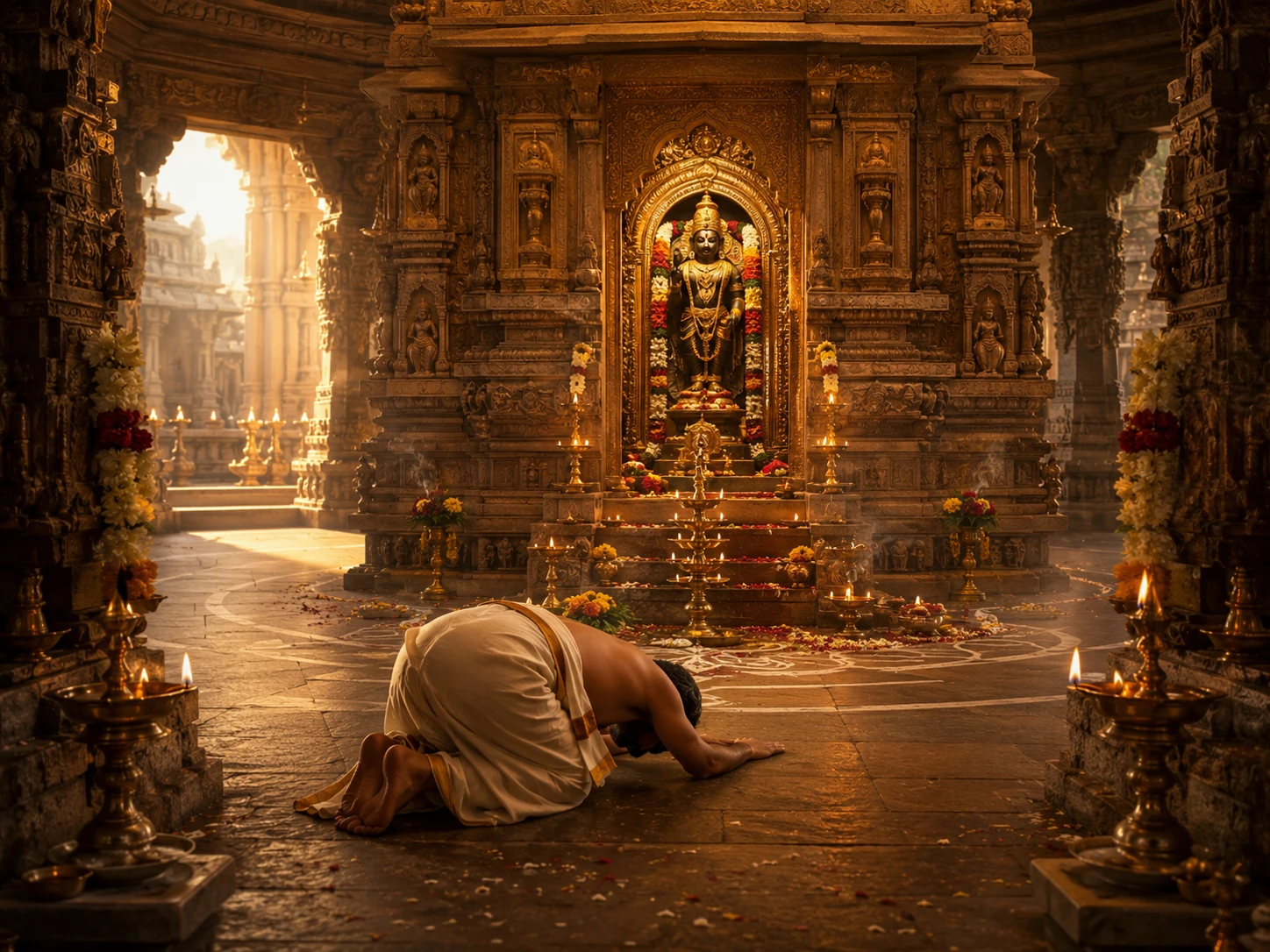
Pradakshina and Namaskara -- Why Hindus Walk Clockwise and Touch the Ground
प्रदक्षिणा और नमस्कार -- हिन्दू दक्षिणावर्त क्यों चलते और भूमि क्यों छूते हैं
हिन्दू पूजा के दो सबसे शारीरिक रूप से दृश्य कर्म -- न मन्त्र, न पुरोहित, न सामग्री, न धन। केवल शरीर और भक्ति-उपकरण बनाने की इच्छा।
प्रदक्षिणा -- पवित्र वस्तु के चारों ओर दक्षिणावर्त चलना -- मन्दिर, देवता, पवित्र वृक्ष (पीपल, नीम, वट), तुलसी, पवित्र अग्नि, और सम्मानित व्यक्तियों के। 'प्र' (आगे) और 'दक्षिण' (दाहिना) -- दाहिना भाग पवित्र केन्द्र की ओर रखते आगे बढ़ना।
नमस्कार -- दिव्य या बड़ों के समक्ष झुकना या प्रणाम -- सरल अंजलि मुद्रा (हथेलियाँ वक्ष पर जुड़ी) से पूर्ण साष्टांग नमस्कार (शरीर के आठ बिन्दु भूमि-स्पर्श: दो पाँव, दो घुटने, दो हथेलियाँ, वक्ष, मस्तक)। बीच में कई श्रेणियाँ: खड़े प्रणाम, घुटने टेककर, पंचांग नमस्कार।
दोनों भारतीय जीवन में इतने समाहित कि मन्दिर से बहुत परे। बच्चा स्कूल जाने से पहले बड़ों के चरण छूता। वधू-वर विवाह में अग्नि की प्रदक्षिणा। नई कार पहली drive से पहले परिक्रमा। ये संकीर्ण अर्थ में धार्मिक कर्म नहीं -- विश्वदृष्टि की सांस्कृतिक अभिव्यक्ति जो सम्मान, विनम्रता और भक्ति में शरीर की भागीदारी को श्वास जितना स्वाभाविक मानती है।
पूछने योग्य: शरीर क्यों मायने रखता है? बस सम्मानपूर्ण विचार क्यों नहीं? परम्परा का उत्तर सटीक: शरीर मन से पृथक नहीं। शारीरिक मुद्राएँ मानसिक अवस्थाएँ रचती हैं। दक्षिणावर्त चलना ध्यानात्मक लय। भूमि पर प्रणाम अहंकार-विलय। शरीर मन को वो सिखाता है जो मन स्वयं नहीं सिखा सकता।
यानि कानि च पापानि जन्मान्तरकृतानि च। तानि तानि विनश्यन्ति प्रदक्षिणपदे पदे॥
yāni kāni ca pāpāni janmāntara-kṛtāni ca tāni tāni vinaśyanti pradakṣiṇa-pade pade
जन्म-जन्मान्तर के जो भी पाप किए, वे प्रदक्षिणा के हर क़दम पर नष्ट होते हैं।
— Skanda Purana (traditional attribution)
नमस्कार के प्रकार
| Type | प्रकार | Body Position | When Used | Who Performs |
|---|---|---|---|---|
| Anjali Mudra | अंजलि मुद्रा | Palms joined at chest, standing | Greeting, prayer, temple entry | Everyone -- universal |
| Pranama | प्रणाम | Standing bow with folded hands | Before elders, teachers, deities | All ages |
| Panchanga | पंचांग | Five points touch ground (knees, hands, head) | Temple worship, guru darshan | Common in South India |
| Sashtanga | साष्टांग | Eight points: feet, knees, palms, chest, forehead flat on ground | Full prostration before deity or guru | Men (traditionally); women do Panchanga |
| Dandavat | दण्डवत | Body stretched like a stick, face down, arms extended forward | Supreme surrender, Vaishnava tradition | Devotees in ISKCON, Gaudiya tradition |
| Pada Sparsha | पाद स्पर्श | Touching feet of elder with right hand, then touching own eyes | Daily greeting to parents, teachers, elders | Children and younger family members |
कई दक्षिण भारतीय परम्पराओं में महिलाएँ साष्टांग (आठ-बिन्दु) के बजाय पंचांग (पाँच-बिन्दु) नमस्कार करती हैं। पर ये भेद सार्वभौमिक नहीं, समुदाय अनुसार भिन्न।
दक्षिणावर्त क्यों? दक्षिणायन का विज्ञान
प्रदक्षिणा की दक्षिणावर्त दिशा मनमानी नहीं। हिन्दू ब्रह्माण्डीय अवलोकन: सब खगोलीय पिण्ड -- सूर्य के चारों ओर ग्रह, पृथ्वी के चारों ओर चन्द्रमा -- उत्तरी ध्रुव से देखने पर संगत कक्षीय दिशा में। दक्षिणावर्त चलकर भक्त व्यक्तिगत कक्षा को ब्रह्माण्डीय से संरेखित।
आगम ग्रन्थ निर्दिष्ट: प्रदक्षिणा सदा दाहिना भाग (दक्षिण) देवता की ओर। दाहिना शुभ पक्ष -- दाहिना हाथ आशीर्वाद देता-लेता, यज्ञोपवीत दाहिने कन्धे-बाएँ कूल्हे, दाहिना पाँव पवित्र स्थान में पहले।
शारीरिक आयाम भी। लयबद्ध वृत्त में चलना ध्यानात्मक अवस्था -- पुनरावृत्त गति, मन्दिर संरचना पर निरन्तर दृश्य केन्द्र, निर्णय-रहितता (बस मार्ग अनुसरण) -- मन शान्त। चलन-ध्यान पर शोध पुष्टि करता कि पुनरावृत्त वृत्ताकार चलन चिन्ता कम और भावनात्मक नियमन सुधारता।
प्रदक्षिणा संख्या देवता अनुसार। गणेश एक (ब्रह्माण्डीय एकत्व -- माता-पिता की परिक्रमा कर कार्तिकेय से दौड़ जीतने की कथा)। शिव तीन (कुछ परम्पराएँ अर्ध-प्रदक्षिणा -- गोमुखी नाले पर रुककर लौटना, पवित्र जल-प्रवाह पार न करें)। विष्णु चार। सूर्य सात।
गिरिवलम -- पवित्र पहाड़ियों की परिक्रमा -- सबसे शारीरिक रूप से कठिन। तिरुवण्णामलै में अरुणाचल 14 किमी नंगे पाँव पूर्णिमा रात्रि। गोवर्धन परिक्रमा 21 किमी। नर्मदा परिक्रमा -- सम्पूर्ण नर्मदा नदी -- 2,600+ किमी, महीनों। ये भूदृश्य की प्रदक्षिणा -- पृथ्वी देवता, शरीर प्रार्थना का उपकरण।
तिरुवण्णामलै का अरुणाचल गिरिवलम भारत की सबसे बड़ी मासिक तीर्थयात्राओं में। हर पूर्णिमा रात अनुमानित 2-5 लाख भक्त अरुणाचल पहाड़ी के 14 किमी नंगे पाँव परिक्रमा -- शिव अग्नि-स्तम्भ स्वरूप। सूर्यास्त से शुरू, रात भर। तमिलनाडु सरकार हर पूर्णिमा विशेष बसें, चिकित्सा दल, भीड़ प्रबन्धन। कार्तिगै दीपम (नवम्बर-दिसम्बर) में अरुणाचल शिखर पर विशाल ज्वाला -- 30 लाख+ भक्त गिरिवलम। रमण महर्षि ने 50+ वर्ष अरुणाचल पर बिताए, पहाड़ी को स्वयं गुरु माना -- हर गिरिवलम गुरु प्रदक्षिणा।
आज एक प्रदक्षिणा करो
अपने निकटतम मन्दिर जाओ और तीन प्रदक्षिणाएँ करो -- धीरे, सजगता से, दाहिनी ओर देवता की ओर रखते हुए। या अपने आँगन के तुलसी के पौधे की परिक्रमा करो। हर फेरे में चलते हुए "ॐ नमः शिवाय" या अपने इष्ट देवता का मन्त्र जपो। तीन फेरे, तीन मिनट की देहधारी भक्ति। एटर्नल राग के मन्त्र-ध्यान पुस्तकालय में चुनने के लिए मन्त्र हैं।
Eternal Raga · शाश्वत राग
Institutional voice — scholarly articles on Sanatan Dharma
अपनी समझ गहरी करें
अपनी समझ और गहरी करें
rituals traditions
Temple Darshan Etiquette -- The Complete Protocol for Visiting a Hindu Temple
Most Hindus visit temples. Few know the correct sequence. There is a reason you remove shoes before entering, ring the bell at the threshold, worship Ganesha first, walk clockwise around the sanctum, accept prasad in the right hand, and never point your feet at the deity. Every rule has a Vedic, architectural, or psychological rationale. This is the complete user guide to Hindu temple darshan.
rituals traditions
Puja at Home -- The Complete Beginner's Guide
You have a small mandir shelf in your apartment. A brass diya your mother gave you. A photo of a deity you feel drawn to. And absolutely no idea what to do next. This guide is for you -- the 22-year-old in Pune who just moved out, the NRI in New Jersey setting up a puja corner for the first time, the curious soul who wants to start but does not know where.
rituals traditions
Why Bells, Lamps, and Flowers -- The Sensory Engineering Behind Hindu Worship
Hindu worship is not random. Every bell, every lamp, every flower, every stick of incense, every drop of water addresses a specific sense, invokes a specific element, and produces a specific psychological effect. The puja is a sensory design system -- a five-element, five-sense immersive experience engineered three thousand years before UX designers existed. Here is the complete map.
rituals traditions
Panchopachara Puja -- The 5 Offerings That Engage All Five Senses
You do not need a pandit, a pavilion, or a two-hour ritual to worship. The Panchopachara Puja -- five offerings representing the five elements and engaging the five senses -- is the tradition's elegant minimum viable puja. Sandalwood for earth, flowers for space, incense for air, lamp for fire, food for water. Five items. Five minutes. A complete act of devotion.
rituals traditions
Sandhyavandana -- The Daily Vedic Practice That Even Rama and Krishna Never Skipped
Three times a day, at the junction of night and day, morning and afternoon, afternoon and night, the twice-born Hindu is commanded to stop everything and perform Sandhyavandana. It combines pranayama, the Gayatri Mantra, water offerings, and meditation into a single twenty-minute ritual. The Ramayana shows Rama doing it in the forest. The Mahabharata shows Krishna doing it before battle. And somewhere in India right now, an IIT student is doing it in his hostel room.
rituals traditions
The 16 Samskaras -- Rites of Passage from Womb to Pyre
Hinduism does not leave life to chance. From the moment a couple decides to conceive to the moment the body returns to the five elements, there are sixteen rituals -- samskaras -- designed to refine the human being at every critical transition. Think of them as firmware updates for the soul, installed at precisely the right moments.
deities avatars
Ganesha -- The Elephant God Decoded
An elephant head on a child's body. A broken tusk in one hand and a sweet in the other. A mouse as a vehicle for the largest deity in the room. Nothing about Ganesha makes sense on the surface -- and everything makes sense once you decode the symbols. This is the deity India invokes before every exam, every business launch, and every WhatsApp group creation.
तिरुवण्णामलै का अरुणाचल गिरिवलम भारत की सबसे बड़ी मासिक तीर्थयात्राओं में। हर पूर्णिमा रात अनुमानित 2-5 लाख भक्त अरुणाचल पहाड़ी के 14 किमी नंगे पाँव परिक्रमा -- शिव अग्नि-स्तम्भ स्वरूप। सूर्यास्त से शुरू, रात भर। तमिलनाड…
More in Rituals & Traditions
Aarti -- Why Hindus Circle Light Before God
13 मिनट पढ़ें
Abhisheka -- Why Hindus Bathe Their Gods
10 मिनट पढ़ें
Akshaya Tritiya -- The Day Nothing Given Away Runs Out
12 मिनट पढ़ेंवही अनुवाद त्रुटि जिसने हिन्दू धर्म में '33 कोटि' को '33 करोड़' बनाया, बौद्ध धर्म में भी हुई। बौद्ध ग्रन्थों के चीनी अनुवाद ने 'सप्त कोटि बुद्ध' (7 श्रेष्ठ बुद्ध) का अनुवाद '7 करोड़ बुद्ध' कर दिया। तिब्बती अनुवाद ने सही …
Deities AvatarsCommunity Reflections
🕉️
Be the first to share your reflection.