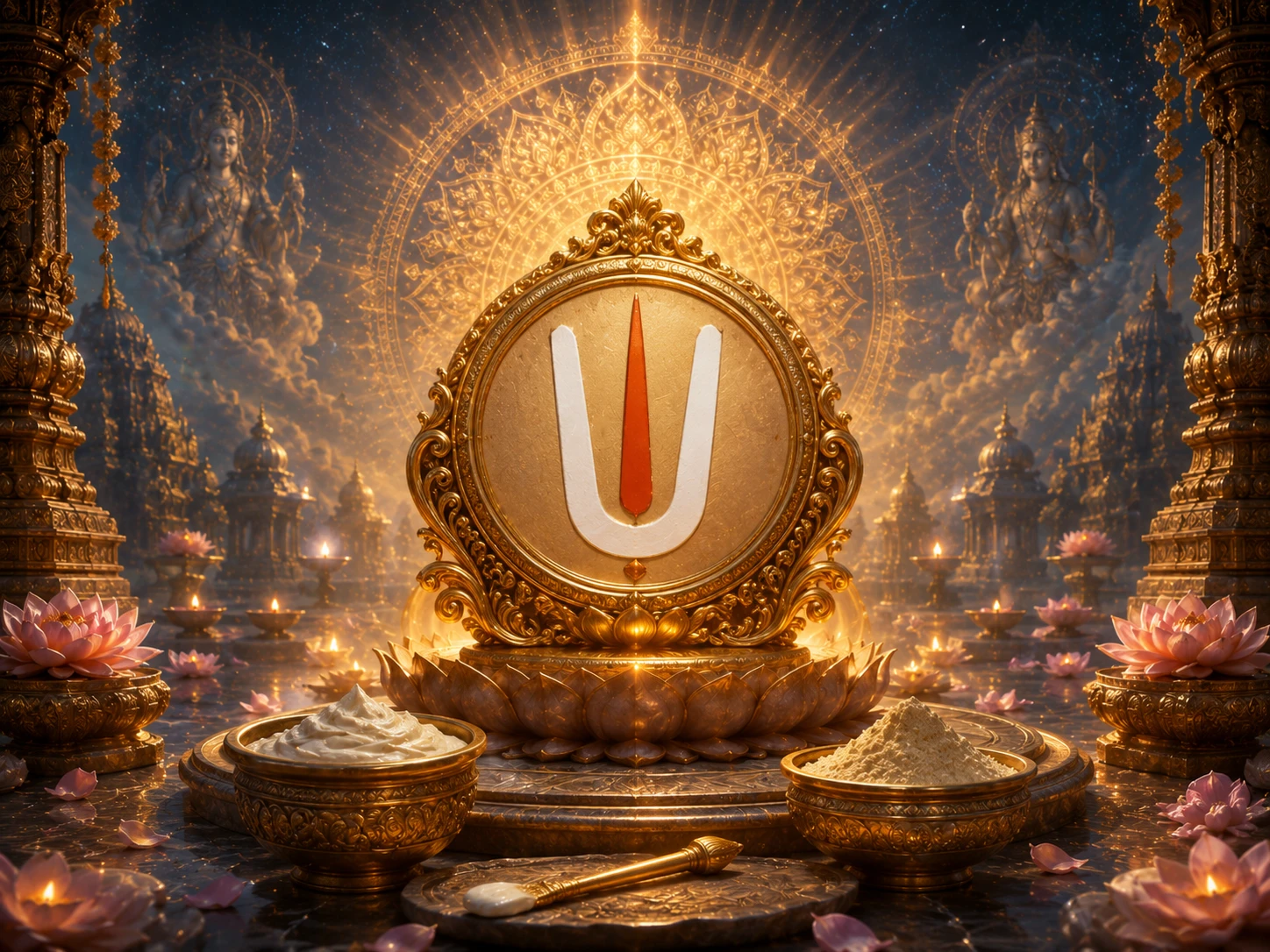
Urdhva Pundra -- The Vertical Lines That Turn Your Body into Twelve Vishnu Temples
ऊर्ध्वपुण्ड्र -- वो ऊर्ध्व रेखाएँ जो तुम्हारे शरीर को बारह विष्णु मन्दिर बनाती हैं
यदि त्रिपुण्ड्र शिव का हस्ताक्षर, ऊर्ध्वपुण्ड्र विष्णु का। दो-तीन ऊर्ध्व रेखाएँ -- ऊपर की ओर (ऊर्ध्व = ऊपर, पुण्ड्र = चिह्न) -- श्वेत मिट्टी, चन्दन लेप या गोपीचन्दन (द्वारका की श्वेत मिट्टी) से नासिका-सेतु से शिखा-रेखा तक, बीच में लाल, पीला या काला चिह्न। हिन्दू धर्म के प्रत्येक वैष्णव सम्प्रदाय की निर्णायक दृश्य पहचान।
वासुदेव उपनिषद तीन ऊर्ध्व रेखाओं की व्याख्या: तीन वेद, तीन लोक, ॐ के तीन अक्षर, चेतना की तीन अवस्थाएँ, तीन तत्त्व (माया, ब्रह्म, आत्मा), तीन शरीर (स्थूल, सूक्ष्म, कारण)। ऊर्ध्व दिशा आध्यात्मिक आरोहण -- आत्मा विष्णु की ओर उठती।
लेकिन ललाट केवल आरम्भ। पद्म पुराण और स्कन्द पुराण विधान: भक्त वैष्णव शरीर पर बारह स्थानों पर ऊर्ध्वपुण्ड्र लगाये, द्वादश नाम -- विष्णु के बारह नाम -- प्रत्येक बिन्दु पर:
1. ललाट -- केशव। 2. उदर -- नारायण। 3. वक्ष -- माधव। 4. कण्ठ -- गोविन्द। 5. दायाँ पार्श्व -- विष्णु। 6. दायीं ऊपरी भुजा -- मधुसूदन। 7. दायीं अग्रभुजा -- त्रिविक्रम। 8. बायाँ पार्श्व -- वामन। 9. बायीं ऊपरी भुजा -- श्रीधर। 10. बायीं अग्रभुजा -- हृषीकेश। 11. ऊपरी पृष्ठ -- पद्मनाभ। 12. निम्न पृष्ठ -- दामोदर।
प्रत्येक नाम विष्णु के ब्रह्माण्डीय कार्य का भिन्न पक्ष। साधना सम्पूर्ण शरीर को बहु-मन्दिर परिसर में रूपान्तरित -- बारह देवालय, प्रत्येक विष्णु के विशिष्ट रूप को समर्पित। तुम इन मन्दिरों में नहीं जाते। पहनते हो।
Juhu मुम्बई के युवा ISKCON भक्त के लिए जो प्रतिदिन सुबह गोपीचन्दन तिलक लगाकर Andheri के tech job जाता, दैनिक पहचान-घोषणा। श्रीरंगम की श्री वैष्णव दादी जिन्होंने सत्तर वर्ष हर दिन नामम लगाया, चिह्न उनके चेहरे से अभिन्न। उडुपि कृष्ण मठ के माध्व पुजारी के लिए, तिलक संस्थागत -- वंश, दार्शनिक शाखा और देवता-सेवा का अधिकार।
ऊर्ध्वपुण्ड्र मूल पहनने योग्य पहचान प्रणाली। badges, uniforms, LinkedIn profiles से पहले -- माथे पर मिट्टी थी, ऊपर की ओर, दिव्य के प्रति निष्ठा घोषित।
ऊर्ध्वपुण्ड्रं हरेः क्षेत्रं ललाटे यस्य विद्यते। तं दृष्ट्वा सर्वपापेभ्यो मुच्यते नात्र संशयः॥
ūrdhvapuṇḍraṃ hareḥ kṣetraṃ lalāṭe yasya vidyate | taṃ dṛṣṭvā sarvapāpebhyo mucyate nātra saṃśayaḥ ||
ललाट पर ऊर्ध्वपुण्ड्र भगवान हरि का क्षेत्र (मन्दिर) है। इसे देखने मात्र से सर्वपापों से मुक्ति -- इसमें कोई सन्देह नहीं।
— Padma Purana, Uttara Khanda
सम्प्रदाय अनुसार प्रमुख ऊर्ध्वपुण्ड्र शैलियाँ
| Sampradaya / सम्प्रदाय | Shape / आकार | Material / सामग्री | Central Mark / केन्द्रीय चिह्न | Key Distinction / प्रमुख भेद |
|---|---|---|---|---|
| Sri Vaishnava (Tenkalai) / श्रीवैष्णव (तेनकलै) | Y-shape with curved nose bridge / Y-आकार, वक्र नासिका-सेतु | White clay + kumkum / श्वेत मिट्टी + कुमकुम | Red line (Lakshmi) / लाल रेखा (लक्ष्मी) | Curve = unconditional grace (marjara nyaya) / वक्र = बिना शर्त कृपा |
| Sri Vaishnava (Vadakalai) / श्रीवैष्णव (वडकलै) | Y-shape with straight bridge / Y-आकार, सीधा सेतु | White clay + kumkum | Red line | Straight = grace requires effort (markata nyaya) / सीधा = कृपा को पुरुषार्थ चाहिए |
| Gaudiya (ISKCON) / गौडीय | U-shape + tulasi leaf / U-आकार + तुलसी पत्ती | Gopichandana (Dwarka clay) / गोपीचन्दन | Tulasi leaf mark / तुलसी पत्ती | Clay from Krishna's land / कृष्ण की भूमि की मिट्टी |
| Madhva (Udupi) / माध्व (उडुपि) | Two lines not joined at bottom / दो रेखाएँ नीचे अलग | Gopichandana | Black line (Vayu) / काली रेखा (वायु) | Vayu = breath of God / वायु = भगवान का प्राण |
| Swaminarayan / स्वामीनारायण | U-shape + round dot / U-आकार + गोल बिन्दु | Chandana + kumkum / चन्दन + कुमकुम | Red chandlo (circle) / लाल चाँदलो | Krishna's feet + Lakshmi within / कृष्ण के चरण + भीतर लक्ष्मी |
| Nimbarka / निम्बार्क | Two black lines + black dot / दो काली रेखाएँ + काला बिन्दु | Dark gopichandana | Black dot (Radha-Krishna) / काला बिन्दु | Given by Narada at initiation / नारद ने दीक्षा पर दिया |
| Ramanandi / रामानन्दी | Broad red central line / चौड़ी लाल केन्द्रीय रेखा | Kumkum / कुमकुम | Red line is the mark / लाल रेखा ही चिह्न | Largest Vaishnava monastic order in North India / उत्तर भारत का सबसे बड़ा वैष्णव मठ |
प्रत्येक शैली शताब्दियों के धर्मशास्त्रीय परिष्कार। तेनकलै-वडकलै बहस -- कृपा बिल्ली-न्याय (बिना शर्त) या वानर-न्याय (पुरुषार्थ) -- हिन्दू धर्म के सर्वाधिक सूक्ष्म धर्मशास्त्रीय विमर्शों में, तिलक वक्रता के एक मिलीमीटर में दृश्य।
बारह-शरीर ऊर्ध्वपुण्ड्र प्रणाली का अर्थ कि कठोर वैष्णव हर सुबह बारह स्थानों पर तिलक लगाता, प्रत्येक पर विष्णु का भिन्न नाम। 30 सेकण्ड प्रति चिह्न, दैनिक लगभग 6 मिनट। 60-वर्षीय वयस्क जीवन में, लगभग 1,31,400 व्यक्तिगत तिलक और 15,76,800 विष्णु-नाम पाठ -- केवल सुबह तिलक से। द्वादश नाम स्वयं विष्णु के ब्रह्माण्डीय कार्यों की संकुचित कथा, 'केशव' (केशों के स्वामी) से 'दामोदर' (रस्सी से बँधे, यशोदा द्वारा बाल कृष्ण को ओखली से बाँधना)। तिलक विधि एक साथ शरीर-चिह्नन, मन्त्र ध्यान और धर्मशास्त्रीय अध्ययन।
द्वादश नाम तिलक विधि सीखो
विष्णु के बारह नाम -- केशव, नारायण, माधव, गोविन्द, विष्णु, मधुसूदन, त्रिविक्रम, वामन, श्रीधर, हृषीकेश, पद्मनाभ और दामोदर -- पढ़ते हुए बारह ऊर्ध्व पुण्ड्र लगाओ, हर चिह्न के लिए एक नाम, माथे से आरम्भ करके। परिवार के कोई बड़े या तुम्हारे सम्प्रदाय के आचार्य स्थान दिखा सकते हैं। विष्णु के 108 नाम अर्थ सहित एटर्नल राग पर हैं।
Tags
Eternal Raga · शाश्वत राग
Institutional voice — scholarly articles on Sanatan Dharma
अपनी समझ गहरी करें
अपनी समझ और गहरी करें
sacred symbols
Tilak Types -- The Hindu Forehead Mark That Tells Your Entire Spiritual Address
Before LinkedIn profiles and Instagram bios, Hindus had a one-glance identity system -- the tilak. A single mark on the forehead could tell you someone's deity, lineage, philosophy, and guru. Tripundra or Urdhva Pundra? Vibhuti or chandana? Each line is a declaration of cosmic allegiance.
sacred symbols
Tripundra -- The Three Ash Lines That Declare You Are Already Free
Three horizontal lines of sacred ash. The mark of Shiva. Worn by Naga sadhus, Smarta Brahmins, Lingayats, and Adi Shankaracharya himself. Each line simultaneously represents a sacred fire, a syllable of Om, a guna, a world, a Veda, and an aspect of Shiva. The Kalagni Rudra Upanishad devotes its entire text to explaining why.
sacred artefacts
Tulasi Mala -- The Neckbeads That Mark You as Vishnu's Own
Two or three strands of small wooden beads, worn around the neck at all times -- in the shower, during sleep, at work, at death. The Tulasi Mala is not jewellery. It is a permanent declaration of spiritual identity. The Padma Purana says that Yama's messengers will not approach a body wearing Tulasi beads. ISKCON devotees worldwide wear it as their most visible marker of Krishna consciousness.
sacred symbols
Yajnopavita -- The Sacred Thread That Made You Born Twice
Three cotton strands, nine deities, a knot that encodes your entire lineage. The Janeu is not a string -- it is a contract. A contract with your guru, your ancestors, and the Vedas. The Upanayana ceremony that gives it to you is called a second birth. And the thread you wear for the rest of your life is the receipt.
sacred symbols
Temple Architecture Symbolism -- Why Every Hindu Temple Is a Human Body, a Mountain, and the Universe
The dark womb-room at the centre. The tower rising above it like a spine. The gateway that frames the divine like an eye. A Hindu temple is not a building where you go to see God. It IS the body of God -- designed on a mandala grid, proportioned by sacred mathematics, and oriented to catch the first ray of the rising sun.
sacred symbols
Lotus (Padma) -- The Flower That Grows in Mud and Became God's Throne
It grows from the bottom of a swamp. It rises through murky water. It blooms in sunlight without a single stain. This is not a motivational poster -- it is the central metaphor of Hindu civilisation. Every god sits on it. Every scripture references it. The Bhagavad Gita used it to explain the entire philosophy of detached action in one line.
बारह-शरीर ऊर्ध्वपुण्ड्र प्रणाली का अर्थ कि कठोर वैष्णव हर सुबह बारह स्थानों पर तिलक लगाता, प्रत्येक पर विष्णु का भिन्न नाम। 30 सेकण्ड प्रति चिह्न, दैनिक लगभग 6 मिनट। 60-वर्षीय वयस्क जीवन में, लगभग 1,31,400 व्यक्तिगत तिलक…
More in Sacred Symbols
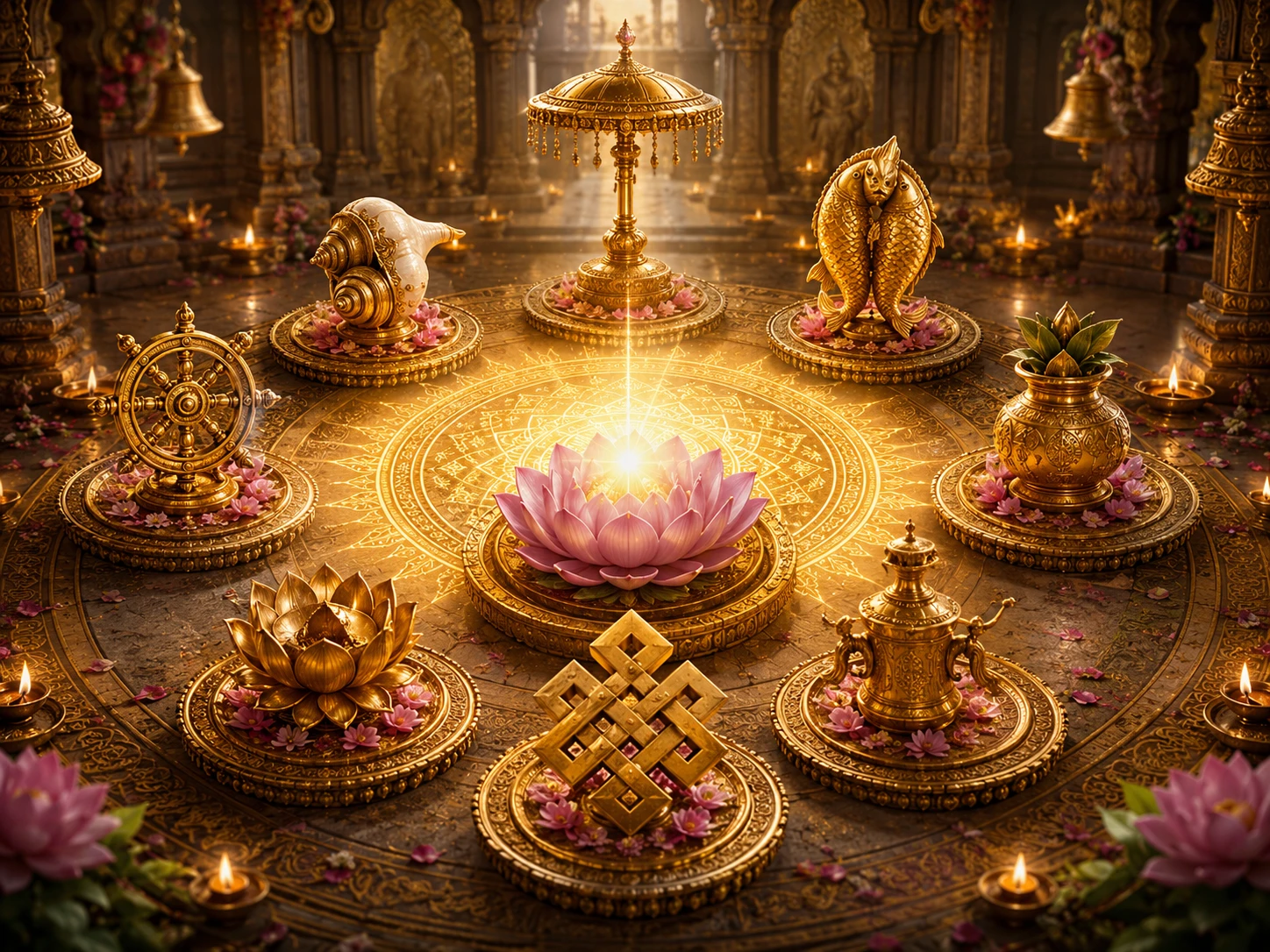
Ashtamangala -- The Eight Auspicious Symbols of Hindu Tradition
13 मिनट पढ़ें
Bindu -- The Point from which Creation Emerges
12 मिनट पढ़ें
Gau -- Why the Cow Holds the Place She Does in Hindu Life
14 मिनट पढ़ेंवही अनुवाद त्रुटि जिसने हिन्दू धर्म में '33 कोटि' को '33 करोड़' बनाया, बौद्ध धर्म में भी हुई। बौद्ध ग्रन्थों के चीनी अनुवाद ने 'सप्त कोटि बुद्ध' (7 श्रेष्ठ बुद्ध) का अनुवाद '7 करोड़ बुद्ध' कर दिया। तिब्बती अनुवाद ने सही …
Deities AvatarsCommunity Reflections
🕉️
Be the first to share your reflection.