
The Science Behind Yoga -- From Patanjali's 196 Sutras to NIMHANS Brain Scans
योग के पीछे का विज्ञान -- पतंजलि के 196 सूत्रों से NIMHANS के ब्रेन स्कैन तक
'योग' शब्द संस्कृत धातु 'युज्' से है -- जोड़ना, मिलाना। प्राचीनतम वैदिक प्रयोग में यह रथ में घोड़ों को जोतने को कहता था। कठोपनिषद् (लगभग 5वीं शताब्दी ई.पू.) तक यह इन्द्रिय-संयम के रूपक में रूपान्तरित हो चुका था -- सारथी (बुद्धि) घोड़ों (इन्द्रियों) को नियन्त्रित करता है जो रथ (शरीर) खींचते हैं जिसमें आत्मा बैठा है। जब पतंजलि ने योगसूत्र संकलित किए (लगभग दूसरी शताब्दी ई.पू. से चौथी शताब्दी ई. -- काल विवादित), शब्द ने तकनीकी अर्थ प्राप्त कर लिया था: मन को स्थिर कर आत्मा साक्षात्कार की व्यवस्थित पद्धति।
पतंजलि के योगसूत्र 196 सूत्रों (aphorisms) के हैं, चार अध्यायों (पादों) में: समाधि पाद, साधना पाद, विभूति पाद, और कैवल्य पाद। ग्रन्थ असाधारण रूप से सघन है। प्रत्येक सूत्र बीज है -- कण्ठस्थ करने, जपने, और फिर भाष्य द्वारा विस्तार के लिए। सम्पूर्ण ग्रन्थ लगभग 10 पृष्ठों में छप सकता है। भाष्य पुस्तकालय भरते हैं।
परिभाषात्मक कथन सूत्र 1.2 है: 'योगश्चित्तवृत्तिनिरोधः' -- योग चित्त-क्षेत्र की वृत्तियों का निरोध है। यह शारीरिक आसनों का वर्णन नहीं। मानसिक अवस्था की परिभाषा है। आगे का सम्पूर्ण अष्टांग ढाँचा इसी निरोध को लाने के लिए है। आसन आठ में से एक उपकरण। प्राणायाम दूसरा। अन्तिम तीन -- धारणा, ध्यान, और समाधि -- आन्तरिक मूल हैं। वैश्विक yoga industry जो पढ़ाती है वह आठ में से अंग तीन है। शेष सात अंगों में ही विज्ञान वास्तव में है।
योगश्चित्तवृत्तिनिरोधः॥
yogaś citta-vṛtti-nirodhaḥ ||
योग चित्त की वृत्तियों का निरोध है।
— Yoga Sutras of Patanjali, 1.2
योग के आठ अंग (अष्टांग) -- सम्पूर्ण प्रणाली
| Limb | Sanskrit | English | What It Trains | Modern Parallel |
|---|---|---|---|---|
| 1 | Yama | Ethical restraints | Social conduct: non-violence, truth, non-stealing, celibacy/continence, non-possessiveness | Professional ethics codes; corporate governance principles |
| 2 | Niyama | Personal observances | Self-discipline: cleanliness, contentment, austerity, self-study, surrender to the divine | Morning routines; journaling; self-improvement protocols |
| 3 | Asana | Physical posture | Body: stability and comfort in seated position; strength and flexibility | The global yoga-studio industry -- 90% of what people call 'yoga' |
| 4 | Pranayama | Breath regulation | Autonomic nervous system: extending and controlling the breath cycle | Box breathing (Navy SEALs); Wim Hof method; NIMHANS research on vagal tone |
| 5 | Pratyahara | Sense withdrawal | Sensory processing: detaching attention from external sensory inputs | Digital detox; deep-focus protocols; sensory deprivation tanks |
| 6 | Dharana | Concentration | Attention: fixing the mind on a single point -- mantra, flame, breath | Flow state research (Csikszentmihalyi); attention training in cognitive psychology |
| 7 | Dhyana | Meditation | Sustained awareness: unbroken flow of attention toward the object of concentration | Mindfulness-based stress reduction (MBSR); Vipassana; AIIMS meditation studies |
| 8 | Samadhi | Absorption | Consciousness: complete absorption where the meditator, meditation, and object merge | Peak experience (Maslow); non-dual awareness states studied in contemplative neuroscience |
पतंजलि की प्रणाली प्रगतिशील है -- प्रत्येक अंग अभ्यासी को अगले के लिए तैयार करता है। यम-नियम की नैतिक नींव, आसन की शारीरिक स्थिरता, और प्राणायाम की श्वास-दक्षता के बिना समाधि का प्रयास बिना प्रशिक्षण marathon दौड़ने जैसा है। क्रम ही विज्ञान है।
योग का तन्त्रिका-वैज्ञानिक प्रमाणन अब अनुमान नहीं रहा। NIMHANS बेंगलुरु ने योग के मापनीय प्रभावों पर 200 से अधिक peer-reviewed शोधपत्र प्रकाशित किए हैं। AIIMS दिल्ली एकीकृत चिकित्सा विभाग चलाता है जिसमें उच्चरक्तचाप, मधुमेह, और चिन्ता के लिए योग-आधारित प्रोटोकॉल शामिल। Harvard Medical School का ध्यान-प्रेरित neuroplasticity शोध दिखाता है कि आठ सप्ताह का mindfulness अभ्यास hippocampus (स्मृति और सीखना) में grey matter घनत्व बढ़ाता है और amygdala (भय और तनाव प्रतिक्रिया) में घटाता है।
प्राणायाम -- चौथा अंग -- सर्वाधिक व्यापक रूप से अध्ययन किया गया। धीमी-श्वास प्राणायाम तकनीकें (नाड़ीशोधन / अनुलोम-विलोम) हृदय-दर परिवर्तनशीलता (HRV) बढ़ाती हैं, स्वायत्त तन्त्रिका तन्त्र स्वास्थ्य का प्रमुख मार्कर। उच्च HRV भावनात्मक लचीलापन, बेहतर निर्णय-क्षमता, और कम हृदय-रोग जोखिम से सम्बद्ध। तन्त्र: नियन्त्रित धीमी श्वास vagus nerve उत्तेजित करती है, स्वायत्त तन्त्रिका तन्त्र को sympathetic ('लड़ो या भागो') से parasympathetic ('विश्राम और पचाव') प्रभुत्व में स्थानान्तरित करती है। यह ठीक वही है जो पतंजलि ने 2,000 वर्ष पहले बताया -- कि प्राणायाम श्वास नियमन द्वारा मन शान्त करता है -- neuroscience की शब्दावली में कहा गया संस्कृत के बजाय।
अन्तर्राष्ट्रीय योग दिवस (21 जून), 2014 में संयुक्त राष्ट्र द्वारा भारतीय प्रधानमन्त्री नरेन्द्र मोदी के प्रस्ताव पर घोषित, अब 170 से अधिक देशों में मनाया जाता है। भारत का योग उद्योग वैश्विक रूप से $35 बिलियन से अधिक मूल्य का। फिर भी विडम्बना: वैश्विक योग अर्थव्यवस्था अंग 3 (आसन) और अंग 4 (प्राणायाम) के टुकड़ों पर बनी है, जबकि पतंजलि का वास्तविक ग्रन्थ नैतिक, मनोवैज्ञानिक, और चिन्तनशील आयामों पर कहीं अधिक स्थान देता है। Kota में चिन्ता से जूझते JEE student, Koramangala में burnout सामना करते startup founder, या Toronto में पहचान-विस्थापन से जूझते NRI -- पतंजलि के शेष अंग किसी Headspace subscription से अधिक प्रासंगिक हो सकते हैं।
पतंजलि के योगसूत्र एक भी नामित आसन (मुद्रा) का वर्णन नहीं करते। आसन के बारे में एकमात्र निर्देश सूत्र 2.46 है: 'स्थिरसुखमासनम्' -- आसन स्थिर और सुखद हो। आसनों की विस्तृत सूची (सूर्य नमस्कार, शीर्षासन आदि) बाद के हठयोग ग्रन्थों से आती है जैसे हठयोग प्रदीपिका (15वीं शताब्दी) और घेरण्ड संहिता (17वीं शताब्दी)। UN अन्तर्राष्ट्रीय योग दिवस 21 जून को मनाया जाता है -- ग्रीष्म अयनान्त -- उत्तरी गोलार्ध में वर्ष का सबसे लम्बा दिन और योगिक परम्परा में गहरा महत्त्व रखने वाली तिथि, जब सूर्य दक्षिणायन शुरू करता है। NIMHANS बेंगलुरु ने पाया कि दीर्घकालीन योग अभ्यासकर्ता prefrontal cortex -- निर्णय-क्षमता, आवेग-नियन्त्रण, और भावनात्मक नियमन के लिए ज़िम्मेदार मस्तिष्क क्षेत्र -- में मापनीय रूप से बढ़ी cortical मोटाई दिखाते हैं। भारत का AYUSH मन्त्रालय 2014 में विशेष रूप से पारम्परिक स्वास्थ्य प्रणालियाँ प्रोत्साहित करने के लिए बना, योग इसका प्रमुख कार्यक्रम।
एटर्नल राग पर अपना योग अभ्यास शुरू करो
पतंजलि की प्रणाली लचीलेपन से नहीं, श्वास और सजगता से आरम्भ होती है। एटर्नल राग के ध्यान खण्ड में चरण-दर-चरण प्राणायाम पृष्ठ और धारणा अभ्यास हैं -- अष्टांग योग के चौथे और छठे अंग।
Tags
Eternal Raga · शाश्वत राग
Institutional voice — scholarly articles on Sanatan Dharma
अपनी समझ गहरी करें
अपनी समझ और गहरी करें
scriptural exegesis
Gita Chapter 6 -- Dhyana Yoga -- The Honest Guide to Meditation
Chapter 6 is where the Gita gets brutally practical about meditation. Krishna describes the technique -- posture, gaze, breath, mental stillness -- and Arjuna immediately responds with perhaps the most relatable line in all of scripture: 'The mind is restless, turbulent, strong, and obstinate -- controlling it is harder than controlling the wind.' Krishna does not disagree. He says yes, the mind is impossible to tame -- except through practice and detachment. This chapter is 2,500 years old, and it reads like a therapy session between a frustrated student and a patient teacher.
vedic sciences
Ayurveda -- The 3,000-Year-Old Science That Knows Your Body Type Before You Do
Long before personalised medicine became a Silicon Valley buzzword, the Charaka Samhita classified every human being into one of seven constitutional types based on three biological forces -- Vata, Pitta, and Kapha. Modern genomic studies at CSIR-IGIB have found that these ancient types correlate with distinct gene expression profiles. Ayurveda did not guess. It observed.
scriptural exegesis
Katha Upanishad -- Nachiketa and Yama
A teenage boy walks into the house of Death, waits three days without food, and then proceeds to negotiate the universe's deepest secret out of Yama himself. The Katha Upanishad is not a dusty scripture -- it is the original startup pitch where a kid with zero leverage outplayed the CEO of the afterlife.
philosophy darshana
The Six Darshanas -- India's Original Intellectual Operating Systems
Long before Greek philosophy had its first argument, India had six complete philosophical systems -- each with its own logic, metaphysics, epistemology, and liberation path. Nyaya built formal logic. Vaisheshika invented atomic theory. Samkhya mapped consciousness. Yoga engineered the mind. Mimamsa decoded ritual. Vedanta asked the final question. Together, they are the most comprehensive intellectual framework any civilisation has produced.
scriptural exegesis
Gita Chapter 14 -- Three Gunas -- The Operating System You Never Knew You Were Running
Everything you think, feel, and do is running on one of three modes: Sattva (clarity), Rajas (restless drive), or Tamas (inertia). You did not choose them. They chose you -- through your food, your sleep cycle, the people you spend time with, and the habits you have compounded over lifetimes. Chapter 14 of the Gita is the most precise psychological framework in ancient literature. It explains why you feel inspired at 5 AM and sluggish at 3 PM, why some people are driven by ambition and others by apathy, and -- most importantly -- how to transcend all three.
vedic sciences
Shad Vedangas -- The Six Limbs of the Veda
The Vedas are not a single book you can pick up and read. They are a living system with six auxiliary sciences -- phonetics, metre, grammar, etymology, astronomy, and ritual procedure -- that function like limbs of a body. Without them, the Vedas are a voice without a mouth, a path without eyes. Here is the operating manual India's knowledge system ran on for three thousand years.
tantra mantra yantra
Tantra, Mantra and Yantra -- The Three Pillars of Spiritual Practice
Tantra is the loom, Mantra is the thread, Yantra is the pattern. Together they form the complete technology of spiritual transformation that India gifted to the world -- and they are far more profound than popular culture imagines.
पतंजलि के योगसूत्र एक भी नामित आसन (मुद्रा) का वर्णन नहीं करते। आसन के बारे में एकमात्र निर्देश सूत्र 2.46 है: 'स्थिरसुखमासनम्' -- आसन स्थिर और सुखद हो। आसनों की विस्तृत सूची (सूर्य नमस्कार, शीर्षासन आदि) बाद के हठयोग ग्…
More in Vedic Sciences

Agnichayana -- The Falcon-Shaped Fire Altar That Survived 3,000 Years
12 मिनट पढ़ें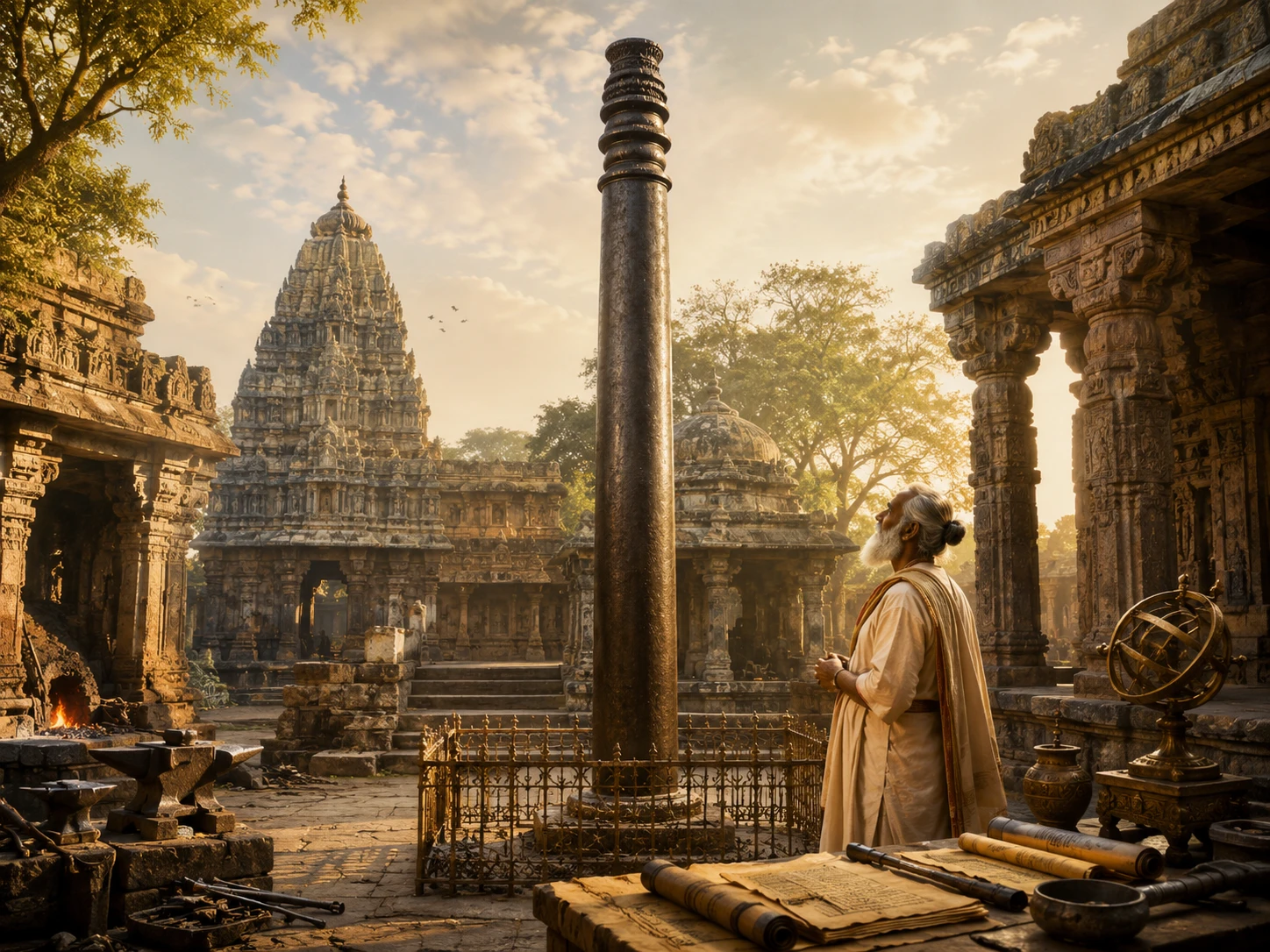
Ancient Indian Metallurgy -- The Iron Pillar That Refuses to Rust
13 मिनट पढ़ेंAryabhata -- The Astronomer Who Said the Earth Turns
3 मिनट पढ़ेंवही अनुवाद त्रुटि जिसने हिन्दू धर्म में '33 कोटि' को '33 करोड़' बनाया, बौद्ध धर्म में भी हुई। बौद्ध ग्रन्थों के चीनी अनुवाद ने 'सप्त कोटि बुद्ध' (7 श्रेष्ठ बुद्ध) का अनुवाद '7 करोड़ बुद्ध' कर दिया। तिब्बती अनुवाद ने सही …
Deities AvatarsCommunity Reflections
🕉️
Be the first to share your reflection.