Achankovil Sastha
अचनकोविल शास्ता
The householder Sastha at the forest's heart
Achankovil, Kerala, India
Achaṅkoviḷ ŚāstāAlso known as: Achankovilappan, Achankovil Dharmasastha Temple, Achankovil Sashasthan, Achankovil Sastha Kshetram
युग
Pre-modern (current structure 20th century; ancient sacred site tradition)
वास्तुकला
Kerala Nāḷu-kettu tradition
खुला
05:30 – 20:30
आरती
05:30 · 10:30 · 17:30 · 20:00
विशेष
All devotees including women of all ages are welcome. The Achankovil forest route — the traditional pada yatra approach to Sabarimala from the east — passes through the temple precincts; pilgrims on this route take darshan before proceeding into the forest.
पवित्र कथा · पवित्र कथा
If Aryankavu is the Sashasthan at the threshold — Ayyappa with his consorts presiding over the mountain pass between two worlds — then Achankovil is the Sashasthan at the heart. Deeper in the Pathanamthitta forests, set on the banks of the Achankovil River in the shadow of the ranges that eventually rise to Sabarimala, this is where Ayyappa's householder form is rooted in the living forest itself, not at a crossing-point but at a centre. Achankovilappan — the Lord of Achankovil — sits between Poorna and Pushkala as the second of the two consort-present temples in the Pancha Sabari Sastha circuit, embodying the same theology of fulfilled, inclusive divinity as Aryankavu, but in a quieter, more inward register. The temple lies on one of the traditional forest routes to Sabarimala, and for generations of pilgrims from the eastern Pathanamthitta valleys, Achankovil has been the first Sastha darshan on the yatra — the blessing taken at the forest's heart before the ascent to the hilltop.
Sacred Designationपवित्र पदनाम
Sacred Origin Storyपवित्र उत्पत्ति कथा
Source: Shaiva-Vaishnava composite (Hariharaputra tradition); Achankovil Sastha Sthala Purana
The Achankovil tradition holds that Ayyappa, having established his eternal celibate seat at Sabarimala and his threshold-guardian form at Aryankavu, chose the deep forest of the Achankovil valley as the site for the second expression of his Sashasthan form — the householder deity rooted in the living forest rather than stationed at its border. Poorna and Pushkala, the divine consorts whose names carry the cosmic principles of fullness and abundance, are present here as at Aryankavu, but the spiritual register of Achankovil is understood as more inward and contemplative: this is the householder Sastha in the silence of the deep forest rather than in the dynamic movement of the mountain pass.
The Achankovil River — flowing from the ranges above through the forest valley to the plains — is the sacred geography of this site in the same way the Pampa is sacred to Sabarimala and the Kallada to Kulathupuzha. The river's water, drawn from the same highland sources that feed the pilgrimage rivers of the Sabarimala complex, is used in the temple's abhishekam and for the ritual bath that pilgrims take before darshan. Achankovil thus holds a unique position in the Pancha Sastha circuit: the deepest forest, the inmost retreat, the householder Sastha's still centre.
उद्धृत स्रोत:
- Achankovil Sastha Sthala Purana (Malayalam oral tradition)
- Bhuta Purana (regional Kerala Purana — Ayyappa narrative framework)
- Travancore Devaswom Board documentation on Pancha Sabari Sastha temples
- Kerala Tourism — Pancha Sastha circuit pilgrimage literature
Historyइतिहास
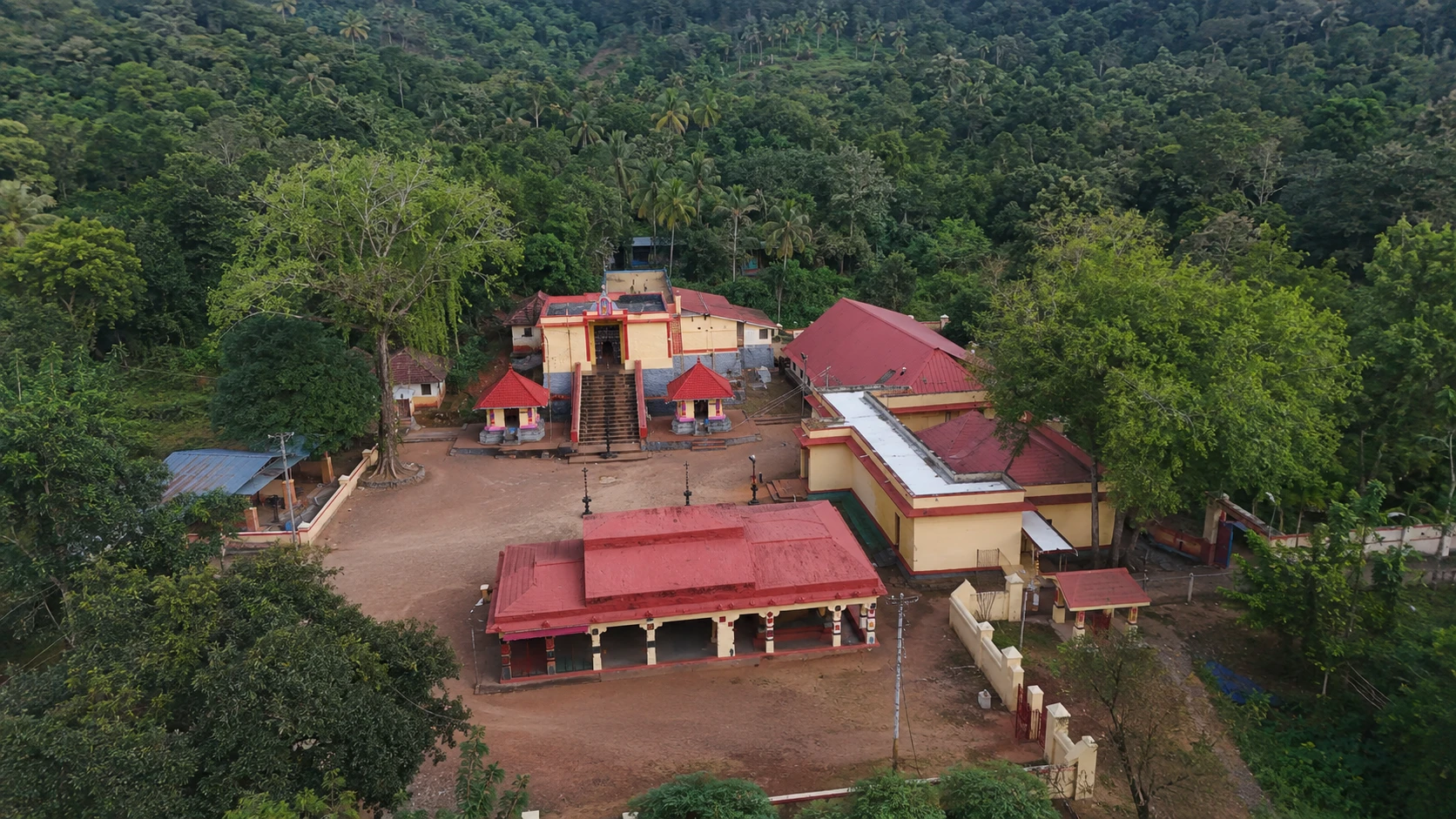
The Achankovil Sastha temple sits deep within the Pathanamthitta forest range, in the valley carved by the Achankovil River in the Western Ghats. The site's sacred identity is ancient — the forest valley that the Achankovil River drains is part of the same highland complex as the Sabarimala pilgrimage terrain, and veneration of Sastha in this valley predate the formalisation of the current temple structure. As the Sabarimala pilgrimage expanded across the 19th and 20th centuries, Achankovil's position on one of the traditional forest routes to the hilltop shrine gave it a functional role in the pilgrimage ecosystem: a staging point and darshan site for pilgrims approaching Sabarimala from the eastern Pathanamthitta valleys. The temple's formal recognition as the second Sashasthan seat of the Pancha Sabari Sastha circuit — alongside Aryankavu — established its theological identity within the broader Ayyappa pilgrimage framework. The Achankovil Sastha Devaswom administers the temple. The surrounding Achankovil forest is part of the larger Konni–Achankovil forest division, a significant wildlife corridor in southern Kerala connecting the Agasthyamala Biosphere Reserve forests with the Periyar Tiger Reserve complex.
Historical Timelineऐतिहासिक कालक्रम
Achankovil established as a Sastha veneration site in the deep forest valley: the Achankovil River valley's association with Sastha worship predates the formalisation of the current temple, rooted in the same Western Ghats forest sacred geography as the broader Ayyappa pilgrimage complex. The Sashasthan form — with consorts Poorna and Pushkala — becomes the site's defining theological identity as the forest-interior complement to Aryankavu's pass-threshold form.
Founding date is traditional and not inscriptionally confirmed.
Achankovil formalised as an eastern-approach staging point on the Sabarimala pilgrimage network: as the Sabarimala yatra expanded, the traditional forest route from the Pathanamthitta valleys through Achankovil to the Sabarimala hilltop gained recognition in pilgrimage guides as an alternative to the Erumeli and Pampa approaches. The temple's darshan became an established first stop for pilgrims approaching Sabarimala from the east.
The Konni–Achankovil forest range designated as a significant wildlife corridor in southern Kerala: the forests around the temple are incorporated into the Konni forest division of Pathanamthitta, forming part of the larger wildlife corridor connecting the Agasthyamala Biosphere Reserve with the Periyar Tiger Reserve. The designation added a conservation dimension to the temple's forest setting that has become part of its contemporary identity.
What You'll Seeदर्शन में
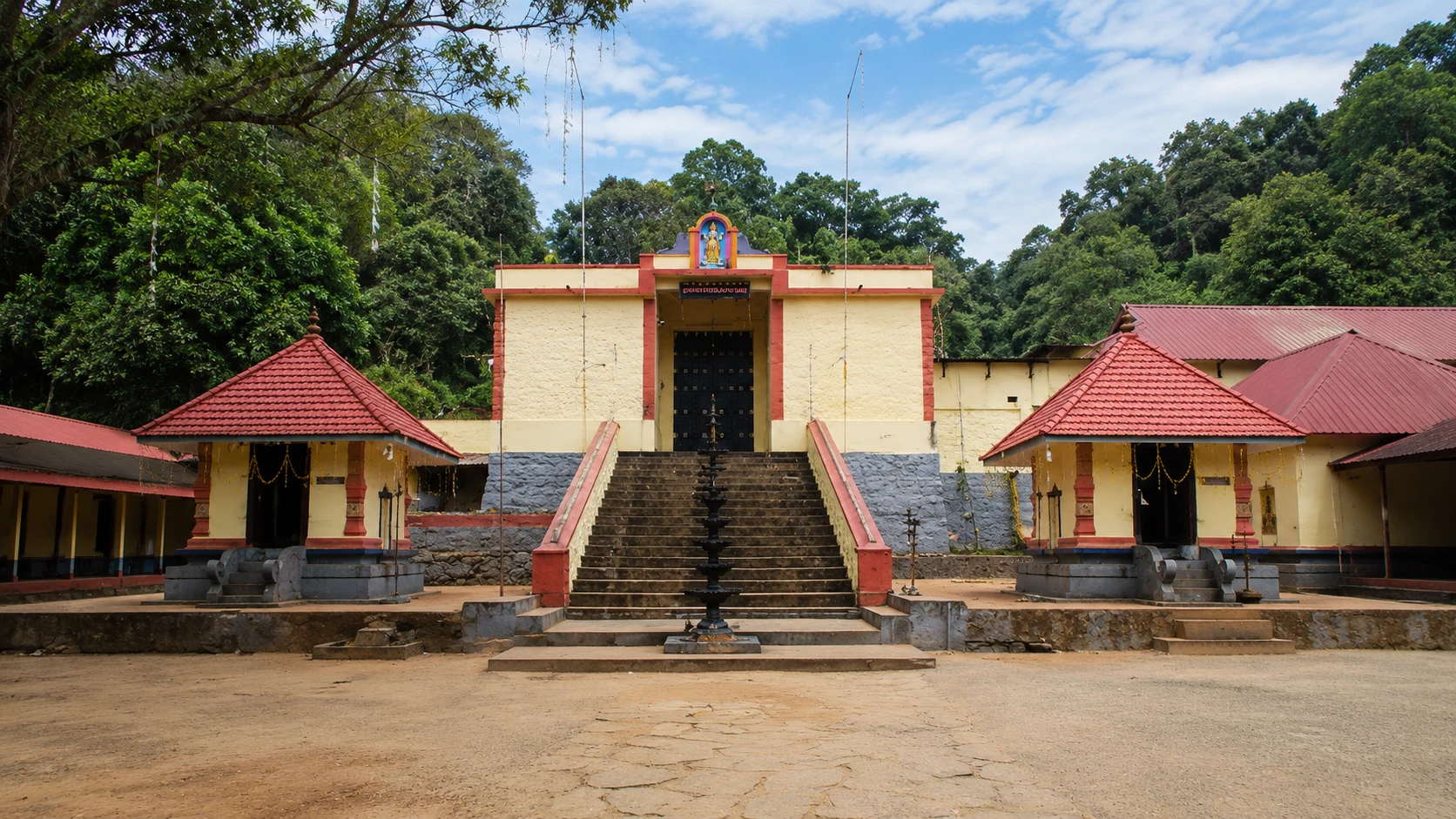
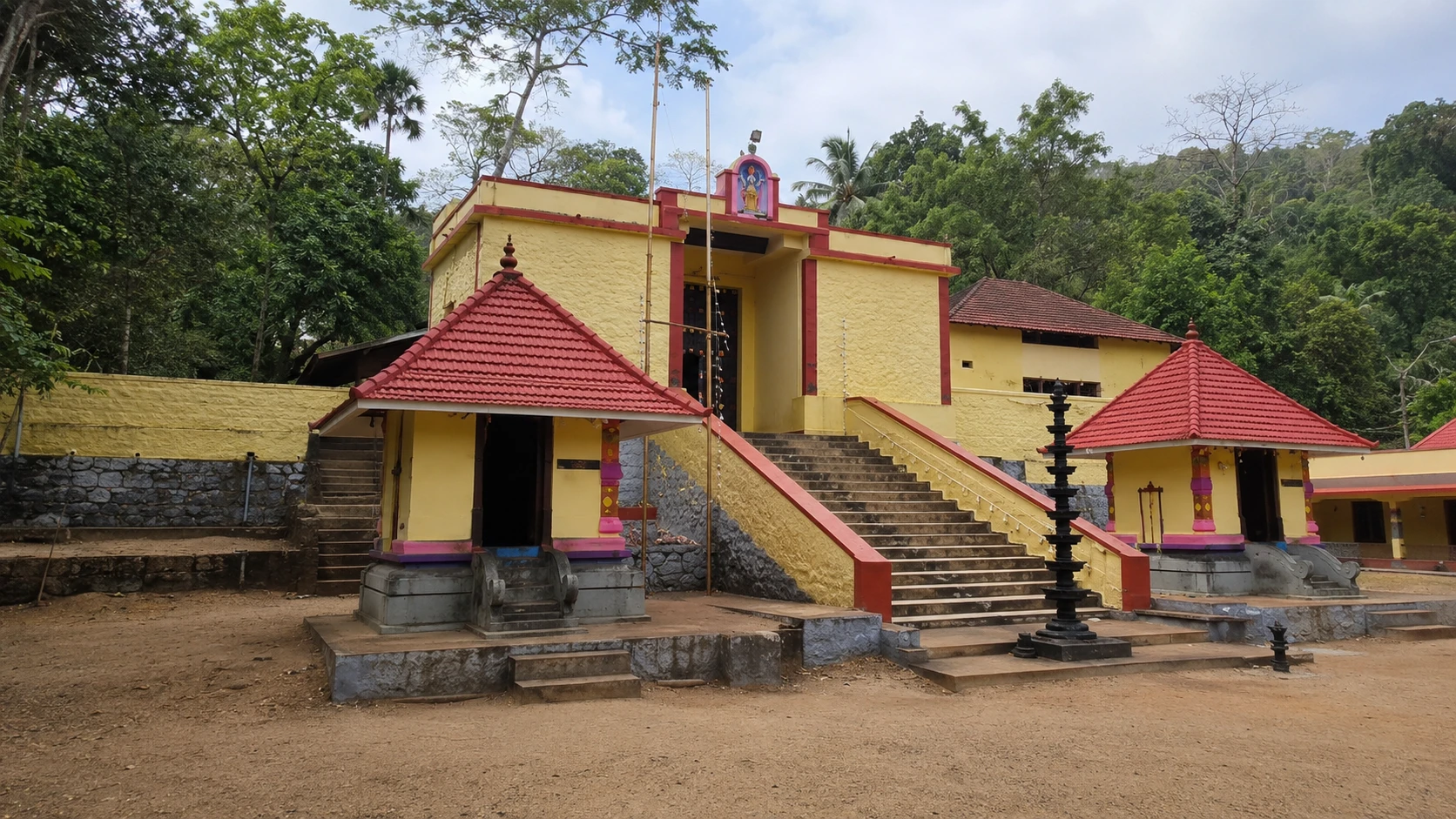
The Achankovil Sastha is enshrined in a seated posture between the divine consorts Poorna and Pushkala — the same triadic arrangement as at Aryankavu, expressing the Sashasthan's complete householder identity. Achankovilappan is flanked by Poorna on the right and Pushkala on the left. The deity's expression is traditionally described within the devotional literature as serene and deeply welcoming — the Sastha at rest in the forest, in the fullness of his domestic form rather than on active patrol or in combat posture. The forest setting of the temple intensifies the iconographic reading: the living jungle outside the sanctum, threaded through with the sound of the Achankovil River, forms the sensory context for the stillness of the enshrined deity. Photography inside the inner sanctum is not permitted.
Distinctive Practicesविशिष्ट परंपराएँ
The Achankovil Forest Route (Eastern Pada Yatra to Sabarimala)
अचनकोविल वन-मार्ग (सबरीमाला की पूर्वी पादयात्रा)
During Mandala and Makaravilakku seasons; most active November–January
For pilgrims approaching Sabarimala from the eastern Pathanamthitta valleys, the traditional forest foot-route passes through Achankovil. After taking darshan at the Achankovil Sastha temple — the householder Sastha's blessing received before entering the deeper forest — pilgrims continue northeast through the forest ranges, crossing streams and forest paths, toward the Sabarimala sannidhanam. This route, less heavily used than the Erumeli-based route or the Pampa motor-road approach, is the preferred path of pilgrims who know this particular stretch of forest and wish to approach the brahmachari summit through the forest's progressive deepening: from the householder heart at Achankovil to the ascetic peak at Sabarimala.
The Achankovil route enacts a theological progression that mirrors the Pancha Sastha circuit's own logic: the pilgrim moves from the householder Sastha (Achankovil) toward the brahmachari Sastha (Sabarimala), tracing in the physical landscape the same movement from engaged worldly life to renunciant stillness that the Ayyappa theology describes. Taking Achankovilappan's blessing — the blessing of the complete, consort-present, family-embracing Sastha — before ascending to the celibate summit is understood as the full traversal of Ayyappa's cosmic identity: not bypassing the householder dimension but honouring it on the way to the ascetic.
Did You Know?क्या आप जानते हैं?
Achankovil is the only temple in the Pancha Sabari Sastha circuit that sits on a traditional forest route directly connecting to the Sabarimala sannidhanam through uninterrupted forest terrain. The route from Achankovil to Sabarimala passes through the forests of the Konni–Achankovil range and the Periyar Tiger Reserve buffer zones — making it the most ecologically immersive of all the traditional Sabarimala approach routes, and the one most closely approximating what the original pada yatra pilgrimage through the unbroken Western Ghats forest would have looked and felt like.
Kerala Forest Department Konni division route documentation; Travancore Devaswom Board pada yatra route records
The Konni forest division surrounding Achankovil is home to the Konni Elephant Training Camp — one of Kerala's oldest captive elephant management facilities — established in the early 20th century. The facility, managed by the Kerala Forest Department, trains elephants used in temple festivals across the state, creating an unexpected but historically deep connection between the forest around Achankovil and the elephant-procession culture of Kerala's temple festivals, including the Sabarimala complex's own festival elephants.
Kerala Forest Department records on Konni Elephant Training Camp; Kerala Tourism documentation
While both Achankovil and Aryankavu share the same consorts — Poorna and Pushkala — and the same Sashasthan theological form, the two temples are understood within the pilgrimage tradition as complementary rather than duplicate. A common pilgrimage pattern for devotees seeking the full householder blessing combines both: Aryankavu is the threshold, where the pilgrim first encounters the Sashasthan at the pass between worlds; Achankovil is the heart, where the same form is encountered again in the silence of the deep forest. Together the two temples form a complete circuit of the householder Sastha's presence — from boundary to centre.
Kerala Tourism Pancha Sastha circuit documentation; Travancore Devaswom Board pilgrimage literature; comparative theological analysis of Sashasthan sites
The Achankovil River (Achankovilaru) originates in the Sabarimala hill complex and flows westward through the Konni forests to eventually merge with the Kallada River system before reaching the sea near Kollam. The river's source in the same highland that houses Sabarimala is devotionally significant — the water that flows past Achankovil Sastha comes from the mountain that houses the brahmachari form of the same deity. Pilgrims who bathe in the Achankovil before darshan are thus bathing in water that has, in a sense, descended from the deity's own seat.
Kerala River Basin Atlas; Western Ghats hydrological surveys; Achankovil River watershed documentation
Visitor Accessप्रवेश जानकारी
Achankovil Sastha temple has no entry restrictions based on gender or age. All devotees — including women of all ages — are welcome for darshan at all times. No mandatory vow or special clothing is required for general darshan, though pilgrims undertaking the Sabarimala yatra who pass through Achankovil on the traditional forest route continue wearing their vow-clothing. The absence of restriction is theologically grounded in the same Sashasthan principle as Aryankavu: the consort-present form of the deity creates a fully inclusive sacred space.
No advance registration is required. Modest dress is appropriate — traditional Kerala attire or simple clean clothing. Pilgrims approaching via the Achankovil forest route to Sabarimala should ensure they have verified Forest Department entry permissions for the forest sections beyond the temple.
Festivalsत्योहार
Ashtami Rohini Utsavam
अष्टमी रोहिणी उत्सवम्
Aug–Sep (Rohini nakshatra on Ashtami tithi, Chingam/Bhadra month)
The primary annual festival of Achankovil, observed as Ayyappa's birth anniversary. The festival involves special abhishekam for all three deities — Achankovilappan, Poorna, and Pushkala — decorated in festival regalia, with offerings of forest flowers alongside traditional ritual materials. The relatively remote forest setting means the Ashtami Rohini festival at Achankovil retains a quieter, more intimate character than the large-scale festivals at Aryankavu or Sabarimala — a quality many devotees specifically value.
Mandala Vilakku
मण्डल विलक्कू
Nov–Dec (coinciding with Sabarimala Mandala season)
Achankovil observes its Mandala Vilakku in tandem with the Sabarimala Mandala season — daily lamps and heightened pujas through the forty-one-day period. Pilgrims on the Achankovil forest route to Sabarimala pass through during this season, and the temple sees its highest annual footfall in these weeks as both Pancha Sastha circuit pilgrims and Sabarimala-bound pada yatris arrive.
Karkidaka Masa Special Puja
कर्कडक मास विशेष पूजा
July–August (Karkidakam, the Malayalam monsoon month)
Like Kulathupuzha, Achankovil observes special pujas during Karkidakam — the monsoon month associated with forest intimacy and Ramayana recitation in Kerala. During the heaviest monsoon weeks, the Achankovil River swells and the forest around the temple reaches its most lush and impenetrable state. The Karkidakam puja at Achankovil is understood as honouring the Sastha in the fullness of his forest domain — the season when the living jungle, which is inseparable from the deity's identity here, is most powerfully itself.
Traditional Offeringsपारंपरिक अर्पण
प्राथमिक अर्पण
Achankovil River Water (for abhishekam)
अचनकोविल नदी जल (अभिषेकम् के लिए)
Water drawn from the Achankovil River — which originates in the Sabarimala highland complex and flows past the temple through the Konni forest — is the primary sacred offering medium at this temple. As at Kulathupuzha with the Kallada, offering river water at Achankovil is an act of returning the forest's own gift to its divine source. The water's highland origin connects the offering directly to Sabarimala's terrain — pilgrims who bathe in the Achankovil River before darshan have immersed themselves in water from the same mountain that houses the brahmachari form of the same deity they are about to encounter in householder form.
Neyyabhishekam Coconut
नेय्याभिषेकम् नारियल
The ghee-filled coconut carried in the irumudi is offered here by pilgrims undertaking the Pancha Sastha circuit or the Achankovil forest route to Sabarimala. At Achankovil, the offering takes on the particular resonance of the householder form receiving the ego's surrender — the brahmachari summit lies ahead; the householder heart blesses the journey forward.
Kumkum and flowers for Poorna and Pushkala
पूर्णा और पुष्कला के लिए कुमकुम और फूल
As at Aryankavu, the divine consorts Poorna and Pushkala receive specific offerings at Achankovil — kumkum, flowers, and turmeric offered by women devotees seeking blessings for marriage, household prosperity, and fertility. The forest context adds a particular offering tradition: forest flowers gathered from the Konni range are considered especially appropriate for the consorts at this site, as their abundance and natural beauty embody the principles of Poorna (completeness) and Pushkala (luxuriance) in the living forest.
Offerings for all three deities are available from vendors near the temple. Forest flowers from the Konni range are locally available and are the traditional preference for the consort offerings at this site. Pilgrims approaching via the forest route should note that independently gathering forest materials within the Konni forest division is subject to Forest Department regulations.
How to Reachकैसे पहुँचें
Achankovil is located approximately 50 km from Pathanamthitta town, accessed via Konni. From Pathanamthitta, the road runs south via Konni through the forest range — the journey takes approximately 1.5–2 hours. From Kollam, the approach is via Punalur (~50 km from Punalur to Achankovil), a total journey of approximately 90–100 km from Kollam town. KSRTC buses operate between Pathanamthitta and Konni; onward transport from Konni to Achankovil is primarily by shared auto or private taxi.
The nearest railway stations are Punalur (~50 km, Kollam–Punalur metre-gauge line) and Chengannur (~75 km, main Kerala trunk line). From Chengannur, the approach via Pathanamthitta and Konni is approximately 2.5 hours.
The approach road from Konni to Achankovil passes through the Konni forest range — scenic but subject to monsoon disruption (June–September). Monsoon flooding can affect both the road and the Achankovil River banks near the temple. Verify road conditions before travel during this period. For pilgrims intending to continue on the Achankovil forest route toward Sabarimala, Forest Department entry permissions for the relevant forest sections must be obtained in advance.
Book a Pujaपूजा बुक करें
Achankovil Sastha Devaswom does not maintain an online booking portal. No verified phone numbers or email addresses are currently available for publication. Verify all operational details on arrival at the temple.
Managed by: Achankovil Sastha Devaswom Trust (local administration)
Abhishekam and archana for all three deities (walk-in)
तीनों देवताओं के लिए अभिषेकम् और अर्चना (वॉक-इन)
Booking information verified: 2026-05-23
Sacred Soundsपवित्र ध्वनि
क्या आप जानते हैं? · Did You Know?
वही अनुवाद त्रुटि जिसने हिन्दू धर्म में '33 कोटि' को '33 करोड़' बनाया, बौद्ध धर्म में भी हुई। बौद्ध ग्रन्थों के चीनी अनुवाद ने 'सप्त कोटि बुद्ध' (7 श्रेष्ठ बुद्ध) का अनुवाद '7 करोड़ बुद्ध' कर दिया। तिब्बती अनुवाद ने सही किया: 7 प्रकार, 7 करोड़ नहीं। एक संस्कृत शब्द, दो प्रमुख विश्व धर्मों में गलत पढ़ा गया, ने दो एकसमान भ्रम स्वतन्त्र रूप से उत्पन्न किए।
Related Contentसंबंधित सामग्री
Related Scriptures
Community Reflections
🕉️
Be the first to share your reflection.