Thirukurungudi Nambi
तिरुक्कुरुंगुडी
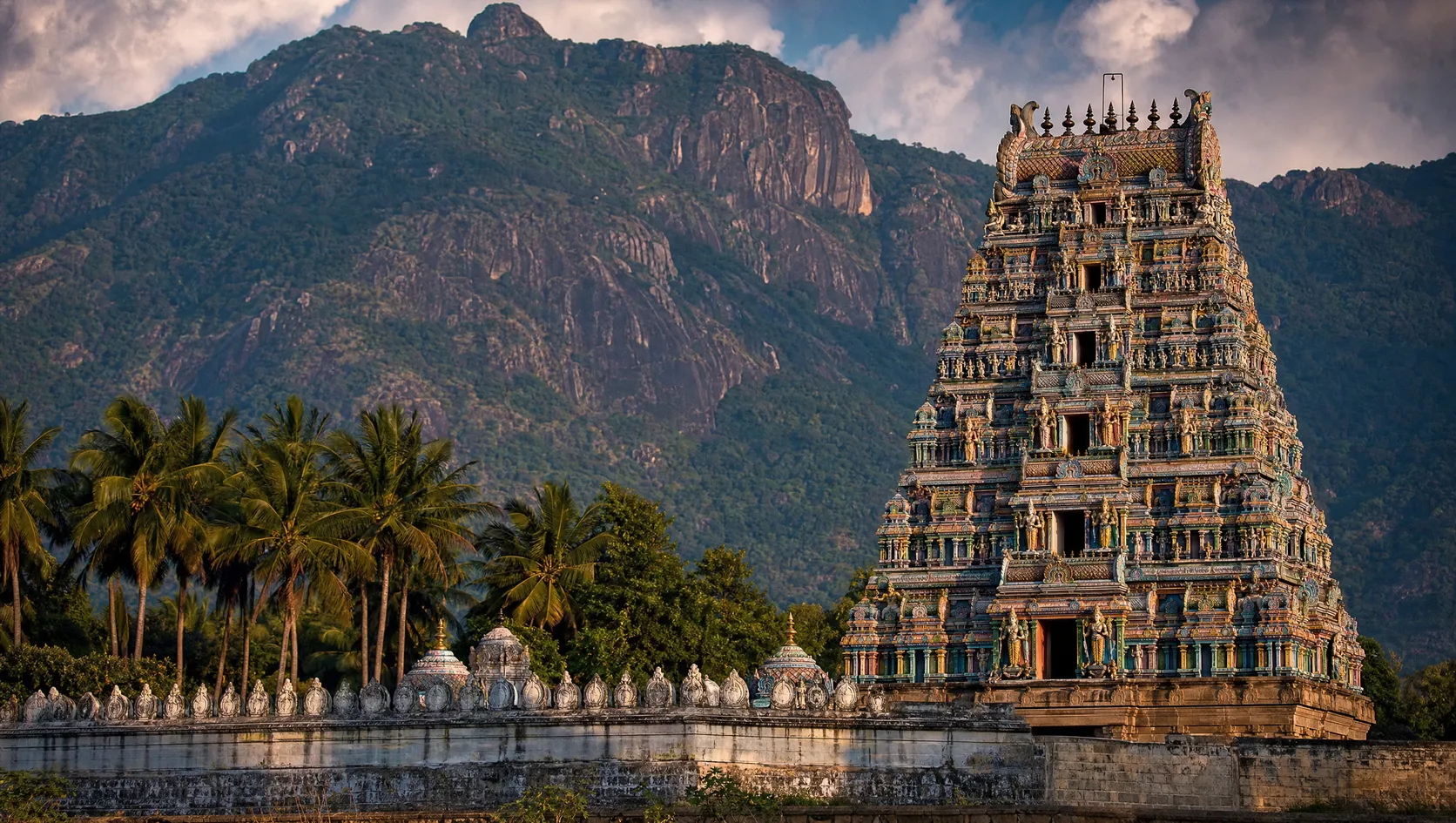
A Divya Desam at the foot of the Western Ghats, where Vishnu is worshipped as Nambi, the Trustworthy One, in five forms across the sthala
Thirukurungudi, Tamil Nadu, India
Tirukkuṟuṅkuḍi (Vaiṣṇava Nambi)Also known as: Thirukurungudi Nambi Temple, Vaishnava Nambi, Nambi Perumal Thirukurungudi
युग
An ancient temple sung by the Alvars in the first millennium, endowed and expanded under the Pandyas, the Vijayanagara empire and above all the Nayakas, whose fine woodcarving fills its mandapams
वास्तुकला
Dravidian, with a gopuram over the entrance, a spacious temple on the plain holding the standing, sitting and reclining forms of the Lord, and celebrated Nayaka-period wooden pillars and carved mandapams
खुला
07:00 – 20:00
विशेष
The temple observes the Srivaishnava round of daily worship to Nambi, with the recitation of the Nalayira Divya Prabandham at set occasions; the full pilgrimage extends beyond the main temple to the other forms of the Pancha Nambi, including the hill shrine of the Malai Nambi. Timings run in sessions with a midday break and vary with the festival calendar; they should be confirmed locally.
पवित्र कथा · पवित्र कथा
Among the hundred and eight Divya Desams, the abodes of Vishnu sung by the Alvar poet-saints, Thirukurungudi lies in the far south of the Tamil country, in the old land of Nanjil Nadu, at the very foot of the Western Ghats where the Mahendragiri hills rise green above the plain. Here Vishnu is worshipped by a name found almost nowhere else: he is Nambi, the Trustworthy One, the Lord in whom the devotee places an entire trust, and the temple and the town alike take their character from him. What makes Thirukurungudi unlike any other Divya Desam is that the Lord is not worshipped in a single form and a single place, but in five, the Pancha Nambi, spread across the sacred landscape of the sthala. In the great temple on the plain he stands as Ninra Nambi, the standing Lord; near him he sits as Irundha Nambi and reclines as Kidandha Nambi, the three postures of Vishnu gathered in one place; on the way to the hill he is Thiruparkadal Nambi, the Lord of the ocean of milk; and high on the Mahendragiri he is the Malai Nambi, the Lord of the hill, worshipped as Paramapada Nambi, the Lord of the highest heaven. To make the full pilgrimage of Thirukurungudi is to seek the one Nambi in all five of his forms, from the plain to the summit. The name Nambi carries the tradition's tenderest theme. The Lord who is trustworthy took, the sthala holds, a human form to walk among his devotees, so that the god of Thirukurungudi is remembered not as remote but as one who came near, who could be trusted because he had come close. Nammalvar, greatest of the Alvars, whose own town of Alwarthirunagari lies not far off, sang this Nambi, and Thirumangai Alvar sang him too, binding the little town at the foot of the Ghats into the Tamil scripture of Vishnu.
Sacred Designationपवित्र पदनाम
Sacred Origin Storyपवित्र उत्पत्ति कथा
Source: The Srivaishnava tradition and the Sthala Purana of Thirukurungudi, with the theme of the Lord as Nambi and the Pancha Nambi
The tradition of Thirukurungudi turns on the name Nambi, the Trustworthy One, and on the Lord's nearness to those who trust him. The sthala holds that Vishnu, worshipped here at the foot of the Ghats, is the Lord who does not stay distant but comes close, taking a human devotee-form to walk among his people, so that the god of this place is trusted because he made himself trustworthy by drawing near.
Around this name the sthala gathers its most cherished account, that the one Nambi shows himself here not once but five times, in five forms across the sacred landscape, the Pancha Nambi. In the great temple on the plain he stands, Ninra Nambi, the Lord who stands ready to receive the devotee; beside him he sits as Irundha Nambi and reclines in yoga-nidra as Kidandha Nambi, so that the three classic postures of Vishnu, standing, sitting and lying, are held in one town. On the path toward the hill he is Thiruparkadal Nambi, the Lord of the ocean of milk upon which Vishnu sleeps, and high on the Mahendragiri he is the Malai Nambi, the Lord of the hill, worshipped as Paramapada Nambi, bearing the name of the highest heaven itself.
The five forms make the whole sthala a single pilgrimage rising from the plain to the summit, the devotee seeking the one Lord in all his aspects and climbing at last to the hill where he is worshipped as the Lord of Paramapada, the abode beyond the worlds. To come to Thirukurungudi is to be told that the Lord is trustworthy, that he comes near, and that he waits in five forms for the one who will seek him from the plain to the peak.
उद्धृत स्रोत:
- Sthala Purana of Thirukurungudi
- Srivaishnava tradition and the Nalayira Divya Prabandham
- The hymns of Nammalvar and Thirumangai Alvar on the Nambi
अन्य परंपराएँ · अन्य परंपराएँ
The Srivaishnava tradition on Nammalvar and the Nanjil Nadu country
विद्वत संदर्भ
Thirukurungudi is studied as one of the southernmost Divya Desams, set in the Tirunelveli region at the foot of the Western Ghats, in the historic Nanjil Nadu country that lay between the Pandya lands and the Kerala coast. Its antiquity is attested by the hymns of the Alvars, above all Nammalvar and Thirumangai Alvar, whose activity is placed across the middle centuries of the first millennium, giving the shrine an established sanctity of great age. The physical temple was endowed and expanded under the successive powers of the far south, the Pandyas, the Vijayanagara empire and the Madurai Nayakas, and it is the Nayaka period above all that gives the temple its distinctive character: the mandapams of Thirukurungudi are celebrated for their fine wooden pillars and carved timber-work, among the notable survivals of Nayaka woodcarving in the temples of the Tamil south, where sculpted wood takes the place more usually held by stone. Scholars note the temple's most unusual feature, the Pancha Nambi, the worship of the one Lord in five distinct forms and locations of the sthala, from the standing image in the main temple to the hill shrine of the Malai Nambi on the Mahendragiri, a pattern that turns the whole landscape into a single graded pilgrimage. The name Nambi, the Trustworthy One, and the tradition of the Lord's human devotee-form are treated as expressions of the intimate, personal devotion of the Srivaishnava south, the god drawn near to those who trust him.
Historyइतिहास
Thirukurungudi is one of the 108 Divya Desams, the abodes of Vishnu sung by the Alvars, and among the southernmost of them, set in the Tirunelveli region of far southern Tamil Nadu at the foot of the Western Ghats, in the old Nanjil Nadu country. Here Vishnu is worshipped as Nambi, the Trustworthy One, and the shrine is distinctive above all others for the Pancha Nambi, the worship of the one Lord in five forms spread across the sacred landscape, from the standing image in the temple on the plain to the Malai Nambi high on the Mahendragiri hill.
The temple's importance is attested from deep antiquity by the hymns of the Alvars. Nammalvar, the greatest of them, whose birthplace of Alwarthirunagari lies not far away in the same southern country, sang the Nambi, and Thirumangai Alvar sang him too, gathering Thirukurungudi into the Nalayira Divya Prabandham, the Tamil scripture of Vishnu, and binding this town at the foot of the Ghats into the wider devotional landscape of the far south.
The physical temple grew over many centuries under the powers of the southern country. The Pandyas, whose land this was, endowed and built here; the Vijayanagara emperors extended their patronage to the far south; and above all the Madurai Nayakas of the sixteenth and seventeenth centuries enriched the temple, leaving it the fine wooden pillars and carved mandapams for which it is celebrated. The woodcarving of Thirukurungudi, sculpted timber where other temples work in stone, is among the notable survivals of Nayaka craftsmanship in the Tamil country, and gives the temple a character all its own.
Throughout, the shrine remained bound to the Srivaishnava tradition and to the memory of the Alvars, above all Nammalvar, so that the worship of the Nambi is carried on with the recitation of the Prabandham beside the Sanskrit Veda, and the great festivals of the Srivaishnava year are kept here as at the other Divya Desams. The town of Nanjil Nadu, lying between the Pandya country and the Kerala coast, gave the temple a distinct regional flavour, and local traditions of the far south are woven through its worship.
Today Thirukurungudi remains a living Divya Desam, administered under the Tamil Nadu religious endowments framework and drawing pilgrims who come to seek the Nambi in all five of his forms, from the plain to the summit of the hill. Its great annual car festival, the Vaikasi Brahmotsavam and the Adhyayana Utsavam of the Prabandham keep the old devotion alive at the foot of the Western Ghats.
Historical Timelineऐतिहासिक कालक्रम
Nammalvar, the greatest of the Alvars, whose birthplace of Alwarthirunagari lies nearby in the same southern country, sings the Nambi of Thirukurungudi, and Thirumangai Alvar sings him too, giving the shrine an attested sanctity of great antiquity in the Nalayira Divya Prabandham.
The Alvars' activity is generally placed across the middle centuries of the first millennium; their hymns are the earliest firm evidence of Thirukurungudi's importance as a Divya Desam.
Under the Pandyas, whose country embraced the far south, the temple is endowed and built up, establishing Thirukurungudi as an important Vaishnava shrine of the Nanjil Nadu region.
The temples of the far south carry inscriptions of successive southern dynasties recording endowments over many centuries.
With the organisation of the Srivaishnava community under Ramanuja and the acharyas, the Divya Desams of the far south, Thirukurungudi among them, are held firmly within the tradition of loving surrender to Vishnu, their worship shaped to the Srivaishnava pattern.
The far southern Divya Desams around the Tamraparni are closely tied to the memory of Nammalvar and to the Srivaishnava tradition that grew around the Alvars.
The temple continues under the later Pandyas and the shifting powers of the far south, keeping its place as a living Divya Desam through a period of political change in the Tamil country.
The Vijayanagara empire extends its patronage to the temples of the far south, and Thirukurungudi shares in the endowment and building activity of the period, its shrines and halls enlarged under the empire and its governors.
The Madurai Nayakas enrich the temple most of all, endowing it and adding the mandapams whose fine wooden pillars and carved timber-work make Thirukurungudi celebrated among the temples of the Tamil south for its Nayaka woodcarving.
The wooden pillars and carved mandapams of Thirukurungudi are among the notable survivals of Nayaka woodcarving in the Tamil country, where sculpted timber takes the place more usually held by stone.
Under the local chieftains and rulers of Nanjil Nadu and the surrounding far south, the temple continues its worship and festivals, the Pancha Nambi tradition kept across the plain and the hill.
The temple and the Divya Desams of the far south are recorded in colonial-era surveys and gazetteers of the Tirunelveli region, which note the shrine of the Nambi, its Nayaka woodwork and its place among the abodes sung by the Alvars.
The temple passes under the Tamil Nadu religious and charitable endowments administration, which oversees its worship, upkeep and festivals, and conservation attention turns to the preservation of its distinctive wooden carvings.
The wooden work of the mandapams calls for particular care, timber being more vulnerable than stone to the passage of time.
Thirukurungudi remains a living Divya Desam, drawing pilgrims who seek the Nambi in all five of his forms, from the standing Lord in the temple on the plain to the Malai Nambi on the Mahendragiri, and keeping the great festivals, the Vaikasi Brahmotsavam, the annual car festival, Vaikuntha Ekadasi and the Adhyayana Utsavam.
What You'll Seeदर्शन में
The presiding image of Thirukurungudi is the Nambi, Vishnu worshipped in the main temple on the plain as Ninra Nambi, the standing Lord, upright and ready to receive the devotee who comes to trust him. This is the Moolavar, the immovable image in the sanctum, the first and chief of the five forms in which the one Lord shows himself across the sthala.
What sets Thirukurungudi apart is precisely this multiplication of the one god into the Pancha Nambi. Beside the standing Lord, the tradition holds the Irundha Nambi, the sitting form, and the Kidandha Nambi, the reclining form in yoga-nidra, so that the three classic postures of Vishnu, standing, seated and lying upon the serpent, are gathered within one sacred town. On the way toward the hill is the Thiruparkadal Nambi, the Lord of the ocean of milk, and high on the Mahendragiri stands the Malai Nambi, the Lord of the hill, worshipped as Paramapada Nambi, bearing the name of the highest heaven. The whole landscape becomes an iconographic field, the one Nambi seen in aspect after aspect from the plain to the summit.
The consort of the Nambi is Kurungudivalli Nachiyar, Kurunguditha Valli, who has her own shrine within the temple, so that the Lord and the Goddess are each worshipped in their own precinct as at the other Divya Desams. Beside the deities, the iconography of Thirukurungudi is carried as much by its woodwork as by its images: the mandapams are filled with the fine carved wooden pillars of the Nayaka period, sculpted timber where other temples work in stone, and these carvings, of deities, attendants and ornament, are among the notable features of the temple. The standing Nambi at the centre, the five forms across the sthala, the Goddess in her shrine, and the carved wooden halls around them, together make the distinctive iconographic pattern of Thirukurungudi.
Distinctive Practicesविशिष्ट परंपराएँ
The Pilgrimage of the Pancha Nambi
पंच नम्बि की तीर्थयात्रा
Year-round, and most fully on festival occasions
The devotee of Thirukurungudi seeks the one Lord not in a single sanctum but in five forms across the sthala: the standing Ninra Nambi, the sitting Irundha Nambi and the reclining Kidandha Nambi in and around the main temple, the Thiruparkadal Nambi on the way, and the Malai Nambi, worshipped as Paramapada Nambi, high on the Mahendragiri hill. The full pilgrimage rises from the plain to the summit, seeking the Nambi in aspect after aspect.
The five forms make a single doctrine walkable. The one Lord, standing, sitting, reclining, upon the ocean and upon the hill, is met in each of the modes in which Vishnu is worshipped, and the climb from the plain to the Malai Nambi, the Lord of Paramapada, enacts bodily the ascent from the ordinary world to the highest heaven. To seek all five forms is to be told that the one Nambi holds all these aspects, and that the devotion which begins on the plain finds its goal at the summit, in the Lord of the abode beyond the worlds.
Recitation of the Nalayira Divya Prabandham
नालायिर दिव्य प्रबंधम् का पाठ
Daily in worship, and centrally in the Adhyayana Utsavam
The Tamil hymns of the Alvars, above all those of Nammalvar, whose town lies nearby, are recited in the worship of the Nambi beside the Sanskrit Veda, and are chanted in full during the Adhyayana Utsavam, the festival of the recitation of the Prabandham, a central observance of the Srivaishnava year kept here as at the other Divya Desams.
That the Tamil hymns are given standing beside the Sanskrit Veda is the defining claim of Srivaishnavism: the Prabandham is the Dravida Veda, the Veda in Tamil, and the Alvars are seers on a level with the ancient rishis. At Thirukurungudi, sung by Nammalvar himself, to recite the Prabandham before the Nambi is to worship the Lord in the very words in which the greatest of the Alvars, a son of this southern soil, praised him, keeping the hymns not as text but as living offering.
Ascent to the Malai Nambi on the Mahendragiri
महेन्द्रगिरि पर मलै नम्बि तक आरोहण
Year-round, with particular observances on festival days
Beyond the temple on the plain, devotees climb to the hill shrine of the Malai Nambi, the Lord of the hill, worshipped as Paramapada Nambi high on the Mahendragiri. The ascent through the wooded slopes of the Western Ghats to the shrine of the Lord of the highest heaven is a distinct pilgrimage in itself, undertaken to complete the round of the five forms.
The hill shrine gives the pilgrimage its summit and its meaning. To climb from the plain to the Malai Nambi, worshipped as the Lord of Paramapada, the abode beyond the worlds, is to make the ascent to heaven a thing walked with the body, the wooded slopes of the Ghats standing for the rising path of the soul. The Lord who is trustworthy on the plain is the Lord of the highest heaven on the hill, and the devotee who climbs to him is shown that the trust begun below leads at last to the summit.
Veneration of the Nayaka Woodcarvings
नायक काष्ठ-शिल्पों की श्रद्धा
Year-round, within the carved mandapams
The mandapams of Thirukurungudi are filled with fine carved wooden pillars and timber-work of the Nayaka period, sculpted with deities, attendants and ornament. Devotees pass through these carved halls on their way to the Nambi, and the woodwork is honoured as part of the sacred fabric of the temple, sculpted wood taking the place more usually held by stone.
The carved wooden halls are not mere ornament but a form of worship in themselves, the labour and skill of generations offered to the Nambi in sculpted timber. To pass through them on the way to the Lord is to move through an offering made in wood, and the tradition honours the carvings as the temple's inheritance, a devotion set down in a material more tender and more perishable than stone, and so held all the more carefully as a trust passed from the makers of the past to the devotees of the present.
Did You Know?क्या आप जानते हैं?
Thirukurungudi is one of the 108 Divya Desams, the abodes of Vishnu sung by the Alvars, set at the very foot of the Western Ghats in the far south of Tamil Nadu.
Srivaishnava tradition
Vishnu is worshipped here as Nambi, the Trustworthy One, a name found almost nowhere else, and the tradition holds that the Lord took a human devotee-form to draw near to his people.
Sthala Purana of Thirukurungudi
The temple is unique for the Pancha Nambi, the worship of the one Lord in five forms across the sthala: Ninra (standing), Irundha (sitting), Kidandha (reclining), Thiruparkadal, and the Malai Nambi on the hill.
Sthala tradition of the Pancha Nambi
The Malai Nambi, high on the Mahendragiri hill, is worshipped as Paramapada Nambi, the Lord of the highest heaven, so the pilgrimage of the five forms rises from the plain to the summit.
Sthala tradition
The temple's mandapams are celebrated for their fine Nayaka-period wooden pillars and carved timber-work, among the notable survivals of woodcarving in the temples of the Tamil south.
Temple surveys
Thirukurungudi was sung by Nammalvar, the greatest of the Alvars, whose birthplace of Alwarthirunagari lies nearby, and by Thirumangai Alvar, in the Nalayira Divya Prabandham.
Nalayira Divya Prabandham
The temple lies in the old Nanjil Nadu country, which lay between the Pandya lands and the Kerala coast, giving its worship a distinct far-southern regional flavour.
Regional tradition of Nanjil Nadu
The consort of the Nambi is Kurungudivalli Nachiyar, also called Kurunguditha Valli, worshipped in her own shrine within the temple.
Temple tradition
In the one town the three classic postures of Vishnu, standing, sitting and reclining, are worshipped together in the forms of the Nambi, a rare gathering of the god's aspects in a single sthala.
Sthala tradition of the Pancha Nambi
Visitor Accessप्रवेश जानकारी
The temple is open to all Hindus, and the inner sanctum of the Nambi is reached through the temple's halls and enclosures. As at many major Vaishnava temples of the south, entry to the innermost precinct is restricted to Hindus, and worshippers are asked to dress traditionally and to leave footwear outside the temple. The full pilgrimage of Thirukurungudi extends beyond the main temple on the plain to the other forms of the Pancha Nambi, including the hill shrine of the Malai Nambi on the Mahendragiri, which involves a climb and is best undertaken with time in hand and local guidance. Within the temple, the carved wooden mandapams are part of the route to the sanctum. Timings run in sessions through the day with a midday closure, and vary with the festival calendar, above all during the Vaikasi Brahmotsavam and the car festival. Confirm current timings, the arrangements for the hill shrine and any restrictions locally before visiting.
आध्यात्मिक आधार
The restriction of the innermost precinct to Hindus follows the practice of the major Vaishnava temples of the south, which preserve the ritual purity of the sanctum according to their tradition. It is not a denial of the Lord's accessibility but an ordering of the approach to him: the Nambi is the Trustworthy One, the Lord who draws near to his devotees, and the graded passage inward through the halls of the temple orders that nearness rather than withholding it. The Pancha Nambi gives the whole sthala a spiritual shape that the pilgrim moves through. To seek the Lord in his five forms, and above all to climb from the plain to the Malai Nambi on the hill, is to make the approach to the god a graded ascent from the ordinary world to the Lord of Paramapada, the highest heaven. The forms and the climb are the tradition's way of teaching that the trust placed in the Nambi below leads the devotee upward to the abode beyond the worlds.
समकालीन संदर्भ
Thirukurungudi is a living Divya Desam rather than a crowded pilgrimage centre on the scale of the great temples, and a visit on an ordinary day is unhurried, with room to see the standing Nambi, the other forms and the carved wooden halls at leisure. The town lies in a rural setting at the foot of the Ghats, and the temple is its heart. The great festivals, above all the Vaikasi Brahmotsavam and the annual car festival, draw far larger crowds, when the processional Nambi is taken through the streets and the town fills with pilgrims. On those days visitors should expect crowds and adjusted arrangements. The hill shrine of the Malai Nambi involves a climb and is visited by the more determined pilgrims and by those completing the full round of the five forms; its access should be checked locally, as it depends on the season and the day.
व्यावहारिक मार्गदर्शन
Allow time to see the principal forms of the Nambi in and around the main temple, the standing, sitting and reclining Lord, along with the shrine of Kurungudivalli Nachiyar and the carved wooden mandapams for which the temple is known. To complete the full round of the Pancha Nambi, including the Thiruparkadal Nambi and the Malai Nambi on the hill, plan for a longer visit and seek local guidance on the hill shrine, which involves a climb. Dress traditionally and leave footwear outside the temple. Non-Hindu visitors can see much of the temple and its woodwork but should note the restriction at the innermost precinct. The temple is reached from Nanguneri and Tirunelveli, and is well combined with the other Divya Desams of the far south, above all the Nava Tirupati around Alwarthirunagari, the towns associated with Nammalvar. Confirm timings, festival dates and hill-shrine access locally before travelling.
Festivalsत्योहार
Vaikasi Brahmotsavam
वैकासि ब्रह्मोत्सवम्
May-Jun (Vaikasi)
The great annual Brahmotsavam of the temple, over which the processional Nambi is taken through the streets on the many vahanas across its days, the fullest celebration of the Lord's public presence in the town, drawing pilgrims from across the far south.
Car Festival (Ther)
रथ-उत्सव (तेर)
During the Vaikasi Brahmotsavam
The great car festival, when the processional Nambi is drawn through the streets on the temple ther, the towering wooden chariot, hauled by the gathered devotees. It is among the most thronged occasions of the temple's year and the high point of the Brahmotsavam.
Vaikuntha Ekadasi
वैकुण्ठ एकादशी
Dec-Jan (Margazhi)
The great Vaishnava festival of the gate of heaven, kept at Thirukurungudi as at the Divya Desams, when the Nambi is worshipped with special observance and devotees seek his grace on the day held sacred to the passage into Vaikuntha, fittingly at a shrine whose hill form is worshipped as the Lord of Paramapada.
Adhyayana Utsavam
अध्ययन उत्सवम्
Dec-Jan (Margazhi)
The festival of the recitation of the Nalayira Divya Prabandham, when the Tamil hymns of the Alvars, above all those of Nammalvar who sang this Nambi, are chanted in full over its days before the Lord, a central observance of the Srivaishnava year.
Traditional Offeringsपारंपरिक अर्पण
प्राथमिक अर्पण
Tulasi (holy basil)
तुलसी
तुलसी
Tulasi, the holy basil beloved of Vishnu, is the offering most proper to the Nambi as to any form of Vishnu, laid at his feet and woven into his garlands. No worship of Vishnu is complete without it, and at Thirukurungudi it is offered to the standing Lord and to the other forms of the Pancha Nambi.
Sacred food (prasadam)
प्रसाद
नैवेद्यम्
Cooked food is offered to the Nambi and shared with devotees as prasadam, the Lord's grace made tangible. To receive the prasadam of the temple is to carry away a share of what has been placed before the god, the meal that has passed through his presence.
Garlands of flowers
पुष्प-मालाएँ
पुष्पमाला
Garlands of flowers, with tulasi, are offered to the Nambi and to the goddess Kurungudivalli Nachiyar, and garlands that have adorned the deity are returned to devotees as a blessing carrying the touch of the Lord.
Sandal and vastra (cloth)
चंदन और वस्त्र
चन्दनम्
Sandal paste and offerings of cloth are made to the Nambi in the temple's worship, adorning and honouring the Lord. The cool sandal and the fresh vastra are among the customary marks of respect offered to Vishnu in his shrines and are given to the standing Nambi in his daily service.
Recitation of the Prabandham and the Sahasranama
प्रबंधम् और सहस्रनाम का पाठ
स्तोत्रपाठः
Beyond material offerings, the recitation of the Alvars' Tamil hymns, above all those of Nammalvar, and of the Vishnu Sahasranama, the thousand names of Vishnu, is held a high offering to the Nambi, the god worshipped as much in sung word as in flower and food. At Thirukurungudi, sung by Nammalvar himself, the offering of hymn is close to the heart of the shrine.
इस मंदिर की विशेषता
The Trust of the Devotee to the Nambi
नम्बि को भक्त का विश्वास
What is particular to Thirukurungudi is that its highest offering answers the very name of the Lord. He is Nambi, the Trustworthy One, and the offering the tradition holds dearest is the trust of the devotee, the placing of oneself in the hands of the Lord who came near and made himself worthy of trust. A pilgrim brings tulasi, flowers and food as at any shrine of Vishnu, but the offering the sthala holds highest is the turning of the heart to the Nambi in trust, and above all the completing of the round of the five forms, the seeking of the Lord from the plain to the Malai Nambi on the hill, worshipped as the Lord of Paramapada. The devotee gives his trust, and the Lord who is trustworthy receives him and leads him upward to the highest heaven.
Offerings at Thirukurungudi follow the Srivaishnava tradition, with tulasi, flowers, garlands, sandal and prasadam central, and the recitation of the Prabandham and the Vishnu Sahasranama held as offerings of word. Eternal Raga presents these practices as a devotional tradition; specific seva and offering arrangements, including those for the hill shrine of the Malai Nambi, should be confirmed with the temple.
How to Reachकैसे पहुँचें
Thirukurungudi lies in Tirunelveli district in far southern Tamil Nadu, at the foot of the Western Ghats, in the old Nanjil Nadu country, and is reached through the towns of the far south.
By air: Tuticorin (Thoothukudi) Airport is the nearest airport; Madurai Airport, larger and better connected, is the main gateway within reach for those coming from further afield.
By rail: Tirunelveli Junction is the major railhead serving the area, connected to Chennai, Madurai and the wider network; from there the temple is reached by road.
By road: Thirukurungudi is reached from Nanguneri, the nearest town, and from Tirunelveli by road, served by buses and taxis through the plain below the Ghats. The temple stands at the heart of the town, with the Mahendragiri hills rising behind it.
Many pilgrims combine Thirukurungudi with the other Divya Desams of the far south, above all the Nava Tirupati around Alwarthirunagari, the group of shrines along the Tamraparni associated with Nammalvar, and with the great temples of Tirunelveli, making a pilgrimage of the southern abodes of Vishnu.
Plan Your Visitयात्रा की योजना
🌤 सर्वोत्तम मौसम
October to March is the most comfortable time to visit, with milder weather in the far south and pleasant conditions for the temple and, for the determined, the hill shrine of the Malai Nambi. The cool months make the climb to the hill easier and the plain more agreeable. The Vaikasi Brahmotsavam and the car festival fall around May-June (Vaikasi), a hot but spiritually rich season and the temple's greatest occasion, drawing the largest crowds. The Margazhi month (December-January) brings Vaikuntha Ekadasi and the Adhyayana Utsavam of the Prabandham. The southwest and northeast monsoons bring rain to the Ghats, and the hill shrine in particular is best approached in dry weather. Early morning and evening are the most atmospheric times at the temple, when worship is active and the heat of the plain is least.
👘 पहनावे का नियम
Traditional and modest dress is required. Men commonly wear a dhoti or trousers with a shirt; women a saree or salwar kameez. Footwear is left outside the temple. As a Vaishnava Divya Desam, Thirukurungudi expects respectful traditional attire, and those climbing to the hill shrine should also dress for the walk.
📱 फोन और फोटोग्राफी
Photography is generally restricted within the inner enclosures and the sanctum, and the carved wooden mandapams may have their own rules. Follow the posted notices and the directions of temple staff, keep phones silenced within the shrines, and ask before photographing the woodwork or the deities.
🏨 आवास
Thirukurungudi is a small town, and while there is basic lodging nearby, most visitors base themselves in the larger towns of the far south, above all Tirunelveli and Nanguneri, which offer a fuller range of hotels and guest houses a short drive from the temple. Demand rises around the Vaikasi Brahmotsavam and the car festival, when the town fills with pilgrims and booking ahead in the nearby towns is advisable. Outside the great festivals the area is quiet, and a visit can be made unhurried, with the temple and the hill shrine seen at leisure.
Sacred Soundsपवित्र ध्वनि
क्या आप जानते हैं? · Did You Know?
वही अनुवाद त्रुटि जिसने हिन्दू धर्म में '33 कोटि' को '33 करोड़' बनाया, बौद्ध धर्म में भी हुई। बौद्ध ग्रन्थों के चीनी अनुवाद ने 'सप्त कोटि बुद्ध' (7 श्रेष्ठ बुद्ध) का अनुवाद '7 करोड़ बुद्ध' कर दिया। तिब्बती अनुवाद ने सही किया: 7 प्रकार, 7 करोड़ नहीं। एक संस्कृत शब्द, दो प्रमुख विश्व धर्मों में गलत पढ़ा गया, ने दो एकसमान भ्रम स्वतन्त्र रूप से उत्पन्न किए।
Related Contentसंबंधित सामग्री
Related Scriptures
Community Reflections
🕉️
Be the first to share your reflection.