Vitthal (Pandharpur)
विठ्ठल पंढरपुर
The God who came to visit and was asked to wait — and has been waiting ever since
Pandharpur, Maharashtra, India
Viṭṭhala Mandira, PaṇḍharpuraAlso known as: Vitthal Rukmini Mandir, Vithoba Temple, Pandurang Mandir, Shri Vitthal-Rukmini Devasthan
युग
Temple antiquity traditionally traced to at least the early medieval period (c. 8th–9th century CE); documented in Varkari literature from the 13th century; current structure has evolved through multiple renovations
वास्तुकला
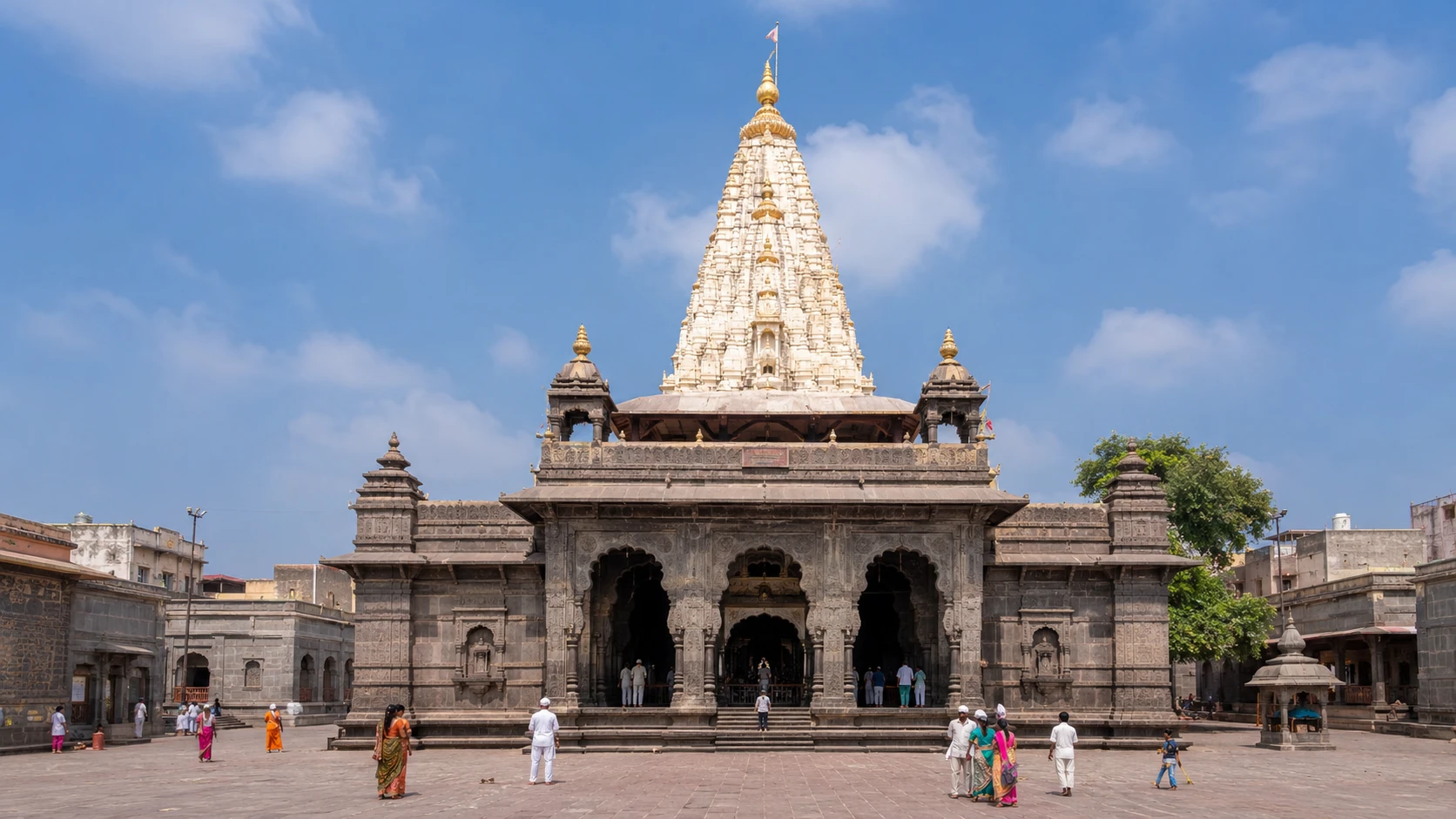
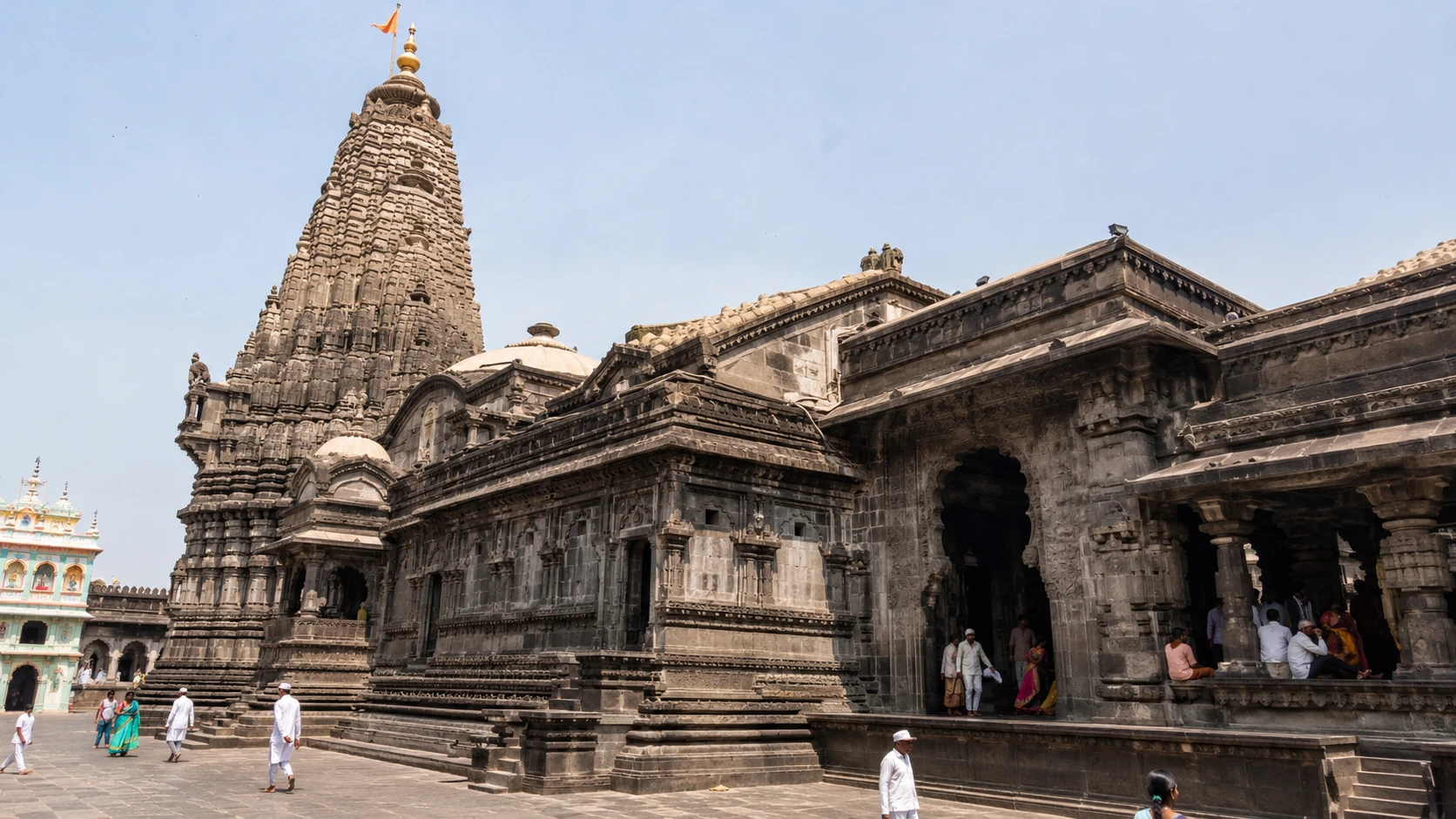
Hemadpanthi / Yadava-era Karnataka-Desh vernacular — basalt stone construction, distinctive shikhara (tower), carved facade; principal sanctum faces east toward the Chandrabhaga
खुला
04:30 – 21:00
आरती
04:30 · 07:00 · 11:00 · 16:00 · 19:30
विशेष
The temple undergoes peak-period protocols during Ashadhi Ekadasi (June–July) and Kartiki Ekadasi (October–November), when millions of Varkari pilgrims arrive simultaneously. Separate darshan queues and crowd management measures apply during Wari periods. Midday break approximately 12:30–16:00; timings subject to seasonal adjustment — verify with the Vitthal Rukmini Mandir Samiti.
पवित्र कथा · पवित्र कथा
Pundalik was a devoted son, serving his aged parents at Pandharpur, when Krishna himself came to the door. Krishna — having left Dwaraka and journeyed south specifically to meet his greatest devotee — arrived at the threshold. But Pundalik was absorbed in his service. Without interrupting it, he picked up the brick he had been kneeling on and threw it toward the doorway: 'Wait there, Lord.' And Vishnu waited. He stood on the brick with his arms on his hips — a posture that said neither reproach nor impatience, only: I am here. I will be here. Take your time. That stance is what devotees encounter today in the sanctum at Pandharpur: Vitthal — arms akimbo on hips, standing on his vīṭhā — the Lord who is not approached with pomp and supplication but met, face to face, as a friend who has been waiting at the door. For seven centuries, the Varkari saints of Maharashtra have walked hundreds of miles twice a year to reach this meeting. They bring nothing that requires ceremony. They come because Vitthal is already there.
Sacred Origin Storyपवित्र उत्पत्ति कथा
Source: Varkari Sampradaya, Maharashtra (founded by the Varkari saints from the 13th century CE onwards; core texts include the abhangas of Dnyaneshwar, Namdev, Eknath, and Tukaram, and the Skanda Purana's Pandharpur Mahatmya)
The foundational myth of Pandharpur centres on Pundalik — a householder so devoted to the service of his parents that the Lord himself came to his door and was told to wait. The Pandharpur Mahatmya (in the Skanda Purana) and the Bhaktavijaya of Mahipati (18th century) give the full account: Pundalik had been a dissolute young man who treated his parents badly. Travelling to Kashi, he encountered the sage Kukkutaswami and was transformed; recognising his neglect, he returned home and devoted himself to his parents' care with the intensity of a man reborn. Word of his transformation reached Dwaraka — the tradition says that Krishna, from his heavenly abode, could not resist visiting a devotee of such calibre. Krishna, accompanied by Rukmini, arrived at Pundalik's humble dwelling on the banks of the Chandrabhaga.
But Pundalik was massaging his father's legs when they arrived. He did not stop. Looking up at the radiant figure at the threshold, he picked up the brick on which he had been kneeling — without interrupting his service — and slid it toward the doorway. 'Lord, stand on this and wait.' The Lord stood. He placed his arms on his hips (the katyavalambita posture) and waited on the brick. When Pundalik finally completed his service and came to the door, he found the Lord standing there, smiling — the arms still on the hips, the posture of one who has been waiting with perfect contentment and who is in no hurry at all because love does not hurry.
Pundalik prostrated himself. He asked the Lord to remain at Pandharpur — not to return to Dwaraka but to stay on the Chandrabhaga banks for all those who would come after. The Lord agreed. This is why Vitthal stands where he stands: not because of conquest or consecration in the conventional sense, but because a devotee asked him to, and he was moved enough by the asking to say yes.
उद्धृत स्रोत:
- Skanda Purana, Sahyadri Khanda — Pandharpur Mahatmya (primary Puranic source for the Pundalik legend)
- Mahipati, 'Bhaktavijaya' (18th century, Marathi) — major Varkari hagiography
- G.A. Deleury, 'The Cult of Vithoba' (Pune: Deccan College, 1960) — foundational scholarly study in English
- R.C. Dhere, 'Shri Vitthal: Ek Mahasamanvaya' (Pune, 1984, Marathi) — on the synthetic origins of the Vitthal cult
विद्वत संदर्भ
The identity and origins of Vitthal/Vithoba are subjects of ongoing scholarly debate. G.A. Deleury's foundational study ('The Cult of Vithoba', 1960) argues that Vitthal is a pre-Vaishnava deity of the Deccan who was gradually assimilated into the Vaishnava tradition through the Varkari movement. R.C. Dhere's extensive Marathi scholarship ('Shri Vitthal: Ek Mahasamanvaya', 1984) proposes a synthesis of Jain, Shaiva, and Vaishnava elements. Some scholars note linguistic connections between 'Vitthal' and the Kannada 'Vithala,' suggesting a Karnataka Vaishnava origin. The Varkari tradition itself unambiguously identifies Vitthal with Krishna-Vishnu, and the Pundalik legend is the tradition's own explanation of the deity's presence at Pandharpur. Modern scholarship acknowledges that the question of Vitthal's pre-Vaishnava identity does not diminish the tradition's theological integrity — it illuminates the synthetic genius of the Bhakti movement.
Historyइतिहास
The Vitthal temple at Pandharpur stands at the confluence of two of India's most remarkable religious streams: the ancient sacred geography of the Chandrabhaga river (the Bhima), and the Varkari Sampradaya — the devotional movement that produced, between the 13th and 17th centuries, the greatest flowering of Marathi devotional literature in history. The temple's structural antiquity is traced to at least the Yadava dynasty period (c. 9th–14th centuries CE), and inscriptions and literary references place the Vitthal cult at Pandharpur firmly in the pre-Varkari period. From the 13th century, the Varkari saints — Dnyaneshwar (c. 1275–1296 CE), Namdev (c. 1270–1350 CE), Chokhamela (c. 14th century), Eknath (c. 1533–1599 CE), and Tukaram (c. 1598–1650 CE) — transformed Pandharpur from a regional sacred site into the spiritual centre of Maharashtra's entire devotional landscape. The Ashadhi and Kartiki Ekadasi pilgrimages (the Wari) have brought tens of thousands, then hundreds of thousands, then millions to Pandharpur twice a year for seven centuries — the processions carrying the saints' padukas (footwear) from Alandi, Dehu, Paithan, and other Varkari centres. The temple has been managed since 2014 by the Vitthal Rukmini Mandir Samiti under the Maharashtra government, which has undertaken significant infrastructure development around the temple complex to manage pilgrim flow. The question of access for Dalit communities — most famously represented by the 14th-century Mahar saint Chokhamela, who worshipped Vitthal from outside the temple walls during his lifetime — has been a subject of ongoing reform debates in Maharashtra.
Historical Timelineऐतिहासिक कालक्रम
Dnyaneshwar (Jnanadeva, c. 1275–1296 CE) completes the Dnyaneshwari — a Marathi-language commentary on the Bhagavad Gita composed at age 15 — and subsequently undertakes a pilgrimage to Pandharpur. His visit to Vitthal, documented in Varkari hagiography, marks the moment when the Varkari tradition's intellectual and devotional streams fused at Pandharpur. Dnyaneshwar's abhanga compositions addressed to Vitthal became cornerstones of the Varkari liturgical tradition.
The exact dates of Dnyaneshwar's birth (c. 1275 CE) and death (c. 1296 CE) are accepted by scholars with some variance. The Dnyaneshwari's composition is dated by internal evidence to approximately 1290 CE.
Namdev (c. 1270–1350 CE), the prolific Varkari poet-saint, composes thousands of abhangas to Vitthal and establishes the tradition of namasankirtana (communal singing) as the central devotional practice of the Varkari movement. Chokhamela — a Mahar saint of the same period — worships Vitthal from outside the temple walls, his deep devotion unable to breach the caste boundaries of the time. His abhangas of longing and acceptance, composed outside the sanctum, became among the most powerful texts of the Bhakti movement's engagement with caste exclusion. Chokhamela's samadhi is said to be at the northern Namdev Prabhut entrance of the temple.
Chokhamela's exact dates are uncertain; scholars place him in the early-to-mid 14th century. His samadhi's precise location at the temple complex has been a subject of scholarly and community debate in Maharashtra's Dalit literary tradition.
Tukaram (c. 1598–1650 CE), the most beloved Varkari saint, composes approximately 4,500 abhangas addressed to Vitthal that became the emotional core of the Varkari tradition. His experience of receiving divine instruction from Vitthal — and the subsequent persecution he faced from Brahmin orthodoxy over his right to compose sacred poetry — is documented in his own abhangas. He is said to have disappeared ('left for Vaikuntham') in 1650 CE. His compositions continue to be sung across the Vari processions to this day.
Tukaram's dates are given as c. 1598–1650 CE in Marathi literary scholarship, based on internal evidence in his abhangas and contemporary documentary records. His Gatha (approximately 4,500 verses) is the largest body of poetry by a single Varkari saint and has been continuously transmitted through the Vari tradition.
The Vitthal Rukmini Mandir Samiti, a statutory body under the Maharashtra government, assumed full management of the Pandharpur temple complex following the passage of the Maharashtra Shri Vitthal Rukmini Mandir Act. The Samiti has undertaken large-scale infrastructure development — ghat renovation, crowd management systems, and digital ticketing — to manage the millions of pilgrims who attend the Ashadhi and Kartiki Wari.
What You'll Seeदर्शन में
The Vitthal murti at Pandharpur is unlike any other major Vaishnava deity in India. The figure stands on a brick (vīṭhā) — a plain rectangular stone, not a lotus, not a pedestal of conventional sanctity, but a humble brick — with both arms resting on the hips (the katyavalambita or kati-hasta posture). There are no weapons, no conch, no chakra, no lotus — none of the royal emblems that mark the Chaturbhuja Vishnu of most Vaishnava temples. Vitthal holds nothing and gestures at nothing. He simply stands, arms akimbo, facing east toward the Chandrabhaga, in an attitude of patient, available, utterly unhurried presence.
The complexion is described in the abhangas as the dark blue-black of the monsoon cloud — shyama — the colour that the Varkari saints used in their poetry to evoke both the deep sky and the depth of the Lord's love. Vitthal wears a Vaishnava tilak (U-shaped mark) on his forehead, a Vaijayanti garland, and the Kaustubha gem at the chest. The murti is flanked by Rukmini (to his left) — his consort, installed in her own separate shrine accessible from the same temple complex. The posture of the arms-on-hips is the iconographic axis around which the entire Varkari theology turns: this is a God who does not reach down from above but stands at eye-level, waiting, his patience as infinite as his love. Photography of the sanctum interior is not permitted.
Distinctive Practicesविशिष्ट परंपराएँ
The Vari — the biannual walking pilgrimage
वारी — द्विवार्षिक पैदल तीर्थयात्रा
Ashadhi Ekadasi (June–July) and Kartiki Ekadasi (October–November)
Twice a year — on Ashadhi Ekadasi and Kartiki Ekadasi — hundreds of thousands of Varkari devotees walk to Pandharpur from every corner of Maharashtra, completing what is one of the largest recurring pilgrimages in the world. The walkers travel in dindis — groups of pilgrims singing abhangas in unison — following the palkhis: palanquins that carry the paduka (sandals/footwear) of the Varkari saints. The principal palkhis travel from Alandi (Dnyaneshwar's samadhi), Dehu (Tukaram's samadhi), and other Varkari sacred centres. The procession takes approximately 18–22 days from Alandi to Pandharpur, with pilgrims singing day and night. At the moment of Ekadasi, the arriving dindis converge at Pandharpur for darshan of Vitthal on the sacred Chandrabhaga ghat.
The Vari is not a journey toward Vitthal but a re-enactment of the encounter Pundalik had — the devotee arriving at the door, the Lord already there. The walking itself is the devotion; the singing is the prayer; the community of fellow pilgrims is the satsang. Irawati Karve's celebrated account ('On the Road', 1962) describes the Wari as 'the most extraordinary social experiment in Maharashtra's history' — a movement that dissolves caste, class, and personal identity in the communal act of walking and singing toward God.
The posture of the waiting God — katyavalambita mudra
प्रतीक्षारत देव की मुद्रा — कट्यवलंबित मुद्रा
Permanent iconographic feature
The arms-on-hips posture of Vitthal is not merely an aesthetic choice — it is the theological statement of the deity's entire relationship with the devotee. No other major Vaishnava deity in India stands in this posture. The arms on the hips say: I am not commanding. I am not descending with divine gifts. I am standing here, at the level of a human being, at the door, waiting. The brick on which he stands is the brick Pundalik threw — the most unremarkable, democratic, un-sacred material imaginable — and yet it is on this brick that the Lord of the Universe chose to stand when invited to wait. The Varkari theological tradition reads the posture as an act of supreme divine humility: the Lord who meets the devotee on equal terms, at the door, without grandeur.
Chokhamela — the saint's vigil outside the walls
चोखामेला — दीवारों के बाहर संत की जागरण
Historical practice; Chokhamela's samadhi at the temple entrance is visited by pilgrims
In the 14th century, the Mahar saint Chokhamela — one of the most profound devotees of Vitthal — was not permitted to enter the temple on account of his caste. He spent his devotional life worshipping Vitthal from outside the temple walls. His abhangas composed in this state of longing — poems of radical vulnerability and undiminished faith, written by a man who knew he would not be admitted — are among the most moving documents of the Bhakti movement. His samadhi (memorial) at the northern (Namdev Prabhut) entrance of the Pandharpur temple is visited as a sacred site, an acknowledgement that his devotion was real even when the institution failed him. The tradition of Chokhamela's outside worship is a living memorial to the Bhakti movement's unfinished project of caste reform and to the paradox of a God who waits for everyone and an institution that does not.
Did You Know?क्या आप जानते हैं?
The Ashadhi Ekadasi Vari is one of the largest recurring pilgrimages in the world. Estimates for the total number of pilgrims arriving at Pandharpur for a single Ashadhi Ekadasi range from 8 to 15 million depending on the year. The procession from Alandi (Dnyaneshwar's samadhi, near Pune) to Pandharpur — approximately 240 km on foot — takes about 18 days.
Maharashtra Tourism; Irawati Karve, 'On the Road: A Maharashtrian Pilgrimage', Economic and Political Weekly (1962)
Some of Namdev's abhangas are included in the Guru Granth Sahib — the holy scripture of Sikhism — compiled by Guru Arjun Dev in 1604 CE. Namdev spent a period living in Punjab and his compositions circulated across north India. His inclusion in the Guru Granth Sahib marks one of the clearest intersections between the Maharashtra Bhakti tradition and the Sikh tradition.
Guru Granth Sahib (1604); W.H. McLeod, 'Historical Dictionary of Sikhism' (2nd ed., 2005); Charlotte Vaudeville, 'Barahmasa in Indian Literatures' (1986)
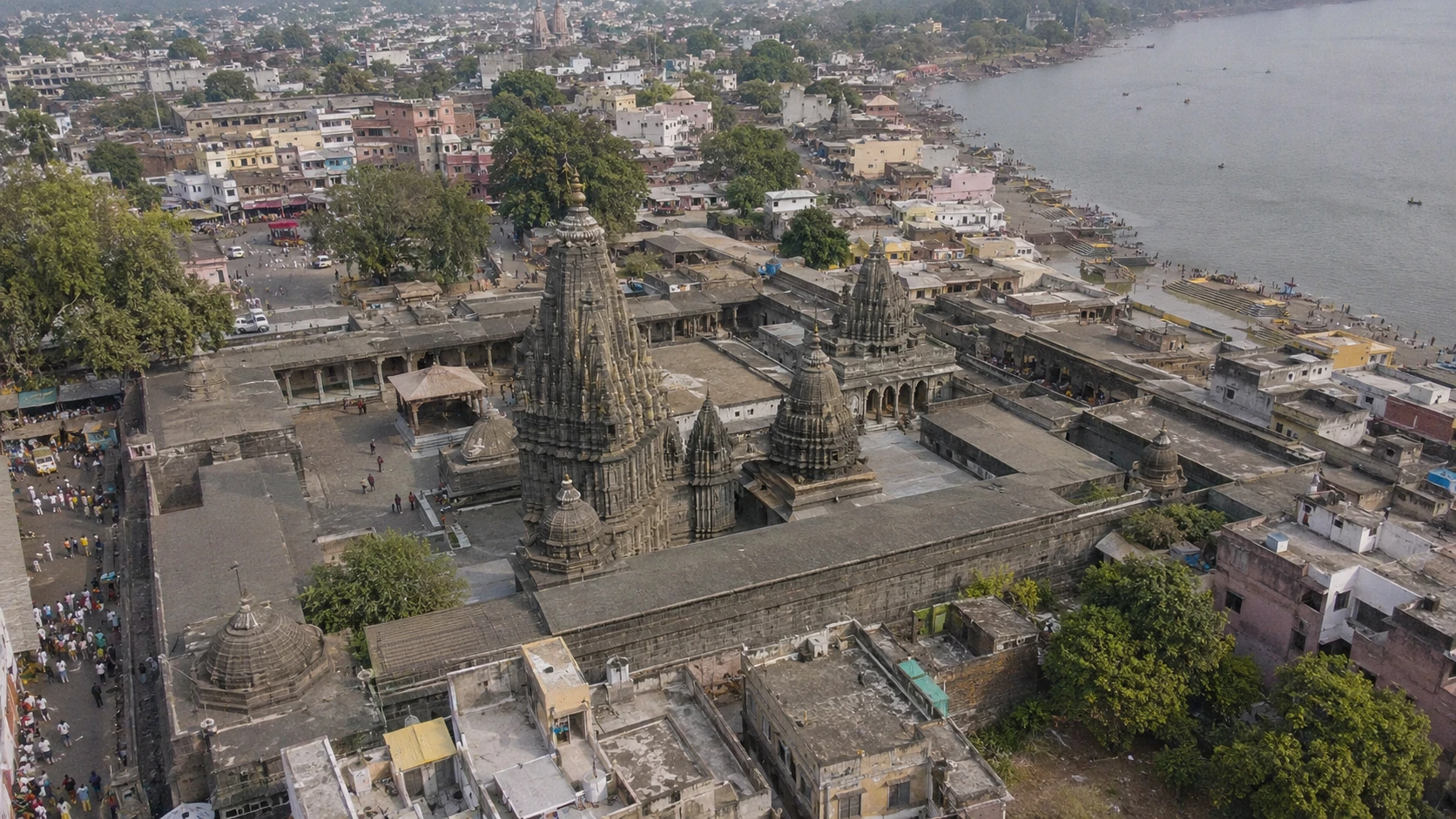
The Chandrabhaga river (Bhima), on whose bank the Pandharpur temple stands, is considered the most sacred river of Maharashtra in the Varkari tradition. Pilgrims bath at the Chandrabhaga ghat before taking darshan of Vitthal — the ritual parallels the Ganga bath before Kashi darshan. The Chandrabhaga ghat itself is lined with steps built over centuries by donations from successive generations of pilgrims.
G.A. Deleury, 'The Cult of Vithoba' (1960); Maharashtra Tourism documentation
Tukaram's abhangas were at the centre of a fierce 17th-century controversy: Brahmin scholars demanded he destroy his compositions on the grounds that a non-Brahmin shudra had no right to compose sacred Sanskrit-adjacent devotional poetry. Tukaram refused. According to tradition, he was ultimately vindicated by Vitthal himself, who appeared and told him his abhangas were divine utterance. The Maharashtra government has declared Tukaram a Maharashtra Bhushan.
Tukaram's own abhangas (17th century, Marathi); Mahipati, 'Bhaktalilamrit'; R.D. Ranade, 'Mysticism in Maharashtra' (1933)
Visitor Accessप्रवेश जानकारी
The Pandharpur temple is open to all Hindus. The question of Dalit access has been a persistent reform issue in Maharashtra — during the Bhakti era, the Mahar saint Chokhamela was denied entry; in the modern period, various Maharashtra governments and social reform campaigns have worked toward fully inclusive access. The current policy allows entry for all Hindus. Non-Hindu entry: verify current policy with the Vitthal Rukmini Mandir Samiti before visiting. During Ashadhi and Kartiki Ekadasi, crowd management protocols create separate queue systems; special darshan may be available for differently-abled pilgrims.
आध्यात्मिक आधार
The Varkari tradition, theologically, has always held that Vitthal is accessible to all — a position articulated by the saints themselves, most forcefully by those (like Chokhamela and Bahinabai) who were marginalised by the institutions surrounding the deity. The gap between the tradition's inclusive theology and the history of exclusionary institutional practice is a defining tension in the Vitthal tradition that continues to be debated.
समकालीन संदर्भ
The Dalit access debate at Pandharpur gained renewed national attention in the late 20th century, particularly in the context of B.R. Ambedkar's complex relationship with Pandharpur and the temple. Ambedkar — himself from the Mahar community of Chokhamela — visited Pandharpur and later converted to Buddhism in 1956. The temple access question in Maharashtra has been partially addressed through the Vitthal Rukmini Mandir Samiti's management framework.
व्यावहारिक मार्गदर्शन
Large crowds during Wari periods: arrive early, follow the Samiti's queuing instructions. The Chandrabhaga ghat is accessible independently of the temple for ritual bathing.
Festivalsत्योहार
Ashadhi Ekadasi Wari
आषाढी एकादशी वारी
Jun-Jul (Ashadha Shukla Ekadasi)
The most important single event in the Pandharpur calendar. Several million Varkari pilgrims arrive after walking hundreds of kilometres in procession from Alandi, Dehu, and other Varkari centres. The Palkhi processions converge at Pandharpur. Darshan on Ashadhi Ekadasi — meeting Vitthal on the day of the lotus-born God — is the culminating act of the Wari for the pilgrims who have walked for weeks.
Kartiki Ekadasi Wari
कार्तिकी एकादशी वारी
Oct-Nov (Kartika Shukla Ekadasi)
The second biannual Wari, equally important in the Varkari tradition — Kartiki Ekadasi is when Vitthal is said to sleep on Shesha (the cosmic serpent) and the deity's 'waking' on this Ekadasi marks a cosmic renewal. Slightly smaller than the Ashadhi Wari in terms of pilgrim numbers but considered equally meritorious.
Vitthal Ekadasi (monthly)
विठ्ठल एकादशी (मासिक)
Twice monthly (Ekadasi of both fortnights)
Every Ekadasi (11th lunar day) is observed as a sacred day at Pandharpur, with increased pilgrimage and extended darshan. The monthly Ekadasi observances are particularly significant in the Varkari calendar, where every Ekadasi is an opportunity for a smaller-scale Wari experience.
Tukaram Beej and Dnyaneshwar Shashti
तुकाराम बीज और ज्ञानेश्वर षष्ठी
Mar (Tukaram Beej, Phalgun); Sep-Oct (Dnyaneshwar Shashti, Ashwin)
The anniversaries of the two most beloved Varkari saints are marked at Pandharpur with special abhangas, processions, and darshan of Vitthal. The Dnyaneshwar Shashti celebrates the day he entered samadhi (mahasamadhi) at Alandi; Tukaram Beej marks his departure to Vaikuntham.
Traditional Offeringsपारंपरिक अर्पण
प्राथमिक अर्पण
Tulsi (Holy Basil) — the supreme Vaishnava offering
तुलसी
तुलसी
Tulsi is non-negotiable in all Vaishnava worship; the Varkari tradition's own scripture and the abhangas of Tukaram are full of references to the tulsi as the gateway to Vitthal. 'Tulsicha hara gala, Pandurangacha dwar aala' — with a garland of tulsi, one reaches Pandurang's door — is a common Varkari expression. No bhog at Pandharpur is complete without tulsi.
Charnamrta and panchamrit
चरणामृत और पंचामृत
चरणामृत
Charnamrta — the water used to bathe the deity's feet — is distributed as prasada at Pandharpur and is considered particularly sacred. The Varkari tradition holds that even a drop of charnamrta from Vitthal's feet can transform the devotee's life. Panchamrit (five nectars) is used in abhishekam on auspicious occasions.
Flowers — Marigold (genda), Champa, Lotus
पुष्प — गेंदा, चंपा, कमल
Fresh flower garlands are offered at each daily puja session. The Wari pilgrims traditionally wear garlands of tulsi beads and bring fresh flowers for Vitthal. Marigold garlands are the most common offering; lotus flowers are offered on special occasions.
Prasada food — Shira, Puran Poli, and festival bhog
प्रसाद भोजन — शिरा, पूरन पोली, और उत्सव भोग
The prasada at Pandharpur has a distinctive Maharashtra identity — shira (semolina halwa), puran poli (sweet flatbread with lentil filling), and temple-prepared bhog of rice, dal, and vegetables following Vaishnava dietary norms. The Wari tradition of communal cooking and feeding (annadana) along the route to Pandharpur is one of the world's largest volunteer food service operations during Ekadasi periods.
इस मंदिर की विशेषता
Varkari namasankirtana — communal singing as offering
वारकरी नामसंकीर्तन — समूह गायन अर्पण के रूप में
In the Varkari tradition, namasankirtana — the communal singing of Vitthal's name and the Varkari saints' abhangas — is itself understood as the supreme offering to the Lord. The abhangas are not merely devotional entertainment; they are the sacrifice. Tukaram explicitly taught that in the Kali Yuga, namasankirtana is the yagna (sacrifice) that replaces all others. During the Wari, millions offer this singing as their primary act of worship.
Offering materials (tulsi, flowers, camphor) are available from vendors at the ghat and temple entrance. The Vitthal Rukmini Mandir Samiti distributes charnamrta and prasada after major aarti sessions. Annadana (free meals) is provided during the Wari by numerous community organisations along the pilgrimage route and at Pandharpur itself.
How to Reachकैसे पहुँचें
Pandharpur is most conveniently reached by rail on the Miraj–Pandharpur–Solapur branch line; the Pandharpur Railway Station has direct trains from Pune (via Miraj, approximately 4–5 hours) and connections from Solapur (approximately 2 hours), Miraj (approximately 1.5 hours), and Kolhapur. By road, Pandharpur is approximately 200 km from Pune and 95 km from Solapur on NH-52 and state highways — MSRTC buses run frequently from both cities. By air, Pune International Airport (approx. 200 km) is the nearest practical airport; no commercial airport within 150 km of Pandharpur. During the Wari periods (Ashadhi and Kartiki Ekadasi), the Maharashtra government operates additional special trains and bus services.
Plan Your Visitयात्रा की योजना
🌤 सर्वोत्तम मौसम
October to March (cool, dry weather — comfortable for the ghat and temple). Ashadhi and Kartiki Ekadasi (June–July and October–November) are spiritually the most significant times but bring the largest crowds; plan months in advance if attending the Wari.
👘 पहनावे का नियम
Modest dress required. Men: traditional dhoti or clean trousers with kurta. Women: sari or salwar-kameez. Footwear removed at the temple entrance. During the Wari, the white-clad Varkari attire (white dhoti, tulsi beads, tilak) is culturally distinctive.
📱 फोन और फोटोग्राफी
Photography inside the sanctum is not permitted. Photography on the ghats and in the outer areas is generally permitted.
🏨 आवास
Pandharpur has extensive pilgrim accommodation, including dharamshalas managed by the Vitthal Rukmini Mandir Samiti and various community organisations. During Wari periods, temporary camps along the riverfront house hundreds of thousands of pilgrims. Advance booking is essential for Wari dates. Solapur (95 km) provides wider hotel accommodation with better transport links.
Book a Pujaपूजा बुक करें
Booking links and phone numbers are verified periodically but may change without notice. The vitthal.in portal is the known official Samiti website — verify before payment. During Ashadhi and Kartiki Ekadasi, the Samiti website and official Maharashtra government portals are the only legitimate sources for advance darshan booking. Fraudulent booking websites and tour operators falsely claiming priority darshan are known to operate during the Wari season.
Managed by: Vitthal Rukmini Mandir Samiti, Pandharpur (established under Maharashtra Shri Vitthal Rukmini Mandir Act, 2014)
Abhisheka darshan (special abhishekam with guided darshan)
अभिषेक दर्शन
VIP darshan (priority queue)
वीआईपी दर्शन (प्राथमिकता कतार)
Booking information verified: 2026-05-23
Sacred Soundsपवित्र ध्वनि
Abhangas of Tukaram — Marathi devotional compositions to Vitthal; the emotional core of the Varkari tradition
bhajan
Abhangas of Dnyaneshwar (Jnanadeva) — foundational compositions of the Varkari tradition
bhajan
Vitthal Aarti — Jai Jai Vitthal, traditional Maharashtra Vaishnava aarti
aarti
Abhangas of Namdev (14th century) — compositions in Marathi and Hindi; some included in the Guru Granth Sahib
bhajan
108 Japa Practice
Om Namo Bhagavate Vasudevaya — Varkari namasankirtana is 'Vitthal Vitthal' or 'Jai Jai Ram Krishna Hari'
Chant 108 times in the spirit of this temple
क्या आप जानते हैं? · Did You Know?
वही अनुवाद त्रुटि जिसने हिन्दू धर्म में '33 कोटि' को '33 करोड़' बनाया, बौद्ध धर्म में भी हुई। बौद्ध ग्रन्थों के चीनी अनुवाद ने 'सप्त कोटि बुद्ध' (7 श्रेष्ठ बुद्ध) का अनुवाद '7 करोड़ बुद्ध' कर दिया। तिब्बती अनुवाद ने सही किया: 7 प्रकार, 7 करोड़ नहीं। एक संस्कृत शब्द, दो प्रमुख विश्व धर्मों में गलत पढ़ा गया, ने दो एकसमान भ्रम स्वतन्त्र रूप से उत्पन्न किए।
Related Contentसंबंधित सामग्री
Related Scriptures
Community Reflections
🕉️
Be the first to share your reflection.