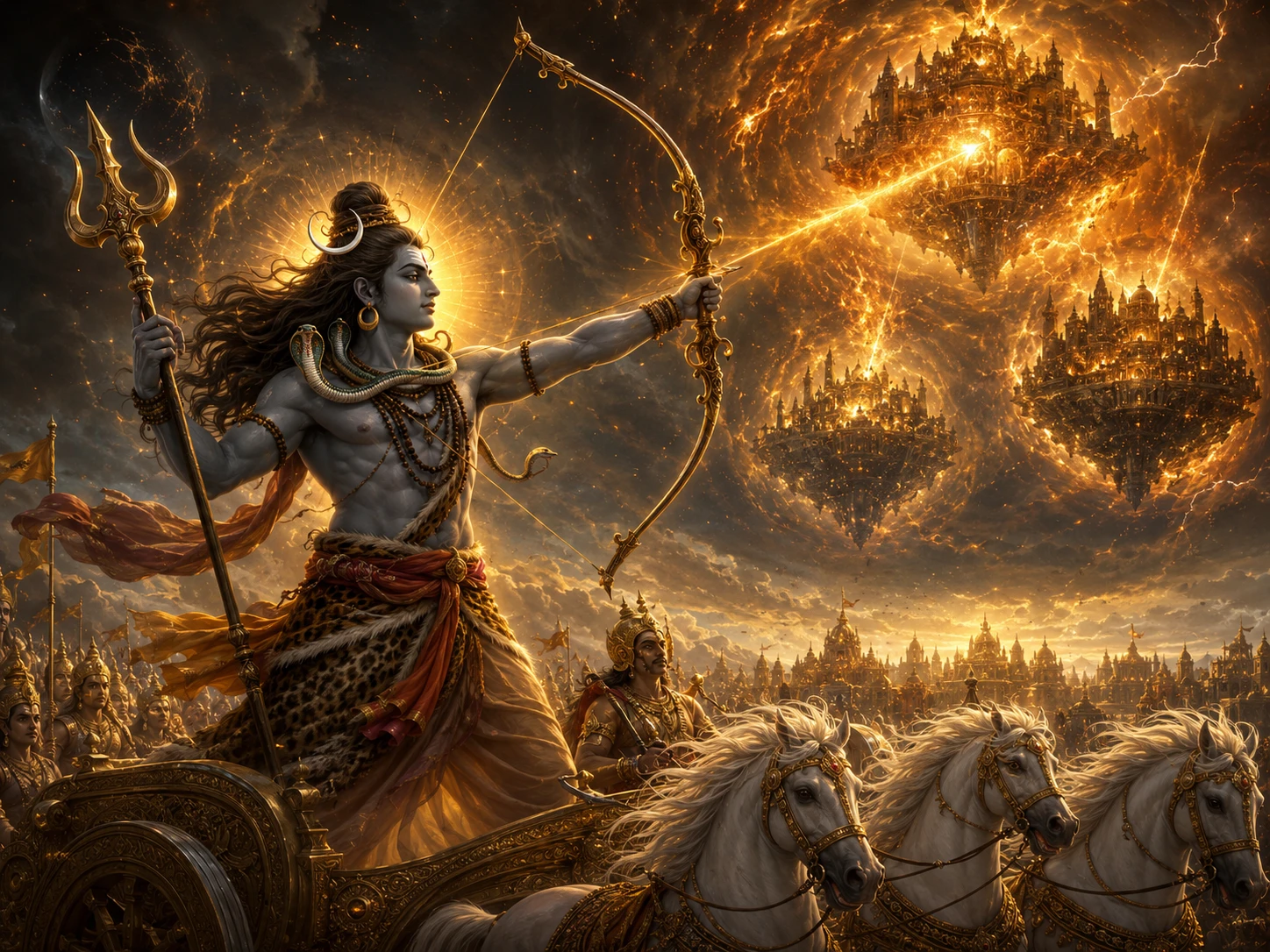
Tripurasura -- How Shiva Destroyed Three Flying Cities with a Single Arrow
त्रिपुरासुर -- शिव ने एक बाण से तीन उड़ते नगर कैसे नष्ट किए
अगर महाभारत भारत का Game of Thrones है, तो त्रिपुरासुर कथा उसका Star Wars -- तीन उड़ते क़िला-नगरों, उन्हें बनाने वाले प्रतिभाशाली वास्तुकार, एक लगभग असम्भव कमज़ोरी, और एक देवता की कहानी जिसने उस एक कमज़ोरी का शोषण करने के लिए पूरे ब्रह्माण्ड को एक अस्त्र-प्रणाली में समेटा।
कथा शिव पुराण, मत्स्य पुराण, और महाभारत (कर्ण पर्व, अध्याय 34) से आती है। यह शिव के सबसे प्रसिद्ध नामों में एक -- त्रिपुरारि (त्रिपुर का शत्रु) या त्रिपुरान्तक (तीन नगरों का नाशक) -- की व्याख्या करती है।
तारकासुर के तीन पुत्र
तारकासुर शक्तिशाली असुर था जिसे कार्तिकेय (मुरुगन), शिव-पुत्र, ने मारा। पर तारकासुर के तीन पुत्र -- तारकाक्ष, विद्युन्माली, और कमलाक्ष -- बचे। वे तत्काल प्रतिशोध में डूबे योद्धा नहीं थे। रणनीतिकार थे। ब्रह्मा को तपस्या से प्रसन्न किया और सोच-समझकर इंजीनियर किया हुआ वरदान माँगा।
अमरता नहीं माँगी -- ब्रह्मा वह नहीं दे सकते। कुछ ज़्यादा चालाक माँगा: तीन नगर, आकाश में बने, जो कहीं भी उड़ सकें, और एक अकेली, लगभग असम्भव शर्त पर ही नष्ट हों। तीन नगर अलग-अलग तलों में परिक्रमा करें। हर हज़ार वर्ष में एक बार एक सीधी रेखा में आएँ। केवल उसी सटीक क्षण, एक प्राणी द्वारा चलाया एक बाण तीनों एक साथ नष्ट कर सके।
वास्तुकार: मय दानव
नगर बनाने के लिए तीनों ने मय दानव को नियुक्त किया -- असुर-जगत का सबसे बड़ा वास्तुकार, वही मय जो बाद में महाभारत में पाण्डवों के लिए मयसभा (भ्रम-भवन) बनाएगा। तारकाक्ष का नगर स्वर्ण का, स्वर्ग में परिक्रमारत। विद्युन्माली का रजत का, आकाश में तैरता। कमलाक्ष का लौह का, पृथ्वी के ऊपर मँडराता।
तीन नगर मिलकर त्रिपुर कहलाए -- एक चलायमान साम्राज्य। कहीं भी प्रकट हों, कोई भी लक्ष्य मारें, किसी भी सेना की पहुँच से पहले लौट जाएँ। इन्हें संसार के पहले stealth aircraft carriers समझो।
हज़ार वर्ष तक त्रिपुरासुरों ने इन नगरों से ब्रह्माण्ड पर आतंक मचाया। देवताओं ने, उड़ते क़िले भेदने में असमर्थ, शिव से विनती की।
त्रिपुरं दहतः पूर्वं शूलपाणेर्महात्मनः। धनुष्यायम्यमाणे तु ज्याघोषो दिवमस्पृशत्॥
tripuraṃ dahataḥ pūrvaṃ śūlapāṇer mahātmanaḥ | dhanuṣy āyamyamāṇe tu jyāghoṣo divam aspṛśat ||
जब महात्मा शूलपाणि शिव ने त्रिपुर दहन के लिए धनुष खींचा, प्रत्यंचा की टंकार स्वर्ग को छू गई।
— Mahabharata, Karna Parva, Chapter 34 (Tripura Dahana narrative)
ब्रह्माण्डीय अस्त्र-प्रणाली -- शिव का विश्व-रथ
जब शिव ने त्रिपुर नष्ट करना स्वीकार किया, देवताओं ने उन्हें केवल शस्त्र नहीं दिया। पूरे ब्रह्माण्ड को एक युद्ध-यन्त्र में समेटा -- हिन्दू साहित्य में वर्णित सबसे विस्तृत दिव्य रथ।
पृथ्वी रथ बनी। मेरु पर्वत धुरी। सूर्य और चन्द्र दो पहिये। वेद चार अश्व। ब्रह्मा सारथी। विष्णु बाण की नोक। वायु बाण के पंख। अग्नि नोक का तेज। पिनाक -- शिव का अपना धनुष, वही जो राम बाद में सीता स्वयम्वर में तोड़ेंगे -- वासुकि सर्प से प्रत्यंचा चढ़ी।
यह केवल शस्त्र नहीं। यह ब्रह्माण्ड शस्त्रीकृत है। सृष्टि का हर तत्त्व विनाश के एक कृत्य में भर्ती। सन्देश: गहराई से जमी, व्यवस्थागत बुराई नष्ट करने के लिए पूरे ब्रह्माण्ड का सहयोग चाहिए।
शिव ने प्रतीक्षा की। हज़ार वर्ष तीन नगर अलग-अलग तलों में परिक्रमा करते रहे, कभी एक सीध में न आए। और फिर, नियत क्षण पर, तीनों एक रेखा में आए। एक पल में शिव ने पिनाक खींचा, निशाना लिया, छोड़ा। एक बाण, विष्णु, अग्नि, और वायु की संयुक्त शक्ति लिए, तीनों नगरों को एक साथ भेद गया। सोना, चाँदी, लोहा -- तीनों भड़के और पश्चिमी सागर में गिरे।
यह क्षण त्रिपुर दहन कहलाता है। कार्तिक पूर्णिमा पर मनाया जाता है।
गहरा अर्थ
तीन नगर परम्परागत रूप से व्यक्ति के तीन शरीरों से जोड़े जाते हैं: स्थूल शरीर (लोहा), सूक्ष्म शरीर (चाँदी), और कारण शरीर (सोना)। तीन दैत्य शैव सिद्धान्त के तीन मल: आणव (अहंकार), कर्म, और माया। शिव का एक बाण ज्ञान का बाण है जो, सही संरेखण के क्षण पर, तीनों बन्धन एक साथ नष्ट करता है।
कोटा के coaching centre में competitive exams की तैयारी करते छात्र के लिए रूपक अधिक व्यावहारिक है: तीन नगर तीन distractions -- social media (सोना, चमकीला), साथियों से तुलना (चाँदी, प्रतिबिम्बी), और आत्म-सन्देह (लोहा, भारी)। अलग-अलग तलों में घूमते हैं, पर कभी-कभी एक सीध में आकर पूरी तरह जकड़ लेते हैं। तुम्हारे भीतर का शिव -- केन्द्रित, स्थिर, अविचलित चेतना -- उस संरेखण की प्रतीक्षा करे और एकाग्र इच्छाशक्ति के एक कृत्य से तीनों पर प्रहार करे।
ब्रह्माण्डीय रथ -- शिव के युद्ध-यन्त्र का हर घटक
| Component | Cosmic Equivalent | Symbolism |
|---|---|---|
| Chariot | The Earth (Prithvi) | The ground of reality; dharma as the vehicle of action |
| Axle | Mount Meru | The cosmic axis; the still centre around which everything revolves |
| Wheels | Sun and Moon | Time (day-night cycle); the rhythm of creation |
| Horses | The Four Vedas | Knowledge drives action; Rig, Yajur, Sama, Atharva |
| Charioteer | Brahma | The Creator guides the vehicle; wisdom steers power |
| Bow | Pinaka (Shiva's bow) | The instrument of focused destruction |
| Bowstring | Vasuki (serpent king) | Kundalini; coiled energy released in a single moment |
| Arrow tip | Vishnu (as the pointed force) | Preservation destroys what threatens dharma |
| Arrow feathers | Vayu (wind god) | Speed and direction; prana guiding the strike |
| Arrow fire | Agni (fire god) | Transformative destruction; purification through burning |
त्रिपुर दहन रथ इस हिन्दू विचार की चरम अभिव्यक्ति है कि ब्रह्माण्डीय व्यवस्था (ऋत) के लिए सृष्टि के हर तत्त्व को केन्द्रित बुराई के विरुद्ध सहयोग करना होता है।
कार्तिक पूर्णिमा -- नवम्बर-दिसम्बर की पूर्णिमा -- वाराणसी में त्रिपुरारि पूर्णिमा या देव दीपावली (देवताओं की दिवाली) के रूप में मनाई जाती है। इस रात गंगा के घाटों पर हज़ारों मिट्टी के दीये तैराए जाते हैं, जो संसार के सबसे दृश्य रूप से शानदार धार्मिक आयोजनों में है। परम्परा इस रात शिव द्वारा त्रिपुर-नाश की स्मृति है। गोवा में कार्तिक पूर्णिमा पर दीयों वाली छोटी काग़ज़ की नावें तैराने की परम्परा है, जो सागर में गिरते जलते नगरों का प्रतीक है।
ॐ नमः शिवाय जपो -- त्रिपुरारि का मन्त्र
शिव ने एक ही बाण से माया के तीनों नगर नष्ट कर दिए। माला पर ॐ नमः शिवाय का 108 बार जप करो और अपना बाण विचलन पर साधो। एटर्नल राग पर इसका पृष्ठ अर्थ और जप-विधि बताता है।
Tags
Eternal Raga · शाश्वत राग
Institutional voice — scholarly articles on Sanatan Dharma
अपनी समझ गहरी करें
अपनी समझ और गहरी करें
deities avatars
Who is Shiva?
He is the ash-smeared ascetic who is also the ideal husband. The destroyer of the universe who is called 'The Auspicious One.' The god of death who drank poison to save all life. He sits in meditation on a Himalayan peak, and simultaneously dances the cosmos into existence and annihilation. No deity in Hinduism contains more contradictions -- and no deity resolves them more completely. This is not a mythology explainer. This is an attempt to stand at the foot of the mountain and look up.
deities avatars
Nine Forms of Shiva -- The Many Faces of Mahadeva
He is the silent teacher under a banyan tree and the screaming destroyer on a battlefield. He is half-woman and half-man. He drank the poison that would have ended the universe and his throat turned blue. Nine scripturally-attested forms of Shiva -- from Nataraja to Rudra -- and why each one exists.
deities avatars
Nataraja -- The Cosmic Dancer
One foot crushes a dwarf. The other is raised in liberation. A ring of fire frames the dance. A drum beats creation into existence. An open palm says 'do not fear.' This is Nataraja -- Shiva as the Lord of Dance -- and it is the single most replicated Indian bronze in the history of art. The physicists at CERN chose it to stand outside the world's largest particle accelerator. The Chola bronzesmiths of Tamil Nadu perfected it a thousand years ago. And every time a subatomic particle appears and disappears, the cosmic dance continues.
deities avatars
Daksha's Yagna and Sati -- Why Daksha Hated Shiva
A father so offended by his son-in-law that he held a cosmic sacrifice and invited every god in the universe -- except Shiva. A wife so devastated by the insult that she walked into the sacred fire and burned herself alive. And a husband so enraged by her death that he created a warrior from his dreadlock who destroyed the entire ceremony and beheaded the father-in-law. The Daksha Yagna is not a domestic dispute. It is the origin story of the Shakti Peethas, the theology of Shiva's rage, and the reason Parvati exists.
scriptural exegesis
Ravana Lifts Kailash -- How the Demon King Became Shiva's Greatest Devotee
A ten-headed king tries to uproot God's mountain. God presses it back with his little toe. The king, crushed and trapped, sings for a thousand years -- and the hymn he composes becomes one of the most powerful devotional poems in Sanskrit. The Ravananugraha episode is where arrogance meets devotion, and the result is the Shiva Tandav Stotram.
divine arsenal
Pashupatastra -- The Supreme Weapon Never Used
The most fearsome weapon in the Mahabharata was never deployed on the battlefield. Shiva granted it to Arjuna after a wrestling match in the forests of Indrakila, yet Arjuna carried it through all eighteen days of Kurukshetra without ever invoking it. The Pashupatastra's true power lay not in its destruction, but in its restraint -- a philosophy that modern nuclear doctrine would independently discover thousands of years later.
कार्तिक पूर्णिमा -- नवम्बर-दिसम्बर की पूर्णिमा -- वाराणसी में त्रिपुरारि पूर्णिमा या देव दीपावली (देवताओं की दिवाली) के रूप में मनाई जाती है। इस रात गंगा के घाटों पर हज़ारों मिट्टी के दीये तैराए जाते हैं, जो संसार के सबस…
More in Deities & Avatars
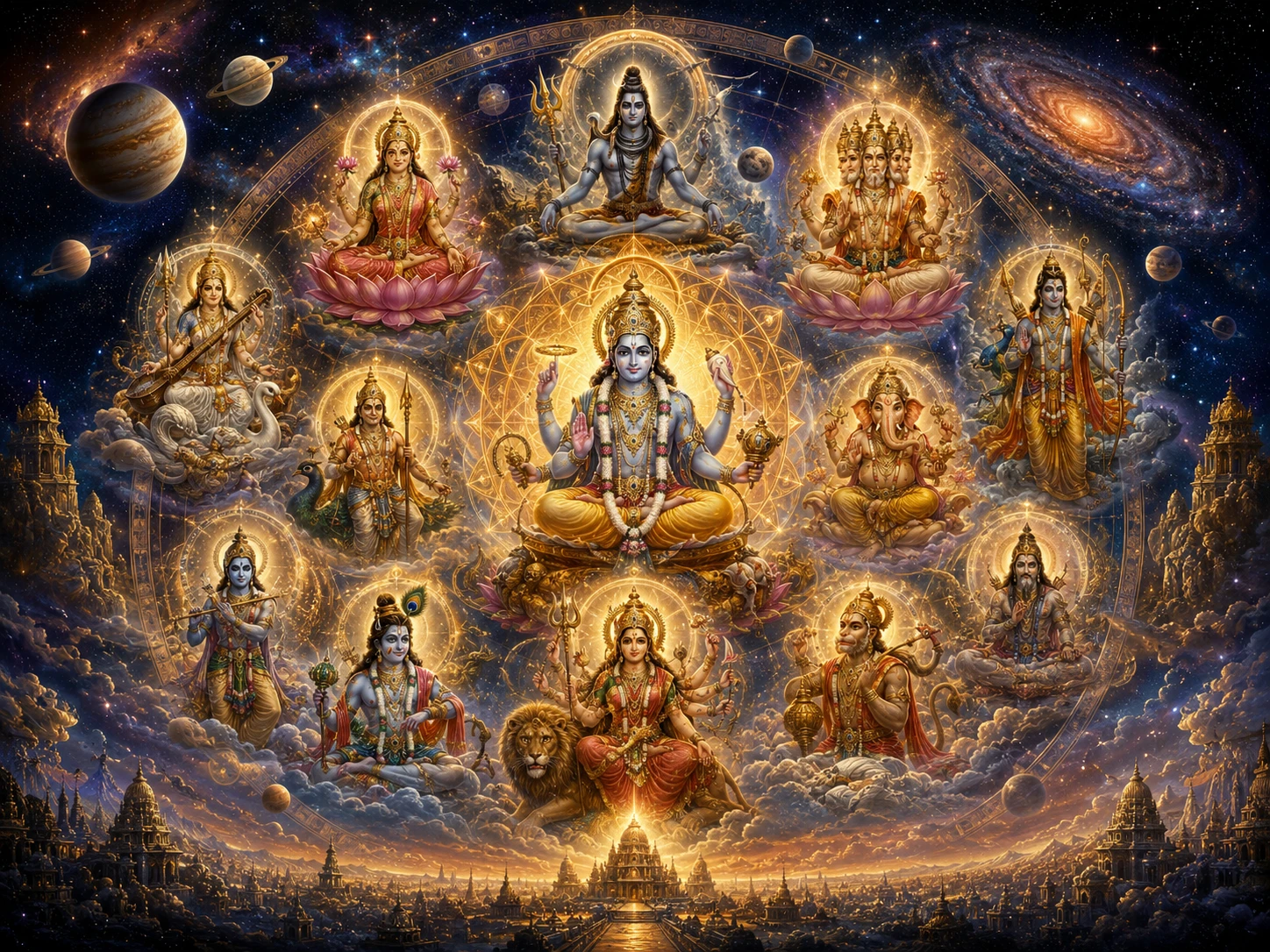
33 Koti Devata -- Why Hinduism Has 33 Types of Gods, Not 33 Crore
13 मिनट पढ़ें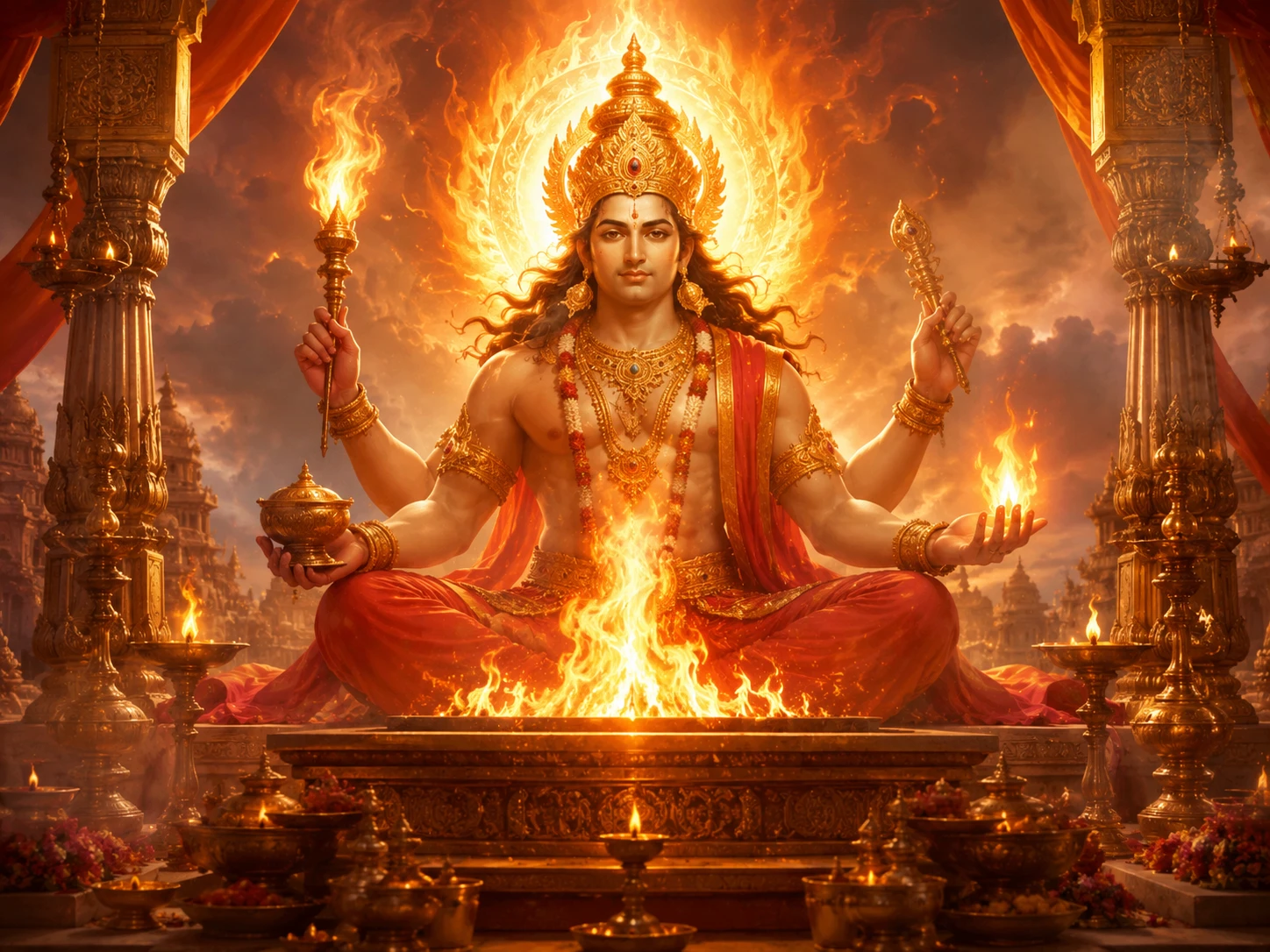
Agni -- The Fire God
19 मिनट पढ़ें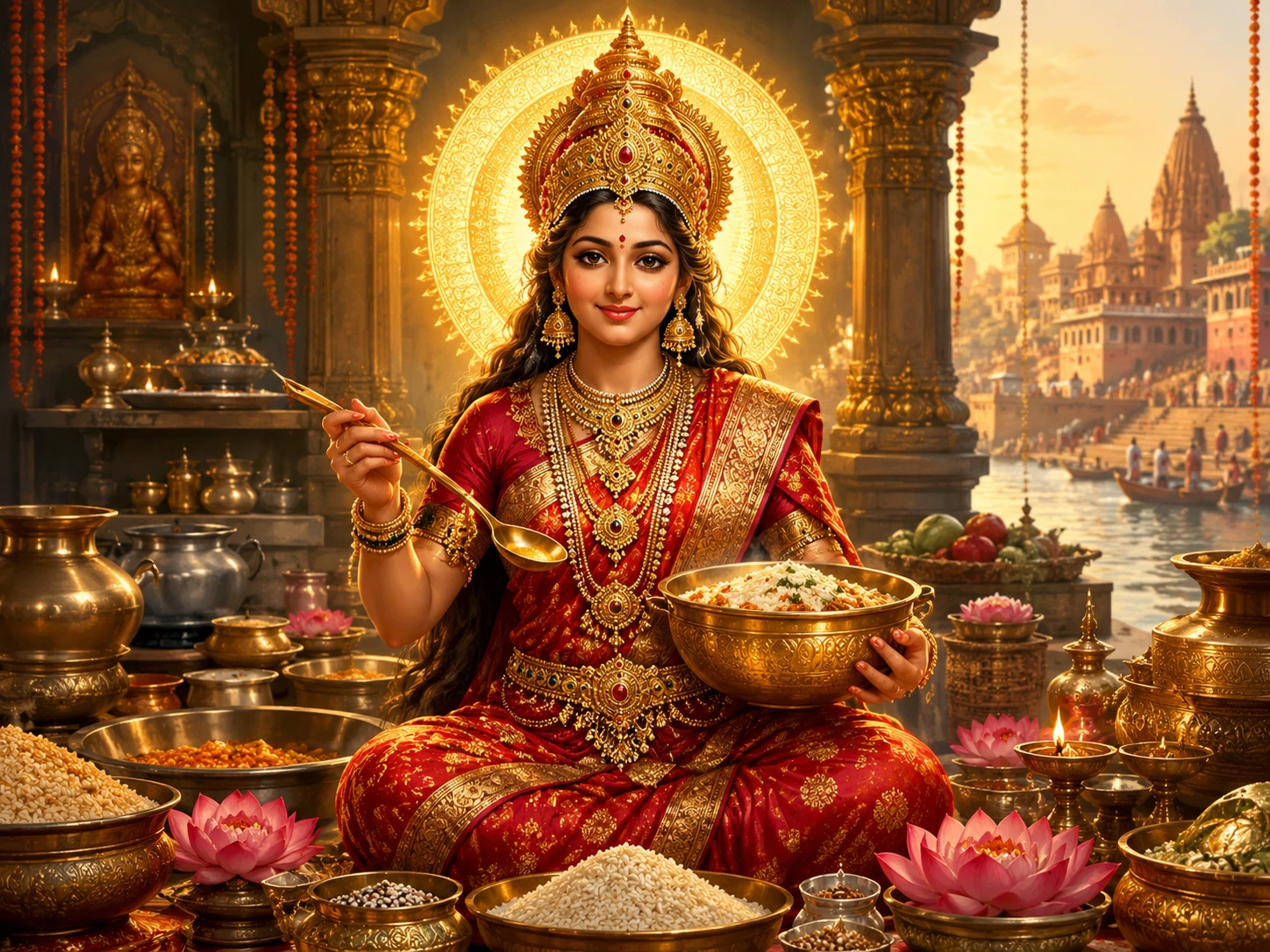
Annapurna -- Goddess of Food
19 मिनट पढ़ेंवही अनुवाद त्रुटि जिसने हिन्दू धर्म में '33 कोटि' को '33 करोड़' बनाया, बौद्ध धर्म में भी हुई। बौद्ध ग्रन्थों के चीनी अनुवाद ने 'सप्त कोटि बुद्ध' (7 श्रेष्ठ बुद्ध) का अनुवाद '7 करोड़ बुद्ध' कर दिया। तिब्बती अनुवाद ने सही …
Deities AvatarsCommunity Reflections
🕉️
Be the first to share your reflection.