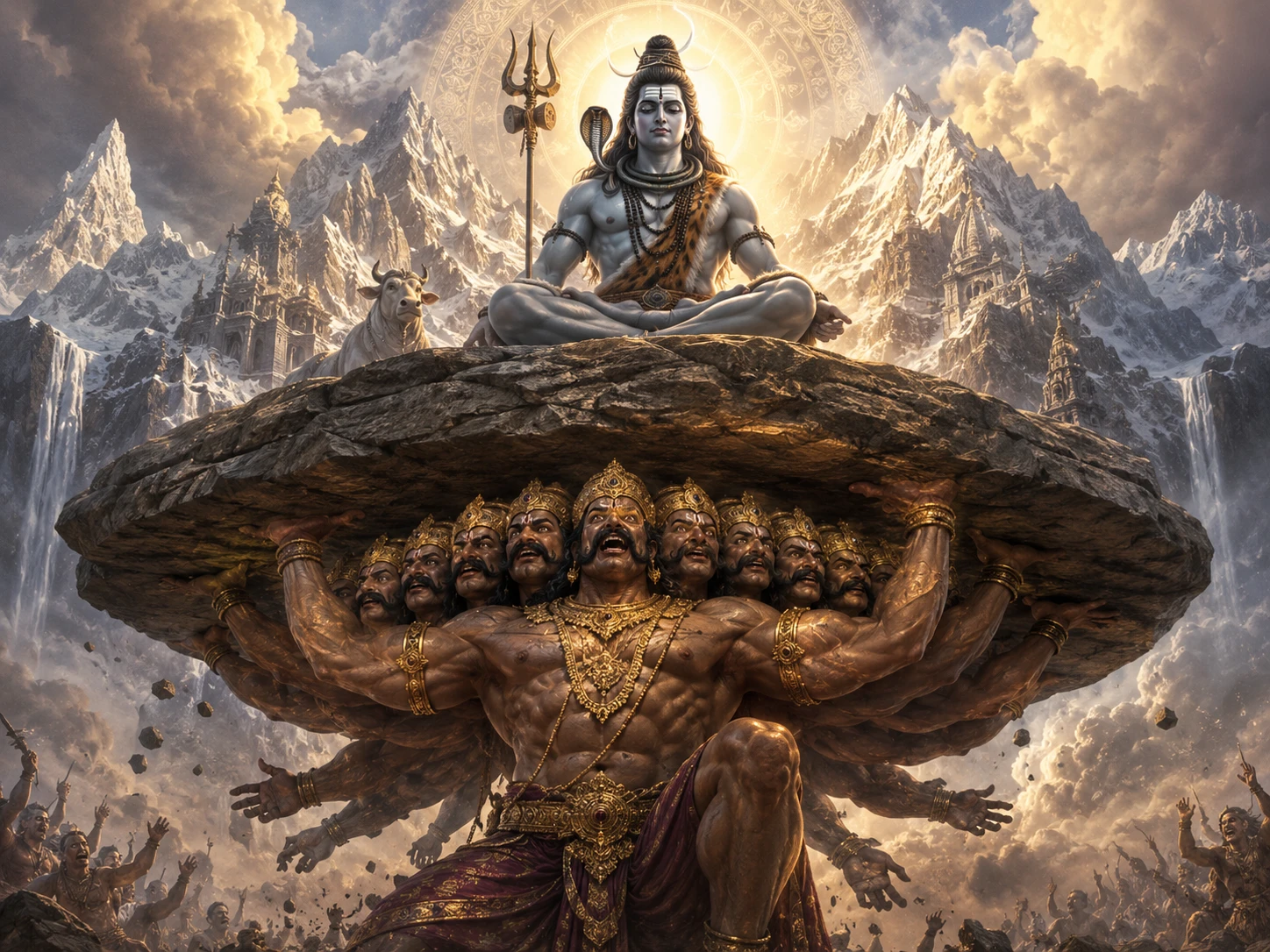
Ravana Lifts Kailash -- How the Demon King Became Shiva's Greatest Devotee
रावण ने कैलाश उठाया -- कैसे राक्षस-राजा शिव का सबसे बड़ा भक्त बना
रावण रामायण का खलनायक है। हर दशहरा पर उत्तर भारत में उसका पुतला जलता है -- दस सिर पटाखों से भरे, हर एक एक दुर्गुण का प्रतीक। बच्चे जयकार करते हैं। फुलझड़ियाँ चलती हैं। सन्देश साफ़ है: बुराई का नाश।
पर जलता पुतला तुम्हें यह नहीं बताता: रावण हिन्दू साहित्य के सबसे बड़े शिव भक्तों में था। जन्म से ब्राह्मण (ऋषि विश्रवा का पुत्र)। चार वेद और छह शास्त्र में पारंगत। वीणा का विशेषज्ञ। इतनी तीव्र तपस्या की कि स्वयं ब्रह्मा वरदान देने उतरे। और एक पर्वत के नीचे दबकर जो स्तोत्र रचा -- शिव ताण्डव स्तोत्र -- वह आज भी भारत के शिव मन्दिरों में उन्हीं लोगों द्वारा पढ़ा जाता है जो दस दिन पहले उसका पुतला जलाते हैं।
कथा वाल्मीकि रामायण के उत्तर काण्ड, सर्ग 16-17 से आती है, और भारतीय कला-इतिहास के सबसे मूर्तिमान प्रसंगों में है -- एलोरा के कैलाश मन्दिर (8वीं शताब्दी ई.) में विशाल रावणानुग्रह उभारशिल्प में अमर।
रावण ने अभी अपने सौतेले भाई कुबेर की नगरी अलका जीती थी। कुबेर के ख़ज़ाने और उड़ने वाला रथ पुष्पक विमान लूटकर लंका लौट रहा था। विमान हिमालय के ऊपर से गुज़र रहा था कि अचानक रुक गया। पर्वत के एक विशेष हिस्से से पार नहीं जा सका। वह पर्वत कैलाश था।
टकराव, शाप, और कुचलना
रुके हुए रास्ते के नीचे रावण की मुलाक़ात नन्दी से हुई -- शिव के वृषभ-मुख द्वारपाल। नन्दी ने बताया कि भगवान शिव और पार्वती पर्वत पर हैं, कोई नहीं गुज़र सकता। रावण, हाल की सैन्य विजय के नशे में, हँसा और नन्दी की शक्ल का मज़ाक़ उड़ाया, उसे 'बन्दर-मुँह' कहा।
नन्दी का उत्तर एक शाप था जो पूरी रामायण में गूँजेगा: 'वानर तुम्हें और तुम्हारे राज्य को नष्ट करेंगे।' यह रामायण की महान संरचनात्मक विडम्बनाओं में है -- वानर सेना जो अन्ततः लंका को घुटनों पर लाएगी, वह सीता-हरण से नहीं बल्कि कैलाश की ढलान पर इस एक अपमान से गतिमान हुई, राम के जन्म से वर्षों पहले।
शाप और रोके जाने के अपमान से क्रोधित रावण ने वह करने का निर्णय लिया जो किसी प्राणी ने कभी नहीं किया: स्वयं कैलाश उखाड़ना। बीस भुजाएँ पर्वत के नीचे लगाईं और उठाना शुरू किया।
कैलाश हिला। धरती काँपी। नदियाँ उलटीं। पार्वती, भयभीत, शिव से चिपक गईं। गण बिखर गए। एक संक्षिप्त, असम्भव क्षण के लिए पर्वत वाक़ई उठा।
शिव ने हिन्दू साहित्य की सबसे संयमित ब्रह्माण्डीय शक्ति-प्रदर्शन से उत्तर दिया। खड़े नहीं हुए। शस्त्र नहीं उठाया। कुछ संस्करणों में आँखें भी नहीं खोलीं। बस पैर का अँगूठा पर्वत पर दबा दिया। कैलाश उतरा। रावण की बीस भुजाएँ नीचे दब गईं। उँगलियाँ कुचली गईं। वह चीखा -- और चीख इतनी तेज़ थी कि तीनों लोक हिल गए। परम्परा के अनुसार इसीलिए उसे यह नाम मिला: 'रावण', धातु 'रु' से -- चीखना, रोना।
फँसा, पीड़ा में, हिलने में असमर्थ, रावण ने एकमात्र शेष काम किया। उसने गाना शुरू किया।
जटाटवीगलज्जलप्रवाहपावितस्थले गलेऽवलम्ब्य लम्बितां भुजङ्गतुङ्गमालिकाम्। डमड्डमड्डमड्डमन्निनादवड्डमर्वयं चकार चण्डताण्डवं तनोतु नः शिवः शिवम्॥
jaṭāṭavīgalajjalapravāhapāvitasthale gale'valambya lambitāṃ bhujaṅgatuṅgamālikām | ḍamaḍḍamaḍḍamaḍḍamanninādavaḍḍamarvayaṃ cakāra caṇḍatāṇḍavaṃ tanotu naḥ śivaḥ śivam ||
जटा-रूपी वन से बहते जल-प्रवाह से पवित्र गले में, जिस पर सर्प-माला लटकी है, और डमरू जो 'डमड् डमड् डमड् डमड्' की ध्वनि करता है -- भगवान शिव ने प्रचण्ड ताण्डव किया। वे हमें कल्याण प्रदान करें।
— Shiva Tandav Stotram, Verse 1 (attributed to Ravana, Uttara Kanda tradition)
हज़ार साल का स्तोत्र और उसके बाद
कैलाश के नीचे दबकर रावण ने जो गाया वह शिव ताण्डव स्तोत्र है -- सत्रह चतुष्पदियाँ ऐसी लयबद्ध संस्कृत में कि धीरे बोलने पर भी ढोल की थाप जैसी सुनाई देती हैं। छन्द iambic octameter है (प्रति पंक्ति 16 अक्षर, लघु-गुरु बारी-बारी), और अनुप्रास एक तालवाद्य-प्रभाव रचता है जो शिव के नृत्य के डमरू की नक़ल करता है। यह केवल भक्ति-काव्य नहीं है। यह एक ध्वनि-अनुभव है -- ऐसा स्तोत्र जो मन से समझने से पहले छाती में अनुभव होने के लिए बना है।
तमिल परम्परा एक और परत जोड़ती है: कैलाश के नीचे दबा रावण अपना एक सिर काटता है, खोपड़ी से वीणा बनाता है, अपनी नसों से तार लगाता है, और गायन की संगत करता है। यह बिम्ब -- जिस देवता ने कुचला उसकी स्तुति में अपने ही शरीर से बनी वीणा बजाता राक्षस-राजा -- हिन्दू मूर्तिकला के सबसे तीव्र प्रभावशाली बिम्बों में है।
रावण हज़ार साल गाता रहा। कुछ संस्करण कहते हैं बिना रुके। अन्य कहते हैं शिव शुरू से सुन रहे थे पर देखना चाहते थे भक्ति कब तक टिकती है। अन्ततः शिव प्रसन्न हुए। रावण को मुक्त किया। क्षमा किया। और दो उपहार दिए: 'रावण' नाम (जिसकी चीख से संसार काँपे) और चन्द्रहास -- एक दिव्य खड्ग जो कभी नहीं टूट सकता, जब तक निर्दोषों पर न चलाया जाए।
यह प्रसंग रावण के चरित्र की केन्द्रीय विरोधाभास समझाता है। वह साधारण खलनायक नहीं। असाधारण ज्ञान और सच्ची भक्ति वाला व्यक्ति जिसे एक दोष नष्ट करता है: इच्छा पर नियन्त्रण की अक्षमता।
एलोरा का कैलाश मन्दिर, संसार की सबसे बड़ी अखण्ड शिला-कर्तित संरचनाओं में, अपने दक्षिणी मण्डप के नीचे मानव-आकार रावणानुग्रह उभारशिल्प रखता है। रावण पर्वत के नीचे ज़ोर लगा रहा है। शिव ऊपर शान्त बैठे हैं, एक भुजा चिपकी पार्वती के इर्द-गिर्द, दूसरी से अभय मुद्रा। सन्देश पत्थर में तराशा है: ब्रह्माण्ड सन्तुलन पर चलता है, कच्ची ताक़त पर नहीं।
रावण -- खलनायक-भक्त का विरोधाभास
| Aspect | Ravana the Scholar-Devotee | Ravana the Villain |
|---|---|---|
| Lineage | Brahmin by birth; grandson of Rishi Pulastya; son of sage Vishrava | Half-Rakshasa through his mother Kaikesi |
| Knowledge | Mastered 4 Vedas, 6 Shastras; expert in Ayurveda and Jyotisha | Used knowledge for conquest and domination, not liberation |
| Music | Virtuoso veena player; composed the Shiva Tandav Stotram | Made a veena from his own severed head -- devotion through self-destruction |
| Tapasya | Performed intense penance; received boons from Brahma and Shiva | Used boons to terrorise Devas, conquer the three worlds |
| Devotion | Greatest Shiva devotee; worshipped Shiva daily in Lanka | Arrogance led him to lift Kailash -- devotion laced with ego |
| Gifts from Shiva | Received Chandrahasa (invincible sword) and the Atmalinga | Lost the Atmalinga to Ganesha's trick; eventually defeated by Rama |
| Death | Rama gave him full Brahmin funeral honours; 'enmity ends with death' | Died because his boon excluded humans -- the one species he underestimated |
रावण महाभारत के कर्ण को रामायण में रोपित करने जैसा है -- अपार प्रतिभा का व्यक्ति जिसे एक त्रासद दोष नष्ट करता है। परम्परा उसे बुराई तक सीमित नहीं करती। दोनों सत्य एक साथ धारण करती है।
एलोरा का कैलाश मन्दिर (गुफा 16), 8वीं शताब्दी ई. में राष्ट्रकूट वंश के अधीन निर्मित, एक ही बेसाल्ट चट्टान से ऊपर से नीचे तराशा गया। अनुमानित 2,00,000 टन चट्टान निकाली गई। आधार पर रावणानुग्रह उभारशिल्प भारत की सबसे बड़ी कथात्मक मूर्तियों में है। पूरा मन्दिर उसी पर्वत के नाम पर है जिसे रावण ने उठाने की कोशिश की -- वास्तुशिल्पीय संरचना स्वयं कथा का पुनर्कथन है। एलोरा के दर्शक शाब्दिक रूप से प्रसंग में चल रहे हैं: कैलाश ऊपर, रावण नीचे, शिव अविचल।
शिव ताण्डव स्तोत्र का पाठ करो
वह स्तोत्र पढ़ो जिसे परम्परा के अनुसार रावण ने कैलास के नीचे रचा। शिव ताण्डव स्तोत्र अर्थ सहित एटर्नल राग पर है; इसके अक्षरों में शिव के ब्रह्माण्डीय नृत्य की लय अनुभव करो।
Tags
Eternal Raga · शाश्वत राग
Institutional voice — scholarly articles on Sanatan Dharma
अपनी समझ गहरी करें
अपनी समझ और गहरी करें
scriptural exegesis
Warriors Who Defeated Ravana Before Rama
Before Rama drew his bow, Ravana had already been humiliated by at least five beings -- crushed under Shiva's toe, trapped in Vali's armpit, imprisoned by Kartavirya Arjuna, clawed by Jatayu's father, and humbled by a child-sage. The 'invincible' demon king of Lanka was anything but. Here is the resume of defeats that the Dussehra effigies never mention.
deities avatars
Who is Shiva?
He is the ash-smeared ascetic who is also the ideal husband. The destroyer of the universe who is called 'The Auspicious One.' The god of death who drank poison to save all life. He sits in meditation on a Himalayan peak, and simultaneously dances the cosmos into existence and annihilation. No deity in Hinduism contains more contradictions -- and no deity resolves them more completely. This is not a mythology explainer. This is an attempt to stand at the foot of the mountain and look up.
deities avatars
Nine Forms of Shiva -- The Many Faces of Mahadeva
He is the silent teacher under a banyan tree and the screaming destroyer on a battlefield. He is half-woman and half-man. He drank the poison that would have ended the universe and his throat turned blue. Nine scripturally-attested forms of Shiva -- from Nataraja to Rudra -- and why each one exists.
deities avatars
Daksha's Yagna and Sati -- Why Daksha Hated Shiva
A father so offended by his son-in-law that he held a cosmic sacrifice and invited every god in the universe -- except Shiva. A wife so devastated by the insult that she walked into the sacred fire and burned herself alive. And a husband so enraged by her death that he created a warrior from his dreadlock who destroyed the entire ceremony and beheaded the father-in-law. The Daksha Yagna is not a domestic dispute. It is the origin story of the Shakti Peethas, the theology of Shiva's rage, and the reason Parvati exists.
divine arsenal
Pashupatastra -- The Supreme Weapon Never Used
The most fearsome weapon in the Mahabharata was never deployed on the battlefield. Shiva granted it to Arjuna after a wrestling match in the forests of Indrakila, yet Arjuna carried it through all eighteen days of Kurukshetra without ever invoking it. The Pashupatastra's true power lay not in its destruction, but in its restraint -- a philosophy that modern nuclear doctrine would independently discover thousands of years later.
deities avatars
Nataraja -- The Cosmic Dancer
One foot crushes a dwarf. The other is raised in liberation. A ring of fire frames the dance. A drum beats creation into existence. An open palm says 'do not fear.' This is Nataraja -- Shiva as the Lord of Dance -- and it is the single most replicated Indian bronze in the history of art. The physicists at CERN chose it to stand outside the world's largest particle accelerator. The Chola bronzesmiths of Tamil Nadu perfected it a thousand years ago. And every time a subatomic particle appears and disappears, the cosmic dance continues.
एलोरा का कैलाश मन्दिर (गुफा 16), 8वीं शताब्दी ई. में राष्ट्रकूट वंश के अधीन निर्मित, एक ही बेसाल्ट चट्टान से ऊपर से नीचे तराशा गया। अनुमानित 2,00,000 टन चट्टान निकाली गई। आधार पर रावणानुग्रह उभारशिल्प भारत की सबसे बड़ी क…
More in Scriptural Exegesis
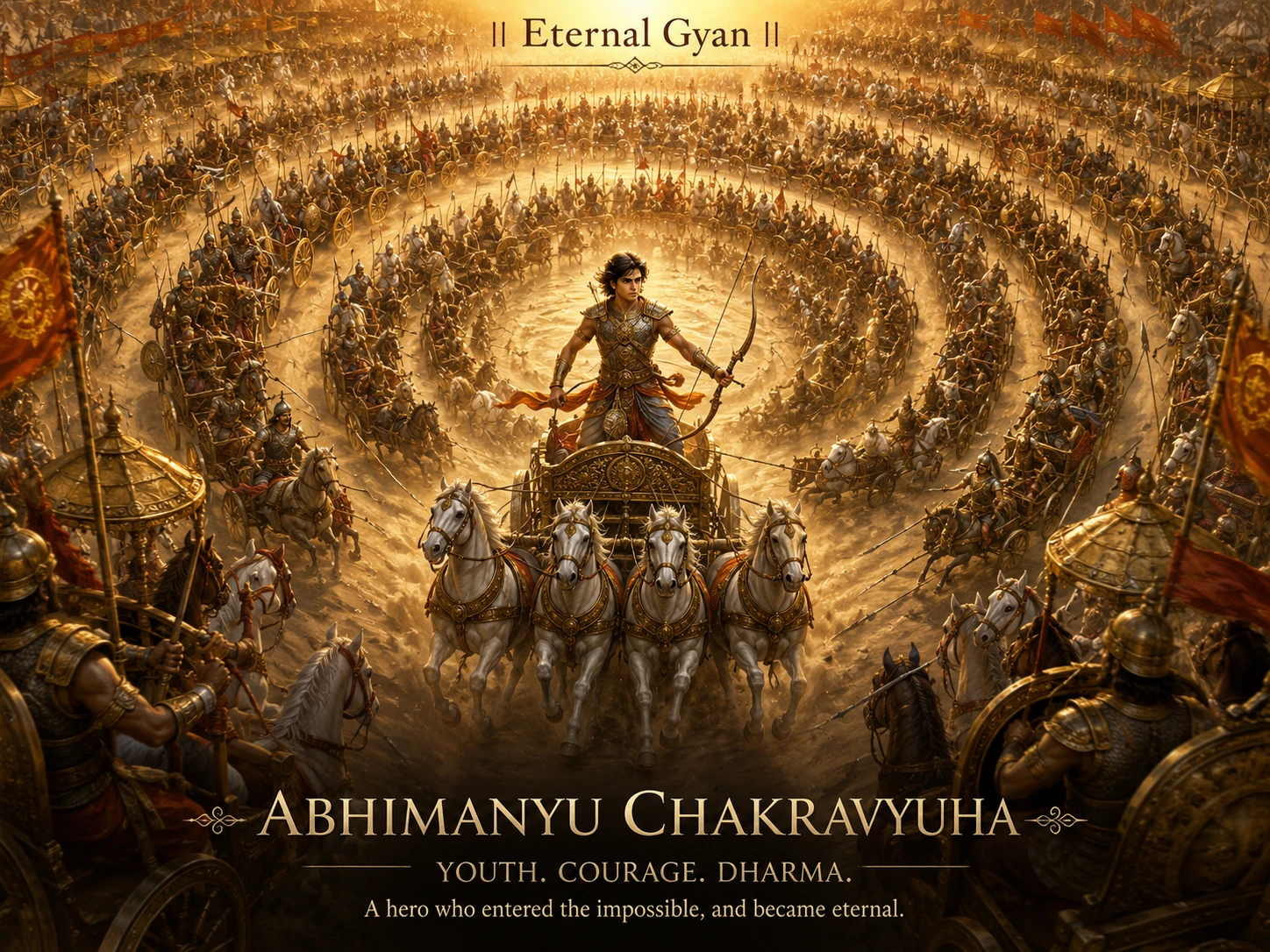
Abhimanyu and the Chakravyuha -- The Boy Who Knew How to Enter but Not How to Leave
14 मिनट पढ़ें
Adbhuta Ramayana -- The Ramayana Where Sita Becomes Kali
9 मिनट पढ़ें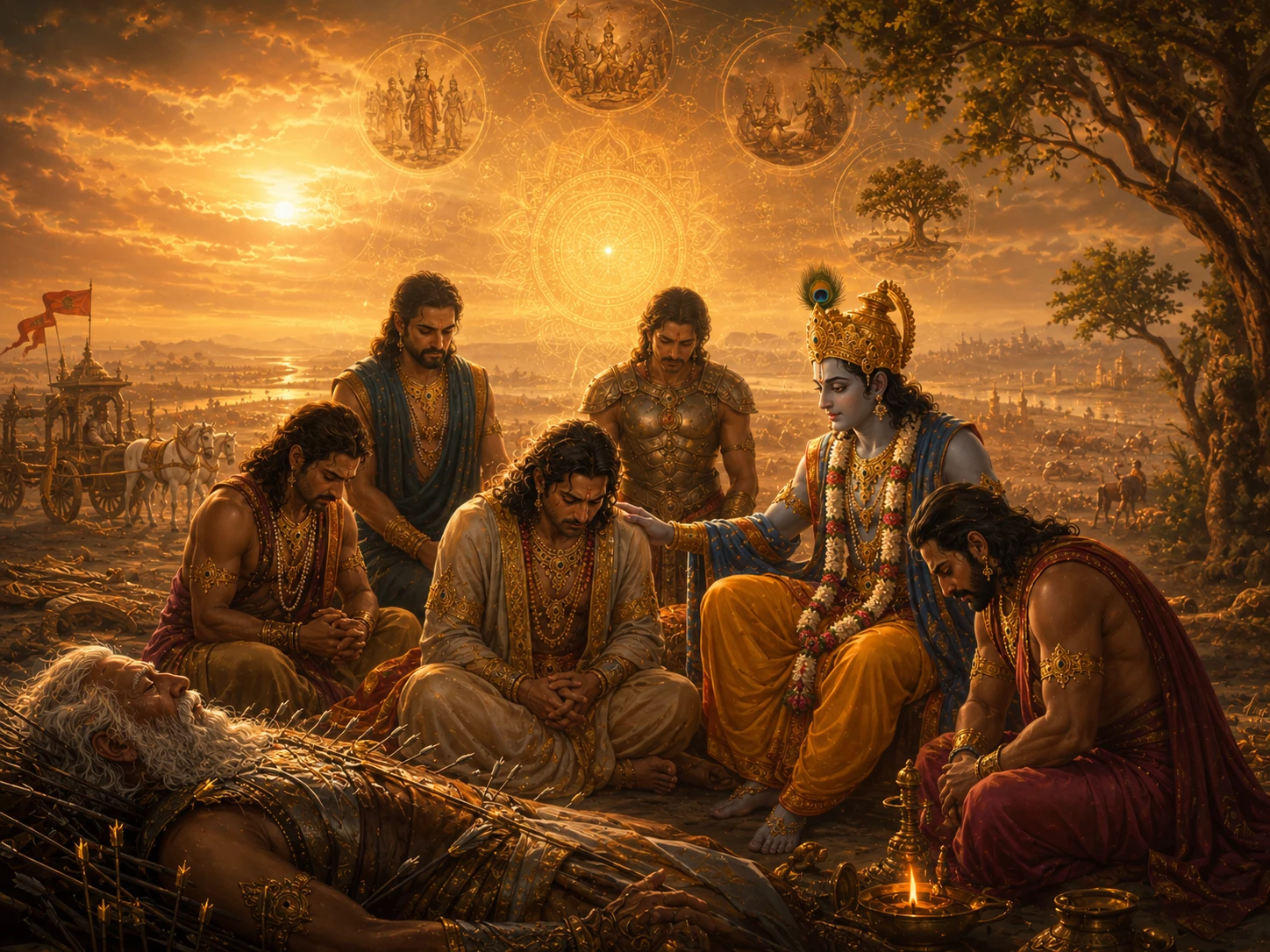
After Kurukshetra -- What Happened Next
14 मिनट पढ़ेंवही अनुवाद त्रुटि जिसने हिन्दू धर्म में '33 कोटि' को '33 करोड़' बनाया, बौद्ध धर्म में भी हुई। बौद्ध ग्रन्थों के चीनी अनुवाद ने 'सप्त कोटि बुद्ध' (7 श्रेष्ठ बुद्ध) का अनुवाद '7 करोड़ बुद्ध' कर दिया। तिब्बती अनुवाद ने सही …
Deities AvatarsCommunity Reflections
🕉️
Be the first to share your reflection.