Warriors Who Defeated Ravana Before Rama
राम से पहले रावण को हराने वाले योद्धा
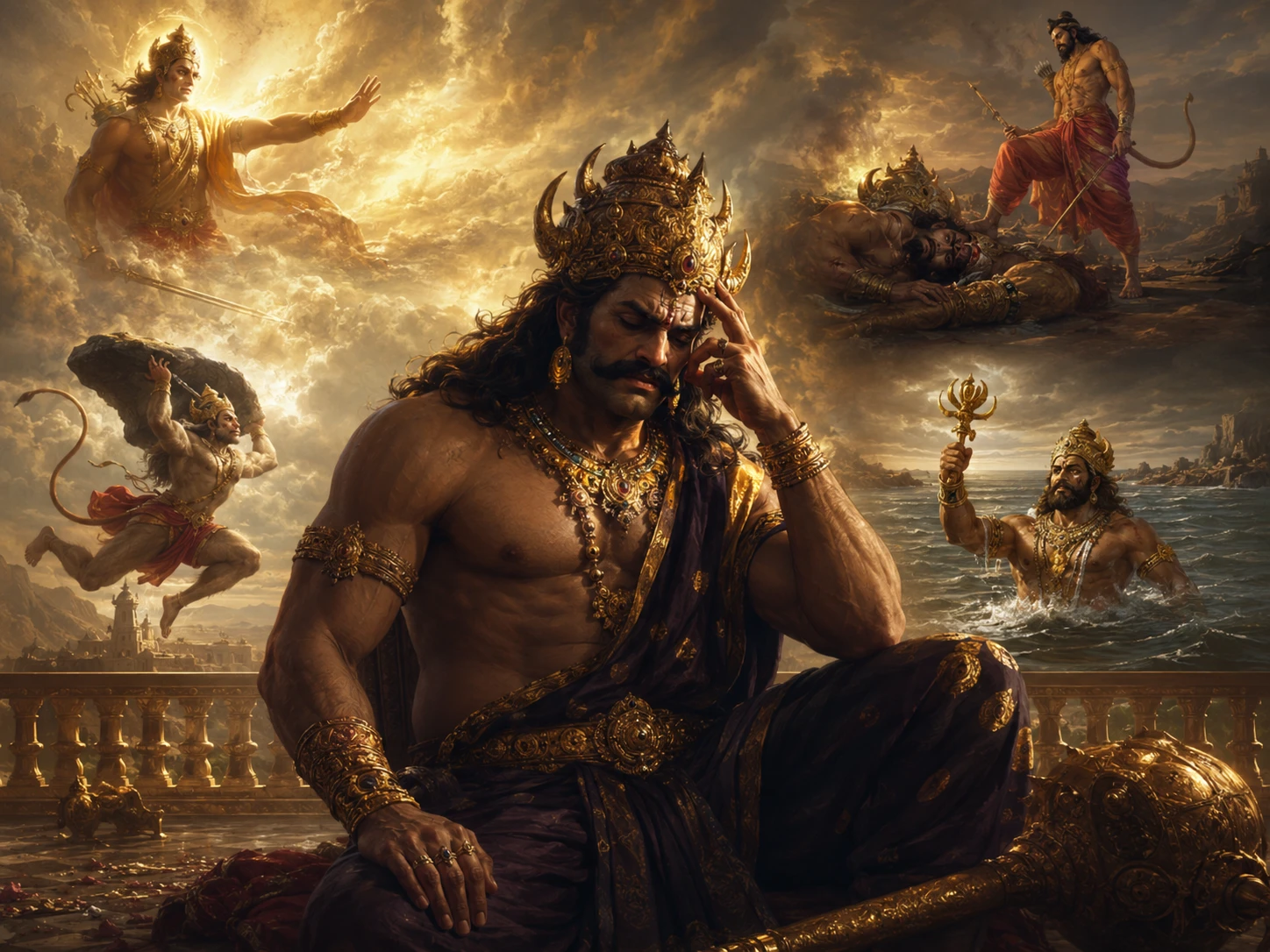
Pop culture ने रावण को एकआयामी खलनायक बना दिया है जिसने संसार पर अत्याचार किया जब तक राम ने नहीं रोका। मूल ग्रन्थों में हक़ीक़त कहीं ज़्यादा दिलचस्प और रावण के लिए कहीं ज़्यादा अपमानजनक है। वाल्मीकि रामायण -- विशेषकर उत्तर काण्ड और किष्किन्धा काण्ड -- और पुराण साहित्य कम-से-कम पाँच अवसर दर्ज करते हैं जब रावण निर्णायक रूप से पराजित, बन्दी, या अपमानित हुआ ऐसे योद्धाओं से जो राम नहीं थे।
ये पराजयें फ़ुटनोट नहीं हैं। ये संरचनात्मक हैं। ये व्यवस्थित रूप से रावण की अजेयता के मिथक को ध्वस्त करती हैं और समझाती हैं कि ब्रह्मा के वरदान में घातक खामी क्यों थी: रावण ने देव, दानव, यक्ष, नाग, गन्धर्व, और राक्षसों से सुरक्षा माँगी। मनुष्यों या पशुओं से नहीं माँगी -- क्योंकि उन्हें तुच्छ माना। हर योद्धा जिसने उसे हराया, इसी अहंकार का अलग तरीक़े से शोषण किया।
न देवा नासुरा यक्षा न गन्धर्वोरगाः क्वचित्। समर्था मां विनिर्जेतुं मानुषान्किं पुनः शठान्॥
na devā nāsurā yakṣā na gandharvoragāḥ kvacit | samarthā māṃ vinirjetuṃ mānuṣān kiṃ punaḥ śaṭhān ||
न देव, न असुर, यक्ष, न गन्धर्व और नाग मुझे परास्त कर सकते हैं। फिर तुच्छ मनुष्यों की क्या बिसात?
— Ravana's boast, Uttara Kanda, Valmiki Ramayana (paraphrased from Brahma's boon context)
राम से पहले रावण को हराने वाले पाँच योद्धा
| # | Warrior | Source Text | How Ravana Was Defeated | What It Reveals |
|---|---|---|---|---|
| 1 | Shiva (via his toe) | Uttara Kanda, Sarga 16-17 | Ravana tried to uproot Kailash; Shiva pressed it down with his big toe, crushing Ravana beneath for 1,000 years | Cosmic power does not need to announce itself. A toe can humble twenty arms. |
| 2 | Vali (Vanara King of Kishkindha) | Uttara Kanda, Sarga 34; Kishkindha Kanda references | Ravana challenged Vali during his evening sandhya; Vali grabbed Ravana, tucked him under his armpit, and flew across the four oceans before releasing him | A 'mere monkey' overpowered the conqueror of the three worlds. Ravana's boon excluded animals and humans. |
| 3 | Kartavirya Arjuna (Sahasrabahu) | Uttara Kanda, Sarga 32-33; Brahmanda Purana | Ravana attacked Kartavirya Arjuna's capital Mahishmati on the Narmada; Kartavirya, with his thousand arms, captured Ravana and imprisoned him. Released later on Pulastya's request. | A human king defeated the demon king. Brahma's boon did not cover humans. |
| 4 | Jatayu's father Arun (Sampati's account) | Uttara Kanda; regional Ramayana traditions | In some Puranic accounts, the aged vulture-king Arun (father of Jatayu and Sampati) clashed with Ravana and wounded him, tearing his chariot apart | Even an old bird could wound Ravana. His son Jatayu would later give his life fighting the same enemy. |
| 5 | Sage Agastya (through sheer spiritual power) | Uttara Kanda; Agastya legends in Tamil tradition | When Ravana flew south, Agastya's spiritual presence was so overwhelming that Ravana could not cross the Vindhyas. In some versions, Agastya cursed him directly. | No army, no weapons -- pure tapasya-shakti stopped the conqueror of the three worlds. |
ब्रह्मा के वरदान ने रावण को देवताओं, दानवों, और दिव्य प्राणियों से अभय किया। इसमें मनुष्य (राम, कार्तवीर्य), पशु (वालि), या स्वयं शिव (जो सभी श्रेणियों से परे हैं) शामिल नहीं थे। वरदान की खामी रावण का अपना अहंकार था।
वालि प्रसंग -- बगल में दबाया
रावण की सबसे सिनेमाई अपमानजनक पराजय किष्किन्धा के वानर-राजा वालि के हाथों है। उत्तर काण्ड बताता है कि रावण, विश्व-विजय यात्रा पर, किष्किन्धा पहुँचा और वालि को ललकारा। पर वालि समुद्र तट पर सन्ध्या कर रहे थे। रावण ने आक्रमण किया। वालि ने, प्रार्थना बिना रोके, बस एक भुजा से रावण को पकड़ा, अख़बार की तरह बगल में दबाया, और सन्ध्या जारी रखी -- संघर्षरत राक्षस-राजा को शरीर से चिपकाए चारों महासागरों पर उड़ते हुए।
प्रार्थना पूरी करने के बाद ही वालि ने रावण को छोड़ा। अपमान पूर्ण था। कुबेर को हराने वाला, देवताओं को झुकाने वाला, कैलाश हिलाने वाला विजेता -- एक बन्दर ने सामान की तरह ढोया।
कार्तवीर्य अर्जुन प्रसंग -- मानव राजा द्वारा बन्दी
कार्तवीर्य अर्जुन -- सहस्रबाहु भी कहलाते हैं -- नर्मदा तट पर माहिष्मती के हैहय राजा थे। उत्तर काण्ड बताता है कि रावण ने दिग्विजय के दौरान माहिष्मती पर आक्रमण किया। कार्तवीर्य ने, जिन्हें दत्तात्रेय से हज़ार भुजाओं का वरदान मिला था, रावण से लड़कर बन्दी बनाया। रावण जेल में डाला गया और तब तक रहा जब तक उसके पितामह ऋषि पुलस्त्य ने कार्तवीर्य से मध्यस्थता कर रिहाई नहीं करवाई।
यह पराजय रावण की अजेयता की पौराणिक कथा के लिए विनाशकारी है क्योंकि कार्तवीर्य अर्जुन मानव राजा थे। देवता नहीं। दिव्य अस्त्र नहीं। साधारण भुजाओं (हालाँकि हज़ार) वाले मर्त्य शासक ने लंकापति को हराकर क़ैद किया।
अहंकार का प्रतिरूप
पाँचों पराजयों को जोड़ने वाली बात सैन्य कमज़ोरी नहीं है। रावण सचमुच शक्तिशाली था। पर हर पराजय में trigger अहंकार था: नन्दी का मज़ाक़ (कैलाश प्रसंग), प्रार्थना के दौरान वालि को ललकारना, 'तुच्छ' माने मानव राजा पर आक्रमण। रावण का हर पूर्व-पराजय उसी ने अनदेखी की चेतावनी था। और अन्तिम पराजय -- उस मानव राजकुमार से जिसे वरदान में शामिल करने की ज़हमत नहीं उठाई -- आजीवन 'कमतर' प्राणियों को कम आँकने का तार्किक निष्कर्ष था।
वालि द्वारा रावण की अपमानजनक हार के बाद दोनों की मित्रता-सन्धि यही कारण है कि सुग्रीव (वालि के भाई और प्रतिद्वन्द्वी) ने रावण से सीधे लड़ने की बजाय राम की मदद माँगी। सुग्रीव जानता था कि वालि का रावण से गठबन्धन है। अगर सुग्रीव लंका पर हमला करता, वालि रावण का साथ देता -- युद्ध अजेय बन जाता। राम द्वारा वालि-वध इसलिए केवल सुग्रीव के राज्य की बहाली नहीं थी; यह लंका अभियान की रणनीतिक पूर्वशर्त थी। वालि हटाओ, और रावण का सबसे शक्तिशाली ग़ैर-राक्षस सहयोगी हट जाता है। रामायण की रणनीति किसी भी आधुनिक भू-राजनीतिक playbook जितनी स्तरित है।
राम नाम जपो -- वह मनुष्य जिसने रावण का अन्त किया
पाँच योद्धाओं ने रावण को झुकाया, पर केवल राम ने उसकी कथा समाप्त की। माला पर "श्री राम जय राम जय जय राम" का 108 बार जप करो। एटर्नल राग पर इस मन्त्र का पृष्ठ अर्थ और जप-विधि बताता है।
Tags
Eternal Raga · शाश्वत राग
Institutional voice — scholarly articles on Sanatan Dharma
अपनी समझ गहरी करें
अपनी समझ और गहरी करें
scriptural exegesis
Ravana Lifts Kailash -- How the Demon King Became Shiva's Greatest Devotee
A ten-headed king tries to uproot God's mountain. God presses it back with his little toe. The king, crushed and trapped, sings for a thousand years -- and the hymn he composes becomes one of the most powerful devotional poems in Sanskrit. The Ravananugraha episode is where arrogance meets devotion, and the result is the Shiva Tandav Stotram.
deities avatars
Daksha's Yagna and Sati -- Why Daksha Hated Shiva
A father so offended by his son-in-law that he held a cosmic sacrifice and invited every god in the universe -- except Shiva. A wife so devastated by the insult that she walked into the sacred fire and burned herself alive. And a husband so enraged by her death that he created a warrior from his dreadlock who destroyed the entire ceremony and beheaded the father-in-law. The Daksha Yagna is not a domestic dispute. It is the origin story of the Shakti Peethas, the theology of Shiva's rage, and the reason Parvati exists.
scriptural exegesis
Ramayana Warriors -- Rama's Alliance vs Lanka's Army
Two brothers, a bear king, an exile army of Vanaras, and one defector against the most fortified island-fortress in the world. The Lanka war was not a simple good-vs-evil showdown -- it was a war between two military systems, fought gate by gate, duel by duel. Here is every major warrior from both sides, mapped to their actual battle matchups from Valmiki's Yuddha Kanda.
scriptural exegesis
Sugriva's Search for Sita -- The Intelligence Network Hidden in the Ramayana
No phones, no satellites, no maps. Yet Sugriva found Sita across an entire continent. He did not send a random army -- he built a four-directional intelligence network with designated leaders, precise geographical routes, and a strict one-month deadline. Kishkindha Kanda, Sargas 40-43, reads less like an ancient epic and more like a military operations manual. The Ramayana was not just telling a story. It was teaching strategy.
scriptural exegesis
Hanuman's Leap Across the Ocean
100 yojanas of open ocean. Three supernatural obstacles. Zero backup. Hanuman's leap to Lanka is not just mythology's greatest action sequence -- it is a masterclass in overcoming self-doubt, navigating temptation, and executing under impossible pressure.
deities avatars
Dashavatara -- Why Vishnu Comes Back Ten Times
Fish, tortoise, boar, half-lion, dwarf, axe-warrior, prince, cowherd, enlightened teacher, future horseman. The ten avatars of Vishnu are not random folklore. Read them in sequence and you get something startling -- a narrative that mirrors evolutionary biology, tracks the rise and fall of political systems, and argues that God does not sit above history but enters it, gets dirty, and does the work. The Dashavatara is Hinduism's answer to the question every civilisation asks: why does the world keep breaking, and who fixes it?
वालि द्वारा रावण की अपमानजनक हार के बाद दोनों की मित्रता-सन्धि यही कारण है कि सुग्रीव (वालि के भाई और प्रतिद्वन्द्वी) ने रावण से सीधे लड़ने की बजाय राम की मदद माँगी। सुग्रीव जानता था कि वालि का रावण से गठबन्धन है। अगर सु…
More in Scriptural Exegesis
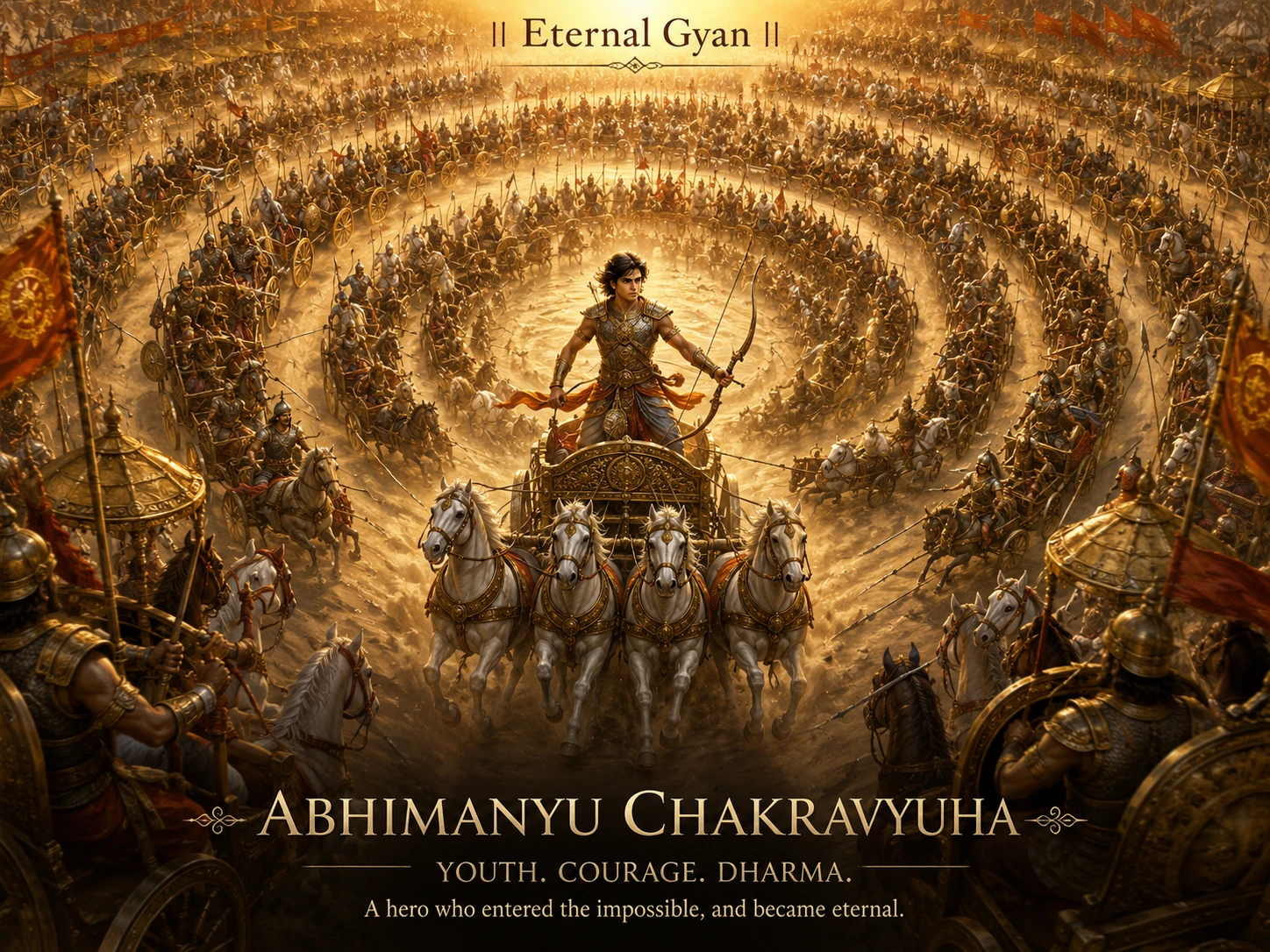
Abhimanyu and the Chakravyuha -- The Boy Who Knew How to Enter but Not How to Leave
14 मिनट पढ़ें
Adbhuta Ramayana -- The Ramayana Where Sita Becomes Kali
9 मिनट पढ़ें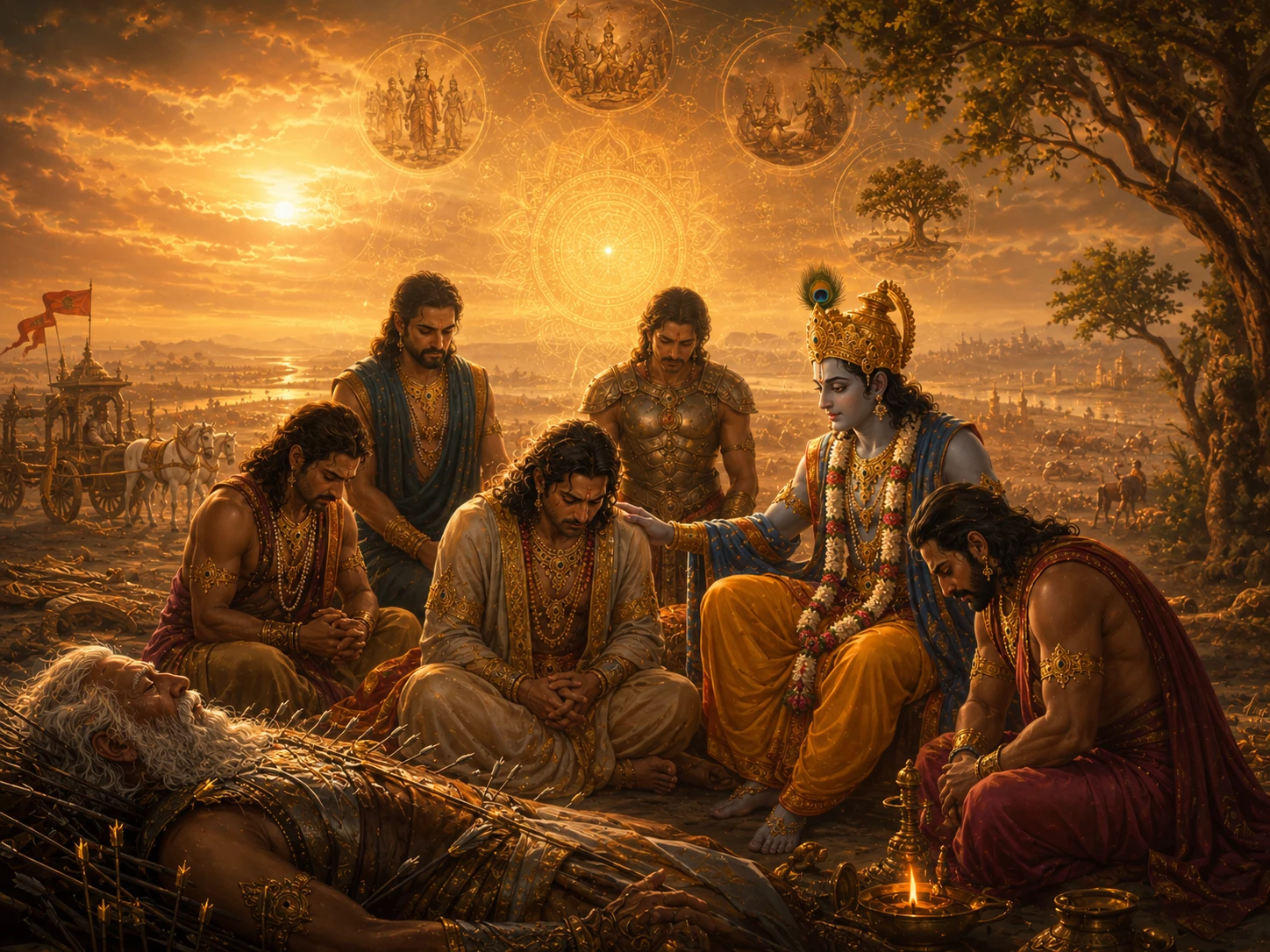
After Kurukshetra -- What Happened Next
14 मिनट पढ़ेंवही अनुवाद त्रुटि जिसने हिन्दू धर्म में '33 कोटि' को '33 करोड़' बनाया, बौद्ध धर्म में भी हुई। बौद्ध ग्रन्थों के चीनी अनुवाद ने 'सप्त कोटि बुद्ध' (7 श्रेष्ठ बुद्ध) का अनुवाद '7 करोड़ बुद्ध' कर दिया। तिब्बती अनुवाद ने सही …
Deities AvatarsCommunity Reflections
🕉️
Be the first to share your reflection.