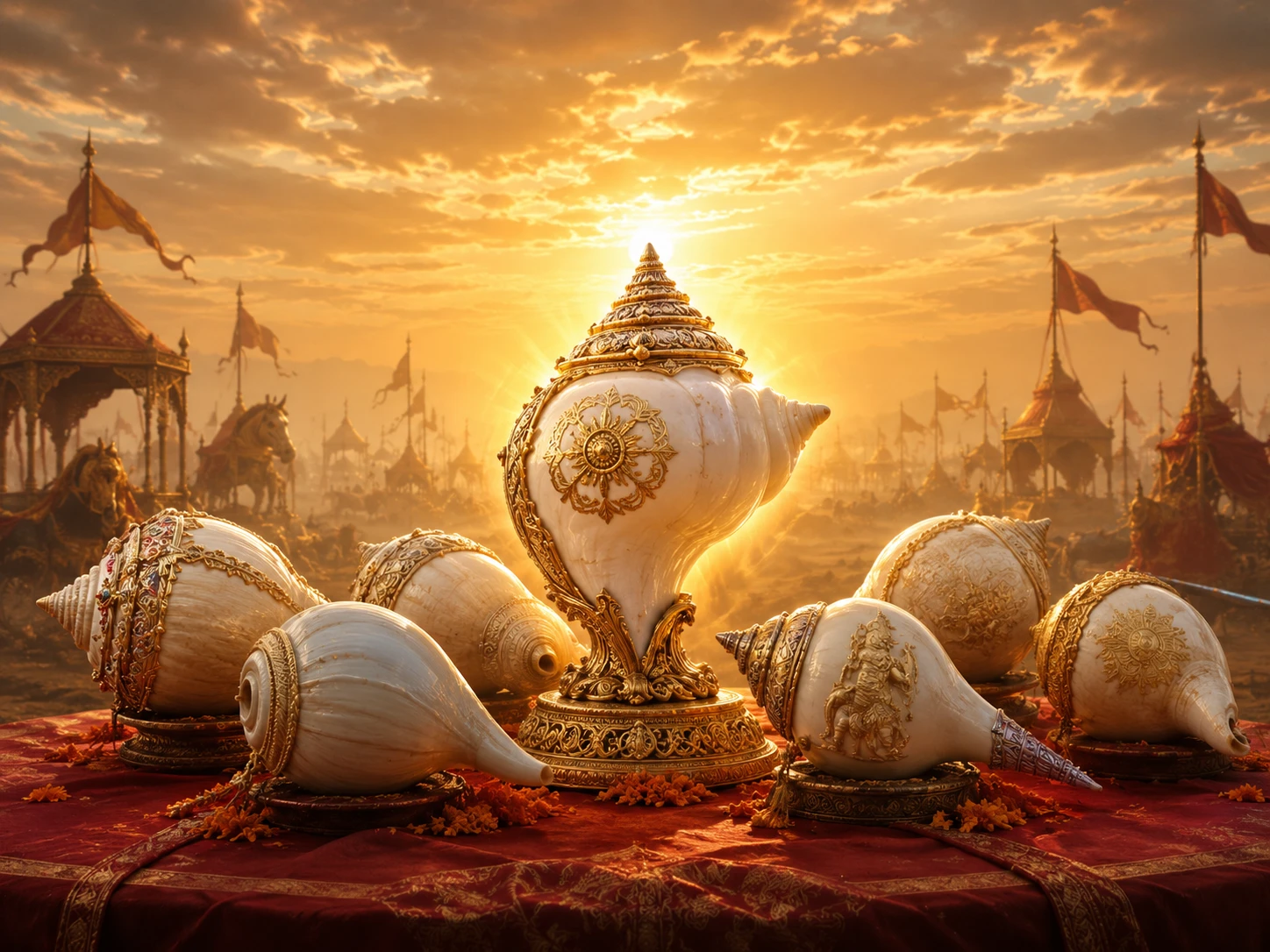
The Sacred Conch Shells -- Panchajanya, Devadatta and the War Horns of Kurukshetra
पवित्र शंख -- पाञ्चजन्य, देवदत्त और कुरुक्षेत्र के रणशंख
पाञ्चजन्यं हृषीकेशो देवदत्तं धनञ्जयः। पौण्ड्रं दध्मौ महाशङ्खं भीमकर्मा वृकोदरः॥ अनन्तविजयं राजा कुन्तीपुत्रो युधिष्ठिरः। नकुलः सहदेवश्च सुघोषमणिपुष्पकौ॥
paanchajanyam hrishhiikeshah devadattam dhananjayah paunDram dadhmau mahaashankham bhiimakarmaa vrikoudarah anantavijayam raajaa kuntiputrah yudhishhthirah akulah sahadevas ca sughosha-manipushpakau
हृषीकेश (कृष्ण) ने पाञ्चजन्य बजाया; धनंजय (अर्जुन) ने देवदत्त; भीमकर्मा वृकोदर (भीम) ने महाशंख पौण्ड्र; राजा युधिष्ठिर ने अनन्तविजय; और नकुल-सहदेव ने सुघोष और मणिपुष्पक।
— Bhagavad Gita 1.15-16
भगवद्गीता -- हिन्दू धर्म का सम्भवतः सबसे महत्वपूर्ण आध्यात्मिक ग्रन्थ -- दर्शन से नहीं शुरू होती। यह ध्वनि विज्ञान से शुरू होती है। सम्पूर्ण प्रथम अध्याय (अर्जुन विषाद योग) कुरुक्षेत्र रणभूमि के दोनों ओर शंखनाद से आरम्भ होता है। संजय अन्धे राजा धृतराष्ट्र को बताता है कि वह ध्वनि इतनी प्रबल थी कि पृथ्वी और आकाश कम्पित हो उठे। यह काव्यात्मक अतिशयोक्ति नहीं; जानबूझकर रचा गया कथा-शिल्प है। गीता बता रही है: ज्ञान से पहले एक ऐसी विदारक ध्वनि चाहिए जो जड़ता को तोड़ दे।
प्रत्येक पाण्डव योद्धा नामित शंख धारण करता था, और प्रत्येक नाम अपने धारक के चरित्र और नियति को संकेतित करता था।
पाँच पाण्डव शंख
| Conch | शंख | Bearer | Meaning of Name | Origin | Symbolism |
|---|---|---|---|---|---|
| Panchajanya | पाञ्चजन्य | Krishna | 'Born of five elements' or 'Born of Panchajana' | Krishna retrieved it from the demon Panchajana who lived as a conch in the ocean, after his guru Sandipani's son was kidnapped. It emerged from the milky ocean. | Dharma and cosmic order. Its sound declares the divine presence on the battlefield. When Krishna blows it, he is not a charioteer -- he is God announcing himself. |
| Devadatta | देवदत्त | Arjuna | 'God-given' | Gifted to Arjuna by Indra (his father) during his time in Amaravati (Indra's heaven). Received alongside celestial weapons training. | Courage and divine authority. Its sound was believed to inspire valor in allies and strike terror in enemies. Could avert natural disasters. |
| Paundra | पौण्ड्र | Bhima | 'Of Pundra region' or 'The Great One' | A massive conch matching Bhima's legendary physical stature. Origin connected to the Pundra kingdom. | Raw strength and fearlessness. Only Bhima had the lung capacity and physical power to blow it to its full potential. Its bass resonance shook the earth. |
| Anantavijaya | अनन्तविजय | Yudhishthira | 'Eternal victory' | Fitting for the king who embodied Dharma. The conch whose name prophesied the war's outcome from the start. | Truth, righteousness, and inevitable victory of dharma. Yudhishthira's quiet blowing of this conch carried the moral authority of the entire Pandava cause. |
| Sughosa | सुघोष | Nakula | 'Sweet-sounding' or 'Pleasant resonance' | Befitting Nakula, considered the most handsome and graceful of the Pandavas. | Harmony and beauty in sound. Even in war, the Pandava cause carried aesthetic grace. |
| Manipushpaka | मणिपुष्पक | Sahadeva | 'Jeweled flower' or 'Gem among blossoms' | Connected to the treasures of the ocean. Sahadeva was the wisest of the five. | Wisdom adorned with beauty. The jewel-like sound complemented Sahadeva's deep knowledge of astrology and dharma. |
कथा की सटीकता देखें: सबसे पहले कृष्ण बजाते हैं (दिव्य प्राधिकार), फिर अर्जुन (योद्धा प्राधिकार), फिर भीम (भौतिक बल), फिर युधिष्ठिर (नैतिक प्राधिकार), फिर जुड़वाँ एक साथ (पूरक शक्तियाँ)। क्रम स्वयं शक्ति का क्रम है।
पवित्र शंखों के प्रकार
रणभूमि से परे शंख हिन्दू अनुष्ठान जीवन में केन्द्रीय स्थान रखता है। दो मुख्य प्रकार इसकी पवित्र भूगोल को परिभाषित करते हैं।
दक्षिणावर्ती शंख (दाहिनी ओर सर्पिल) अत्यन्त दुर्लभ है -- लगभग दस लाख शंखों में एक में पाया जाता है। देवी लक्ष्मी और भगवान विष्णु से सम्बद्ध, इसे सबसे शुभ वस्तु माना जाता है। वैज्ञानिक रूप से यह Turbinella pyrum प्रजाति के प्राकृतिक वामावर्ती विकास प्रतिरूप से विचलन है।
वामावर्ती शंख सामान्य प्रकार है जो भारत भर में दैनिक पूजा, आरती और मंदिर अनुष्ठानों में प्रयोग होता है। बनारस हिन्दू विश्वविद्यालय के ध्वनि विज्ञान विभाग ने सही ढंग से बजाए गए शंख की आवृत्ति सीमा 100-500 Hz मापी है -- वे आवृत्तियाँ जो मानव तंत्रिका तंत्र पर शान्तिदायक प्रभाव और तत्काल वातावरण में जीवाणुनाशक गुण रखती हैं।
तमिलनाडु, केरल और ओडिशा के मंदिरों में प्रातःकालीन शंखनाद केवल अनुष्ठान नहीं -- यह ध्वनि सीमा चिह्न है जो घोषणा करता है: इस ध्वनि की पहुँच में पवित्र भूमि आरम्भ होती है।
शंख हिन्दू, बौद्ध और जैन तीनों धर्मों में आठ शुभ प्रतीकों (अष्टमंगल) में से एक है। भारतीय रुपये का प्रतीक चिह्न स्वयं शंख की पवित्र सर्पिल से अपनी दृश्य विरासत ढूँढता है -- समृद्धि, दिव्य ध्वनि और राष्ट्रीय पहचान का सम्बन्ध।
पवित्र ध्वनि सुनें -- ॐ जप
शंख की ध्वनि को ॐ का भौतिक रूप माना जाता है। शान्त बैठकर माला पर ॐ का 108 बार उच्चारण करो, हर ध्वनि को अगली से पहले पूरी तरह विलीन होने दो। एटर्नल राग के मन्त्र-ध्यान पुस्तकालय में जप के लिए और मन्त्र हैं।
Eternal Raga · शाश्वत राग
Institutional voice — scholarly articles on Sanatan Dharma
अपनी समझ गहरी करें
अपनी समझ और गहरी करें
sacred symbols
Shankh -- The Sacred Conch That Declared War, Sanctifies Worship, and Purifies Water
The opening scene of the Bhagavad Gita is not a conversation. It is a sound -- five conch shells blown simultaneously on the battlefield of Kurukshetra. Krishna's Panchajanya, Arjuna's Devadatta, Bhima's Paundra. Before a single arrow flies, the war is declared by sound. The conch is Hinduism's battle cry, prayer bell, and water purifier -- all in one spiralling shell.
sacred symbols
Om -- The Primordial Sound That Contains the Universe
Every temple bell, every mantra, every meditation session begins and ends with Om. But what exactly IS Om? The Mandukya Upanishad claims this single syllable contains all of reality -- past, present, future, and whatever lies beyond time itself. Twelve verses. One sound. The entire map of consciousness.
divine arsenal
Astra vs Shastra -- The Two Classes of Weapons in Hindu Warfare
One is hurled with mantras and divine invocation. The other is wielded by hand and muscle. Understanding the fundamental difference between Astra and Shastra unlocks the entire weapons philosophy of ancient India.
tantra mantra yantra
Nada Yoga -- The Yoga of Sacred Sound
The Hatha Yoga Pradipika declares that of all paths to samadhi, meditation on Nada -- the inner sound -- is supreme. In a world drowning in noise-cancelling earbuds and Spotify playlists, the oldest yoga of sound asks you to listen to the one frequency that needs no device.
scriptural exegesis
Gita Chapter 2 -- Sankhya Yoga: The Chapter That Changed Indian Philosophy Forever
Arjuna drops his bow. His hands shake. He tells Krishna he would rather beg for food than kill his teachers and cousins. Krishna's response in Chapter 2 is the philosophical backbone of the entire Gita -- covering the immortality of the soul, the ethics of action without attachment, and the portrait of the Sthitaprajna (the person of steady wisdom). This single chapter contains more quotable verses than most entire scriptures. 'Karmanye vadhikaraste' lives on WhatsApp statuses for a reason.
tantra mantra yantra
The Science of Mantra -- How Sacred Sound Rewires Consciousness
A mantra is not a prayer. It is not a wish. It is a precision instrument of consciousness -- a vibrational key engineered in Sanskrit thousands of years ago to unlock specific states of mind. Modern neuroscience is only now catching up.
शंख हिन्दू, बौद्ध और जैन तीनों धर्मों में आठ शुभ प्रतीकों (अष्टमंगल) में से एक है। भारतीय रुपये का प्रतीक चिह्न स्वयं शंख की पवित्र सर्पिल से अपनी दृश्य विरासत ढूँढता है -- समृद्धि, दिव्य ध्वनि और राष्ट्रीय पहचान का सम्ब…
More in Divine Arsenal
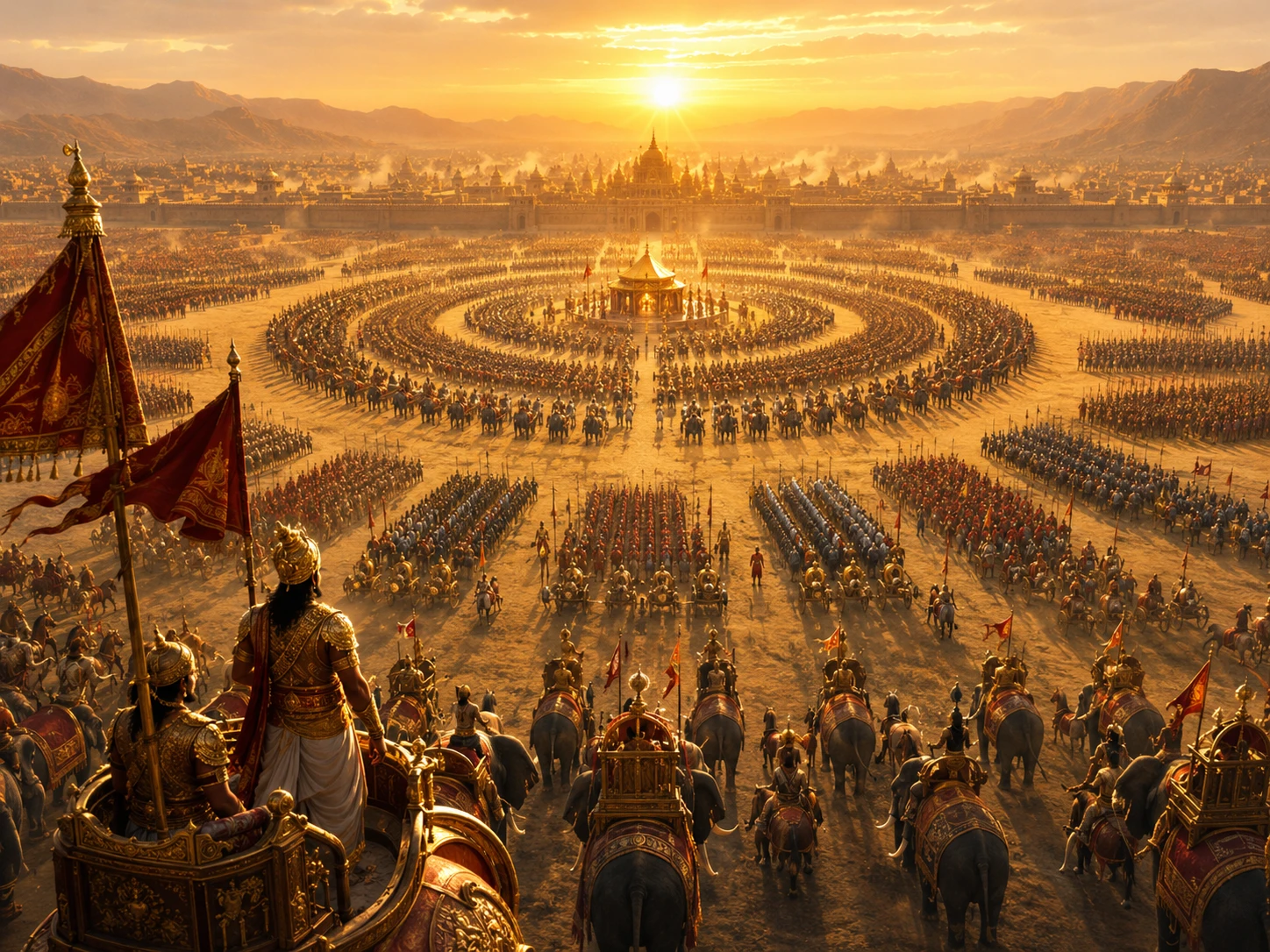
Akshauhini -- The Epic Army Structure Where Every Digit Sums to 18
14 मिनट पढ़ें
Ancient Indian Martial Arts -- Kalaripayattu to Malla-Yuddha
14 मिनट पढ़ें
Astra Invocation and Withdrawal -- The Ritual of Weapons
16 मिनट पढ़ेंवही अनुवाद त्रुटि जिसने हिन्दू धर्म में '33 कोटि' को '33 करोड़' बनाया, बौद्ध धर्म में भी हुई। बौद्ध ग्रन्थों के चीनी अनुवाद ने 'सप्त कोटि बुद्ध' (7 श्रेष्ठ बुद्ध) का अनुवाद '7 करोड़ बुद्ध' कर दिया। तिब्बती अनुवाद ने सही …
Deities AvatarsCommunity Reflections
🕉️
Be the first to share your reflection.