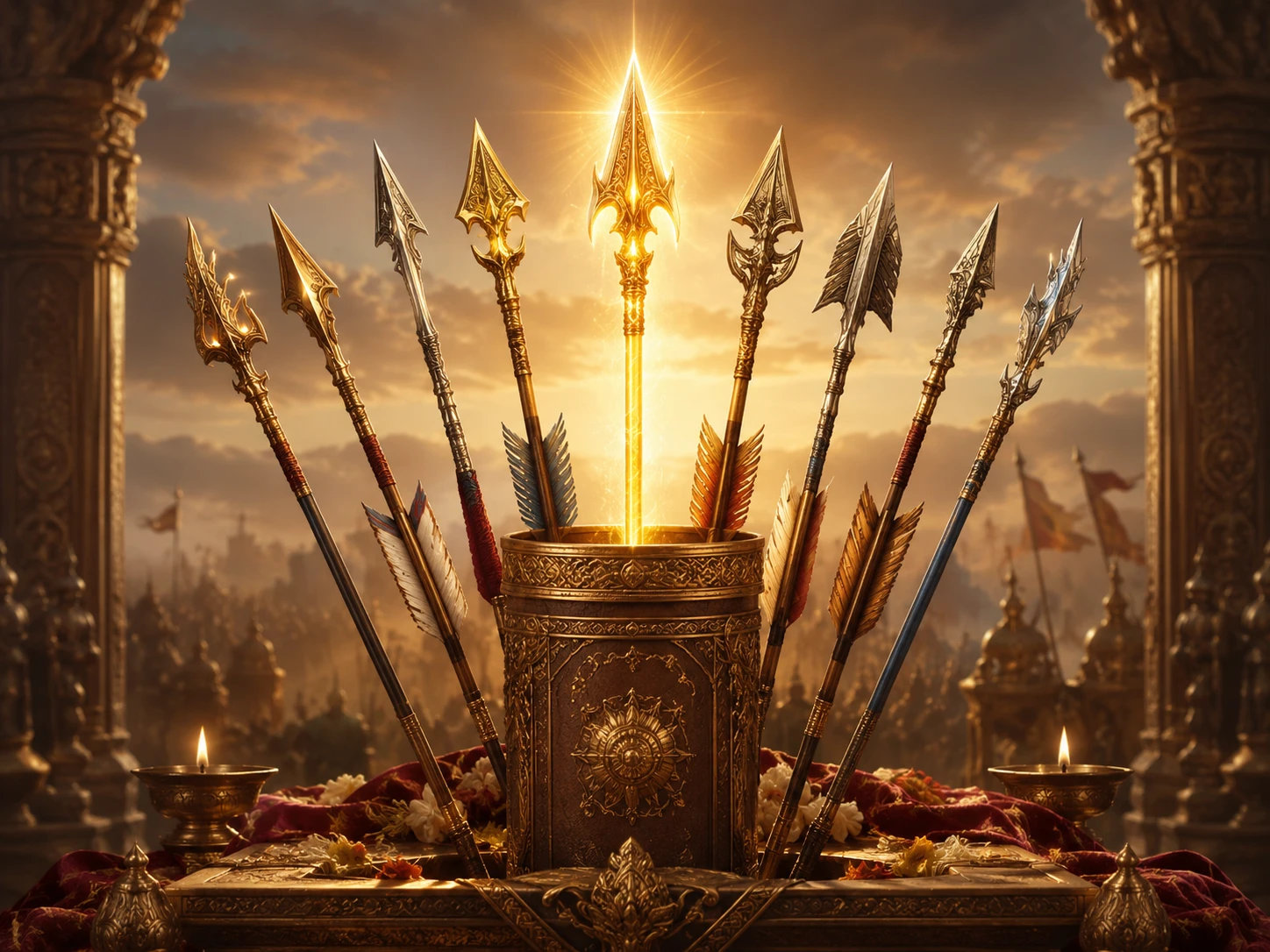
The Arrows That Changed Destiny -- Famous Banas of Hindu Mythology
नियति बदलने वाले बाण -- हिन्दू पौराणिक कथाओं के प्रसिद्ध बाण
अस्त्रों और दिव्य धनुषों के युग में बाण वाहन प्रणाली था -- वह माध्यम जो दिव्य ऊर्जा को प्रत्यंचा से लक्ष्य तक पहुँचाता था। पर सभी बाण समान नहीं थे। कुछ साधारण लोहे की नोक वाली छड़ें थीं। अन्य देवताओं द्वारा प्रदत्त, मंत्रों से सशक्त, सम्पूर्ण युद्धों की दिशा बदलने में सक्षम दिव्य विनाश के उपकरण।
हिन्दू पौराणिक कथाओं के बाणों को असाधारण बनाने वाली बात केवल उनकी विनाशक शक्ति नहीं बल्कि उनकी सटीकता है -- भौतिक और नैतिक दोनों। अनेक बाण बुद्धिमान थे: लक्ष्य का पीछा कर सकते थे, बाधाओं से बच सकते थे, या उड़ान के बीच वापस बुलाए जा सकते थे।
ये हैं वे बाण जिनकी उड़ान ने पौराणिक कथाओं की दिशा बदली -- और प्रत्येक प्रक्षेपवक्र में अन्तर्निहित पाठ।
नियति बदलने वाले बाण
| Arrow/Astra | बाण/अस्त्र | Fired By | Target | Gifted By / Source | Power & Story |
|---|---|---|---|---|---|
| Brahmastra (on arrow) | ब्रह्मास्त्र बाण | Rama | Ravana | Agastya Rishi gifted the Astra; Brahma empowered it | The final arrow of the Ramayana. Invoked by Agastya's Aditya Hridayam mantra. Powered by Vayu (wind), Agni (fire), and Surya (sun). Pierced Ravana's navel where amrita sustained him. After killing Ravana, the arrow cleaned itself in the ocean and returned to Rama's quiver. |
| Anjalikastra | अञ्जलिकास्त्र | Arjuna | Karna | Divine arrow of immense size | The arrow that killed Karna. Fired when Karna's chariot wheel was stuck and he was unarmed trying to free it. Shaped like folded hands (anjali). Severed Karna's head. One of the most morally debated moments in the Mahabharata -- was it dharma to strike an unarmed warrior? |
| Shabdavedi Bana | शब्दवेधी बाण | Arjuna (and Dasharatha) | Various | Skill-based, no divine gift needed | Sound-seeking arrow. The archer fires guided only by sound, not sight. Dasharatha accidentally killed Shravan Kumar with one. Arjuna used it in darkness during battle. Represents the highest level of archery mastery. |
| Nagastra | नागास्त्र | Karna | Arjuna | Serpent-deity empowered | Transforms into venomous serpents mid-flight. Karna fired it at Arjuna on Day 17. Krishna pressed the chariot into the ground so the arrow struck Arjuna's crown instead of his head. Karna refused to fire it a second time -- once used, an Astra's honour is spent. |
| Shakti (Indra's spear-arrow) | शक्ति | Karna | Ghatotkacha | Indra, in exchange for Karna's Kavach-Kundal | Infallible single-use weapon. Karna saved it to kill Arjuna but was forced to use it on Bhima's son Ghatotkacha who was rampaging at night. Ghatotkacha's sacrifice saved Arjuna's life -- the most strategic sacrifice in the war. |
| Bhishma's chosen arrows | भीष्म के चुने बाण | Multiple warriors | Bhishma himself | Bhishma chose his own death | Bhishma lay on a bed of arrows (Sharashayya) but could not be killed until he willed it (Iccha Mrityu). He chose Uttarayan (auspicious period) to depart. The arrows that held him were his chosen resting place, not instruments of defeat. |
| Brahmastra (Ashwatthama) | ब्रह्मास्त्र | Ashwatthama | Pandava lineage (unborn Parikshit) | Drona taught the launch, not the recall | Fired in grief and rage after his father's death. Targeted the womb of Uttara. Krishna protected Parikshit and cursed Ashwatthama to wander earth immortally with a festering wound. The ultimate cautionary tale of a weapon without wisdom. |
रावण का वध करने वाला बाण कार्य पूर्ण कर राम के तूणीर में लौट आया। कर्ण का वध करने वाला बाण लौट नहीं सकता -- वह अपनी परिस्थितियों का नैतिक भार सदैव वहन करता है। हिन्दू पौराणिक कथाओं में बाण स्मरण रखते हैं।
स तं निहत्य राक्षसेन्द्रं प्रतापवान् रघुप्रवीरो रणकर्मदुर्मदम्। ततस्तदस्त्रं मुदितस्तूणीगतं समाददे रामनियुक्तकर्म तत्॥
sa tam nihatya raakshasendram prataapavaan raghupraviiro raNakarmadurmadam tatas tad astram muditah tuuNiigatam samaadade raamaniyuktakarma tat
उस पराक्रमी राक्षसराज का वध कर रघुवंश के वीर -- वह बाण अपना दिव्य कार्य पूर्ण कर प्रसन्नतापूर्वक तूणीर में लौट आया, राम के लिए उसका कार्य अब पूर्ण था।
— Valmiki Ramayana, Yuddha Kanda 108.17
भारत की आधुनिक टैंक-रोधी निर्देशित मिसाइल का नाम 'नाग' और वायु-से-वायु मिसाइल का नाम 'अस्त्र' है। DRDO का 'मिशन शक्ति' (उपग्रह-रोधी परीक्षण, 2019) उसी इन्द्र शक्ति की प्रतिध्वनि था जो कर्ण कुरुक्षेत्र ले गया था।
अर्जुन की एकाग्रता अपनाएँ -- 108 जप
अँधेरे में केवल ध्वनि से लक्ष्य साधने वाले शब्दवेधी बाण के लिए आवश्यक एकाग्रता उसी स्थिरता से आती है जो मन्त्र-जप विकसित करता है। माला पर एक ही मन्त्र के 108 जप करो, गिनती भटकने दिए बिना। एटर्नल राग का मन्त्र-ध्यान पुस्तकालय मन्त्र चुनने की जगह है।
Eternal Raga · शाश्वत राग
Institutional voice — scholarly articles on Sanatan Dharma
अपनी समझ गहरी करें
अपनी समझ और गहरी करें
divine arsenal
Astra vs Shastra -- The Two Classes of Weapons in Hindu Warfare
One is hurled with mantras and divine invocation. The other is wielded by hand and muscle. Understanding the fundamental difference between Astra and Shastra unlocks the entire weapons philosophy of ancient India.
divine arsenal
The Celestial Bows -- Pinaka, Gandiva, Sharanga, Vijaya and the Sacred Art of Dhanurvidya
Five bows shaped the fate of two great epics. Forged by Vishwakarma and Brahma, wielded by Shiva, Rama, Arjuna, Vishnu, and Karna -- these were not mere weapons but extensions of cosmic will. Know their origins, their powers, and the warriors who earned them.
divine arsenal
The Sacred Conch Shells -- Panchajanya, Devadatta and the War Horns of Kurukshetra
The Bhagavad Gita opens not with words but with sound -- the thunderous blowing of five sacred conch shells that signalled the beginning of the greatest war in mythology. Each conch had a name, a story, and a power. Know them all.
divine arsenal
The Celestial Chariots -- Pushpaka Vimana, Arjuna's Ratha, and the Flying Machines of Hindu Mythology
Ravana's Pushpaka Vimana could fly across oceans and read its owner's mind. Arjuna's chariot bore Hanuman on its flag and was driven by God himself. These were not fairy tale carriages -- they may be literary encodings of technologies that ancient India actually possessed.
scriptural exegesis
Gita Chapter 2 -- Sankhya Yoga: The Chapter That Changed Indian Philosophy Forever
Arjuna drops his bow. His hands shake. He tells Krishna he would rather beg for food than kill his teachers and cousins. Krishna's response in Chapter 2 is the philosophical backbone of the entire Gita -- covering the immortality of the soul, the ethics of action without attachment, and the portrait of the Sthitaprajna (the person of steady wisdom). This single chapter contains more quotable verses than most entire scriptures. 'Karmanye vadhikaraste' lives on WhatsApp statuses for a reason.
scriptural exegesis
Gita Chapter 11 -- Vishwaroop: When Arjuna Saw Everything and Could Not Bear It
Arjuna asks to see Krishna's true form. He gets what he asks for. Infinite mouths, infinite eyes, infinite arms, the entire universe being consumed. Warriors rushing into blazing mouths like moths into flame. Time itself as a devouring force. This is the chapter Oppenheimer quoted at Trinity. It is the Gita's most terrifying passage -- and its most honest statement about what happens when a human mind encounters infinity without a filter.
भारत की आधुनिक टैंक-रोधी निर्देशित मिसाइल का नाम 'नाग' और वायु-से-वायु मिसाइल का नाम 'अस्त्र' है। DRDO का 'मिशन शक्ति' (उपग्रह-रोधी परीक्षण, 2019) उसी इन्द्र शक्ति की प्रतिध्वनि था जो कर्ण कुरुक्षेत्र ले गया था।
More in Divine Arsenal
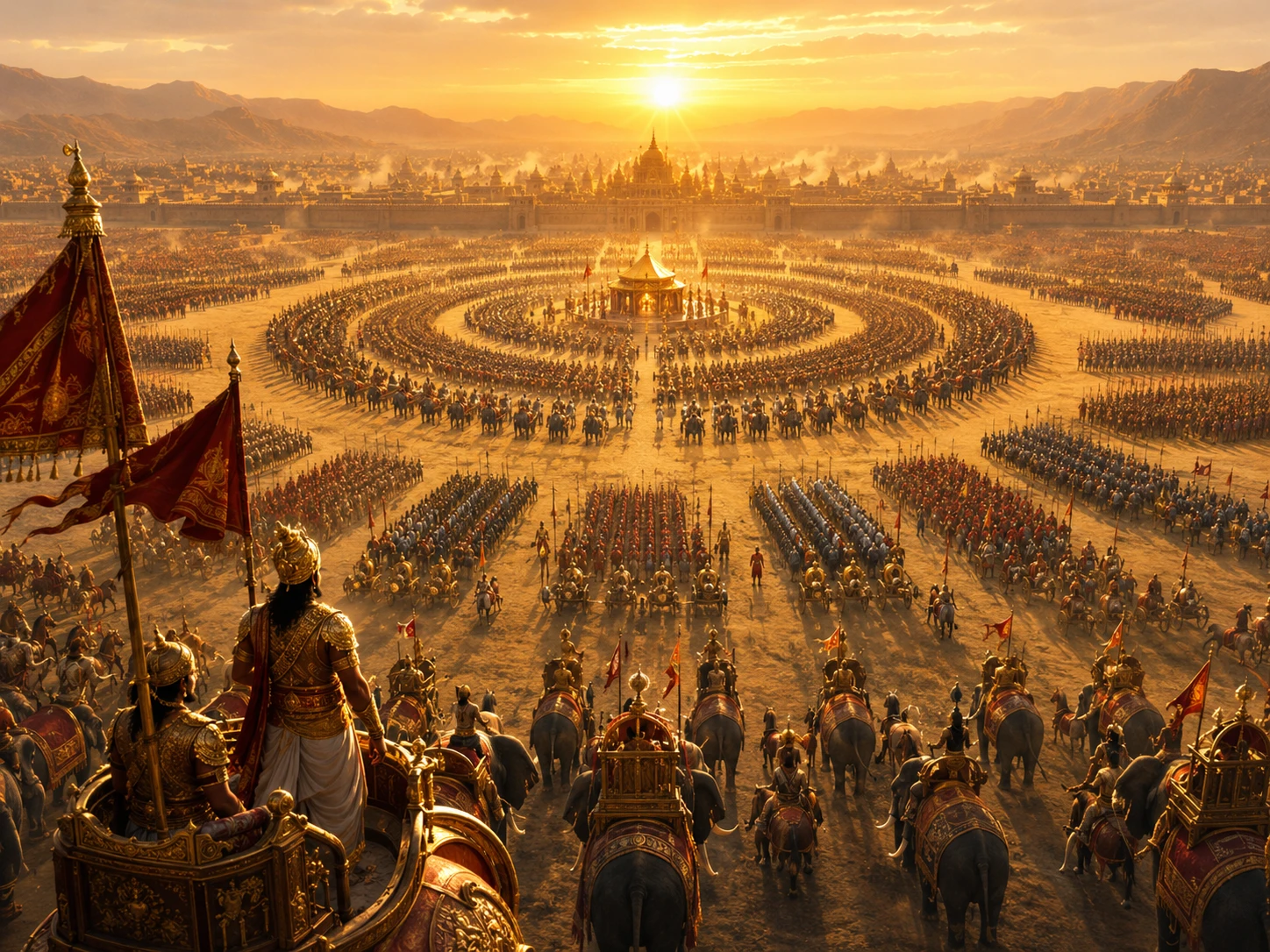
Akshauhini -- The Epic Army Structure Where Every Digit Sums to 18
14 मिनट पढ़ें
Ancient Indian Martial Arts -- Kalaripayattu to Malla-Yuddha
14 मिनट पढ़ें
Astra Invocation and Withdrawal -- The Ritual of Weapons
16 मिनट पढ़ेंवही अनुवाद त्रुटि जिसने हिन्दू धर्म में '33 कोटि' को '33 करोड़' बनाया, बौद्ध धर्म में भी हुई। बौद्ध ग्रन्थों के चीनी अनुवाद ने 'सप्त कोटि बुद्ध' (7 श्रेष्ठ बुद्ध) का अनुवाद '7 करोड़ बुद्ध' कर दिया। तिब्बती अनुवाद ने सही …
Deities AvatarsCommunity Reflections
🕉️
Be the first to share your reflection.