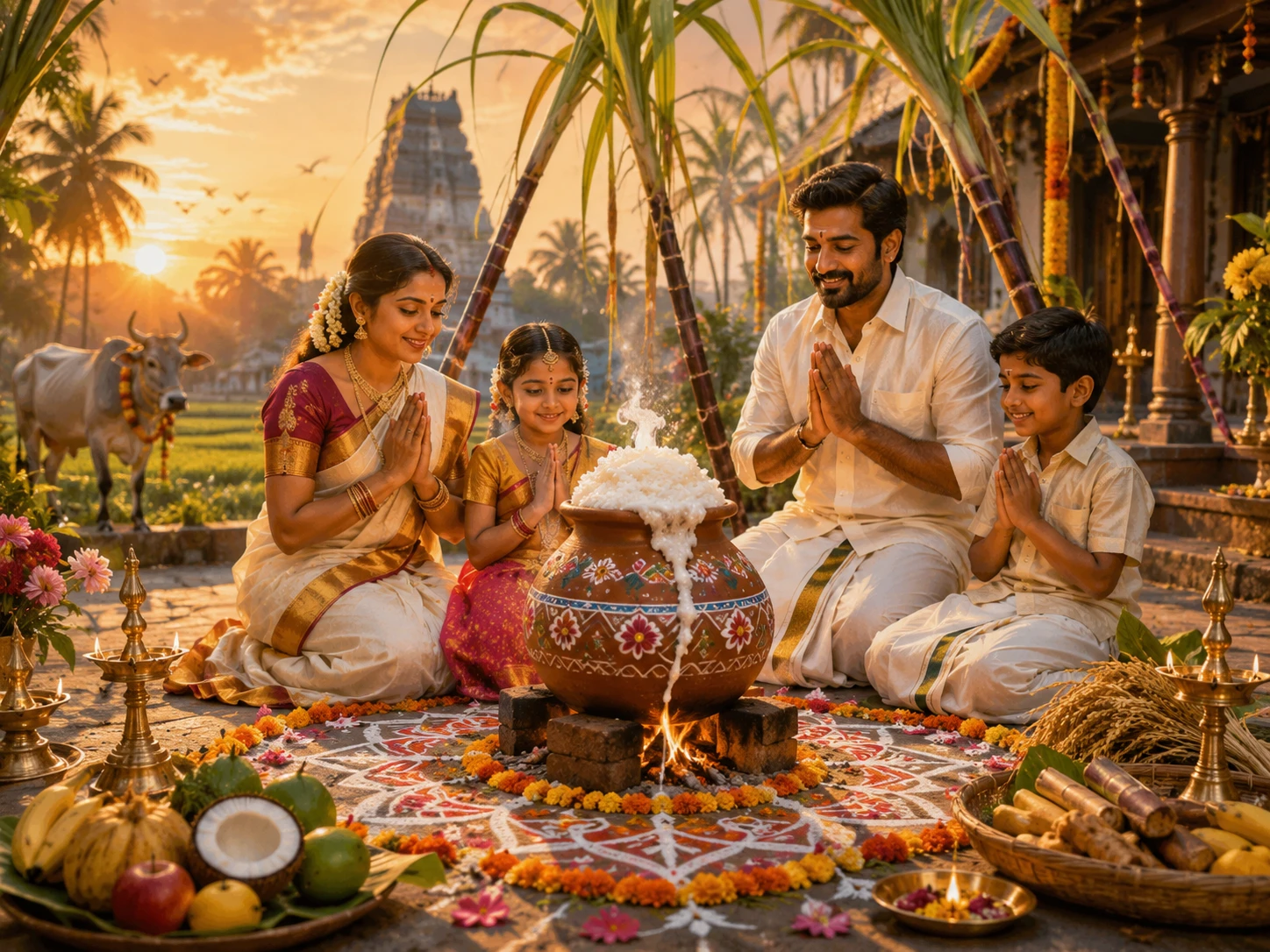
Pongal -- Tamil Nadu's Four-Day Harvest Festival That Worships the Sun, the Cow, and the Overflowing Pot
पोंगल -- तमिलनाडु का चार दिवसीय फ़सल उत्सव जो सूर्य, गाय और उफनते बर्तन की पूजा करता है
पोंगल मकर संक्रान्ति (14-15 जनवरी) से संयुक्त। पर जहाँ मकर संक्रान्ति अन्यत्र एक-दिवसीय, तमिलनाडु चार-दिवसीय फ़सल उत्सव -- राज्य का सबसे महत्वपूर्ण सांस्कृतिक उत्सव, दीवाली-नवरात्रि से बड़ा, तमिल पहचान, कृषि और मनुष्य-प्रकृति सम्बन्ध से गहरे जुड़ा।
'पोंगल' तमिल में 'उफनना' या 'उबलकर बहना।' केन्द्रीय अनुष्ठान: नवीन कटाई चावल ताज़े दूध में मिट्टी के बर्तन में खुली आग पर उबाला जब तक उफने। उफनना निर्णायक क्षण -- प्रचुरता इतनी कि पात्र न धारण कर सके। परिवार चिल्लाता 'पोंगल-ओ-पोंगल!' -- हर्षोल्लास कि फ़सल प्रचुर, सूर्य उदार, जीवन अच्छा।
दिन 1 -- भोगी पोंगल: भोर में अलाव। परिवार पुरानी, टूटी, अप्रयुक्त वस्तुएँ आग में। भौतिक decluttering -- अतीत छोड़ नए के लिए जगह।
दिन 2 -- थाई पोंगल (सूर्य पोंगल): मुख्य दिन। प्रवेश पर विस्तृत कोलम (चावल के आटे से ज्यामितीय)। पोंगल बर्तन -- नया मिट्टी का, गले में हल्दी पौधा -- बाहरी आग पर। चावल, दूध, गुड़, इलायची, घी। उफनने पर उत्सव। पहले सूर्य को कृतज्ञता अर्पण: 'तुमने वर्षा दी, पृथ्वी ने अनाज, दोनों ने मिलकर जीवन।' फिर परिवार, पड़ोसी, अतिथि।
दिन 3 -- मट्टू पोंगल: पशुधन सम्मान। गाय-बैल स्नान, रंग-फूल-घण्टी सजावट, सींग चमकीले। परिवार से पहले पशुओं को पोंगल। कुछ क्षेत्रों में जल्लीकट्टू (बैल-पकड़/वश खेल) -- विवादास्पद पर सांस्कृतिक रूप से महत्वपूर्ण, 2,000+ वर्ष। मट्टू पोंगल सभ्यतागत स्वीकृति: कृषि अकेली मानवीय उपलब्धि नहीं। खेत जोतने और दूध देने वाले पशुओं बिना कोई फ़सल नहीं।
दिन 4 -- काणुम पोंगल: मनोरंजन और पारिवारिक बन्धन। सम्बन्धी-भेंट, नदी-पार्क सैर। 'काणुम' अर्थात् 'देखना' -- देखना और दिखना, गहन कृषि-ऋतु बाद विस्तृत परिवार-समुदाय से पुनर्जुड़ाव।
(Thai Pongal follows Tamil Sangam tradition rather than Sanskrit verse tradition)
थाई पोंगल का आध्यात्मिक प्राधिकार एकल संस्कृत श्लोक में नहीं, संगम साहित्य परम्परा में -- सबसे प्राचीन तमिल साहित्यिक संग्रह (तीसरी सदी ई.पू. से तीसरी सदी ई.) -- जो कृषि, सूर्य और फ़सल चक्र व्यापक रूप से मनाता है। त्योहार संगठित ब्राह्मणीय धर्म से पूर्ववर्ती, द्रविड़ कृषि धन्यवाद परम्परा शुद्धतम रूप में।
— Sangam literature tradition (Tamil agricultural thanksgiving)
पोंगल -- चार दिन एक नज़र में
| Day | दिन | Name | Theme | Key Activity | Food |
|---|---|---|---|---|---|
| Day 1 | दिन 1 | Bhogi | Discarding the old | Bonfire of unused items at dawn | Seasonal vegetables |
| Day 2 | दिन 2 | Thai Pongal | Thanking the Sun | Overflowing rice-milk pot, Surya puja | Sakkarai Pongal (sweet rice) |
| Day 3 | दिन 3 | Mattu Pongal | Honouring cattle | Bathing and decorating cows/bulls | Ven Pongal (savoury rice) |
| Day 4 | दिन 4 | Kaanum Pongal | Family and recreation | Visiting relatives, outings, socialising | Varied (picnic foods) |
पोंगल तमिलनाडु का आधिकारिक राज्य-उत्सव, चारों दिन सार्वजनिक अवकाश। मकर संक्रान्ति, लोहड़ी, बिहू, उत्तरायण से संयुक्त -- सब फ़सल/सूर्य उत्सव एक ही खगोलीय घटना (सूर्य का मकर प्रवेश) भिन्न क्षेत्रों में।
जल्लीकट्टू, मट्टू पोंगल का बैल-वश खेल, विश्व के सबसे पुराने निरन्तर खेलों में। सिन्धु घाटी सभ्यता (बैल-कूद मुहरें, ~2500 ई.पू.) और संगम साहित्य (मुल्लै पाट्टू) -- कम से कम 4,000 वर्ष। 2014 में सर्वोच्च न्यायालय प्रतिबन्ध (पशु कल्याण) और 2017 में भारी विरोध-प्रदर्शन (चेन्नई मरीना Beach पर लाखों) के बाद तमिलनाडु सरकार ने विशेष अध्यादेश। अब तमिलनाडु सांस्कृतिक विरासत विधि से संरक्षित -- तमिल सांस्कृतिक पहचान और कथित सांस्कृतिक एकरूपीकरण के विरुद्ध प्रतिरोध का प्रतीक।
पोंगल पकाकर सूर्य को अर्पित करो
अगले थाई पोंगल पर (या किसी भी सुबह जब सूर्य का सम्मान करना चाहो), एक बर्तन में चावल को दूध, गुड़ और इलायची के साथ पकाओ और उफनने दो। पहला हिस्सा पूर्व की ओर मुख करके सूर्य को अर्पित करो, फिर परिवार के साथ बाँटो, और "ॐ सूर्याय नमः" का बारह बार जप करो। सबसे सरल धन्यवाद: धरती ने जो दिया उसे पकाकर आकाश को लौटाना। सूर्य की लम्बी स्तुति, आदित्य हृदयम्, अर्थ सहित एटर्नल राग पर है।
Eternal Raga · शाश्वत राग
Institutional voice — scholarly articles on Sanatan Dharma
अपनी समझ गहरी करें
अपनी समझ और गहरी करें
rituals traditions
Makar Sankranti -- The Only Hindu Festival Tied to the Sun, Not the Moon
Almost every Hindu festival follows the lunar calendar. Makar Sankranti is the exception. It falls on a fixed solar date -- January 14 (or 15) -- when the sun crosses from Sagittarius (Dhanu) into Capricorn (Makara), marking the beginning of Uttarayana, the northern journey of the sun. This astronomical event triggers the most geographically diverse celebration in India: Pongal in Tamil Nadu, Lohri in Punjab, Bihu in Assam, Uttarayan in Gujarat, and Til-Gul in Maharashtra -- all on the same day, all celebrating the same sun, all in completely different ways.
rituals traditions
Chhath Puja -- The Only Hindu Festival Where You Worship the Setting Sun
Most Hindu worship faces east -- toward the rising sun, toward beginnings. Chhath Puja faces west -- toward the setting sun, toward endings, toward the courage to honour what is departing. Standing waist-deep in a river or pond at sunset and again at sunrise, offering Arghya (water oblation) to Surya with bare hands while chanting Vedic hymns -- this is the most physically demanding, most ecologically pure, and most egalitarian festival in the Hindu calendar. No priest. No temple. No idol. Just you, the water, and the sun.
rituals traditions
Vrata -- What a Hindu Vow Really Means (It Is Not Just Fasting)
Your mother kept Karva Chauth without water for sixteen hours. Your grandmother observed Ekadashi every fortnight without fail. Your colleague skips lunch on Tuesdays 'for Hanuman.' The world sees Hindu fasting as dietary restriction. The tradition sees it as something far more radical: Vrata is a voluntary, time-bound act of self-imposed discipline that rewires the relationship between desire and willpower. Fasting is the most visible expression. But the real Vrata happens inside.
rituals traditions
Annadana -- Why Feeding Is the Highest Form of Charity in Hindu Tradition
The Taittiriya Upanishad declares: 'Do not turn away anyone who comes for food.' The Mahabharata ranks Annadana above all other forms of giving. The Sikh Langar feeds 100,000 people daily at the Golden Temple alone. The Akshaya Patra Foundation, inspired by ISKCON, serves mid-day meals to 2 million schoolchildren every day. In a civilisation that equates food with Brahman (Annam Brahma), feeding another person is not charity -- it is worship.
deities avatars
Surya -- The Sun God Who Drives a Seven-Horse Chariot Across the Sky Every Day
He is the most visible god in Hinduism -- you can see him every morning. The Gayatri Mantra, the most sacred verse in the Vedas, is addressed to him. The Konark Sun Temple is shaped like his chariot. And every time you do Surya Namaskar in your yoga class, you are performing a 3,000-year-old sun worship ritual. Surya is the deity hiding in plain sight.
rituals traditions
Naivedya and Prasada -- Why Hindus Feed God Before They Eat
You cook food. You place it before the deity. You wait. The food has not physically changed -- same molecules, same temperature, same taste. And yet the tradition insists that something fundamental has transformed. What went in as Naivedya (offering) comes out as Prasada (grace). This transformation is not chemistry. It is theology -- and it may be the most quietly radical idea in all of Hindu practice.
rituals traditions
Vijayadashami / Dussehra -- The Day India Celebrates Victory (But Whose Victory Depends on Where You Are)
In Delhi, a 100-foot Ravana effigy burns while lakhs cheer. In Kolkata, Durga is immersed in the Hooghly while millions weep. In Mysuru, a golden howdah procession moves through illuminated streets. In Tamil Nadu, tools and books are worshipped. Same day, same Tithi, four completely different festivals -- all called Vijayadashami. This is not inconsistency. It is the genius of a civilisation that encodes a single principle (victory of dharma over adharma) in multiple regional languages of celebration.
जल्लीकट्टू, मट्टू पोंगल का बैल-वश खेल, विश्व के सबसे पुराने निरन्तर खेलों में। सिन्धु घाटी सभ्यता (बैल-कूद मुहरें, ~2500 ई.पू.) और संगम साहित्य (मुल्लै पाट्टू) -- कम से कम 4,000 वर्ष। 2014 में सर्वोच्च न्यायालय प्रतिबन्ध…
More in Rituals & Traditions
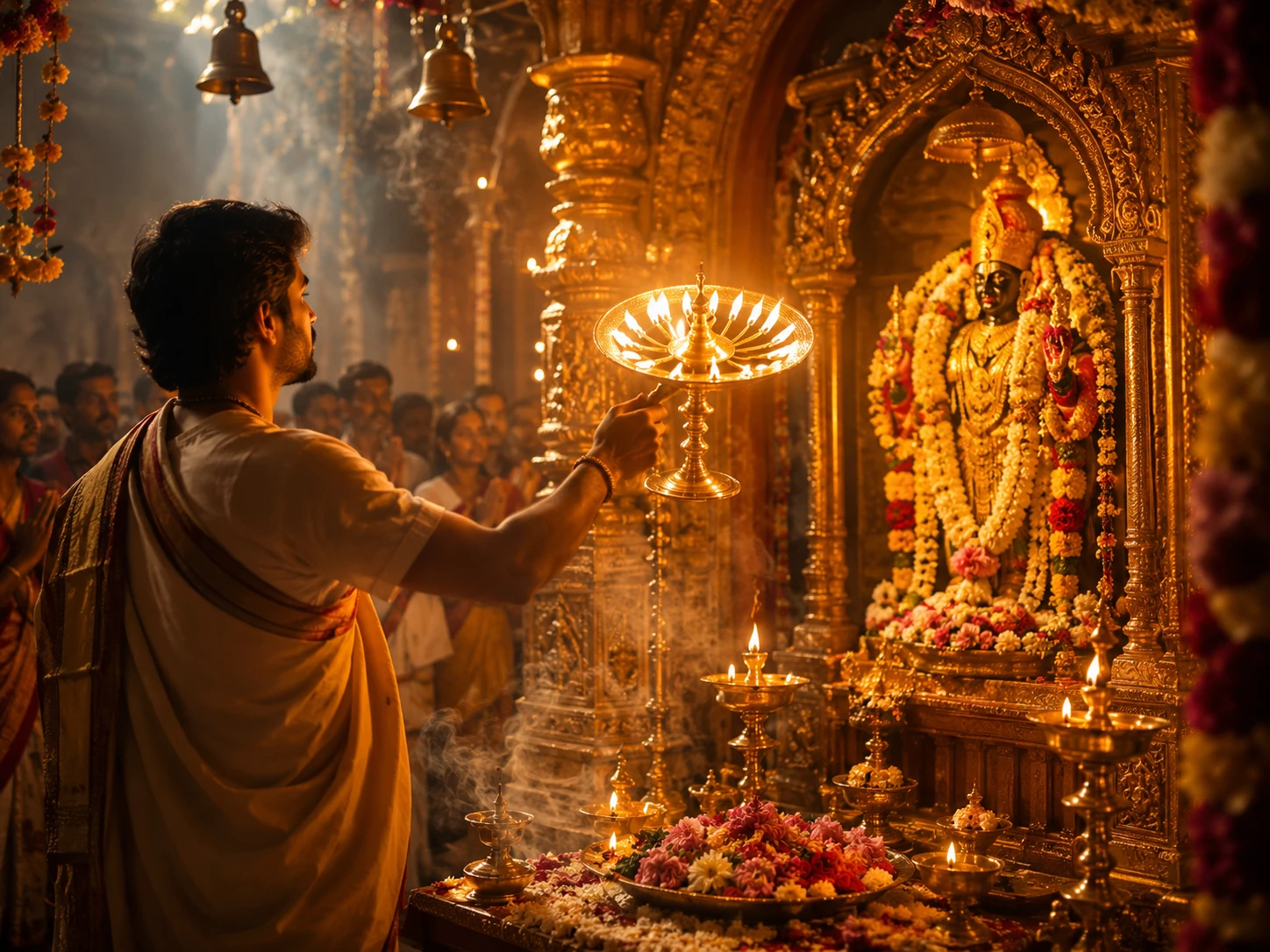
Aarti -- Why Hindus Circle Light Before God
13 मिनट पढ़ें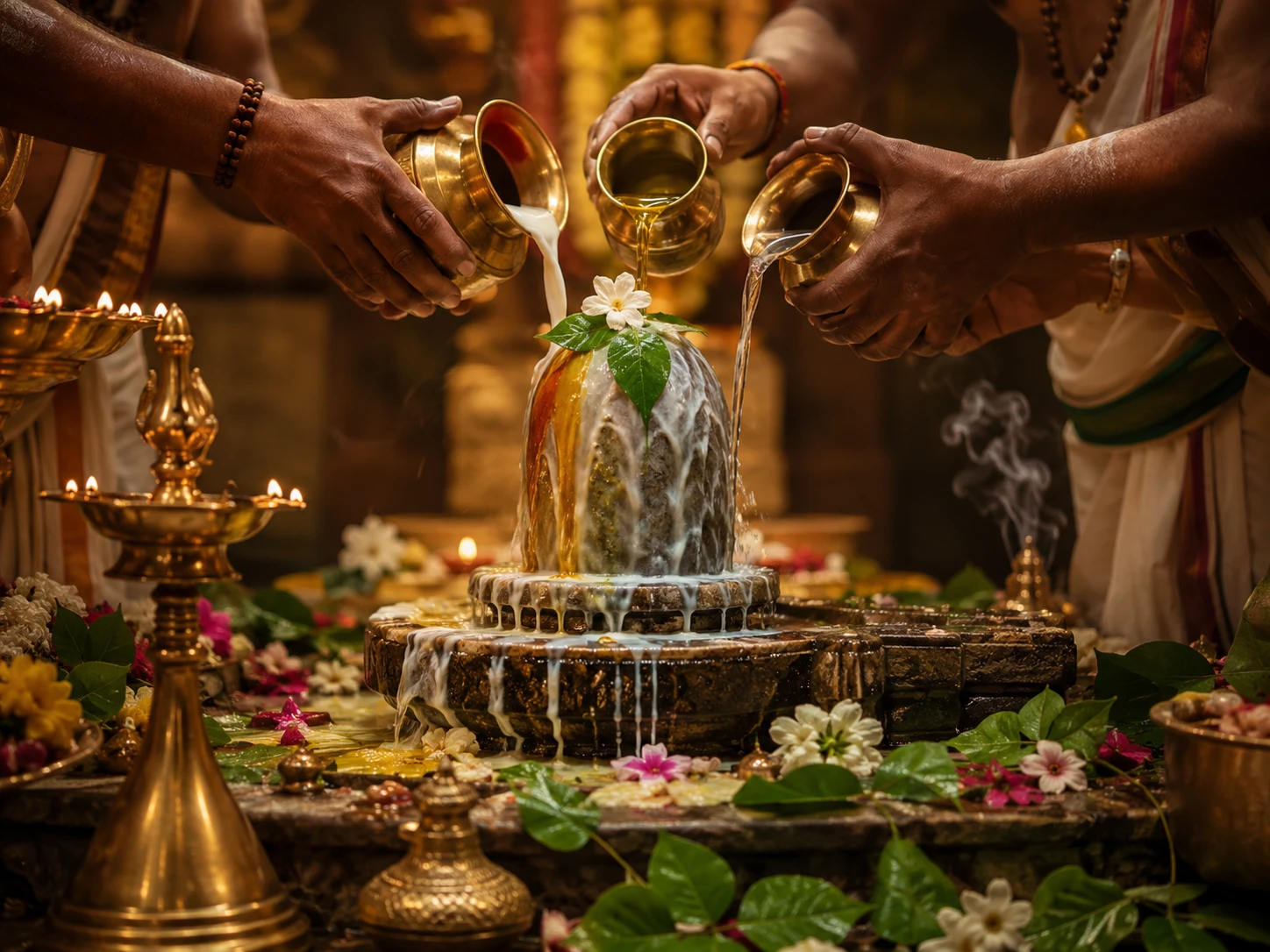
Abhisheka -- Why Hindus Bathe Their Gods
10 मिनट पढ़ें
Akshaya Tritiya -- The Day Nothing Given Away Runs Out
12 मिनट पढ़ेंवही अनुवाद त्रुटि जिसने हिन्दू धर्म में '33 कोटि' को '33 करोड़' बनाया, बौद्ध धर्म में भी हुई। बौद्ध ग्रन्थों के चीनी अनुवाद ने 'सप्त कोटि बुद्ध' (7 श्रेष्ठ बुद्ध) का अनुवाद '7 करोड़ बुद्ध' कर दिया। तिब्बती अनुवाद ने सही …
Deities AvatarsCommunity Reflections
🕉️
Be the first to share your reflection.