Suryavanshi -- The Solar Dynasty from the First King to Rama
सूर्यवंशी -- प्रथम राजा से राम तक सौर राजवंश
भूमिका -- मानव पौराणिक कथाओं का सबसे लम्बा वंश
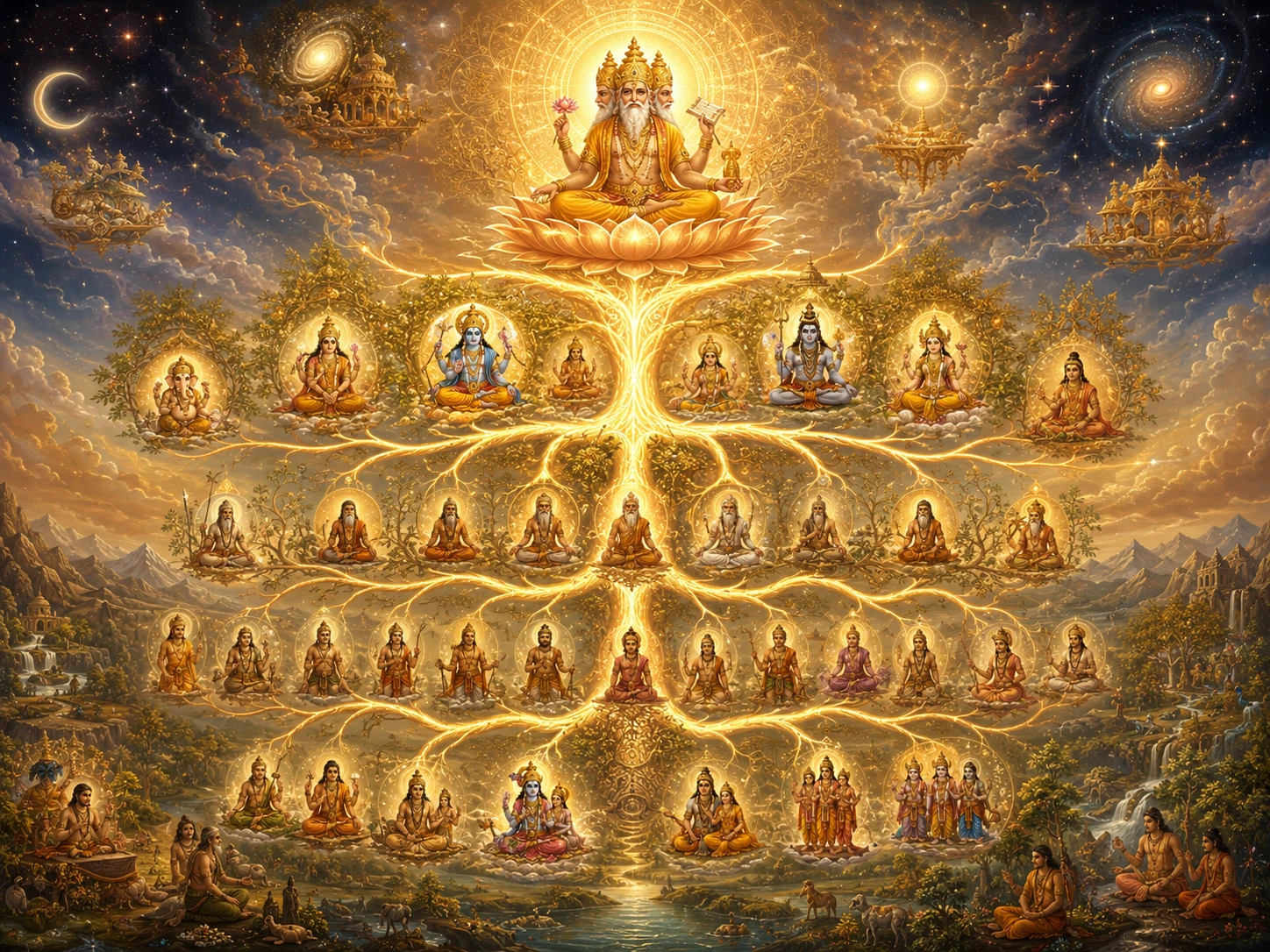
सूर्यवंशी -- सौर राजवंश, इक्ष्वाकु वंश या रघुवंश -- हिन्दू शास्त्रों का सबसे विस्तृत रूप से प्रलेखित राजवंश है। विष्णु पुराण (पुस्तक 4), वाल्मीकि रामायण (बालकाण्ड, सर्ग 70, जहाँ वसिष्ठ राम के विवाह पर वंशावली सुनाते हैं) और भागवत पुराण (स्कन्ध 9) मिलकर वैवस्वत मनु से सुमित्र (अन्तिम शासक, जिसे महापद्मनन्द ने लगभग चौथी शताब्दी ई.पू. में पराजित किया) तक 100 से अधिक राजाओं की गणना करते हैं।
ब्रह्माण्डीय वंशावली: ब्रह्मा > मरीचि > कश्यप > सूर्य (विवस्वान्) > वैवस्वत मनु > इक्ष्वाकु > ... > राम (67वीं पीढ़ी) > कुश और लव > ... > बृहद्बल (महाभारत युद्ध में अभिमन्यु द्वारा मारे गए, राम के 31 पीढ़ी बाद) > ... > सुमित्र (अन्तिम राजा)।
यह लेख इक्ष्वाकु से राम तक प्रमुख राजाओं पर केन्द्रित है -- जिनकी कथाएँ व्यक्तिगत रूप से प्रसिद्ध लेकिन राजवंश के भीतर सम्बन्ध अक्सर छूट जाते हैं।
UPSC aspirant के लिए इक्ष्वाकु वंश पौराणिक राजसूचियों और पुरातात्विक अभिलेखों दोनों में मिलता है। 2024 राम मन्दिर प्राण-प्रतिष्ठा के बाद अयोध्या के दर्शनार्थी के लिए -- यह समझना कि राम सूर्य से शुरू हुए वंश के 67वें राजा थे -- एक ऐसा आयाम जोड़ता है जो कोई guidebook नहीं देता। कालिदास का रघुवंश, श्रेष्ठतम संस्कृत महाकाव्यों में से एक, ठीक इसी वंशरेखा का अनुसरण करता है।
इमं विवस्वते योगं प्रोक्तवानहमव्ययम्। विवस्वान्मनवे प्राह मनुरिक्ष्वाकवेऽब्रवीत्॥
imam vivasvate yogam proktavaan aham avyayam vivasvaan manave praaha manur ikshvaakave abravit
मैंने यह अविनाशी योग विवस्वान् (सूर्य) को सिखाया; विवस्वान् ने मनु को कहा; मनु ने इक्ष्वाकु को बताया।
— Bhagavad Gita, Chapter 4, Verse 1
सौर राजवंश के प्रमुख राजा -- इक्ष्वाकु से राम तक
| King | Generation | Famous For | Key Episode | Source |
|---|---|---|---|---|
| Ikshvaku | 1st (Manu's son) | Founder of the dynasty, first king of Ayodhya | Born from Manu's sneeze; 100 sons; founded Kosala kingdom | Vishnu Purana 4.1, Ramayana 1.70 |
| Vikukshi (Shasada) | 2nd | Eldest son of Ikshvaku | Ate a hare during a sacred hunt; banished then recalled as king | Vishnu Purana 4.2 |
| Puranjaya (Kakutstha) | 3rd | Warrior who rode Indra in bull form | Defeated Daityas by fighting from the hump of Indra-as-bull; dynasty also called 'Kakutstha' | Vishnu Purana 4.2 |
| Mandhata | ~20th | Chakravartin (world emperor) | Conquered the entire earth; one of the greatest Suryavanshi kings | Vishnu Purana 4.3 |
| Harishchandra | ~30th | The truthful king | Sold himself, wife Shaivya, and son Rohitashva into slavery rather than break his promise to Vishwamitra | Markandeya Purana, Vishnu Purana 4.7 |
| Sagara | ~40th | 60,000 sons burned to ash | His sons dug the ocean (Sagara = ocean) searching for the sacrificial horse; Kapila Muni's gaze burned them | Ramayana 1.38-42, Vishnu Purana 4.4 |
| Bhagiratha | ~44th | Brought Ganga from heaven | Performed extreme tapas; Ganga descended through Shiva's locks; redeemed Sagara's 60,000 sons; Ganga called 'Bhagirathi' | Ramayana 1.43-44, Vishnu Purana 4.4 |
| Dilipa | ~60th | The devoted king | Served Nandini (Vasishtha's cow) to earn a son; model of royal dharma | Raghuvansha 1-2 (Kalidasa) |
| Raghu | ~61st | World conqueror, dynasty renamed after him | Conquered all directions; gave away all his wealth; the dynasty became 'Raghuvansha' after him | Raghuvansha 3-5 (Kalidasa) |
| Aja | ~62nd | The grief-stricken king | Married Indumati via svayamvara; she died suddenly; Aja died of heartbreak | Raghuvansha 6-8 (Kalidasa) |
| Dasharatha | ~63rd | Father of Rama, the promise-keeper | Had three wives (Kausalya, Kaikeyi, Sumitra); granted Kaikeyi two boons that led to Rama's exile; died of separation from Rama | Ramayana 2.1-63 |
| Rama | 67th | 7th avatar of Vishnu, Maryada Purushottam | Exile, Sita's abduction, Lanka war, return to Ayodhya, Rama Rajya | Valmiki Ramayana (entire epic) |
| Kusha and Lava | 68th | Rama's twin sons | Kusha ruled South Kosala; Lava ruled North Kosala; Kusha married Nag-kanya Kumudvati | Ramayana Uttara Kanda |
| Brihadbala | ~98th | Last major Suryavanshi in the Mahabharata era | Fought on Kaurava side in Kurukshetra; killed by Abhimanyu | Mahabharata, Vishnu Purana 4.22 |
स्रोत: विष्णु पुराण पुस्तक 4, वाल्मीकि रामायण बालकाण्ड सर्ग 70-72, भागवत पुराण स्कन्ध 9, कालिदास का रघुवंश। पीढ़ी संख्याएँ अनुमानित क्योंकि भिन्न पुराण नाम जोड़ते या हटाते हैं। राम स्रोत के अनुसार 63वीं-67वीं पीढ़ी में। राम के बाद ~30 पीढ़ी बृहद्बल तक (महाभारत) और ~50 सुमित्र तक (अन्तिम राजा)।
वे कथाएँ जो राजवंश को परिभाषित करती हैं
सूर्यवंश एक गुण से परिभाषित: सत्य -- किसी भी कीमत पर निभाया गया। हर प्रमुख राजा की कथा वचन, प्रतिज्ञा या धर्म के प्रति प्रतिबद्धता के इर्द-गिर्द घूमती है जो विनाश तक परखी जाती है।
हरिश्चन्द्र ने विश्वामित्र को वचन तोड़ने के बजाय पत्नी, पुत्र और स्वयं को दासता में बेचा। जब उनका अपना पुत्र सर्पदंश से मरा और पत्नी शव लेकर दाह-संस्कार आई, हरिश्चन्द्र ने -- अब चाण्डाल (श्मशान कर्मचारी) -- दाह-शुल्क माँगा क्योंकि स्वामी का आदेश था। कर्तव्य को शोक से ऊपर रखा।
सगर के 60,000 पुत्रों ने अश्वमेध घोड़ा खोजते हुए पृथ्वी खोदी और कपिल मुनि की तपस्या भंग की। कपिल की दृष्टि ने सबको भस्म कर दिया। चार पीढ़ियों की तपस्या के बाद भगीरथ ने गंगा को स्वर्ग से उतरने के लिए मनाया। शिव ने जटाओं में पकड़कर आघात कम किया। गंगा 'भागीरथी' कहलाती हैं। आधुनिक हिन्दी में 'भागीरथ प्रयास' (असम्भव प्रयत्न) इसी कथा से। जब ISRO वैज्ञानिक बहु-दशकीय अन्तरिक्ष कार्यक्रम को 'भागीरथ प्रयास' कहें, वे सूर्यवंश उद्धृत कर रहे हैं।
दशरथ की त्रासदी राजवंश का नैतिक चरमबिन्दु। युद्ध में कैकेयी को दो वरदान दिए थे। वर्षों बाद कैकेयी ने माँगा: राम को 14 वर्ष वनवास, भरत को राज्याभिषेक। दशरथ मना कर सकते थे। वे राजा थे। लेकिन सूर्यवंशी राजा का वचन, एक बार दिया, वापस नहीं हो सकता। उन्होंने वचन निभाया और राम के वियोग में प्राण त्यागे। राम ने भी पिता का वचन निभाया हालाँकि दशरथ मर चुके थे।
राम के बाद कुश और लव। 31 पीढ़ी बाद बृहद्बल कुरुक्षेत्र युद्ध में अभिमन्यु द्वारा मारे गए। जब महात्मा गाँधी ने 'राम राज्य' का आह्वान किया, वे केवल राम नहीं बल्कि सम्पूर्ण सूर्यवंशी सत्य-पालन, कर्तव्य और त्याग की परम्परा का आह्वान कर रहे थे।
हिन्दी मुहावरा 'भागीरथ प्रयास' -- अर्थात इतने विशाल पैमाने का प्रयत्न कि असम्भव लगे -- सीधे सूर्यवंश से आता है। राजा भगीरथ ने पूर्वजों (सगर के 60,000 पुत्रों) की राख पर गंगाजल बहाने के लिए पीढ़ियों तक तपस्या की। जब ISRO, DRDO या IIT शोधकर्ता बहु-दशकीय इंजीनियरिंग चुनौती को 'भागीरथ प्रयास' कहें, वे अनजाने सूर्यवंशी राजसूची उद्धृत कर रहे हैं। गंगा स्वयं उनका नाम धारण करती हैं: 'भागीरथी।'
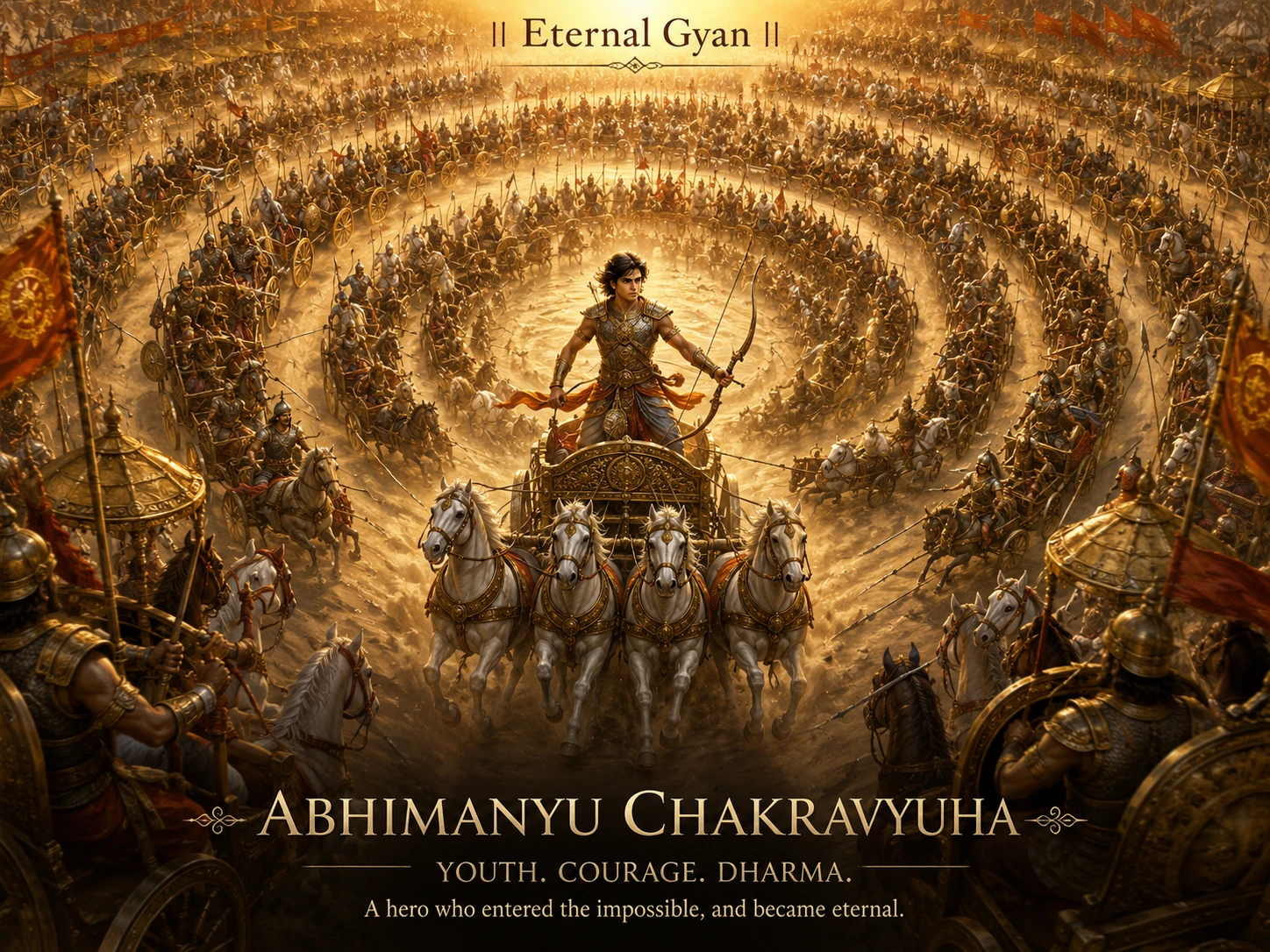
बृहद्बल, राम के लगभग 31 पीढ़ी बाद के सूर्यवंशी राजा, ने महाभारत युद्ध में कौरव पक्ष से लड़ा और 13वें दिन चक्रव्यूह में अभिमन्यु (अर्जुन के किशोर पुत्र) द्वारा मारे गए। अर्थात सूर्यवंश -- स्वयं राम का वंश -- पाण्डवों (चन्द्रवंश) के विपरीत पक्ष में था। महाभारत युद्ध अन्य बहुत कुछ के साथ-साथ सूर्यवंश बनाम चन्द्रवंश संघर्ष भी था। वैवस्वत मनु के वंशवृक्ष की दो शाखाएँ, दर्जनों पीढ़ियों से अलग, एक रणभूमि पर फिर मिलीं।
एटर्नल राग पर रामायण पढ़ो
सूर्यवंश की सबसे महान कथा स्वयं रामायण है। इसे एटर्नल राग पर पढ़ो, बालकाण्ड से आगे सातों काण्ड, संस्कृत और अंग्रेज़ी-हिन्दी अनुवाद सहित।
Tags
Eternal Raga · शाश्वत राग
Institutional voice — scholarly articles on Sanatan Dharma
अपनी समझ गहरी करें
अपनी समझ और गहरी करें
deities avatars
Surya's Family -- How One God Fathered Yama, Shani, the Ashwini Kumaras, and All of Humanity
Surya had two wives: Sanjana, who could not bear his radiance, and Chhaya, the shadow she left behind. From Sanjana came Yama (death), Yamuna (the river), Manu (humanity's ancestor), and the Ashwini Kumaras (divine physicians). From Chhaya came Shani (Saturn, karma's enforcer), Tapati (the river), and Savarni Manu (the next cosmic era's ruler). Same father. Two mothers. Ten children. And the entire human race.
vedic sciences
The 14 Manus -- Cosmic Reset Buttons of Hindu Time
Hindu cosmology does not have one Adam. It has fourteen. Each Manvantara -- a cosmic era of 306.72 million years -- is governed by a different Manu who repopulates the earth, establishes dharma, and oversees a fresh team of gods, sages, and an Indra. We are currently in the 7th Manvantara, ruled by Vaivasvata Manu, son of Surya. Seven Manus have served. Seven are yet to come. And Vishnu takes a new avatar for each.
scriptural exegesis
Chandravanshi -- The Lunar Dynasty from Moon to Mahabharata
The Solar Dynasty gave India Rama. The Lunar Dynasty gave India everything else: Krishna, the Pandavas, the Kauravas, Bharata (after whom India is named), Shakuntala (Kalidasa's masterpiece), and the Mahabharata itself. It begins with a scandal -- the Moon god Soma abducting Tara, wife of Brihaspati -- and it ends with the greatest war in mythology. One lineage. Two branches. Every epic.
scriptural exegesis
Brahma's Children -- The First Generation of Creation
Brahma tried three times to populate the universe. First he created four sons who refused to reproduce and became monks. Then he got so angry that Rudra burst from his forehead. Finally he created ten Prajapatis from his mind -- and through them, every god, demon, human, animal, and plant in existence traces its origin. This is the original org chart of the cosmos.
scriptural exegesis
Ram and Sita -- The Complete Life Chronology
How old was Sita when Ram went into exile? Were they married for 12 years or just one? What does Valmiki Ramayana actually say -- and why do different manuscripts say different things? Social media is full of numbers thrown out of context. This article does what most don't: it lays out every verse, every manuscript variant, every scholarly reading, and lets you see the complete picture. From Chaitra Navami to the banks of Sarayu, this is the life chronology of Ram and Sita as the primary texts present it -- contradictions, critical editions, and all.
deities avatars
Kashyapa's Wives -- How One Sage Fathered Gods, Demons, and Everything In Between
Why are gods and demons always at war? Because they are cousins -- half-brothers sharing the same father, the sage Kashyapa. Aditi's sons became the Devas. Diti's sons became the Daityas. Vinata's sons became Garuda and Aruna. Kadru's sons became the serpents. And the family dynamics that produced them explain the entire cosmic conflict of Hindu mythology.
हिन्दी मुहावरा 'भागीरथ प्रयास' -- अर्थात इतने विशाल पैमाने का प्रयत्न कि असम्भव लगे -- सीधे सूर्यवंश से आता है। राजा भगीरथ ने पूर्वजों (सगर के 60,000 पुत्रों) की राख पर गंगाजल बहाने के लिए पीढ़ियों तक तपस्या की। जब ISRO,…
More in Scriptural Exegesis
Abhimanyu and the Chakravyuha -- The Boy Who Knew How to Enter but Not How to Leave
14 मिनट पढ़ें
Adbhuta Ramayana -- The Ramayana Where Sita Becomes Kali
9 मिनट पढ़ें
After Kurukshetra -- What Happened Next
14 मिनट पढ़ेंवही अनुवाद त्रुटि जिसने हिन्दू धर्म में '33 कोटि' को '33 करोड़' बनाया, बौद्ध धर्म में भी हुई। बौद्ध ग्रन्थों के चीनी अनुवाद ने 'सप्त कोटि बुद्ध' (7 श्रेष्ठ बुद्ध) का अनुवाद '7 करोड़ बुद्ध' कर दिया। तिब्बती अनुवाद ने सही …
Deities AvatarsCommunity Reflections
🕉️
Be the first to share your reflection.