The Natyashastra -- Bharata's Fifth Veda of Drama, Dance and Rasa
नाट्यशास्त्र -- नाटक, नृत्य और रस का भरत का पंचम वेद
त्रेता युग में, नाट्यशास्त्र का पहला अध्याय कहता है, देवता एक विनती लेकर ब्रह्मा के पास आए। लोग लोभ, क्रोध और शोक में पड़ गए थे, और चारों वेद सबके लिए सुलभ नहीं थे। उन्होंने कुछ ऐसा माँगा जो देखा और सुना दोनों जा सके, और जिसे सब साझा कर सकें। तब ब्रह्मा ने अन्य चारों से लेकर एक पंचम वेद, नाट्यवेद, की रचना की: ऋग्वेद से पाठ, सामवेद से गीत, यजुर्वेद से अभिनय और अथर्ववेद से भाव, रस। उन्होंने इसे भरत मुनि को दिया, जिन्होंने इसे अपने सौ पुत्रों को सिखाया, और पहला नाटक खेला गया।
जो ग्रन्थ यह कथा कहता है वह नाट्यशास्त्र है, "नाटक का शास्त्र", जो भरत मुनि की रचना माना जाता है। यह प्राचीन विश्व की सबसे उल्लेखनीय कृतियों में से एक है: छत्तीस या सैंतीस अध्यायों और लगभग छह हज़ार श्लोकों में, गद्य अंशों सहित, प्रदर्शन-कलाओं की सम्पूर्ण नियमावली। विद्वान इसके संकलन को लगभग ईसा-पूर्व 200 से 200 ईस्वी के बीच रखते हैं, जिसमें पुरानी सामग्री भी समाहित है।
प्रदर्शन के बारे में लगभग कुछ भी नहीं छूटा। नाट्यशास्त्र बताता है कि प्रेक्षागृह कैसे बनाएँ और मंच का अभिषेक कैसे करें; नाटकों के प्रकार और कथानक की संरचना; हाथों की मुद्राएँ, नेत्र, भौंह, गर्दन और पैरों की गतियाँ; वेशभूषा और रूपसज्जा; वाणी, छन्द और वे प्रादेशिक बोलियाँ जो अभिनेताओं को बोलनी चाहिए; संगीत, उसके स्वर-ग्राम और वाद्य; और दर्शकों को प्रस्तुति को कैसे परखना चाहिए। ग्रन्थ एक झगड़ा भी दर्ज करता है: जब पहले नाटक में देवताओं को असुरों को हराते दिखाया गया, दर्शकों में बैठे असुर आहत हुए और उन्होंने विघ्न डाला -- इसलिए विश्वकर्मा से एक उचित, सुरक्षित प्रेक्षागृह बनवाया गया।
नाट्यशास्त्र के आठ रस
| Rasa (aesthetic flavour) | Sthayi bhava (underlying emotion) |
|---|---|
| Shringara -- the erotic, love | Rati -- love, delight |
| Hasya -- the comic | Hasa -- mirth |
| Karuna -- the compassionate, tragic | Shoka -- sorrow |
| Raudra -- the furious | Krodha -- anger |
| Vira -- the heroic | Utsaha -- energy, resolve |
| Bhayanaka -- the terrible | Bhaya -- fear |
| Bibhatsa -- the odious | Jugupsa -- disgust |
| Adbhuta -- the marvellous | Vismaya -- wonder |
बाद के आचार्यों ने, सबसे बढ़कर ग्यारहवीं शताब्दी में अभिनवगुप्त ने, नौवें रस शान्त के पक्ष में तर्क दिया, जिसका आधार कामना का शमन है। इसके साथ सूची परिचित नवरस, नौ रस, बन गई।
नाट्यशास्त्र का सबसे प्रभावशाली विचार रस है, शाब्दिक अर्थ "रस" या "स्वाद"। इसका प्रसिद्ध सूत्र, रस-सूत्र, कहता है कि रस विभावों (कारण, जैसे पात्र और परिवेश), अनुभावों (बाहरी लक्षण, जैसे आँसू या काँपती आवाज़) और व्यभिचारी भावों (क्षणिक भाव) के संयोग से उत्पन्न होता है। शोक के बारे में नाटक देखता दर्शक केवल दुखी नहीं होता; कला के माध्यम से शोक करुण रस के आस्वाद्य अनुभव में बदल जाता है, जिसका आनन्द लिया जा सकता है, यद्यपि वह पीड़ा के बारे में है।
यह भेद -- एक कच्चे भाव और उसके सौन्दर्यात्मक, साझा करने योग्य रूप के बीच -- ने दो हज़ार वर्षों तक सभी कलाओं के बारे में भारतीय चिन्तन को आकार दिया। कश्मीर के महान दार्शनिक अभिनवगुप्त ने नाट्यशास्त्र पर शास्त्रीय टीका, अभिनवभारती, लिखी, और रस के आस्वाद की तुलना ब्रह्म-साक्षात्कार के आनन्द से की। उनके लिए अपने शिखर पर कला आध्यात्मिक अनुभव के निकट थी।
2025 में यूनेस्को ने भगवद्गीता के साथ नाट्यशास्त्र की पाण्डुलिपियों को अपने मेमोरी ऑफ़ द वर्ल्ड रजिस्टर में जोड़ा, जो विश्व-महत्त्व के दस्तावेज़ों को दर्ज करता है। भारत के शास्त्रीय नृत्य -- भरतनाट्यम्, कथक, ओडिसी, कुचिपुड़ी, मोहिनीयाट्टम्, कथकली, मणिपुरी और सत्रिया -- प्रत्येक अपनी मुद्रा-भाषा को उसी से जोड़ते हैं।
भरतनाट्यम्, जिसके नाम को ही आज अनेक नर्तक भरत से जोड़ते हैं, नाट्यशास्त्र के बाद के जीवन को सबसे स्पष्ट दिखाता है। यह तमिलनाडु के मन्दिर-नृत्य से विकसित हुआ, जो शताब्दियों तक पवित्र परिसरों में होता रहा, और उन्नीसवीं शताब्दी के आरम्भ में तंजावुर दरबार के चार भाइयों, "तंजावुर चौकड़ी", ने इसे नया रूप दिया, जिन्होंने प्रस्तुति को आधुनिक क्रम दिया। बीसवीं शताब्दी में, जब मन्दिर-परम्परा क्षीण हुई, रुक्मिणी देवी अरुण्डेल जैसे पुनरुद्धारकों ने इसे सभा-मंच पर पहुँचाया, सचेत रूप से नाट्यशास्त्र और अभिनय दर्पण जैसे बाद के ग्रन्थों का आधार लेते हुए।
इन सभी रूपों में नाट्यशास्त्र का मूल वचन बना रहता है: हस्त-मुद्राओं और नेत्रों की गति से कृष्ण या शिव की कथा कहती नर्तकी आज भी वही अर्पित कर रही है जिसके लिए ब्रह्मा ने पंचम वेद रचा था -- अन्य चारों के सत्य, सबके लिए दृश्य बनाकर।
गान्धर्ववेद, संगीत का शास्त्र, पढ़ें
संगीत और ध्वनि का उपवेद, जो नाट्यशास्त्र के संगीत-अध्यायों से गहराई से जुड़ा है।
Tags
Eternal Raga · शाश्वत राग
Institutional voice — scholarly articles on Sanatan Dharma
अपनी समझ गहरी करें
अपनी समझ और गहरी करें
vedic sciences
Gandharvaveda -- The Science of Music and Sound
The forgotten Upaveda of the Sama Veda treats music as a path to liberation. From the seven swaras to Nada Brahma, Gandharvaveda is the textbook behind every Hindustani raga, every Carnatic kriti, and every bhajan you have ever sung along to.
vedic sciences
Nada Brahma -- Sound as Creation in Hindu Sangeet Shastra
Long before raags had names, India held one foundational claim: sound is creation itself. Trace the lineage from the Sama Veda's chants to Bharata's Natya Shastra to Sharangadeva's Sangeet Ratnakara -- the spine of classical music as sadhana.
vedic sciences
Upavedas -- The Four Applied Sciences of Hindu Tradition
The Vedas gave India its philosophy and rituals. The Upavedas gave India its professions. Four applied knowledge systems -- Ayurveda (medicine), Dhanurveda (warfare), Gandharvaveda (music and performing arts), and Sthapatyaveda (architecture) -- were classified as subsidiary Vedas, each attached to one of the four main Vedas. They represent the Hindu tradition's insistence that sacred knowledge must produce practical results: a healed body, a defended nation, a beautiful performance, a well-built home. Together, the Upavedas form the intellectual infrastructure of pre-modern Indian civilisation -- from the surgeon's scalpel to the architect's blueprint to the musician's raga.
deities avatars
Nataraja -- The Cosmic Dancer
One foot crushes a dwarf. The other is raised in liberation. A ring of fire frames the dance. A drum beats creation into existence. An open palm says 'do not fear.' This is Nataraja -- Shiva as the Lord of Dance -- and it is the single most replicated Indian bronze in the history of art. The physicists at CERN chose it to stand outside the world's largest particle accelerator. The Chola bronzesmiths of Tamil Nadu perfected it a thousand years ago. And every time a subatomic particle appears and disappears, the cosmic dance continues.
sacred artefacts
Divine Musical Instruments -- Veena, Damaru, Murali
Saraswati's Veena created knowledge. Shiva's Damaru created language. Krishna's Murali created longing. Three instruments, three cosmic functions -- and the foundation of one of the world's oldest musical traditions. From the 14 Maheshwara Sutras that birthed Sanskrit grammar to the raga system that maps human emotion, Hindu mythology placed music at the centre of creation itself.
tantra mantra yantra
Mudras in Ritual and Yoga -- The Silent Language of the Hands
When you press your palms together and say Namaste, you are performing Anjali Mudra -- a gesture older than any surviving scripture. When you meditate with thumb touching index finger, you are performing Gyan Mudra -- uniting individual consciousness with the universal. Mudras are the oldest programming language in human history, and your hands are the keyboard.
2025 में यूनेस्को ने भगवद्गीता के साथ नाट्यशास्त्र की पाण्डुलिपियों को अपने मेमोरी ऑफ़ द वर्ल्ड रजिस्टर में जोड़ा, जो विश्व-महत्त्व के दस्तावेज़ों को दर्ज करता है। भारत के शास्त्रीय नृत्य -- भरतनाट्यम्, कथक, ओडिसी, कुचिप…
More in Vedic Sciences
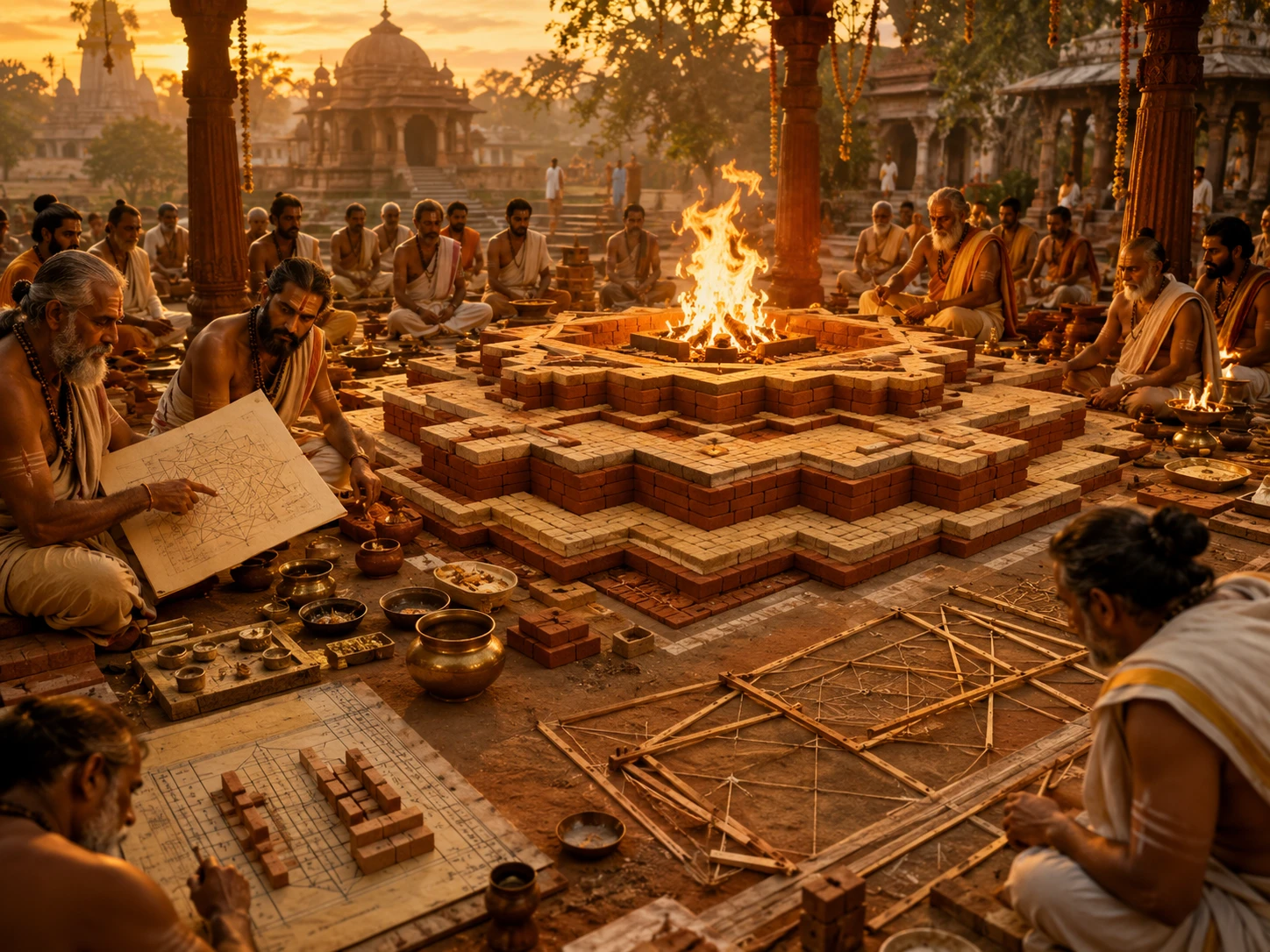
Agnichayana -- The Falcon-Shaped Fire Altar That Survived 3,000 Years
12 मिनट पढ़ें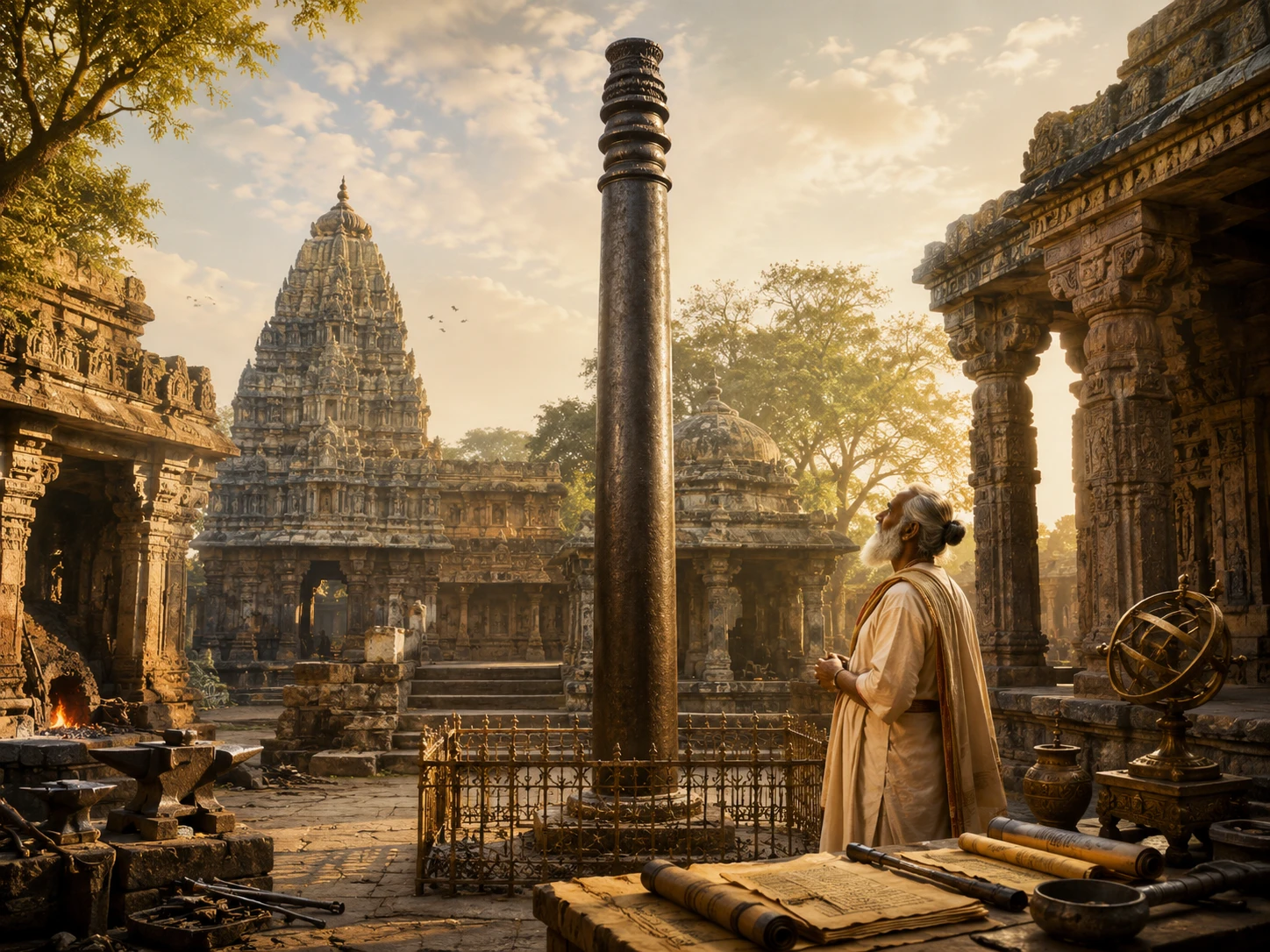
Ancient Indian Metallurgy -- The Iron Pillar That Refuses to Rust
13 मिनट पढ़ेंAryabhata -- The Astronomer Who Said the Earth Turns
3 मिनट पढ़ेंवही अनुवाद त्रुटि जिसने हिन्दू धर्म में '33 कोटि' को '33 करोड़' बनाया, बौद्ध धर्म में भी हुई। बौद्ध ग्रन्थों के चीनी अनुवाद ने 'सप्त कोटि बुद्ध' (7 श्रेष्ठ बुद्ध) का अनुवाद '7 करोड़ बुद्ध' कर दिया। तिब्बती अनुवाद ने सही …
Deities AvatarsCommunity Reflections
🕉️
Be the first to share your reflection.