Kashtbhanjan Dev (Sarangpur)
कष्टभंजन देव हनुमान
The murti Swaminarayan blessed — Hanuman with his foot on the demon
Sarangpur, Gujarat, India
Kaṣṭabhaṅjana Deva SāraṃgapuraAlso known as: Kashtbhanjan Dev Sarangpur, Sarangpur Hanumanji, Sarangpur Kashtbhanjan, BAPS Sarangpur Hanuman, Kashtabhanjan Hanumanji
युग
Early 19th century (murti consecrated by Swaminarayan, c. 1800–1825); BAPS temple complex developed through 20th–21st century
वास्तुकला
BAPS Swaminarayan temple architecture — Gujarati style with marble and ornate detailing; substantial modern complex
खुला
06:00 – 21:00
आरती
06:30 · 11:45 · 19:00 · 20:30
विशेष
Tuesdays and Saturdays draw the largest crowds; Hanuman Jayanti and Swaminarayan Jayanti are the principal festivals; BAPS guest house adjacent to temple complex
पवित्र कथा · पवित्र कथा
In the small Gujarat village of Sarangpur, a Hanuman murti stands in a posture no other major Hanuman temple in India replicates: his right foot pressing down on a pishachini — a female malevolent spirit — who writhes beneath him, her power utterly crushed. This is not the benevolent protector or the devoted servant. This is Kashtbhanjan Dev — the Destroyer of Difficulties in his most militant aspect, the deity who does not merely ward off evil but physically subjugates it. The Swaminarayan tradition holds that Sahajanand Swami himself consecrated this murti with his divine presence, transforming it from carved stone into a living channel of spiritual power. Hundreds of thousands come each year, many of them carrying afflictions that medicine and ordinary prayer have not resolved, to petition the Hanuman who once crushed a demon beneath his foot and who, the tradition insists, has never stopped.
Sacred Origin Storyपवित्र उत्पत्ति कथा
Source: BAPS Swaminarayan Sanstha tradition / Swaminarayan sampraday hagiographic literature
The Kashtbhanjan Hanumanji murti at Sarangpur exists at the intersection of two narratives: the ancient Puranic account of Hanuman's power over malevolent forces, and the specific historical episode from the Swaminarayan tradition in which Sahajanand Swami activated that power at this site.
The first narrative is Puranic. In the broader Vaishnavite and Shaivite traditions, Hanuman's sovereignty over spirits (pretas, pishachas, and bhutas) is established through multiple textual sources: the Hanuman Chalisa ('Bhoot pisach nikat nahin aavai, Mahavir jab naam sunavai'), the Valmiki Ramayana's description of Hanuman as Rudra-avatara, and the tradition of Hanuman as the great Bhairava who governs the threshold between the human and spirit worlds. The iconography at Sarangpur — Hanuman's foot pressing down on a pishachini — makes this theological claim visible and literal: the demon is not merely absent; she is subdued, physically held down by the deity's presence.
The second narrative is specific to the Swaminarayan tradition. Sahajanand Swami (1781–1830), founder of the Swaminarayan Sampraday, passed through the Sarangpur area during one of his many Gujarat tours. The hagiographic tradition preserved in the Satsangi Jivan and related texts records that a woman believed to be severely possessed by a malevolent force was brought before him. Sahajanand Swami directed her to stand before the Kashtbhanjan Hanumanji murti at Sarangpur. As she stood before the murti, the possessing spirit — unable to withstand Hanuman's divine presence — was expelled. The woman was healed.
This healing established the Sarangpur murti's identity as a living instrument of divine grace — not merely a representation of Hanuman but a murti activated by the touch of a saint. In Swaminarayan theology, a murti consecrated by a realized saint (sant) is believed to contain the saint's spiritual energy, making the murti itself a conduit for divine intervention. The Satsangi Jivan's account of this episode has been repeated, elaborated, and verified through centuries of subsequent testimonies from devotees who report similar resolutions to seemingly intractable spiritual and psychological afflictions at this site.
The tradition at Sarangpur differs from the folk-therapeutic model of Mehandipur in its theological structure: where Mehandipur operates through a court-like petition to a hierarchy of deities, Sarangpur operates through the Swaminarayan sampraday's framework of satsang (spiritual community), devotion to the Akshar-Purushottam relationship, and the mediation of the living saint's lineage. The healing is understood not as a transaction between the afflicted and a specialist deity but as a consequence of coming into the field of the sampraday's spiritual authority.
उद्धृत स्रोत:
- Satsangi Jivan by Shatanand Swami (19th century Swaminarayan hagiographic text)
- BAPS Swaminarayan Sanstha historical and theological documentation
- Hanuman Chalisa by Tulsidas — for the bhoot-pisach protection verse
- Raymond Brady Williams, 'A New Face of Hinduism: The Swaminarayan Religion' (1984)
विद्वत संदर्भ
The Sarangpur Kashtbhanjan temple has been documented in scholarly work on the Swaminarayan tradition, particularly in Raymond Brady Williams ('A New Face of Hinduism', 1984) and Kim Knott and Knut Jacobsen's broader works on Hinduism in diaspora contexts. Scholars note that the healing function at Sarangpur, while superficially similar to Mehandipur, operates through a structurally different mechanism: the Swaminarayan tradition's emphasis on the living Akshar (the saint) as mediator means that the healing is understood to pass through the lineage of saints rather than through a direct folk-therapeutic petition. The pishachini-under-foot iconography of the Sarangpur murti is unusual within the BAPS tradition, which typically favors benevolent Vaishnava imagery — its presence reflects the specific historical function this murti was given by Swaminarayan's healing episode.
Historyइतिहास
The Sarangpur Kashtbhanjan temple's history is inseparable from the history of the Swaminarayan Sampraday and, specifically, the BAPS branch that has been most closely associated with this site.
Sahajanand Swami (1781–1830), the founder of the Swaminarayan Sampraday, was one of the most influential religious reformers in 19th-century Gujarat. He reorganized the Uddhav Sampraday, traveled extensively across Gujarat, Rajasthan, and Kutch, composed the Shikshapatri (a code of religious conduct), and established a network of temples and communities. The healing episode at Sarangpur — in which a possessed woman was healed through darshan of the Kashtbhanjan Hanumanji murti — is among the most frequently cited miracles in the sampraday's hagiographic literature.
After Sahajanand Swami's death in 1830, he designated two of his nephews as hereditary acharyas for two dioceses. However, a succession of spiritual leaders within the sampraday believed that the true succession passed not through hereditary acharyas but through a line of realized saints (Akshar succession). This theological dispute eventually crystallized in the early 20th century with the formation of the BAPS — the Bochasanwasi Akshar Purushottam Sanstha — which traces its lineage through Gunatitanand Swami, Bhagatji Maharaj, Shastriji Maharaj, Yogiji Maharaj, and Pramukh Swami Maharaj (Shastri Narayanswarupdas, 1921–2016).
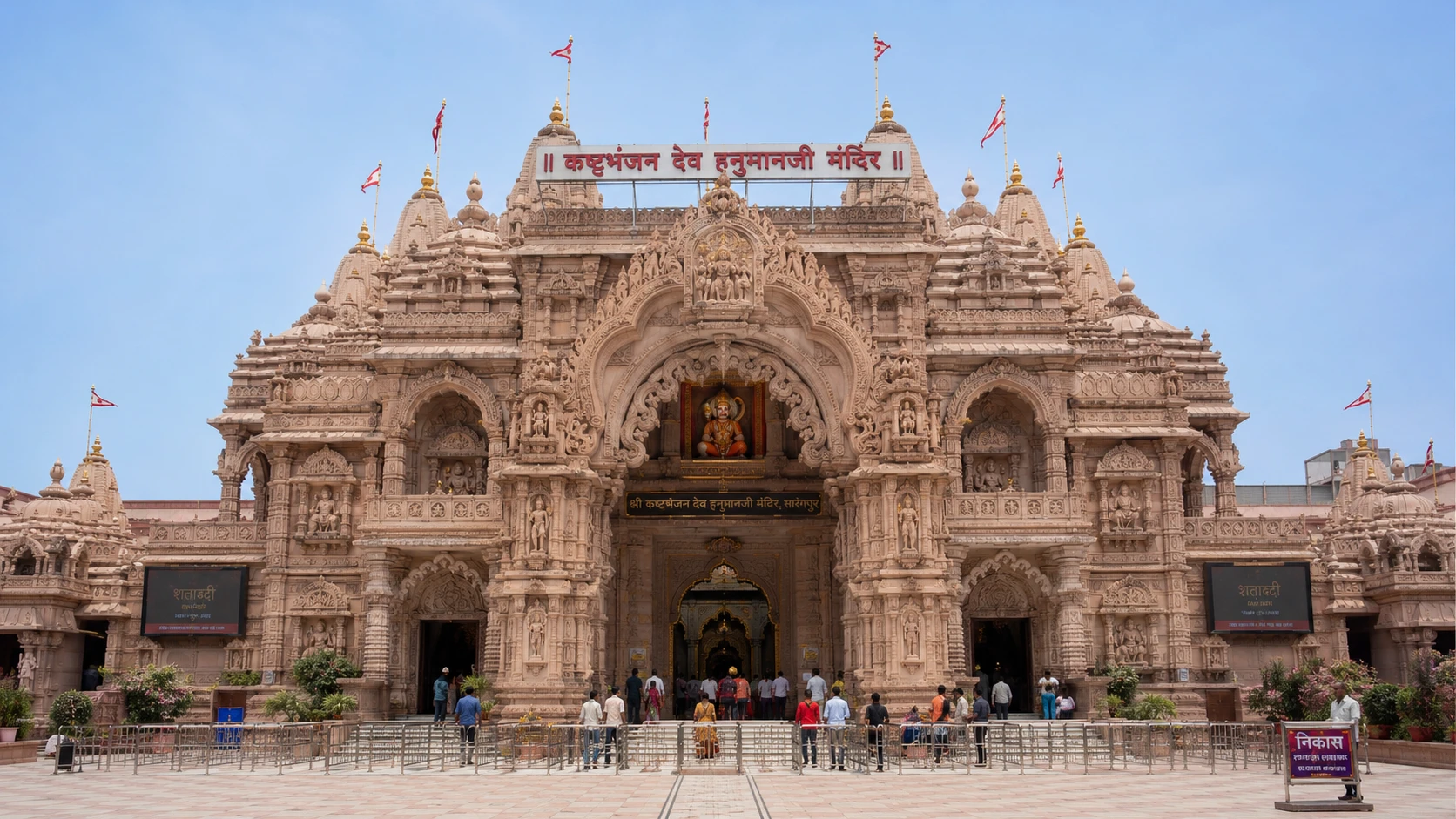
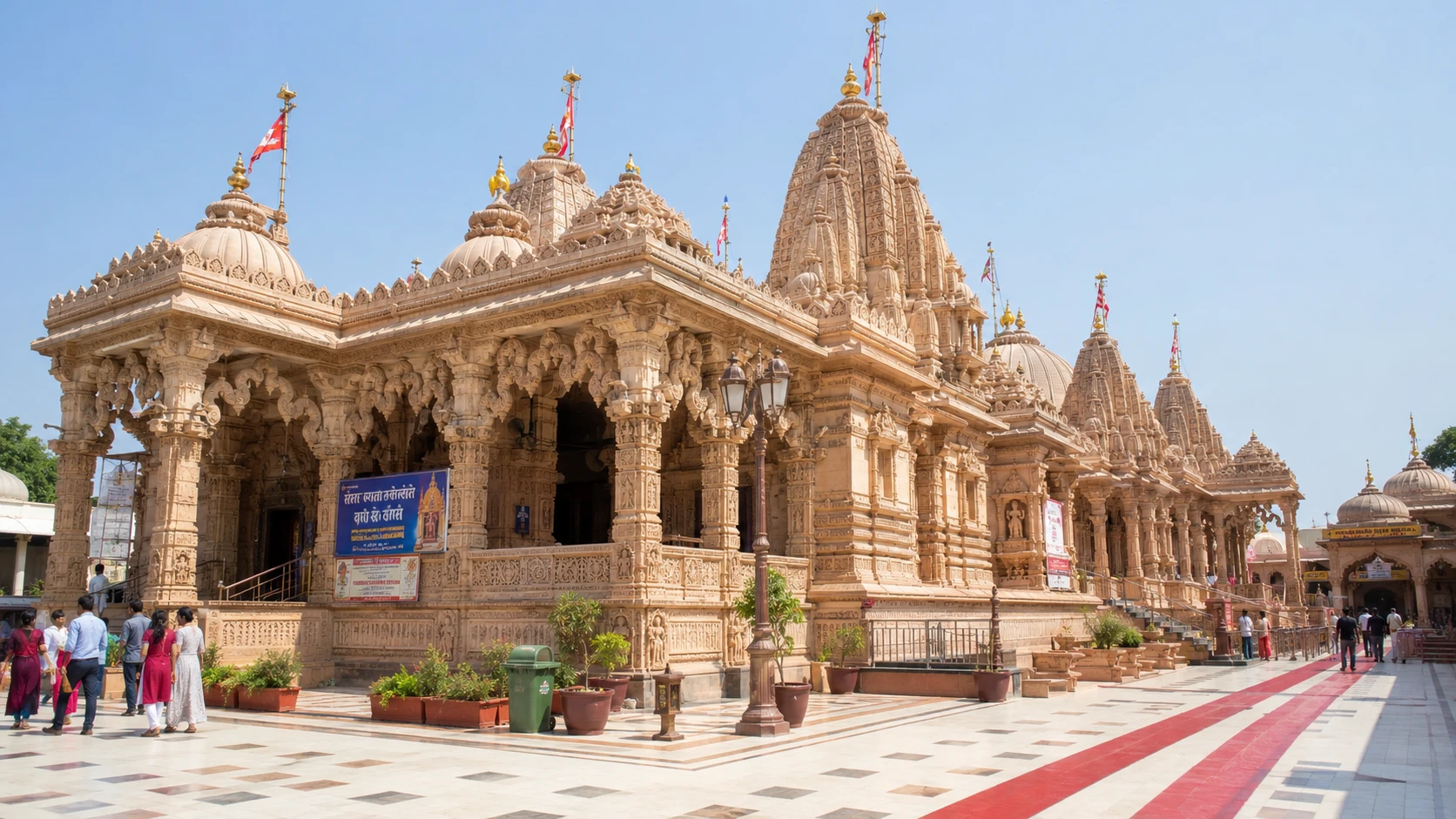
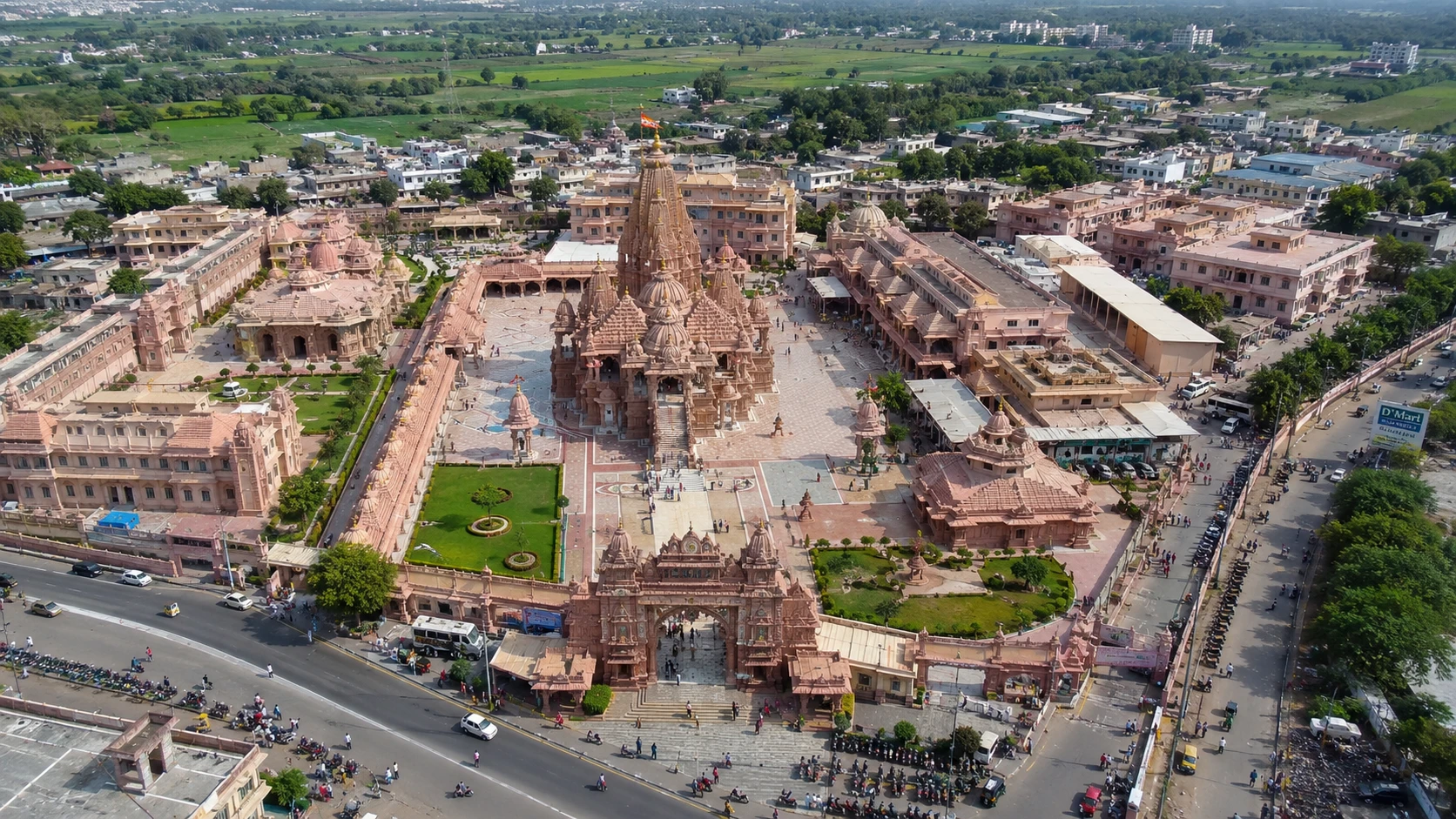
BAPSassociated itself deeply with the Sarangpur Kashtbhanjan temple through its institutional development, investing in the construction of the current temple complex — a large, white marble structure built in the Gujarati temple architecture style with elaborate carvings, a mandapa, and a significant garbhagriha housing the Kashtbhanjan murti. The BAPS Sarangpur complex also includes a guest house, prasadalaya (dining hall), and facilities for organized pilgrim groups.
Pramukh Swami Maharaj, the longest-serving and most globally recognized BAPS head (Pramukh Swami for over 45 years), was closely associated with Sarangpur. He visited the temple repeatedly and is credited with overseeing the modernization of its infrastructure. His death in August 2016 at Sarangpur itself — at the BAPS complex adjacent to the Kashtbhanjan temple — gave the site an additional layer of sacred significance within the BAPS tradition: the place where the organization's most beloved leader completed his earthly life.
Mahant Swami Maharaj (Keshavjivandas Swami) succeeded Pramukh Swami as the current BAPS Pramukh in 2016 and continues the tradition of close association with the Sarangpur site.
Historical Timelineऐतिहासिक कालक्रम
Sahajanand Swami (Swaminarayan) visits Sarangpur during his Gujarat tours. A woman believed to be possessed by a malevolent spirit is healed through darshan of the Kashtbhanjan Hanumanji murti. This episode is recorded in the Satsangi Jivan and establishes the murti's identity as a consecrated instrument of healing in the Swaminarayan tradition.
Formation of BAPS (Bochasanwasi Akshar Purushottam Sanstha) under Shastriji Maharaj (Yagnapurushdas). BAPS formally adopts the Sarangpur Kashtbhanjan temple as a primary pilgrimage site and begins institutional investment in the temple's infrastructure and management.
Extensive development of the BAPS Sarangpur complex under Pramukh Swami Maharaj — construction of the current marble temple, guest house, pilgrim facilities, and prasadalaya. The complex becomes one of the most visited Swaminarayan pilgrimage sites globally, drawing devotees from the Gujarati diaspora worldwide.
Death of Pramukh Swami Maharaj (Shastri Narayanswarupdas) at the Sarangpur BAPS complex — the same site as the Kashtbhanjan temple. Pramukh Swami had been the head of BAPS for over 45 years and was deeply personally associated with Sarangpur. His passing at Sarangpur gave the site additional sacred significance within BAPS theology.
What You'll Seeदर्शन में
The Kashtbhanjan Hanumanji murti at Sarangpur is iconographically distinctive in a way no other major Hanuman temple in India replicates: Hanuman stands with his right foot pressing down upon a pishachini — a female malevolent spirit — who lies crushed beneath him, rendered powerless. His right hand is raised, his expression is fierce rather than benevolent, and his overall bearing communicates conquest and suppression rather than protection or devotion. This is Hanuman in his most martial theological function — not the Rama-devotee, not the mountain-carrier, but the subduer of evil forces.
The murti is housed in the garbhagriha of the BAPS-built marble temple, which is considerably more architecturally elaborate than a typical Gujarati village shrine. The sanctum is maintained to the exacting cleanliness standards characteristic of BAPS temple management — fresh floral offerings changed multiple times daily, careful management of the prasad and offering protocols, and strict crowd management during peak periods. The marble temple's exterior features intricate carved panels in the Gujarati tradition. The overall complex includes large mandapas capable of accommodating the substantial pilgrim volumes this temple receives.
Distinctive Practicesविशिष्ट परंपराएँ
Satsang-Mediated Healing Pilgrimage
सत्संग-मध्यस्थ उपचार तीर्थयात्रा
Year-round; peak on Tuesdays and Saturdays; Hanuman Jayanti and Swaminarayan Jayanti
Sarangpur receives pilgrims who come specifically seeking relief from severe afflictions — chronic illness, mental health crises, perceived spiritual possession, and family catastrophes. Unlike Mehandipur's walk-in folk therapeutic model, the BAPS framework at Sarangpur structures the healing petition through the sampraday's community. Pilgrims are expected to engage with the BAPS satsang (spiritual community), spend time in prayer and scripture reading at the complex, and approach the Kashtbhanjan murti through the disciplined framework of the sampraday's spiritual practice rather than as individual petitioners. BAPS sadhus (monks) are available to counsel and guide afflicted devotees.
The Swaminarayan theological framework understands affliction (kasht) as arising from karmic causes and distance from God. Healing through the Kashtbhanjan murti is understood as restoration of the devotee's connection to the divine through the mediating presence of the sampraday's spiritual lineage — Sahajanand Swami's grace, transmitted through the Akshar succession. The murti is not a separate healing agency but an expression of the same divine grace that flows through the living sants of the tradition.
Pramukh Swami Smruti Darshanam
प्रमुख स्वामी स्मृति दर्शनम
Year-round at the Sarangpur complex
The BAPS Sarangpur complex includes a memorial and exhibition dedicated to Pramukh Swami Maharaj, who passed away at this site in August 2016. This has become an additional pilgrimage element for BAPS devotees — to come to Sarangpur is now also to honor the place where the most beloved BAPS leader completed his earthly mission. The memorial integrates the Kashtbhanjan temple visit with a remembrance of the living saints of the tradition.
In BAPS theology, the Akshar (the living manifestation of the divine on earth) is the doorway to Purushottam (God). Pramukh Swami is considered by BAPS to have been the Akshar of his era — his physical presence at Sarangpur during his passing sanctifies the complex in a way that extends beyond the Kashtbhanjan murti's own consecration. Coming to Sarangpur is thus an encounter with two consecrations: Swaminarayan's 19th-century blessing of the murti, and Pramukh Swami's 21st-century blessing of the ground.
Did You Know?क्या आप जानते हैं?
The Kashtbhanjan Hanumanji murti at Sarangpur depicts Hanuman with his foot pressing down on a pishachini (female malevolent spirit) — making it iconographically unique among major Hanuman temples in India. This posture literally enacts the theological claim that Hanuman subdues and defeats evil spirits, rather than merely warding them off.
Temple iconography; BAPS documentation
Pramukh Swami Maharaj — who led BAPS for over 45 years and is considered one of the most globally influential Hindu spiritual leaders of the 20th and 21st centuries — passed away at the Sarangpur BAPS complex on August 13, 2016. This gives Sarangpur a significance within BAPS devotion that no other site in Gujarat shares: it is simultaneously the place of Swaminarayan's healing miracle and the place of Pramukh Swami's passing.
BAPS Swaminarayan Sanstha; international media coverage
The healing tradition at Sarangpur differs structurally from Mehandipur's folk therapeutic model. At Mehandipur, spirits are expelled through a public, unmediated confrontation between the afflicted and the deities. At Sarangpur, the BAPS framework channels healing through the sampraday's community of saints (sadhus), satsang participation, and the theological framework of Akshar-Purushottam — making the healing process an integration into the living spiritual community rather than a one-time exorcism.
Raymond Brady Williams (1984); BAPS theological documentation
The BAPS Sarangpur complex draws significant Gujarati diaspora pilgrimage — from the United Kingdom, East Africa, North America, Australia, and New Zealand. BAPS mandirs worldwide organize group pilgrimages to Sarangpur as part of ancestral Gujarat devotional circuits, making this one of the few Indian temple sites with a structured global pilgrimage infrastructure maintained by an international religious organization.
BAPS Swaminarayan Sanstha international center documentation
Visitor Accessप्रवेश जानकारी
The Sarangpur BAPS Kashtbhanjan temple is open to all devotees without restriction. The Swaminarayan tradition requires modest dress — see dress code below. BAPS temple management enforces strict protocols on dress, behavior, and offering procedures. Photography inside the garbhagriha is strictly prohibited. The complex is meticulously maintained. Devotees seeking counsel for afflictions can ask to speak with BAPS sadhus at the site.
Book BAPS guest house accommodation in advance for festival periods — it fills very quickly for Hanuman Jayanti and Swaminarayan Jayanti. Arrive early morning for shorter darshan queues. The BAPS prasadalaya (dining hall) serves free or subsidized meals to all devotees — a significant benefit for pilgrims on a tight budget. Follow all dress code requirements strictly — BAPS volunteers at the entrance will ask those not appropriately dressed to change. A note on the Salangpur-Sarangpur distinction: pilgrims sometimes conflate the two names — the BAPS primary temple with the Kashtbhanjan pishachini-under-foot murti is HERE at Sarangpur (4 km from Salangpur).
Festivalsत्योहार
Hanuman Jayanti
हनुमान जयंती
Mar-Apr (Chaitra Purnima)
The principal festival at Kashtbhanjan temple, drawing pilgrims from across Gujarat, Rajasthan, Maharashtra, and the global Gujarati diaspora. BAPS organizes the event on a massive scale — special abhishekam, extended darshan windows, large-scale bhandaras (community feasts), and discourses by BAPS sadhus. The BAPS network worldwide coordinates group pilgrimages timed for this date.
Swaminarayan Jayanti
स्वामीनारायण जयंती
Apr (Chaitra Shukla Navami — Ram Navami)
The birthday of Sahajanand Swami (Swaminarayan) is the most important date in the Swaminarayan calendar and is observed with extraordinary ceremony at Sarangpur. The Kashtbhanjan healing narrative is re-enacted through discourse and devotional programs. Swaminarayan Jayanti at Sarangpur draws enormous crowds and is one of the most important events in the BAPS annual calendar.
Diwali and Annakut
दिवाली और अन्नकूट
Oct-Nov (Kartik)
The Swaminarayan tradition observes Diwali as the New Year (Samvat) commencement, followed the next day by Annakut — the offering of a mountain of food items to the deity, symbolizing devotion through abundance. At Sarangpur, the Annakut celebration is elaborate, with hundreds of food items arranged before the Kashtbhanjan murti and then distributed as prasad. This is among the most visually spectacular festivals at the BAPS complex.
Traditional Offeringsपारंपरिक अर्पण
प्राथमिक अर्पण
Sindoor (Vermilion)
सिंदूर
सिन्दूर
Sindoor offered to Kashtbhanjan Hanumanji carries particular weight at Sarangpur: the vermilion honors Hanuman's total devotion to Rama, but the fierce pishachini-under-foot iconography of this murti gives the offering an additional warrior valence — the red of sindoor is also the color of the deity who subdues evil, not merely the color of devotion.
Flower garlands
फूल मालाएँ
Fresh flower garlands are changed multiple times daily at the Sarangpur murti — one of the distinguishing features of BAPS temple management's exacting standards. Marigold, jasmine, and roses are offered. The frequency of floral renewal reflects the BAPS tradition's emphasis on maintaining the murti in a state of constant fresh consecration.
Laddoo (Sweet offering)
लड्डू
Laddoos are offered to Kashtbhanjan Hanumanji. The BAPS complex at Sarangpur operates its own prasad kitchen, and the temple-prepared laddoo prasad is among the most sought-after at the site. Devotees who have received blessings — particularly those who believe their afflictions have been resolved — often sponsor large-scale laddoo distributions as an act of thanksgiving.
Coconut
नारियल
नारिकेल
Coconut offering before Kashtbhanjan symbolizes the breaking of the obstacles — the same difficulties the murti is named for destroying. The coconut's breaking represents the devotee's surrender of ego and the obstacles' dissolution before Hanuman's power.
इस मंदिर की विशेषता
BAPS Prasad (Temple-Kitchen Offerings)
BAPS प्रसाद (मंदिर-रसोई अर्पण)
The BAPS prasadalaya at Sarangpur prepares temple prasad — primarily laddoos and other Gujarati sweets — that devotees receive after darshan. Unlike most temples where prasad is purchased from external vendors, the BAPS kitchen at Sarangpur produces consecrated prasad that has been prepared within the temple complex itself, giving it a sanctity that externally purchased offerings cannot have. Devotees often carry this prasad home for family members who could not attend.
Offering sets are available from authorized BAPS counters within the temple complex — using these is preferred over bringing offerings from outside vendors, as the BAPS management ensures quality and authenticity. All offerings must comply with the BAPS tradition's vegetarian and Sattvik standards — no onion, garlic, or non-vegetarian items. Follow the instructions of BAPS seva volunteers regarding offering procedures.
How to Reachकैसे पहुँचें
Sarangpur is in Botad district, Saurashtra region of Gujarat, approximately 4 km from Salangpur and 28 km from Botad Junction.
By road, from Ahmedabad (130 km): take the Bhavnagar highway (NH-48 to SH network), proceed through Botad toward Sarangpur. From Bhavnagar (60 km): direct road via Botad. Private vehicles, taxis from Botad, and dedicated pilgrim bus services operated by BAPS centers connect major Gujarat cities to Sarangpur.
By rail, Botad Junction (28 km) is the nearest railway station, with trains from Ahmedabad, Bhavnagar, and Rajkot. From Botad, shared taxis and autos run to Sarangpur.
By air, Bhavnagar Airport (65 km) has limited domestic flights. Ahmedabad Airport (130 km) offers the best national and international connectivity.
The BAPS network operates dedicated pilgrim transport from major Gujarat cities and from BAPS centers internationally for organized group pilgrimages. Contact your local BAPS mandir for group travel arrangements.
Plan Your Visitयात्रा की योजना
🌤 सर्वोत्तम मौसम
October to March for best weather (18–30°C). The Saurashtra climate is hot in summer (April–June, 38–44°C). All seasons are active given BAPS's organized international pilgrimage program, which brings devotees year-round.
👘 पहनावे का नियम
Strict dress code enforced at BAPS temples. Men: white kurta-pyjama preferred, or formal traditional attire; no shorts, jeans, or sleeveless tops. Women: sari or salwar kameez with dupatta; no Western casual wear. BAPS volunteers at the entrance enforce these requirements. Visitors who do not meet the dress code will be asked to change or obtain clothing from vendors near the complex.
📱 फोन और फोटोग्राफी
Mobile phones on silent mode inside the temple. Photography strictly prohibited inside the garbhagriha and in the inner worship areas. Exterior photography of the marble temple structure is generally permitted.
🏨 आवास
The BAPS complex operates a guest house (nivas) at Sarangpur — priority booking for BAPS devotees and organized group pilgrims. Book well in advance through your regional BAPS center, especially for festival periods. Basic pilgrim accommodation is also available in Sarangpur village. Botad (28 km) has better hotel options for non-BAPS travelers.
Book a Pujaपूजा बुक करें
BAPS Swaminarayan Sanstha's official portal is baps.org — use this for accommodation booking, donation, and pilgrimage planning. The Sarangpur complex does not have a separate standalone website. Guest house booking at the temple is managed through BAPS's internal reservation system — contact your nearest BAPS satsang center or the Sarangpur mandir directly. As with all temple sites, verify current fees and available sevas before travel.
Managed by: BAPS Swaminarayan Sanstha
Abhishekam (scheduled by priests)
अभिषेकम
Guest house accommodation (BAPS nivas)
गेस्ट हाउस आवास (BAPS निवास)
Booking information verified: 2026-05-22
Sacred Soundsपवित्र ध्वनि
क्या आप जानते हैं? · Did You Know?
वही अनुवाद त्रुटि जिसने हिन्दू धर्म में '33 कोटि' को '33 करोड़' बनाया, बौद्ध धर्म में भी हुई। बौद्ध ग्रन्थों के चीनी अनुवाद ने 'सप्त कोटि बुद्ध' (7 श्रेष्ठ बुद्ध) का अनुवाद '7 करोड़ बुद्ध' कर दिया। तिब्बती अनुवाद ने सही किया: 7 प्रकार, 7 करोड़ नहीं। एक संस्कृत शब्द, दो प्रमुख विश्व धर्मों में गलत पढ़ा गया, ने दो एकसमान भ्रम स्वतन्त्र रूप से उत्पन्न किए।
Related Contentसंबंधित सामग्री
Related Scriptures
Community Reflections
🕉️
Be the first to share your reflection.