Salangpur Hanumanji
सालंगपुर हनुमान
The Hanuman who destroys difficulties, in the land of Swaminarayan
Salangpur, Gujarat, India
Sālangapura HanumānajīAlso known as: Salangpur Hanumanji Mandir, Sarangpur Hanumanji, Kashtbhanjan Hanumanji Salangpur, Salangpur Balaji
युग
Associated with the Swaminarayan tradition (early 19th century); older shrine on site
वास्तुकला
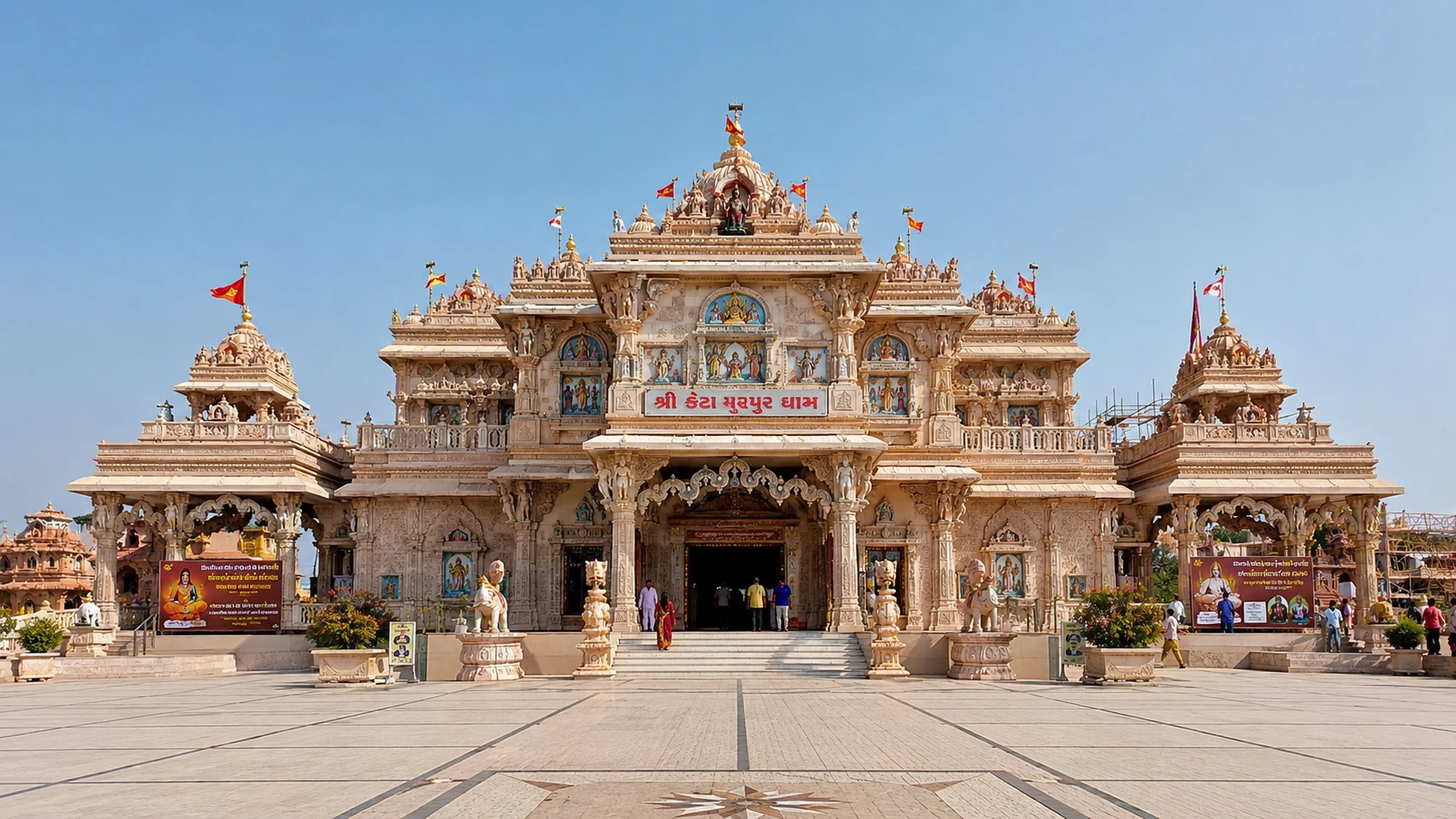
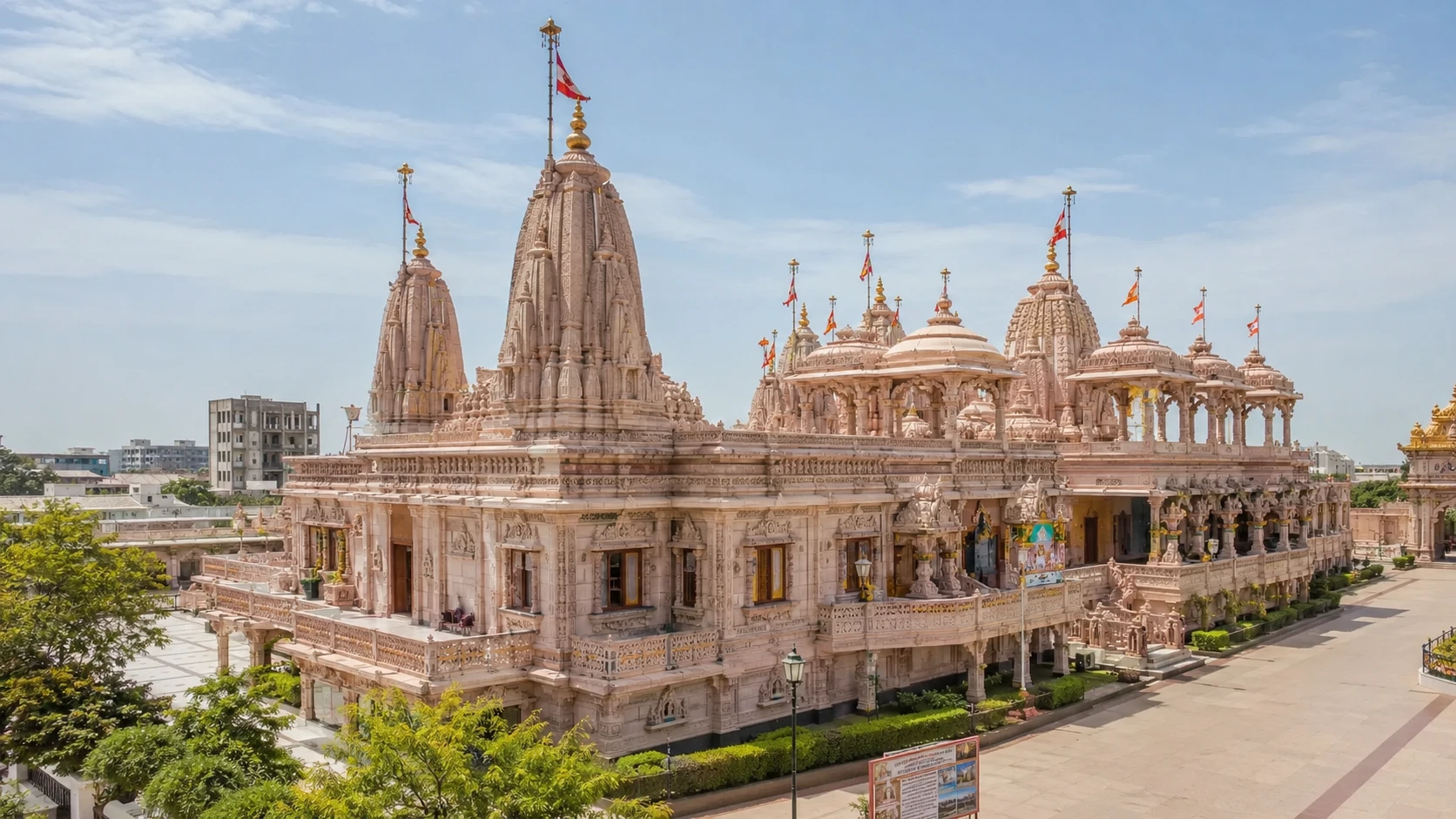
Gujarati temple architecture with Swaminarayan-influenced elements
खुला
06:00 – 21:00
आरती
06:30 · 12:00 · 19:00
विशेष
Tuesdays and Saturdays draw peak crowds; Hanuman Jayanti is the principal festival
पवित्र कथा · पवित्र कथा
In the flat, agricultural heartland of Saurashtra-Botad in Gujarat, the name Salangpur is synonymous with Hanuman's power to shatter difficulty. The Hanumanji temple here, in the cluster of sacred sites that straddle the villages of Salangpur and nearby Sarangpur, draws pilgrims primarily from Gujarat, Rajasthan, and Maharashtra who come seeking relief from troubles the ordinary world has not been able to resolve. The temple tradition is deeply interwoven with the Swaminarayan sampraday — the great Vaishnava reformation movement of 19th-century Gujarat — lending this Hanuman temple a theological character quite distinct from its North Indian counterparts: here Hanuman is worshipped not only as Rama's devoted servant but as a deity of fierce protective grace endorsed by the Swaminarayan tradition itself.
Sacred Origin Storyपवित्र उत्पत्ति कथा
Source: Swaminarayan sampraday tradition / local Saurashtra Vaishnava oral narrative
The mythology of the Salangpur-Sarangpur Hanumanji cluster is inseparable from the life and mission of Sahajanand Swami, later known as Swaminarayan, who traversed Gujarat in the late 18th and early 19th centuries establishing a major Vaishnava reform movement.
The foundational account in the Swaminarayan tradition holds that Sahajanand Swami came to Sarangpur — the village immediately adjacent to Salangpur — and encountered a woman who was believed to be severely afflicted by malevolent forces, unable to be cured despite numerous attempts. Sahajanand Swami, perceiving her affliction to have a spiritual cause, performed a healing in the name of Hanuman. The woman recovered, and the murti of Hanuman associated with this healing became known as Kashtbhanjan — the Destroyer of Difficulties — in recognition of the event.
This account established the template for Hanuman worship in this geographic cluster: Hanuman as the deity who, when invoked through sincere devotion and saintly intercession, can break the grip of any difficulty, whether spiritual, physical, or psychological. The Swaminarayan tradition's framing is notably different from the purely folk-therapeutic tradition of Mehandipur or the Puranic warrior-devotee tradition of North Indian Hanuman temples: here, Hanuman's power is accessed through the disciplined Vaishnava devotional framework of the sampraday.
The broader local tradition holds that the Salangpur-Sarangpur area was already a place of Hanuman veneration before Sahajanand Swami's arrival — the Kashtbhanjan epithet was applied to an existing sacred presence, and the saint's healing episode confirmed and amplified what the local tradition already knew about this spot's potency.
उद्धृत स्रोत:
- Swaminarayan Sampraday hagiographic tradition — Satsangi Jivan and related texts
- BAPS Swaminarayan Sanstha historical records
- Local Saurashtra oral tradition
विद्वत संदर्भ
The Salangpur-Sarangpur Hanumanji cluster is an example of what scholars of the Swaminarayan tradition (Raymond Brady Williams, 'A New Face of Hinduism: The Swaminarayan Religion', 1984) identify as the sampraday's strategic integration of existing regional folk and Shaivite devotional sites into a Vaishnava framework. Hanuman, already revered across caste and tradition boundaries in Gujarat, became a powerful point of convergence — his worship was compatible with Vaishnava theology (Hanuman as Rama's supreme devotee) while also addressing the healing and spirit-affliction concerns of the rural population. The Kashtbhanjan healing narrative is well-attested within the sampraday's own documentary tradition.
Historyइतिहास
The Salangpur-Sarangpur area's religious significance precedes the Swaminarayan tradition and is rooted in the pre-existing Hanuman devotional culture of the Saurashtra region. The specific geography — flat agricultural land interspersed with small settlement clusters — was already a network of local shrines and folk worship sites before Sahajanand Swami's arrival.
Sahajanand Swami (1781–1830), founder of the Swaminarayan Sampraday, conducted extensive journeys through Gujarat, Rajasthan, and Kutch. His visit to the Sarangpur area and the associated healing event is dated to the early 19th century within the sampraday's own chronology. The Kashtbhanjan episode is among the most frequently cited accounts in Swaminarayan hagiographic literature, and the murti associated with it became one of the most venerated in the entire sampraday.
After Sahajanand Swami's death in 1830, his spiritual successors — the acharyas of the two dioceses he established — continued to develop the Sarangpur-Salangpur site. The BAPS (Bochasanwasi Akshar Purushottam Sanstha) branch of the Swaminarayan tradition, which grew from a schismatic succession dispute in the early 20th century, has been particularly associated with the Sarangpur Kashtbhanjan temple, investing substantially in its infrastructure and international promotion.
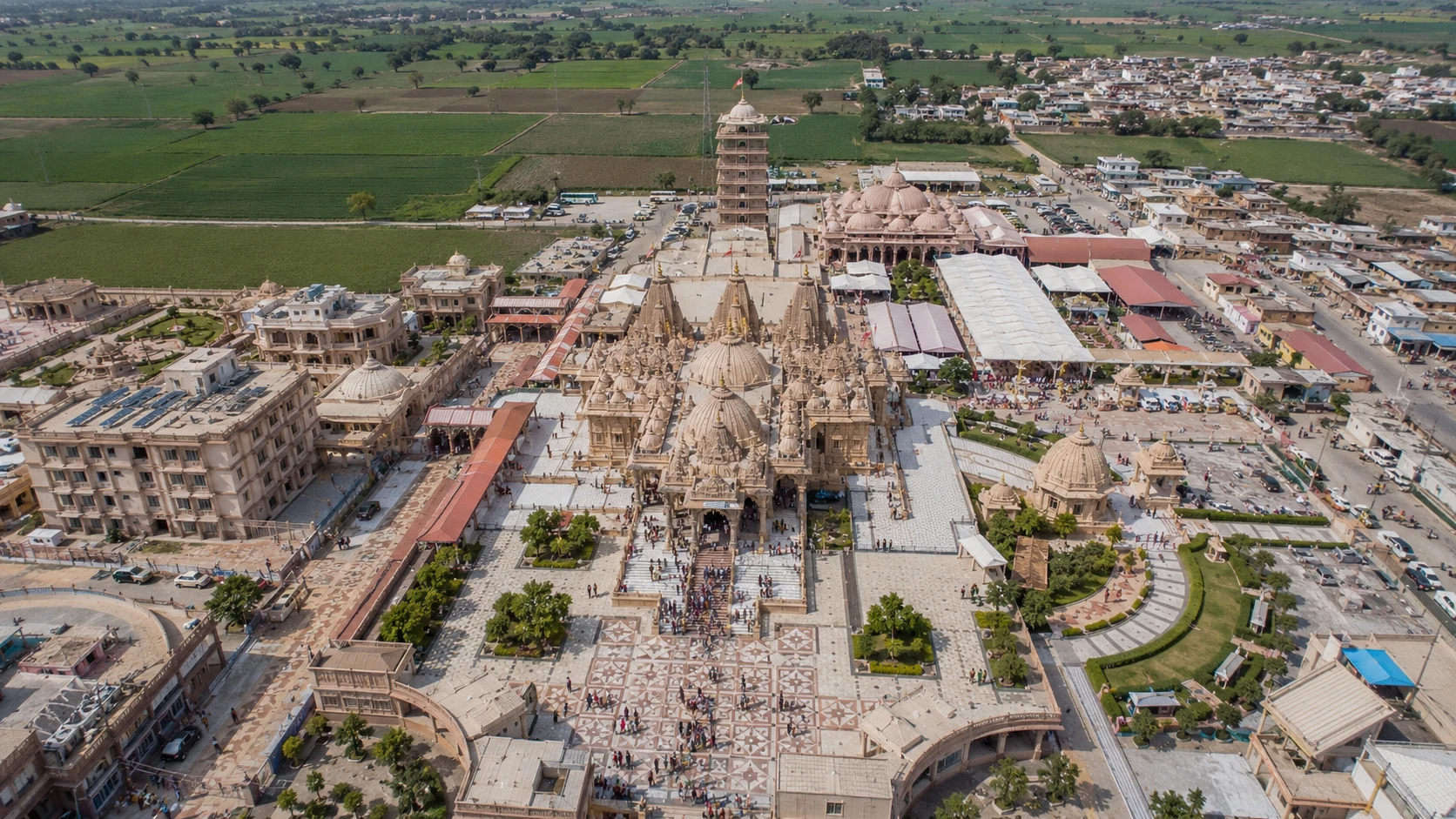
The Salangpur temple (distinct by coordinates from the main Sarangpur Kashtbhanjan complex, approximately 4 km away) represents the broader sacred geography of this pilgrimage cluster. Pilgrims arriving in the area typically visit both sites as part of a single Saurashtra devotional circuit that may also include Somnath, Palitana, and Dwarka.
The site draws significant Gujarati diaspora pilgrims — from the United Kingdom, East Africa, North America, and Australia — for whom the Swaminarayan-affiliated Hanuman shrines carry particular cultural and devotional weight as connections to their ancestral homeland's religious landscape.
Historical Timelineऐतिहासिक कालक्रम
Sahajanand Swami (later Swaminarayan) visits the Sarangpur area and performs a healing associated with the Hanuman murti. The murti becomes known as Kashtbhanjan — Destroyer of Difficulties. This event is foundational to the temple cluster's identity in the Swaminarayan hagiographic tradition.
BAPS Swaminarayan Sanstha's growing association with the Sarangpur Kashtbhanjan temple and investment in the broader pilgrimage infrastructure of the Salangpur-Sarangpur cluster. The site becomes a major pilgrimage destination for Gujarati communities worldwide.
Significant increase in diaspora pilgrimage to the Salangpur-Sarangpur cluster, particularly from UK, East Africa, North America, and Australia, driven by BAPS Swaminarayan network's global growth and the construction of BAPS mandirs worldwide that strengthened devotee connections to the ancestral Gujarati sacred geography.
What You'll Seeदर्शन में
The Hanumanji murti at Salangpur is in the standing North Indian form, coated in sindoor and adorned with garlands and ornamental clothing. The murti is venerated under the Kashtbhanjan epithet — Destroyer of Difficulties — which is the primary theological identity of Hanuman in this Swaminarayan-influenced tradition. The sanctum is typically maintained to the high standards of cleanliness and order characteristic of the Swaminarayan tradition's temple management, with fresh offerings changed regularly and the murti kept in immaculate condition. The broader Salangpur-Sarangpur pilgrimage cluster includes the nearby Sarangpur Kashtbhanjan temple, which is the more architecturally elaborate of the two sites and the primary focus of BAPS Swaminarayan infrastructure investment.
Distinctive Practicesविशिष्ट परंपराएँ
Kashtbhanjan Petition (Difficulty-Breaking Prayer)
कष्टभंजन याचना
Daily; peak on Tuesdays and Saturdays
Devotees come to the temple specifically to petition Kashtbhanjan Hanumanji for relief from severe difficulties — chronic illness, family breakdown, financial ruin, court cases, or situations of perceived spiritual affliction. The petition is made through prayer, offering, and in the Swaminarayan tradition, often through correspondence with or visit to a senior sadhu (monk) who may offer additional spiritual guidance. Unlike Mehandipur's raw, unmediated intensity, the Salangpur-Sarangpur tradition channels healing requests through the disciplined structure of the sampraday.
In the Swaminarayan theological framework, difficulty (kasht) arises from karmic causes and spiritual separation from God. Hanuman as Kashtbhanjan addresses both — his power breaks the causal chain of difficulty while his devotion to Rama models the spiritual alignment that prevents its recurrence. The petition is thus not merely a request for relief but an act of spiritual repositioning.
Did You Know?क्या आप जानते हैं?
The Kashtbhanjan healing narrative associated with the Salangpur-Sarangpur cluster is one of the most widely cited miracles in Swaminarayan hagiographic literature. It establishes a distinctive Gujarati Vaishnava framework for Hanuman worship — in which the deity's healing power is accessed through the disciplined devotion of the sampraday rather than through folk-shamanic practices.
Satsangi Jivan; Raymond Brady Williams (1984)
The Salangpur-Sarangpur pilgrimage cluster is approximately 4 km from the main Sarangpur Kashtbhanjan temple — both are typically visited together as part of a single Saurashtra pilgrimage circuit. The broader area also includes Palitana (Jain pilgrimage), Somnath, and Dwarka within a day's drive, making it one of the most pilgrimage-dense regions in all of India.
Gujarat Tourism; temple trust documentation
The Swaminarayan tradition's approach to Hanuman worship is theologically notable because Swaminarayan was a strict Vaishnava whose primary focus was Purushottam Narayan (the supreme form of Vishnu). The integration of Hanuman — a Shaivite-origin deity who is simultaneously Rama's devotee — reflects the tradition's pragmatic acknowledgment of existing Gujarat devotional culture.
Raymond Brady Williams (1984); Swaminarayan sampraday theological literature
The Gujarati diaspora's pilgrimage to Salangpur-Sarangpur is a significant cultural phenomenon — BAPS Swaminarayan centers in the UK, USA, Canada, Kenya, and Australia organize group pilgrimages to the Saurashtra cluster including this site, making it one of the few Indian temples with a structured global pilgrimage infrastructure.
BAPS Swaminarayan Sanstha global center documentation
Visitor Accessप्रवेश जानकारी
The Salangpur Hanumanji temple is open to all devotees without restriction. The Swaminarayan tradition maintains temples to standards of high cleanliness — visitors are expected to enter with clean hands and feet, modest dress, and without footwear. Photography policies vary — confirm at the site before photographing the inner sanctum.
Combine the visit with the nearby Sarangpur Kashtbhanjan temple (~4 km). Tuesdays and Saturdays draw peak crowds. The area is best reached by car or private vehicle from Botad or Bhavnagar. Allow a full day for the Salangpur-Sarangpur pilgrimage cluster.
Festivalsत्योहार
Hanuman Jayanti
हनुमान जयंती
Mar-Apr (Chaitra Purnima)
The principal festival, drawing pilgrims from across Saurashtra and the broader Gujarati diaspora. Special abhishekam, extended darshan, and large-scale community feasts (bhandaras) characterize the celebration. The BAPS network mobilizes organized group pilgrimages from Swaminarayan centers across India and internationally.
Swaminarayan Jayanti
स्वामीनारायण जयंती
Apr (Chaitra Shukla Navami — Ram Navami coincides)
The birthday of Sahajanand Swami (Swaminarayan) is observed across all Swaminarayan tradition sites, including Salangpur-Sarangpur. The Kashtbhanjan healing narrative is commemorated through special pujas and discourses. The day is one of the most important in the Swaminarayan calendar and draws devotees from the global BAPS network.
Traditional Offeringsपारंपरिक अर्पण
प्राथमिक अर्पण
Sindoor (Vermilion)
सिंदूर
सिन्दूर
Sindoor is the primary offering to Hanuman, recalling his legendary act of covering his body in vermilion for Lord Rama's wellbeing. In the Swaminarayan tradition, the offering is made with particular mindfulness — the act of applying sindoor is an act of Hanuman's seva (service), which the devotee symbolically emulates.
Laddoo (Sweet offering)
लड्डू
Boondi laddoos are the standard sweet offering to Hanuman at the Salangpur temple. The tradition of sweet offerings in the Swaminarayan tradition carries particular meaning — Swaminarayan theology emphasizes the nectar (amrit) of devotion as the sweetness that defeats difficulty, and the laddoo offering enacts this symbolically.
Flower garlands
फूल मालाएँ
Fresh flower garlands, particularly marigold and jasmine, are offered to the Hanumanji murti. The Swaminarayan tradition's temple management ensures fresh floral offerings are maintained throughout the day. Flowers represent purity of heart — the devotee brings the most perishable, fragile thing as an offering, acknowledging the impermanence of material existence before the eternal divine.
The Swaminarayan tradition's temples typically sell offering sets (puja samagri) at authorised counters near the temple entrance. Offerings brought from outside are accepted but should be unpacked before entry. Follow the instructions of temple sevaks (volunteers) regarding how offerings are to be presented — protocols vary slightly between Swaminarayan-affiliated and independent temples.
How to Reachकैसे पहुँचें
Salangpur is in Botad district, Saurashtra region of Gujarat, approximately 4 km from the Sarangpur Kashtbhanjan temple.
By road is the most practical approach. From Bhavnagar (60 km), take the Bhavnagar-Botad highway and proceed to Salangpur. From Ahmedabad (130 km), drive south via the Bhavnagar highway (NH-48 to SH network). Private vehicles, taxis, and shared autos from Botad Junction serve the area.
By rail, the nearest major junction is Botad (30 km), with trains from Ahmedabad, Bhavnagar, Rajkot, and Surendranagar. Shared taxis and private cabs connect Botad to Salangpur.
By air, Bhavnagar Airport (65 km) has limited domestic flights from Mumbai and Ahmedabad. Ahmedabad Airport (130 km) offers the best connectivity with national and international routes.
Pilgrims typically combine Salangpur-Sarangpur with the broader Saurashtra circuit: Somnath (120 km), Palitana (80 km), Dwarka (200 km), and Gondal (80 km) — making the cluster part of one of India's richest multi-day pilgrimage routes.
Plan Your Visitयात्रा की योजना
🌤 सर्वोत्तम मौसम
October to March offers pleasant temperatures (18–30°C) for visiting Saurashtra. Summer (April–June) can be intensely hot (38–44°C). The monsoon (July–September) is moderate in Saurashtra and does not significantly disrupt temple access.
👘 पहनावे का नियम
The Swaminarayan tradition requires modest dress — men in kurta-pyjama or formal attire; women in sari or salwar suit. Shorts, sleeveless tops, and casual Western wear are not appropriate. Remove footwear at the temple entrance.
📱 फोन और फोटोग्राफी
Mobile phones on silent mode. Photography policies at Swaminarayan tradition temples are strict — confirm before photographing the inner sanctum or the murti directly.
🏨 आवास
Salangpur and Sarangpur are small villages with basic pilgrimage accommodation. The BAPS Swaminarayan Sanstha operates a guest house at the Sarangpur Kashtbhanjan complex — booking through BAPS is recommended for those in the sampraday. Botad (30 km) has better hotel options. For comfortable stays, Bhavnagar (60 km) offers a wider range.
Sacred Soundsपवित्र ध्वनि
क्या आप जानते हैं? · Did You Know?
वही अनुवाद त्रुटि जिसने हिन्दू धर्म में '33 कोटि' को '33 करोड़' बनाया, बौद्ध धर्म में भी हुई। बौद्ध ग्रन्थों के चीनी अनुवाद ने 'सप्त कोटि बुद्ध' (7 श्रेष्ठ बुद्ध) का अनुवाद '7 करोड़ बुद्ध' कर दिया। तिब्बती अनुवाद ने सही किया: 7 प्रकार, 7 करोड़ नहीं। एक संस्कृत शब्द, दो प्रमुख विश्व धर्मों में गलत पढ़ा गया, ने दो एकसमान भ्रम स्वतन्त्र रूप से उत्पन्न किए।
Related Contentसंबंधित सामग्री
Related Scriptures
Community Reflections
🕉️
Be the first to share your reflection.