A new sound library from Eternal Raga

Eternal Dhwani

शाश्वत ध्वनि

Indian classical · Brainwave-tuned · Outcome-engineered

शास्त्रीय वाद्य · मस्तिष्क-तरंग संयोजित · जीवन के लिए

Long-form Indian classical instrumental soundscapes, layered with brainwave entrainment frequencies — organised by what your life actually needs. Sleep. Focus. Calm. Healing. Morning energy.

PodcastMusic AlbumEternal Dhwani

Launching soon · जल्द आ रहा है

Be the first to hear when the first titles drop.

Discover

Find your sound

Duration
Frequency
Instrument

Titles dropping soon

Search and filter will activate when the first tracks are published.

Seven Pillars · सात स्तंभ

Find your frequency

Each pillar is a life outcome. Each title is engineered for it.

Focus & Concentration

Soon

एकाग्रता

Indian classical instrumentals paired with Beta and Gamma brainwave frequencies, engineered for sustained attention.

Deep WorkADHD FocusExam Prep
Explore pillar

Stress & Anxiety

Soon

तनाव और चिंता

When the nervous system is running hot — Sunday scaries, pre-meeting jitters, doom-scroll spiral — Indian classical ragas like Bhairavi and Yaman, layered over Alpha and Theta frequencies, drop cortisol and reset the vagus nerve.

Burnout RecoveryCortisol ResetDoom Scroll Recovery
Explore pillar

Sleep & Deep Rest

Soon

निद्रा

Surbahar, bansuri in low register, and tanpura drones tuned to Delta frequencies for genuine deep sleep — not background spa music.

Insomnia Relief8-Hour Sleep LoopNight Shift Recovery
Explore pillar

Emotional Healing

Soon

भावनात्मक उपचार

Sarangi — the bowed Indian string closest to the human voice — paired with Solfeggio 528Hz and 396Hz for heartbreak, grief, loneliness, and the long work of letting go.

Heartbreak HealingGrief ComfortLetting Go
Explore pillar

Nada Yoga

Soon

नादयोग

The classical Hindu and tantric tradition of sound as the meditation object itself — not background to a different practice.

Sound BathShavasanaChakra Soundscapes
Explore pillar

Morning & Energy

Soon

प्रातः ऊर्जा

Santoor's crystalline morning shimmer, raga Bhairav at dawn, gentle Beta frequencies to wake the system without spiking cortisol.

Morning MotivationWorkout WarmupMonday Reset
Explore pillar

Healing & Wellness

Soon

स्वास्थ्य

Solfeggio frequencies (174Hz, 285Hz, 528Hz) layered with veena and sarangi for chronic pain, migraines, PMS, autoimmune flare-ups, and post-illness recovery.

Chronic Pain ReliefMigrainePMS ComfortLong CovidHospital Stay
Explore pillar
The Science of Sound

The Frequency Library

आवृत्ति पुस्तकालय

Every track in Eternal Dhwani is tuned to a specific brainwave or Solfeggio frequency, chosen for what your nervous system actually needs in that moment. Here is what each band does, and why we paired it the way we did.

Delta

0.5–4 Hz

The frequency of deep sleep and bodily restoration.

Delta waves dominate during the deepest, dreamless stage of sleep. The brain is least active in Delta; the body is most active in repair — growth hormone secretion peaks, immune function strengthens, cells regenerate. You will not consciously hear Delta carriers — they sit beneath the instrumental layers. You will feel their effect the next morning.

Best for

InsomniaAll-night sleepPost-illness recoveryDeep rest

Best with

SurbaharLow BansuriTanpura
Browse Delta titles →

Theta

4–8 Hz

Meditation, light sleep, and the band of emotional release.

Theta arises in deep meditation and the hypnagogic state between waking and sleeping. The vagus nerve activates; the parasympathetic nervous system takes over from fight-or-flight. This is the band of release — tears can come unexpectedly during long Theta sessions, especially after weeks of burnout. Includes 7.83 Hz Schumann, the Earth's electromagnetic resonance.

Best for

Pre-sleep wind downDeep meditationVagus resetBurnout recovery

Best with

BansuriSarangiTanpura
Browse Theta titles →

Alpha

8–12 Hz

Relaxed alertness — present but not stressed.

Alpha dominates during quiet wakefulness: eyes closed but awake, absorbed reading, light meditation, daydreaming. It is the band of open monitoring — present but not gripped. You can read, write, or simply be, without the mental friction of Beta-driven task focus. This is what you want for an hour of reading without picking up the phone.

Best for

ReadingMindfulnessLight studyDecompression

Best with

Sitar (soft)Bansuri
Browse Alpha titles →

Beta

12–30 Hz

Active focus, alertness, problem-solving.

Beta dominates the waking task-focused brain — your daytime working mind. Mid-Beta (14–18 Hz) is the productive sweet spot; high-Beta tips toward anxiety. Sitar and sarod with steady tabla rhythm create active focus without the cognitive cost of vocal-led music, which is why our coding, exam-prep, and WFH tracks live in this band.

Best for

WFH focusExam prepCodingWorkout warm-up

Best with

SitarSarodTabla
Browse Beta titles →

Gamma

30–100 Hz

High cognition, memory consolidation, peak focus.

Gamma is the highest brainwave band — associated with peak cognitive performance, cross-region brain communication, memory consolidation, and conscious perception itself. Long-term meditators show unusually high Gamma activity. 40 Hz Gamma in particular is the subject of significant recent neuroscience research. Sitar and sarod's articulated attack pairs naturally with the band's rhythmic detail.

Best for

Deep workADHD focusCodingBrain fog reset

Best with

SitarSarod
Browse Gamma titles →

Solfeggio 174

174 Hz

The foundational frequency for pain relief and grounding.

The lowest of the six classical Solfeggio frequencies. In sound-healing tradition, 174 Hz is associated with pain reduction, an increased sense of safety, and feeling anchored in the body. You feel it more than you hear it — deep, settling, low. Sarangi's voice-like depth and tanpura drone amplify the grounding quality.

Best for

Chronic painMigraineBody relaxationHospital stay

Best with

SarangiTanpura
Browse 174 Hz titles →

Solfeggio 285

285 Hz

The tissue-healing and recovery frequency.

The second classical Solfeggio frequency. In sound-healing tradition it is associated with cellular repair, tissue regeneration, and physical recovery — most commonly used during convalescence after surgery, injury, or long illness. Less grounding than 174 Hz, with a subtle restorative quality. Veena and sarangi both carry 285 Hz well because both have the slow, sustained tone the frequency needs to do its work.

Best for

Post-surgery recoveryInjury healingLong Covid

Best with

VeenaSarangi
Browse 285 Hz titles →

Brainwave entrainment and Solfeggio frequencies are used in sound-healing tradition and supported by emerging neuroscience research. They are a companion to rest, focus, and recovery — not a substitute for medical care. If you are managing a clinical condition, consult your physician.

The Soul of Eternal Raga

The Indian Instrument Library

वाद्ययंत्र पुस्तकालय

The instruments of Indian classical music are not just sources of sound — each carries centuries of devotional practice, regional tradition, and sonic engineering refined across generations. Here is the character of each, and what it brings to your listening.

Sitar

Sitar — bright, articulated, sustained shimmer

Sitar

सितार

sitāra

Bright, articulated, sustained shimmer — the most globally recognised Indian classical instrument.

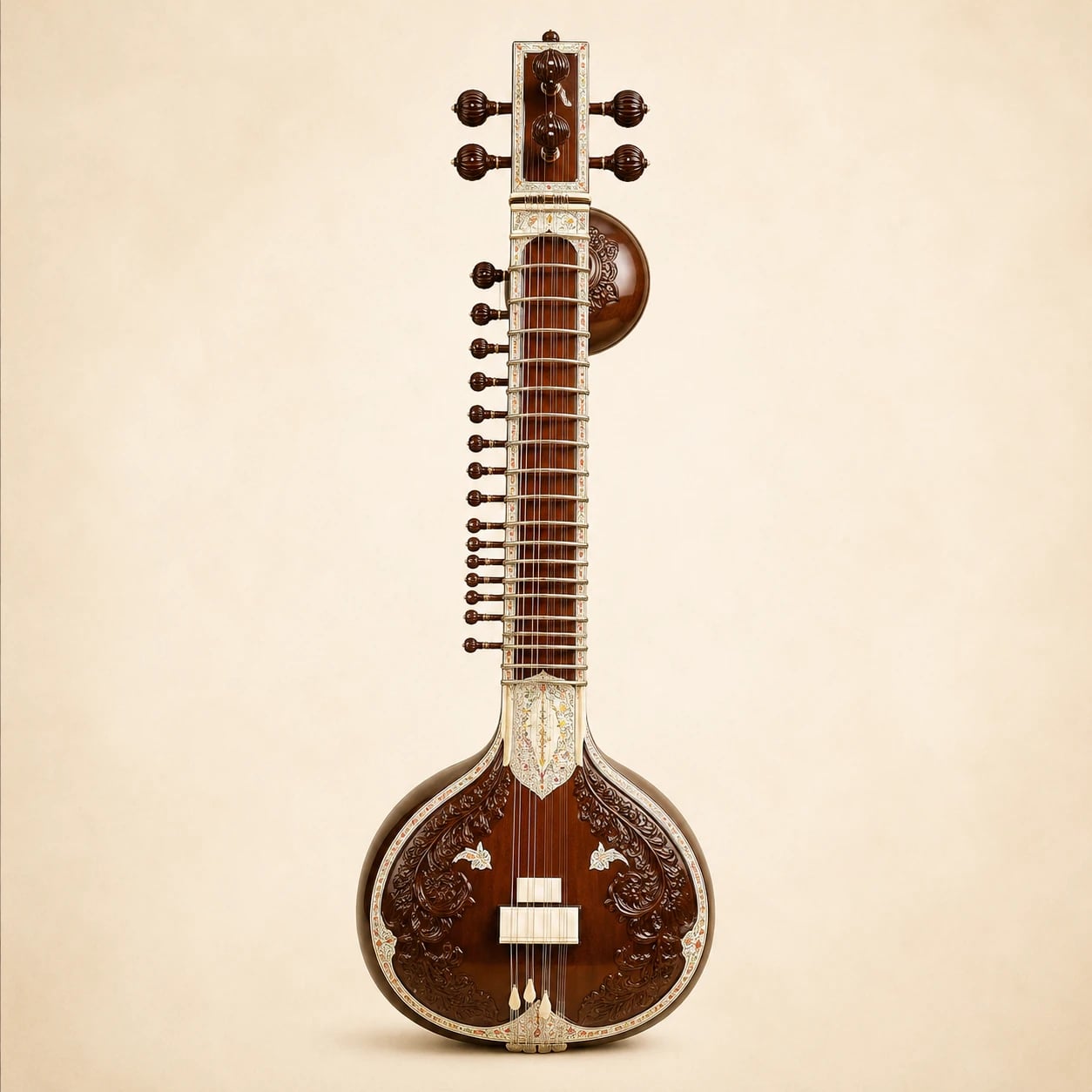
The sitar evolved in 18th-century North India, drawing on earlier instruments like the veena and the Persian setar. Pandit Ravi Shankar brought it to mainstream Western awareness from the 1950s onward; today masters like Ustad Shahid Parvez and Anoushka Shankar continue the tradition.

It carries 18 to 21 metal strings — six or seven played directly, the rest sympathetic strings that resonate untouched, creating the instrument's signature halo of overtones. The long teak neck and gourd resonator give it the high, ringing brightness no other instrument matches.

That high-overtone signature works as a foreground attention anchor — it pulls focus without demanding it. This is why the sitar pairs so naturally with Beta and Gamma frequencies for focused work.

Best for

FocusStudyWorkMindfulness

Best Hz

AlphaBetaGamma

Pairs with

TanpuraTabla
Browse Sitar titles →

Sarod

सरोद

saroda

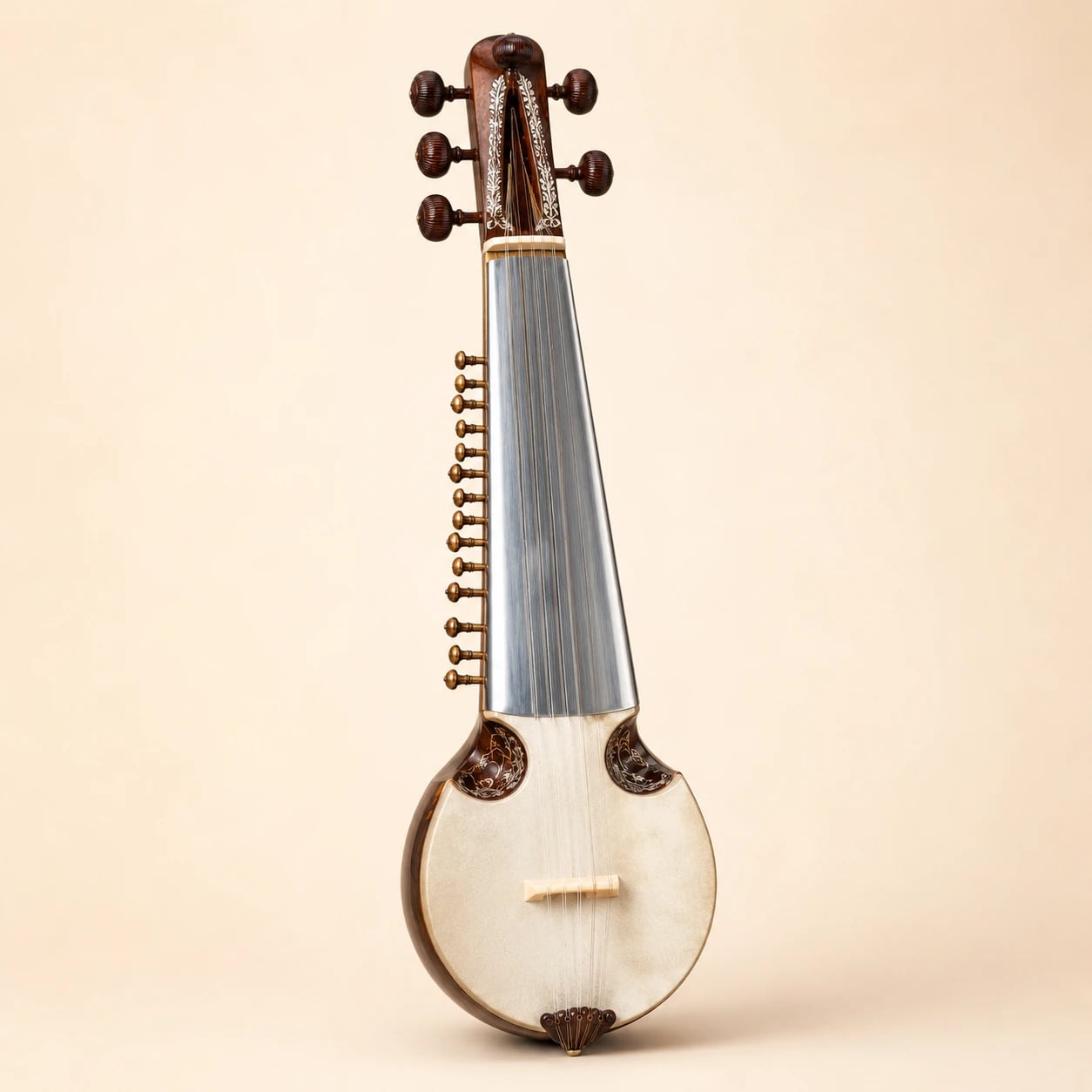
Deep, woody, fretless glide — the sitar's contemplative older sibling.

The sarod evolved in Mughal-era North India from the Afghan rabab, refined across the 19th century by the Bangash, Maihar, and Senia gharanas. Ustad Ali Akbar Khan and Ustad Amjad Ali Khan are among its most influential modern masters.

It carries 25 strings — 10 played, 15 sympathetic and drone — across a polished steel fingerboard. The absence of frets is what defines its character: notes glide continuously, creating the deep meend (glissando) that mimics the human voice in long, fluid arcs.

Darker than the sitar, slower in its phrasing, the sarod is better suited to contemplative late-evening work, deep reading, and the brain-fog reset — where the mind needs to settle into a single train of thought without disruption.

Best for

Deep workContemplationLate evening

Best Hz

BetaGammaTheta

Pairs with

TablaTanpura
Browse Sarod titles →

Sarod

Sarod — deep, woody, fretless glide

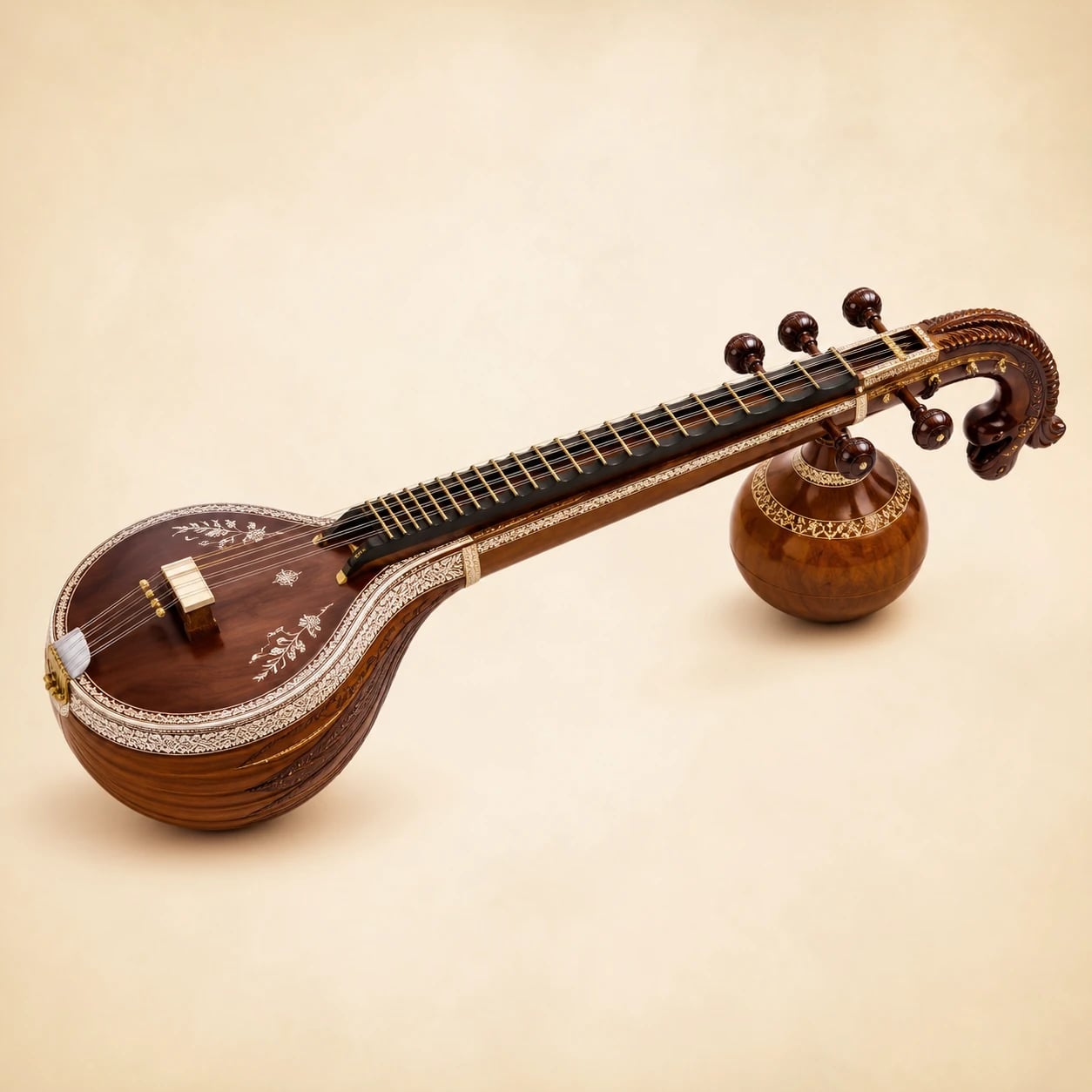
Veena

Veena — sacred, resonant, ancient

Veena

वीणा

vīṇā

Sacred, resonant, ancient — the deepest sonic root of Indian classical music.

The veena is the most ancient stringed instrument in the Indian tradition, mentioned in the Vedas and depicted in temple sculptures from the 2nd century BCE. Goddess Saraswati, patron of learning and the arts, is iconographically inseparable from the veena — she is almost always shown holding one. The South Indian Saraswati Veena is the most common contemporary form.

Built from a single piece of jackfruit wood, with a large primary resonator, a secondary upper resonator, 24 brass frets, and seven strings (four played, three drone), the veena carries a weight and gravitas no other Indian instrument matches.

Of all classical Indian instruments, the veena carries the deepest devotional charge. Its sound feels older and slower — better suited to chakra meditation, sacred practice, and the Solfeggio healing frequencies than to focus work.

Best for

MeditationSacred practiceChakra work

Best Hz

ThetaAlphaSolfeggio

Pairs with

Tanpura
Browse Veena titles →

Bansuri

बांसुरी

bāṃsurī

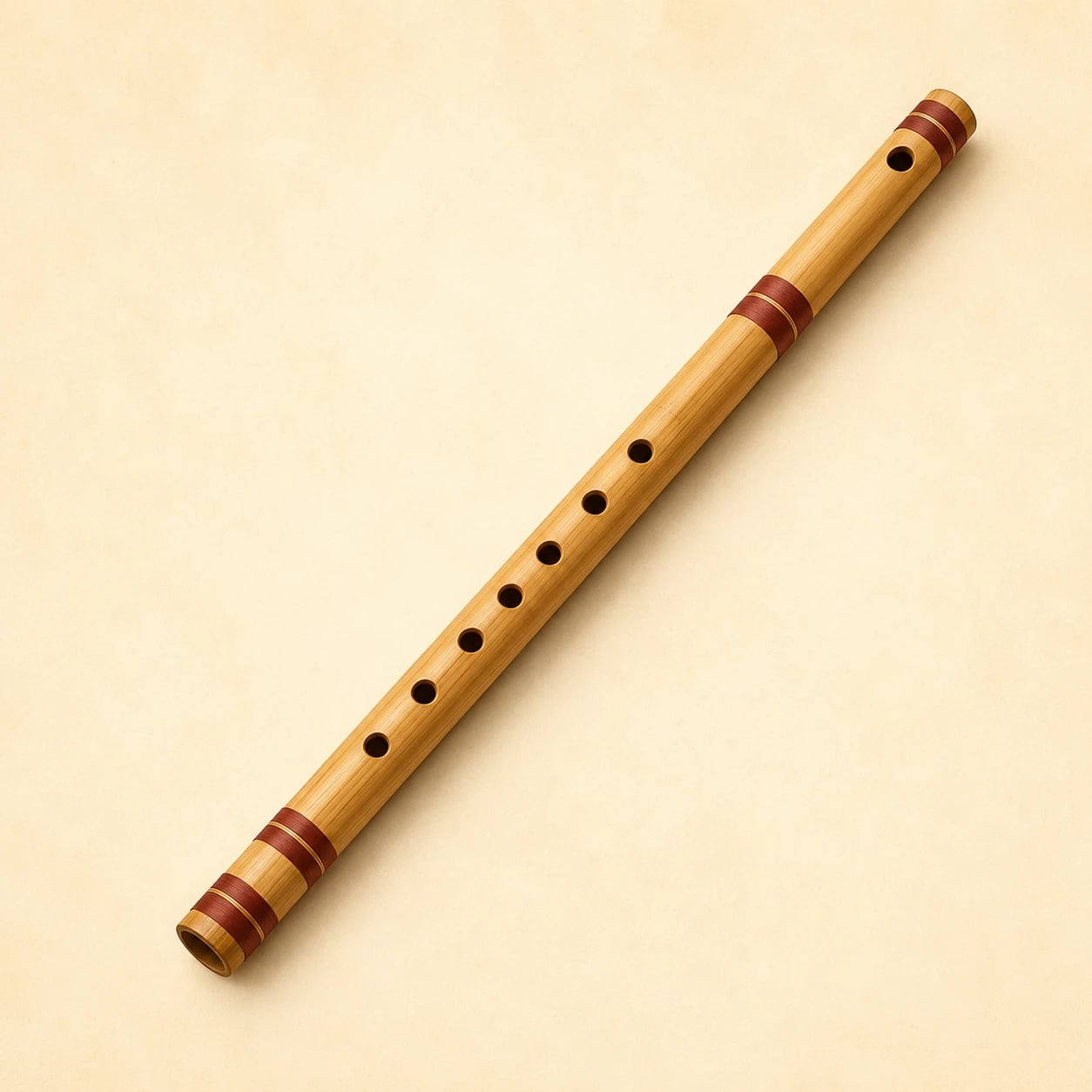
Breathy, vocal, intimate — the most human-sounding of Indian winds.

The bansuri is inseparable from Lord Krishna, whose flute in tradition charmed all of Vrindavan. It appears in Hindu iconography and temple sculpture for at least 2,500 years. Pandit Hariprasad Chaurasia is the leading modern master who elevated the instrument from its folk roots to the concert classical stage.

A single piece of bamboo, hand-bored with six or seven finger holes. No keys, no reed, no mouthpiece — only the player's breath. This simplicity is also its profundity: every note carries the breath that made it.

The bansuri's breathy quality has a parasympathetic effect — listeners report slower breathing within minutes. This makes it the ideal instrument for pre-sleep wind-down, anxiety relief, and breath practice. The low-register bansuri pairs especially well with Delta frequencies for deep sleep.

Best for

SleepAnxiety reliefBreath practiceRomantic calm

Best Hz

DeltaThetaAlpha

Pairs with

TanpuraSarangi
Browse Bansuri titles →

Bansuri

Bansuri — breathy, vocal, intimate

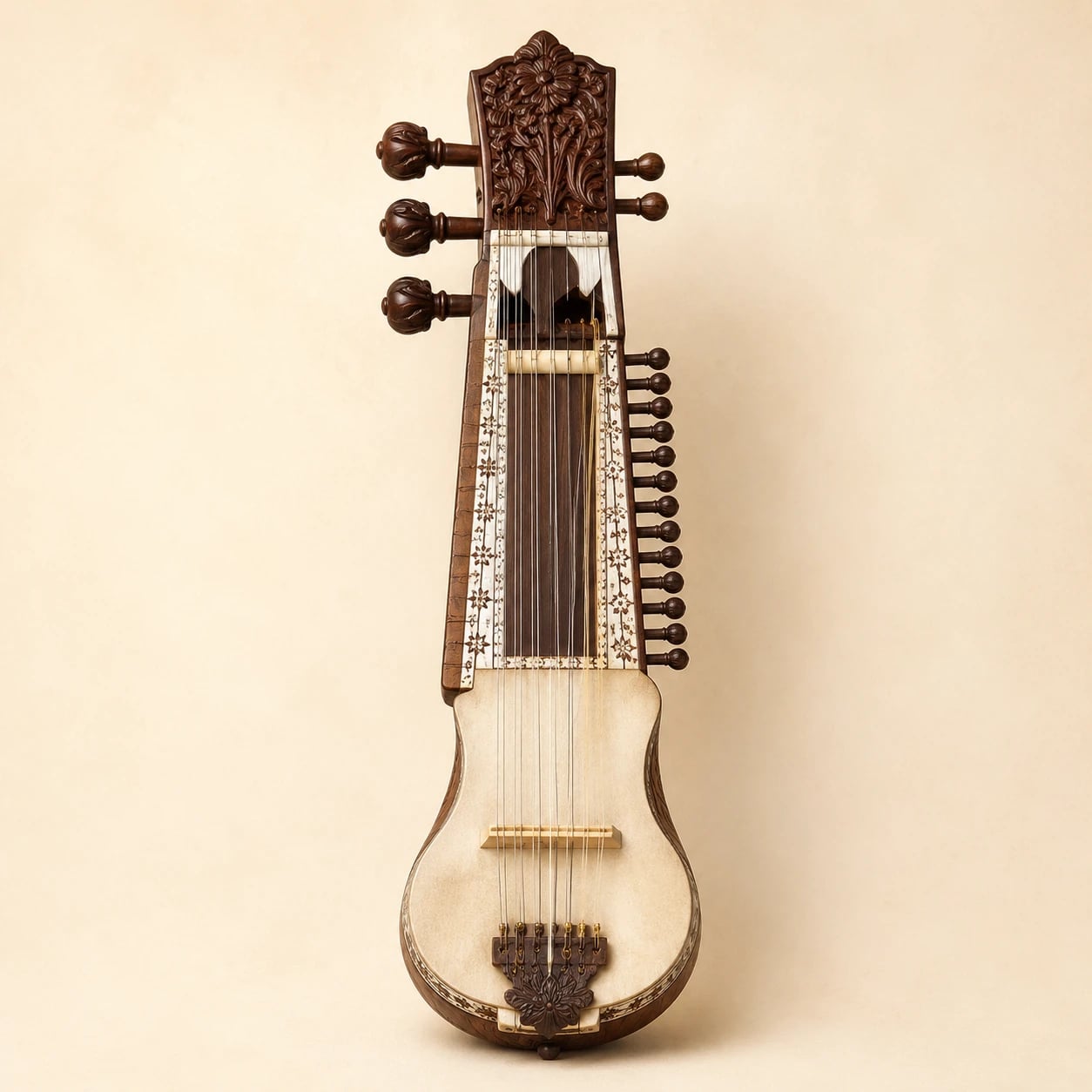
Sarangi

Sarangi — bowed strings, closest to the human voice

Sarangi

सारंगी

sāraṅgī

Bowed strings, closest to the human voice — the instrument of longing.

The sarangi entered Indian classical music in the 18th and 19th centuries as the preferred accompaniment for khayal vocal performance. It came perilously close to disappearing in the late 20th century before being revived by masters like Pandit Ram Narayan and Ustad Sultan Khan.

Carved from a single block of wood, with three main bowed strings of gut and 35 to 37 sympathetic steel strings beneath, the sarangi is played with a heavy bow. Its construction makes it one of the most technically demanding instruments in the tradition.

The sarangi is the most emotionally direct of all Indian classical instruments. Its sound mimics the human voice so closely that some listeners cannot tell whether they are hearing a singer or an instrument. This is why the sarangi carries grief, heartbreak, and emotional release better than anything else in the tradition.

Best for

GriefHeartbreakEmotional releaseLonging

Best Hz

ThetaSolfeggio 174Solfeggio 528Solfeggio 396

Pairs with

Tanpura
Browse Sarangi titles →

Santoor

संतूर

santūra

Hammered, crystalline, shimmering — sunlight on water.

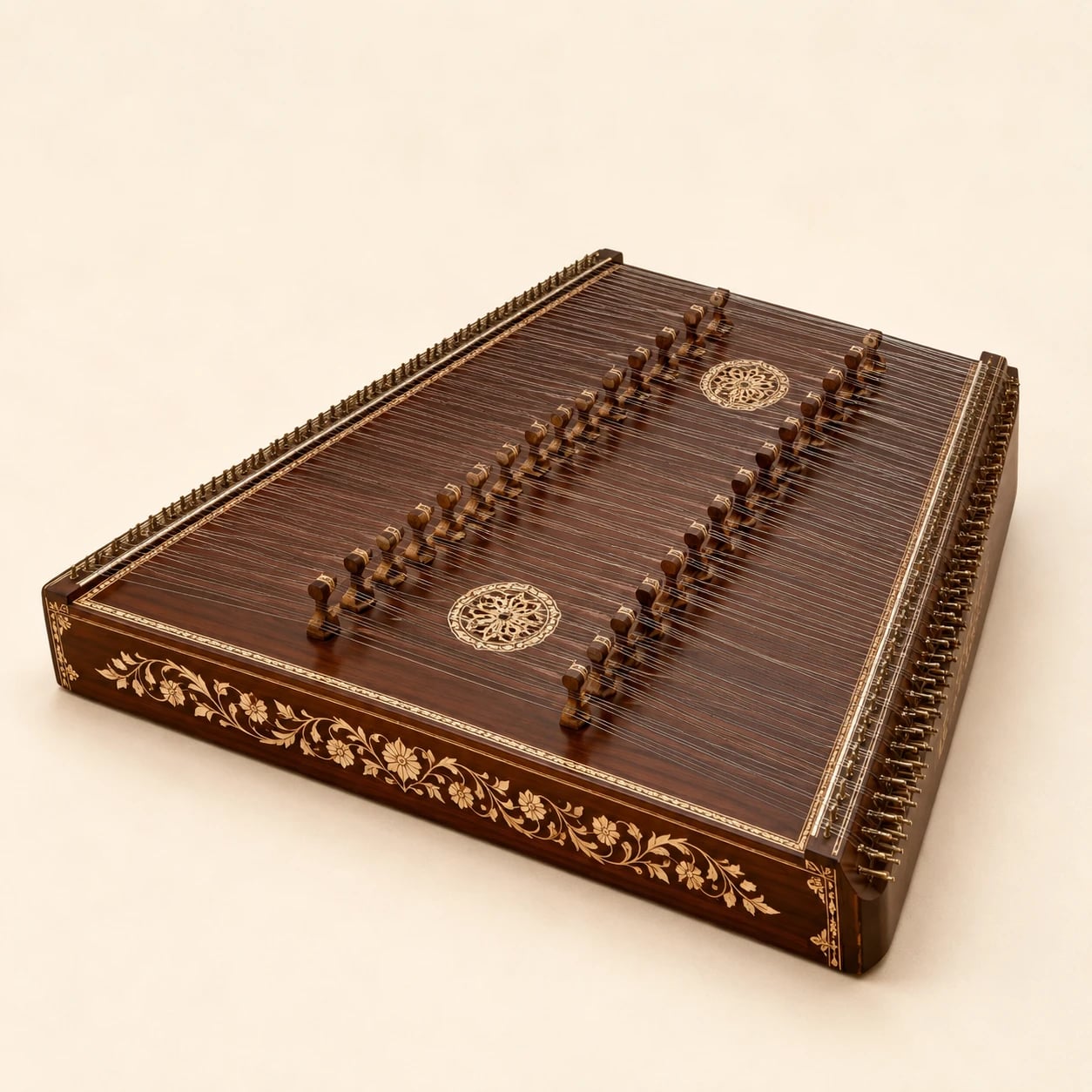
The santoor comes originally from Kashmir, where it accompanied Sufiana Mausiqi — the Sufi devotional music of the valley. Pandit Shivkumar Sharma is credited with bringing it into mainstream Indian classical music from the 1950s onward, establishing it as a solo concert instrument capable of carrying full raga performance.

A trapezoidal box of walnut wood, with 87 to 100 strings stretched across two rows of bridges, played with two lightweight wooden mallets (mezrabs) held between the fingers. Every note is struck, not sustained — creating a percussive-melodic texture unlike any other.

The santoor's hammered articulation feels brightening rather than meditative — sunlight on water rather than candlelight. This is the morning instrument. It pairs naturally with Beta frequencies and dawn ragas like Bhairav, and brings gentle joy to PMS-comfort and reset playlists.

Best for

MorningOptimismGentle joyPMS comfort

Best Hz

AlphaBetaSolfeggio 528

Pairs with

TanpuraLight Tabla
Browse Santoor titles →

Santoor

Santoor — hammered, crystalline, shimmering

Surbahar

Surbahar — bass sitar, very deep slow tones

Surbahar

सुरबहार

surabahāra

Bass sitar — very deep, very slow, the floor of music itself.

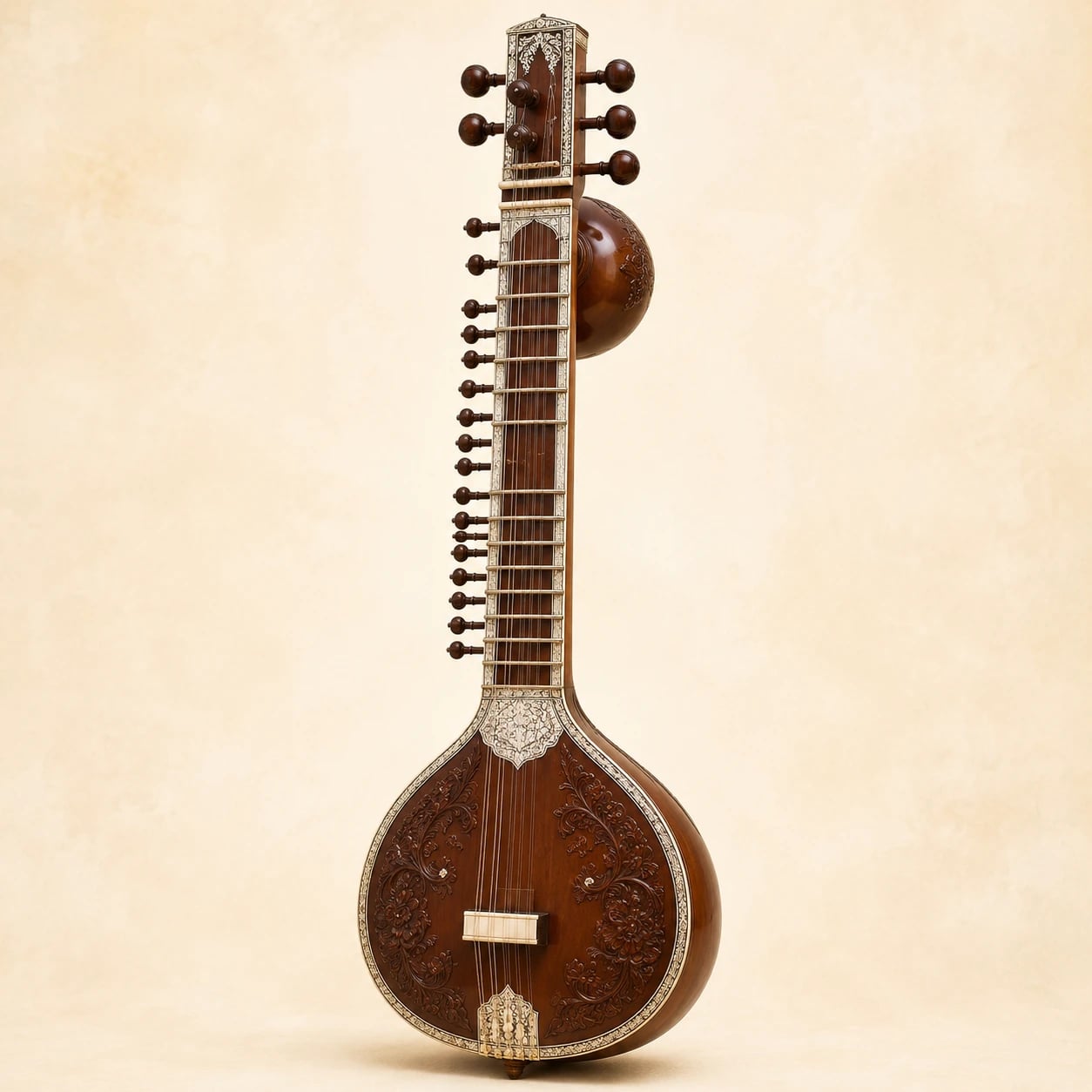
The surbahar was developed in the 19th century by Sahebdad Khan and later instrument-makers as a bass extension of the sitar, specifically to render alap — the slow, meditative opening section of a raga — at the depth and pace it traditionally demanded. It is sometimes simply called the bass sitar.

Larger than a standard sitar, with a wider and longer fingerboard, the surbahar is tuned roughly an octave lower. The string response is slower; the same playing techniques as the sitar are executed at glacial tempo.

The surbahar's depth makes it uniquely suited to deep-sleep audio. It occupies the same sonic register as Delta frequencies and feels like the floor of music itself. You almost never hear it outside dedicated raga performances — which is part of why these Eternal Dhwani sleep tracks feel unlike anything else.

Best for

Deep sleepRoot chakraNight shift recovery

Best Hz

DeltaSolfeggio 396

Pairs with

Tanpura
Browse Surbahar titles →

The Science & Tradition

Why this pairing works

3,000 years of raga science, meeting modern neuroscience

Prefer guided practice? Pranayama, Japa, and Chakra meditations are in the Meditate section.

Go to Meditate & Yoga