Eternal Gyan
शाश्वत ज्ञान
Where do you even start with Hinduism?
A lot of people ask that. The answer is simpler than it looks: this is not a random pile of books. It is a structured knowledge system, built layer by layer over three thousand years. Every text answers a specific question at a specific depth.
You just need to know where to look.
Nine Pillars of Sacred Knowledge
Select a domain to explore its depth
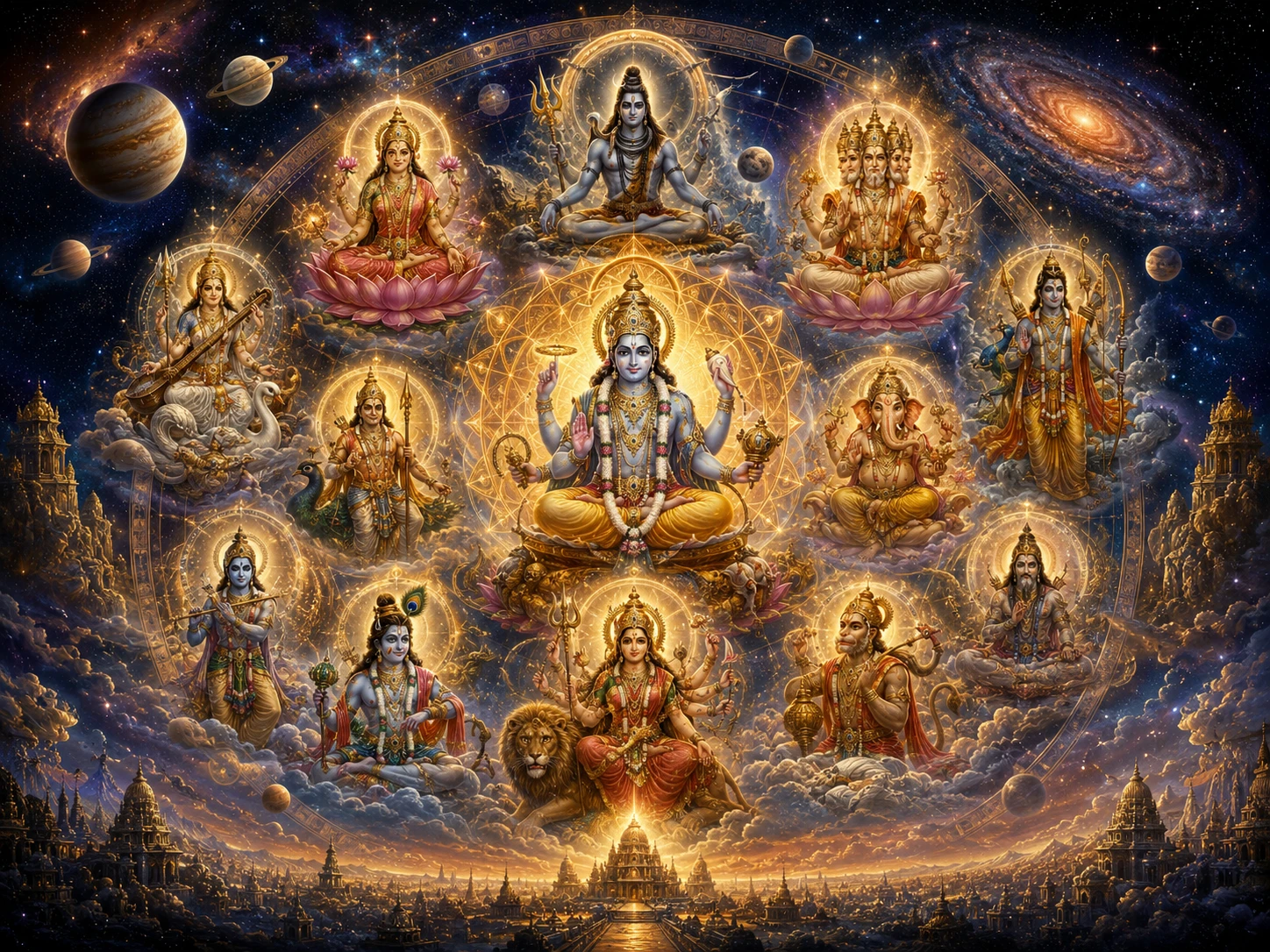
Eternal Gyan is a growing library of clear, well-sourced articles on the ideas behind Hindu practice. It moves from darshana (the six classical schools of philosophy) to the Vedic sciences, from the symbolism of deities and their avatars to the meaning of rituals, sacred symbols, and the tantra-mantra-yantra tradition. The aim is orientation rather than dogma: what a concept is, where it sits in the wider tradition, and how it is understood and lived in India today. Articles are written to be read by a curious newcomer and to hold up for someone already steeped in the tradition. Start with a category below, or follow the threads between articles, mantras, and practices.
Knowledge Articles
 tantra-mantra-yantra
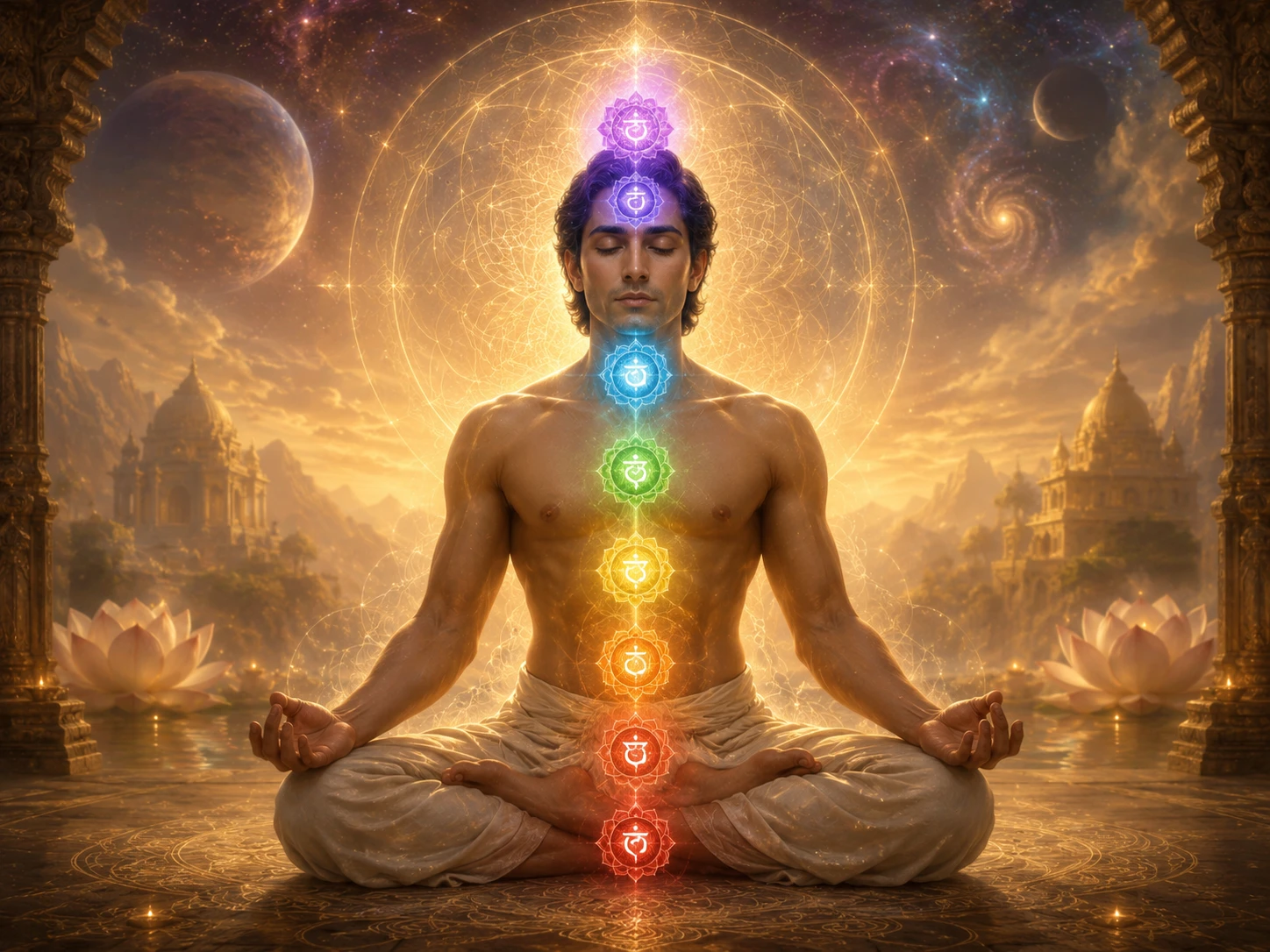
The Seven Chakras -- Energy Centres That Map Your Inner Universe
सात चक्र -- तुम्हारे भीतरी ब्रह्माण्ड का मानचित्र
You have seven power stations running along your spine. Each governs a specific domain of human experience -- …
 tantra-mantra-yantra
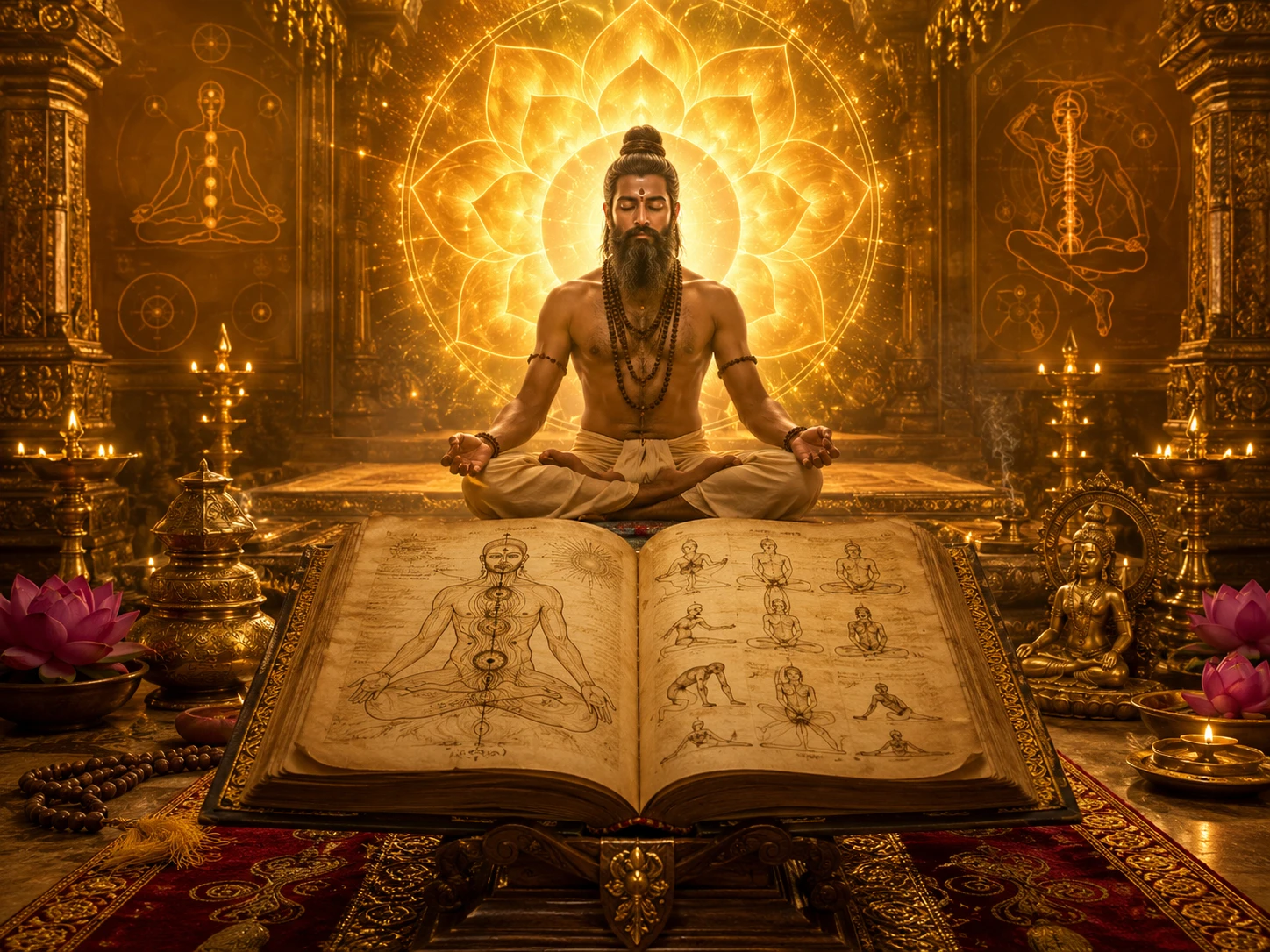
Hatha Yoga Pradipika
हठ योग प्रदीपिका
The 15th century yogi Svatmarama compiled 389 verses into the Hatha Yoga Pradipika, the single most influentia…
 deities-avatars
Apah -- The Waters of the Rig Veda
आपः -- ऋग्वेद के जल
Every morning, Hindus performing sandhyavandana sip water while reciting a Rig Vedic hymn that calls the water…
 scriptural-exegesis
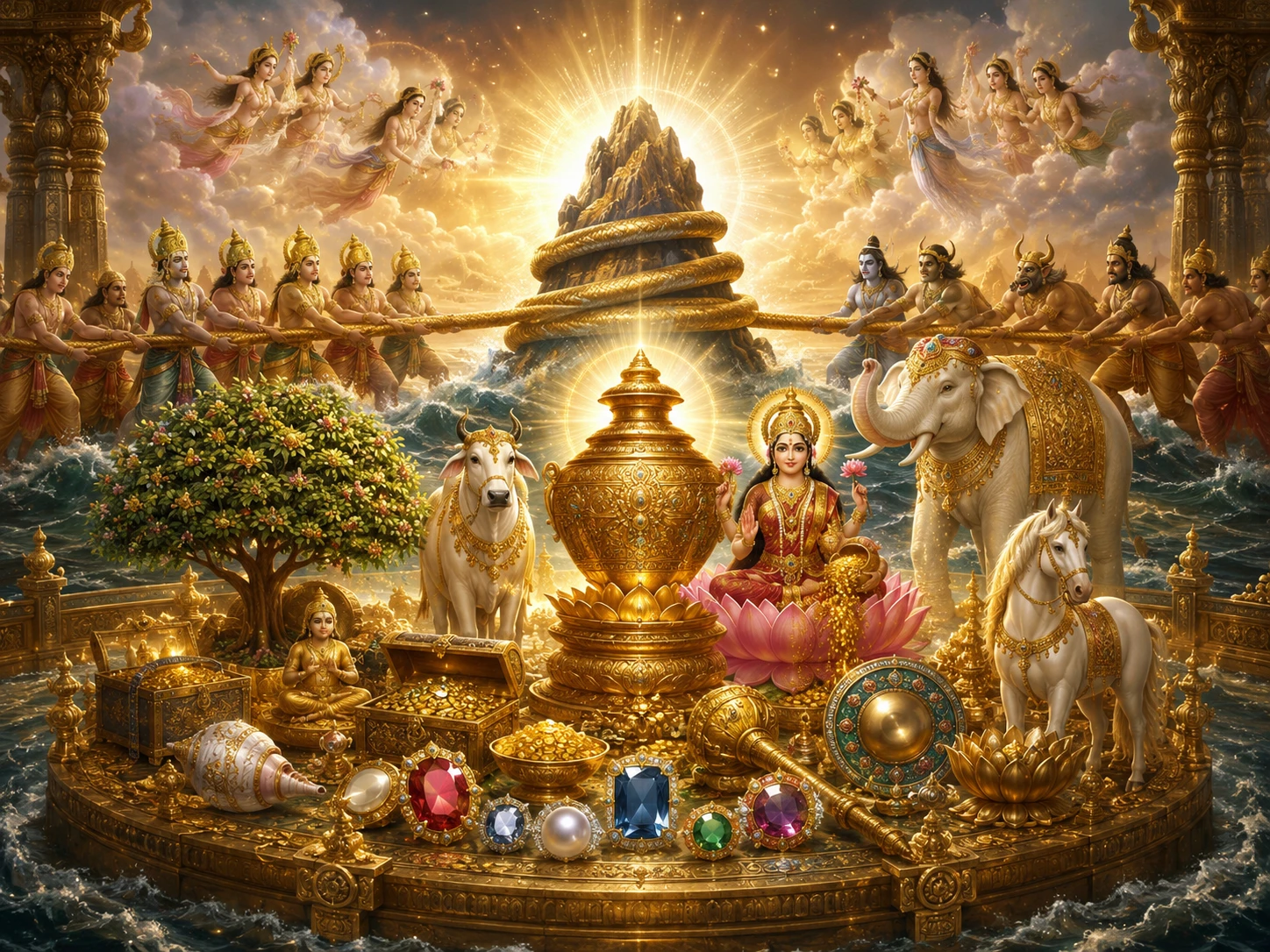
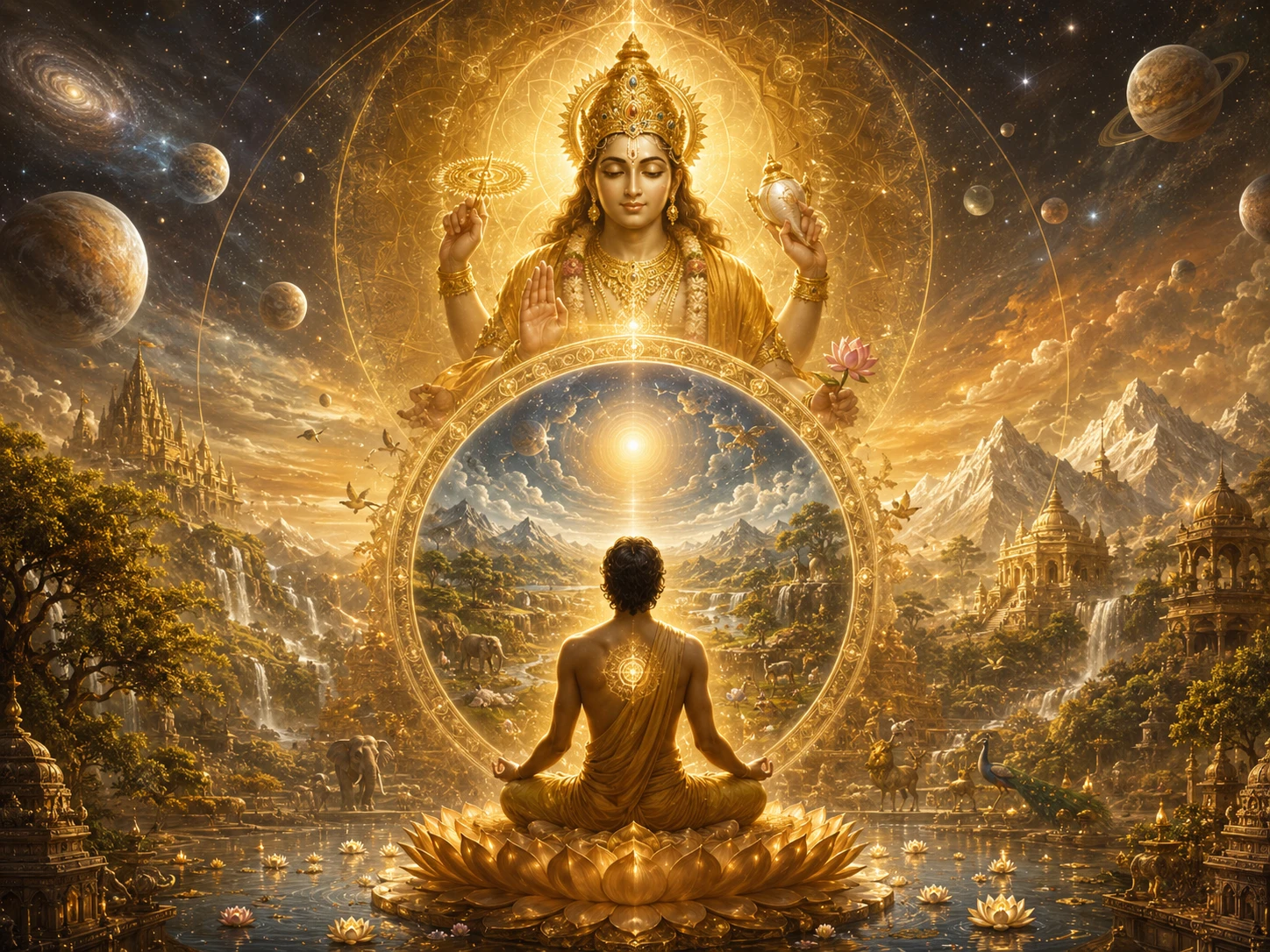
Samudra Manthan -- When Gods and Demons Ran a Joint Venture and the Universe Almost Died
समुद्र मंथन -- जब देवताओं और असुरों ने मिलकर startup चलाया और ब्रह्मांड लगभग खत्म हो गया
A cosmic ocean. A mountain for a churning rod. A serpent king for a rope. Gods on one end, demons on the other…
 philosophy-darshana
Jiva, Ishvara, Jagat -- The Three Categories Every Vedanta School Must Answer For
जीव, ईश्वर, जगत् -- वे तीन प्रश्न जिनका हर वेदान्त-दर्शन को उत्तर देना है
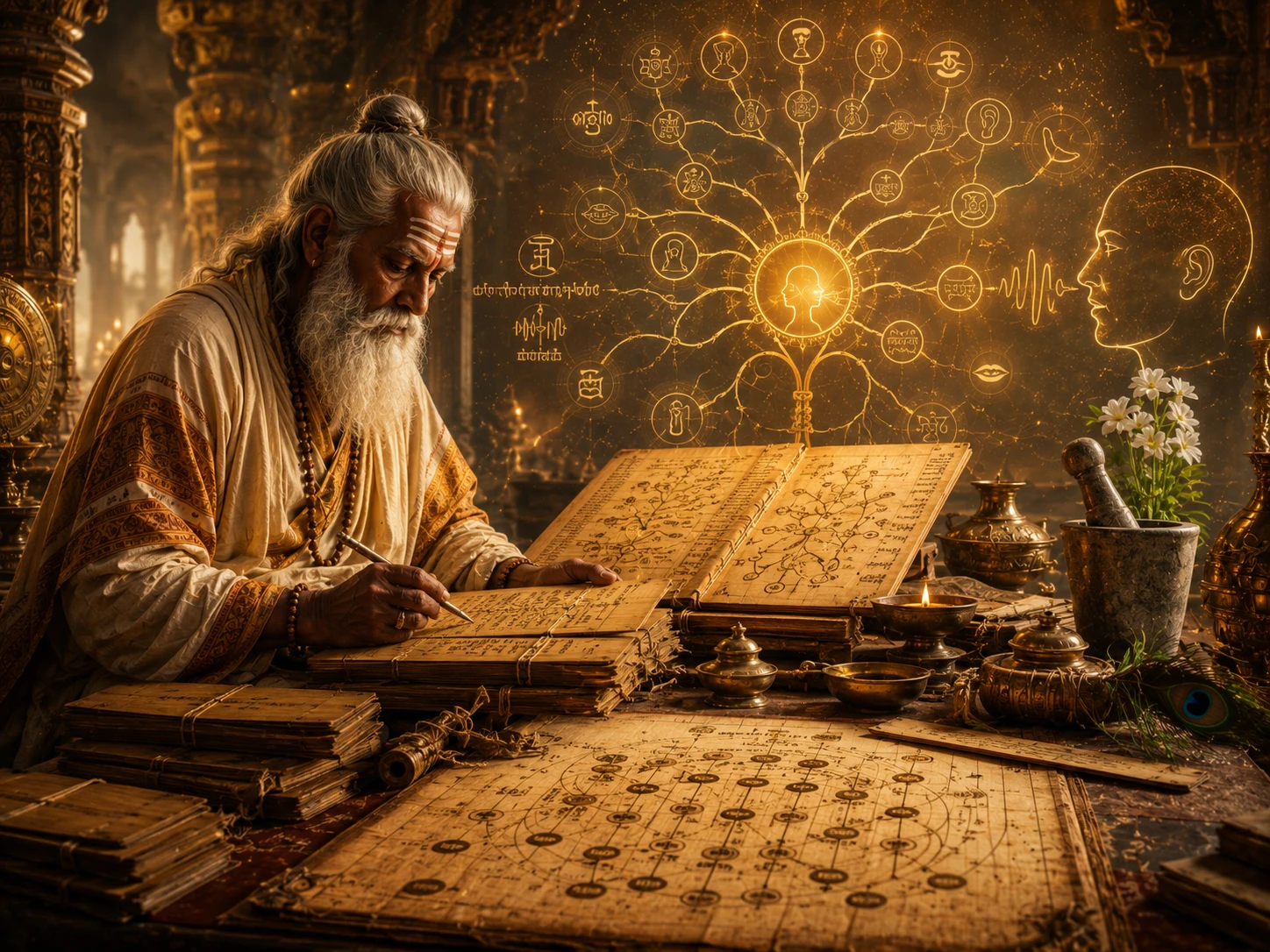
Three Sanskrit words decide what kind of Vedantin you are. Jiva is the individual self. Ishvara is the persona…
 vedic-sciences
Nirukta -- How Yaska Built the World's First Etymology Textbook
निरुक्त -- यास्क का रचा विश्व का प्रथम व्युत्पत्ति शास्त्र
Before Panini's grammar, before Merriam-Webster, before Google defined anything, Yaska wrote the Nirukta -- a …
The Map of Hindu Literature
Five stages across four thousand years -- from revealed sound to lived tradition.
Before any of this was written, the tradition began with a question.
नासदासीन्नो सदासीत्तदानीं नासीद्रजो नो व्योमा परो यत् । किमावरीवः कुह कस्य शर्मन्नम्भः किमासीद्गहनं गभीरम् ॥
nāsadāsīnno sadāsīttadānīṃ nāsīdrajo no vyomā paro yat | kimāvarīvaḥ kuha kasya śarmannambhaḥ kimāsīdgahanaṃ gabhīram ||
Then even non-existence was not, nor existence. There was no air then, nor the heavens beyond it. What covered it? Where was it? In whose keeping? Was there then cosmic water, in depths unfathomed?
Rigveda 10.129.1 -- Nasadiya SuktaFrom this single question, five great stages of literature grew.
c. 1500-500 BCE
The Vedas
Śruti -- That which was heard
“What is the nature of reality and how do we speak to it?”
The Rigveda's hymns to Agni, Indra, and Ushas. The Yajurveda's liturgy of sacrifice. The Samaveda's melodies arranged for the Soma rite. The Atharvaveda's charms for healing, protection, and everyday life. Four collections, each a different way of meeting the sacred.
c. 800-200 BCE
Upanishads & Āraṇyakas
Vedānta -- The end and summit of the Vedas
“What is Brahman? What is Ātman? Are they the same?”
The principal ten to thirteen Upanishads commented on by Adi Shankara -- Isha, Kena, Katha, Prashna, Mundaka, Mandukya, Taittiriya, Aitareya, Chhandogya, Brihadaranyaka, and others. The four great sayings (Mahāvākyas) crystallize what they teach: consciousness is Brahman, I am Brahman, that thou art, this self is Brahman.
c. 400 BCE-400 CE
Itihāsas
Smṛti -- Thus it was; living dharma in story
“How does a person live righteously when the right path is never simple?”
Valmiki's Ramayana, on the ethics of kingship when duty and family pull in opposite directions. Vyasa's Mahabharata, on the moral weight of war among cousins. And at the heart of the Mahabharata, the Bhagavad Gita -- 700 verses where Krishna answers Arjuna's question that every adult eventually asks.
c. 300-1200 CE
Purāṇas
Smṛti -- Ancient lore; theology made accessible
“How do we bring the abstract truths of the Upanishads into daily worship?”
Eighteen Mahāpurāṇas, grouped around Vishnu, Shiva, or Brahma. Eighteen Upapurāṇas, often regional and sectarian. At the centre, the Bhāgavata Purāṇa, which became the textual home of the Krishna tradition. The same philosophy the Upanishads argue in sutras, the Purāṇas tell as story.
c. 600 BCE-1500 CE
Vedāṅgas
Auxiliary sciences that preserve and extend the tradition
“How do we perform the tradition correctly, century after century?”
The six disciplines that keep the Vedas readable across centuries -- Shiksha (phonetics), Kalpa (ritual procedure), Vyakarana (Panini's grammar), Nirukta (etymology), Chhanda (metre), and Jyotisha (astronomy for ritual timing). Alongside these stand the six classical Darshanas and the four applied Upavedas -- Ayurveda, Dhanurveda, Gandharvaveda, and Sthapatyaveda.
c. 1500-500 BCE
The Vedas
Śruti -- That which was heard
“What is the nature of reality and how do we speak to it?”
The Rigveda's hymns to Agni, Indra, and Ushas. The Yajurveda's liturgy of sacrifice. The Samaveda's melodies arranged for the Soma rite. The Atharvaveda's charms for healing, protection, and everyday life. Four collections, each a different way of meeting the sacred.
c. 800-200 BCE
Upanishads & Āraṇyakas
Vedānta -- The end and summit of the Vedas
“What is Brahman? What is Ātman? Are they the same?”
The principal ten to thirteen Upanishads commented on by Adi Shankara -- Isha, Kena, Katha, Prashna, Mundaka, Mandukya, Taittiriya, Aitareya, Chhandogya, Brihadaranyaka, and others. The four great sayings (Mahāvākyas) crystallize what they teach: consciousness is Brahman, I am Brahman, that thou art, this self is Brahman.
c. 400 BCE-400 CE
Itihāsas
Smṛti -- Thus it was; living dharma in story
“How does a person live righteously when the right path is never simple?”
Valmiki's Ramayana, on the ethics of kingship when duty and family pull in opposite directions. Vyasa's Mahabharata, on the moral weight of war among cousins. And at the heart of the Mahabharata, the Bhagavad Gita -- 700 verses where Krishna answers Arjuna's question that every adult eventually asks.
c. 300-1200 CE
Purāṇas
Smṛti -- Ancient lore; theology made accessible
“How do we bring the abstract truths of the Upanishads into daily worship?”
Eighteen Mahāpurāṇas, grouped around Vishnu, Shiva, or Brahma. Eighteen Upapurāṇas, often regional and sectarian. At the centre, the Bhāgavata Purāṇa, which became the textual home of the Krishna tradition. The same philosophy the Upanishads argue in sutras, the Purāṇas tell as story.
c. 600 BCE-1500 CE
Vedāṅgas
Auxiliary sciences that preserve and extend the tradition
“How do we perform the tradition correctly, century after century?”
The six disciplines that keep the Vedas readable across centuries -- Shiksha (phonetics), Kalpa (ritual procedure), Vyakarana (Panini's grammar), Nirukta (etymology), Chhanda (metre), and Jyotisha (astronomy for ritual timing). Alongside these stand the six classical Darshanas and the four applied Upavedas -- Ayurveda, Dhanurveda, Gandharvaveda, and Sthapatyaveda.
PARALLEL TRADITION
Āgama & Tantra
The living traditions of temple worship and spiritual practice, revealed alongside the Vedas rather than from them.
While the Vedic stream gave rise to yajna, Upanishad, and Vedānta, another current was flowing in parallel. The Āgamas -- Shaiva, Vaishnava, Shakta -- gave the tradition its temple architecture, daily worship rituals, and tantric sadhanas. Much of what a Hindu practises in a temple today comes from Āgama, not from the Vedas directly.
The tradition that began with a question ends with one too.
को अद्धा वेद क इह प्र वोचत्कुत आजाता कुत इयं विसृष्टिः । अर्वाग्देवा अस्य विसर्जनेनाथा को वेद यत आबभूव ॥
ko addhā veda ka iha pra vocat kuta ājātā kuta iyaṃ visṛṣṭiḥ | arvāgdevā asya visarjanena athā ko veda yata ābabhūva ||
Who really knows? Who will here proclaim it? Whence was it produced? Whence is this creation? The gods came afterwards, with the creation of this universe. Who then knows whence it has arisen?
Rigveda 10.129.6 -- Nasadiya SuktaFour thousand years of literature. Millions of verses. And it still ends with: perhaps no one knows.
Explore the nine living categories of this tradition below.
Stories, Festivals & Spiritual Living
कहानियाँ, त्योहार और आध्यात्मिक जीवन
 JYOTIRLINGA
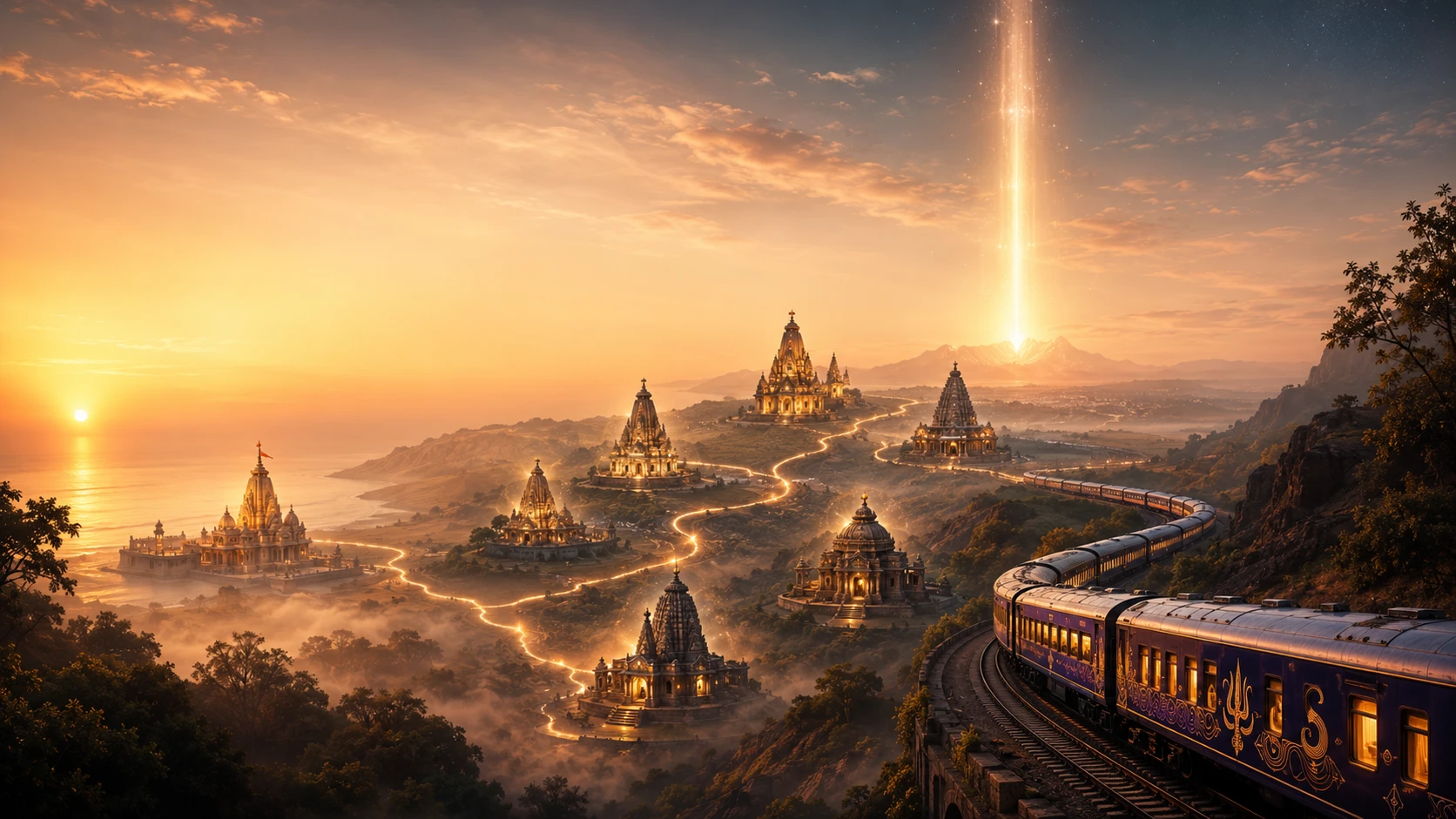
Seven Jyotirlingas, One Rail Route
Indian Railways now runs a packaged train that covers seven of the twelve Jyotirlingas in a single trip. Here is which seven, why they sit close enough to string together, and what the package actually includes.
 BRAHMA MUHURTA
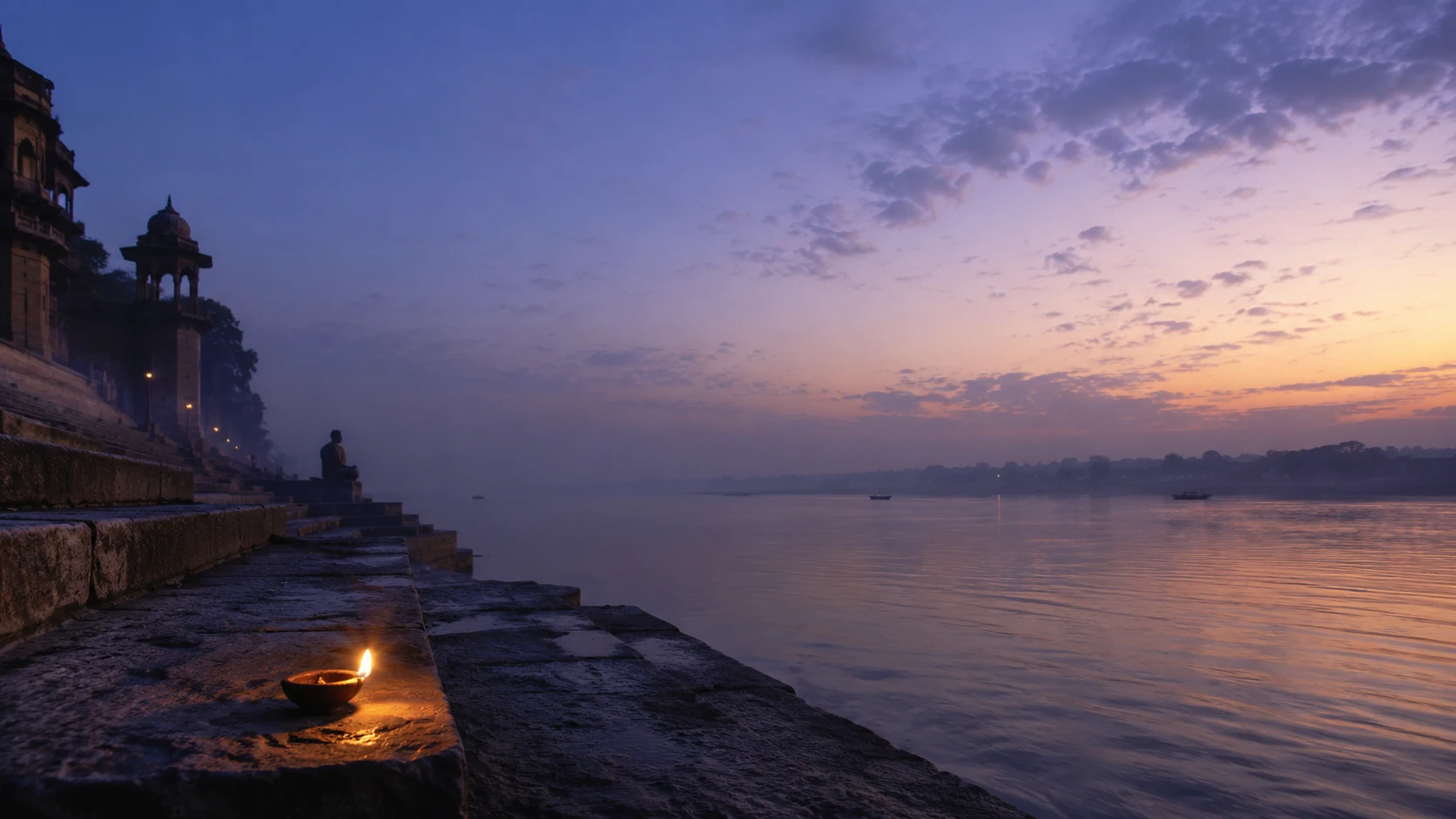
Brahma Muhurta: What the Tradition Actually Says (and What It Doesn't)
Social media has turned Brahma Muhurta into a productivity hack: wake at 4 AM, activate your pineal gland, synchronize with the Universe. Most of these claims would not survive a conversation with either a Sanskrit scholar or a sleep researcher. The tradition says something simpler, older, and more useful than any of that.
 SADHANA
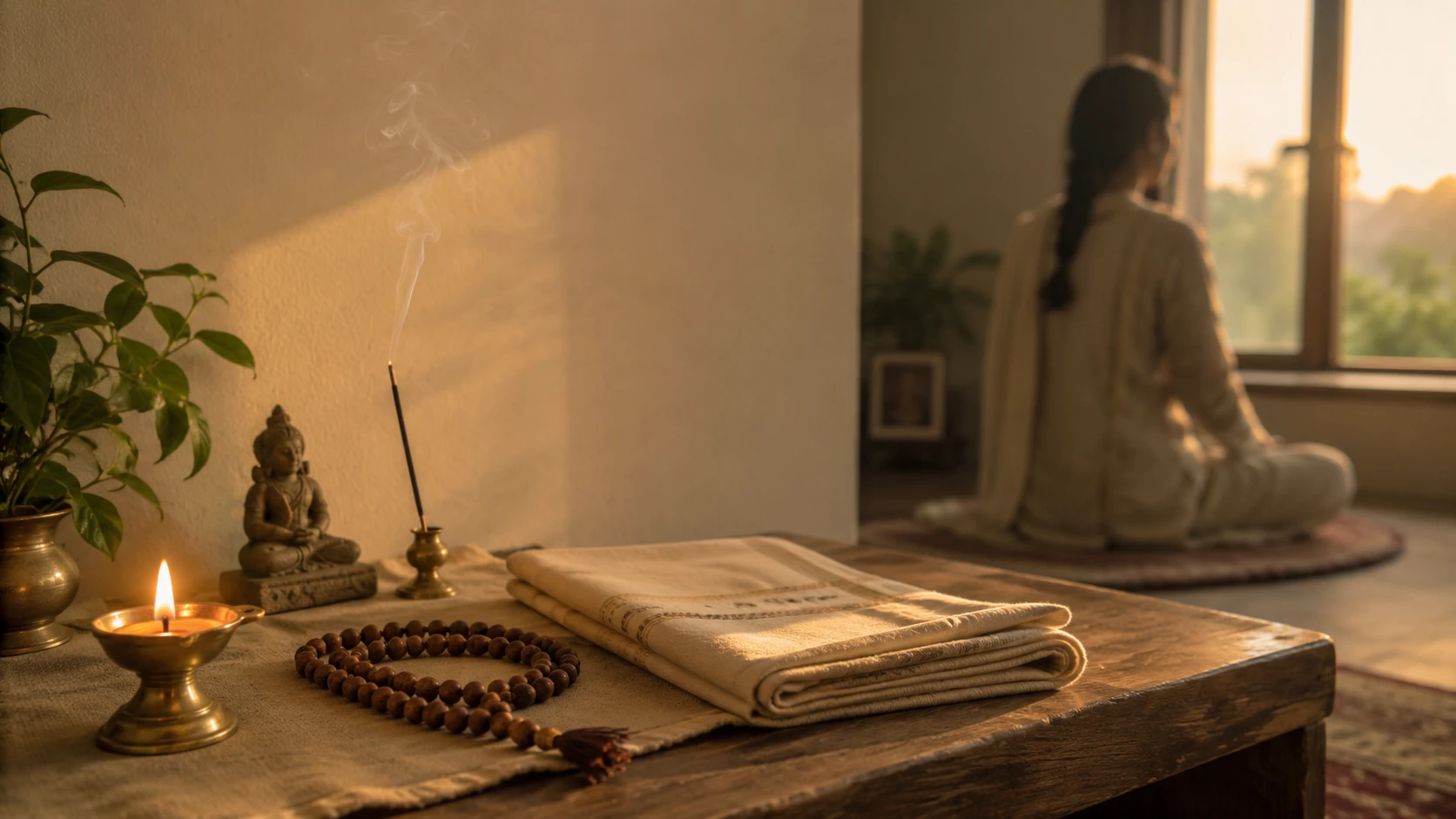
Building a Daily Sadhana in 15 Minutes
The most common reason people do not have a daily practice is not laziness. It is ambition. They imagine sadhana as a ninety-minute pre-dawn ritual with a full puja setup, and since they cannot do that on a Tuesday in Bengaluru with a 9 AM standup call, they do nothing. Fifteen minutes is enough. It has always been enough. The tradition says so explicitly.
 TEMPLES
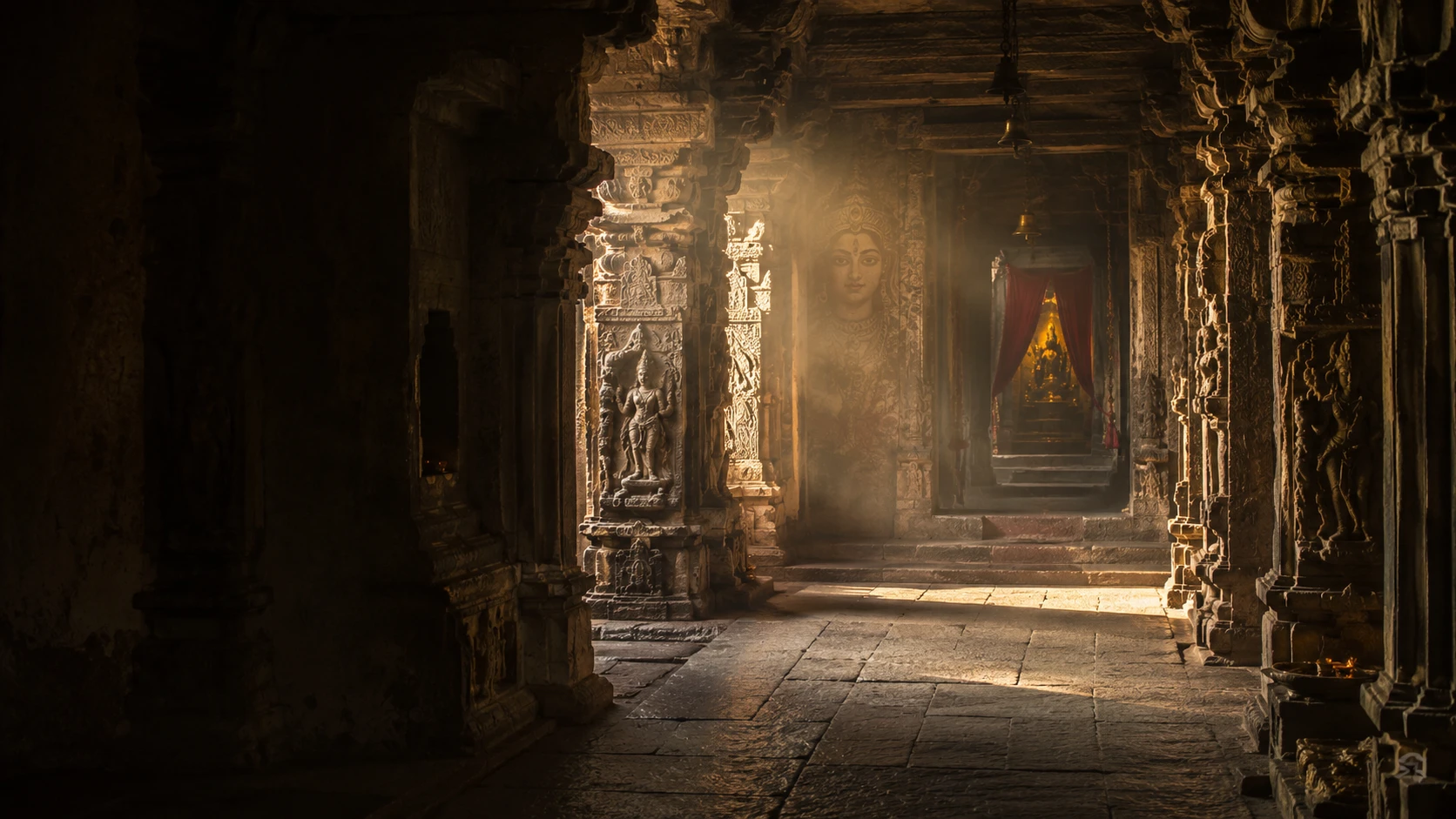
Sacred Temples of India: Stories Guidebooks Don't Tell
Every temple guidebook will tell you the year of construction, the dynasty that built it, and the deity inside. Very few will tell you why the sanctum at Chidambaram is empty, why the goddess at Kamakhya bleeds, or what sits behind the sealed vault at Padmanabhaswamy. The stories that matter most in Indian temples are the ones the plaques leave out.
"The soul is neither born, nor does it die. It has not come into being and will not come into being. It is unborn, eternal, ever-existing, and primeval."
न जायते म्रियते वा कदाचिन्
— Bhagavad Gita 2.20
Explore the Bhagavad GitaSeekers' Questions
Canonical answers to the most frequently asked questions in Hindu philosophy
Stay Connected to Wisdom
ज्ञान से जुड़े रहें
Subscribe for weekly deep-dives into Hindu philosophy, upcoming sacred texts, and curated wisdom — delivered every Ekadashi.
No spam. Unsubscribe any time. Delivered every Ekadashi.