Devi Naman Stotram

Ya Devi Sarva Bhuteshu · 21 Forms of the Goddess

Devī Māhātmyam / Durgā Saptaśatī

The Shri Devi Naman Stotram is one of the most profound hymns in the Devi Mahatmyam tradition. While most devotees know only the verse saluting the Goddess in her form as Shakti, Power, the complete stotram contains 21 such verses. Each verse salutes the Goddess in a different form that she inhabits within every living being. She is not confined to temples or to moments of formal worship. She is present as sleep, as hunger, as memory, as compassion, as delusion, and as grace. This text presents all 21 forms with their Sanskrit source, meaning, and philosophical significance, an invitation to recognise the Goddess in every dimension of lived experience.

1

Vishnumayaविष्णुमाया
The power that makes the formless visibleCosmic Ordering Principle
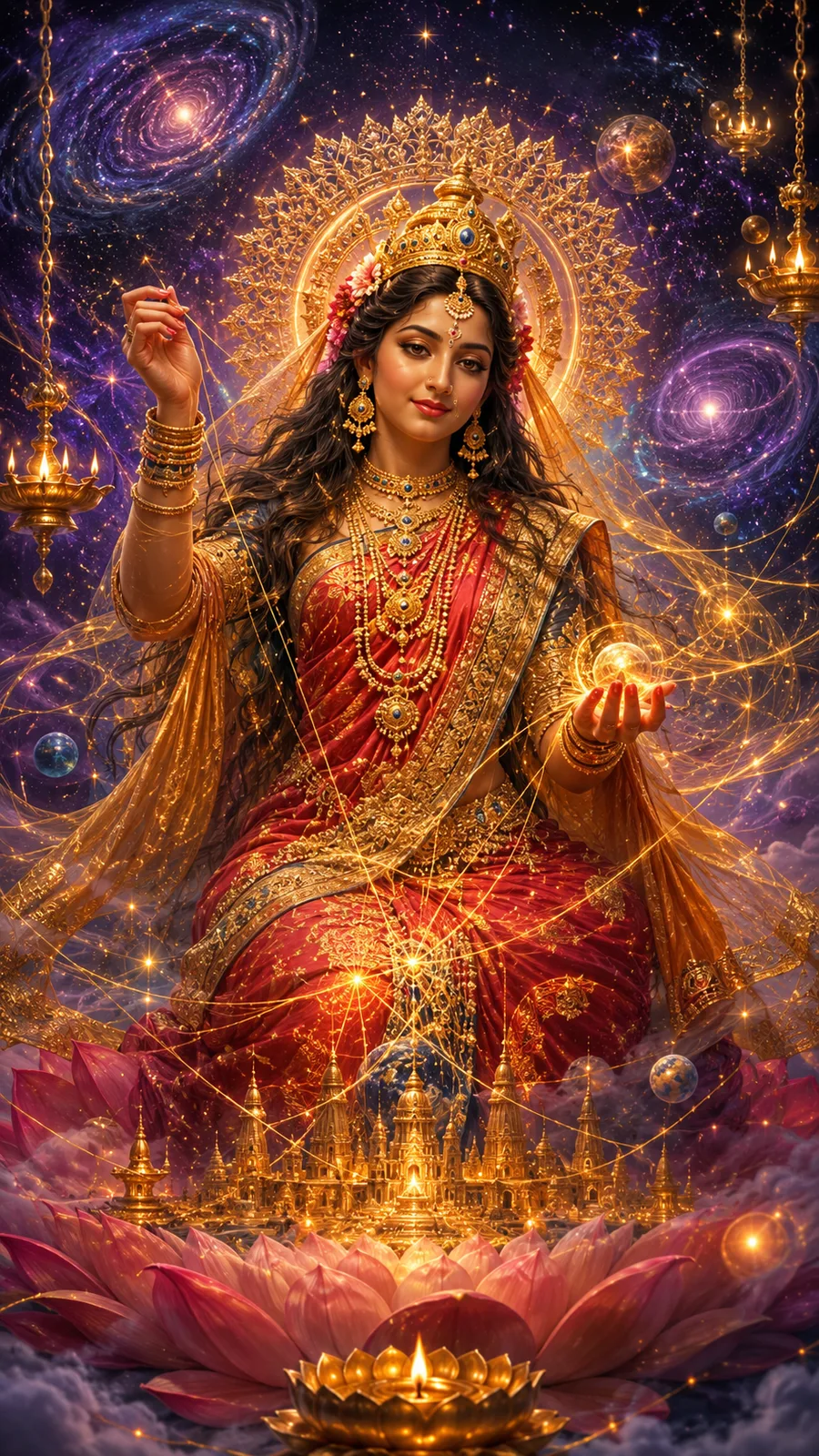
Devi in the form of Vishnumaya: The power that makes the formless visible

या देवी सर्वभूतेषु विष्णुमायेति शब्दिता। नमस्तस्यै नमस्तस्यै नमस्तस्यै नमो नमः॥

Yā Devī Sarva-Bhūteṣu Viṣṇumāyeti Śabditā Namas-Tasyai Namas-Tasyai Namas-Tasyai Namo Namaḥ

To that Devi who in all beings is called Vishnumaya. Salutations to Her, Salutations to Her, Salutations to Her, Salutations again and again.

Read the deep dive ▾

Explanation

Maya does not simply mean illusion. Maya is the divine power through which the formless takes form and the invisible becomes visible. Vishnumaya is the cosmic ordering principle, the intelligence through which Vishnu, the sustainer, holds the universe in its intricate balance. When you experience the world as real, vivid, and present, it is Vishnumaya at work. The Goddess is not separate from this experience. She is its very fabric.

Word meaning

Yā (she who), Devī (the Goddess), sarva-bhūteṣu (in all beings), viṣṇumāyā (the māyā of Vishnu, his power of cosmic appearance), iti śabditā (is called by this name). Then the refrain: namas-tasyai, namas-tasyai, namas-tasyai (salutations to her, three times), namo namaḥ (salutations again and again). The first two verses of the stotram say the Goddess is called a power; from the third verse on, they say she abides in the form of a quality. This opening verse names her as māyā itself.

Name origin

The word appears in this very verse of the Devi Mahatmyam, the text from which the whole stotram comes. Maya is the power by which the one reality takes on the appearance of a manifold world. The compound vishnumaya ties that power to Vishnu, the preserver who holds the world in its working order. To call the Goddess Vishnumaya is to say that the very fact of a world appearing, sustained and coherent, is her activity.

Maya carries a long history across Hindu texts. In Vedanta it often names the power that veils the one and projects the many. In the Bhagavata Purana, a closely related term, yogamaya, arranges the events around Krishna's birth. The Devi Mahatmyam gathers these senses and places them at the head of the stotram: before it names the Goddess as sleep or hunger or memory, it names her as the power that makes a world at all. This naming is attested in the text, not a later gloss. What maya means, illusion, or manifestation, or both, is where traditions differ, and this book follows the reading that fits the verse: maya as the power of appearing.

Story

The Devi Mahatmyam opens not with the Goddess in battle but with the Goddess as sleep. At the end of a cosmic age, the universe draws back into a single ocean. Vishnu lies upon the coils of the serpent Shesha, sunk in yogic sleep. From the residue of his ears two asuras take form, Madhu and Kaitabha, and they move to kill Brahma, who sits on the lotus that rises from Vishnu's navel.

Brahma sees them coming. He cannot wake Vishnu, because the sleep that holds Vishnu is itself a goddess, Yoganidra, the great sleep of yoga. So Brahma turns to her and praises her. He calls her the queen of all, the power who has entered Vishnu's eyes and closed them, the one in whom the whole world rests. He asks her to loosen her hold so the sustainer may wake and meet the danger.

The Goddess hears. She gathers herself out of Vishnu's eyes and withdraws from his body, and Vishnu opens them. He rises and faces Madhu and Kaitabha, and the fight goes on for a very long age, neither side yielding. At last the two asuras, drunk on their own strength, tell Vishnu to ask them for anything, certain that nothing could defeat them. Vishnu asks to slay them. Caught by their own words and clouded by her power, they try to escape on a technicality and ask to be killed only where there is no water. Vishnu sets them on his vast thighs, above the flooded world, and ends them there.

The Goddess does two things in this story. She is the sleep that binds the sustainer, and she is the clouding that undoes his enemies. Both are her maya. The Devi Mahatmyam places this at its very start, before any of the famous battles, to say that even Vishnu rests and acts within her power. She is Vishnumaya.

Philosophy

Why does a hymn that will go on to find the Goddess in hunger, in sleep, in memory, begin with maya? Because maya is the ground that makes all the rest possible. Before there can be a being who sleeps or hungers or remembers, there must be a world in which beings appear at all. To name the Goddess Vishnumaya first is to say that this appearing, the sheer fact that anything stands forth as real, is already her.

This reframes a word many hear as a warning. Some take maya for mere illusion and dismiss the world as a trap to see through and leave behind. The stotram does not take that turn. It bows to maya. It calls the power of appearance a goddess and salutes her three times. The world is not an error to be seen through; its appearance is divine activity to recognise.

The sequence matters. The first verse names her as Vishnumaya, the cosmic power. The second names her as Chetana, the consciousness that knows. Only from the third verse does the hymn move into the particular faculties, buddhi, nidra, kshudha, and the rest. The order runs from the widest frame inward: first the power that makes a world, then the awareness that meets it, then the specific shapes that awareness takes within a living being. Vishnumaya is where the map begins. Everything the stotram will later find inside a person is already folded into this first word, because the person, and the world the person wakes into, are her appearing.

Practice

This is the verse to sit with at the threshold of waking. In the first moment of the morning, before the day's tasks arrive, the world simply appears: light at the window, the weight of the body, the room taking shape. That appearing is Vishnumaya. The practice is not to push the world away as unreal but to receive its arrival as her work.

Chanting this verse at the start of the full stotram suits its place. It is the doorway. Hold in mind, as you say it, that the reality you are about to move through, solid and ordinary as it seems, is not separate from the Goddess you salute.

The form asks one thing of the practitioner: attention to the fact of appearance itself. We spend most of the day on what appears: the tasks, the people, the worries. Vishnumaya turns the attention one step back, to the power by which any of it shows up at all. To notice that, even once in a day, is to have met her.

2

Chetanaचेतना

The knowing presence in all living beingsConsciousness / Awareness
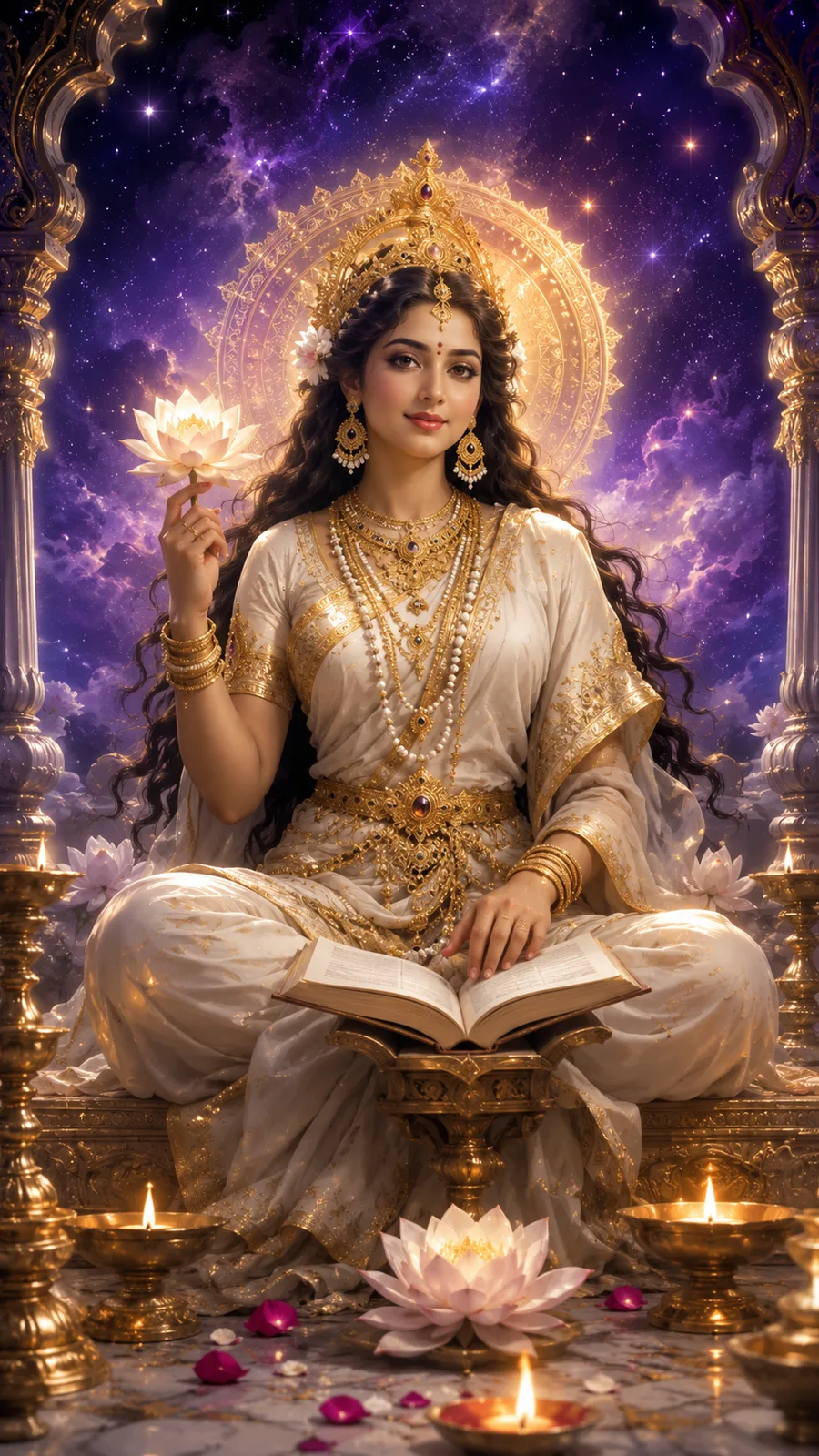
Devi in the form of Chetana: The knowing presence in all living beings

या देवी सर्वभूतेषु चेतनेत्यभिधीयते। नमस्तस्यै नमस्तस्यै नमस्तस्यै नमो नमः॥

Yā Devī Sarva-Bhūteṣu Cetanety-Abhidhīyate Namas-Tasyai Namas-Tasyai Namas-Tasyai Namo Namaḥ

To that Devi who in all beings is reflected as Consciousness. Salutations to Her, Salutations to Her, Salutations to Her, Salutations again and again.

Read the deep dive ▾

Explanation

Chetana is awareness itself, the capacity to know, to perceive, to be present. What separates a living being from an inanimate object is this animating consciousness. The Goddess declares that this consciousness, present in every creature from the smallest to the greatest, is her own presence. When you are aware of reading this line, that very awareness is the Goddess in her form as Chetana.

Word meaning

Yā Devī sarva-bhūteṣu (the Goddess who, in all beings), cetanā iti abhidhīyate (is called Chetana, consciousness). Then the refrain: namas-tasyai, namas-tasyai, namas-tasyai, namo namaḥ. Like the opening verse, this one says the Goddess is called by a name, abhidhīyate, she is spoken of as Chetana, rather than saying she abides in a form. The word cetanā comes from the root cit, to be aware, to perceive, to know.

Name origin

Chetana comes from chit, one of the oldest and weightiest words in Hindu thought. Chit means consciousness, the bare fact of awareness. The Upanishads treat consciousness not as a product of the body but as fundamental, and the tradition that follows them speaks of the absolute as sat-chit-ananda, being, consciousness, and bliss. Consciousness, in this view, is not one feature of reality among others; it is close to the heart of what is real.

Chetana is the working form of this principle in a living being: sentience, the capacity to know and to feel, the difference between a creature and a stone. The Samkhya system draws a sharp line between purusha, pure awareness, and prakriti, the unconscious stuff of nature, and places the light of consciousness on the side of purusha. The stotram does not argue these systems. It does something simpler and bolder. It takes the awareness present in every being and calls it by the Goddess's name. Where the first verse named her as the power behind the world's appearance, this verse names her as the awareness in which any appearance is known. The text itself gives both namings.

Story

The hymn that names the Goddess as Chetana has a setting of its own, and the Devi Mahatmyam gives it. Two asuras, Shumbha and Nishumbha, had taken the three worlds. They had seized the sun's heat, the wind's motion, the share of every sacrifice that once went to the gods. Stripped of their places, the gods remembered the Goddess, who had promised to come to their aid whenever they called.

So they went to the Himalayas and praised her. Their praise is the hymn we are reading. They did not call her by one name alone. They named her as the consciousness in all beings, as intelligence, as sleep, as power, as mercy, bowing again and again to the one who lives inside everything as its very awareness. They were not pointing to a distant deity on a far peak. They were naming what is nearest, the knowing that is present in every creature, and calling it Goddess.

As they praised, Parvati came there to bathe in the waters of the Ganga. She asked them whom they were praising. Before she could answer for herself, a radiant form stepped out of the sheath of her body, and that form said, this hymn is for me. Because she came from the bodily sheath, the kosha, she was called Kaushiki. The form left behind, dark as night, became Kalika. Kaushiki took up the war the gods could not fight.

The story sets consciousness at the centre. The gods, in their need, did not reach outward for a weapon. They turned to the awareness that was already everywhere, named it, and it answered by stepping forth in a shape that could act. The Devi Mahatmyam frames the whole hymn this way: the Goddess the gods praise as Chetana is not somewhere else. She is the awareness reading these words now.

Philosophy

If the first verse gives the world, the second gives the one who knows it. Vishnumaya is the power by which a world appears; Chetana is the awareness to which it appears. Place them side by side and the stotram has already said something complete: the divine is both the show and the seeing of it, both the world out there and the knowing in here.

This is why the placement is deliberate. Consciousness could have been listed among the later faculties, somewhere near intelligence and memory. Instead it stands second, right after the cosmic power and before any particular faculty. The hymn treats awareness not as one mental function among many but as the ground on which the functions stand. Before a being can discern, remember, or rest, it must first be aware at all. That bare awareness is Chetana.

The word that holds the forms together is sarva-bhuteshu, in all beings. Consciousness is what the hymn finds common to every creature. A human, an animal, the smallest living thing, each carries the same spark of knowing, differing in degree and not in kind. To call that spark the Goddess is to say that sentience itself is sacred, and that the awareness looking out of one pair of eyes is not finally separate from the awareness looking out of every other. The faculties that follow will divide and specialise this knowing. Chetana is the knowing before it divides.

Practice

Most practice reaches for an object: a name to chant, an image to hold, a breath to follow. This verse points the other way. Its object is the awareness that would be doing the chanting, holding, and following.

Sit for a moment and notice that you are aware. Not aware of any particular thing, simply aware. There is knowing happening: the sounds in the room reach it, the feeling of the body reaches it, this line of text reaches it. That knowing, quietly present, is what the verse calls Chetana, and what it calls Goddess.

The practice is to rest attention there, on awareness itself, for as long as it holds, and to return when it slips. Chanting the verse can mark the turn: as you say it, let the attention come off the objects of the moment and settle on the simple fact of being aware. There is nothing to achieve and nothing to produce. The awareness is already here. The verse only asks you to notice whose it is.

3

Buddhiबुद्धि

The faculty that distinguishes truth from illusionIntelligence / Discernment
Devi in the form of Buddhi: The faculty that distinguishes truth from illusion

या देवी सर्वभूतेषु बुद्धिरूपेण संस्थिता। नमस्तस्यै नमस्तस्यै नमस्तस्यै नमो नमः॥

Yā Devī Sarva-Bhūteṣu Buddhi-Rūpeṇa Saṃsthitā Namas-Tasyai Namas-Tasyai Namas-Tasyai Namo Namaḥ

To that Devi who in all beings is abiding in the form of Intelligence. Salutations to Her, Salutations to Her, Salutations to Her, Salutations again and again.

Read the deep dive ▾

Explanation

Buddhi is not merely intelligence or learning. It is the faculty of discernment, the inner capacity to distinguish what is true from what is false, what is dharmic from what is adharmic. In a moment of great pressure, when you choose the right path despite difficulty, it is the Goddess in her form as Buddhi who guides that choice. This form reminds us that wisdom is not earned through study alone but is a grace that the Goddess bestows.

Word meaning

Yā Devī sarva-bhūteṣu (the Goddess who, in all beings), buddhi-rūpeṇa saṃsthitā (abides in the form of buddhi, intelligence or discernment). Then the refrain: namas-tasyai, namas-tasyai, namas-tasyai, namo namaḥ. From this third verse the construction changes. The first two verses said the Goddess is called Vishnumaya and Chetana; here the refrain becomes rūpeṇa saṃsthitā, she abides in the form of. Buddhi comes from the root budh, to wake, to know, to understand.

Name origin

Buddhi comes from budh, to wake and to understand. In Hindu philosophy buddhi is a central principle. In Samkhya it is the first evolute of prakriti, also called mahat, the faculty of determination that stands above mind and ego. It is the discernment that can tell the real from the unreal, purusha from prakriti, and through which the path to freedom opens.

The Katha Upanishad gives a famous image: the body is a chariot, the self is the rider, buddhi is the charioteer, the mind is the reins, and the senses are the horses. In this picture buddhi is what gives the whole being direction, what holds and steers. The Bhagavad Gita places buddhi even more at the centre. Krishna speaks of the steady intellect, the sthitaprajna whose understanding holds firm in pleasure and pain, and he calls the path of acting from clear discernment buddhi-yoga.

To call the Goddess buddhi is to say that the power of right discernment in every being is hers. This discernment is not the hoarding of information; it is the capacity to see clearly and judge well. The stotram names that capacity a form of the Goddess.

Story

The clearest portrait of buddhi in Hindu scripture is a moment when it fails. On the field of Kurukshetra, with two armies drawn up and the conch-shells sounded, Arjuna asks his charioteer to halt between the lines. He looks across at the men he must fight, his teachers, his cousins, his elders, and his discernment collapses. His limbs go weak, his bow slips from his hand, and he says that his mind is confused about what is right. He would rather not fight at all.

What has failed is not his courage or his skill. It is his buddhi, the faculty that weighs and decides. Grief and attachment have clouded it, and a clouded buddhi cannot tell duty from desire. Arjuna sits down in the chariot and asks to be taught.

The Bhagavad Gita is the answer to that request. Krishna does not hand Arjuna a decision. He works to clear the faculty that makes decisions, returning again and again to the steady intellect, the buddhi that holds firm when feeling pulls it one way and fear another. He calls the path of acting from clear discernment buddhi-yoga, and he describes the person whose buddhi is settled, unshaken in sorrow and not greedy in joy.

The Goddess of the stotram is not a character in this story. But the faculty the whole story turns on, the discernment lost on the battlefield and rebuilt through the teaching, is the one this verse names as hers. When a person under pressure clears their mind and sees what must be done, that returning clarity is buddhi, and the stotram calls it the Goddess.

Philosophy

After Vishnumaya, which gives the world, and Chetana, which gives bare awareness, Buddhi is the first particular faculty. It is awareness that has gained an edge, the power that distinguishes. Chetana is knowing; Buddhi is knowing that discerns, weighs, and decides. The order is plain: first bare awareness, then discerning intelligence.

To take buddhi for mere cleverness or information would be a mistake. It is not accumulation; it is the capacity to see clearly and judge well. The Katha Upanishad calls it the charioteer, the one who keeps the chariot on its road. When the senses pull like horses, buddhi is what holds the direction.

There is a deep claim in calling this power the Goddess. The moment of clear seeing, the sudden settling into right judgment, is not only your achievement; it is also a grace working through you. Yet the stotram keeps its balance. The tradition holds both at once: buddhi sharpens with practice, yoga refines it, and at the same time, at its deepest level, it is the Goddess's presence. This is not either-or but both. The forms that follow will show still more particular shapes of experience. Buddhi is the shape by which a being chooses its way.

Practice

The time to notice buddhi is the moment of decision, above all under pressure. The practice is simple: before you decide, pause; let the covering of fear, craving, or anger settle; attend to the quiet faculty that can see clearly.

Before a hard choice you can chant this third verse, not so the answer is placed in your hand, but so the faculty that finds the answer is cleared. To withhold the first impulse, to not act on it at once, is itself a way of honouring this form; it gives discernment room to step forward.

Calling the Goddess buddhi offers the practitioner a reminder: clarity does not arrive from outside. It is already within, often buried under noise. The chant is a signal for that noise to subside. When the mind grows quiet and the right path begins to show itself, you have already met what this verse calls the Goddess.

4

Nidraनिद्रा

The power that renews all living beingsSleep / Restoration
Devi in the form of Nidra: The power that renews all living beings

या देवी सर्वभूतेषु निद्रारूपेण संस्थिता। नमस्तस्यै नमस्तस्यै नमस्तस्यै नमो नमः॥

Yā Devī Sarva-Bhūteṣu Nidrā-Rūpeṇa Saṃsthitā Namas-Tasyai Namas-Tasyai Namas-Tasyai Namo Namaḥ

To that Devi who in all beings is abiding in the form of Sleep. Salutations to Her, Salutations to Her, Salutations to Her, Salutations again and again.

Read the deep dive ▾

Explanation

Sleep seems ordinary, even passive. Yet it is among the most essential acts of life. Without sleep, no creature survives. In the Devi Mahatmyam, Yoga Nidra is described as the cosmic sleep that envelops even Lord Vishnu between cycles of creation. The Goddess as Nidra is the great restorer, the one who withdraws consciousness inward so the body may heal, the mind may quieten, and the being may return renewed. When you fall into deep, restful sleep, it is the Goddess who receives you.

Word meaning

Yā Devī sarva-bhūteṣu (the Goddess who, in all beings), nidrā-rūpeṇa saṃsthitā (abides in the form of nidra, sleep). Then the refrain: namas-tasyai, namas-tasyai, namas-tasyai, namo namaḥ. Nidrā is sleep, and in this tradition it is more than the body's rest. The Goddess met in the first verse as the sleep that held Vishnu, yoga-nidrā, is here named as sleep itself, present in every being that closes its eyes.

Name origin

Nidra is built from the root dra, to sleep, with the prefix ni. The word has several homes in the tradition. Yoganidra is the cosmic sleep in which Vishnu rests during the dissolution of the worlds, and the tradition sees that sleep as a goddess. It is not unconsciousness but a withdrawn, gathered rest.

Patanjali's Yoga Sutras count nidra as one of the five vrittis, the activities of the mind. There nidra is the vritti whose support is the awareness of absence. Sleep, in other words, is not a blank; it is a state of mind with its own content, the experience of nothing being present. The Mandukya Upanishad names three states, waking, dream, and deep sleep, and calls deep sleep, sushupti, the state in which the self rests in itself.

To call the Goddess nidra is to say that sleep is not a name for nothing. It is a real state, one the tradition studied with care, and the stotram names that state a form of the Goddess.

Story

In the first form we saw what the Goddess's waking does, when she released her hold and Vishnu rose to act. This form dwells on the sleep itself.

The old cosmology describes a rhythm. Worlds are created, sustained, and at the end of a vast age withdrawn. When they withdraw, there is no waste and no end, only rest. Vishnu reclines on the coils of the serpent Shesha upon a single shoreless ocean, his eyes closed, and the sleep that holds him is a goddess, Yoganidra. This is not the sleep of exhaustion. It is a held stillness, a yogic rest in which everything that was and will be is gathered and kept. When the time comes, a lotus rises from his navel, creation begins again, and the worlds return.

The tradition takes this cosmic pause as the pattern of all sleep. What happens to the universe at the end of an age happens to a creature each night. The senses draw inward. The day's noise settles. The body repairs what the waking hours wore down, and the being that lay down tired rises restored. Sleep is the small dissolution from which we are remade each morning.

The Devi Mahatmyam places this sleep among the Goddess's forms to make a quiet point. We are taught to value waking, doing, achieving, and to treat sleep as time lost. The stotram bows to sleep. It calls the nightly withdrawal a goddess and salutes her. The rest that repairs us, the pause we cannot skip without harm, is not an interruption of life. It is one of the ways the divine moves through a living being, the same Yoganidra who once held the sustainer of the worlds.

Philosophy

After buddhi, the height of mental activity, nidra is its opposite, the settling of that activity. The placement is worth noticing. Buddhi is the peak of waking discernment; nidra follows it at once as the rest of that very faculty. The stotram does not honour only the active powers. It honours the pause as well.

There is a bold claim in this. We tend to look for the sacred in heightened awareness, in meditation, in insight. The stotram also places it in the dissolving of awareness, in the sleep where the ego and its judgments let go. Vedanta takes an interest in deep sleep, sushupti, as a state with no division and no sorrow, a faint taste of the peace of pure being, though one returns from it knowing nothing of what passed. The tradition does not all agree on what deep sleep reveals, and it treats the state as rest in being, near to freedom without being the same as it.

The deeper note is this. By calling sleep sacred, the stotram affirms that surrender and letting go are as divine as effort and achievement. The forms that follow will show more shapes of experience. Nidra is the shape in which a being lets go of holding.

Practice

The time to notice nidra is the threshold of sleep, lying down at night. The practice is to lie down as an act of trust rather than defeat: to let the day go, to loosen control, to enter the small dissolution willingly.

Chanting this fourth verse at night is a way of handing the body and mind to the Goddess who is this rest. Nothing here is to be achieved, and no result is asked for. The point is only to treat sleep as sacred surrender rather than time lost, and to stop resenting the pause.

The nature of sleep teaches something too. It cannot be forced; the harder you reach for it, the further it withdraws. It can only be received, like grace. When you hand over the day and lie still, you are meeting what this verse calls the Goddess.

5

Kshudhaक्षुधा

The life force that insists on sustaining itselfHunger / Primal Need
Devi in the form of Kshudha: The life force that insists on sustaining itself

या देवी सर्वभूतेषु क्षुधारूपेण संस्थिता। नमस्तस्यै नमस्तस्यै नमस्तस्यै नमो नमः॥

Yā Devī Sarva-Bhūteṣu Kṣudhā-Rūpeṇa Saṃsthitā Namas-Tasyai Namas-Tasyai Namas-Tasyai Namo Namaḥ

To that Devi who in all beings is abiding in the form of Hunger. Salutations to Her, Salutations to Her, Salutations to Her, Salutations again and again.

Read the deep dive ▾

Explanation

Hunger is the body's declaration that it chooses life. It is one of the most primal signals, the insistence of the living creature to sustain itself. By placing hunger among her forms, the Goddess makes a profound statement: she does not inhabit only the beautiful and the sacred. She is present in need, in longing, in the most basic human experience. The act of feeding another is, in this light, an act of serving the Goddess herself.

Word meaning

Yā Devī sarva-bhūteṣu (the Goddess who, in all beings), kṣudhā-rūpeṇa saṃsthitā (abides in the form of kshudha, hunger). Then the refrain: namas-tasyai, namas-tasyai, namas-tasyai, namo namaḥ. Kṣudhā is hunger, the body's demand for food. The verse takes one of the most ordinary and insistent sensations of every living creature and names it a form of the Goddess.

Name origin

Hunger sits surprisingly deep in Hindu thought. The Brihadaranyaka Upanishad opens its account of creation with a startling line: in the beginning there was nothing, and what there was, was covered by death, by hunger, for hunger is death. The first stir of existence is an appetite, a will to consume and so to continue. The Taittiriya Upanishad approaches food from the other side. In the teaching given to Bhrigu, the seeker traces reality back through its layers and finds that food, anna, is Brahman, that beings are born from food, live by it, and return to it.

The tradition also gives hunger a face. Annapurna, whose name means full of food, is the form of the Goddess who feeds the world, worshipped above all in Kashi. To name the Goddess as kshudha, then, is not strange within this tradition. Hunger stands at the origin of things and runs through every living body, and the same Goddess who is the hunger is also, as Annapurna, the food that answers it.

Story

The most loved story of hunger and its filling belongs to Kashi, the old city on the Ganga. The Kashi Khanda of the Skanda Purana keeps the tradition of Annapurna, the Goddess who is full of food.

In the popular telling, Shiva, lost in the heights of his own renunciation, once spoke of the whole material world as maya, mere appearance, food included. If the world is unreal, he said, then so is the need to eat. Parvati heard this. To answer it, she withdrew, and with her went the nourishing power of the world. Crops failed. The earth dried. Hunger spread through every creature, and in time even the gods and Shiva himself felt the hollow ache that no philosophy could argue away.

Then the Goddess appeared in Kashi as Annapurna. She stood with a vessel of food in one hand and a serving ladle in the other, and she fed whoever came. Shiva came too. The great renouncer, who had called food an illusion, stood before her with a begging bowl and received anna from her hand. In that moment the lesson was complete. The body is real. Its hunger is real. And the power that fills it is the Goddess.

The Devi Mahatmyam places hunger among her forms in the same spirit. It does not treat hunger as a low thing to rise above. It bows to it. The pang that wakes an infant crying in the night, the appetite that drives every creature to seek its food, the hunger that humbled even Shiva, is named here as the Goddess. To feed a hungry person, in this light, is to serve her directly, and to receive food with gratitude is to receive her.

Philosophy

With this form the stotram turns fully toward the body. The first verses named cosmic and mental powers, maya, consciousness, intelligence. Sleep began the turn toward what the body does on its own, and hunger continues it. The Goddess is now being found not in the heights of the mind but in its most basic and involuntary demands.

There is a quiet refusal in this. We are used to dividing life into the spiritual and the physical, and to ranking the first above the second. Hunger does not respect that ranking. It cannot be faked or reasoned away. It humbles the scholar and the king as surely as the beggar, and it binds every living thing into the same need. To call it the Goddess is to sanctify the plain fact of being a creature that must eat.

Hunger also drives the whole continuation of life. It is the force that sends every being out to seek, to work, to survive. And the stotram holds both ends of it at once. The Goddess is the hunger that empties and the food that fills, the lack and its answer. The Upanishad that called hunger death also called food Brahman, and the two are one current. The forms that follow stay close to the body before the stotram rises again. Kshudha is the form in which the divine appears as need itself.

Practice

This form turns the most routine moment of the day, the meal, into an occasion. Before eating, pause. Let the hunger you feel register not as an interruption to be silenced but as the Goddess's own signal moving in you, and let the food before you be received as her gift. Many households already mark this with a short offering or a word of thanks; the verse gives that habit its meaning.

The form has an outward face as well. If the Goddess is the hunger in all beings, then to feed a hungry person is to serve her directly. The giving of food, annadana, has long been held among the highest acts in this tradition, and this verse is its quiet root.

Chant the fifth verse before a meal, or as you place food in another's hands. There is nothing to attain. You are simply recognising that the need and its filling, your own and every creature's, are the Goddess at work.

6

Chhayaछाया

Protection and the echo of a deeper truthShadow / Shelter / Reflection
Devi in the form of Chhaya: Protection and the echo of a deeper truth

या देवी सर्वभूतेषु छायारूपेण संस्थिता। नमस्तस्यै नमस्तस्यै नमस्तस्यै नमो नमः॥

Yā Devī Sarva-Bhūteṣu Chāyā-Rūpeṇa Saṃsthitā Namas-Tasyai Namas-Tasyai Namas-Tasyai Namo Namaḥ

To that Devi who in all beings is abiding in the form of Shadow. Salutations to Her, Salutations to Her, Salutations to Her, Salutations again and again.

Read the deep dive ▾

Explanation

Chhaya carries two meanings in this context. The first is shelter, a shadow that protects from the scorching sun, the shade under which the weary find rest. The second reading, found in some traditional commentaries, is the reflection of a higher self, the surface form of a being as a faint echo of the deeper truth within. The Goddess as Chhaya is both the protection she offers and the subtle reminder that what we see of ourselves may be only a reflection of what we truly are.

Word meaning

Yā Devī sarva-bhūteṣu (the Goddess who, in all beings), chāyā-rūpeṇa saṃsthitā (abides in the form of chhaya, shadow or reflection). Then the refrain: namas-tasyai, namas-tasyai, namas-tasyai, namo namaḥ. Chāyā comes from the root chad, to cover. It means shade, the cool relief cast by anything that blocks the sun, and it also means reflection or image, the likeness of a thing thrown back from a surface.

Name origin

Chhaya carries a small cluster of meanings, and the verse holds them together. From the root chad, to cover, it first means shade, the patch of coolness a tree or a wall throws against the heat. It also means reflection, the image of a face returned by water or a mirror, a likeness that is real and yet is not the thing itself.

The tradition also knows Chhaya as a person. In the Markandeya Purana and the Vishnu Purana, she is the shadow-double of Sanjna, the wife of Surya the sun. When Sanjna could not bear her husband's blaze, she made a second self from her own shadow and left it in her place. That figure was named Chhaya, the shadow.

To name the Goddess chhaya draws on all of this. She is the shade that gives relief, the reflection that lets an unbearable brightness be met in a softer form, and the standing-in likeness through which a hidden reality becomes approachable.

Story

The Markandeya Purana, the same text that holds the Devi Mahatmyam, tells how Chhaya came to be. Surya, the sun, married Sanjna, the daughter of the divine craftsman. She bore him children, but she could not live close to his light. His heat was relentless, his brilliance more than her eyes or her body could endure. Day after day she turned her face away.

At last she made a decision. From her own shadow she shaped a second woman, identical to herself in form and bearing, and she named her Chhaya, the shadow. She asked Chhaya to take her place beside Surya and to care for the children as if they were her own, and then she withdrew to her father's house and beyond, into long austerity. Surya did not notice the exchange. The shadow sat where the wife had sat, and life went on.

For a long while Chhaya carried the role faithfully. The sun's household continued, the children were raised, and the absence at its centre stayed hidden behind a form that looked exactly like presence. Only later, through the strain of how she favoured her own children, did the truth come to light, and Surya went in search of the wife who had gone.

The story turns on a single idea. There was a brilliance too great to live beside directly, so a shadow was made through which life with it became possible. The traditions differ on the names and the children, but this core holds. The stotram, naming the Goddess as Chhaya, points to exactly this gift. She is the bearable form of what would otherwise overwhelm, the shade against a heat too strong, the reflection through which we meet what we could not face head on.

Philosophy

Chhaya is the most subtle of the forms so far. It is not a faculty like intelligence, nor a bodily state like sleep or hunger, but a relationship: the bond between a thing and the shade or the image it casts. The verse reads this relationship in two ways, and both are old in the tradition.

The first is shelter. A shadow is relief, the cool patch where a tired body escapes the sun. To call the Goddess chhaya is to name her as refuge, the shade that falls across a life when its heat grows too much to bear.

The second is reflection. A shadow or an image is a likeness thrown back from a surface, real in its way and yet pointing beyond itself to the thing it copies. Later Vedanta uses exactly this picture for the self: the individual person is a reflection of pure consciousness in the mind, as the one sun is reflected in many vessels of water. On this reading, what you take yourself to be is a chhaya of something deeper, and the deeper thing is the Goddess. The story of Surya's shadow-wife adds a third note. A brilliance too great to face directly can be met through a shadow made in its likeness. Grace often comes this way, in a softened form we can stand before. Chhaya is the divine made approachable, the image that lets us turn toward what we could not meet whole.

Practice

This form lives in two ordinary experiences: shade and reflection. When you step out of harsh sun into the cool of a tree or a wall, let that relief be more than physical. The shade that receives you is the Goddess as chhaya, the refuge that falls across a hard day. Take it as a small grace rather than a mere convenience.

The other practice is reflection. Catch your own face in water or a mirror and remember that the image is a likeness, not the whole of you. It points to a self behind it that no surface can hold. The forms around you do the same, each a chhaya of a reality it gestures toward.

Chant the sixth verse in either moment, resting in shade or pausing before a reflection. There is nothing to produce. You are noticing that relief and likeness, shadow and image, are the Goddess meeting you in a form gentle enough to receive.

7

Shaktiशक्ति

The primal force that enables all actionPower / Energy
Devi in the form of Shakti: The primal force that enables all action

या देवी सर्वभूतेषु शक्तिरूपेण संस्थिता। नमस्तस्यै नमस्तस्यै नमस्तस्यै नमो नमः॥

Yā Devī Sarva-Bhūteṣu Śakti-Rūpeṇa Saṃsthitā Namas-Tasyai Namas-Tasyai Namas-Tasyai Namo Namaḥ

To that Devi who in all beings is abiding in the form of Power. Salutations to Her, Salutations to Her, Salutations to Her, Salutations again and again.

Read the deep dive ▾

Explanation

This is the form most devotees recognise, the verse most commonly chanted. Shakti is the primal energy that underlies all action, the capacity to move, to create, to resist, to protect, to endure. It is not only physical strength. Shakti includes the strength of will, the power of conviction, the force that enables a person to rise after defeat. When you find the strength to do what needs doing, the Goddess in her form as Shakti is present in that moment.

Word meaning

Yā Devī sarva-bhūteṣu (the Goddess who, in all beings), śakti-rūpeṇa saṃsthitā (abides in the form of shakti, power or energy). Then the refrain: namas-tasyai, namas-tasyai, namas-tasyai, namo namaḥ. Śakti comes from the root śak, to be able, to have power. It names capacity itself, the power to act, to make, to move. In this tradition the word also names the Goddess in her widest sense, the power behind all that happens.

Name origin

Shakti comes from the root shak, to be able. It means power, capacity, the sheer ability to act and to make. Of all the words in this hymn, this one sits closest to the centre of the tradition the Devi Mahatmyam belongs to, the tradition that takes the Goddess as the supreme power behind everything.

In that tradition Shakti is not a quality the divine happens to have; it is the divine in its active aspect. A well-known image puts it sharply: Shiva without Shakti is shava, a corpse. The still ground of reality cannot stir, create, or act without the power that is the Goddess. Every god is said to have his shakti, his own power in feminine form, and the Devi Mahatmyam tells how the powers of all the gods together became one Goddess.

To name her shakti, then, is almost to name her by her nature rather than by one of her shapes. Sleep, hunger, and shadow are forms she takes. Power is what she is.

Story

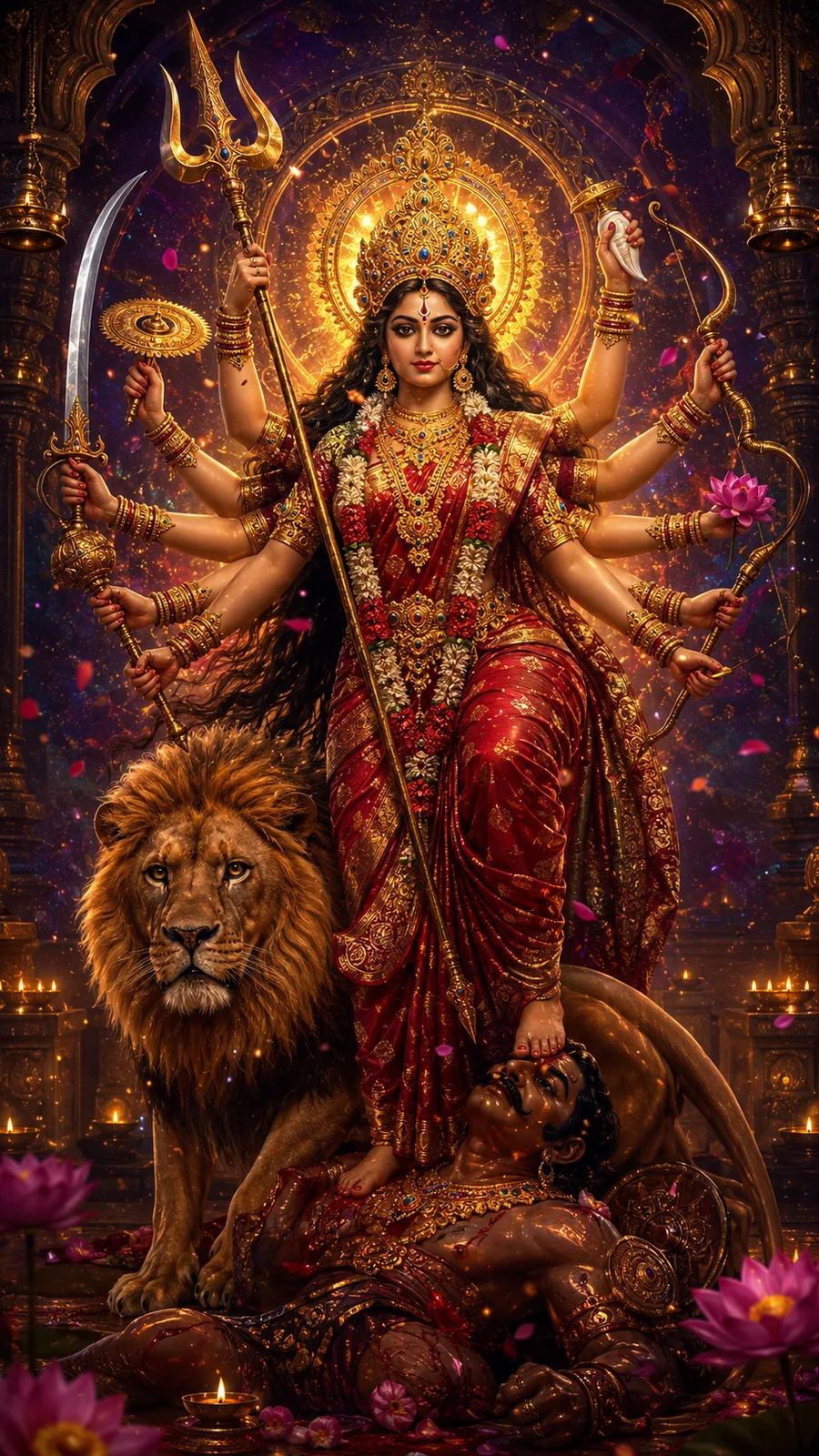
The Devi Mahatmyam tells the story that this verse rests on. The asura Mahishasura, a being who could shift between the shapes of a buffalo and a man, had grown strong enough to defeat the gods and seize the heavens. Driven out, with nowhere left to turn, the gods gathered before Vishnu and Shiva and told them what had happened.

As the gods listened, anger rose in them, and the anger became light. From Shiva's face a great energy blazed out, and from Vishnu's, and from Brahma's, and from Indra and all the others, each god's power streaming from him as fire. The energies met and merged, gathering into a single mountain of light that filled the sky, and from that light a Goddess took shape. She was the combined power of every god made into one form.

Then each god gave her his own weapon, a trident from Shiva, a discus from Vishnu, and so down the line, until she stood armed with the strength of all of them at once. Mounted on her lion, she went out to meet Mahishasura. He came at her in shape after shape, buffalo and lion and man, and she met each one and at last struck him down.

The point of the story is plain. When the gods alone could not stand, the power within them, drawn out and gathered, could. That power is Shakti. The strength that lets a person rise after defeat is the same energy that raised the gods when they had been beaten. The stotram names the Goddess as that power, the strength every being draws on, the capacity to act when acting seemed impossible.

Philosophy

Among the twenty-one forms, this one names the principle that holds the rest. Intelligence, sleep, hunger, shadow: each is a particular shape. Shakti is not a shape but the power to take any shape at all, the capacity to be and to act that runs under every form. In a sense each of the others is Shakti wearing a face. This one names her without the face.

This is the heart of the tradition the stotram comes from. Reality has two poles. One is still, the silent ground of pure being and awareness. The other is dynamic, the power that moves, creates, and acts. The first without the second cannot stir. The Goddess is that second pole, and the text makes the claim plainly: she is the power without which even the gods are inert.

Notice what the hymn has now done. In its second verse it named her Chetana, consciousness, the still awareness in all beings. In this seventh verse it names her Shakti, power, the energy in all beings. She is named as both poles of reality, the awareness and the force, the stillness and the movement. Neither is more her than the other.

And she is named here as immanent. The power is in all beings. Your own capacity to work, to resist, to endure, to begin again, is not merely your private strength. It is a portion of the one power that became a Goddess when the gods had failed. To know this is to act with confidence, because the power is real, and with humility, because it was given and not made.

Practice

This form meets you in every act of effort. The push to finish what is hard, the will that holds a course against resistance, the strength that lifts you up after you have been knocked down, all of it is Shakti moving in you. The practice is to recognise it as hers. Your capacity to act is not only your own; it is a share of the power that runs through all beings.

That recognition changes how you meet effort. You can act with confidence, because the strength is real and has a divine source, and without arrogance, because it was given to you and is not your possession. When you are spent and have nothing left, you can turn toward her, not as a request for a sudden surge but as a return to the ground your strength rises from.

Chant the seventh verse before something difficult, or when you must rise again. You are not borrowing a foreign power. You are remembering whose power has been moving in you all along.

8

Trishnaतृष्णा

The force that propels all beings forwardThirst / Longing / Desire
Devi in the form of Trishna: The force that propels all beings forward

या देवी सर्वभूतेषु तृष्णारूपेण संस्थिता। नमस्तस्यै नमस्तस्यै नमस्तस्यै नमो नमः॥

Yā Devī Sarva-Bhūteṣu Tṛṣṇā-Rūpeṇa Saṃsthitā Namas-Tasyai Namas-Tasyai Namas-Tasyai Namo Namaḥ

To that Devi who in all beings is abiding in the form of Thirst. Salutations to Her, Salutations to Her, Salutations to Her, Salutations again and again.

Read the deep dive ▾

Explanation

Trishna is intense longing, thirst, deep desire. Traditions that focus on the problems of attachment often treat trishna as something to be overcome. Yet this stotram bows to it as a divine form. The Goddess as Trishna is the force that propels every living being forward, the thirst to know, to create, to connect, to grow. Without this force, nothing moves. The longing itself, including the spiritual longing for the divine, is the Goddess at work in the heart.

Word meaning

Yā Devī sarva-bhūteṣu (the Goddess who, in all beings), tṛṣṇā-rūpeṇa saṃsthitā (abides in the form of trishna, thirst or craving). Then the refrain: namas-tasyai, namas-tasyai, namas-tasyai, namo namaḥ. Tṛṣṇā comes from the root tṛṣ, to be thirsty. Its first sense is literal thirst, and from there it widens to mean longing, craving, the deep wanting that reaches for what it does not have.

Name origin

Trishna is built from the root trish, to be thirsty. Its first meaning is the body's thirst, and from there it widens into longing, craving, the deep wanting that reaches for what one does not have.

The word carries a heavy history. In Buddhism, trishna, called tanha in Pali, stands at the centre of the Four Noble Truths: craving is named as the origin of suffering, and the end of suffering is the going-out of that craving. Much of Hindu thought runs the same way. The Bhagavad Gita warns that desire clouds the judgment and drives a person to harm. The Yoga Sutras count attachment among the afflictions of the mind, and the renunciate path aims at vairagya, the cooling of thirst.

And yet this verse salutes trishna as a form of the Goddess. The same Devi Mahatmyam that holds this hymn teaches that the Goddess, as Mahamaya, is the one who casts beings into attachment and also the one who grants their release. The word arrives, then, carrying two histories at once, and the stotram erases neither.

Story

The Devi Mahatmyam opens with two men who have lost everything. King Suratha has been driven from his throne by enemies and betrayed by his own ministers. A merchant named Samadhi has been thrown out of his home by the wife and sons who seized his wealth. Both have fled into the forest, and both come to rest at the hermitage of the sage Medhas.

There a strange thing troubles them. Though each has been wronged and cast aside, neither can stop caring for what he has lost. The king still aches for his kingdom and worries whether his people are well kept. The merchant still loves the very family that robbed and abandoned him. They put the question to the sage. Why, when we see clearly that these people betrayed us, do our hearts still cling to them?

The sage answers that this clinging is the work of Mahamaya, the great Goddess. It is she who draws even the wise into the whirlpool of attachment, the pull toward this is mine and these are my own. She binds beings to the world through their longing, and the same Goddess, when turned toward and worshipped, sets them free. Then the sage tells them her deeds, the stories that make up the rest of the text, and the two men go to the riverbank and worship her, and in time each receives what is right for him.

The whole text is framed by this thirst. Trishna is the cord that still held two betrayed men to the world they had lost, and the sage names that cord as the Goddess. The stotram does the same when it bows to her as trishna. The longing that keeps us reaching, even when reaching has hurt us, is not outside the divine. It is one of her forms, and seeing it as hers is where its hold begins to change.

Philosophy

This verse asks a hard question of anyone who reads it honestly. So much of the spiritual tradition, Buddhist and Hindu alike, names craving as the very thing to be overcome. How can a hymn then bow to it?

The renunciate view is not wrong, and the stotram does not pretend it is. Craving does bind. It keeps a being reaching and never at rest, turning the wheel of birth and longing, and the cooling of that thirst is real freedom. The Buddha taught this, and so did the sages of the Hindu renunciate path. Hold on to that.

And hold this beside it. Trishna is also the force of life itself. The thirst to know, to make, to connect, to grow, the wanting that sends a child to learn and a seeker to seek, is the same energy. Without some form of this reaching, nothing lives or grows at all.

The stotram does not resolve the tension by saying craving is good and should be fed. It says something else. Craving is hers. The Goddess who, as Mahamaya, binds beings through attachment is the same Goddess who frees them. To see trishna as a form of the Goddess is not to surrender to it. It is to recognise the divine energy moving even in the force that binds, and that recognition is where the grip starts to loosen. The seeker does not slay an enemy called desire. The seeker meets the Goddess even there, and the meeting changes everything.

So both truths stand. Craving must be seen through, and craving is divine. The stotram adds to the Buddha's teaching, not against it, the Shakta note that nothing, not even the force that holds us, falls outside her.

Practice

This form is best met in the moment a strong wanting takes hold, the pull toward a thing, an outcome, a person you feel you must have. The usual responses are two: force the wanting down, or chase it. This verse points to a third.

When the craving rises, pause and turn toward the wanting itself. Feel the energy of it, the heat and the reach, and recognise it as a form of the Goddess, the same life-thirst that moves through every being. That recognition opens a small space between you and the craving. In that space you are no longer simply its servant, and from there you can choose freely what to do.

This is neither suppression nor indulgence. It is seeing. Chant the eighth verse when a longing has you in its grip, not to feed it and not to crush it, but to find the Goddess in the very force pulling at you. The grip loosens not by force but by being seen for what it is.

9

Kshantiक्षान्ति

The strength that holds steady under pressureForbearance / Patience / Forgiveness
Devi in the form of Kshanti: The strength that holds steady under pressure

या देवी सर्वभूतेषु क्षान्तिरूपेण संस्थिता। नमस्तस्यै नमस्तस्यै नमस्तस्यै नमो नमः॥

Yā Devī Sarva-Bhūteṣu Kṣānti-Rūpeṇa Saṃsthitā Namas-Tasyai Namas-Tasyai Namas-Tasyai Namo Namaḥ

To that Devi who in all beings is abiding in the form of Forbearance. Salutations to Her, Salutations to Her, Salutations to Her, Salutations again and again.

Read the deep dive ▾

Explanation

Kshanti encompasses forbearance, patience, and forgiveness. It is among the rarest and most demanding qualities a human being can cultivate. When someone acts wrongly toward you and you hold your dignity without breaking, when circumstances turn against you and you remain steady, that capacity does not come from weakness. It is a form of strength so refined that it requires the Goddess's own grace to sustain. The Goddess as Kshanti holds the world from tearing apart.

Word meaning

Yā Devī sarva-bhūteṣu (the Goddess who, in all beings), kṣānti-rūpeṇa saṃsthitā (abides in the form of kshanti, forbearance or forgiveness). Then the refrain: namas-tasyai, namas-tasyai, namas-tasyai, namo namaḥ. Kṣānti comes from the root kṣam, to endure, to bear, to forgive. It is the strength to hold steady under wrong, to bear what is hard without breaking, and to forgive what could be answered with anger.

Name origin

Kshanti, close kin to the word kshama, means forbearance, patience, the capacity to bear and to forgive. It comes from the root ksham, to endure. The tradition ranks it high among the virtues. The Bhagavad Gita lists forgiveness among the marks of a divine nature and among the qualities of one who has steadied the mind. The old codes of dharma place forbearance among the duties that hold a good life together.

The virtue reaches beyond Hindu texts. In Buddhism, kshanti is one of the six perfections a seeker cultivates, the patience that meets harm without returning it. In Jain practice, the asking and granting of forgiveness, kshama, stands at the centre of spiritual life.

The tradition also gives forbearance an image: the earth. The ground bears every weight, is dug and ploughed and trampled, and still holds and sustains without complaint. To call the Goddess kshanti is to name her as that earth-like strength in every being, the power to bear and to forgive that does not come from weakness but from depth.

Story

In the years of the Pandavas' exile, after the dice game had stripped them of everything and Draupadi had been dragged and shamed in the open court, the family lived in the forest. Draupadi carried the memory like a coal that would not cool. One day she turned to Yudhishthira, the eldest, the one who had staked and lost, and asked how he could bear it. The men who had wronged them sat at ease on a stolen throne. Where was his anger? Why did he counsel patience when patience looked so much like defeat?

Yudhishthira answered her with a long defence of forbearance. Anger, he said, is the root of ruin. The man who cannot govern his rage destroys himself and those around him. Forbearance is not the weakness of one who cannot strike. It is the strength of one who can strike and chooses not to, who holds the harder ground. He called forbearance the virtue by which the world is held together, the quality of the truly strong.

Yet the dialogue does not make him a man without limits. The epic also lets Bhima rage against waiting, and Draupadi's challenge is never simply dismissed. The tradition that praises forbearance also knows that forbearance has a season, that there is a time to bear and a time to act, and that the wise must tell them apart. Yudhishthira held his patience through the exile. When its term was done and right was still denied, the war came.

This is the forbearance the stotram names as the Goddess. Not the patience of the helpless, but the steadiness of one who could answer and waits, who bears what is hard without breaking and forgives what could be repaid with harm. When a person meets an injury and holds their dignity instead of striking back, that steadiness is kshanti, and the stotram calls it the Goddess.

Philosophy

With this verse the hymn turns toward the virtues. The earlier forms named powers and states, awareness, intelligence, hunger, craving. Kshanti is the first that is plainly a quality of character, a way of meeting life rather than a faculty or a need.

The first thing to set right is what forbearance is not. It is not weakness, and it is not the patience of someone who has no choice. Kshanti is the strength of one who could answer a blow and holds steady instead, who bears what is hard without being broken by it. If Shakti, named two verses earlier, is the power to act, kshanti is the power to refrain, and the stotram treats both as the Goddess. The same energy that takes up weapons against the asuras shows here as the strength not to strike.

The old image for this is the earth. It bears every weight, is cut and trampled, and still sustains. Divine forbearance is earth-like, patient from depth rather than from helplessness.

The tradition is honest about a limit. Forbearance is not endless tolerance of wrong. The same Mahabharata that praises patience also knows there is a time to bear and a time to act, and asks the wise to tell them apart. Kshanti is discerning strength, not surrender.

And it carries a quiet mercy toward the one who holds it. Resentment burns the one who keeps it far more than the one it is aimed at. To forgive, in this light, is partly a release of oneself. The Goddess as kshanti is the strength to set the coal down.

Practice

This form lives in the gap between a provocation and the reaction to it. Someone wrongs you, insults you, pushes against you, and there is a small instant before you respond. The practice is to find that instant and stand in it. In that pause is a steadiness that can choose its answer rather than be dragged into one, and that steadiness is the Goddess as kshanti.

This is not a teaching to endure real harm or to stay where you are being hurt. Forbearance is the strength to choose your response, and sometimes the right response is to act and to leave. What kshanti removes is not your power but your bondage to anger.

It also loosens old grievances. A resentment carried for years burns only the one who carries it. Chant the ninth verse when you are provoked, or when an old wrong still smoulders in you, and let the earth-like steadiness rise. To set the burden down is to meet the Goddess in the strength that bears and forgives.

10

Jaatiजाति

The source of each being's essential characterGenus / Primordial Nature
Devi in the form of Jaati: The source of each being's essential character

या देवी सर्वभूतेषु जातिरूपेण संस्थिता। नमस्तस्यै नमस्तस्यै नमस्तस्यै नमो नमः॥

Yā Devī Sarva-Bhūteṣu Jāti-Rūpeṇa Saṃsthitā Namas-Tasyai Namas-Tasyai Namas-Tasyai Namo Namaḥ

To that Devi who in all beings is abiding in the form of Genus. the original cause of everything. Salutations to Her, Salutations to Her, Salutations to Her, Salutations again and again.

Read the deep dive ▾

Explanation

In this context, Jaati does not refer to social categories. It refers to the primordial nature or genus of a being, the fundamental character with which it comes into existence. Every creature has an essential nature: the nature of a tree, the nature of fire, the nature of a human. The Goddess as Jaati is present at the very origin of each being's nature, the source from which its particular way of existing arises. She is the principle of differentiated existence itself.

Word meaning

Yā Devī sarva-bhūteṣu (the Goddess who, in all beings), jāti-rūpeṇa saṃsthitā (abides in the form of jaati). Then the refrain: namas-tasyai, namas-tasyai, namas-tasyai, namo namaḥ. Jāti comes from the root jan, to be born. Here it means the innate nature or genus of a being, the kind of creature it is born as and the essential character that comes with that kind. In this verse it does not mean social caste, a later and separate sense of the same word.

Name origin

Jaati comes from the root jan, to be born, and its first meaning is simply kind or genus, the class into which a being is born. In the schools of Indian logic and grammar, jati is the universal, the shared nature that makes each cow a cow and each lotus a lotus, the common character running through all members of a kind. This is the sense the verse uses: jaati is the innate nature of a being, the character it carries by virtue of what it is.

One clarification matters here, because the same word travelled. In later social usage, jati came to name the many groups of the caste system. That social sense is not what this verse means, and it is worth saying plainly. The stotram speaks of the nature found in all beings, sarva-bhuteshu, and it salutes the same divine presence in every one of them. It locates the sacred in the innate character of each kind of creature, not in any ranking of people above people. To read social hierarchy into this verse is to mistake a much older and wider word for a narrower later one.

Story

The Mahabharata tells of a brahmin named Kaushika who had grown proud of his austerities. One day a crane, soiling him from a tree, was burned to ash by the heat of his angry glance, and the power pleased him. Later, begging for food at a house, he was kept waiting by a wife busy serving her husband. When he showed his irritation, she said calmly that she was no crane to be scorched by his look, and that duty done with love was its own discipline. Astonished, he asked how a housewife knew such things. She sent him to learn from Dharmavyadha, a seller of meat in the city of Mithila.

Kaushika went, expecting little from a butcher in his stall. What he found was a man settled in wisdom. Dharmavyadha spoke of duty and the soul, of how a person serves the sacred by doing their own work well and caring for those given to them, and of how no honest work makes a person low. He had cared for his parents, kept to his task, harmed no one beyond what his trade required, and through that ordinary faithfulness had reached a depth the proud ascetic had not.

The story makes its point without raising its voice. The high nature Kaushika sought did not sit where he assumed it would, on the side of birth and rank. It lived in a butcher and a housewife, in lives the world would not have called elevated. Their true nature, their real jaati, was not the station the world had assigned them.

This is the nature the stotram names as the Goddess. She is the innate character placed in every being, and it is found in all of them alike. The verse salutes that nature in the brahmin and the butcher equally, in every kind of creature, because the same Goddess abides as the inmost nature of each.

Philosophy

This verse names something easy to miss and easy to misread. Jaati, in its meaning here, is the innate nature of a being, the character that comes with being the kind of creature one is. A tiger has a tiger's nature, a river its flowing, a particular person their own temperament and gifts. The stotram says this innate nature, in every being, is the Goddess.

There is a quiet dignity in the claim. Your essential character, the way you are made, the bent of your mind and the grain of your spirit, is not an accident to be ashamed of or overcome. It is a form the Goddess takes in you. To honour your own nature, and to let each creature be true to its own, is to honour her.

The clarification from the word's history bears repeating, because it guards the verse against misuse. The same word, jati, later named the social divisions of caste, and some have read this verse as if it sanctified that order. It does not. The stotram places the divine in the innate nature of all beings without exception, sarva-bhuteshu, and bows to it equally in each. A teaching that finds the same Goddess in every creature is the opposite of one that ranks them. The story of the butcher who out-knew the brahmin says the same thing in narrative form.

So the form holds two notes together. The first is reverence for the particular: each being's own nature is sacred. The second is the universal that the first rests on: the nature in all of them is one Goddess. To see this is to respect every creature as it is, and to meet your own nature not as a limit but as her presence in you.

Practice

This form lives in two recognitions: meeting your own essential nature as a form of the Goddess in you, and respecting the nature of other beings as they are. The practice is to stop fighting or being ashamed of your innate makeup, and to let others be true to theirs, seeing the divine character in every kind of creature.

Chant the tenth verse when you struggle against your own nature, or when you are tempted to look down on another kind of being or person. One honest note: honouring innate nature is not fatalism. You still grow and choose; but it begins by treating the nature you were given as sacred ground rather than a flaw.

And this respect is equal toward all, never a ranking. When you meet your own character as her form, and see that same divine nature in every creature, you are meeting the Goddess who abides as the inmost nature of each being.

11

Lajjaलज्जा

The conscience that holds moral life togetherModesty / Ethical Restraint
Devi in the form of Lajja: The conscience that holds moral life together

या देवी सर्वभूतेषु लज्जारूपेण संस्थिता। नमस्तस्यै नमस्तस्यै नमस्तस्यै नमो नमः॥

Yā Devī Sarva-Bhūteṣu Lajjā-Rūpeṇa Saṃsthitā Namas-Tasyai Namas-Tasyai Namas-Tasyai Namo Namaḥ

To that Devi who in all beings is abiding in the form of Modesty. Salutations to Her, Salutations to Her, Salutations to Her, Salutations again and again.

Read the deep dive ▾

Explanation

Lajja is often translated as shame, but its fuller meaning is modesty, the inner sense of propriety and ethical restraint. It is the quiet voice that says this is not right before an action is taken. It is what separates a conscious moral being from one who acts without reflection. This inner restraint is not weakness or timidity. It is the Goddess holding the ethical fabric of human society together. Where lajja is present, there is conscience. Where it is absent, harm follows.

Word meaning

Yā Devī sarva-bhūteṣu (the Goddess who, in all beings), lajjā-rūpeṇa saṃsthitā (abides in the form of lajja, modesty). Then the refrain: namas-tasyai, namas-tasyai, namas-tasyai, namo namaḥ. Lajjā comes from the root lajj, to feel shy or ashamed. Its surface sense is shyness or shame, but its fuller meaning is modesty, the inner sense of propriety, the feeling that holds a person back from what is base.

Name origin

Lajja, from the root lajj, to feel shy or ashamed, names the inward sense of shame and modesty. The tradition treats it not as a weakness but as a virtue, often under the name hri, modesty, which the old texts list among the qualities of a good person. Sri, prosperity, and Hri, modesty, are even spoken of as goddesses who keep company with the divine, and a common teaching holds that good fortune does not stay where modesty has been lost.

Lajja in this honoured sense is the conscience, the felt recoil from doing what is wrong, and the self-respect that guards a person's dignity. It is worth marking what it is not. The tradition does not praise the crushing shame that makes a person despise themselves, nor the social shaming used to control and humiliate. The lajja the stotram salutes is the quieter, finer thing: the inner check that keeps conduct clean and the modesty that is a form of dignity. To call the Goddess lajja is to name that moral sensitivity in every being as hers.

Story

In the Sundara Kanda of the Ramayana, Hanuman leaps across the sea to Lanka to search for Sita. By night he enters the palace of Ravana, moving through hall after hall, and at last into the inner chambers where the women of the household lie sleeping. He searches every face, hoping one of them is the queen he was sent to find.

When he comes out, a doubt stops him. He has looked closely upon the sleeping wives of another man, and he asks himself whether he has done wrong. For a hero on a sacred errand, in the middle of a desperate search, it is a remarkable pause. The mission did not require it. His conscience raised the question on its own.

Then he reasons it through. He looked among those women only to find Sita, with no desire and no wrong intent in his heart. The fault in such an act, he concludes, lies in the wanting, and there had been none. The mind that searched was clean, and so the act was clean. Reassured, he goes on.

The story shows lajja at its finest. It is not the loud shame that the world imposes. It is the quiet inner voice that checks even a good person doing a good thing, asking whether they have kept their conduct clean. And it shows the discernment that a mature conscience carries, weighing the intent of the heart and not the surface of the deed alone.

This is the modesty the stotram names as the Goddess. She is the inner sense of right that recoils from what is base, the self-respect that guards dignity, the conscience that speaks even when no one is watching. When you feel that quiet check before you cross a line, or that you would not do a thing even unseen, that sense is lajja, and the stotram calls it the Goddess.

Philosophy

This verse continues the hymn's turn through the virtues, and it names one of the subtlest of them. Lajja, in its honoured sense, is the inner moral sense, the conscience, the felt boundary that keeps a person's conduct clean. It is the inward counterpart of law. Where law says what others will not allow, lajja says what you cannot do and still remain yourself.

It is important to separate this from its shadow. Shame can curdle. It can become the self-loathing that makes a person despise their own being, or the weapon a society uses to humiliate and control. The stotram does not bow to that. The lajja it salutes is modesty as dignity, the quiet self-respect that guards a person from the base, not the cruelty that grinds a person down.

Seen rightly, lajja is a kind of self-respect. You hold back from certain acts not mainly from fear of being caught but because you honour what you are. In this hymn's logic, what you are is a form of the Goddess, so to keep your conduct clean is to keep faith with her presence in you.

One note belongs here, since modesty has so often been turned into a code pressed on some and not others, especially on women. The stotram does not do that. It places lajja in all beings without exception, sarva-bhuteshu, as the universal inner check, not a rule imposed from outside on a few. The same Goddess who is power and forbearance is also this fine sense of right. Conscience, like strength, is one of her forms.

Practice

This form meets you in the instant before a wrong act, in the quiet check that rises and says, not this. It is strongest where no one is watching and no one would ever know, because then the voice is purely your own. The practice is to listen to it as the Goddess and to let it hold, rather than arguing it down.

Honour the conscience, and let your conduct come from self-respect rather than from fear of being seen. To act well only when watched is not lajja. To act well unseen is.

One honest note. This is conscience, not self-punishment. When you do fall short, the healthy form of lajja turns you toward setting things right, toward amends and correction, not toward despising yourself. Chant the eleventh verse to strengthen that inner sense of dignity, the modesty that guards what is clean in you. The voice that keeps you true when you are alone is the Goddess speaking as lajja.

12

Shantiशान्ति

The stillness that holds steady in any stormPeace / Inner Stillness
Devi in the form of Shanti: The stillness that holds steady in any storm

या देवी सर्वभूतेषु शान्तिरूपेण संस्थिता। नमस्तस्यै नमस्तस्यै नमस्तस्यै नमो नमः॥

Yā Devī Sarva-Bhūteṣu Śānti-Rūpeṇa Saṃsthitā Namas-Tasyai Namas-Tasyai Namas-Tasyai Namo Namaḥ

To that Devi who in all beings is abiding in the form of Peace. Salutations to Her, Salutations to Her, Salutations to Her, Salutations again and again.

Read the deep dive ▾

Explanation

Shanti is not the absence of noise or conflict. It is a deep interior stillness that remains undisturbed even when circumstances are turbulent. It is the eye at the centre of the storm. When a person in the midst of great difficulty remains centred, calm, and clear, that capacity is the Goddess as Shanti. She is the ground of being on which everything else rests. Without this stillness at the core, no other quality can be sustained.

Word meaning

Yā Devī sarva-bhūteṣu (the Goddess who, in all beings), śānti-rūpeṇa saṃsthitā (abides in the form of shanti, peace). Then the refrain: namas-tasyai, namas-tasyai, namas-tasyai, namo namaḥ. Śānti comes from the root śam, to be calm, to grow quiet, to cease. It is peace, but not mainly the peace of quiet surroundings. It is the inner stillness that can hold even when the surroundings are not quiet at all.

Name origin

Shanti, from the root sham, to grow calm and to cease, is one of the most spoken words in Hindu prayer. Almost every Vedic recitation and Upanishadic reading closes with it, repeated three times: shanti, shanti, shanti. The threefold saying is traditionally read as a prayer for peace from three kinds of disturbance, the troubles that rise in oneself, the troubles that come from other beings, and the troubles that come from forces beyond human control.

In the Bhagavad Gita, peace is the fruit of the steadied mind. Krishna says that for the person who has no peace there can be no happiness, and that the one who has let go of craving and the sense of mine moves through the world and reaches peace.

This is the shanti the verse names as the Goddess. Not the calm of an easy day, which any quiet evening can give, but the deeper stillness that the tradition prays for and the sages describe, the peace that can stand even inside difficulty. To call the Goddess shanti is to name that steadiness in every being as hers.

Story

The Bhagavata Purana tells of Prahlada, the son of the asura king Hiranyakashipu. The father had set himself against Vishnu and demanded that all bow to him alone. But the boy, from his earliest years, loved Vishnu with his whole heart, and nothing his father said could turn him.

What followed was a long persecution. The king, enraged that his own son would not yield, tried to break him. Prahlada was thrown from heights, given poison, set among weapons, cast into fire, trampled by elephants, bound and flung into the sea. Through all of it the boy stayed calm. He did not rage at his father and he did not beg. He simply kept his heart fixed on Vishnu, and a stillness held him that the violence could not reach. The stories say he came through each ordeal unharmed, but the deeper marvel is the peace itself, a child untroubled in the middle of every effort to terrify him.

When his father finally demanded to know where this Vishnu was, whether he was in a particular pillar, the boy answered that he was everywhere, in the pillar and in all things. The pillar broke open, and the Lord came forth as Narasimha to end the tyrant. But the heart of the story is not the rescue. It is the boy who was already at peace before any rescue came.

This is what the stotram names as the Goddess. Shanti is not the absence of storms. Prahlada's world was nothing but storm, and still he was calm. The peace was not in his circumstances but in him, rooted in something the circumstances could not touch. When a person in the middle of great trouble stays centred and clear, not because the trouble has passed but because they are anchored deeper than it, that steadiness is shanti, and the stotram calls it the Goddess.

Philosophy

After the active virtues, the hymn names the stillness beneath them. Shanti is peace, but the verse is careful about which peace it means. There is a peace that depends on the world cooperating, the calm of an undisturbed evening, and that peace breaks the moment the evening does. The shanti the stotram honours is the other kind, the inner stillness that can hold even when the world is in uproar.

This stillness is not new to the hymn. In its second verse it named the Goddess as Chetana, the silent awareness in all beings. Shanti is that same stillness felt as peace. And it stands at the far end of an earlier verse too. Where the hymn named her as Trishna, craving, the cooling of that thirst is exactly this peace. Where wanting quiets, shanti rises. The two verses are the two ends of one teaching.

Such peace comes from being anchored in something the circumstances cannot reach. Prahlada's calm rested on his devotion. The Gita's peace rests on the letting go of craving and the sense of mine. In each case the ground is deeper than the storm.

One thing it is not. Shanti is not numbness, and it is not indifference. It is not the deadening of feeling or the refusal to care. A heart can feel keenly and still be held steady. Peace is not the absence of the storm within but a stillness wide enough to hold it.

To call this peace the Goddess is to say that the still centre is already in you, beneath the turbulence, even now. It is not made but uncovered. Shanti is her presence as the quiet that was always underneath.

Practice

The place to find this form is not only a quiet cushion on an easy morning. It is the middle of difficulty, where you learn whether the peace is real. When you are disturbed, the first urge is to settle the outer storm before you can rest. This verse points the other way: turn toward the quiet that is present underneath even now, and let attention rest there. The storm may go on. You are no longer only the storm.

This is not pretending to be calm, and it is not pushing real distress away. It is finding the deeper steadiness that can hold the distress without being swept off by it.

Chant the twelfth verse when you are agitated, and let the old closing carry it, shanti, shanti, shanti, peace from what troubles you within, from others, and from all that lies beyond your hand. You are not manufacturing calm. You are settling into the peace that was already there, the Goddess as the stillness at your centre.

13

Shraddhaश्रद्धा

The sincerity that transforms action into devotionFaith / Wholehearted Engagement
Devi in the form of Shraddha: The sincerity that transforms action into devotion

या देवी सर्वभूतेषु श्रद्धारूपेण संस्थिता। नमस्तस्यै नमस्तस्यै नमस्तस्यै नमो नमः॥

Yā Devī Sarva-Bhūteṣu Śraddhā-Rūpeṇa Saṃsthitā Namas-Tasyai Namas-Tasyai Namas-Tasyai Namo Namaḥ

To that Devi who in all beings is abiding in the form of Faith. Salutations to Her, Salutations to Her, Salutations to Her, Salutations again and again.

Read the deep dive ▾

Explanation

Shraddha is far more than religious belief. It is the quality of wholehearted engagement, the sincerity with which a person gives themselves to what they do. A craftsperson who works with complete attention has shraddha. A parent who cooks for a child with love has shraddha. A devotee who prays without distraction has shraddha. The Bhagavad Gita holds shraddha as foundational, declaring that a person is formed by their faith. The Goddess as Shraddha is the sacred quality that transforms ordinary action into devotion.

Word meaning

Yā Devī sarva-bhūteṣu (the Goddess who, in all beings), śraddhā-rūpeṇa saṃsthitā (abides in the form of shraddha, faith). Then the refrain: namas-tasyai, namas-tasyai, namas-tasyai, namo namaḥ. Śraddhā is built from śrat, the heart or trust, and dhā, to place. Its literal sense is to place the heart, to give one's heart in trust. It is faith, but as wholehearted trust and sincere commitment rather than mere belief in a claim.

Name origin

Shraddha is one of the deepest words in the tradition, and its making says a great deal. It joins shrat, an old word for the heart or for trust, with dha, to place. To have shraddha is to place the heart, to give oneself in trust. It is faith, but the word points less to agreeing with a statement than to committing the heart fully to something.

The Rig Veda already treats Shraddha as a goddess. A hymn invokes her at dawn, midday, and dusk, saying that by faith the sacred fire is kindled and by faith offerings are made. In the Bhagavad Gita the word is central. Krishna says a person is made of their shraddha, that as a person's faith is, so they themselves become, and that the one who has shraddha gains knowledge.

So when this verse names the Goddess as shraddha, it draws on an old line. Faith here is not blind belief. It is the heart's wholehearted trust, the sincerity with which a person gives themselves to what they do and seek. That capacity, in every being, the stotram calls the Goddess.

Story

The Katha Upanishad opens with a boy named Nachiketas. His father was performing a great sacrifice, giving away his possessions, but the boy saw that the cows being given were old and barren, animals past all use. A real offering, he understood, must be made with a whole heart, and this one was not. Shraddha, the text says, entered him. Out of that earnestness he kept asking his father, to whom will you give me? The father, irritated, finally said: I give you to Death.

Nachiketas took even that seriously. He went to the house of Yama, the lord of death, and finding him away, waited three nights at his door without food or welcome. When Yama returned and saw that a guest had been kept waiting, he offered three boons to set it right.

For his third boon Nachiketas asked the hardest thing: what becomes of a person after death, the truth of the Self. Yama tried to turn him aside. He offered wealth instead, long life, sons and herds, every pleasure the boy could want. Nachiketas refused them all. These things wear out the senses and pass, he said, and he would not trade the question of his heart for any of them.

Yama, pleased, called him steadfast and rare, one who chose the good over the merely pleasant, and taught him the knowledge of the Self that makes up the rest of the Upanishad.

The whole text turns on the boy's shraddha. It was not blind belief. It was the wholehearted earnestness that took the search seriously, waited without complaint, and refused to be bought off with lesser things. That faith carried him to the highest teaching. When a person gives their heart fully to what truly matters and will not be distracted by easier rewards, that wholehearted trust is shraddha, and the stotram calls it the Goddess.

Philosophy

This verse names faith, but the word it uses is richer than the English. Shraddha, the placing of the heart, is not first of all agreement with a claim. It is the wholehearted trust by which a person gives themselves to something, the willingness to commit the heart and not just the opinion.

The Bhagavad Gita makes a striking claim about it. A person, Krishna says, is made of their shraddha; as one's faith is, so one becomes. This turns faith from a side-quality into a shaping force. You become what you give your heart to. The Gita adds that the one who has shraddha gains knowledge, while the one who trusts nothing receives nothing deeply, for a closed heart cannot take anything in.

Two cautions keep this honest. Shraddha is not credulity, the switching off of the mind. The boy Nachiketas, the very picture of faith, also tested and chose, refusing easy rewards and holding out for the truth. True shraddha is earnest trust that still discerns. And so it pairs with an earlier form. The hymn named the Goddess as Buddhi, discernment, in its third verse, and as Shraddha here. Faith without discernment is blind, and discernment without faith stays barren. Genuine seeking needs both, and the stotram names the Goddess as each.

To call shraddha the Goddess is to honour the heart's power to trust and to give itself fully. It is what makes love possible, and devotion, and the patient learning of anything deep. That capacity, in every being, is named here as hers.

Practice

This form lives wherever you give yourself fully rather than by halves. A practice done with the whole heart, a relationship entered without holding back, a work taken up with all of you, each carries shraddha. Notice, then, where you keep part of yourself in reserve, and where you are willing to place the heart entirely.

There are two movements to it, and both matter. First discern where to place your heart, since the tradition says you become what you trust, so the choice deserves care. Then, having chosen, give yourself to it fully. The choosing and the wholeheartedness are both shraddha.

Chant the thirteenth verse when you begin something that asks your whole heart, or when half-heartedness is holding you at a distance from your own life. This is not a call to believe without thinking. It is a call to trust, once you have chosen well, with the heart placed all the way in. That wholehearted trust is the Goddess as shraddha.

14

Kantiकान्ति

The light that shines from an interior state of graceRadiance / Inner Beauty
Devi in the form of Kanti: The light that shines from an interior state of grace

या देवी सर्वभूतेषु कान्तिरूपेण संस्थिता। नमस्तस्यै नमस्तस्यै नमस्तस्यै नमो नमः॥

Yā Devī Sarva-Bhūteṣu Kānti-Rūpeṇa Saṃsthitā Namas-Tasyai Namas-Tasyai Namas-Tasyai Namo Namaḥ

To that Devi who in all beings is abiding in the form of Loveliness and Beauty. Salutations to Her, Salutations to Her, Salutations to Her, Salutations again and again.

Read the deep dive ▾

Explanation

Kanti is the luminous quality, the inner radiance that becomes visible on the face and form of a being. It is distinct from mere physical appearance. A person deep in meditation, a mother holding her newborn, an artist absorbed in their work, each may carry a visible glow that comes not from cosmetics but from an interior state of peace, love, or devotion. That radiance is the Goddess as Kanti. She is beauty as it actually is: a light that shines from within.

Word meaning

Yā Devī sarva-bhūteṣu (the Goddess who, in all beings), kānti-rūpeṇa saṃsthitā (abides in the form of kanti, radiant beauty). Then the refrain: namas-tasyai, namas-tasyai, namas-tasyai, namo namaḥ. Kānti is loveliness, the glow of beauty, the luster that makes a face or a form shine. In the tradition it points less to a surface arrangement of features than to a radiance that seems to come from within.

Name origin

Kanti means loveliness, radiance, the glow of beauty. The Sanskrit poets used it for the special luster that beauty takes on, the shine that love or contentment or youth lends a face, not the bare shape of the features but the light that seems to come through them.

The tradition raises this to its height in the Goddess herself. One of her great names is Tripurasundari, the beautiful one of the three worlds, and a famous hymn ascribed to Shankara, the Saundarya Lahari, the wave of beauty, sings of her loveliness from crown to foot. In that vision her beauty is not one pretty thing among many. It is the source from which every beautiful thing borrows its light. The loveliness of a flower, a face, a dawn, is a spark of hers.

So to name the Goddess kanti is to say that radiance itself, wherever it appears, is her. And the tradition locates the truest radiance within. The glow that rises on a face at peace, in love, or absorbed in devotion is kanti, beauty as inner light, and the stotram names it the Goddess.

Story

There is no single dramatic tale for this form. Its story is told instead in a hymn, the Saundarya Lahari, the wave of beauty, which the tradition ascribes to the sage Shankara. The hymn is a long contemplation of the Goddess's loveliness, taken slowly from the crown of her head to her feet, each part of her described as more radiant than the last.

What lifts it above ordinary praise is its central claim. The poet does not say the Goddess is very beautiful, as one beautiful being among others. He says that all beauty anywhere is a reflection of hers. The shine of the moon, the grace of a swan, the colour of a flower, the loveliness of any face, each borrows its light from her, as small lamps borrow flame from a single fire. Her radiance is the original, and the beauty of the world is its scattering.

The tradition pairs this with a quieter observation that anyone can test. The most beautiful thing about a person is rarely the arrangement of their features. It is the light that comes up in them from within, the glow on the face of someone at peace, the warmth in the look of someone in love, the shine of a person wholly absorbed in what they are doing. That radiance owes nothing to a mirror. It rises from an inner state.

This is the beauty the stotram names as the Goddess. Not the surface that fashion measures and the years take away, but the light that shines through a being from the peace, the love, the devotion within. When you see that glow in someone, or feel it rise in yourself in a moment of quiet joy, that radiance is kanti, and the stotram calls it the Goddess.

Philosophy

This verse names beauty, and it quietly redefines it. The kanti the hymn honours is not the arrangement of features that the eye first reads. It is radiance, the light that shows through a being, and the tradition locates the truest of it within.

Seen this way, kanti is closely tied to the forms just before it. Where there is peace, shanti, and where the heart is given wholly, shraddha, a glow appears in the being. Kanti is, in part, the visible shine of those inner states. The hymn has been naming the qualities of the inner life, and here it names the light they give off. Beauty becomes the outward face of an inward condition.

A word about our own age belongs here. We measure beauty almost entirely by surface and by comparison, and a vast machinery exists to sell it back to us. The stotram's kanti gently undoes that. Real radiance is not bought, and it cannot be ranked one face against another. It rises from within and shows on its own. To know this is to be freed from the anxiety of the mirror.

The form does two things at once. It refuses to despise beauty, as some hard renunciation does, and dignifies it as a form of the Goddess. And it relocates beauty, from the surface to the inner light. Both matter.

And it is for everyone. The radiance is placed in all beings, sarva-bhuteshu, not in a lucky few. Every being can shine with this inner light when the state within is right. Beauty, in this hymn, is not a gift handed to some and withheld from others. It is the Goddess, ready to show through anyone.

Practice

This form meets you twice: in the glow that rises in you during a moment of peace, love, or full absorption, and in the radiance you catch in another person, which is rarely their features and almost always their light.

The practice is to recognise true beauty as inner radiance, in yourself and in others, and to tend the inner states it rises from. Care for your peace, your warmth, your wholehearted attention, and the light follows. This is not a rule against caring for how you look. It is a reminder of where the real beauty lives, so that the mirror loses its power to unsettle you.

When you are tempted to measure yourself or someone else by surface alone, or to compare, chant the fourteenth verse. Let it return you to the truth that radiance is an inner light, the same in every being who lets it rise. The glow you have seen on a face at peace is the Goddess shining through. That light is kanti, and it is hers.

15

Lakshmiलक्ष्मी

The fullness and flourishing of life in all dimensionsGood Fortune / Abundance
Devi in the form of Lakshmi: The fullness and flourishing of life in all dimensions

या देवी सर्वभूतेषु लक्ष्मीरूपेण संस्थिता। नमस्तस्यै नमस्तस्यै नमस्तस्यै नमो नमः॥

Yā Devī Sarva-Bhūteṣu Lakṣmī-Rūpeṇa Saṃsthitā Namas-Tasyai Namas-Tasyai Namas-Tasyai Namo Namaḥ

To that Devi who in all beings is abiding in the form of Good Fortune. Salutations to Her, Salutations to Her, Salutations to Her, Salutations again and again.

Read the deep dive ▾

Explanation

Lakshmi here is not only the goddess of wealth in its material sense. She represents abundance in its fullest meaning, the flourishing of life in all its dimensions. Health is Lakshmi. A loving family is Lakshmi. A true friendship is Lakshmi. The contentment of a mind at peace is Lakshmi. The word lakshmi comes from a root meaning to perceive, to observe, suggesting that prosperity is, in part, the capacity to recognise and appreciate what one already has. The Goddess as Lakshmi is the fullness that life can hold.

Word meaning

Yā Devī sarva-bhūteṣu (the Goddess who, in all beings), lakṣmī-rūpeṇa saṃsthitā (abides in the form of lakshmi, fortune and abundance). Then the refrain: namas-tasyai, namas-tasyai, namas-tasyai, namo namaḥ. Lakṣmī is linked to the root lakṣ, to perceive or to mark, and meant first a sign or mark, then the auspicious sign, and so fortune itself. She is also called Sri, splendour and well-being. The word names abundance in the fullest sense: prosperity, auspiciousness, the flourishing of life.

Name origin

Lakshmi comes from a root, laksh, meaning to perceive or to mark, and at first it meant simply a mark or sign. A sign can be good or bad, and the language kept both, alakshmi for the mark of misfortune and lakshmi for the mark of good fortune. In time lakshmi came to mean good fortune itself, and then the goddess of it. Her other name is Sri, which carries splendour, beauty, and well-being together.

It is worth being clear about how wide this is. Lakshmi is not only money. She is abundance in every form, health, beauty, plenty, grace, the auspiciousness that makes a life thrive. The tradition adds that this fortune keeps the company of good qualities. The texts say Sri dwells where there is truth, effort, cleanliness, and modesty, and leaves where there is sloth and cruelty and quarrel.

So to name the Goddess lakshmi is to call her the principle of flourishing itself, in every being. Wherever life thrives, wherever there is plenty and grace and well-being, that abundance is hers.

Story

The great story of Lakshmi's coming is the churning of the ocean of milk. The gods had lost their strength and their fortune, and to win back the nectar of immortality they made an unlikely pact with the asuras to churn the great ocean together. They took Mount Mandara for a churning rod and the serpent Vasuki for the rope, and Vishnu became a tortoise beneath the mountain to bear its weight. Then the two sides pulled, gods at one end and asuras at the other, and the churning began.

It was long and hard, and what first rose was not reward but danger. A terrible poison came up out of the ocean, enough to destroy the worlds, and Shiva drank it to save them. Only after that did the good things begin to surface, the wish-granting tree, the divine cow, the moon, and many treasures. And at last, rising on a lotus, radiant, came Lakshmi herself, the goddess of fortune, with the whole assembly struck silent at the sight of her. She looked over all who stood there and chose Vishnu, the sustainer, placing her garland on him.

Two things in the story say what fortune is. The first is that abundance was won through sustained effort, the long pull of the churning, and not handed over free. The second is that the poison came before the nectar. To reach the good, the churners had to pass through what was hard and even deadly first.

This is the abundance the stotram names as the Goddess. Lakshmi is the flourishing of life, the plenty and grace and well-being that rise when effort and dharma hold together, the way she rose from the churned ocean and went to the one who sustains. When a life thrives, when there is fullness and auspiciousness in it, that thriving is the Goddess as Lakshmi, and the stotram bows to her.

Philosophy

This verse names fortune, and it does so without embarrassment. Some spiritual traditions treat the material world as a thing to escape, but the Hindu view has long held a place for worldly well-being. Prosperity and the goods of life, artha and kama, sit beside dharma and liberation as proper aims of a human life. So this form blesses the flourishing of life. The divine is present in abundance, not only in renunciation.

Still, the tradition keeps fortune honest in two ways. The first is that Sri is wide. Lakshmi is not only money but health, beauty, plenty, grace, the whole thriving of a life, and the texts tie her to virtue, saying she dwells with truth and effort and generosity and leaves where there is cruelty and sloth. The second follows from the churning: abundance is won through effort and often after difficulty, the poison before the nectar. This verse does not promise that devotion will make a person rich. The prosperity that is divine is the flourishing that comes when effort and dharma hold together, and it includes an inner fullness that no amount of wealth can buy.

The form also reaches back a verse. In Kanti the hymn named radiance, and Sri carries that same splendour. Having named the inner states and their light, the hymn now blesses the outward fullness of life as well. The Goddess is in the thriving, not only in the interior.

To call abundance the Goddess is to make gratitude a form of devotion. The plenty in a life is not a private trophy but her presence, to be received with thanks and shared, and the truest wealth is the grace that holds even when the rest comes and goes.

Practice

This form lives in the plenty already in your life, and the first practice is simply to see it. Where there is health, enough to eat, people who care for you, beauty, a roof, the flourishing is the Goddess, and to receive it with gratitude rather than take it for granted is to honour her.

The tradition says Sri keeps certain company. She gathers where there is effort, honesty, cleanliness, and generosity, and she drains away where there is hoarding, cruelty, and quarrel. So the practice is also to live in a way she can stay: to work honestly, to keep your space and dealings clean, and above all to give, since fortune flows where it is shared and stagnates where it is clutched.

This is not a transaction. Chanting will not be a coin that buys wealth. Chant the fifteenth verse in gratitude for what you have and to align yourself with the flourishing of life, remembering that the deepest abundance is the contentment that holds whether plenty comes or goes. That flourishing is the Goddess as Lakshmi.

16

Vrittiवृत्ति

The force that keeps creation in ceaseless motionActivity / Natural Function
Devi in the form of Vritti: The force that keeps creation in ceaseless motion

या देवी सर्वभूतेषु वृत्तिरूपेण संस्थिता। नमस्तस्यै नमस्तस्यै नमस्तस्यै नमो नमः॥

Yā Devī Sarva-Bhūteṣu Vṛtti-Rūpeṇa Saṃsthitā Namas-Tasyai Namas-Tasyai Namas-Tasyai Namo Namaḥ

To that Devi who in all beings is abiding in the form of Activity. Salutations to Her, Salutations to Her, Salutations to Her, Salutations again and again.

Read the deep dive ▾

Explanation

Vritti is the continuous activity, the natural inclination, the occupation or function of a being. A river flows. That is its vritti. A bird sings. That is its vritti. A teacher teaches, a healer heals, a builder builds, each expressing their essential activity in the world. The Goddess as Vritti is the animating principle behind this ceaseless movement of life. Creation is not a static event but an ongoing activity, and the Goddess is the force that keeps it in motion.

Word meaning

Yā Devī sarva-bhūteṣu (the Goddess who, in all beings), vṛtti-rūpeṇa saṃsthitā (abides in the form of vritti, activity). Then the refrain: namas-tasyai, namas-tasyai, namas-tasyai, namo namaḥ. Vṛtti comes from the root vṛt, to turn, to move, to be in action. It means the characteristic activity of a thing, its functioning, the way it behaves and operates. In yoga it also names the movements of the mind, and in common speech a person's occupation or livelihood.

Name origin

Vritti comes from the root vrit, to turn, to move, to be active. From that one root it spreads into several meanings, all near each other. A vritti is the characteristic activity of a thing, the way it functions: the flowing of a river, the burning of a fire, the beating of a heart. It is also a person's occupation or livelihood, the work they turn their days to. And in the Yoga Sutras of Patanjali it is the movement of the mind. The Sutras open by defining yoga as the stilling of the vrittis of the mind, the constant turning of thought that yoga seeks to quiet.

The thread through all of these is motion, the turning and functioning by which anything is active rather than inert. To name the Goddess vritti is to find her in that activity itself. Wherever something turns, works, moves, or behaves according to its nature, that functioning is the Goddess. She is not only the being of things but their doing.

Story

The tradition has a great image for activity itself: the cosmic dance. Shiva is shown as Nataraja, the lord of the dance, one foot raised, the other on a crouching figure, a ring of fire around him, dancing the whole universe into motion. The dance is not decoration. It is said to carry the five great activities by which the cosmos runs: the making of worlds, their holding, their dissolving, the veiling of truth, and its uncovering in grace. The turning galaxies, the seasons, the breath in a body, all of it is that one dance.

But the Shakta tradition adds a turn that belongs to this hymn. Shiva, it says, is the still ground, and the movement is hers. Without his Shakti, his power, he could not stir at all; the old saying is that Shiva without Shakti is inert as a corpse. So the dance is the Goddess. The activity that runs through everything is her energy in motion, and Shiva is the silent stage on which she moves.

Read this way, every functioning is a ripple of her dance. The river keeps to its flowing, the bird to its flying, the mind to its turning, a worker to their daily work, and each is the Goddess as vritti, the same activity that turns the worlds appearing small and near in a single life.

This is what the stotram names. Vritti is the characteristic activity of each thing, its functioning according to its nature, and the hymn calls that activity the Goddess. She is the still awareness named earlier, in her second verse as Chetana, and she is also the movement, here as Vritti. When you watch a river run, or feel your own hands at work, the activity itself, the turning that is not still, is the Goddess, and the stotram bows to her in it.

Philosophy

The hymn keeps setting two things side by side, and here it names the second of them plainly. In its second verse it called the Goddess Chetana, the still awareness in all beings. Now it calls her Vritti, the activity, the turning and functioning by which anything moves at all. She is the silence underneath and the movement on the surface, and the hymn will not choose between them. One tradition would call these the still witness and active nature, purusha and prakriti, and say the Goddess is both.

This dignifies activity. The sacred is not only in withdrawal and rest. A being's characteristic doing, the river's flowing, the worker's work, the ordinary functioning of a life, is itself a form of the Goddess. Your daily occupation, the thing you turn your hours to, is not a distraction from the divine but one of its faces.

There is a question worth meeting here. Yoga, in the Sutras of Patanjali, defines itself as the stilling of the vrittis of the mind. If yoga quiets the vrittis, how can the hymn call vritti the Goddess? The two do not conflict. Yoga does not despise activity. It seeks to quiet the restless, compulsive turning of thought so that the still awareness underneath, Chetana, can be known. The two forms are the poles yoga works between, settling the scattered movement to rest in the silence, and both are her.

So to name activity the Goddess is to say you need not stop doing to touch the divine. The doing itself, done with presence and freed from compulsion, is her movement. She is in the stillness, and she is in the turning of the hands.

Practice

This form lives in your own activity, in the work you do and the movement of your days. The practice is to recognise that activity itself as the Goddess, so that doing becomes a kind of worship rather than a turning away from it. Your characteristic work, done with your whole presence, is her movement through you.

The form has a second side, from yoga. Watch the turning of your mind. Much of it is useful, but much is only restless churning, the same worries circling without rest. When that compulsive turning takes over, let it settle, not into dullness but toward the quiet beneath it, the still awareness the hymn named as Chetana.

So there are two movements to the practice: bring full presence to the activity that is worth doing, and let the scattered, compulsive turning of the mind grow quiet. Chant the sixteenth verse to consecrate your work as her movement, or when the mind's churning needs to settle. The activity of your life, offered and unhurried, is the Goddess as vritti.

17

Smritiस्मृति

The thread connecting a being to its past and identityMemory / Continuity
Devi in the form of Smriti: The thread connecting a being to its past and identity

या देवी सर्वभूतेषु स्मृतिरूपेण संस्थिता। नमस्तस्यै नमस्तस्यै नमस्तस्यै नमो नमः॥

Yā Devī Sarva-Bhūteṣu Smṛti-Rūpeṇa Saṃsthitā Namas-Tasyai Namas-Tasyai Namas-Tasyai Namo Namaḥ

To that Devi who in all beings is abiding in the form of Memory. Salutations to Her, Salutations to Her, Salutations to Her, Salutations again and again.

Read the deep dive ▾

Explanation

Memory is more than the ability to recall facts. It is the thread that connects a being to its past, to its relationships, to its identity. Without memory, there is no self in any continuous sense, no accumulated wisdom, no learning from experience. The Goddess as Smriti preserves this thread. In the broader Hindu philosophical tradition, smriti also refers to the body of remembered and transmitted knowledge: scripture, tradition, lineage. The Goddess holds both personal and collective memory.

Word meaning

Yā Devī sarva-bhūteṣu (the Goddess who, in all beings), smṛti-rūpeṇa saṃsthitā (abides in the form of smriti, memory). Then the refrain: namas-tasyai, namas-tasyai, namas-tasyai, namo namaḥ. Smṛti comes from the root smṛ, to remember, to call to mind. It is memory, the power that holds the past and carries it forward. In the tradition the same word also names the remembered scriptures, and at its deepest it points to the remembering of what one has forgotten about oneself.

Name origin

Smriti, from the root smri, to remember, is memory, the power to hold and recall what has passed. The word carries more than one weight in the tradition. As a faculty, the Yoga Sutras count smriti among the activities of the mind, defining it as the not-losing of something once experienced. As a class of texts, Smriti is a great category: the remembered scriptures, the epics and Puranas and codes of dharma, set beside Shruti, the heard or revealed Veda. One is what was directly received; the other is what the tradition remembered and carried.

In the Bhagavad Gita memory has a higher note. Krishna says that from him come memory and knowledge and their loss, and at the very end Arjuna declares that his delusion is gone and his memory regained. There realization itself is spoken of as remembering.

So to name the Goddess smriti is to find her in the power of memory at every level, the thread that holds a life together and the deeper recollection of what one most truly is.

Story

The tradition tells a small story to show what memory most deeply is. Ten travellers crossed a river together. When they reached the far bank, anxious that the current might have swept one of them away, they stopped to count. Each one counted the others and reached nine. Again and again they counted, and each time came up one short, and they began to grieve for the companion they thought they had lost.

A passer-by watched them count and saw at once what was wrong. Each man was counting the other nine and forgetting to count himself. The passer-by said simply, you are the tenth. The one they mourned was the one doing the counting. No one was lost. They had only forgotten themselves.

The teachers use this to say something about every life. What we are looking for, our own deepest self, is never actually missing. We count everything else, the body, the thoughts, the roles, and come up short, and grieve as if something were gone, when the seeker is the very thing sought. To realise this is not to gain something new but to remember what was always there. It is an act of smriti, memory turned back upon the one who forgot.

Memory, then, is more than the storehouse of the past. It is the thread that holds a self together through time, and at its depth it is the power to remember what one most truly is.

This is what the stotram names as the Goddess. She is the memory that carries a life forward, the recollection by which we are continuous and whole, and the deeper remembering in which the self that seemed lost is found to have been here all along. When you hold the thread of your own story, or catch a sudden recognition of something you always knew, that remembering is smriti, and the stotram calls it the Goddess.

Philosophy

This verse names memory, and it means the word at more than one depth. At the surface, smriti is the everyday faculty, the holding and recalling of what has passed. But the hymn is not naming a minor mental tool. Memory is the thread that makes a continuous self. Without it the moments of a life would not hold together into anyone at all; a person who loses memory loses the thread of who they are. Memory is the binding of identity across time.

It connects to the form just before it. The Yoga Sutras count memory as one of the movements of the mind, one of the vrittis. So smriti is in one sense a particular vritti, but it is the one that ties all the others into a single experiencer who remembers, and the hymn gives it its own verse for that reason.

At its depth the word turns spiritual. The tradition says the self we seek is not lost but forgotten, and that realisation is a kind of remembering, the recognition that what was sought was here all along. Devotion, too, is often simply smarana, keeping the divine in memory through the day.

One honest word. Memory is a gift, but held wrongly it can become a chain, when a life is ruled by the past or trapped in reliving an old wound. Its deeper purpose is not to hoard or relive but to give continuity and, at its best, to remember what is true.

To call memory the Goddess is to find her in this thread, the recollection that holds a life whole and the deeper remembering of what one most truly is.

Practice

This form lives in the simple act of remembering, and the tradition turns it into a practice called smarana, keeping the divine in mind as a quiet thread through the day. To remember, in small moments, what matters most, is itself a kind of devotion.

So the practice has a few faces. Hold the thread of who you are and where you have come from, with gratitude rather than grasping. Keep the divine in memory through ordinary hours, returning to it the way you would return to a familiar name. And at the deepest, let the recognition rise that your own true nature was never lost, only forgotten.

One honest note. This is not about clinging to the past or reliving old wounds. Memory here serves continuity and recognition, not rumination. Chant the seventeenth verse as an act of remembrance, or to recover the thread when you feel scattered and have lost sight of what matters. The remembering that holds your life together, and the deeper recollection of what you are, is the Goddess as smriti.

18

Dayaदया

The response that reaches beyond self toward anotherCompassion / Kindness
Devi in the form of Daya: The response that reaches beyond self toward another

या देवी सर्वभूतेषु दयारूपेण संस्थिता। नमस्तस्यै नमस्तस्यै नमस्तस्यै नमो नमः॥

Yā Devī Sarva-Bhūteṣu Dayā-Rūpeṇa Saṃsthitā Namas-Tasyai Namas-Tasyai Namas-Tasyai Namo Namaḥ

To that Devi who in all beings is abiding in the form of Kindness. Salutations to Her, Salutations to Her, Salutations to Her, Salutations again and again.

Read the deep dive ▾

Explanation

Daya is compassion, the capacity to feel another being's suffering and respond with care. It is one of the most consistently celebrated virtues across Hindu philosophical and devotional traditions. When you witness pain and something in you responds, when you act to ease another's burden without expectation of return, the Goddess as Daya is moving through you. Compassion is the point at which the individual self reaches beyond its own boundary and touches the shared ground of existence.

Word meaning

Yā Devī sarva-bhūteṣu (the Goddess who, in all beings), dayā-rūpeṇa saṃsthitā (abides in the form of daya, compassion). Then the refrain: namas-tasyai, namas-tasyai, namas-tasyai, namo namaḥ. Dayā comes from the root day, to feel with, to have mercy. It is compassion, the movement of the heart toward another's suffering, the softening that wishes to relieve another's pain as if it were one's own.

Name origin

Daya, from the root day, to feel with another and to be moved to mercy, is compassion. The tradition places it at the very centre of right living. A well-loved line says that compassion is the root of dharma, that all duty grows from it. Its near-cousin is karuna, the word the Yoga Sutras use when they teach the seeker to meet the suffering with compassion, the happy with friendliness, the good with gladness.

What sets daya apart from mere pity is where it comes from. Pity can look down on another from a safe distance. Daya rises from the opposite recognition, that the one who suffers is not finally other than oneself. The teaching to see all beings as one's own self is the ground of it. When the boundary between self and other thins, another's pain is felt as near as one's own, and the wish to ease it follows by itself.

To name the Goddess daya is to find her in that softening of the heart toward suffering, in every being. The compassion that reaches past the self to another is hers.

Story

The Bhagavata Purana tells of a king named Rantideva, famous for his giving. He kept nothing for himself, passing on to others whatever came to him, until he and his family had gone many days with almost no food or water. At last, weak with hunger, they were about to break the fast with the little that had come to them, some rice cooked in milk, and a little water.

As they were about to eat, a hungry brahmin arrived. Rantideva gave him a share gladly, and the man ate and left. Then came another guest, and Rantideva gave again. Then a man with a pack of dogs, hungry, and the king gave away the rest of the food to them, bowing to the dogs as forms of the divine. Now only the water was left, just enough for one parched man. As he raised it to his lips, an outcaste, faint with thirst, begged for a drink. Without a pause Rantideva gave him the water too.

And he spoke the words for which he is remembered. He said he did not pray for greatness, nor for heaven, nor even for liberation from rebirth. His one wish was to stand within all suffering beings and take their pain upon himself, so that they might be free of it. That, and nothing for himself, was his whole prayer.

The story is the clearest picture of what daya is. It is not pity handed down from above. It is compassion that has forgotten the line between self and other so completely that another's hunger weighs more than one's own, another's thirst matters more than one's own survival.

This is the compassion the stotram names as the Goddess. She is the heart's reaching toward another's suffering, the mercy that does not calculate, the love that feels the pain of all beings as near as its own. When your heart softens toward another and moves to ease their pain, that movement is daya, and the stotram calls it the Goddess.

Philosophy

This verse names compassion, and it quietly changes what we usually mean by the word. Daya is not pity handed down from a safe height. It is the movement of the heart toward another's suffering that arises when the line between self and other grows thin. Pity keeps its distance. Daya closes it.

In this hymn the ground of that closeness is plain. The refrain has said again and again that the Goddess abides in all beings, sarva-bhuteshu. If the same divine is in every being, then another's suffering is not finally separate from oneself, and it is not separate from her. The whole vision of the stotram becomes an ethic in this one verse: to see the Goddess in everyone is to be unable to stay indifferent to anyone's pain. The refrain and this form meet here.

The tradition makes daya foundational, not optional. A loved line calls compassion the root of dharma, the source from which all right conduct grows. And it is the nearest face of the divine, the mercy of the mother, the grace that bends toward the suffering, which the coming verses will reach again.

One honest word. Rantideva's compassion, which would carry the world's pain rather than escape alone, is an ideal, not a demand to neglect yourself into harm. True daya includes you among the beings who deserve care. Compassion that becomes self-erasure has lost its balance; the heart can be soft toward others and toward itself at once.

To name compassion the Goddess is to find her in that softening toward suffering, the love that does not calculate, reaching past the self to the shared ground where no one's pain is wholly other.

Practice

This form lives in the moment your heart softens toward someone's suffering, and the practice is to let that softening become something: a word, a help, an easing of pain where you can reach it. Compassion that stays only a feeling has not finished.

When you see another in pain, the hymn gives you a way to hold it. The same Goddess who is in you is in them. Their suffering is not the trouble of a stranger but the pain of one who shares your deepest ground. Let that recognition move you toward them rather than past them. The yogis cultivated exactly this, meeting the suffering with compassion as a daily turning of the heart.

Include yourself in it. Compassion is not a reason to neglect or punish yourself; you are among the beings who deserve care. Chant the eighteenth verse to soften a heart that has grown hard or indifferent, and to widen the circle of your care. The mercy that reaches toward another's pain, and does not leave you out, is the Goddess as daya.

19

Tushtiतुष्टि

The grace of resting in what already isContentment / Sufficiency
Devi in the form of Tushti: The grace of resting in what already is

या देवी सर्वभूतेषु तुष्टिरूपेण संस्थिता। नमस्तस्यै नमस्तस्यै नमस्तस्यै नमो नमः॥

Yā Devī Sarva-Bhūteṣu Tuṣṭi-Rūpeṇa Saṃsthitā Namas-Tasyai Namas-Tasyai Namas-Tasyai Namo Namaḥ

To that Devi who in all beings is abiding in the form of Contentment. Salutations to Her, Salutations to Her, Salutations to Her, Salutations again and again.

Read the deep dive ▾

Explanation

Tushti is contentment, the rare and precious experience of feeling that this moment, this life, this breath is enough. It is not resignation or passivity. It is a fullness that arises when the restless seeking of the mind momentarily stills. In a world that constantly insists on more, tushti is a radical and difficult achievement. The Goddess as Tushti is the grace that allows a being, even briefly, to rest in sufficiency. When you feel that rare sense of completeness, the Goddess is present in that stillness.

Word meaning

Yā Devī sarva-bhūteṣu (the Goddess who, in all beings), tuṣṭi-rūpeṇa saṃsthitā (abides in the form of tushti, contentment). Then the refrain: namas-tasyai, namas-tasyai, namas-tasyai, namo namaḥ. Tuṣṭi comes from the root tuṣ, to be satisfied, to be pleased. It is contentment, the settled sense that what is, is enough, the quiet satisfaction that does not depend on getting more.

Name origin

Tushti, from the root tush, to be satisfied or pleased, is contentment, the state of being at ease with what is. Its close kin in practice is santosha, which the Yoga Sutras of Patanjali name as one of the observances a seeker keeps. The Sutras make a strong promise about it: from contentment comes the highest happiness, a happiness that acquiring cannot match.

The Bhagavad Gita says the same in its own way. Among the marks of the devotee dear to Krishna is one who is always content, satisfied with whatever comes unsought, at rest in the Self by the Self. Contentment, in this tradition, is not a small comfort. It is a sign of one who has steadied the mind.

It is worth saying what tushti is not. It is not laziness or giving up, and it is not settling for what is wrong. The contented person still acts and still cares; what they have set down is the gnawing dependence on getting more in order to be at peace. To name the Goddess tushti is to find her in that quiet sufficiency, the enough that does not need more, in every being.

Story

The tradition remembers King Janaka of Mithila as a man who held a whole kingdom and yet was bound by none of it. He ruled, he judged, he lived in a palace, but his ease did not come from any of these things. He was counted among those who reached the highest understanding while fully active in the world, and the sages came to him for wisdom though he wore a crown.

A famous saying is remembered of him. Word came one day that the city of Mithila was burning. The ascetics who lived there grew anxious for their huts and their few belongings, and ran to save them. Janaka, whose own great palace stood in the flames, did not stir. He said, though Mithila burns, nothing of mine is lost.

He did not mean that he cared for nothing. He meant that what he truly was could not be touched by what the fire took. His contentment did not rest on the palace, so the loss of the palace could not take it from him. He had found the source of his fullness within, and an inner fullness cannot be added to by gain or emptied by loss.

This is the contentment the stotram names as the Goddess. Tushti is not the satisfaction of having finally got enough things, for that satisfaction is always one wish away from ending. It is the deeper enough, the sense that what one is, here and now, is already whole, so that the having and the losing of things move across the surface of a peace they cannot reach.

When you feel, even for a moment, that this is enough, that you need nothing added to be at rest, that quiet fullness is tushti, and the stotram calls it the Goddess. It is the answer to the thirst the hymn named long before, the craving that said never enough, met at last by the contentment that says enough.

Philosophy

This verse completes something the hymn began long before. In its eighth verse it named the Goddess as Trishna, craving, the thirst that is never satisfied, the wanting that always returns. Here, eleven verses on, it names her as Tushti, contentment, the enough. These are the two ends of one human story. Craving is the wound, and contentment is its healing, and the same Goddess is in both, the thirst and the quenching alike.

Contentment, rightly understood, is not the feeling of having finally got enough. That feeling never lasts, because the next want is already forming. Tushti is the deeper kind, an inner fullness that does not depend on acquiring anything. Janaka kept his ease whether the palace stood or burned. The Yoga Sutras promise that the highest happiness comes from contentment, not from getting, which turns the world's logic over. The world says, gain more and you will be happy. The tradition says, be content and you already are.

The honest guard is worth repeating. Contentment is not laziness, and it is not resignation, and it is not settling for what is wrong. The contented person still acts, still works for what is good, still cares. Janaka ruled a kingdom. What contentment sets down is not effort but the dependence of one's peace on the result. You can labour for change and rest in enough at the same time.

To name contentment the Goddess is to call the capacity to rest in what is a sacred thing, and the practical end of the path. The contented mind is the peaceful mind. Tushti and the peace named earlier as shanti are close kin, and both are her.

Practice

This form lives in the small moments when you feel that this is enough, that nothing needs to be added for you to be at rest. The practice is to notice those moments instead of rushing past them, and to let them widen. Gratitude is the doorway: when you see clearly what is already here, the reaching for more loosens on its own.

The yogis made this a discipline they called santosha, the deliberate resting in what is. Much of the restless wanting in a day runs on a quiet promise, when I get this, then I will be content. Catch that promise and set it down, and look for the contentment that is available now, before the getting.

This does not mean stop improving your life, and it does not mean accept what is wrong. You can still act and still aspire. Tushti only frees your peace from waiting on the outcome. Chant the nineteenth verse when wanting has you chasing, and let it return you to the enough that was already here. That quiet fullness is the Goddess as tushti.

20

Matruमातृ

Love that gives without counting the costMother / Unconditional Care
Devi in the form of Matru: Love that gives without counting the cost

या देवी सर्वभूतेषु मातृरूपेण संस्थिता। नमस्तस्यै नमस्तस्यै नमस्तस्यै नमो नमः॥

Yā Devī Sarva-Bhūteṣu Mātṛ-Rūpeṇa Saṃsthitā Namas-Tasyai Namas-Tasyai Namas-Tasyai Namo Namaḥ

To that Devi who in all beings is abiding in the form of Mother. Salutations to Her, Salutations to Her, Salutations to Her, Salutations again and again.

Read the deep dive ▾

Explanation

The form of the Mother is among the most immediate and recognisable of the Goddess's presences. It is the love that gives without counting the cost, the protection that does not require a reason, the care that continues regardless of return. Yet this stotram does not limit the Matru form to those who have given birth. Wherever the instinct to protect, to nurture, to sustain another being arises, in a parent, a teacher, a friend, a stranger who acts in kindness, the Goddess is present as Matru.

Word meaning

Yā Devī sarva-bhūteṣu (the Goddess who, in all beings), mātṛ-rūpeṇa saṃsthitā (abides in the form of matru, the mother). Then the refrain: namas-tasyai, namas-tasyai, namas-tasyai, namo namaḥ. Mātṛ is the mother, from a root that means to form and to measure out, the one who shapes and brings forth life. The word names the mother and the love that gives without counting what it costs.

Name origin

Matru is the mother. The word comes from a root meaning to form, to shape, to measure out, the same sense that lies behind the very word for mother in many languages. The mother is the one who forms a life and brings it forth, the source and the first shelter of a being.

In the tradition of the Goddess this word is not one form among twenty others only. It is close to her heart. She is called Jaganmata, the mother of the world, Amba and Ma, and her devotees come to her not as servants to a master but as children to a mother. The whole relationship with the Goddess, in this stream of devotion, is a child returning to its mother.

So when the verse names her as matru, it touches the centre of how she is loved. The mother's love is the nearest thing in human life to grace, a love that gives and protects and forgives without weighing the cost or asking what it will get back. To call the Goddess matru is to find that love, in every being who carries it, as hers.

Story

The Bhagavata Purana gives the tradition its dearest picture of a mother's love in Yashoda, who raised the child Krishna in Vrindavan. She did not know, most of the time, that her son was the divine itself. She knew him as a small boy, mischievous, forever in trouble, and she loved him the way mothers do, scolding and feeding and worrying and holding.

Two moments show what that love was. Once, exasperated by his pranks, she tried to tie him to a wooden mortar with a rope. But the rope always fell short by the width of two fingers, however much she added, until at last, seeing how she had worn herself out for love of him, the boy who holds the universe let himself be bound. Love did what no power could.

The other moment cut deeper. The other children told her that Krishna had been eating mud, and she opened his mouth to look. Inside it she saw the whole universe, the sky and the stars, the mountains and seas, all the worlds, and herself among them holding him. For an instant she understood whom she had been raising. Then the boy, out of love, let her forget what she had seen, so that she could go on loving him simply as her child, which was the love he wanted most.

This is what the stotram names as the Goddess. The mother's love, which gives without counting and would spend itself entirely for the one it holds, is among the highest things a human heart can do, and it is the nearest mirror of the divine. In the Goddess it is more than a mirror. She is the mother of all that lives, and every mother's love is a small flame of her vast one.

When a mother gives without thought of return, or when any heart loves with that protecting, forgiving, self-forgetting tenderness, that love is matru, and the stotram calls it the Goddess.

Philosophy

This verse, near the hymn's close, names the form by which the Goddess is most loved. In this stream of devotion she is above all the Mother, Jaganmata, the mother of the world, and those who turn to her come not as servants but as children. So when the verse calls her matru, it is not adding one more item to a list. It is naming the warm centre of the whole relationship.

Mother-love is the nearest thing in human life to grace. It gives without counting the cost, protects without being asked, and forgives again and again without keeping the account. Of all that a human heart can do, it comes closest to a love that asks nothing back. The hymn has been moving toward this. Two verses ago it named compassion, daya, and said its nearest face was the mercy of the mother; here that mercy arrives in full.

One honest word for our time. The form honours mother-love, the self-giving tenderness itself, not a rule that a woman's only worth is in being a mother, nor a demand that mothers erase themselves. This love is placed in all beings, sarva-bhuteshu, not in one sex. It can rise in a father, in a friend, in anyone who loves protectively and without keeping score. The maternal is a way of loving, open to every heart.

To name the mother the Goddess is to say that this self-forgetting love, wherever it appears, is divine, and that behind every such love stands one great Mother. The child held by a human mother, and the soul held by the Mother of all, are held by the same arms.

Practice

This form can be received and it can be given. To receive it, come to the Goddess the way a child comes to its mother, and let yourself be held. This is the heart of her devotion, the simple turning that calls her Ma. Whatever your own mother was or was not, the Mother of all is a love that holds everyone, and it is available to you now.

To give it is the other half. Where you can, love with that protecting, forgiving, self-forgetting tenderness, the love that does not keep score. You need not be a mother, or a woman, to love this way, and you need not erase yourself to do it. The maternal is open to any heart.

Chant the twentieth verse when you need to feel held, and let the Mother of all hold you, or when you wish to soften into that giving love toward someone in your care. The tenderness that gives without counting, received or offered, is the Goddess as matru.

21

Bhraantiभ्रान्ति

The grace that remains even in our most lost momentsDelusion / Error / Confusion
Devi in the form of Bhraanti: The grace that remains even in our most lost moments

या देवी सर्वभूतेषु भ्रान्तिरूपेण संस्थिता। नमस्तस्यै नमस्तस्यै नमस्तस्यै नमो नमः॥

Yā Devī Sarva-Bhūteṣu Bhrānti-Rūpeṇa Saṃsthitā Namas-Tasyai Namas-Tasyai Namas-Tasyai Namo Namaḥ

To that Devi who in all beings is abiding in the form of Delusion. Salutations to Her, Salutations to Her, Salutations to Her, Salutations again and again.

Read the deep dive ▾

Explanation

This is the most startling form in the stotram. The Goddess as Bhraanti: delusion, confusion, error. This verse does not glorify confusion or suggest that error is good. What it says is more profound: even in your moments of greatest confusion, even when you have lost your way entirely, the Goddess has not abandoned you. She is present even in the bhraanti. This is the deepest statement of the stotram: that there is no human state, however flawed or lost, from which the Goddess withdraws. Her presence is truly without condition.

Word meaning

Yā Devī sarva-bhūteṣu (the Goddess who, in all beings), bhrānti-rūpeṇa saṃsthitā (abides in the form of bhraanti, delusion). Then the refrain: namas-tasyai, namas-tasyai, namas-tasyai, namo namaḥ. Bhrānti comes from the root bhram, to wander, to whirl, to go astray. It is delusion, error, the confusion of mistaking one thing for another, the mind's wandering away from what is true.

Name origin

Bhraanti, from the root bhram, to wander or to whirl, is delusion, error, the state of mistaking one thing for another. The tradition has a stock picture for it: a rope seen in dim light and taken for a snake. Nothing is wrong with the eyes and nothing is wrong with the rope; the error is in the seeing, which has wandered from what is there.

This is a startling thing to find named as the Goddess, and the text this hymn comes from says why. The Devi Mahatmyam teaches that it is the great Maya, Mahamaya, who draws even the minds of the wise into delusion. Confusion is not outside her power; it is one of her powers, the veiling by which the one reality seems to be many and the truth is hidden from view.

But the same text holds the other half. The Mahamaya who veils is the Mahamaya who frees. The power that binds the world in delusion is the power that, turned to, lifts it. So to name the Goddess bhraanti is not to praise confusion. It is to say that even our errors are not outside her, and that the way out runs through her too.

Story

The tradition tells a small, exact story to show what delusion is. A man walks along a path at dusk and sees a snake coiled in his way. His heart pounds, he freezes, he breaks into a sweat, perhaps he cries out. Everything in him responds to a deadly danger. Then someone comes with a lamp, and in the light he sees that there was never a snake at all. It was a coiled rope lying on the path. The fear drains away as quickly as it came.

Look closely at what happened. The man's terror was real; his racing heart was real. But the snake was never real. It was bhraanti, a true seeing of a false thing, the mind taking the rope for what it was not. And notice what ended it. He did not have to fight the snake or drive it away. There was nothing to fight. The light simply showed what had been there all along, and the snake was gone because it had never been.

This is how the tradition understands delusion, and it does not pretend the suffering is unreal. The fear in the story hurt. People act on their errors, and the harm that follows is real harm. Confusion is not a thing to be wished for. Yet the snake itself had no substance, and the cure was not struggle but light.

This is what the stotram, in its last verse, dares to name as the Goddess. She is present even in the rope-snake, even in the wandering of the mind into error, for there is no state she withdraws from. And she is the lamp as well. The same power that lets the rope seem a snake is the power whose light shows the rope. To find her even in confusion is already the beginning of the light, for the snake cannot hold once it is seen for what it is.

Philosophy

This is the last of the named forms, and it is the boldest. The hymn has called the Goddess awareness and intelligence, peace and faith, compassion and the mother, all the heights a being can hold. Now, at the close, it calls her delusion. After naming her as everything luminous, it names her as the dark itself.

The daring is exactly the point. The hymn has said, again and again, that she abides in all beings, sarva-bhuteshu. If that is true, she cannot be missing from delusion either, or there would be one corner of existence without her, which the whole hymn denies. Bhraanti completes the totality. Nothing whatever stands outside her, not even error, not even confusion.

This does not make delusion good. The hymn is not saying, be confused, it is divine. Confusion brings real suffering, and the whole spiritual life moves from delusion toward truth. What the verse says is gentler and far more consoling: even when you are lost, mistaken, muddled past all clarity, the divine has not left you. There is no state so fallen that she is not present in it.

And the way out runs through her. The Devi Mahatmyam calls her Mahamaya, the power that both veils and frees, and these are one power, not two. Because the delusion is hers, to find her even in it is already the first turn toward the light, the way the lamp ends the snake. It is the same pattern the hymn drew with craving and contentment. She is the binding and the loosening both.

So the stotram ends with its deepest comfort. You can never fall out of her. In your clearest hour and your most confused, she is the one reality you are made of, and there is nowhere she is not.

Practice

This form meets you in your worst moments, when you are confused, doubting, lost, sure you have got everything wrong. The practice is what you do there. The first move is to not read the confusion as a sign that the divine has abandoned you. It has not. Even here, in the muddle, she is present.

The second move is to turn toward her in it. You do not have to fight your confusion, just as the man did not have to fight the snake. You turn toward the light, and the confusion begins to loosen of itself, shown for what it is. This is not a teaching to stay lost or to call delusion good. It is the promise that you are held even when lost, and that the way out leads toward her, not away.

Chant the twenty-first verse when you feel confused or astray, to remember you are not abandoned and to let clarity return. And having found her in all twenty-one of these forms, the highest and this last, you can find her in any state you will ever stand in. That is the gift the hymn leaves you: there is nowhere she is not, and so there is nowhere you can be without her.