Mantra Meditation · मंत्र ध्यान
Meditation Mantra Library
Two bodies of practice — Japa mantras for sustained repetition with a mala, and Beej syllables that concentrate an entire deity into a single sound.
Japa Mantras जप मंत्र
Full mantras for sustained daily practice. Chanted 108 times with a mala — 7 to 20 minutes of complete immersion in the quality of the chosen deity.
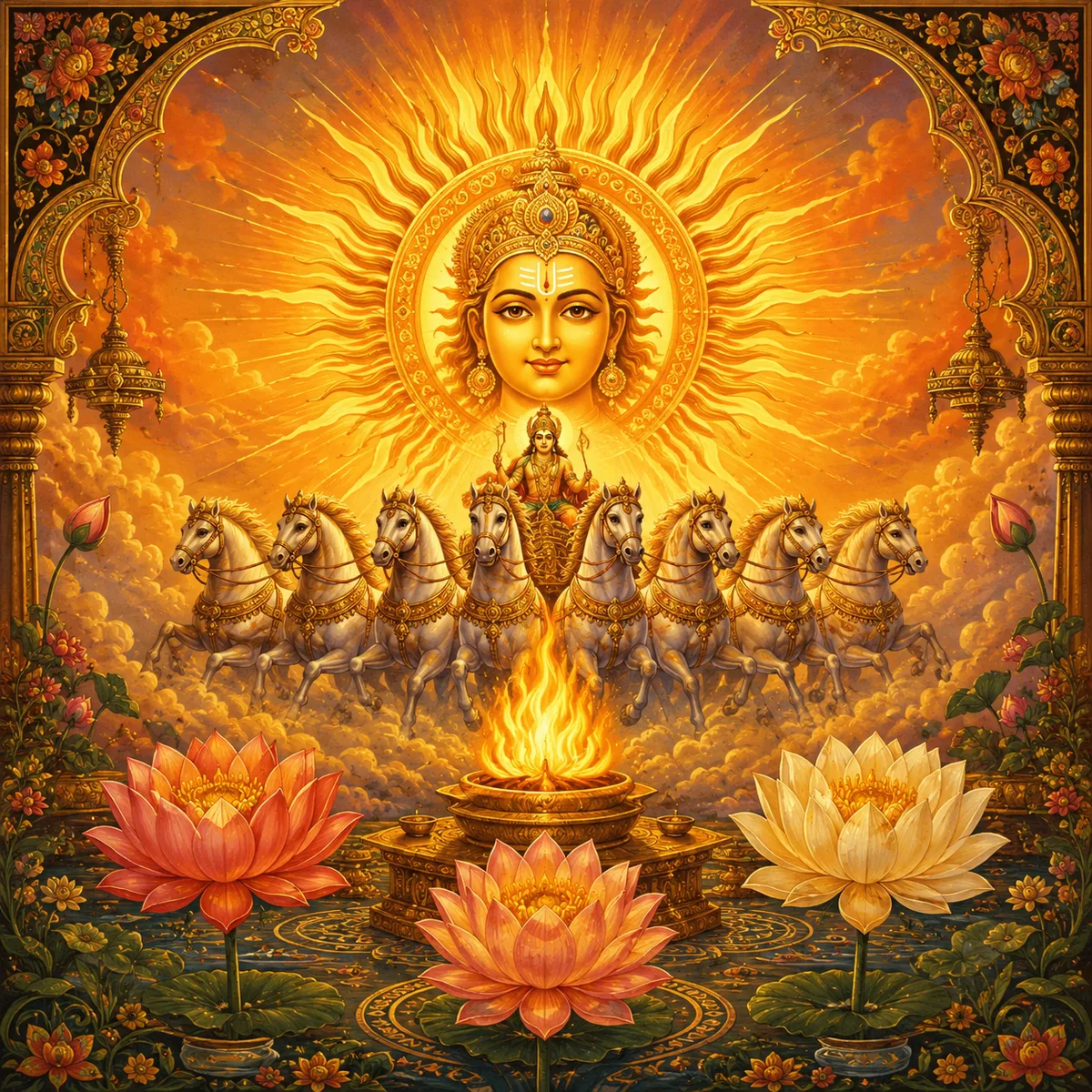
Gayatri Mantra
गायत्री मंत्र
ॐ भूर्भुवः स्वः । तत्सवितुर्वरेण्यं । भर्गो देवस्य धीमहि । धियो यो नः प्रचोदयात् ॥
Om. Across the earth, the atmosphere, and the heavens, we meditate upon that supremely adorable effulgence of the divine Savitr, may it illumine our minds and impel them to right understanding.
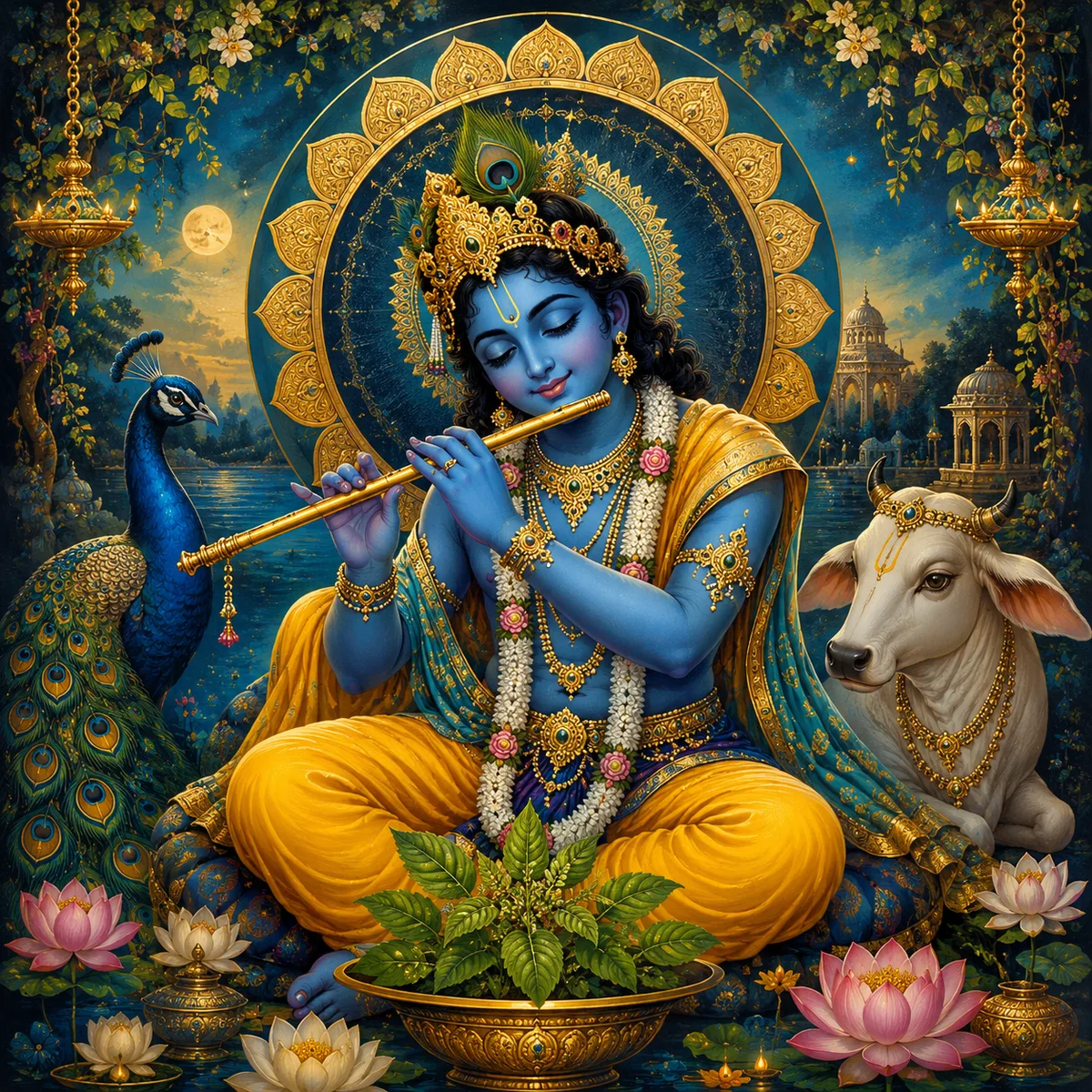
Hare Krishna Mahamantra
हरे कृष्ण महामंत्र
हरे कृष्ण हरे कृष्ण कृष्ण कृष्ण हरे हरे । हरे राम हरे राम राम राम हरे हरे ॥
O divine energy, O all-attractive Lord, O source of all joy, engage me in your service. The repetition of the names alone, the tradition teaches, is enough to cross the ocean of this age.

Maha Mrityunjaya Mantra
महामृत्युंजय मंत्र
ॐ त्र्यम्बकं यजामहे सुगन्धिं पुष्टिवर्धनम् । उर्वारुकमिव बन्धनान् मृत्योर्मुक्षीय मामृतात् ॥
Om. We worship the three-eyed one, the fragrant, the nourisher of all. As a ripe cucumber is released from its stem effortlessly when its time has come, may we be released from death and all that binds, but never released from the deathless within us.
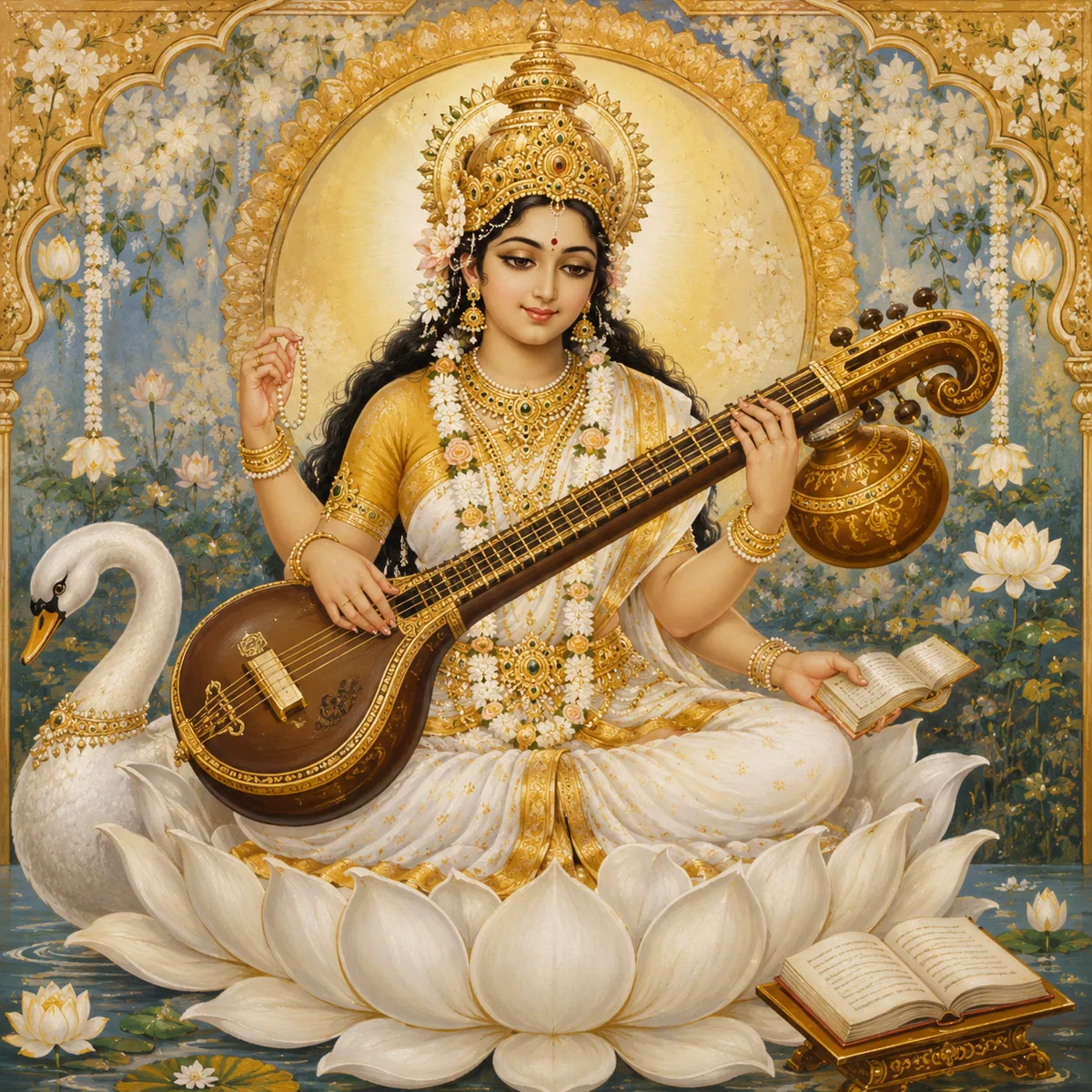
Om Aim Saraswatyai Namah
ॐ ऐं सरस्वत्यै नमः
ॐ ऐं सरस्वत्यै नमः
Om. With her seed syllable Aiṃ, I bow to Saraswati, the goddess of speech and learning, the flowing source of all knowledge, music, and the arts.

Om Durgayai Namah
ॐ दुर्गायै नमः
ॐ दुर्गायै नमः
Om. I bow to Durgā, the inaccessible, the unconquerable, the fortress in whom every being who turns to her finds shelter.
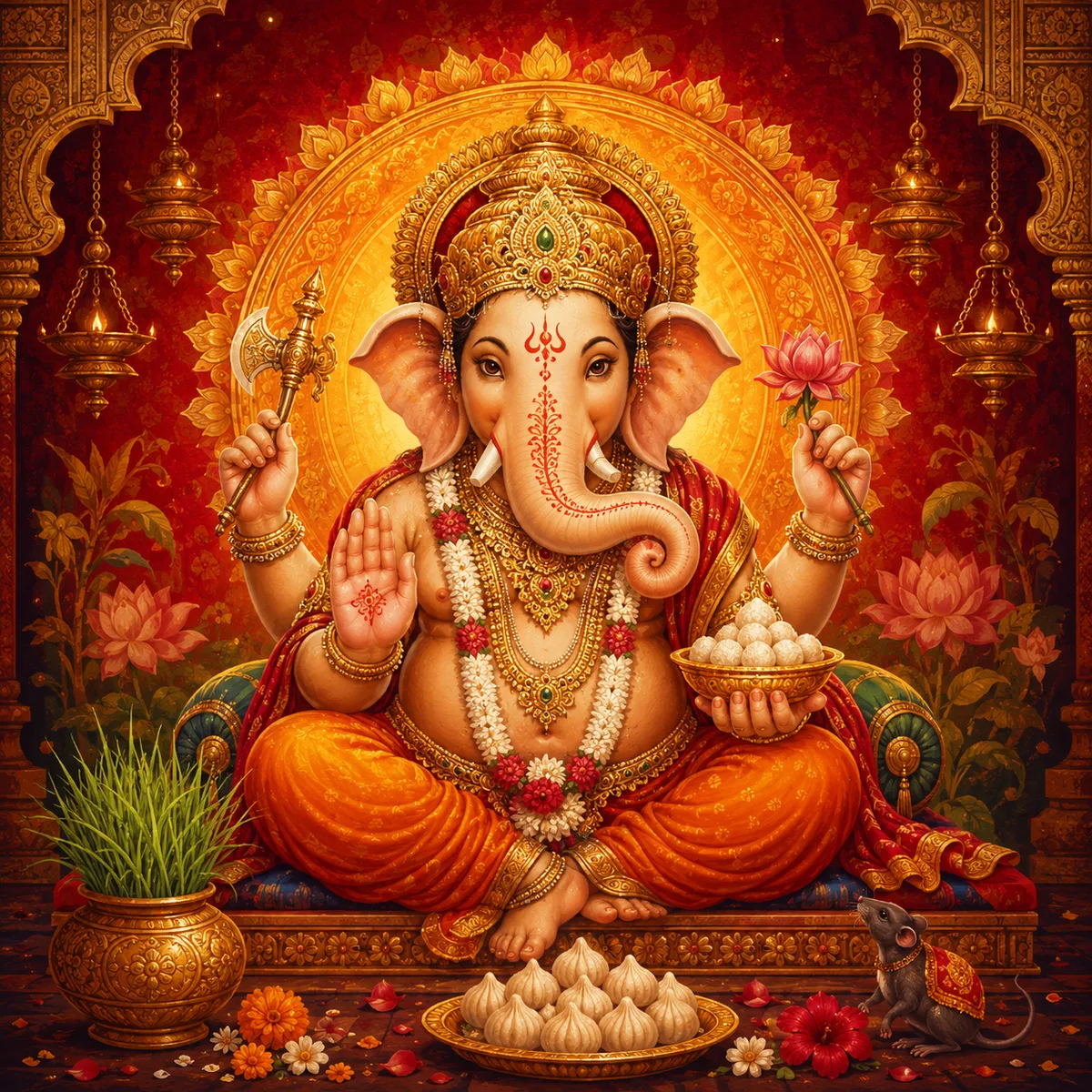
Om Gam Ganapataye Namah
ॐ गं गणपतये नमः
ॐ गं गणपतये नमः
Om. I bow to Ganapati, invoked through his seed-syllable Gaṃ, lord of the gaṇas, remover of obstacles, presider over every beginning.

Om Kali Ma
ॐ काली माँ
ॐ काली माँ
Om. Mother Kali, the dark Mother who consumes all that is impermanent and yet looks upon her child with infinite love.

Om Namah Shivaya
ॐ नमः शिवाय
ॐ नमः शिवाय
I bow to Shiva, the auspicious one within and beyond all things.

Om Namo Bhagavate Vasudevaya
ॐ नमो भगवते वासुदेवाय
ॐ नमो भगवते वासुदेवाय
Om. I bow to Bhagavān Vāsudeva, the supreme Lord endowed with all divine excellences, who dwells in every being as their innermost self.

Om Namo Narayanaya
ॐ नमो नारायणाय
ॐ नमो नारायणाय
Om. I bow to Narayana, the supreme Vishnu who rests upon the waters of dissolution and yet is the inner self of every being.

Om Shanti Shanti Shanti
ॐ शान्तिः शान्तिः शान्तिः
ॐ शान्तिः शान्तिः शान्तिः
Om. Peace, peace, peace. Spoken three times, for peace from the world, from the cosmos, and from within.
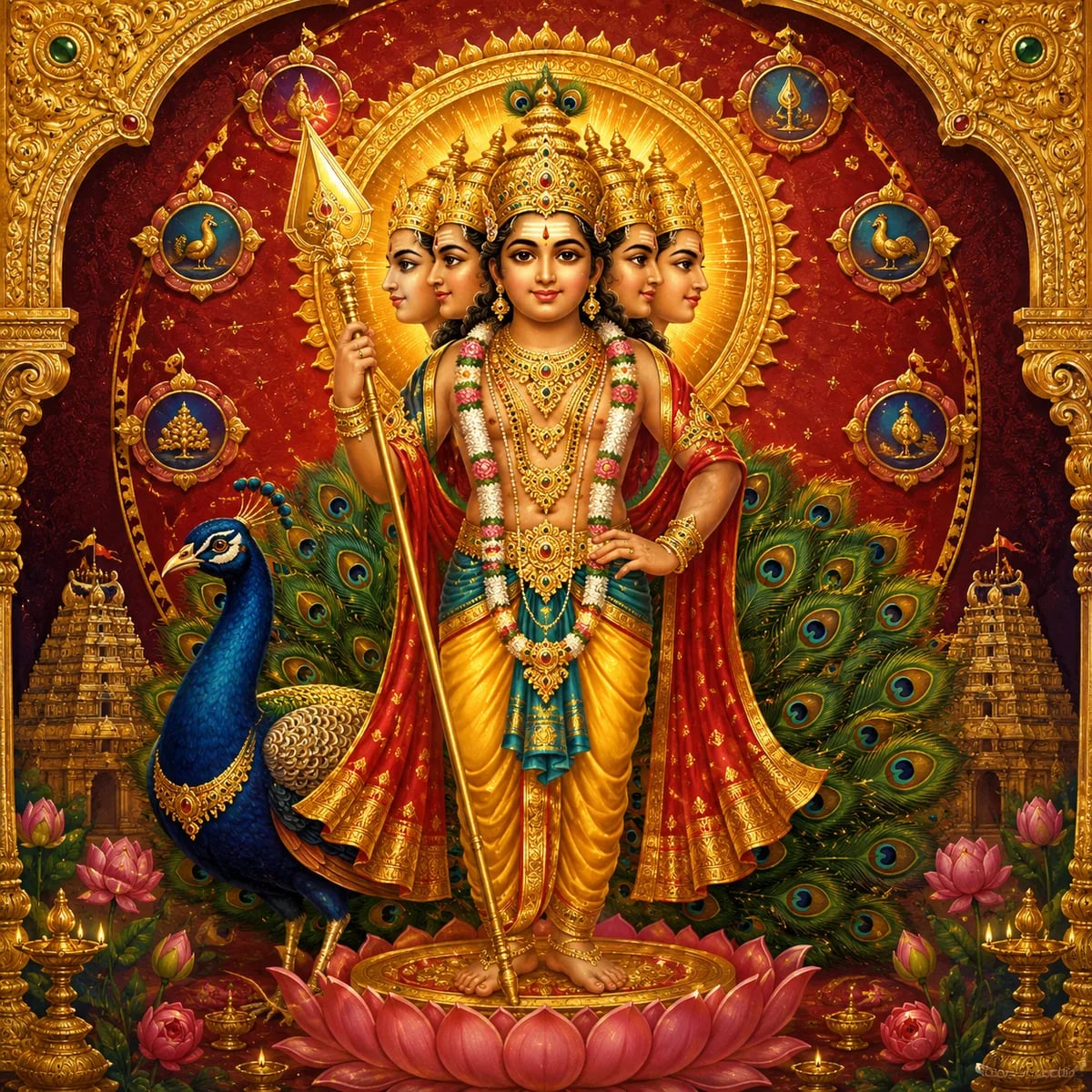
Om Sharavanabhavaya Namah
ॐ शरवणभवाय नमः
ॐ शरवणभवाय नमः
Om. I bow to Śaravaṇabhava, Kartikeya, the eternally youthful warrior-god born from Shiva's tejas in the reed forest of Saravana, slayer of darkness and commander of the divine armies.
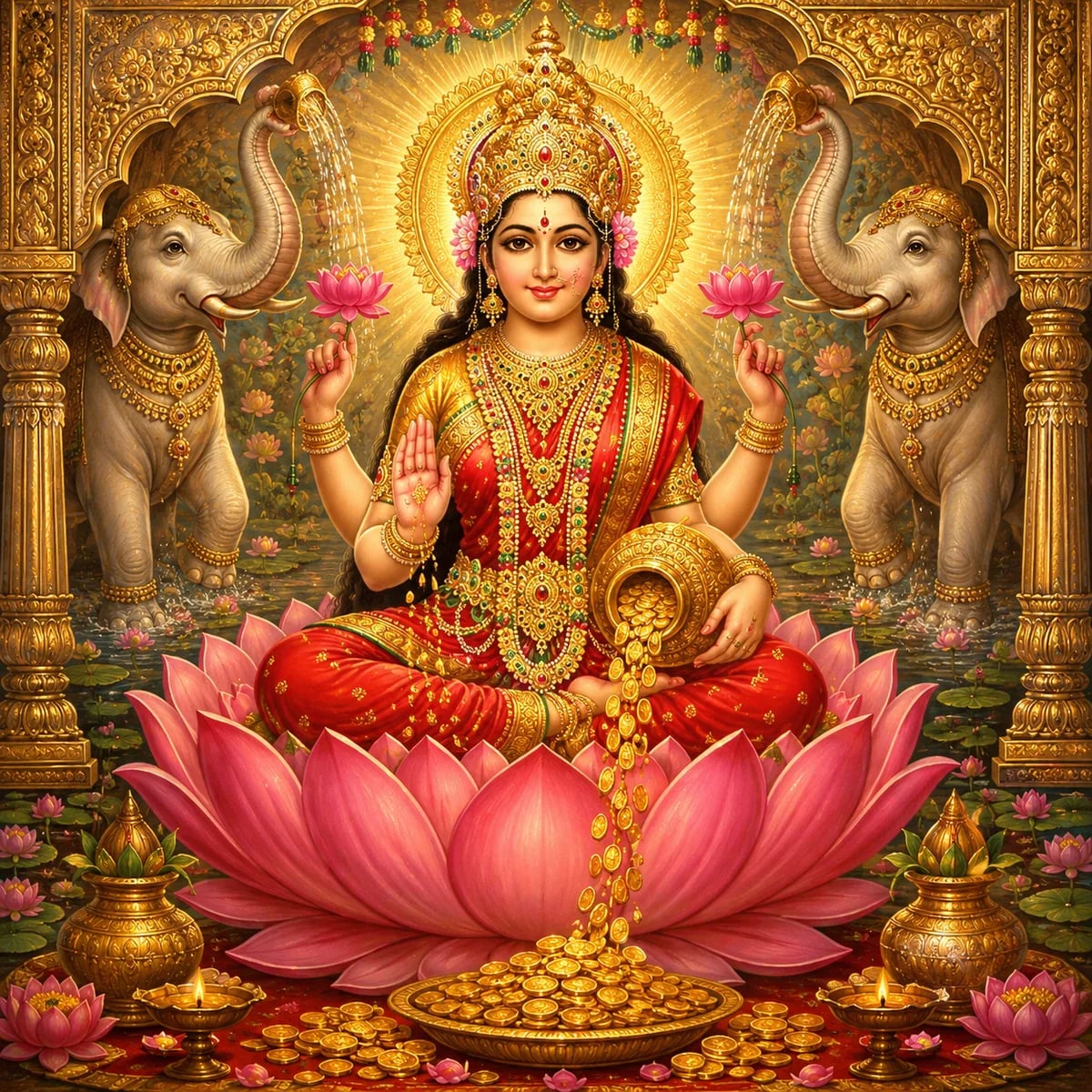
Om Shreem Mahalakshmyai Namah
ॐ श्रीं महालक्ष्म्यै नमः
ॐ श्रीं महालक्ष्म्यै नमः
Om. Through the seed syllable Śrīṃ, I bow to Mahalakshmi, the great goddess of prosperity, beauty, and the auspicious grace that nourishes all life.

Om Sri Hanumate Namah
ॐ श्री हनुमते नमः
ॐ श्री हनुमते नमः
Om. I bow to Śrī Hanuman, the eternal devotee of Rama, the strength of the surrendered, the one in whom Rama is always present.

Om Sri Ram Jaya Ram
ॐ श्री राम जय राम
ॐ श्री राम जय राम
Om. Hail Śrī Rama, hail Rama, victory to the one in whom the soul rests. The mantra is at once a praise, a surrender, and a remembering.
Beej Mantras बीज मंत्र
Single seed syllables — each one a complete deity compressed into sound. Used alone as meditation objects or woven into longer mantras as their activating core.
Literal meaning
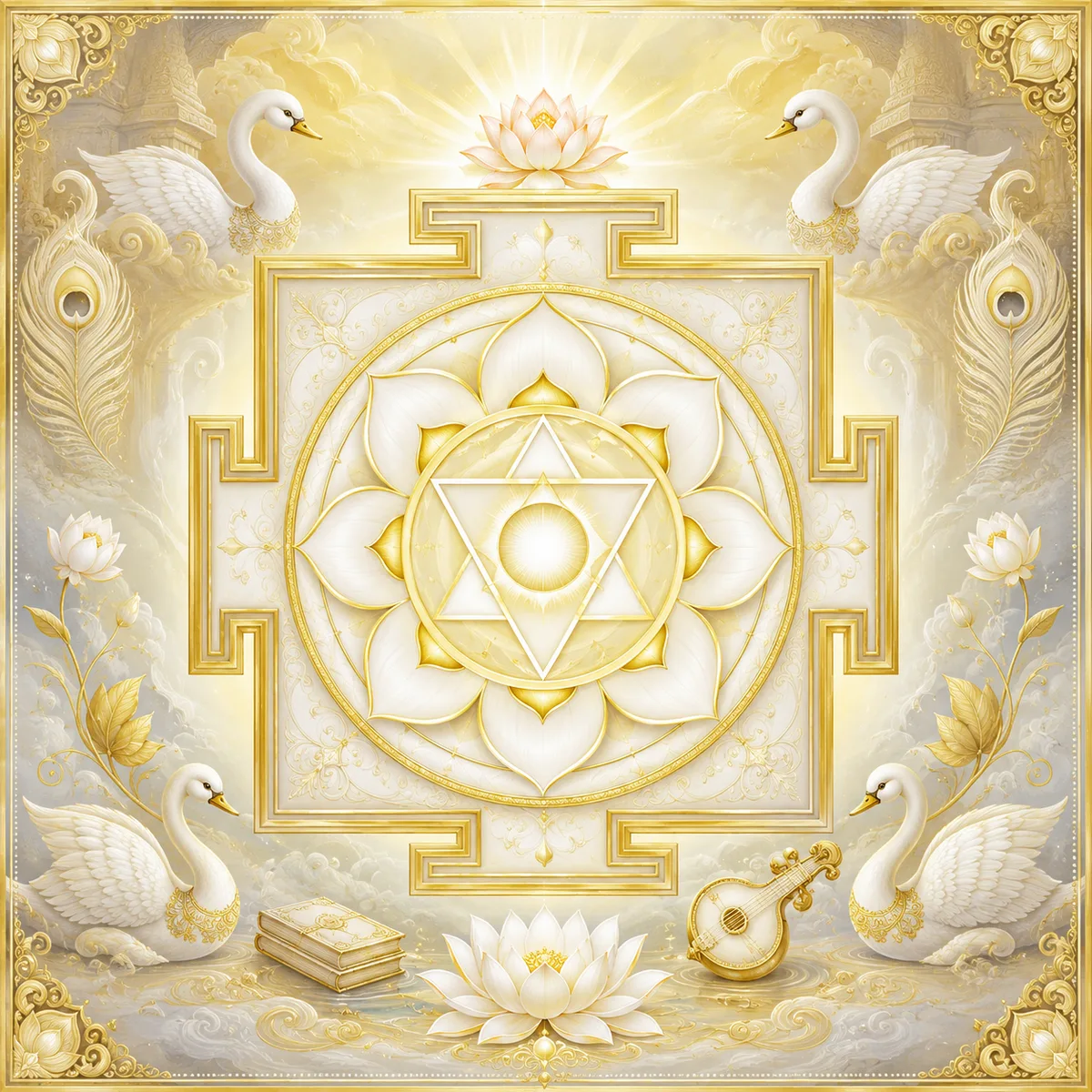
The seed of vāc, articulate speech, the seed-syllable of Saraswati, goddess of all learning and the arts
Aiṃ is the syllable from which articulate language is held to emerge. To plant this seed in the heart before study, before writing, before any act of speech that asks for the right words, is to invoke the flow of vāc, the flow that connects clear inner understanding to its outer expression.
Literal meaning
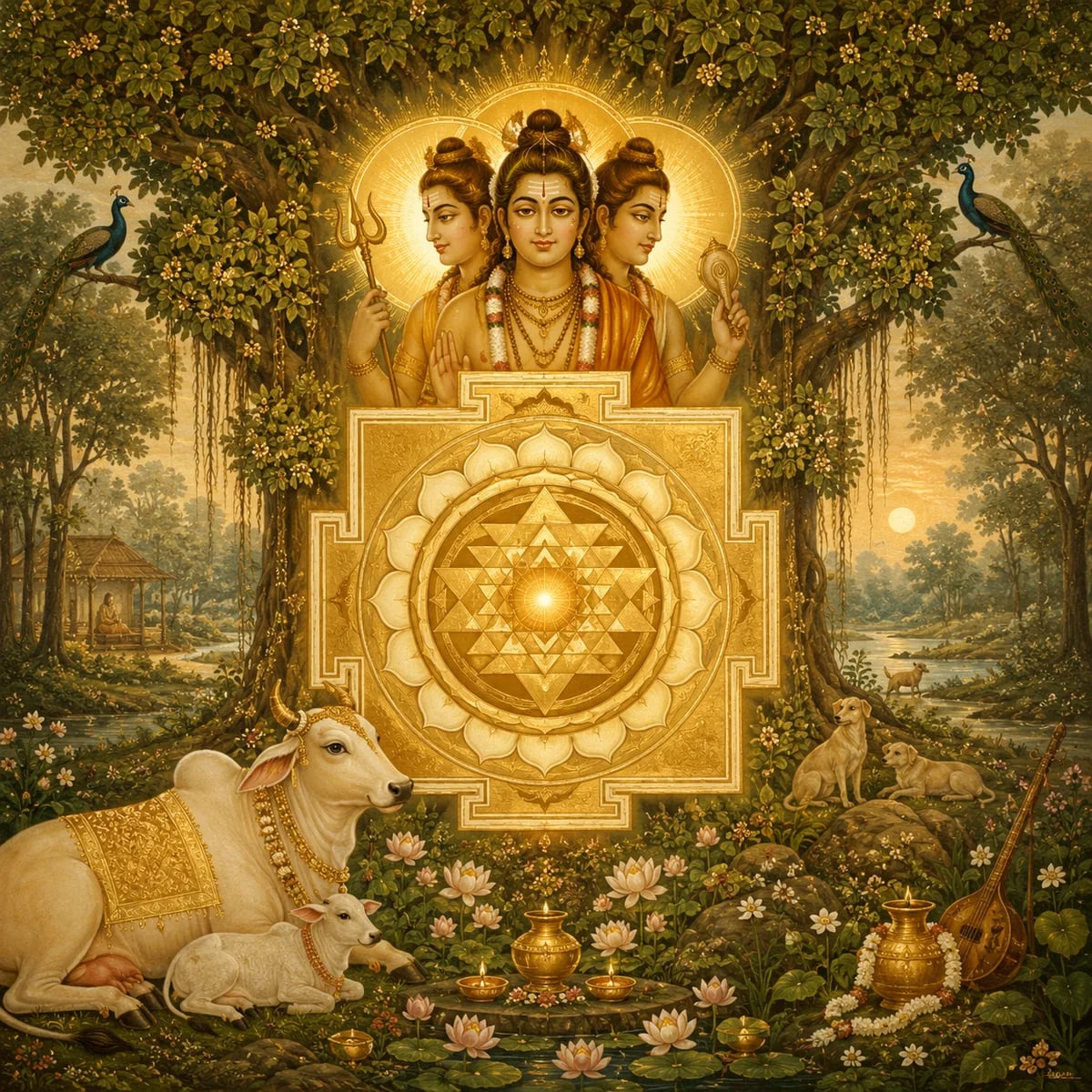
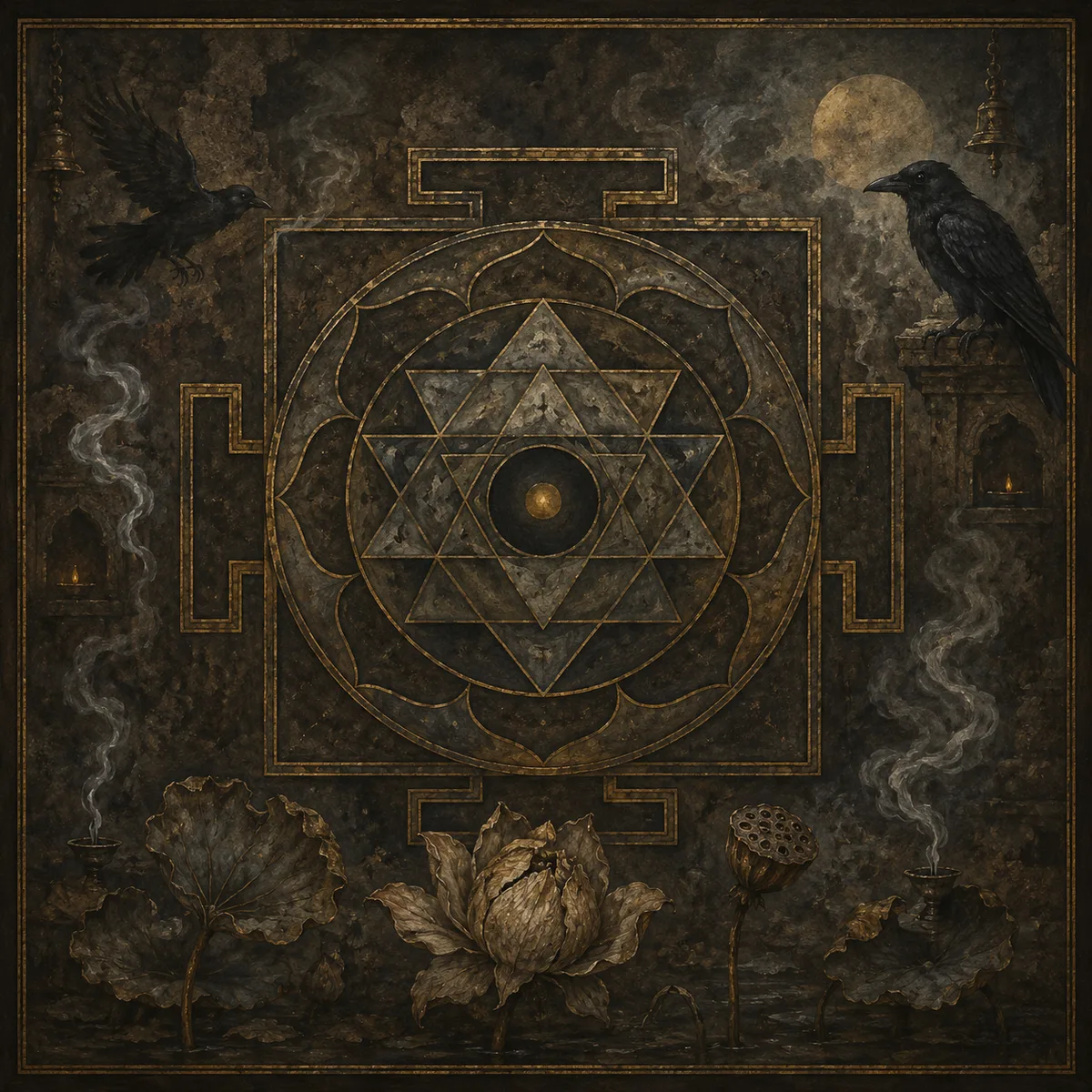
A Tantric seed-syllable associated with Vishnu in certain Pañcarātra lineages, carrying the principle of cosmic preservation and the principle of dāna (divine giving)
Daṃ in Tantric Vaishnava reading carries the principle of giving, Vishnu as the cosmic preserver is the deity who continuously gives existence to the manifest world, sustaining it moment by moment. The beej engages this preservation-energy.
Literal meaning
The seed of Dhumavati, the goddess of the void, of what remains when all conventional auspiciousness has been emptied out
Dhumavati's principle is the descent into the void that is the necessary preparation for the deepest spiritual realisation. The widow-iconography, the dishevelled appearance, the crowless chariot, all signify the radical emptying that some advanced practitioners undertake on the path to recognising the absolute. The beej carries this descent-energy in concentrated sound. Her path is the path of those who have understood that the deepest reality is beyond all attachment to auspiciousness, success, or even life itself in its conventional forms.

Literal meaning
The seed of Durgā, the inaccessible, the unconquerable; the warrior goddess in concentrated sound-form
Duṃ carries the warrior-energy that Durga embodies, not aggression, but the steady inner courage that meets adversity without being broken by it. The same energy by which Durga met Mahishasura, the energy by which any practitioner meets their own battle.

Literal meaning
The seed-syllable of Ganesha, carrying his complete energy as the lord of beginnings and remover of obstacles, in a single sound
Gaṃ holds Ganapati's role as the threshold deity. He is invoked before every other deity, before every new venture, before every threshold-crossing. The beej carries the principle of clearing, the inner space that opens when obstacles begin to dissolve, before the work itself begins.

Literal meaning
The seed of Sadashiva, pure consciousness; the advanced Shaiva beej used in formal Tantric Shiva sadhana
Hauṃ carries the principle of cit, pure undifferentiated consciousness, the same principle the Kashmir Shaiva texts identify as the supreme reality. Where Oṃ Namaḥ Śivāya invokes Shiva in his bhakti form approachable by anyone, Hauṃ invokes Shiva in his unmanifest pure-consciousness aspect that the advanced Tantric sadhana engages directly.

Literal meaning
The seed of Bagalamukhi, the principle of fierce stilling that brings destructive motion to a halt
Bagalamukhi's principle is stambhana, the stilling, the bringing-to-stillness. The classical theological reading is that her energy halts what is in harmful motion: not as aggression, but as the cosmic principle by which what should not continue is brought to a stop. The beej carries this stilling-energy in concentrated sound. In its devotional reading, the same principle is read inwardly, Bagalamukhi stills the practitioner's own inner motions of anxiety, scattered thought, and reactive speech, allowing the deeper awareness beneath to become visible.
Literal meaning
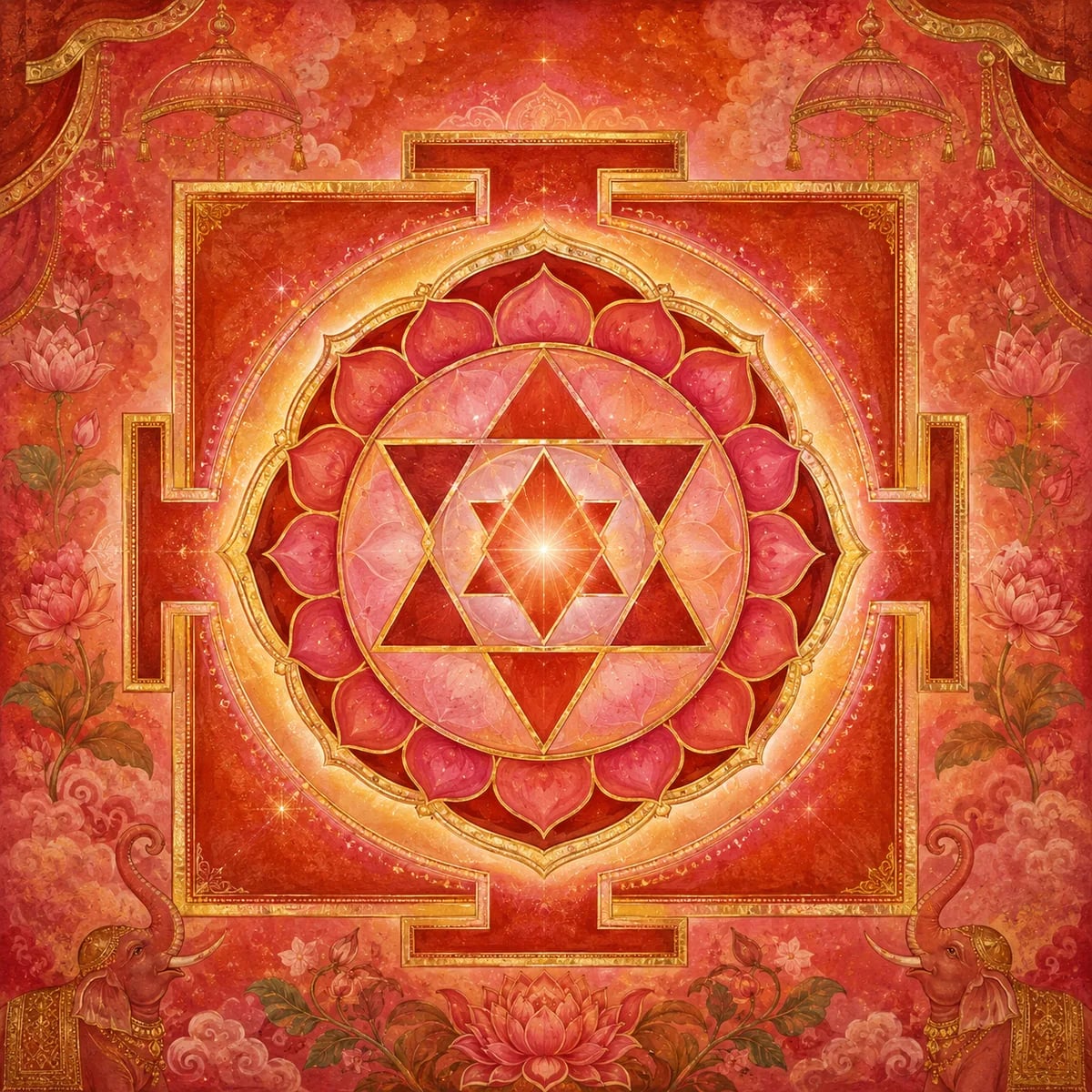
The seed of Maya, the cosmic illusion-power by which the formless Brahman appears as the manifest universe of forms
Hrīṃ does not mean illusion in the sense of falsehood; it means the creative principle that makes manifestation possible. To chant Hrīṃ is to acknowledge that the world of forms is a play of this cosmic intelligence, and to invoke the goddess in whom Maya and Brahman are recognised as one.

Literal meaning
The seed of kāma, divine attraction; the seed-syllable of Krishna, the all-attractive one
Kāma here is not lust in the lower sense but the cosmic principle of attraction itself, the gravity by which souls are drawn toward the divine, the same force that, in its lower forms, becomes the longing of one heart for another. The beej Klīṃ carries the entire range, from the highest devotional pull (Krishna drawing the gopis) to the simple human attraction by which love operates.

Literal meaning
The seed of Kali, the transformative power that consumes all that is impermanent
Krīṃ carries the principle of kāla, time, transformation, dissolution. Not destruction in a negative sense, but the cosmic force by which one form gives way to another, by which what has run its course is consumed so that what is eternal may be seen. The beej is the seed of radical inner transformation.

Literal meaning
The seed of Narasimha, the fierce man-lion avatar of Vishnu, the destroyer of fear and protector of devotees
Kṣrauṃ carries the principle of fierce protection, the energy that emerged from a pillar to defend Prahlada when no ordinary form of help was possible. It is the seed of the inner Narasimha who arises when a devotee's situation has become impossible by ordinary means.

Literal meaning
The primordial sound from which the universe emerged and to which it returns
The complete map of consciousness in a single sound, the three states (waking, dream, deep sleep) and the fourth (witness consciousness) all contained in A-U-M-silence

Literal meaning
The advanced Tantric seed of Hanuman, invoking him as a Tantric deity in his own right, beyond the simpler Vaishnava-bhakti form
Phrauṃ carries Hanuman's breath-power (he is son of Vāyu, the wind-god) compressed into a single syllable. The aspirated consonant 'Pha' echoes the breath itself; the diphthong 'au' binds that breath-energy into fierce concentration; the bindu returns it to source. The beej engages Hanuman not only as Rama's devotee but as the Tantric Mahavira, the great hero, in his fullness.
Literal meaning
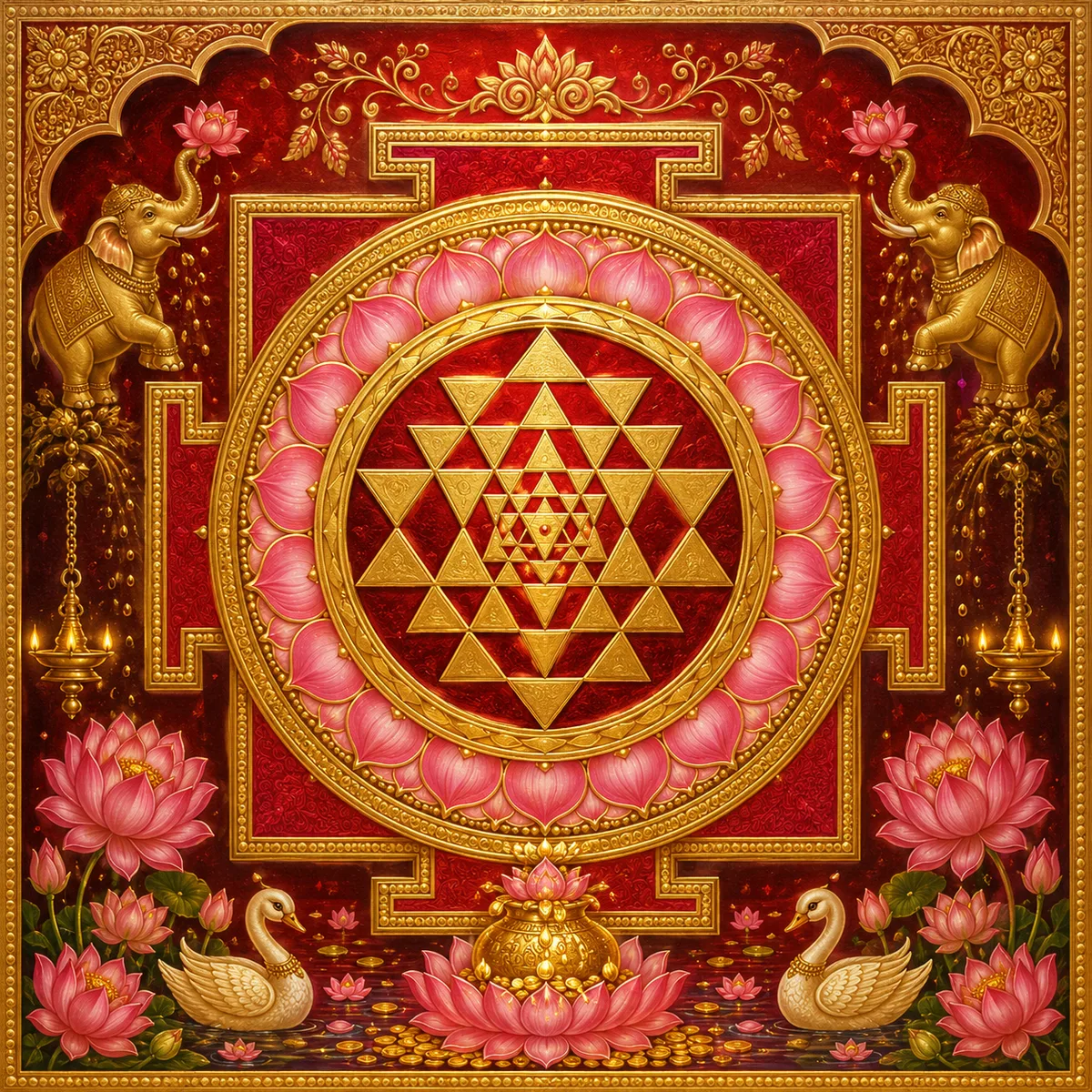
The seed syllable of Sri, the principle of all auspiciousness, abundance, beauty, dignity, and divine grace
Sri is not narrowly the goddess of money but the entire field of well-being. The beej Śrīṃ carries this comprehensive flourishing in a single sound, wealth, beauty, fertility, victory, knowledge, and the harvest of right effort, all addressed through one syllable.

Literal meaning
The seed of Tara, the goddess who carries across; the principle of compassionate crossing of the ocean of saṃsāra
The Sanskrit root tṛ means 'to cross over.' Tara is the goddess of tāraṇa, the carrying across, the rescue, the deliverance from what would otherwise drown the seeker. The beej carries this principle of fierce compassion that arrives at the moment of greatest need.