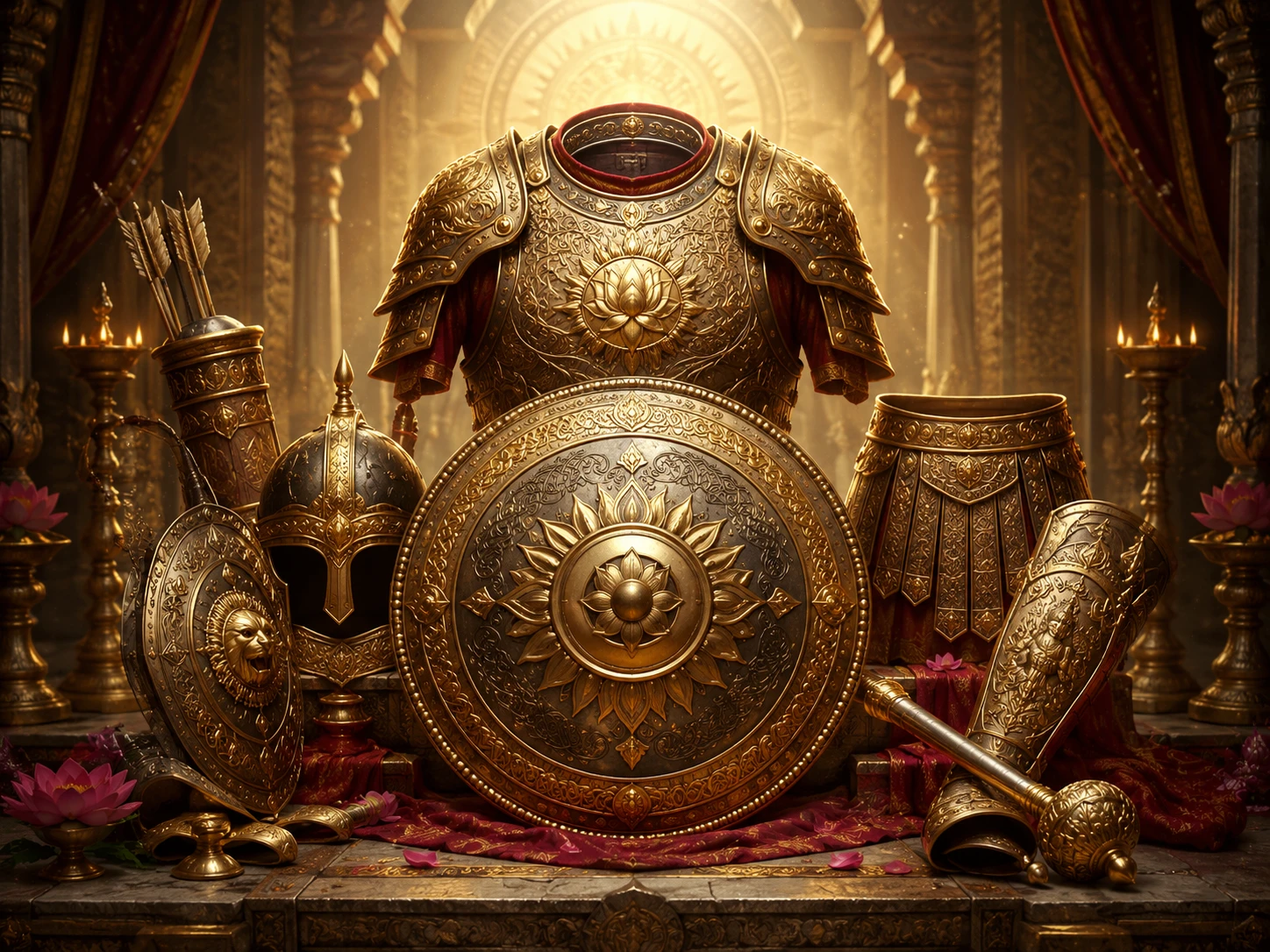
The Divine Shields and Armour -- Karna's Kavach-Kundal, Agastya's Gift, and the Spiritual Meaning of Protection
दिव्य कवच और ढाल -- कर्ण का कवच-कुण्डल, अगस्त्य का वरदान, और सुरक्षा का आध्यात्मिक अर्थ
महाभारत के तर्क में सबसे त्रासद शस्त्र वह नहीं जो मारता है बल्कि जो दान कर दिया जाता है।
कर्ण, अज्ञात ज्येष्ठ पाण्डव, कवच और कुण्डल शरीर से जुड़े हुए जन्मा -- पिता सूर्य का दिव्य वरदान। जब तक वे धारण थे, तीनों लोकों का कोई शस्त्र उसे भेद नहीं सकता था। कवच कोई पहनने की वस्तु नहीं थी; यह उसकी त्वचा का, उसकी पहचान का अंश था। हटाने का अर्थ था जीवित देह से नोचना।
फिर भी जब इन्द्र ब्राह्मण वेश में आकर कवच-कुण्डल दान माँगते हैं, कर्ण -- जो भली-भाँति जानता था कि इन्द्र कौन है, क्यों माँग रहा है, कि यह कृत्य आने वाले युद्ध में उसकी मृत्यु तय कर देगा -- मुस्कुराते हुए दे देता है। अपने शरीर से कवच काटकर।
यह एकल कृत्य कर्ण को महाभारत का सबसे जटिल चरित्र बनाता है। उसने सुभेद्यता चुनी। उसने जीवित रहने पर उदारता चुनी। उसने योद्धा की पहचान पर दानवीर की पहचान चुनी।
इस पौराणिक स्रोत से कवच की अवधारणा हिन्दू परम्परा में भौतिक सुरक्षा से कहीं अधिक गहन रूप में विस्तारित हुई -- और अन्ततः भक्ति साहित्य की एक सम्पूर्ण विधा बनी।
जानन्नपि महाबाहुः कुण्डलाभ्यां सहैव तत्। कवचं प्राददत् कर्णो हसन् वज्रिणमन्तिके॥
jaanann api mahaabaahuh kuNDalaabhyaam sahaiva tat kavacam praadadat karNo hasan vajriNam antike
(परिणाम) भली-भाँति जानते हुए भी, महाबाहु कर्ण ने मुस्कुराते हुए अपने कवच और कुण्डल सामने खड़े इन्द्र (वज्रधारी) को दान कर दिए।
— Mahabharata, Vana Parva 310.16
हिन्दू परम्परा में भौतिक और आध्यात्मिक कवच
| Armour / Protection | कवच / रक्षा | Type | Bearer / Context | Power & Significance |
|---|---|---|---|---|
| Karna's Kavach-Kundal | कर्ण का कवच-कुण्डल | Physical (birth-bound) | Karna, gifted by Surya at birth | Made Karna completely invincible. Fused to his body -- not worn but grown. Given away to Indra as daan. The sacrifice that defined Karna's character and sealed his mortality. |
| Rama's Armour from Agastya | राम का अगस्त्य-प्रदत्त कवच | Physical + Spiritual | Rama, gifted by Sage Agastya before the final battle with Ravana | Agastya gave Rama the Aditya Hridayam (hymn to the Sun) as a spiritual Kavach, plus divine armour and weapons. The hymn was the true armour -- it invoked Surya's energy into Rama's being. |
| Devi Kavacham | देवी कवचम् | Spiritual (stotram) | Chanted by devotees for protection | A 36-verse hymn from the Chandi Path that invokes Devi's protection on every part of the body -- head, eyes, ears, throat, chest, navel, limbs. Each body part is assigned a specific form of the Goddess as guardian. |
| Narayana Kavacham | नारायण कवचम् | Spiritual (stotram) | From Srimad Bhagavatam, Canto 6 | Invokes Vishnu's protection limb by limb. Vishwamitra prescribed it as the ultimate shield. Considered one of the most powerful protective prayers in Vaishnavism. |
| Hanuman's Invulnerability | हनुमान की अभेद्यता | Physical (divine boon) | Hanuman, blessed by multiple gods | As a child, Hanuman was struck by Indra's Vajra and survived. Brahma granted him immunity from the Brahmastra. His body itself is a living Kavach -- hardened by devotion. |
| Arjuna's Chariot Shield | अर्जुन के रथ का कवच | Physical (divine protection) | Krishna's will protecting Arjuna's chariot | Not conventional armour but Krishna's divine will acting as a force field. The chariot absorbed 18 days of celestial weapon impacts and only disintegrated when Krishna withdrew his protection. |
| Rudraksha Kavach | रुद्राक्ष कवच | Physical + Spiritual | Worn by Shiva devotees | A chest piece woven from Rudraksha beads of various mukhis. Believed to create an electromagnetic shield around the wearer. Used by sadhus and warriors alike. |
भौतिक कवच (कर्ण की त्वचा-कवच) से आध्यात्मिक कवच (देवी कवचम् स्तोत्र) तक का विकास व्यापक हिन्दू अन्तर्दृष्टि को प्रतिबिम्बित करता है: सच्ची रक्षा धर्म से तादात्म्य से आती है, किसी भौतिक ढाल से नहीं।
कवच स्तोत्र -- वह कवच जो जपा जाता है
हिन्दू भक्ति साहित्य की सबसे सुन्दर नवाचारों में से एक कवच विधा है -- ऐसे स्तोत्र जो आध्यात्मिक कवच के रूप में संरचित हैं, अंग-अंग, अवयव-अवयव, दिशा-दिशा जपने वाले की रक्षा करते हैं।
चण्डी पाठ का देवी कवचम् सबसे व्यापक रूप से ज्ञात है। इसमें भक्त प्रत्येक शरीर अंग की रक्षा के लिए देवी के विशिष्ट रूपों का आवाहन करता है। यह दिव्य का मानव शरीर पर सम्पूर्ण मानचित्रण है -- ध्वनि से जपा जाने वाला धारणीय मण्डल।
इस परम्परा की असाधारण बात यह है कि यह कवच की अवधारणा को बाहरी और भौतिक से आन्तरिक और कम्पनात्मक में रूपान्तरित करती है। आप इस कवच को पहनते नहीं -- आप यह बन जाते हैं।
हैदराबाद में NEET परीक्षा देने जाते किसी विद्यार्थी के लिए, या बेंगलुरु में निर्णायक निवेशक बैठक में जाते स्टार्टअप संस्थापक के लिए, या कोलकाता में पोते की सुरक्षित उड़ान के लिए प्रार्थना करती दादी के लिए -- कवच स्तोत्र वही देता है जो कभी कर्ण का दिव्य कवच देता था: सुरक्षित, संरक्षित, और अकेले नहीं होने की अनुभूति।
जब कर्ण ने अपने शरीर से कवच-कुण्डल काटा, इन्द्र ने -- उसके बलिदान से प्रभावित होकर -- बदले में शक्ति अस्त्र दिया। यह 'स्थायी अजेयता के बदले एकल-प्रयोग शस्त्र' पौराणिक कथाओं के सबसे असंगत सौदों में से एक है: कर्ण ने चिरस्थायी अभेद्यता एक ऐसे शस्त्र के बदले दे दी जो बाद में अर्जुन के बजाय घटोत्कच पर प्रयोग हुआ। उसकी उदारता ने उसकी रणनीति पराजित की।
आध्यात्मिक कवच धारण करें -- देवी कवचम्
देवी कवचम् का पाठ करो, जो दुर्गा सप्तशती से पहले पढ़ा जाता है और हिन्दू परम्परा के सबसे व्यापक रक्षा-स्तोत्रों में है। यह अर्थ सहित एटर्नल राग पर है।
Eternal Raga · शाश्वत राग
Institutional voice — scholarly articles on Sanatan Dharma
अपनी समझ गहरी करें
अपनी समझ और गहरी करें
divine arsenal
Astra vs Shastra -- The Two Classes of Weapons in Hindu Warfare
One is hurled with mantras and divine invocation. The other is wielded by hand and muscle. Understanding the fundamental difference between Astra and Shastra unlocks the entire weapons philosophy of ancient India.
divine arsenal
The Thundering Mace -- Kaumodaki, Bhima's Gada, and the Art of Gada-Yuddha
The mace is the weapon of raw, unapologetic power. Vishnu carries one, Hanuman wields one, Bhima ended the war with one, and Duryodhana -- the finest mace-fighter alive -- died by one. This is the story of the weapon that decided the Mahabharata's final duel.
divine arsenal
The Sacred Swords -- Chandrahasa, Nandaka, Asi, and the Wootz Steel Legacy
Ravana's Chandrahasa laughed like the crescent moon as it cut. Vishnu's Nandaka separated truth from illusion with a single stroke. And the first sword ever created -- Asi -- was forged by Brahma himself as a living being of fire. These blades shaped mythology, and the steel that made them shaped world history.
sacred symbols
Rudraksha -- Shiva's Tears and the Science Inside the Bead
Rudra's tears (Rudra + Aksha) fell to earth and became seeds. That is the mythology. The science: Rudraksha is the dried seed of Elaeocarpus ganitrus, a tree native to the Himalayan foothills, Nepal, and Indonesia. Impedance spectroscopy at IIT Banaras confirmed that the beads possess measurable electromagnetic, capacitive, and paramagnetic properties -- properties that vary by the number of Mukhis (natural grooves on the surface). A 3,000-year-old prayer bead turns out to be a natural biomaterial with dielectric characteristics. Tradition and physics, sitting in the same seed.
deities avatars
Devi Swaroopa -- Forms of the Goddess
She is Durga on the battlefield and Annapurna in the kitchen. She is Kali at the cremation ground and Lakshmi in the boardroom. She is Saraswati at the university and Parvati in the family. The Hindu Goddess is not one deity with accessories -- she is the entire spectrum of feminine power, from terrifying to tender, from cosmic to domestic. Understanding her forms is understanding the universe itself.
tantra mantra yantra
Tantra, Mantra and Yantra -- The Three Pillars of Spiritual Practice
Tantra is the loom, Mantra is the thread, Yantra is the pattern. Together they form the complete technology of spiritual transformation that India gifted to the world -- and they are far more profound than popular culture imagines.
जब कर्ण ने अपने शरीर से कवच-कुण्डल काटा, इन्द्र ने -- उसके बलिदान से प्रभावित होकर -- बदले में शक्ति अस्त्र दिया। यह 'स्थायी अजेयता के बदले एकल-प्रयोग शस्त्र' पौराणिक कथाओं के सबसे असंगत सौदों में से एक है: कर्ण ने चिरस्…
More in Divine Arsenal
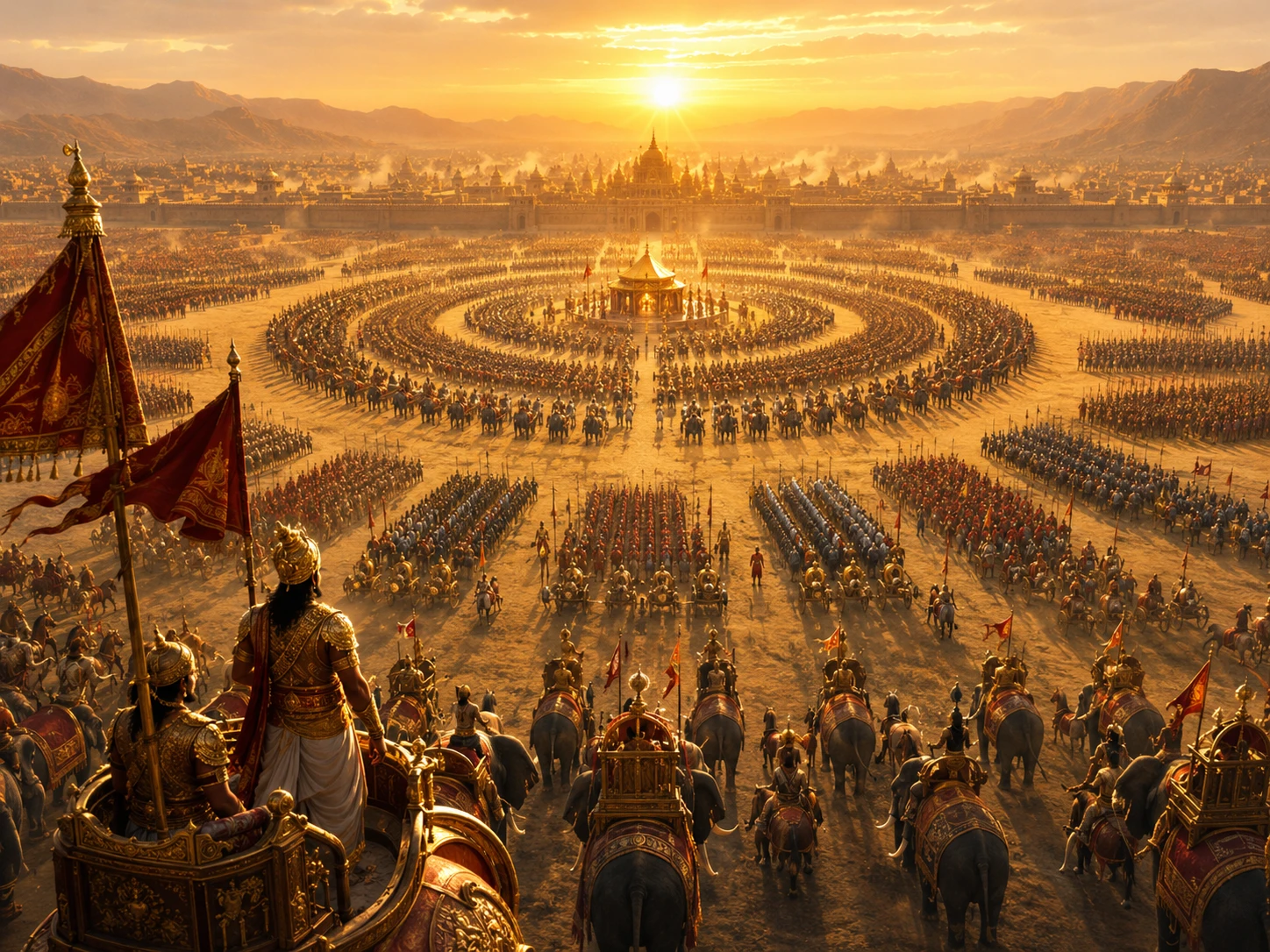
Akshauhini -- The Epic Army Structure Where Every Digit Sums to 18
14 मिनट पढ़ें
Ancient Indian Martial Arts -- Kalaripayattu to Malla-Yuddha
14 मिनट पढ़ें
Astra Invocation and Withdrawal -- The Ritual of Weapons
16 मिनट पढ़ेंवही अनुवाद त्रुटि जिसने हिन्दू धर्म में '33 कोटि' को '33 करोड़' बनाया, बौद्ध धर्म में भी हुई। बौद्ध ग्रन्थों के चीनी अनुवाद ने 'सप्त कोटि बुद्ध' (7 श्रेष्ठ बुद्ध) का अनुवाद '7 करोड़ बुद्ध' कर दिया। तिब्बती अनुवाद ने सही …
Deities AvatarsCommunity Reflections
🕉️
Be the first to share your reflection.