Parikshit to Janamejaya -- The Pandava Dynasty After the War and Why the Mahabharata Was Told
परीक्षित से जनमेजय -- युद्धोत्तर पाण्डव वंश और महाभारत क्यों सुनाई गई
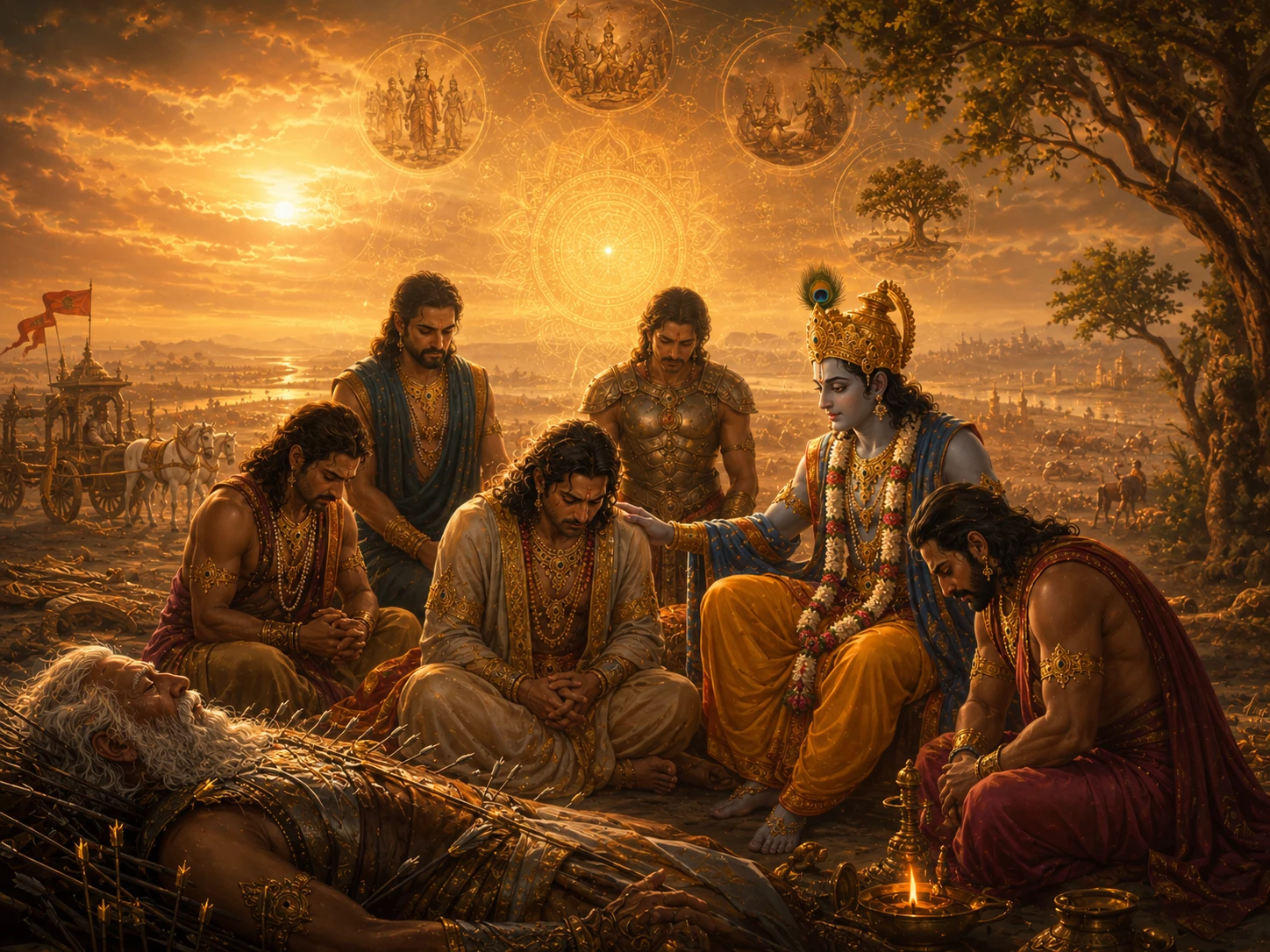
महाभारत कुरुक्षेत्र पर समाप्त नहीं होता। युद्ध चरमोत्कर्ष है, निष्कर्ष नहीं। जो बाद में आता है -- युद्धोत्तर पुनर्निर्माण, पाण्डवों का शोकग्रस्त शासन, अन्ततः उनका प्रस्थान, और एकमात्र जीवित उत्तराधिकारी का भाग्य -- वह उपसंहार है जो सम्पूर्ण महाकाव्य को उसका कथात्मक ढाँचा देता है। परीक्षित और जनमेजय के बिना महाभारत युद्ध-कथा होता। उनके साथ यह सभ्यतागत दस्तावेज़ बनता है -- क्योंकि जनमेजय के सर्प-यज्ञ में ही वैशम्पायन, स्वयं व्यास के शिष्य, ने पहली बार सम्पूर्ण महाभारत सुनाई। आज हम जो कथा पढ़ते हैं वह इसलिए अस्तित्व में है क्योंकि एक पौत्र अपने पितामह की दुनिया समझना चाहता था।
परीक्षित अभिमन्यु और उत्तरा का पुत्र है, अर्जुन और सुभद्रा का पौत्र। महाकाव्य की सबसे असाधारण परिस्थितियों में जन्मा। युद्ध के अन्त में रात्रि नरसंहार के बाद अश्वत्थामा -- ब्रह्मशिर्ष अस्त्र वापस लेने में असमर्थ -- इसे उत्तरा के गर्भ में पुनर्निर्देशित करता है, अन्तिम पाण्डव उत्तराधिकारी को निशाना बनाते हुए। शिशु गर्भ में मारा गया। कृष्ण ने अपनी दिव्य शक्ति से मृत शिशु को पुनर्जीवित किया और भविष्यवाणी की कि वह 60 वर्ष राज्य करेगा। शिशु का नाम परीक्षित रखा -- 'जिसकी परीक्षा हुई' -- क्योंकि जन्म से पहले ही मृत्यु ने उसकी परीक्षा (परीक्षा) ली और वह बच गया।
यह मूल-कथा प्रासंगिक नहीं है। यह परीक्षित को ऐसे राजा के रूप में स्थापित करती है जिसका अस्तित्व ही चमत्कार है -- महाभारत ब्रह्माण्ड के सबसे घातक युद्ध के मलबे से बचाया गया जीवन। वह कुरु, पांचाल, मत्स्य, और यादव वंशों की संयुक्त विरासत धारण करता है। वह राजवंश की अन्तिम आशा है -- राख से जन्मा, ईश्वर-रक्षित, और एक सम्पूर्ण पीढ़ी से खाली राज्य का उत्तराधिकारी।
परीक्षित का 60 वर्षीय शासन समृद्ध और धर्मपरक बताया गया -- विनाश के बाद पुनर्निर्माण का काल। स्वयं पाण्डव युद्ध के बाद अधिक समय शासन नहीं करते। मौसल पर्व (पुस्तक 16) प्रभास में यादव कुल के आत्म-विनाश का दर्ज करता है, इसके बाद कृष्ण का मर्त्यलोक से प्रस्थान। महाप्रस्थानिक पर्व (पुस्तक 17) पाण्डवों की अन्तिम यात्रा बताता है -- वे राज्य त्यागते हैं, परीक्षित को सौंपते हैं, और हिमालय की ओर चलते हैं, चढ़ाई पर एक-एक करके गिरते हुए जब तक केवल युधिष्ठिर जीवित (एक कुत्ते सहित) स्वर्ग पहुँचता है। परीक्षित इस प्रकार केवल राज्य नहीं बल्कि एक सम्पूर्ण युग का नैतिक भार उत्तराधिकार में पाता है।
पर उसकी मृत्यु ही वह घटना शुरू करती है जो महाभारत को ग्रन्थ बनाती है। वन में शिकार करते हुए परीक्षित ध्यानस्थ ऋषि शमीक से मिलता है। प्यासा और थका, पानी माँगता है। ऋषि, गहन ध्यान में, उत्तर नहीं देता। कुपित होकर परीक्षित एक मरे साँप को धनुष से उठाकर ऋषि के गले में डाल देता है -- तुच्छ अपमान। ऋषि का पुत्र शृंगी अनादर जानकर परीक्षित को शाप देता है: सात दिनों में सर्पराज तक्षक के दंश से मरोगे।
परीक्षित, शाप सुनकर, न भागता है न लड़ता। तैयारी करता है। भागवत पुराण के वृत्तान्त में वह शुकदेव (व्यास-पुत्र) को खोजता है और अपने अन्तिम सात दिन सम्पूर्ण भागवत पुराण -- श्रीमद्भागवतम् -- सुनने में बिताता है। सातवें दिन तक्षक आता है, फल के भीतर कीड़े का रूप धारण किए, परीक्षित को दंश करता है, और राजा मरता है। यह मृत्यु -- ब्राह्मण के शाप की पूर्ति में सर्पदंश -- अगली पीढ़ी के निर्णायक कृत्य का इंजन बनती है।
जनमेजय, परीक्षित का पुत्र, तक्षक के विरुद्ध क्रोध से भरा सिंहासन पर बैठता है। वह सर्प सत्र आयोजित करता है -- सर्प यज्ञ -- एक विशाल यज्ञ जो संसार के हर सर्प को यज्ञाग्नि में खींचकर नष्ट करने के लिए रचा गया। यह रूपक कर्मकाण्ड नहीं। महाभारत वास्तविक सर्पों को मन्त्र-शक्ति से वायु में खिंचकर अग्नि में आते और भस्म होते वर्णित करता है।
इसी सर्प यज्ञ में वैशम्पायन -- व्यास के प्रमुख शिष्य -- राजा जनमेजय को सम्पूर्ण महाभारत सुनाता है। यही महाकाव्य का कथात्मक ढाँचा है। महाभारत का हर शब्द जो हम आज पढ़ते हैं, कथा के भीतर, एक अग्नि-यज्ञ में ऋषि द्वारा उस राजा को सुनाई कहानी है जो अपने पूर्वजों के बारे में जानना चाहता था। आदि पर्व (पुस्तक 1) इसी ढाँचे से शुरू होता है: 'जनमेजय ने कहा: हे ब्राह्मण, मैं भारत वंश का इतिहास सुनना चाहता हूँ।' और वैशम्पायन सुनाता है -- 18 पर्वों, एक लाख श्लोकों में, सम्पूर्ण युद्ध, दर्शन, वंशावलियाँ, दिव्य हस्तक्षेप -- सब कुछ।
सर्प यज्ञ अन्ततः आस्तीक द्वारा रोका जाता है, एक युवा ब्राह्मण जिसकी माता नाग राजकुमारी है। आस्तीक तर्क करता है कि सब सर्पों का विनाश ब्रह्माण्डीय सन्तुलन बिगाड़ देगा और प्रतिशोध से कुछ हल नहीं होता। जनमेजय, आस्तीक की बुद्धि से प्रभावित, यज्ञ रोक देता है। यह समापन महाभारत का अपने ही पाठक को अन्तिम पाठ पढ़ाना है: प्रतिशोध का चक्र -- अश्वत्थामा का पाण्डव-पुत्रों को मारना, पाण्डवों का अश्वत्थामा को शापना, तक्षक का परीक्षित को मारना, जनमेजय का सब सर्पों को भस्म करने का प्रयास -- कहीं रुकना होगा। किसी को कहना होगा: बस।
परीक्षित और जनमेजय -- दो पीढ़ियाँ, दो विरासतें
| Aspect | Parikshit | Janamejaya |
|---|---|---|
| Birth | Stillborn, killed by Ashwatthama's Brahmashirsha; revived by Krishna | Born to Parikshit; inherits a stable, rebuilt kingdom |
| Core Event | 60-year dharmic reign; death by Takshaka's snakebite after cursed by Shringi | Sarpa Satra -- the Snake Sacrifice to destroy all serpents in vengeance |
| Legacy Text | Srimad Bhagavatam narrated to him in his final 7 days by Shukadeva | Mahabharata narrated to him during the Sarpa Satra by Vaishampayana |
| What He Represents | The survivor -- a kingdom rebuilt from the ashes of war | The seeker -- a king who demanded his ancestors' full story |
| How Cycle Ends | Accepts death with equanimity; uses final week for spiritual education | Stops the sacrifice at Astika's counsel; chooses mercy over vengeance |
| Modern Parallel | Post-war reconstruction leader -- India after 1947, rebuilding from Partition | The historian who asks: what really happened and why? |
| Spiritual Significance | His 7-day listening to Bhagavatam establishes the tradition of Bhagavata Saptaha | His demand for the full Mahabharata ensures the epic's transmission to all future generations |
परीक्षित के बिना पाण्डव वंश समाप्त। जनमेजय के बिना महाभारत ग्रन्थ रूप में कभी सुनाया नहीं जाता। ये दो पीढ़ियाँ पादटिप्पणी नहीं -- ये वह कारण हैं कि कहानी बची।
जनमेजय उवाच। भारतानां महद्वृत्तं श्रोतुमिच्छाम्यहं प्रभो॥
janamejaya uvāca | bhāratānāṁ mahad vṛttaṁ śrotum icchāmy ahaṁ prabho ||
जनमेजय ने कहा: हे प्रभो, मैं भारत वंश का महान इतिहास सुनना चाहता हूँ।
— Mahabharata, Adi Parva (Opening frame narrative)
भागवत सप्ताह परम्परा -- सम्पूर्ण श्रीमद्भागवतम् सात दिनों में सुनाना -- सीधे परीक्षित के अन्तिम सात दिनों पर आधारित है, जब शुकदेव ने मरते राजा को ग्रन्थ सुनाया। यह परम्परा सम्पूर्ण भारत में वार्षिक रूप से पालन की जाती है, विशेषकर गुजरात, महाराष्ट्र, और वृन्दावन में। जनमेजय का सर्प सत्र भारतीय साहित्य में बड़े पैमाने के सार्वजनिक यज्ञ के सबसे प्रारम्भिक सन्दर्भों में से एक है -- विद्वानों ने इसके वर्णन की वैदिक ग्रन्थों में दर्ज अश्वमेध यज्ञों से तुलना की है। हस्तिनापुर का पुरातात्त्विक स्थल (आधुनिक मेरठ जिला, UP) B.B. लाल और ASI द्वारा उत्खनन किया गया, जहाँ Painted Grey Ware मृद्भाण्ड मिले जो परीक्षित के शासनकाल से परम्परागत रूप से जुड़े काल (लगभग 1100-900 ईसापूर्व) से सुसंगत हैं। तक्षक, जो परीक्षित को मारता है, अपना नाम तक्षशिला (Taxila) -- आधुनिक पाकिस्तान में प्राचीन विश्वविद्यालय नगर -- को देता है, जो कथित रूप से भरत वंश से परीक्षित के वंशजों द्वारा स्थापित किया गया।
महाभारत की ढाँचा-कथा खोजो
महाभारत जनमेजय से आरम्भ और समाप्त होता है: महाकाव्य उनके सर्प-सत्र में सुनाया जाता है, वह सर्प-यज्ञ जो आदि पर्व में वर्णित है। महाभारत का पाठ अभी एटर्नल राग पर नहीं है; परिचय लेख अठारह पर्वों का नक्शा देता है, और परीक्षित की अपनी कथा भागवत पुराण में है, जो साइट पर है।
Tags
Eternal Raga · शाश्वत राग
Institutional voice — scholarly articles on Sanatan Dharma
अपनी समझ गहरी करें
अपनी समझ और गहरी करें
scriptural exegesis
Ashwatthama and the Brahmashirsha -- The Night the War Refused to End
The war ended on Day 18 when Bhima shattered Duryodhana's thighs. The victory celebrations should have begun. Instead, that night, three Kaurava survivors -- Ashwatthama, Kripa, and Kritavarma -- entered the sleeping Pandava camp and slaughtered everyone inside. The five sons of Draupadi. Dhrishtadyumna. Shikhandin. Thousands of soldiers who believed the war was over. Then Ashwatthama launched the Brahmashirsha Astra at the unborn child in Uttara's womb -- Arjuna's grandson, the last heir of the Pandava line. Krishna saved the child and cursed Ashwatthama to wander the earth for 3,000 years in agony. He is still walking.
scriptural exegesis
After Kurukshetra -- What Happened Next
The war ended. The Pandavas won. And then everything fell apart. Krishna's clan destroyed itself in a drunken brawl. Dwaraka sank into the sea. Arjuna's divine powers vanished. And the five brothers who fought the greatest war in history walked into the Himalayas to die. The Mahabharata's post-war chapters are darker, stranger, and more relevant than the war itself.
scriptural exegesis
Abhimanyu and the Chakravyuha -- The Boy Who Knew How to Enter but Not How to Leave
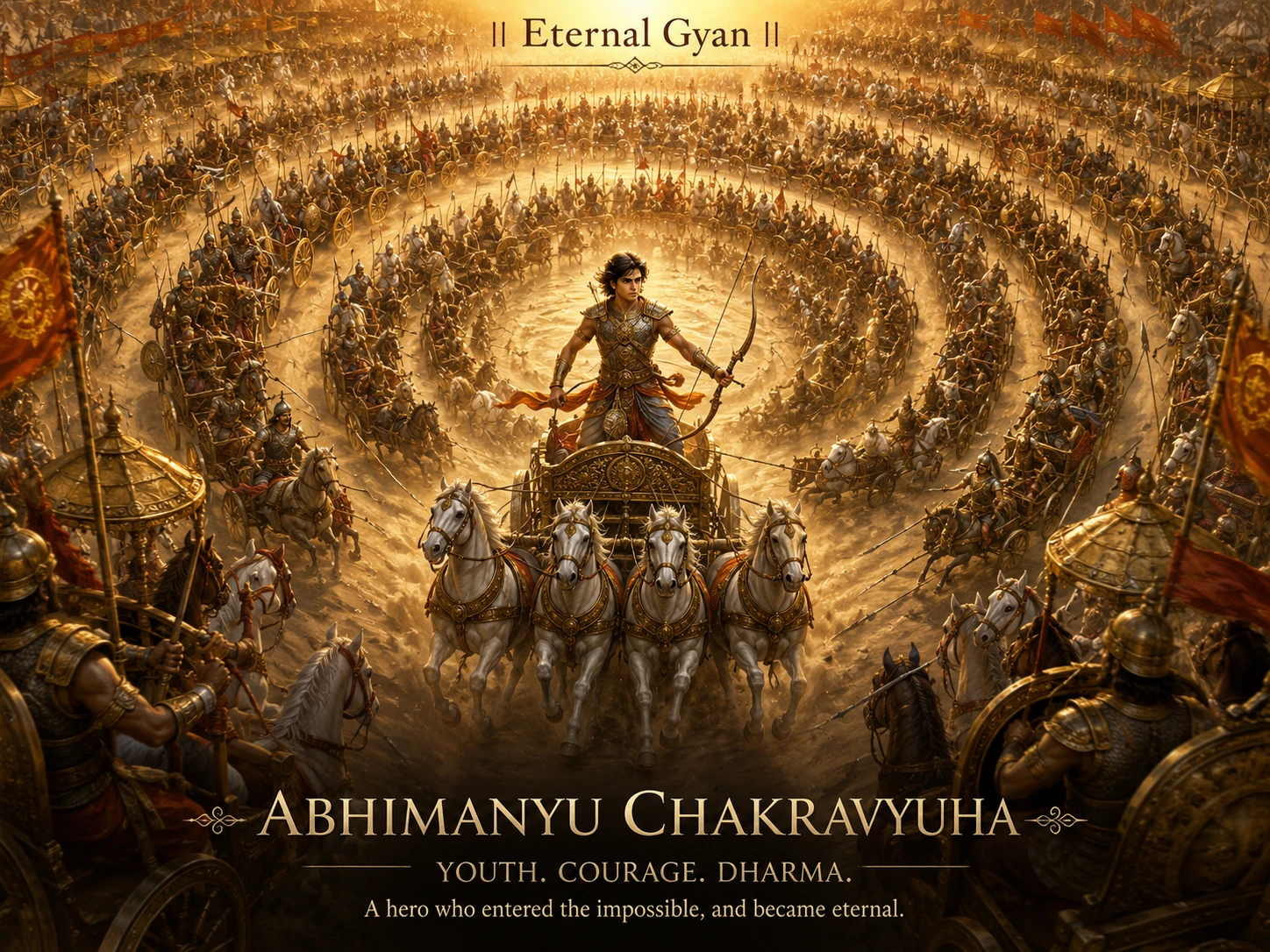
On the 13th day of Kurukshetra, a sixteen-year-old boy broke into the deadliest military formation in the ancient world -- alone, because the adults who promised to follow him were blocked at the gate. He fought Drona, Karna, Ashwatthama, Kripa, Duryodhana, and Shalya simultaneously. He killed Duryodhana's son Lakshmana. He made Karna flee. He held an entire army at bay for hours. And then they killed him -- not in fair combat, but by surrounding him, destroying his chariot, breaking his weapons, and attacking from all sides at once. Abhimanyu's death is not a tragedy of weakness. It is a tragedy of incomplete knowledge sent to do a complete job.
scriptural exegesis
7 Chiranjeevis -- The Immortals of Hindu Tradition
Seven beings who will not die until the end of this cosmic age. One is cursed to wander in agony. One rules the underworld. One compiled every scripture you have ever read. One is the most worshipped deity in India. The Chiranjeevis are not a mythology trivia list -- they are a map of how immortality works in Hindu thought, and why it is not always a blessing.
scriptural exegesis
100 Kauravas -- The Forgotten Brothers of the Mahabharata
Everyone knows Duryodhana and Dushasana. But what about Vikarna, who stood up for Draupadi when no one else did? Or Yuyutsu, who defected to the Pandavas because his conscience demanded it? The Mahabharata names all 100 sons of Dhritarashtra -- warriors, strategists, and dissenters -- most of whom are killed across 18 days. Their story is not just a casualty list. It is the most devastating portrait of fratricidal war ever composed.
scriptural exegesis
Mahabharata -- History or Myth? What the Evidence Actually Says
Submerged cities off Gujarat. 35+ archaeological sites matching the epic's geography. 200+ astronomical events verified by planetarium software. A river that vanished exactly as the text describes. Five categories of evidence that do not 'prove' the Mahabharata -- but make dismissing it as pure fiction increasingly difficult.
scriptural exegesis
Chandravanshi -- The Lunar Dynasty from Moon to Mahabharata
The Solar Dynasty gave India Rama. The Lunar Dynasty gave India everything else: Krishna, the Pandavas, the Kauravas, Bharata (after whom India is named), Shakuntala (Kalidasa's masterpiece), and the Mahabharata itself. It begins with a scandal -- the Moon god Soma abducting Tara, wife of Brihaspati -- and it ends with the greatest war in mythology. One lineage. Two branches. Every epic.
भागवत सप्ताह परम्परा -- सम्पूर्ण श्रीमद्भागवतम् सात दिनों में सुनाना -- सीधे परीक्षित के अन्तिम सात दिनों पर आधारित है, जब शुकदेव ने मरते राजा को ग्रन्थ सुनाया। यह परम्परा सम्पूर्ण भारत में वार्षिक रूप से पालन की जाती है…
More in Scriptural Exegesis
Abhimanyu and the Chakravyuha -- The Boy Who Knew How to Enter but Not How to Leave
14 मिनट पढ़ें
Adbhuta Ramayana -- The Ramayana Where Sita Becomes Kali
9 मिनट पढ़ेंAfter Kurukshetra -- What Happened Next
14 मिनट पढ़ेंवही अनुवाद त्रुटि जिसने हिन्दू धर्म में '33 कोटि' को '33 करोड़' बनाया, बौद्ध धर्म में भी हुई। बौद्ध ग्रन्थों के चीनी अनुवाद ने 'सप्त कोटि बुद्ध' (7 श्रेष्ठ बुद्ध) का अनुवाद '7 करोड़ बुद्ध' कर दिया। तिब्बती अनुवाद ने सही …
Deities AvatarsCommunity Reflections
🕉️
Be the first to share your reflection.