The Ramayana -- An Overview of Valmiki's Epic
रामायण -- वाल्मीकि के महाकाव्य का परिचय
रामायण राम से नहीं, एक प्रश्न से आरम्भ होती है। महर्षि वाल्मीकि घुमन्तू ऋषि नारद से पूछते हैं कि क्या संसार में कोई ऐसा है जो पूर्णतः गुणवान हो -- वीर, सत्यवादी, कृतज्ञ, दृढ़, सबके प्रति दयालु। नारद उत्तर देते हैं कि ऐसा एक पुरुष है, इक्ष्वाकु वंश में जन्मा, जिसका नाम राम है, और संक्षेप में उसकी कथा सुनाते हैं।
इसके बाद जो होता है वह दूसरे सर्ग में है, और भारतीय साहित्य के सबसे प्रसिद्ध दृश्यों में से एक है। तमसा नदी के किनारे चलते हुए वाल्मीकि क्रौंच पक्षियों का एक जोड़ा देखते हैं; एक शिकारी नर को मार देता है, और मादा उसके लिए विलाप करती है। शोक से अभिभूत वाल्मीकि शिकारी को शाप देते हैं -- और शाप उनके मुख से एक पूर्ण छन्दोबद्ध श्लोक बनकर निकलता है। ब्रह्मा उनसे कहते हैं कि शोक से जन्मा यह नया रूप श्लोक है, और इससे उन्हें राम की कथा कहनी चाहिए। इसीलिए वाल्मीकि आदिकवि कहलाते हैं, और रामायण आदिकाव्य।
मा निषाद प्रतिष्ठां त्वमगमः शाश्वतीः समाः । यत् क्रौञ्चमिथुनादेकमवधीः काममोहितम् ॥
mā niṣāda pratiṣṭhāṃ tvamagamaḥ śāśvatīḥ samāḥ | yat krauñcamithunādekamavadhīḥ kāmamohitam ||
हे निषाद, तुम्हें अनन्त वर्षों तक प्रतिष्ठा न मिले, क्योंकि तुमने काम से मोहित क्रौंच-युगल में से एक को मार डाला।
— Valmiki Ramayana, Bala Kanda 2.15
वाल्मीकि रामायण सात भागों में विभाजित है, जिन्हें काण्ड कहते हैं। परम्परा लगभग चौबीस हज़ार श्लोक गिनती है। वे जो कथा कहते हैं, वह कहने में सरल और विवरण में अनन्त समृद्ध है: अयोध्या के राजा दशरथ के ज्येष्ठ पुत्र को राज्याभिषेक की पूर्व-संध्या पर चौदह वर्ष का वनवास मिलता है; उनकी पत्नी सीता का लंका का राजा रावण अपहरण कर लेता है; राम अपने भाई लक्ष्मण और सुग्रीव तथा हनुमान के नेतृत्व वाली वानर सेना के साथ समुद्र पार करते हैं, रावण को हराते हैं और लौटकर राज्य करते हैं।
वाल्मीकि रामायण के सात काण्ड
| Kanda | What happens |
|---|---|
| Bala Kanda | The frame story; Rama's birth and boyhood; training with Vishvamitra; breaking Shiva's bow; marriage to Sita |
| Ayodhya Kanda | The planned coronation; Kaikeyi's two boons; exile; Dasharatha's death; Bharata refuses the throne and rules in Rama's name |
| Aranya Kanda | Life in the Dandaka forest; Shurpanakha; the golden deer; Sita's abduction by Ravana; Jatayu's fight |
| Kishkindha Kanda | Meeting Hanuman and Sugriva; the killing of Vali; the search parties set out |
| Sundara Kanda | Hanuman's leap across the sea; finding Sita in the Ashoka grove; the burning of Lanka |
| Yuddha Kanda | The bridge to Lanka; the war; Ravana's death; Sita's ordeal by fire; return to Ayodhya and coronation |
| Uttara Kanda | The later history: Ravana's past, Sita's second exile, the birth of Lava and Kusha, and the end of Rama's reign |
अनेक विद्वान पहले और अन्तिम काण्ड को दूसरे से छठे काण्ड के प्राचीन मूल में बाद में जोड़ा गया मानते हैं, आंशिक रूप से इसलिए कि केवल इन्हीं दो में राम को खुलकर विष्णु के अवतार के रूप में प्रस्तुत किया गया है। परम्परा सातों को एक ही ग्रन्थ के रूप में पढ़ती है।
रामायण को इतिहास कहा जाता है, "ऐसा ही हुआ था" -- अर्थ के लिए कहा गया इतिहास। इसका केन्द्र कोई युद्ध नहीं, बल्कि कुछ निर्णय हैं। राम पिता का वचन टूटने देने के बजाय वनवास स्वीकार करते हैं। भरत चौदह वर्ष एक आश्रम से राज्य करते हैं, सिंहासन पर राम की पादुकाएँ रखकर। लक्ष्मण भाई के पीछे सब कुछ छोड़ देते हैं; सीता भी साथ चलने पर अड़ जाती हैं। हनुमान बिना किसी प्रतिफल की इच्छा के सेवा करते हैं। खलनायक भी सावधानी से गढ़े गए हैं: रावण विद्वान, भक्त और वीर है, पर अहंकार और काम से नष्ट होता है। इसीलिए यह महाकाव्य आचरण का दर्पण बना -- पुत्र, भाई, पत्नी, मित्र और राजा को कैसा आचरण करना चाहिए -- और इसीलिए राम मर्यादा पुरुषोत्तम कहलाते हैं, धर्म की मर्यादा में रहने वाले पुरुषों में श्रेष्ठ।
इसीलिए रामायण कठिन प्रश्न भी उठाती है जिन पर पाठक शताब्दियों से विवाद करते आए हैं: छिपकर वाली का वध, सीता की अग्नि-परीक्षा, उनका बाद का निर्वासन। परम्परा इन पर कभी मौन नहीं रही; टीकाकारों, कवियों और भक्तों ने इनके अलग-अलग उत्तर दिए हैं, और यह बहस भी महाकाव्य को पढ़ने का एक अंग है।
कोई एक रामायण नहीं है। कम्बन ने इसे तमिल में (लगभग बारहवीं शताब्दी), कृत्तिवास ने बांग्ला में (पन्द्रहवीं शताब्दी), तुलसीदास ने अवधी में रामचरितमानस के रूप में (सोलहवीं शताब्दी) फिर से कहा, और अध्यात्म रामायण ने इसे वेदान्तिक भक्ति के ग्रन्थ के रूप में कहा। भारत के बाहर यह थाईलैंड में रामकियेन, कम्बोडिया में रीमकेर और जावा में ककविन रामायण बनी -- हर एक का अपना बल, और कभी-कभी अपना अन्त।
तपःस्वाध्यायनिरतं तपस्वी वाग्विदां वरम् । नारदं परिपप्रच्छ वाल्मीकिर्मुनिपुङ्गवम् ॥
tapaḥsvādhyāyanirataṃ tapasvī vāgvidāṃ varam | nāradaṃ paripapraccha vālmīkirmunipuṅgavam ||
तपस्वी वाल्मीकि ने तप और स्वाध्याय में लीन, वक्ताओं में श्रेष्ठ, मुनियों में प्रमुख नारद से पूछा --
— Valmiki Ramayana, Bala Kanda 1.1
रामायण आज भी जितनी पढ़ी जाती है, उतनी ही खेली जाती है। रामलीला हर शरद में उत्तर भारत भर में इसका मंचन करती है, जो दशहरे पर रावण के पुतले के दहन के साथ समाप्त होती है; दीपावली अयोध्या में राम की वापसी का उत्सव है; सुन्दर काण्ड में हनुमान की छलाँग साहस और रक्षा के लिए अलग से पढ़ी जाती है। पहली बार पढ़ने के लिए अयोध्या और सुन्दर काण्ड महाकाव्य को उसके सबसे मानवीय और सबसे आनन्दमय रूप में दिखाते हैं।
वाल्मीकि रामायण पढ़ें
सभी सात काण्ड, सर्ग-दर-सर्ग, संस्कृत, लिप्यंतरण और अंग्रेज़ी-हिन्दी अनुवाद सहित।
Tags
Eternal Raga · शाश्वत राग
Institutional voice — scholarly articles on Sanatan Dharma
अपनी समझ गहरी करें
अपनी समझ और गहरी करें
scriptural exegesis
10 Life Lessons from the Ramayana That Still Work in 2026
The Ramayana is not a bedtime story. It is a 24,000-verse operating manual for life -- written by a reformed highway robber who became India's first poet. Every character, from Rama to Ravana, from Kaikeyi to Vibhishana, carries a lesson that lands harder in a world of Instagram comparisons, campus placements, and family WhatsApp drama than it ever did in the forests of Dandaka. Here are 10 lessons -- not the sanitised textbook kind, but the ones that actually matter when your life gets complicated.
deities avatars
Rama -- Ideal of Dharmic Living
Why does India still name its sons after a prince who chose exile over a throne? Rama's life is not a fairy tale -- it is a manual for dharmic decision-making under impossible pressure. From boardrooms to battlefields, his choices remain the hardest moral benchmark in civilization.
scriptural exegesis
Ramayana -- History or Myth? What the Evidence Actually Says
A 48-km limestone bridge between India and Sri Lanka that NASA satellites photographed. An exile route spanning 3,000 km that you can walk today -- every river, cave, and mountain matching Valmiki's descriptions. Astronomical events that planetarium software can verify. Five categories of evidence that turn a simple 'myth or fact?' into a far more interesting question.
deities avatars
Hanuman -- The Perfect Devotee
He could lift mountains, leap oceans, and burn Lanka to the ground -- yet his greatest power was this: he never forgot whose work he was doing. Hanuman is not just a mythological hero. He is the operating system of selfless devotion that India still runs on.
scriptural exegesis
Ramayana Warriors -- Rama's Alliance vs Lanka's Army
Two brothers, a bear king, an exile army of Vanaras, and one defector against the most fortified island-fortress in the world. The Lanka war was not a simple good-vs-evil showdown -- it was a war between two military systems, fought gate by gate, duel by duel. Here is every major warrior from both sides, mapped to their actual battle matchups from Valmiki's Yuddha Kanda.
scriptural exegesis
Adbhuta Ramayana -- The Ramayana Where Sita Becomes Kali
In the Ramayana every Hindu grows up with, Rama kills Ravana and the story ends there. A separate, medieval Sanskrit text called the Adbhuta Ramayana tells a different ending: a second, thousand-headed Ravana appears, Rama cannot defeat him, and Sita does -- by becoming Mahakali. Attributed to Valmiki but almost certainly not his, this apocryphal text is a serious Shakta document, not the version of the Ramayana most Hindus know.
scriptural exegesis
The Mahabharata -- The Text Behind the World's Longest Epic
Most people who say they have read the Mahabharata mean they have read a retelling of the dice game, the exile, and Kurukshetra. Few have asked how the book itself is built: eighteen numbered parvas, a traditional count of one hundred thousand verses, and a story that reaches every reader through three narrators nested inside one another, the outermost speaking at a sacrifice convened because a king's father died of snakebite. This is that architecture, not the episodes.
कोई एक रामायण नहीं है। कम्बन ने इसे तमिल में (लगभग बारहवीं शताब्दी), कृत्तिवास ने बांग्ला में (पन्द्रहवीं शताब्दी), तुलसीदास ने अवधी में रामचरितमानस के रूप में (सोलहवीं शताब्दी) फिर से कहा, और अध्यात्म रामायण ने इसे वेदा…
More in Scriptural Exegesis
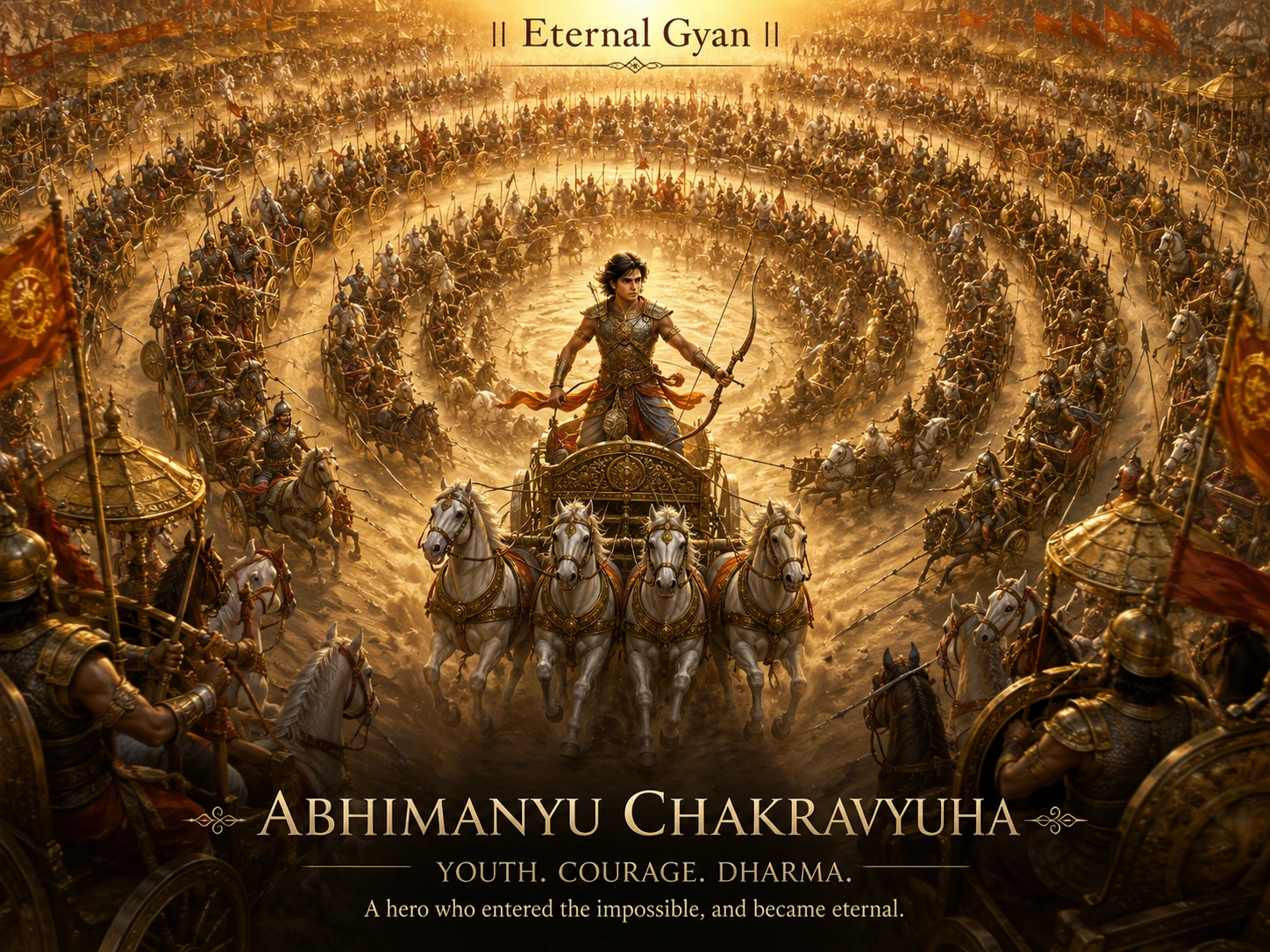
Abhimanyu and the Chakravyuha -- The Boy Who Knew How to Enter but Not How to Leave
14 मिनट पढ़ें
Adbhuta Ramayana -- The Ramayana Where Sita Becomes Kali
9 मिनट पढ़ें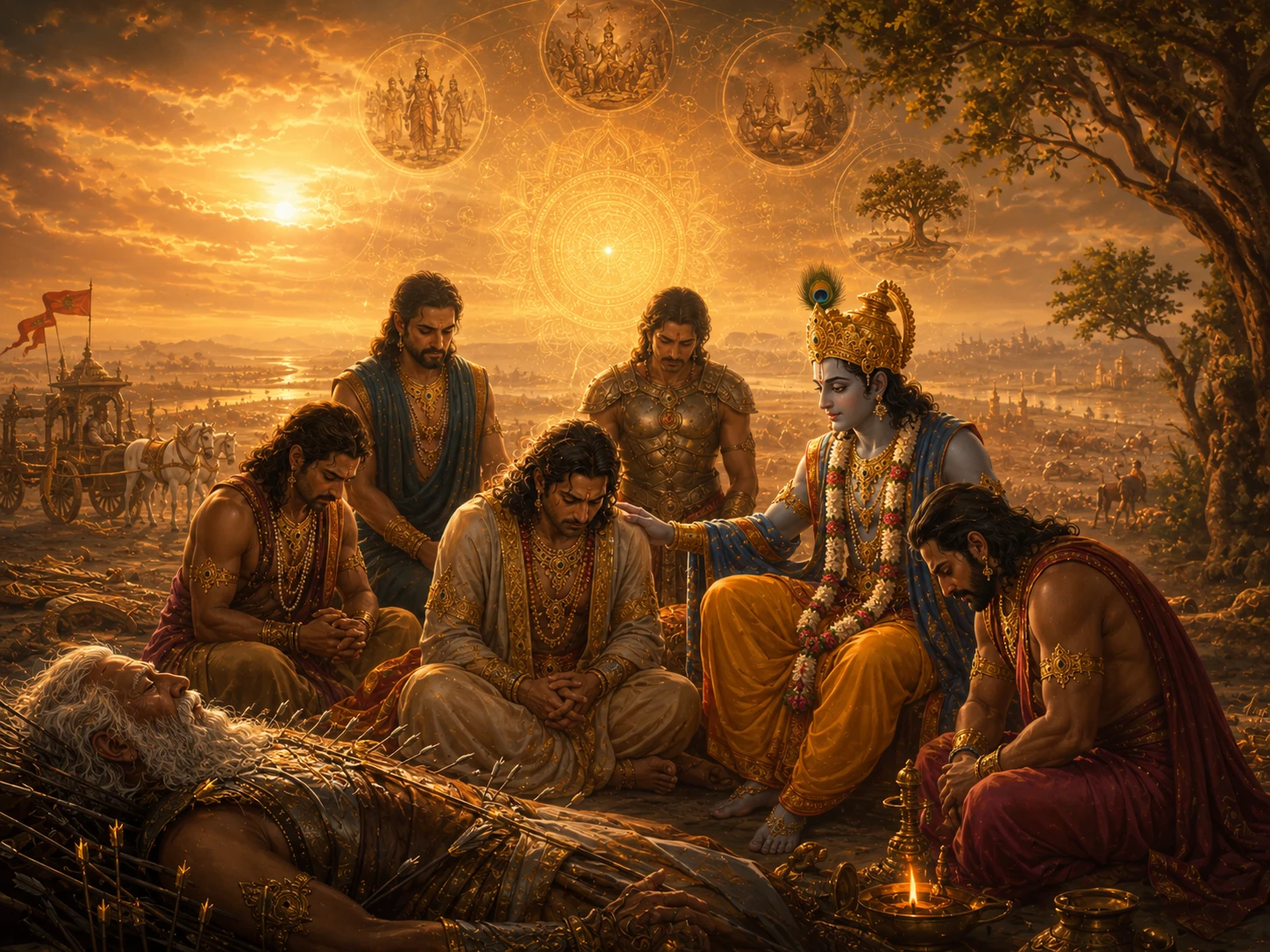
After Kurukshetra -- What Happened Next
14 मिनट पढ़ेंवही अनुवाद त्रुटि जिसने हिन्दू धर्म में '33 कोटि' को '33 करोड़' बनाया, बौद्ध धर्म में भी हुई। बौद्ध ग्रन्थों के चीनी अनुवाद ने 'सप्त कोटि बुद्ध' (7 श्रेष्ठ बुद्ध) का अनुवाद '7 करोड़ बुद्ध' कर दिया। तिब्बती अनुवाद ने सही …
Deities AvatarsCommunity Reflections
🕉️
Be the first to share your reflection.