Shanti Parva -- What the Dying Man on the Bed of Arrows Taught a King Who Did Not Want to Rule
शान्ति पर्व -- शरशय्या पर मरते व्यक्ति ने उस राजा को क्या सिखाया जो राज्य नहीं करना चाहता था
शान्ति पर्व (शान्ति का पुस्तक) महाभारत का बारहवाँ और सबसे लम्बा पुस्तक है -- 365 अध्याय, 13,716 से अधिक श्लोक, सम्पूर्ण महाकाव्य का लगभग एक चौथाई। यदि महाभारत के पहले ग्यारह पुस्तक कथा हैं, तो शान्ति पर्व अर्थ है। यह कुरुक्षेत्र समाप्त होने के बाद, मृतकों का दाह-संस्कार होने के बाद, युधिष्ठिर के हस्तिनापुर का राजा बनने के बाद है। और नया राजा पहला काम करता है -- टूट जाता है।
युधिष्ठिर सिंहासन नहीं चाहता। अपराध-बोध से ग्रस्त है। उसने अपने गुरु (द्रोण, झूठ द्वारा), अपने पितामह (भीष्म, शिखण्डी द्वारा), अपने सौतेले भाई (कर्ण, जिसे बहुत देर से जाना कि कुन्ती का ज्येष्ठ था) की मृत्यु कराई। चचेरे भाइयों, चाचाओं, मित्रों, शिष्यों के शवों से बिछी रणभूमि पर चला। व्यास, नारद, और कृष्ण से कहता है: 'मैं वन जाऊँगा। तपस्वी जीवन जिऊँगा। मैं राज्य के योग्य नहीं।' पाँच ऋषियों, एक भगवान, और स्वयं के भाइयों के संयुक्त प्रयास से उसे समझाया जाता है कि अब राज्य त्यागना -- जब दस लाख मनुष्य उसके लिए इसे जीतने को मरे -- युद्ध से बड़ा पाप होगा।
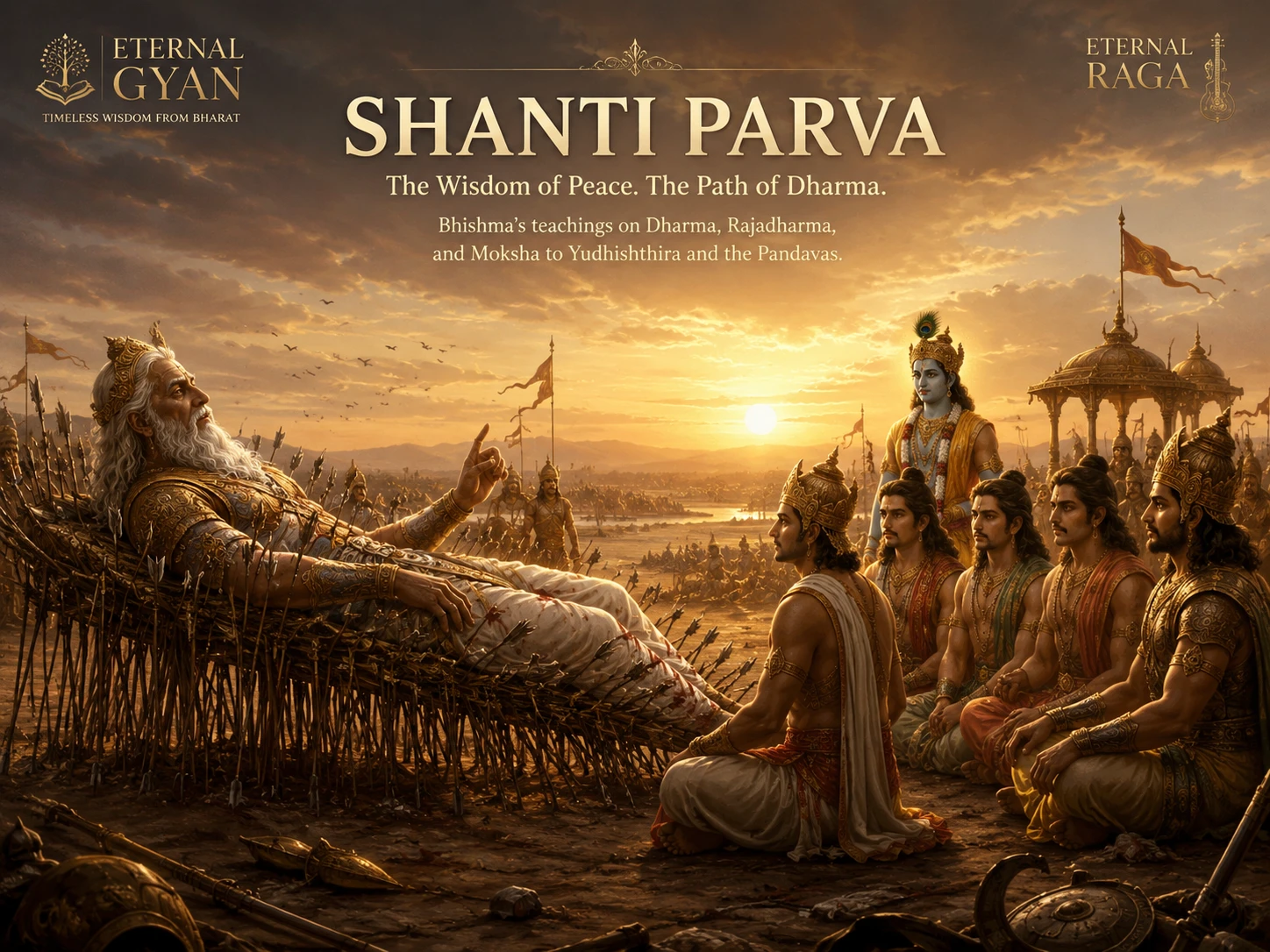
और फिर शिक्षा आरम्भ होती है। कृष्ण युधिष्ठिर और भाइयों को कुरुक्षेत्र ले जाते हैं जहाँ भीष्म शरशय्या पर पड़ा है -- उत्तरायण (शीतकालीन अयनान्त, जब सूर्य उत्तर की ओर मुड़ता है) के शुभ क्षण की मृत्यु के लिए प्रतीक्षा में। कृष्ण की कृपा से भीष्म की पीड़ा हट जाती है ताकि बोल सके। जो होता है वह विश्व साहित्य का सबसे लम्बा उपदेशात्मक प्रवचन है -- तीन उप-पर्व जो कराधान से ध्यान तक, गुप्तचर तन्त्र से आत्मा के स्वरूप तक हर कल्पनीय विषय कवर करते हैं।
न हि सत्यात्परो धर्मो नानृतात्पातकं परम्। सत्यं हि परमं श्रेय आस्तिक्यं सत्यमाश्रितम्॥
na hi satyāt paro dharmo nānṛtāt pātakaṁ param | satyaṁ hi paramaṁ śreya āstikyaṁ satyam āśritam ||
सत्य से बड़ा कोई धर्म नहीं, असत्य से बड़ा कोई पाप नहीं। सत्य ही परम श्रेय है, और आस्तिकता भी सत्य पर आश्रित है।
— Mahabharata, Shanti Parva 12.162 (Bhishma to Yudhishthira)
शान्ति पर्व तीन उप-पर्वों में विभाजित है, प्रत्येक विस्तार में उत्तरोत्तर गहरा।
राजधर्म अनुशासन पर्व (अध्याय 1-130, लगभग 4,716 श्लोक) राजाओं और नेताओं के कर्तव्य कवर करता है। यह महाभारत का शासन-मैनुअल है। भीष्म बताता है: राजा कैसे आचरण करे, मन्त्रियों का चयन कैसे, सेना कैसे संगठित करे, न्याय कैसे, कर कैसे संग्रह करे बिना प्रजा पर अत्याचार, गुप्तचर कैसे, शत्रु-बन्दियों से व्यवहार, कूटनीति, अवसंरचना, अकाल-प्रबन्धन। वह प्रसिद्ध कथन शामिल करता है: 'राजा को विविध स्रोतों से बुद्धि संग्रह करनी चाहिए। एकपक्षीय नैतिकता से संसार में सफल नहीं हो सकते। कर्तव्य बोध से उत्पन्न होना चाहिए।'
आपद्धर्म अनुशासन पर्व (अध्याय 131-173, लगभग 1,649 श्लोक) संकट-काल की नैतिकता सम्बोधित करता है -- जब सामान्य नियम लागू न हों तो क्या। यह सबसे विवादास्पद खण्ड है। भीष्म विश्वामित्र ऋषि की कहानी सुनाता है जिसने अकाल में भूखे परिवार को खिलाने के लिए चाण्डाल के घर से माँस चुराया। दार्शनिक बिन्दु: चरम परिस्थितियों में धर्म का क्रम बदलता है। जीवन-रक्षा कर्मकाण्डीय शुद्धता से ऊपर है। आक्रमण सामना करता राजा छल कर सकता है। भूखा ब्राह्मण निषिद्ध भोजन खा सकता है। 'आपद्धर्म' का शाब्दिक अर्थ है 'खतरे में धर्म' -- वे नियम जब नियम टूट जाएँ।
मोक्षधर्म पर्व (अध्याय 174-365, लगभग 7,351 श्लोक) दार्शनिक और आध्यात्मिक शिखर है -- तीनों खण्डों में सबसे लम्बा और सम्पूर्ण हिन्दू धर्म के सबसे महत्त्वपूर्ण दार्शनिक ग्रन्थों में से एक। यहाँ भीष्म कवर करता है: आत्मन का स्वरूप, जन्म-मृत्यु चक्र, ज्ञान-कर्म-भक्ति योग मार्ग, सांख्य दर्शन, विष्णु सहस्रनाम (विष्णु के सहस्र नाम), ब्रह्माण्डविद्या, ब्रह्म का स्वरूप, और मोक्ष के साधन। यह खण्ड अकेला अधिकांश पूर्ण दार्शनिक ग्रन्थों से लम्बा है।
शान्ति पर्व के तीन स्तम्भ
| Sub-Parva | Chapters (Vulgate) | Verses | Core Question | Key Teachings |
|---|---|---|---|---|
| Rajadharma Anushasana | 1-130 | ~4,716 | How should a king rule? | Duties of rulers; justice; taxation; spies; diplomacy; military; infrastructure; truth as the highest governance principle |
| Apaddharma Anushasana | 131-173 | ~1,649 | What happens when the rules break down? | Crisis ethics; Vishvamitra's stolen meat; preserving life over ritual purity; flexibility of dharma under extreme stress |
| Mokshadharma | 174-365 | ~7,351 | How does one become free? | Nature of Atman; Sankhya philosophy; Jnana/Karma/Bhakti Yoga; Vishnu Sahasranama; cosmology; Brahman; moksha |
शान्ति पर्व की त्रि-भागी संरचना विमर्शित तीन पुरुषार्थों को प्रतिबिम्बित करती है: धर्म (राजधर्म खण्ड), अर्थ (आपद्धर्म व्यावहारिक उत्तरजीविता के रूप में), और मोक्ष (मोक्षधर्म)। काम -- चौथा पुरुषार्थ -- विशेष रूप से अनुपस्थित है, सम्भवतः इसलिए कि कामना ही युद्ध का कारण थी।
शान्ति पर्व में विष्णु सहस्रनाम भी है -- विष्णु के सहस्र नाम -- भीष्म द्वारा युधिष्ठिर के अनुरोध पर सुनाए गए। यह आकस्मिक समावेश नहीं। यह महाभारत का कहने का तरीका है कि संसार का सारा शासन-ज्ञान, संकट-नैतिकता, और दार्शनिक ज्ञान अन्ततः एक गन्तव्य की ओर इंगित करता है: दिव्य को समर्पण। विष्णु सहस्रनाम विश्वभर में लाखों हिन्दुओं द्वारा प्रतिदिन सुनाया जाता है और अस्तित्व में सबसे शक्तिशाली भक्ति-ग्रन्थों में से एक माना जाता है। कि यह शान्ति पर्व से उभरता है -- एक मरते योद्धा के ओठों से, रणभूमि पर, मानव स्मृति के सबसे भीषण युद्ध के बाद -- इसे वह भार देता है जो कोई मन्दिर-पाठ नकल नहीं कर सकता।
समकालीन पाठक के लिए शान्ति पर्व एक विरोधाभास प्रस्तुत करता है। यह एक साथ महाभारत का सबसे व्यावहारिक और सबसे अतीन्द्रिय पुस्तक है। राजधर्म खण्ड National Defence College या IAS प्रशिक्षण अकादमी में module हो सकता है। आपद्धर्म खण्ड Harvard Business School में संकट-नेतृत्व पर case study। मोक्षधर्म उन्नत दर्शन संगोष्ठी का पाठ्यक्रम। और तीनों एक ऐसे व्यक्ति द्वारा दिए जाते हैं जो मर रहा है -- धीरे, पीड़ादायक, सार्वजनिक रूप से -- उन्हीं लोगों के चुनावों के कारण जिन्हें वह अब पढ़ा रहा है।
भीष्म की अन्तिम शिक्षण मुद्रा -- बाणों पर पड़ा, हिलने में असमर्थ, उस विनाश के उत्तरजीवियों से घिरा जो उसने रचने में सहायता की -- महाभारत की ज्ञान की कीमत की सबसे शक्तिशाली छवि है। ज्ञान निःशुल्क नहीं। यह पीड़ा से चुकाया जाता है। और शासन पढ़ाने के लिए सबसे योग्य व्यक्ति वह नहीं जो सिंहासन पर बैठा है बल्कि वह जो रणभूमि के नीचे गड़ा है, ऊपर उस आकाश को देखता जिसमें फिर कभी उड़ नहीं पाएगा।
शान्ति पर्व के राजधर्म खण्ड में भारत की सबसे पुरानी ज्ञात सामाजिक अनुबन्ध सिद्धान्त -- कि राज्य इसलिए अस्तित्व में है क्योंकि लोग सुरक्षा के बदले शासित होने की सहमति देते हैं -- की अभिव्यक्ति है। भीष्म मूल अराजकता अवस्था बताता है (मत्स्य-न्याय -- 'मछलियों का कानून,' जहाँ बड़ी छोटी को खाती है), जिसके बाद लोग ब्रह्मा के पास जाकर राजा माँगते हैं। यह हॉब्स के Leviathan (1651) से एक सहस्राब्दी से अधिक पहले है। मोक्षधर्म खण्ड का विष्णु सहस्रनाम तिरुमला तिरुपति मन्दिर में हर सुबह गर्भगृह खुलने से पहले गाया जाता है, जिससे भीष्म की शरशय्या पर पाठ विश्व के सबसे धनी हिन्दू मन्दिर की दैनिक पूजा-विधि का स्रोत ग्रन्थ बनता है। शान्ति पर्व को शासन, न्याय, और नागरिकों के प्रति राज्य के कर्तव्यों पर कम से कम सात भारतीय सर्वोच्च न्यायालय के निर्णयों में उद्धृत किया गया है।
विष्णु सहस्रनाम का पाठ करो
विष्णु सहस्रनाम -- वे हज़ार नाम जो भीष्म शरशय्या से, शान्ति पर्व के बाद आने वाले अनुशासन पर्व में, सुनाते हैं -- हर नाम के अर्थ सहित एटर्नल राग पर है। अपनी सुबह वैसे आरम्भ करो जैसे भीष्म ने अपना जीवन समाप्त किया।
Tags
Eternal Raga · शाश्वत राग
Institutional voice — scholarly articles on Sanatan Dharma
अपनी समझ गहरी करें
अपनी समझ और गहरी करें
scriptural exegesis
Vidura Niti -- The Wisest Counsel That the King Heard and Still Ignored
The night before the Pandavas' exile ended, when war was one decision away, a sleepless king called his wisest adviser. For eight chapters of the Udyoga Parva, Vidura -- the bastard son who could never be king, the only man in Hastinapura who always told the truth -- delivered 593 verses of raw, unfiltered counsel on leadership, ethics, self-mastery, and statecraft. Dhritarashtra listened to every word. Agreed with every point. And then did the opposite. Vidura Niti is not just political philosophy. It is the anatomy of a man who knew the right thing, had the right adviser, and chose wrong anyway.
scriptural exegesis
Bhishma's Terrible Vow
A crown prince gave up the throne, love, marriage, and children -- forever -- so his father could marry a fisherwoman. That single vow made Bhishma immortal in name and set the entire Mahabharata into motion. Was it the noblest sacrifice in literature, or the most catastrophic?
scriptural exegesis
Gita Chapter 18 -- Moksha Sannyasa Yoga: The Final Exam Where Krishna Says 'Do As You Wish'
78 verses. The longest chapter in the Gita. Krishna classifies everything -- knowledge, action, doer, intellect, happiness -- into three gunas, then drops the most radical verse in Indian scripture: abandon all dharmas and just surrender to Me. And then, in a move no dictator would ever make, he tells Arjuna: now do as you wish.
scriptural exegesis
The Dice Game -- The Darkest Hour of the Mahabharata
A king who cannot say no to a challenge. An uncle whose dice are loaded with the bones of the dead. A court full of elders who watch injustice and say nothing. And a woman who asks one question that nobody in the room can answer: 'Did my husband lose himself first, or me?' The dice game in the Sabha Parva is not a plot device. It is the moral black hole at the centre of the Mahabharata. Everything before it is prologue. Everything after it is consequence. And the central horror is not what happens -- it is who lets it happen.
scriptural exegesis
Yaksha Prashna -- Questions at the Lake
Four brothers lie dead beside an enchanted lake. One brother remains. A voice from the water asks 124 questions about dharma, death, happiness, and the self. Yudhishthira's answers in Vana Parva remain the most sophisticated ethical examination in all of Sanskrit literature.
scriptural exegesis
After Kurukshetra -- What Happened Next
The war ended. The Pandavas won. And then everything fell apart. Krishna's clan destroyed itself in a drunken brawl. Dwaraka sank into the sea. Arjuna's divine powers vanished. And the five brothers who fought the greatest war in history walked into the Himalayas to die. The Mahabharata's post-war chapters are darker, stranger, and more relevant than the war itself.
scriptural exegesis
Gita Chapter 2 -- Sankhya Yoga: The Chapter That Changed Indian Philosophy Forever
Arjuna drops his bow. His hands shake. He tells Krishna he would rather beg for food than kill his teachers and cousins. Krishna's response in Chapter 2 is the philosophical backbone of the entire Gita -- covering the immortality of the soul, the ethics of action without attachment, and the portrait of the Sthitaprajna (the person of steady wisdom). This single chapter contains more quotable verses than most entire scriptures. 'Karmanye vadhikaraste' lives on WhatsApp statuses for a reason.
शान्ति पर्व के राजधर्म खण्ड में भारत की सबसे पुरानी ज्ञात सामाजिक अनुबन्ध सिद्धान्त -- कि राज्य इसलिए अस्तित्व में है क्योंकि लोग सुरक्षा के बदले शासित होने की सहमति देते हैं -- की अभिव्यक्ति है। भीष्म मूल अराजकता अवस्था…
More in Scriptural Exegesis
Abhimanyu and the Chakravyuha -- The Boy Who Knew How to Enter but Not How to Leave
14 मिनट पढ़ें
Adbhuta Ramayana -- The Ramayana Where Sita Becomes Kali
9 मिनट पढ़ें
After Kurukshetra -- What Happened Next
14 मिनट पढ़ेंवही अनुवाद त्रुटि जिसने हिन्दू धर्म में '33 कोटि' को '33 करोड़' बनाया, बौद्ध धर्म में भी हुई। बौद्ध ग्रन्थों के चीनी अनुवाद ने 'सप्त कोटि बुद्ध' (7 श्रेष्ठ बुद्ध) का अनुवाद '7 करोड़ बुद्ध' कर दिया। तिब्बती अनुवाद ने सही …
Deities AvatarsCommunity Reflections
🕉️
Be the first to share your reflection.