Chakra 2 of 7
Svadhisthana Chakra
The Spring That Rises from the Root
Sva means 'one's own.' Adhiṣṭhāna means 'dwelling place' or 'seat.' Together: 'the seat of one's own self.' This is the chakra where personal identity first emerges from the foundation Muladhara has built. Before we can offer ourselves to the world, we must first dwell at home inside the body. That homecoming happens here.
स्व का अर्थ है 'अपना।' अधिष्ठान का अर्थ है 'निवास' या 'आसन।' मिलकर: 'अपने स्व का आश्रय।' यह वह चक्र है जहाँ मूलाधार के आधार से व्यक्तिगत स्व उभरता है।
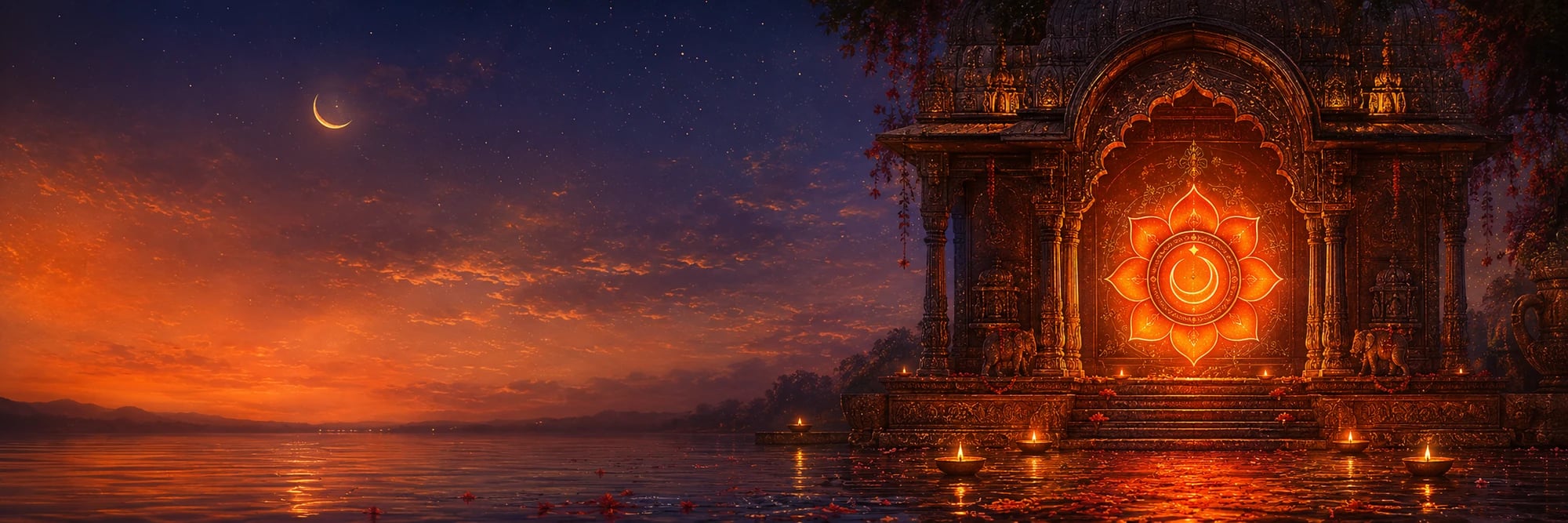
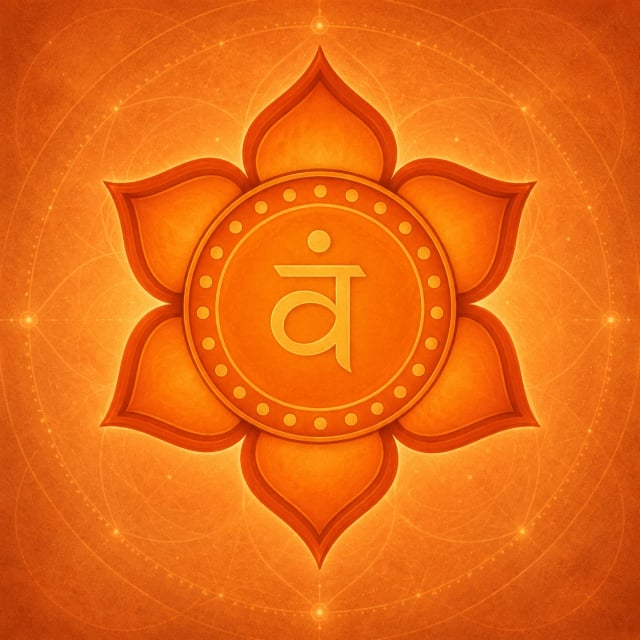
The Muladhara settles the ground. Svadhisthana is what grows on that ground first — the personal self, with its early feelings, its first creative urges, its first sense of 'me' distinct from 'us.' If Muladhara is the soil, Svadhisthana is the spring that rises from it. The classical Tantric texts describe it as a six-petalled vermilion lotus blooming two finger-widths below the navel, with the seed-syllable Vaṃ resonating at its centre and a white crescent moon — the symbol of the water element — gleaming inside.
Where Muladhara asks 'am I safe?', Svadhisthana asks something more delicate: 'what do I feel?' This is the chakra of emotional flow, creative expression, the sacred feminine principle, and what classical Indian thought calls rasa — the essence of taste, of mood, of aesthetic experience. The Sanskrit word svādhiṣṭhāna literally means 'the seat of one's own self' — sva (one's own) plus adhiṣṭhāna (dwelling). Before any of us can offer ourselves to the world, we must first find ourselves at home inside the body. That homecoming happens here.
The element governing this chakra is water — Apaḥ, Jala — which carries every quality the chakra expresses. Water takes the shape of whatever container holds it. It flows around obstacles rather than pushing through them. It nourishes without announcement. A balanced Svadhisthana behaves similarly: emotionally adaptable without being formless, creatively responsive without being scattered, capable of pleasure without being consumed by it. When this chakra is disturbed, the water either freezes (emotional numbness, creative block, fear of intimacy) or floods (mood swings, addictive consumption, drowning in feeling without an anchor).
In the modern Indian context, Svadhisthana is the chakra that responds most directly to the ways daily life dries up the natural moisture of being. The fifty-hour Excel weeks that flatten creativity into routine. The unspoken emotional weight that women in joint families carry across generations without ever putting it down. The suppressed grief of children who were taught early not to make a fuss. The slow erosion of pleasure in marriages that have become logistics. None of these are character failures. They are signals from a chakra asking to be tended.
The bija mantra Vaṃ is chanted with attention placed two finger-widths below the navel. The 'V' is soft, almost like a 'W', and the closing nasal 'M' vibrates in the lower abdomen exactly where the chakra is seated. This is not metaphor. Sustained nasal humming in the lower belly activates the parasympathetic nervous system at the pelvic floor and stimulates the sacral nerve plexus that governs reproductive and emotional regulation. The Tantric tradition encoded a precise physiological technology long before modern science had the instruments to confirm it.
The presiding deity is Vishnu, the preserver, the maintainer of cosmic flow. For Indian householders the most accessible devotional form is Krishna in his playful, creative, dance-with-the-gopis aspect. Krishna at Vrindavan is Svadhisthana made visible — pleasure that does not contradict dharma, creativity that expresses devotion, sensuality that flowers into the highest love. The popular bhajans of Radha-Krishna leela are not separate from chakra work. They are chakra work, transmitted through the language of story.
svādhiṣṭhāne sthito viṣṇuḥ rakṣed rasamayaṃ manaḥ
May Vishnu seated at Svadhisthana protect this mind that is full of feeling.
Signs of Balance & Imbalance
When Balanced
- ✓Creative expression flows easily — work, art, conversation, problem-solving all feel alive rather than mechanical
रचनात्मक अभिव्यक्ति सहज रूप से बहती है, कार्य और कला यांत्रिक नहीं अनुभव होते
- ✓Emotional resilience without suppression — feelings rise, are felt, and pass
बिना दमन भावनात्मक स्थिरता, भावनाएँ आती हैं, अनुभव होती हैं, चली जाती हैं
- ✓Joyful, healthy intimacy in relationships — neither clinging nor avoidant
सम्बन्धों में आनन्दपूर्ण निकटता, न लिपटाव न परिहार
- ✓Ability to feel pleasure without guilt and without excess
बिना अपराध-भाव और बिना अति के सुख का अनुभव
- ✓Healthy menstrual cycles, healthy libido, healthy digestion of taste and texture
स्वस्थ मासिक चक्र, स्वस्थ कामेच्छा, स्वस्थ रस-पाचन
- ✓Easy spontaneous play with children, animals, or in art — without self-consciousness
बच्चों, पशुओं, या कला में सहज लीला, बिना आत्म-चेतना
When Imbalanced
- ✗Creative blocks, the dried-up feeling in work that used to feel alive
रचनात्मक अवरोध, उस कार्य में सूखापन जो कभी सजीव था
- ✗Emotional numbness — going through motions without feeling them
भावनात्मक सुन्नता, क्रियाएँ करना परन्तु अनुभव न होना
- ✗Overwhelming mood swings, weepiness without clear cause
तीव्र भाव-परिवर्तन, बिना स्पष्ट कारण रुलाई
- ✗Addictive patterns — food, scrolling, alcohol, shopping, intimate connection without depth
व्यसनी प्रवृत्तियाँ — भोजन, स्क्रॉल, मद्यपान, क्रय, उथली निकटता
- ✗Hip tightness, sacroiliac pain, lower back discomfort
कमर और कूल्हे की जकड़न
- ✗Reproductive or menstrual irregularities, low libido, postpartum emotional struggle
प्रजनन या मासिक धर्म की समस्याएँ, प्रसवोत्तर भावनात्मक संघर्ष
- ✗Difficulty saying yes to pleasure, or alternately, inability to stop seeking it
सुख स्वीकार करने की कठिनाई अथवा उसे रोकने की अक्षमता
Practices
Japa, visualization, mudra and timing for this chakra
Bija Mantra
Vung — soft 'v' (in Sanskrit this letter sits between 'v' and 'w'), short 'a' as in 'sun', ending with a nasal 'M' that hums in the lower belly
Japa Instructions
Sit in Sukhasana or Padmasana with the spine straight. Place the right palm gently on the lower belly, two finger-widths below the navel. Place the left palm in the lap or on the right hand. Close the eyes. Bring attention to where the right palm rests. Chant Vaṃ aloud one hundred and eight times, allowing the soft V to dissolve into the nasal hum that vibrates in the lower abdomen. Visualize a flowing orange light beneath the palm. Allow emotions to rise and pass.
सुखासन या पद्मासन में बैठें, रीढ़ सीधी। दायाँ हाथ नाभि से दो अंगुल नीचे रखें, बायाँ हाथ गोद में या दायें के ऊपर। आँखें बन्द करें। वं का १०८ बार जप करें, नासिक्य गूँज को निचले उदर में अनुभव करते हुए। नारंगी प्रवाहित प्रकाश की कल्पना करें।
Visualization
A six-petalled vermilion lotus blooming two finger-widths below the navel. Inside the lotus, a glowing white crescent moon — the symbol of the water element. The crescent moves gently, like reflected moonlight on water. The seed-syllable Vaṃ glows at the centre of the crescent in soft gold.
Mudra
Shakti Mudra (or Yoni Mudra in the gentle seated form)
Cup the hands together in the lap, fingers loosely interlaced with the tips of the ring and little fingers extended and touching. This shape evokes the womb of creative possibility — the seat of Svadhisthana made visible in the hands.
Timing & Duration
Minimum
Ideal
Extended
Early evening (5:30–7:30 PM), when the day's emotional accumulation can be processed before sleep. The water element is most receptive at this hour. Practice is also potent near a flowing water source — a river, the sea, or simply running water from a tap in the rinse cycle of an evening shower.
VAM japa often surfaces unprocessed emotion. Sadness, longing, sometimes joy that has been suppressed for years — all of these can rise within the first 30 repetitions. This is not failure of practice; it is the chakra clearing what has been stored. Stay with it. Keep water close by. After completing 108 repetitions, sit in silence for at least two minutes, then journal for five minutes if possible. Do not analyse what came up. Just let it move through.
Cautions
- !Practice gently during menstruation — VAM japa is supportive but avoid intense hip-opening asanas during the first three days
- !Postpartum: gentle practice can begin around 6 weeks after delivery once cleared by your physician
- !Avoid practicing immediately after emotionally heavy conversations — give the system 15 minutes to settle first
- !If addictive urges feel acute, supplement chakra work with appropriate professional support; this is not a substitute
Yoga Pose
Modern India Context
How this chakra shows up in everyday Indian life
Recommended Asanas
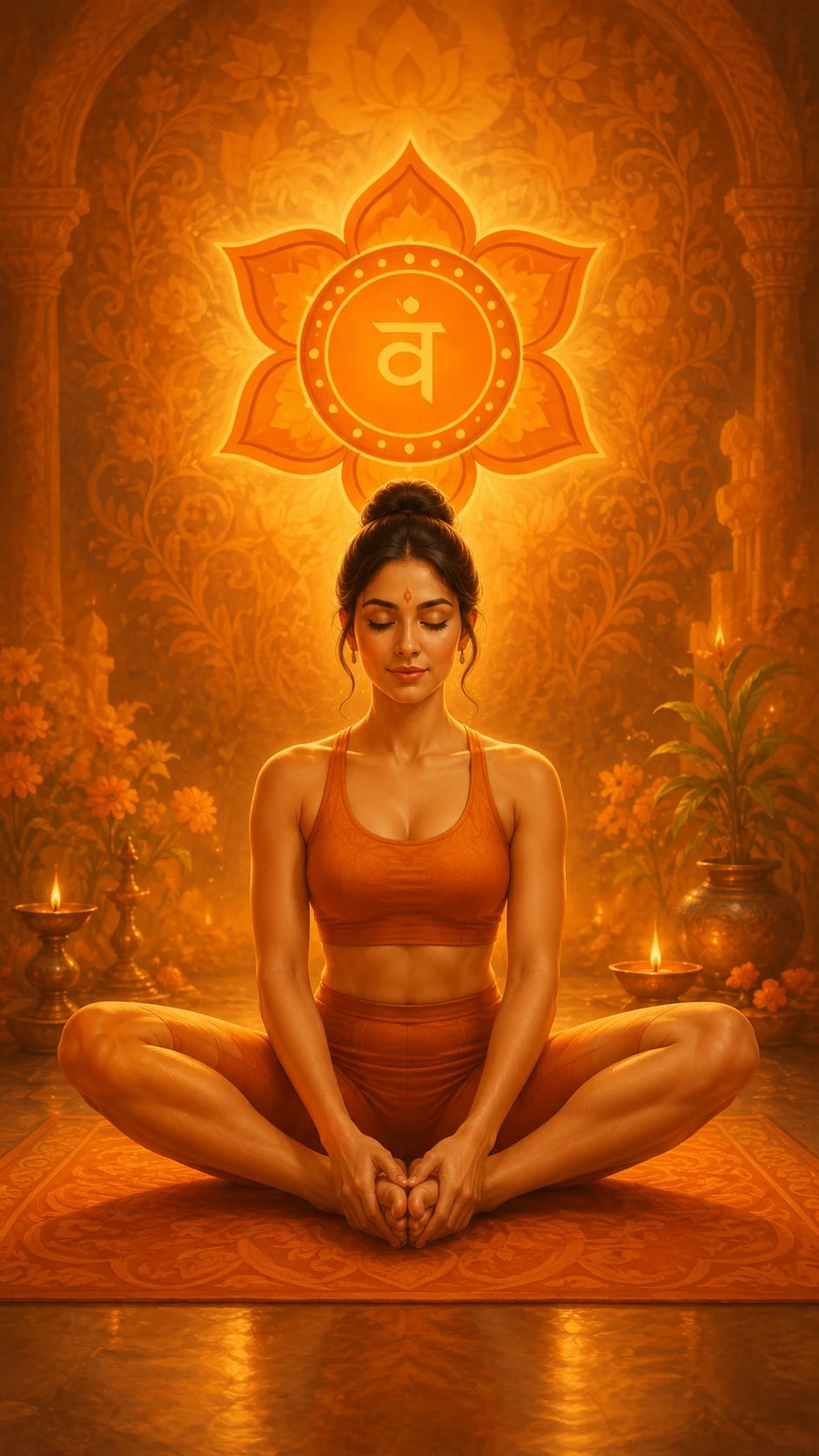
Baddha Konasana (Bound Angle / Butterfly Pose)
बद्धकोणासन
Sit with the soles of the feet pressed together, knees relaxing toward the floor. The most direct hip-opener for the sacral region. Hold for 2 to 5 minutes with slow breath.
Eka Pada Rajakapotasana (Pigeon Pose)
एकपादराजकपोतासन
A deep hip-opener that releases emotional tension stored in the hip flexors and outer hips. Unexpected emotion arising in this pose is common and welcome. Hold each side for 1 to 3 minutes.
Upavistha Konasana (Wide-Angle Seated Forward Bend)
उपविष्टकोणासन
Sit with legs spread wide, fold forward gently. Opens the inner thighs and sacrum without straining the lower back. Excellent for menstrual support.
Anjaneyasana (Low Lunge)
अञ्जनेयासन
Releases the front of the hips, the hip flexors, and the psoas — the area where desk-bound professionals carry the most stored tension. Hold each side for 1 minute.
Utkata Konasana (Goddess Pose)
उत्कट कोणासन
Wide squat with arms raised in a 'cactus' shape, channeling shakti energy. Strengthens the pelvic floor while opening the sacral region. Especially affirming for women.
Pranayama
Sheetali (Cooling Breath)
शीतली
Inhale slowly through a curled tongue, exhale through the nose. Cooling and soothing, directly aligned with the water element. Perfect after emotional release.
Bhramari (Humming Bee Breath)
भ्रामरी
Close the ears with the index fingers, hum a long bee-like sound on the exhale. The vibration soothes the emotional body and pairs beautifully with VAM japa.
Questions & Answers
What is the Svadhisthana or Sacral Chakra in simple terms?▾
Svadhisthana is the second of the seven chakras, located approximately two finger-widths below the navel. In classical yogic terms, it is the seat of personal self, emotional life, creativity, and the water element. Where Muladhara handles survival, Svadhisthana handles aliveness — the felt sense of joy, beauty, pleasure, and relational connection that makes daily existence more than just survival.
How do I know if my Svadhisthana is blocked or imbalanced?▾
Common signs include creative blocks (the dried-up feeling in work or art that used to feel alive), emotional numbness or overwhelming mood swings, addictive patterns around food, scrolling, or substances, hip tightness, sacroiliac pain, and reproductive or menstrual difficulties. Suppressed grief or rage that has not been allowed to move is one of the most common modern-Indian imbalance patterns.
How do I chant the VAM mantra correctly?▾
Sit cross-legged with the spine straight. Place the right palm gently on the lower belly, two finger-widths below the navel. Close the eyes. Chant Vaṃ — soft 'V' that sits between 'V' and 'W', short 'a' as in 'sun', closing with a nasal 'M' that vibrates in the lower abdomen. One hundred and eight repetitions is the traditional count. Allow emotions to rise and pass without grasping them.
Can sacral chakra meditation actually help with creative blocks?▾
The yogic tradition has been clear about this for centuries, and modern research on humming and parasympathetic regulation is consistent with what the tradition described. Daily VAM japa softens the protective contraction that creative blocks rest upon. It will not write your screenplay or design your logo for you. It will quiet the inner critic and the survival-mode part of your mind enough that your natural creative current can flow again.
Is Svadhisthana meditation safe during menstruation or pregnancy?▾
Gentle VAM chanting and visualization are generally safe and supportive during both. However, intense pranayama such as Bhastrika or Kapalbhati should be paused during menstruation and during pregnancy. Deep hip-opening asanas should be modified or skipped in the first three days of menstruation and in the third trimester of pregnancy. The chakra responds beautifully to soft, intuitive practice in these phases. Honour the body's own water-element wisdom during these times.
Why is Krishna associated with this chakra?▾
Krishna embodies the highest expression of Svadhisthana qualities — playful creativity, embodied joy, devotional love that is fully alive in the senses, the dance of rasa. While Vishnu in his cosmic preserver aspect is the formal presiding deity, the popular devotional consciousness of India has always associated Krishna's Vrindavan leela with this chakra. Chanting Hare Krishna Mahamantra or Krishna bhajans is itself a Svadhisthana practice.
Can sacral chakra meditation help with reproductive or menstrual issues?▾
Indirectly yes, and this is well-attested in the tradition. The chakra governs the same anatomical region that hosts the reproductive system. Daily VAM japa, combined with appropriate hip-opening asanas and warm grounding food, supports menstrual regularity, postpartum emotional recovery, and the restoration of healthy desire after periods of stress or burnout. Severe conditions still need medical attention; chakra work is supportive, not substitutive.
What is the connection between Svadhisthana and the sacred feminine?▾
Svadhisthana is the most overtly feminine of the chakras in classical Tantra — its element is water (cooling, receptive, nourishing), its movement is fluid, its associated symbol is the crescent moon. Both women and men have this chakra, but it activates qualities that Indian culture has historically coded as feminine and often suppressed in both genders. Reclaiming Svadhisthana — for Indian women especially, but for men too — is sacred work that restores fullness to the whole human being.
Daily Affirmation
I flow with life. I create joyfully. I feel without fear.
मैं जीवन के संग बहता हूँ। मैं आनन्द से सृजन करता हूँ। मैं बिना भय अनुभव करता हूँ।
Explore Further
Classical Source
Shat-Chakra-Nirupana (षट्-चक्र-निरूपण) — Purnananda Swami (1577 CE (composed in Bengal)). Sir John Woodroffe (Arthur Avalon), 'The Serpent Power: The Secrets of Tantric and Shaktic Yoga' (1918).
The chakra system presented here follows the classical Tantric lineage. Modern interpretations of Svadhisthana often add Western or Theosophical layers — particularly around crystals, essential oils, and chakra colour-therapy — which are not part of the original tradition. Eternal Raga stays close to the classical sources while presenting the practice in language accessible to contemporary Indian life.
← Previous
Muladhara
Root Chakra
Next →
Manipura
Solar Plexus Chakra