Kankalitala Shakti Peeth
कंकालीतला शक्तिपीठ
Where Satī's skeleton fell on the Kopai's bank
Bolpur, West Bengal, India
KaṅkālītalāAlso known as: Kankali Tala, Kankalitala Shakti Peetha, Devagarbha at Kankalitala, কঙ্কালীতলা, মা কঙ্কালীতলা মন্দির, কঙ্কালী মা
युग
Medieval Bengali Shākta site; present temple complex 18th, 19th c. with later additions
वास्तुकला
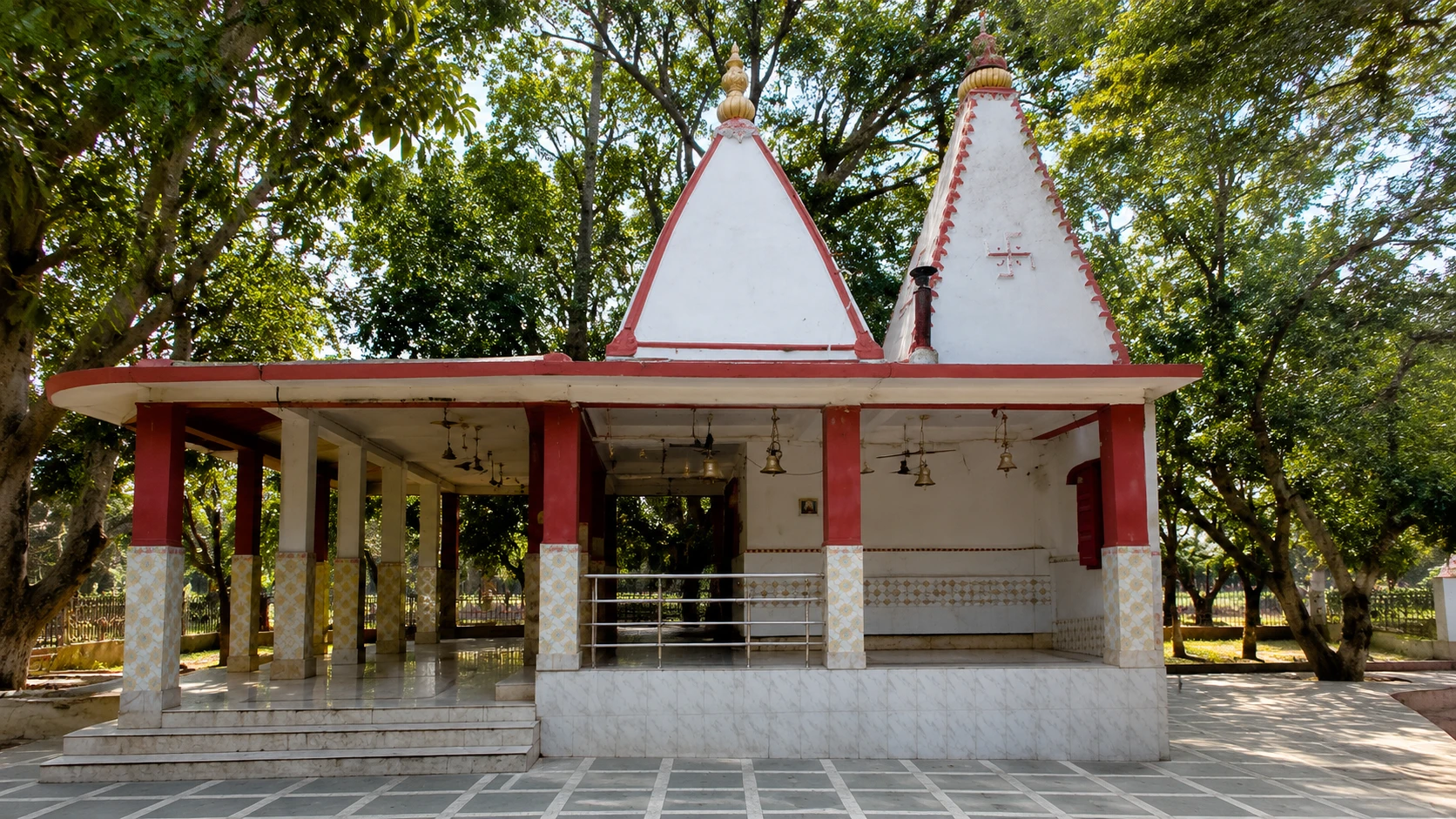
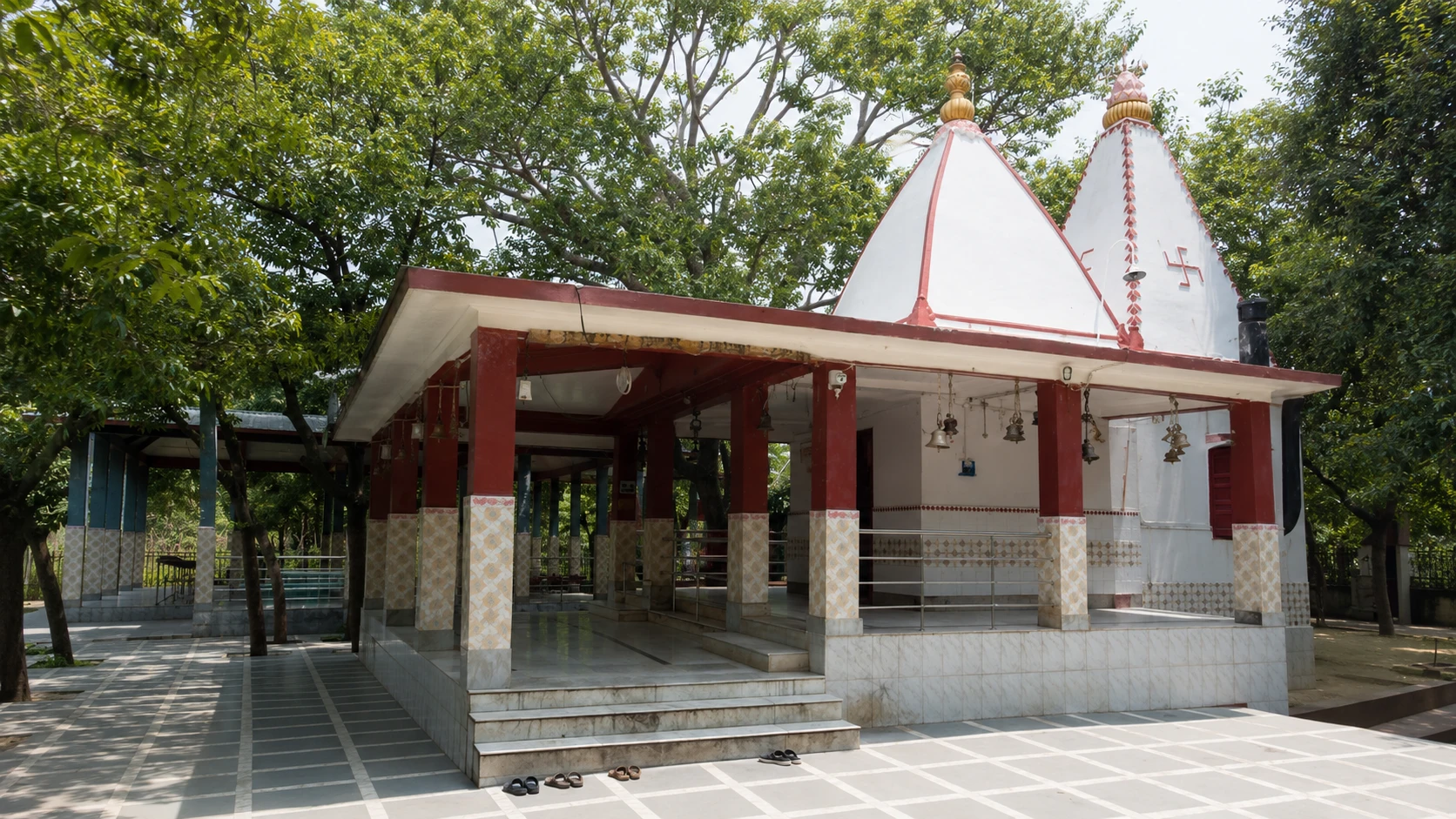
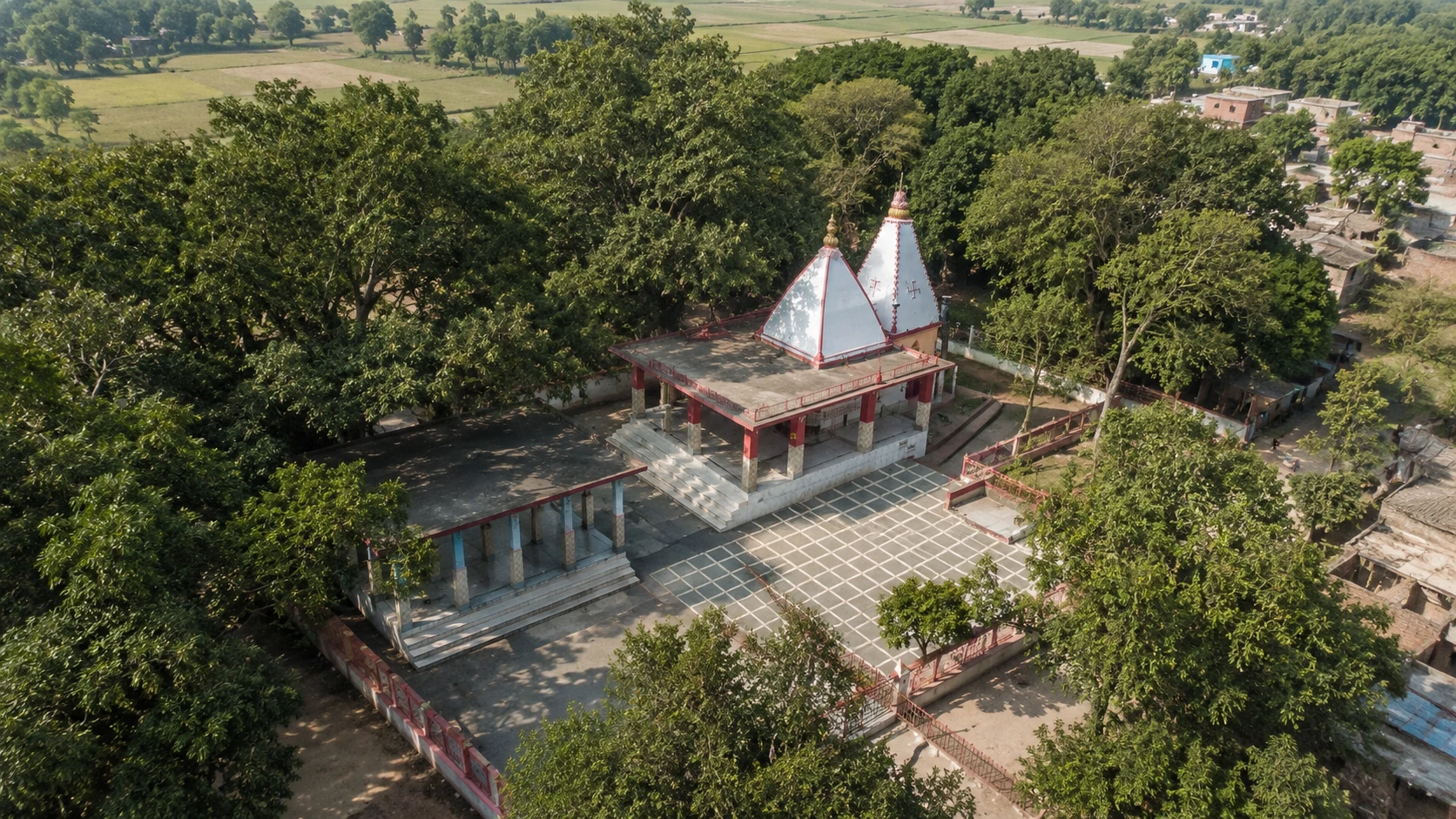
Modest Bengali āṭcālā tradition with a small adjacent cremation ground (smaśāna), set in an open rural clearing on the Kopai bank
खुला
06:00 – 20:30
आरती
06:30 · 12:00 · 19:30
विशेष
Annual Kankali Pūjā observance; Tuesday and Saturday weekly emphasis for Tāntrika and lay devotees alike
पवित्र कथा · पवित्र कथा
Kankalitala stands on the bank of the Kopai river in Birbhum, ten kilometres from the place where Rabindranath Tagore would later found Santiniketan. The site's name is the body-part: kaṅkāla, the skeleton, and tala, the place, Kankalitala, 'the place of the skeleton.' When Satī's body was divided by Viṣṇu's Sudarśana chakra across the eastern Indian earth, what fell at this curve of the Kopai was her bony framework, the kaṅkāla, not a single limb but the whole architecture of the body that holds and is left when flesh has burned away. The Devī enshrined here is named Devagarbhā, 'the womb of god,' and the Bhairava paired with her in the Pīṭhanirṇaya is Ruru, the fierce one whose name carries an old Sanskrit register of deer and demon and devouring. The pairing, skeleton, Devagarbhā, Ruru, gives this Peetha a theological character close to the cremation-ground register that Tarapith holds in larger scale: the bones, the womb that bore the cosmos, the fierce guardian. Kankalitala is smaller than Tarapith and lacks Tarapith's continuous Tāntric saint-lineage; but the body-part fallen here is the largest, the most architectural, of the 51-Peetha attributions, and the Devī here is the womb-mother whose own skeleton frames the site. The Kopai river flows past in its modest curving way; the temple sits in a clearing that is open and rural and very Bengali; and the literary-cultural shadow of Santiniketan, ten kilometres south-east, gives Kankalitala an additional layer that the other Birbhum-Bardhaman Cluster A Peethas do not carry, Tagore knew this temple, wrote of it, walked the country between Santiniketan and the Kopai, and the temple sits within the imaginative geography of Bengali modernity in a way few of the canonical Peethas do.
Sacred Designationपवित्र पदनाम
Shakti Peeth
शरीर का अंग: Skeleton (kaṅkāla, the entire bony framework) per the canonical 51-Peetha attribution preserved in the Pīṭhanirṇaya and the Devī Bhāgavata Purāṇa Saptama Skandha. The name 'Kaṅkālītalā' literally encodes the attribution: kaṅkāla (skeleton) + talā (place / floor / under), 'the place of the skeleton.' This is among the more theologically substantial body-part attributions in the 51-list, not a single limb but the whole bony architecture of the body, which carries direct resonance with the cremation-ground register of Bengali Shākta tradition.
शक्ति: Devagarbhā, 'the womb of god' or 'the womb that bears the deva,' the Devī's form at Kankalitala according to the canonical Pīṭhanirṇaya attribution. The name carries a creation-cosmological register: she is the goddess from whose womb the cosmos issues, and the skeleton, what remains when life-flesh has burned away, is paired with the womb that bore that life into being. The pairing of bones and womb is theologically pointed, reading the site through the full creation-dissolution cycle that Bengali Shākta tradition carries forward from the Devī Bhāgavata. Locally she is also called Kankāleśvarī or simply Kaṅkālī.
भैरव: Ruru, the canonical Bhairava paired with Devagarbhā in the Pīṭhanirṇaya. The Sanskrit name Ruru carries an old register: in Vedic literature Ruru appears as a kind of deer or antelope, and in Purāṇic and Tāntric strata as the name of a demon and as one of the eight or sixty-four Bhairavas. At Kankalitala, Ruru-Bhairava holds the fierce-guardian pole of the Peetha, the protective fearfulness that stands beside Devagarbhā at the site of the skeleton's falling. The Ruru linga is enshrined within the temple complex.
Sacred Origin Storyपवित्र उत्पत्ति कथा
Source: Pīṭhanirṇaya / Devī Bhāgavata Purāṇa Saptama Skandha / Bengali Shākta sthala-purāṇa with cremation-ground register
At Kankalitala the body-part that fell is not a single limb but the entire kaṅkāla, the bones, the architecture of the body, what remains when flesh has burned. In the foundational 51-Peetha narrative, after Satī consumed herself in the flames of Dakṣa's yajña and Shiva carried her body across the eastern Indian earth in his cosmic dance of grief, Viṣṇu's Sudarśana chakra divided the body part by part to release Shiva from his madness.
At fifty-one places across the subcontinent, the parts fell. At the curve of the Kopai river in Birbhum, what fell was the skeleton.
The theological weight of this attribution is particular. Where most Shakti Peethas hold a single limb or organ, an eye, an arm, a fingernail, a yoni, Kankalitala holds the whole framework. This is the body-part that defines what a body is in the cremation-ground tradition of Bengali Shākta worship: when the pyre burns through the soft flesh and the marrow and the heart, what remains and is gathered up is the kaṅkāla.
The bones are what the goddess of the cremation ground recovers; the bones are what the Tāntrika sādhaka sits among in the smaśāna; the bones are what links Kankalitala to the Tarapith register of cremation-ground sādhanā even though the two sites are different in scale and lineage.
The Devī enshrined at Kankalitala is named Devagarbhā, 'the womb of god,' the cosmic womb from which the deva-creation issues. The pairing of body-part and Devī-form here is theologically pointed. The womb that bears the cosmos and the skeleton that remains when the cosmos has burned through one body's life are theological poles of a single circle: creation and dissolution, birth and death, the womb that brings forth and the skeleton that is gathered up.
Bengali Shākta theology reads this circle through the Devī Bhāgavata's whole cosmological frame, and at Kankalitala the site holds both poles in a single sanctum.
The Bhairava paired with Devagarbhā in the Pīṭhanirṇaya is Ruru, fierce, ancient-named, demon-named in some Purāṇic strata and deer-named in others. Ruru-Bhairava stands at the fearful-protective pole of the Peetha. The Ruru linga is enshrined adjacent to the Devī sanctum within the temple complex; the body-part-Devī-Bhairava trinity at Kankalitala is therefore: kaṅkāla, Devagarbhā, Ruru.
The Pīṭhanirṇaya preserves this attribution; subsequent Bengali Shākta sthala-purāṇas elaborate the site in regional voice without departing from the canonical triplet.
The Kopai river flows past the temple in its modest curving way. The clearing in which the temple sits is open and rural in a fashion that is intimately Bengali, the country of red earth, low palms, and small rivers that Birbhum is known for. The small smaśāna adjacent to the temple precincts holds the cremation-ground register that the kaṅkāla attribution authorises.
And ten kilometres south-east stands Santiniketan, where Rabindranath Tagore would later make modern Bengali literature; the Kopai itself flows past Santiniketan on its way to the sea, and Tagore's imaginative geography reached the Kankalitala temple in his walking and in his writing.
The site is one of the few canonical Shakti Peethas that has been brought into the imaginative geography of Bengali literary modernity, and that double inheritance, canonical Tāntric-Shākta and literary-modern, gives Kankalitala its distinctive character within the Birbhum-Bardhaman Cluster A network.
उद्धृत स्रोत:
- Pīṭhanirṇaya / Mahāpīṭhanirūpaṇa (canonical 51-Peetha enumeration; Kankalitala with body part kaṅkāla, Devī Devagarbhā, Bhairava Ruru)
- Devī Bhāgavata Purāṇa, Saptama Skandha
- Kankalitala local sthala-purāṇa (Bengali, preserved in temple administration)
- Bengali Shākta sthala-purāṇa literature on the Birbhum Devī-circuit
- Tagore-era and post-Tagore Bengali literary references to Kankalitala (Rabindranath's prose and walking-essays; Visva-Bharati-period writings)
अन्य परंपराएँ · अन्य परंपराएँ
Tāntric cremation-ground reading, Kankalitala as a smaller Tarapith-register smaśāna seat
A first alternate tradition, held particularly within Bengali Tāntric lineages active in the Birbhum-Bardhaman corridor, reads Kankalitala primarily through its cremation-ground register rather than through its canonical Pīṭhanirṇaya body-part attribution.
In this reading, the small smaśāna adjacent to the temple precincts is not incidental landscape but the theological anchor of the site: the kaṅkāla body-part attribution authorises Kankalitala's identity as a smaśāna-Peetha in the same theological family as Tarapith, though at a much smaller scale and without Tarapith's continuous high-Tāntrika lineage.
Pilgrims of this orientation approach Kankalitala expecting to encounter the cremation-ground register, and the temple's geography rewards that expectation, with the smaśāna and the Devagarbhā sanctum holding the dissolution-and-womb circle in compact form.
The reading is not in conflict with the primary Pīṭhanirṇaya account; it is an emphasis on the cremation-ground dimension that the canonical account contains but does not foreground.
Tagore and the Bengali literary-modern reading of Kankalitala
A second alternate tradition, distinct from both the canonical Shakti-Peetha account and the Tāntric cremation-ground reading, is the literary-modern Bengali reading that emerges from Rabindranath Tagore's engagement with the temple and the country between Santiniketan and the Kopai.
Tagore knew Kankalitala; the temple appears in his prose, in references in his walking-essays, and within the broader imaginative landscape of his Birbhum writing. In Tagore's literary reading, Kankalitala is not primarily a body-part-attribution site or a Tāntric smaśāna-Peetha but a site of folk religious life embedded in the red-earth country of Birbhum, the kind of site that holds together the rural Bengali religious imagination with which Tagore's literary modernity was in continuous dialogue.
This reading is documented less in canonical Shākta sources and more in the Bengali literary archive: in Tagore's own works, in subsequent Visva-Bharati-period writing about the country around Santiniketan, and in twentieth-century Bengali literary engagements with Birbhum's religious geography.
The corpus surfaces it not as an alternative theological account but as a meaningful additional reading-frame that Kankalitala uniquely carries among the Birbhum-Bardhaman Cluster A Peethas.
विद्वत संदर्भ
Modern scholarship on Kankalitala intersects three distinct fields: canonical Shakti-Peetha studies (where Kankalitala is uncontested in the Pīṭhanirṇaya and Devī Bhāgavata Saptama Skandha enumerations as the site of the kaṅkāla-fall, Devī Devagarbhā, Bhairava Ruru), Bengali Shākta-Tāntric studies (where Kankalitala is treated within the broader Birbhum-Bardhaman cremation-ground Peetha network anchored by Tarapith), and Bengali literary studies (where Tagore's engagement with the temple and the country around Santiniketan opens an unusual additional dimension). June McDaniel's 'Offering Flowers, Feeding Skulls' (2004) treats Kankalitala in the survey of West Bengal Devī sites with attention to its smaśāna-adjacent character. Bengali Tagore scholarship from the Visva-Bharati tradition and subsequent literary historians has examined Kankalitala's appearance in the Rabindrik imagination at varying lengths; the temple is not a foregrounded subject in Tagore's writing but it appears with sufficient frequency in the prose and walking-essay genres that the connection is well-documented. The body-part-Devī-Bhairava triplet (kaṅkāla, Devagarbhā, Ruru) is stable across major Pīṭhanirṇaya recensions; the philological encoding of the body-part in the place-name (kaṅkāla + talā = Kaṅkālītalā) is among the cleaner direct attributions in the 51-Peetha geography.
Historyइतिहास
Kankalitala's documented history begins with mention in late-medieval Bengali Shākta literature, which references the site as an established Shakti Peetha, body part kaṅkāla, Devī Devagarbhā, Bhairava Ruru, by at least the fifteenth, sixteenth centuries.
The site's antiquity precedes this textual horizon, as the Pīṭhanirṇaya attribution is preserved in older Sanskrit Tāntric strata. The present temple complex dates substantially from the eighteenth and nineteenth centuries, with patronage drawn from local Birbhum-region zamindars and from various pilgrim-patrons of the Kopai-valley area.
Through the nineteenth century, Kankalitala was active within the broader Birbhum-Bardhaman Shākta circuit alongside Tarapith and Bakreshwar, though at much smaller scale; Bāmākhyāpā of Tarapith is recorded in some hagiographic sources as having visited Kankalitala, though the cross-site connection is less central than Tarapith-Bakreshwar or Tarapith-Sugandhā in the broader circuit literature.
In the early twentieth century, Rabindranath Tagore's founding of Santiniketan ten kilometres south-east opened a new cultural dimension for Kankalitala, Tagore knew the temple, wrote of it, walked the country between Santiniketan and the Kopai, and the temple entered the imaginative geography of Bengali literary modernity in a way few other canonical Peethas did.
After 1947, the Partition's effect on the unified pre-Partition Bengali Shākta pilgrim circuit elevated Kankalitala's role within the now-bounded West Bengal Devī-circuit, particularly given its proximity to the major Visva-Bharati cultural destination; the post-1947 expansion of pilgrim infrastructure was modest but consistent with the wider Birbhum-region pattern.
The twentieth and twenty-first centuries have brought continued local devotional activity, integration of Kankalitala into pilgrimage and cultural itineraries combining Tagore-tourism with the Birbhum Shakti-Peetha circuit, and gradual heritage recognition by West Bengal authorities.
Historical Timelineऐतिहासिक कालक्रम
Earliest documented references to Kankalitala in Bengali Shākta literature, attesting the site as an established Shakti Peetha with the canonical attributions: body part kaṅkāla, Devī Devagarbhā, Bhairava Ruru. The site's antiquity certainly precedes this textual horizon, the Pīṭhanirṇaya attribution is preserved in older Sanskrit Tāntric strata, but Bengali documentary attestation of Kankalitala specifically as a living pilgrimage destination consolidates around the late medieval period.
The 1500 date marks the approximate horizon at which Bengali documentary attestation of Kankalitala becomes consistent, not the founding date of the Peetha. The Pīṭhanirṇaya body-part-Devī-Bhairava triplet (kaṅkāla, Devagarbhā, Ruru) is preserved in older Sanskrit Tāntric strata; the consolidation of Kankalitala specifically as the living-pilgrimage location for this triplet is the development that the late medieval Bengali sources document.
Substantial development of the present Kankalitala temple complex under local Birbhum-region zamindar patronage during the late eighteenth century. The Devagarbhā sanctum, the adjacent Ruru linga shrine, and the smaśāna enclosure take their substantial present form from this period; exact dates and patron names are variably attested in Bengali zamindari records. The late-eighteenth-century date is the most commonly cited consolidation window rather than a single attested year.
Rabindranath Tagore's founding of Santiniketan ten kilometres south-east of Kankalitala, and the subsequent inclusion of the temple within the imaginative geography of Tagore's Birbhum writing. Tagore's walking-essays, prose works, and Visva-Bharati-period writing reference Kankalitala at various lengths; the temple appears as a marker of the rural-Bengali religious landscape that Tagore's literary modernity engaged with in continuous dialogue. The 1905 date marks the broader Visva-Bharati establishment timeline rather than a specific Tagore visit to Kankalitala; Tagore's engagement with the temple unfolds across the early twentieth century.
Kankalitala is among the few canonical Shakti Peethas brought into the imaginative geography of Bengali literary modernity through Tagore's engagement. The 1905 date is the Visva-Bharati establishment marker rather than a specific Tagore-Kankalitala event; the Tagore connection unfolds across many years and across many writings.
After the Partition of Bengal in August 1947, the unified pre-Partition Bengali Shākta pilgrimage circuit was disrupted at the new international border. Kankalitala's role within the now-bounded West Bengal Shākta circuit was recontextualised: while smaller in scale than Tarapith, the canonical inclusion of Kankalitala in the 51-Peetha enumeration and its proximity to the Visva-Bharati cultural destination meant the site retained meaningful pilgrim attention from West Bengali Shaktas seeking to complete a canonical Peetha-circuit within independent India. Post-1947 infrastructure expansion was modest, in keeping with Kankalitala's smaller pilgrim-economy footprint but consistent with broader regional patterns.
Gradual integration of Kankalitala into combined pilgrimage-and-cultural-tourism itineraries that pair the Birbhum Shakti-Peetha circuit (Tarapith, Bakreshwar, Kankalitala) with Visva-Bharati Tagore-tourism around Santiniketan. West Bengal Tourism Department documentation since the 2010s explicitly cross-references the Shakti-Peetha and Tagore-cultural itineraries for visitors to the Birbhum-Bolpur region, recognising Kankalitala as the natural integrative node between the two visit-modes. Heritage recognition and infrastructure improvements at Kankalitala during the 2010s and 2020s have been modest but consistent with this combined-itinerary recognition.
What You'll Seeदर्शन में
The Kankalitala sanctum holds a stone mūrti of Devagarbhā in the Devī-form that the Pīṭhanirṇaya prescribes for this Peetha, multi-armed, in standing or seated posture, with iconographic emphasis on the womb-cosmological register that the name 'Devagarbhā' encodes.
The image is modest in scale, in the characteristic Bengali Shākta dark-stone idiom, daubed with sindoor and ghee from continuous worship, draped in red cloth that the sevāyats renew. Locally the Devī is also called Kaṅkāleśvarī or simply Kaṅkālī, and pilgrim devotional language often uses the local name.
The Ruru linga sits in an adjacent shrine within the temple complex, a simple stone liṅga marking the canonical Bhairava-pole of the Peetha. The architectural fact distinctive to Kankalitala is the cremation ground (smaśāna) immediately adjacent to the temple precincts, small in scale relative to the Tarapith mahāśmaśāna but theologically continuous with it, holding the kaṅkāla body-part attribution in landscape form.
The Kopai river flows past the temple in a modest curving channel; during ordinary water levels the river is at some distance below the temple elevation, and during monsoon it rises closer. The temple sits in an open rural clearing characteristic of Birbhum's red-earth country, low palms, scattered village structures, the long horizon.
Ten kilometres south-east the more famous landscape of Santiniketan and Visva-Bharati begins, and the Kopai itself flows past Santiniketan further along its course; the river is a continuous thread between Kankalitala's canonical Tāntric-Shākta identity and the literary-modern Bengali geography that Tagore made of the surrounding country.
Distinctive Practicesविशिष्ट परंपराएँ
Smaśāna-adjacent darśana, temple-and-cremation-ground integrated circuit
श्मशान-निकट दर्शन, मंदिर-तथा-श्मशान एकीकृत परिक्रमा
Year-round; intensified on Tuesdays and Saturdays (the customary Devī-worship days in Bengali Shākta tradition) and during Kālī Pūjā
The standard Kankalitala circuit integrates the small smaśāna adjacent to the temple precincts into the pilgrim path rather than treating it as external secular landscape. After taking darśana of Devagarbhā in the sanctum and the Ruru linga in the adjacent shrine, devotees walk a short distance to the smaśāna and offer a moment of silence or brief japa at its perimeter. The integration mirrors at smaller scale what Tarapith holds at larger scale, the cremation ground as part of the temple's sacred geography rather than as adjacent space. Serious Tāntrika sādhakas, particularly on Tuesday and Saturday Devī-worship days, may sit at the smaśāna perimeter through the evening with Tāra-nāma japa or with mantras specific to Devagarbhā or Ruru-Bhairava.
The kaṅkāla body-part attribution makes Kankalitala a Peetha of the cremation-ground register by its very name and theology. To approach the Devī here without entering the smaśāna would be to read the site against its own attribution, the bones that fell here are the bones of the cremation ground, and the goddess enshrined is Devagarbhā, the cosmic womb whose creation-pole is balanced by the dissolution-pole that the smaśāna represents. Visiting both together holds the creation-dissolution circle whole.
Kopai-river snāna integrated with darśana
कोपाई-नदी स्नान दर्शन से एकीकृत
Year-round, where seasonally accessible; intensified during Magha (January, February) and Caitra (March, April) bathing months
Pilgrims who wish to undertake the full traditional protocol bathe in the Kopai river below the temple before approaching the Devī sanctum. The Kopai is theologically integrated into Kankalitala's sacred geography in the manner characteristic of Bengali Devī-sites on rivers; the water that flows past the body-part-fall site carries the goddess's presence rather than functioning as external purification. The Kopai is a smaller river than the Ajay or the Dwarka and bathing protocol is correspondingly informal, most pilgrims complete the customary bath quickly and proceed to darśana, with the riverbank held as transit-space within the temple precinct rather than as a destination in its own right.
The Kopai's smaller scale relative to other Birbhum-Bardhaman sacred rivers reflects Kankalitala's smaller scale as a Peetha. The integration of river-bathing with darśana follows the broader Bengali Shākta-tīrtha pattern in which the water that flows past the body-part-fall site is theologically continuous with the Devī's presence; the form of the practice is brief at Kankalitala because the river itself is modest in size and the focus of the pilgrim circuit is the temple-and-smaśāna pair rather than extended river engagement.
Combined Shakti-Peetha and Tagore-Santiniketan itinerary
संयुक्त शक्तिपीठ तथा टैगोर-शान्तिनिकेतन मार्ग
Year-round modern pilgrim-and-cultural-tourism practice; especially active during Visva-Bharati academic-year terms and Bengali festival seasons
A distinctively twentieth- and twenty-first-century practice at Kankalitala is the combined pilgrimage-and-cultural-tourism itinerary that pairs darśana at the temple with visits to Visva-Bharati, the Tagore residences and museums at Santiniketan, the Sonajhuri haat, and other Tagore-cultural destinations within ten to fifteen kilometres. This combined approach distinguishes Kankalitala from other canonical Shakti Peethas in West Bengal: visitors to Tarapith or Bakreshwar are travelling for the temple alone or in combination with other Devī sites; visitors to Kankalitala frequently combine the temple with the Tagore-Santiniketan experience as a single trip. The practice has been formalised in West Bengal Tourism Department itinerary documentation since the 2010s.
The combined itinerary is not a doctrinal practice in the classical Shākta sense but a distinctive modern devotional-cultural form that the geographic proximity of Kankalitala and Santiniketan enables. For many Bengali pilgrims, the combination expresses a continuous Bengali religious-and-cultural identity that does not partition the canonical Shakti-Peetha experience from the literary-modern Tagorean inheritance; both inheritances are read as continuous expressions of Bengali devotional and aesthetic life. The practice is documented as one of the more distinctive contemporary Bengali pilgrim-cultural integrations.
Did You Know?क्या आप जानते हैं?
Among the 51 Shakti Peethas, Kankalitala holds the largest body-part attribution: not a single limb or organ but the entire kaṅkāla, the whole bony architecture of the body. Most Peethas hold a single part (an eye, a finger, a yoni, an arm); Kankalitala holds the framework that gathers all parts. The attribution carries direct theological resonance with the cremation-ground register that the temple's adjacent smaśāna landscape physically inscribes.
Pīṭhanirṇaya / Mahāpīṭhanirūpaṇa; Devī Bhāgavata Purāṇa Saptama Skandha; comparative 51-Peetha attribution analysis
Kankalitala is among the few canonical Shakti Peethas to have entered the imaginative geography of modern Bengali literature: Rabindranath Tagore's writing references the temple, and the Kopai river that flows past Kankalitala flows on through Santiniketan ten kilometres south-east, making the river a continuous thread between the canonical Tāntric-Shākta and the literary-modern Bengali landscapes. No other canonical Peetha in the Birbhum-Bardhaman cluster carries this particular double inheritance.
Rabindranath Tagore, collected prose and walking-essays; Visva-Bharati literary archive
The pairing of the body-part (kaṅkāla, skeleton) with the Devī-form (Devagarbhā, womb of god) at Kankalitala is theologically pointed: the bones that remain after cremation and the womb that bears the cosmos into being are theological poles of a single circle, dissolution and creation, death and birth. Bengali Shākta Mahāvidyā theology reads this circle through the Devī Bhāgavata's cosmological frame, and few Peethas hold the circle as compactly as Kankalitala.
Bengali Shākta Mahāvidyā literature; comparative Devī Bhāgavata cosmological analysis
The Bhairava paired with Devagarbhā in the Pīṭhanirṇaya is Ruru, a Sanskrit name with an unusually layered lexical history: Ruru appears in Vedic strata as a kind of deer or antelope, in Purāṇic and epic literature as the name of a demon and as one of the eight or sixty-four Bhairavas, and in Tāntric literature as a specific fierce-protective form. The name's deer-and-demon double register is theologically continuous with the fierce-protective Bhairava role at Kankalitala.
Sanskrit lexical tradition; Pīṭhanirṇaya; Purāṇic and Tāntric Bhairava-enumeration literature
The place-name 'Kaṅkālītalā' is among the cleaner philological encodings of the body-part attribution in the 51-Peetha geography: kaṅkāla (skeleton) + talā (place / floor / under), literally 'the place of the skeleton.' The encoding is more direct than at most other Peethas, where the place-name typically derives from the Devī's form, the local geographic feature, or the village's earlier secular name. At Kankalitala the body-part has named the place itself.
Sanskrit etymological tradition; Bengali place-name studies
Visitor Accessप्रवेश जानकारी
Kankalitala welcomes pilgrims of all backgrounds for darśana. Photography is generally permitted in the outer temple precincts and at the Kopai riverbank; the inner Devī sanctum follows standard Bengali Shākta photography norms, verify locally before photographing the mūrti. The smaśāna adjacent to the temple is open ground accessible to all visitors; visitors are asked to maintain respectful demeanour given that cremations may be in progress. No caste-based or religion-based exclusions apply.
Most pilgrims complete the Kankalitala circuit in this order: (1) Kopai-river snāna where seasonally accessible, (2) Devagarbhā sanctum darśana, (3) Ruru linga darśana in the adjacent shrine, (4) brief visit to the smaśāna adjacent to the temple precincts. Allow 1.5, 2 hours for an unhurried completion; pilgrims combining Kankalitala with Tagore-Santiniketan destinations should plan a full day in Bolpur. The combined itinerary works well when sequenced morning-Kankalitala / afternoon-Santiniketan or vice versa.
Festivalsत्योहार
Kālī Pūjā (Bengali Shākta Diwali Amāvasyā)
काली पूजा (बंगाली शाक्त दीपावली अमावस्या)
Kārttika Amāvasyā (October, November)
Kālī Pūjā at Kankalitala is theologically the most resonant of the year's festivals, the cremation-ground register that the smaśāna adjacent to the temple authorises is particularly active on the new-moon Kālī night, and the kaṅkāla body-part attribution carries direct theological resonance with the Kālī-tradition register of bone, death, and dissolution. Night ārati extends through the evening, the smaśāna sees serious Tāntrika observance, and pilgrim numbers at Kankalitala on Kālī Pūjā significantly exceed ordinary-day attendance. The temple administration coordinates with local police and West Bengal authorities for crowd management on the festival day.
Annual Kaṅkālī Pūjā
वार्षिक कङ्काली पूजा
Date set by Bengali Shākta calendar, locally observed annual signature festival
The annual signature festival at Kankalitala specifically, observed with full local participation: a small mela (fair) takes place in the area around the temple, the Devagarbhā sanctum sees special abhiṣeka and extended worship, and the broader Kopai-valley pilgrim community gathers. The festival is regional rather than pan-Bengali in draw, but it is the day of the year when Kankalitala is most fully Kankalitala, most fully the place where the body-part-name and the Devī-name and the Bhairava-name come together in a single observance.
Durgā Pūjā
दुर्गा पूजा
Āśvina Śukla Saptamī, Daśamī (September, October)
Durga Puja at Kankalitala is observed with full Bengali Shākta protocol within the temple precincts. Devagarbhā's Durgā-register character makes the festival theologically appropriate; saptamī through Vijayā Daśamī are marked with special abhiṣeka and the sandhi-pūjā at the Aṣṭamī, Navamī boundary. Pilgrim attendance is regionally significant, with Bolpur and the surrounding Visva-Bharati community contributing to festival-day numbers alongside the canonical-circuit Shakta pilgrims.
Vāsanti Pūjā / Caitra Navarātri
वासन्ती पूजा / चैत्र नवरात्रि
Caitra Śukla Pratipadā, Navamī (March, April)
The spring festival of the Devī, observed at Kankalitala as Vāsanti Pūjā. The nine nights of Caitra Navarātri are marked with daily abhiṣeka of the Devagarbhā mūrti and special evening ārati. Pilgrim attendance is moderate, less than at Kālī Pūjā or the annual Kaṅkālī Pūjā, which makes Vāsanti Pūjā a preferred festival for serious sādhakas seeking quieter darśana with theological depth.
How to Reachकैसे पहुँचें
Kankalitala lies in the Birbhum district of West Bengal, approximately ten kilometres north-west of Bolpur (the Visva-Bharati / Santiniketan rail-and-town hub) and about 165 kilometres north of Kolkata. The most practical rail approach is via Bolpur Shantiniketan station (10 km), well-served by frequent express and passenger trains from Howrah on the Howrah, Sahibganj line; journey time from Howrah is approximately 2.5, 3.5 hours depending on train class.
Prantik station (7 km) is closer but served by fewer trains. Local taxis, auto-rickshaws, and shared transport connect Bolpur to Kankalitala. By road, Kankalitala is accessible via state highways from Bolpur and from the broader NH-corridor through Birbhum.
The nearest commercial airports are Kazi Nazrul Islam Airport at Andal, Durgapur (70 km) and Netaji Subhas Chandra Bose International Airport at Kolkata (165 km). Most pilgrims base their stay in Bolpur and complete Kankalitala as a half-day visit, typically combined with Santiniketan-Tagore destinations across one to two days.
Plan Your Visitयात्रा की योजना
🌤 सर्वोत्तम मौसम
October to March is the most comfortable window for Kankalitala, with cool-to-mild daytime conditions and the rural Birbhum landscape at its visual best. Winter months (December, January) align well with the combined Tagore-Shakti-Peetha itinerary as Visva-Bharati's winter terms are active and the Sonajhuri haat and other cultural destinations operate at full pace. Summer (April, June) is hot (up to 42 °C in Birbhum) and the open temple precincts are exposed; pilgrim attendance is lower. Monsoon (July, September) brings the Kopai to high water levels and the riverbank approach may be restricted.
👘 पहनावे का नियम
Standard Bengali Shākta temple norms: modest clothing covering shoulders and knees; women in sari or salwar-kameez, men in dhoti-panjabi or kurta-pyjama, with standard ethnic or modest Western clothing also accepted. Footwear is removed at the temple-precinct entry. For Kopai-river snāna where undertaken, carry change of clothing and modest bathing-wear; for the smaśāna visit, respectful demeanour and modest dress are expected.
📱 फोन और फोटोग्राफी
Phones and cameras are generally permitted in the outer temple precincts, at the Kopai riverbank, and around the smaśāna perimeter. The inner Devī sanctum follows standard Bengali Shākta photography norms, verify locally before photographing the mūrti. Discretion at the smaśāna around active cremations is expected.
🏨 आवास
Kankalitala village offers modest local infrastructure, a small dharmaśālā or two and basic lodges. Bolpur town (10 km) offers extensive accommodation across price brackets, from budget pilgrim lodges to mid-range hotels and Visva-Bharati guest-house options for those with academic-or-cultural connections. The combined Tagore-Kankalitala itinerary works best from a Bolpur base, with day-trips out to Kankalitala (and to other Visva-Bharati and Birbhum cultural destinations) returning to Bolpur for the night.
Sacred Soundsपवित्र ध्वनि
Devī Māhātmya (Caṇḍī Pāṭha), Mārkaṇḍeya Purāṇa, opening chapter and Kavaca-Argala-Kīlaka prelude
stotram · 900
Kālī Kavaca, protective hymn appropriate to the smaśāna-adjacent character of Kankalitala
stotram · 480
Bhairavāṣṭakam, for the Ruru-Bhairava pole of the Peetha
stotram · 360
Nārāyaṇī Stuti, Devī Māhātmya, Chapter 11, from the Caṇḍī Pāṭha
stotram · 600
Rabindra Sangeet selection, songs of the rural Birbhum landscape and the Kopai river country, referencing the broader cultural-geographic context of Kankalitala
bhajan · 720
क्या आप जानते हैं? · Did You Know?
वही अनुवाद त्रुटि जिसने हिन्दू धर्म में '33 कोटि' को '33 करोड़' बनाया, बौद्ध धर्म में भी हुई। बौद्ध ग्रन्थों के चीनी अनुवाद ने 'सप्त कोटि बुद्ध' (7 श्रेष्ठ बुद्ध) का अनुवाद '7 करोड़ बुद्ध' कर दिया। तिब्बती अनुवाद ने सही किया: 7 प्रकार, 7 करोड़ नहीं। एक संस्कृत शब्द, दो प्रमुख विश्व धर्मों में गलत पढ़ा गया, ने दो एकसमान भ्रम स्वतन्त्र रूप से उत्पन्न किए।
Related Contentसंबंधित सामग्री
Related Scriptures
Related Temples
Community Reflections
🕉️
Be the first to share your reflection.