Tarapith
तारापीठ
The Tārā Mā of Tarapith, the principal Tantric Tara shrine of West Bengal, attested in the 51-Pīṭha canonical enumeration with the third eye (trinayana) body-part attribution; the canonical seat of the second Daśa Mahāvidyā (Tara) and one of the canonical Mahā Śmaśānas (great cremation grounds) of the Shakta-Tantric tradition; foundational anchor of the 19th-century Bengali Tantric tradition through the Bāmākhepā samādhi heritage
Tarapith, West Bengal, India
Tārā DevīAlso known as: Tara Ma, Maa Tara, Ugra Tara, Tarapith Tara, Tarini, Nila Sarasvati, Tarapither Tara
युग
Pre-canonical Devī-worship attestation in the broader Birbhum region; canonical 51-Pīṭha attestation by 8th, 12th c. textualization period; substantive medieval temple-construction phase (the original temple structure traditionally dated to the medieval period with documented reconstruction-and-renovation layers); 19th c. Bāmākhepā's lifetime (c. 1837, 1911) bringing the canonical modern Bengali Tantric tradition's foundational anchoring at the site; modern administrative phases under the Government of West Bengal continue temple operations
वास्तुकला
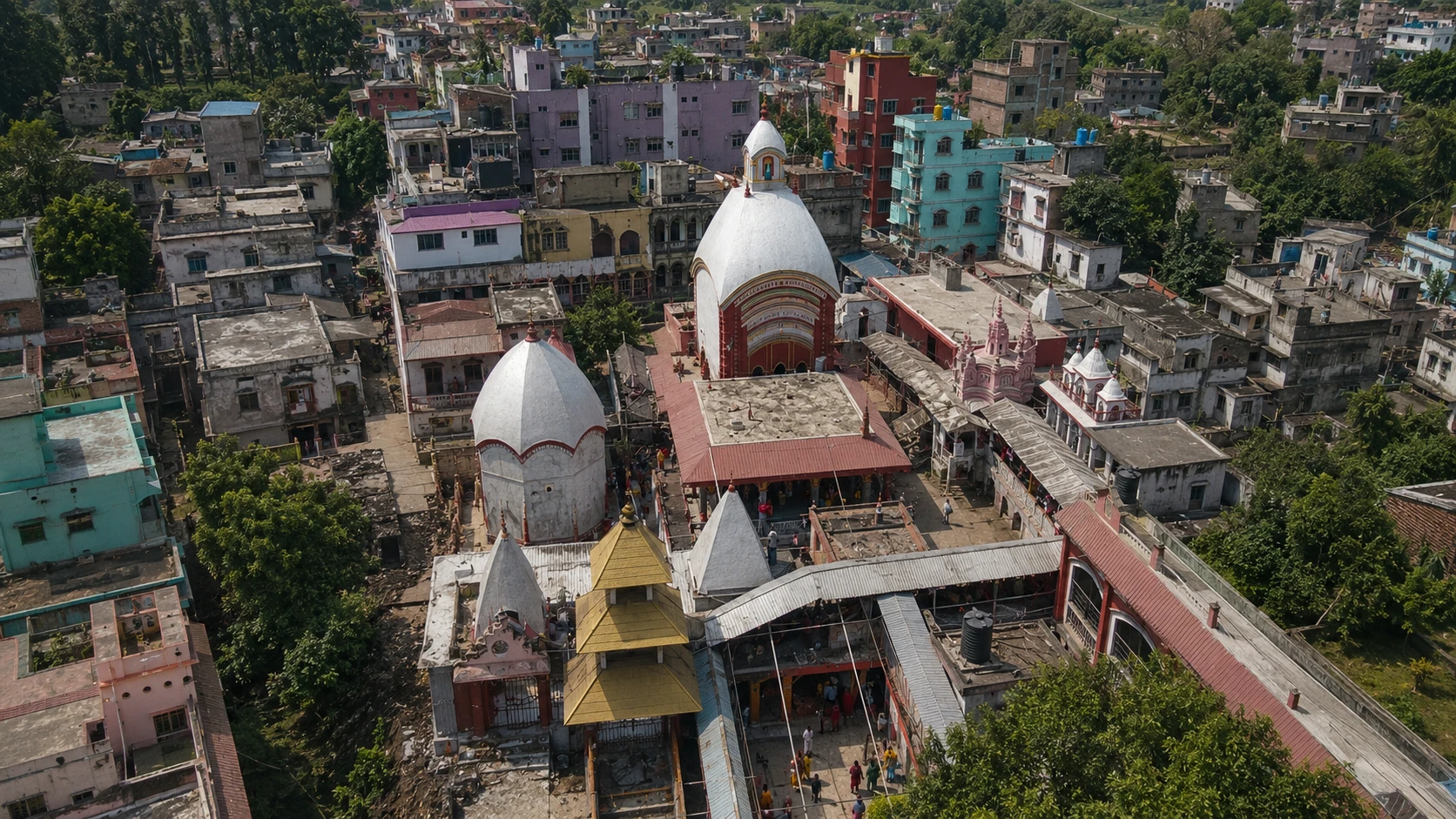
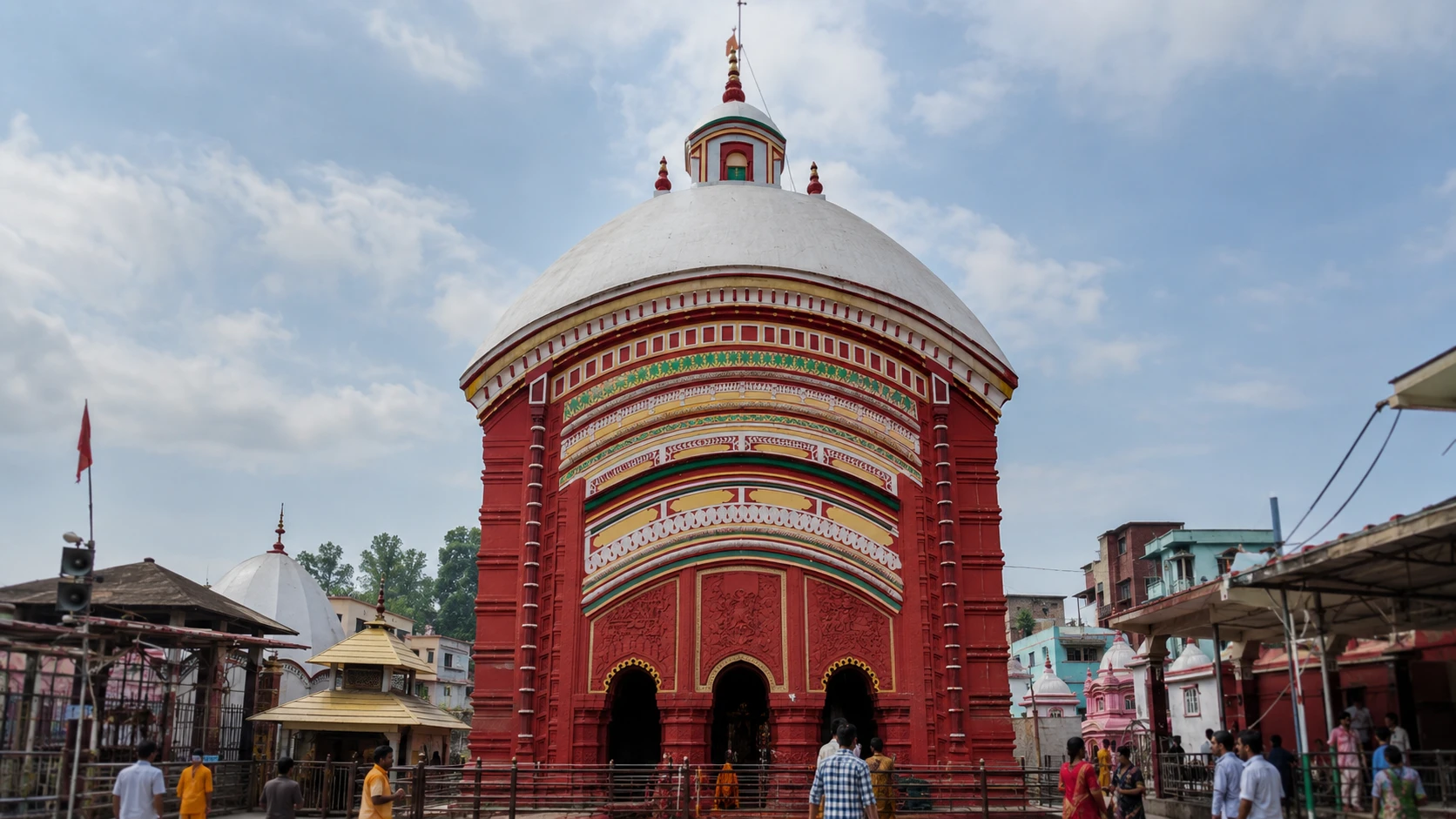
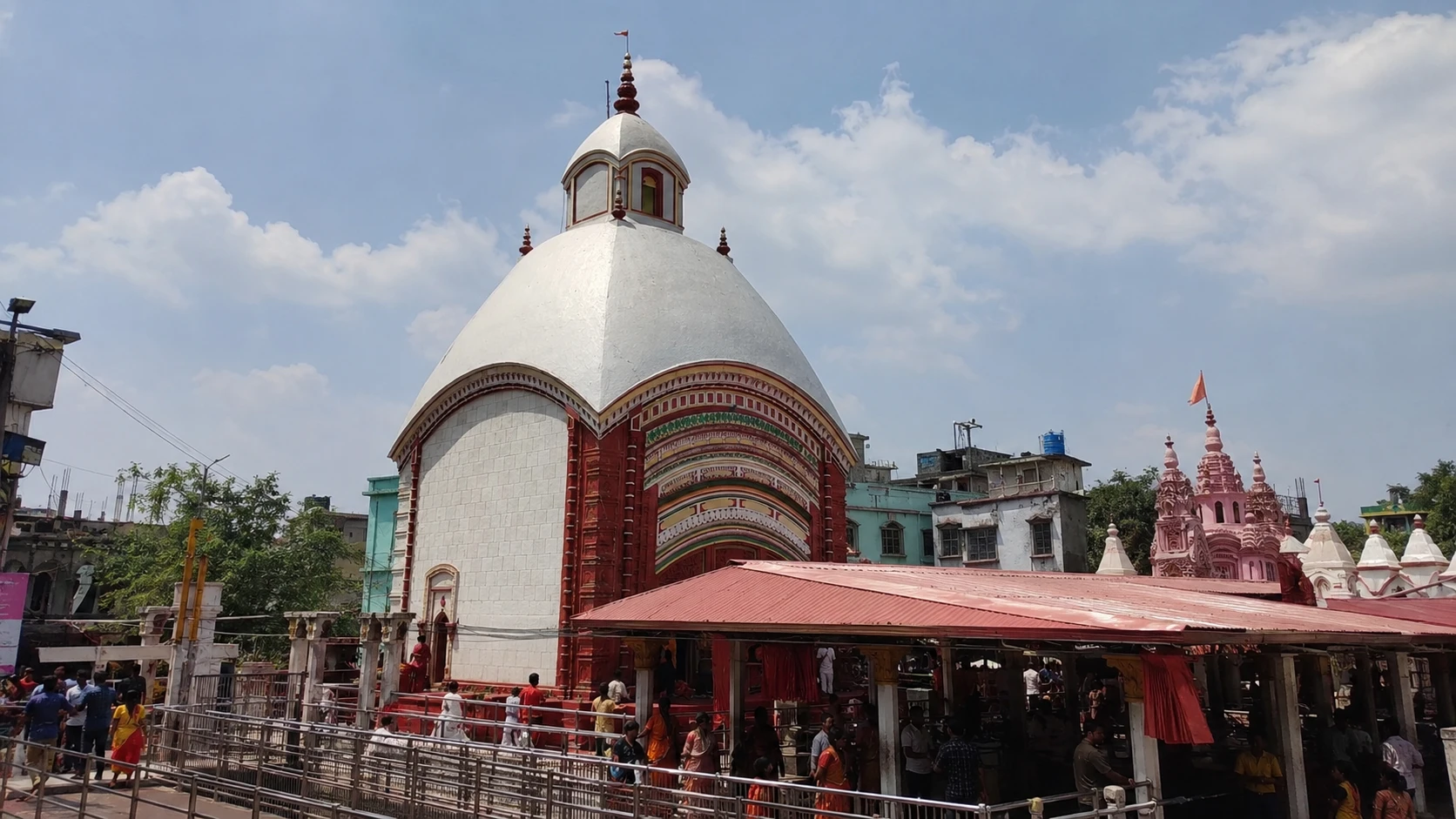
Regional Bengali temple-construction style with substantial medieval and reconstruction-era layering. The principal sanctum preserves the canonical regional Bengal Shakta architectural register, with the broader temple-precinct integrating the Mahāśmaśāna cremation-ground component (immediately adjacent to the principal sanctum) and the Bāmākhepā samādhi shrine within the coordinated temple-complex architecture. The Dwaraka river-side ghat operates as the canonical bathing and ritual-water-source associated with the temple
खुला
04:00 – 21:00
आरती
04:30 · 12:00 · 19:00 · 20:30
विशेष
Kālī Pūjā (Kārtika Amāvasyā, Oct-Nov) is the principal annual nocturnal Devī-festival at Tarapith, with the Devī Tara receiving particular festival-night liturgical attention through the broader Bengali Shakta nocturnal-festival framework, though the principal Tara identity is integrated with the Kālī-Mahāvidyā cycle at this nocturnal observance; Tara Jayanti (the canonical annual Tara Devī observance per the regional Bengali Shakta liturgical calendar) is the principal Tara-specific annual festival; Śāradīya Navarātri (Sep-Oct) and Durgā Pūjā bring the broader Bengal Shakta autumn festival cycle; Vasantī Navarātri (Mar-Apr) brings the spring Devī-festival cycle; Bāmākhepā Jayanti (the anniversary of Bāmākhepā's birth) and Bāmākhepā Tirobhāva Tithi (the anniversary of his samādhi) are the principal Bāmākhepā-tradition observances drawing substantial Bengali Tantric tradition pilgrim flow
पवित्र कथा · पवित्र कथा
Tārā Mā sits at Tarapith village in Birbhum district of West Bengal, approximately 250 km north-northwest of Kolkata and 7 km from Rampurhat (the principal regional administrative center and railhead), and the site occupies a corpus-distinctive position in the canonical Shakta sacred-geography network through the integration of multiple convergent dimensions. The body-part attribution at Tarapith is canonically the third eye (trinayana / netra-pradeśa) per the dominant regional Bengali Shakta tradition and the broader 51-Pīṭha enumeration in Sircar 1948, with the Devī's name Tārā (the Savior, the One Who Takes Across; from Sanskrit root tṛ meaning to cross / to deliver) reflecting her canonical theological identity as the second of the Daśa Mahāvidyā (the ten cosmic-feminine wisdom-forms of the canonical Shakta tradition). The Tarapith site is structurally distinctive within the corpus through several converging dimensions: (a) the 51-Pīṭha-network attestation with the third-eye body-part, the canonical Pīṭha-formation narrative situates Tarapith at the site where Sati's third eye fell, making Tarapith one of the documented body-part-fall Pīṭha sites within the broader 51-network framework even though Tarapith does not appear in the canonical Aṣṭādaśa eighteen-shrine Stotram; (b) the canonical seat of the second Daśa Mahāvidyā Tara, the corpus-first documented Daśa Mahāvidyā framework integration, with Tarapith operating as the canonical principal anchor of the Tara-Mahāvidyā tradition across the broader Hindu Shakta-Tantric framework; (c) one of the canonical Mahā Śmaśānas (great cremation grounds) of the Shakta-Tantric tradition, the corpus-first documented Mahā Śmaśāna integration, with the canonical cremation-ground theological dimension operating in coordinated devotional infrastructure alongside the principal Tara sanctum and the broader temple-precinct; (d) the canonical foundational anchor of the 19th-century Bengali Tantric tradition through Bāmākhepā (Vāmākṣepā, c. 1837, 1911), the great Bengali Tantric saint whose lifelong Tara-devotion, Kaula-style Tantric practice, and final samādhi at Tarapith made him the foundational figure of the modern Bengali Tantric tradition. The Tarapith site operates alongside the broader West Bengal Shakta sacred-geography network including Kalighat (the canonical Kālī shrine in central Kolkata), Dakshineswar (the major Bengal Shakta shrine near Kolkata), Bakreshwar (the regional 51-Pīṭha cluster site), Shrinkhala Pandua (Aṣṭādaśa #3 in Hooghly district), and the broader regional 51-Pīṭha distributions across West Bengal. Within the canonical pan-Indian Daśa Mahāvidyā tradition, Tarapith's particular standing as the principal Tara-Mahāvidyā anchor gives the site theological centrality beyond the regional Bengal Shakta context, the corpus's first documented Daśa Mahāvidyā framework integration arrives at Tarapith.
Sacred Designationपवित्र पदनाम
Shakti Peeth
शरीर का अंग: Third Eye (Trinayana / Netra-pradeśa) per the dominant regional Bengali Shakta tradition and the broader 51-Pīṭha enumeration in Sircar 1948
शक्ति: Tārā (the Savior, the One Who Takes Across; the second of the canonical Daśa Mahāvidyā, the ten cosmic-feminine wisdom-forms of the canonical Shakta tradition. The Devī's name etymologically derives from the Sanskrit root tṛ meaning 'to cross' or 'to deliver,' reflecting her canonical theological identity as the cosmic-feminine power who delivers devotees across the ocean of saṃsāra)
भैरव: Caṇḍa-Bhairava per some regional Bengali Shakta tradition readings, with Tarapith's canonical Bhairava attestation showing recension variability across primary sources, the canonical Pīṭha-Bhairava intra-site pairing at Tarapith is less consistently documented than at the canonical Aṣṭādaśa Pīṭha sites, with the regional Bengali Tantric tradition's local Bhairava-forms operating as devotionally adjacent attestations
Sacred Origin Storyपवित्र उत्पत्ति कथा
Source: Devī Bhāgavata Purāṇa, Skandha VII (canonical 51-Pīṭha enumeration); Kālikā Purāṇa, Chapters 18 and 60, 62 (52-list); regional Bengali Shakta Sthala Purāṇa tradition on Tarapith; the canonical Daśa Mahāvidyā textual tradition including the Mahānirvāṇa Tantra, the Tantrasāra, and the Śākta Tantric corpus; Bāmākhepā oral tradition and the 19th-century Bengali Tantric devotional literature; the Tara-mantra and Tara-stotra textual corpus
The Pīṭha-narrative at Tarapith follows the canonical Pīṭha-formation cycle: Sati's body-fragment (canonically the third eye / trinayana per the dominant regional Bengali Shakta tradition) fell at the Tarapith site, giving rise to the canonical Pīṭha attestation.
The site's distinctive theological identity, however, operates primarily through the Devī Tara's canonical role as the second of the Daśa Mahāvidyā, the cosmic-feminine savior whose canonical iconographic register (Tara in her standing form with the canonical Tara-attributes including the severed-head, the scissors, the kapāla, and the lotus, with the canonical Tara-color register operating through dark-blue or dark-green skin tone characteristic of Tara-iconography) and devotional framework anchor the broader Hindu Tara-Mahāvidyā tradition at Tarapith.
The site's Mahā Śmaśāna canonical attestation operates through the immediately adjacent cremation ground (śmaśāna) that the canonical regional tradition holds as one of the five great cremation grounds (pañca-mahāśmaśāna) of the Shakta-Tantric framework, the canonical Mahā Śmaśāna theological dimension integrates the canonical Pīṭha-attestation with the canonical Tantric cremation-ground devotional infrastructure, with the canonical Tantric tradition holding the cremation ground as theologically continuous with the principal sanctum rather than as a separate spatial-theological domain.
The Bāmākhepā tradition (the canonical Bengali Tantric saint Bāmākhepā, c. 1837, 1911, whose lifelong Tara-devotion and Tantric practice anchored the modern Bengali Tantric tradition's canonical institutionalization) operates as the canonical foundational anchor of the contemporary Tarapith devotional infrastructure, Bāmākhepā's canonical samādhi at the site (achieved at the close of his earthly life) gives the site a documented Tantric-saint-samādhi heritage alongside the canonical Pīṭha-attestation.
The integrated four-dimensional theological architecture, the 51-Pīṭha body-part attestation + the second Daśa Mahāvidyā Tara framework + the canonical Mahā Śmaśāna Tantric cremation-ground dimension + the Bāmākhepā samādhi heritage, operates through the coordinated devotional infrastructure at the temple-precinct.
The Bhairava attestation at Tarapith shows recension variability; the regional Bengali Shakta tradition's local Bhairava-forms (Caṇḍa-Bhairava per some readings, alongside the broader regional Tantric Bhairava framework) operate as devotionally adjacent attestations to the canonical Tara-Mahāvidyā theological framework rather than as a structurally consistent canonical Pīṭha-Bhairava intra-site pairing.
उद्धृत स्रोत:
- Devī Bhāgavata Purāṇa, Skandha VII (canonical 51-Pīṭha enumeration)
- Kālikā Purāṇa, Chapters 18 and 60, 62 (52-list tradition)
- Regional Bengali Shakta Sthala Purāṇa tradition on Tarapith
- Mahānirvāṇa Tantra (canonical Daśa Mahāvidyā textual tradition)
- Tantrasāra of Krishnananda Agamavagisha (16th c. Bengal Tantric textual corpus)
- Tara-mantra and Tara-stotra textual corpus
- Bāmākhepā oral tradition and 19th-century Bengali Tantric devotional literature
- Tantra-related Bengali literary tradition including the Tantric devotional poetry corpus
- Sircar, D. C., 'The Śākta Pīṭhas' (Motilal Banarsidass, 1948; revised 1973)
- Bhattacharya, N. N., 'History of the Sakta Religion' (Manohar, 1974)
- Kinsley, David, 'Tantric Visions of the Divine Feminine: The Ten Mahāvidyās' (University of California Press, 1997)
- Urban, Hugh B., 'Tantra: Sex, Secrecy, Politics, and Power in the Study of Religion' (University of California Press, 2003)
- McDermott, Rachel Fell, 'Mother of My Heart, Daughter of My Dreams: Kali and Uma in the Devotional Poetry of Bengal' (Oxford University Press, 2001)
- Bhattacharya, Tushar, 'Bamakhepa: The Saint of Tarapith' (regional Bengali biographical literature)
- Sarkar, Sumit, 'The Cult of Shakti in Bengal' (Indian History Congress Proceedings, 1985)
अन्य परंपराएँ · अन्य परंपराएँ
Body-part attribution recension at Tarapith
The body-part attribution at Tarapith shows recension variability across primary sources. The dominant regional Bengali Shakta tradition and Sircar 1948 attestation is trinayana / third eye, with this attribution providing the canonical living-tradition framework at the site.
Some Kālikā Purāṇa manuscript variants and broader Tantric textual readings give alternate readings, including 'eye-region' (netra-pradeśa) as a slightly broader reading and, less commonly, alternate body-part attributions that reflect the broader 51-Pīṭha network's complex multi-source textual transmission history.
The corpus records trinayana / third eye as the dominant living-tradition attestation while acknowledging the recension-cluster within the broader eye-region anatomical framework as devotionally compatible context.
Hindu Shakta-Tantric Tara and Tibetan Buddhist Tara theological-historical relationship
The canonical Tara theological framework operates across the Hindu Shakta-Tantric and Tibetan Buddhist religious traditions as theologically distinct but historically convergent canonical traditions. The Hindu Shakta-Tantric Tara (the second of the canonical Daśa Mahāvidyā, anchored at Tarapith) and the Tibetan Buddhist Tara (Ārya Tārā, with the canonical 21-Tara cycle and the broader Tibetan Tantric framework) share the canonical etymology (Sanskrit tṛ = to cross / to deliver), share the canonical theological identity as the cosmic-feminine savior, and historically developed in coordinated mutual influence across the pre-medieval and medieval South Asian-Tibetan religious geography.
The scholarly literature documents the historical-comparative complexity of the two-tradition relationship without resolving the historical-priority question definitively; some scholarly readings hold that the Hindu Tara emerged from Buddhist Tara influence in pre-medieval Bengal, while other readings hold that the two traditions developed in parallel mutual influence.
The corpus records the Hindu Shakta-Tantric Tara framework at Tarapith as the canonical Hindu-tradition attestation that the site operates through, while documenting the broader comparative-religious context as scholarly historical-comparative complexity.
विद्वत संदर्भ
Tarapith occupies a structurally distinctive position in the corpus through the integration of four convergent canonical dimensions at a single integrated temple-precinct: (a) the 51-Pīṭha network attestation with the third-eye / trinayana body-part attribution; (b) the canonical seat of the second Daśa Mahāvidyā (Tara), the corpus's first formal Daśa Mahāvidyā framework integration, formalizing the canonical ten-Mahāvidyā Shakta-Tantric framework alongside the dominant Pīṭha-network frameworks; (c) one of the canonical Mahā Śmaśānas of the Shakta-Tantric tradition, the corpus's first formal Mahā Śmaśāna integration, formalizing the canonical great-cremation-ground theological dimension that the regional Bengali Tantric tradition holds as integrated with the principal Pīṭha; (d) the Bāmākhepā samādhi heritage, the corpus's first formal documentation of a Tantric saint's lifetime-and-samādhi-site canonical tradition integrated with the broader Pīṭha-attestation. The four-dimensional convergence is corpus-distinctive among the documented Shakti Pīṭhas. Within the broader pan-Indian Shakta-Tantric tradition, the Daśa Mahāvidyā framework (Kinsley 1997) operates as a canonical classification of ten cosmic-feminine wisdom-forms alongside (and partially overlapping with) the Pīṭha-network frameworks; Tarapith's canonical role as the second-Mahāvidyā anchor formalizes the corpus's recognition of this canonical classification. The Mahā Śmaśāna framework (the canonical five great cremation grounds of the Shakta-Tantric tradition) operates as a canonical Tantric devotional infrastructure that integrates the cremation-ground theological dimension with the broader Shakta sacred-geography; the corpus's documentation of Tarapith as one of the canonical Mahā Śmaśānas formalizes the corpus's engagement with this canonical Tantric framework. The Bāmākhepā tradition (c. 1837, 1911) is documented through the regional Bengali biographical literature and the broader 19th-century Bengali Tantric scholarly framework (Urban 2003, McDermott 2001), with Bāmākhepā's canonical lifetime-Tara-devotion and Tantric-practice giving the site its modern Bengali Tantric tradition anchoring. The Tarapith site operates within the broader West Bengal Shakta sacred-geography network alongside Kalighat, Dakshineswar, Bakreshwar, Shrinkhala Pandua (Aṣṭādaśa #3), and the broader regional 51-Pīṭha distributions. David Kinsley's 'Tantric Visions of the Divine Feminine: The Ten Mahāvidyās' (1997), Hugh Urban's 'Tantra: Sex, Secrecy, Politics, and Power' (2003), Rachel McDermott's 'Mother of My Heart' (2001), Sumit Sarkar's 'The Cult of Shakti in Bengal' (1985), and the regional Bengali Tantric scholarly literature provide the principal modern academic treatments of the canonical theological-pilgrimage framework within which Tarapith operates.
Historyइतिहास
Tarapith's historical depth as a sacred site is integrated with the broader Birbhum-region Bengal Shakta sacred-geography. The pre-canonical layer (continuous Devī-worship in the Bengal-Birbhum region from at least the late epic period through c. 4th c. CE) places Tarapith within the deep regional Devī-tradition.
The canonical 51-Pīṭha attestation arrived through the 8th, 12th c. textualization period via the Devī Bhāgavata, the Kālikā Purāṇa, and the broader Pīṭha-network textualization. The medieval Bengal Sultanate period (1204, 1576 CE) brought disruption to the broader West Bengal Hindu temple network, with the Tarapith site's specific institutional history during this period documented unevenly across primary sources but consistent with the broader regional pattern.
The Mughal period (1576, 1757 CE) brought relative stability to the broader Bengal region, with the broader Bengal Shakta tradition's institutional continuity preserved across the Mughal centuries. The early modern period (late 18th, 19th c.) brought the substantive reconstruction-and-institutional-consolidation phase at Tarapith alongside the broader Bengal Shakta temple network.
The 19th century, particularly the lifetime of Bāmākhepā (c. 1837, 1911), brought the canonical foundational anchoring of the modern Bengali Tantric tradition at Tarapith. Bāmākhepā (Vāmākṣepā, 'the mad one of Bāmā', the regional appellation reflecting both his Tantric devotion to the Devī's left-handed Vāma form and his canonical madness-state Tantric practice) lived a substantial portion of his life at Tarapith, developed an active Tantric practice integrating the canonical Tara-devotion with Kaula-style Tantric infrastructure, gathered substantial regional disciples, and ultimately attained samādhi at the site at the close of his life.
Bāmākhepā's lifetime-Tantric-practice and final samādhi anchored the canonical modern Bengali Tantric tradition's institutional infrastructure at Tarapith. The Bengali Shakta renaissance of the 19th, 20th centuries (Ramakrishna Paramahamsa, Sri Aurobindo, Bengali Shakta literary tradition) provided the broader institutional-cultural context within which the Tarapith site operated, with Bāmākhepā receiving substantial regional recognition as a foundational Tantric saint within this broader renaissance framework.
Post-Independence (1947, present) administrative arrangements placed the site within the Government of West Bengal Hindu temple framework. The 21st century has brought substantial infrastructure improvements including coordinated pilgrim management during Kālī Pūjā, Tara Jayanti, Śāradīya Navarātri, Bāmākhepā Jayanti, and Bāmākhepā Tirobhāva Tithi festival periods, alongside the broader regional Birbhum district pilgrim infrastructure development.
Historical Timelineऐतिहासिक कालक्रम
Pre-canonical attestation of Devī-worship in the broader Birbhum-region Bengal Shakta sacred-geography. The Tarapith site is situated within the deep regional Devī-religious geography that would integrate the canonical 51-Pīṭha attestation through the textualization-and-institutional-development period.
Canonical 51-Pīṭha attestation of Tarapith through textualization in the Devī Bhāgavata Purāṇa (Skandha VII), the Kālikā Purāṇa (Chapters 18 and 60, 62), and the broader Pīṭha-network textual corpus. The third-eye / trinayana body-part attribution arrives at the site within the broader 8th, 12th c. textualization period during which the canonical 51-network framework was consolidated. The canonical Daśa Mahāvidyā framework (including the second-Mahāvidyā Tara identification) was also substantially developed and textualized during this period through the broader Tantric scriptural corpus.
Bengal Sultanate period (1204, 1576 CE) institutional-political disruption across the broader West Bengal Hindu temple network. The specific institutional history of the Tarapith site during this period is documented unevenly across primary sources, but the broader regional disruption pattern is documented through Bengal medieval historiography. The Tarapith site's living-tradition continuity through the medieval-disruption period operated through the broader regional Bengal Tantric tradition's institutional resilience.
Substantive reconstruction-and-institutional-consolidation phase at Tarapith alongside the broader Bengal Shakta temple network's revival. The present temple infrastructure dates substantially from this period, with broader Bengal Shakta community patronage rebuilding and consolidating the regional Shakta temple network across multiple sites including Tarapith. The Bengali Shakta renaissance of the 19th century, including the literary-cultural movement, the religious-philosophical movement (Ramakrishna Paramahamsa's broader Bengal Shakta institutionalization), and the institutional-administrative consolidation, provided the broader institutional-cultural context within which Tarapith's reconstruction-era infrastructure stabilized.
Bāmākhepā (Vāmākṣepā, c. 1837, 1911) lifetime at Tarapith. Bāmākhepā lived a substantial portion of his life at Tarapith, developed an active Tantric practice integrating canonical Tara-devotion with Kaula-style Tantric infrastructure, gathered substantial regional disciples (including Sadhak Bamadev, his canonical foremost disciple, and the broader regional Bengali Tantric community), and ultimately attained samādhi at the site at the close of his life (c. 1911). Bāmākhepā's canonical lifetime-Tara-devotion and Tantric-practice anchored the canonical modern Bengali Tantric tradition's institutional infrastructure at Tarapith. The Bāmākhepā tradition's pan-Bengali resonance includes substantial regional biographical literature documenting his life and Tantric practice; the broader Bengali cultural framework received him as a foundational Tantric saint within the 19th-century Bengali Shakta renaissance's cultural-religious context. The Bāmākhepā samādhi shrine at Tarapith operates as the canonical pole of the contemporary Bengali Tantric tradition's institutional infrastructure.
Post-Independence administration of the Tarapith temple complex under the Government of West Bengal Hindu temple framework. The post-1947 period saw the broader West Bengal Shakta tradition continue institutional operations through the state administrative framework. The 21st century has brought substantial infrastructure improvements including coordinated pilgrim management during Kālī Pūjā (Oct-Nov, the principal nocturnal Devī-festival), Tara Jayanti (the canonical annual Tara observance), Śāradīya Navarātri (Sep-Oct), Bāmākhepā Jayanti (the anniversary of Bāmākhepā's birth), and Bāmākhepā Tirobhāva Tithi (the anniversary of his samādhi). The Bengali Tantric tradition's substantial 20th-21st century academic and popular literature has provided sustained scholarly engagement with the Bāmākhepā tradition, the canonical Tara-Mahāvidyā framework, and the broader regional Bengal Tantric heritage. Tarapith continues to operate as one of the principal regional Bengal Shakta pilgrimage destinations alongside Kalighat, Dakshineswar, and the broader West Bengal Shakta network.
What You'll Seeदर्शन में
The Tara Mā sanctum at Tarapith preserves the canonical Tara-Mahāvidyā iconographic register through the principal Devī murti and the integrated temple-precinct devotional infrastructure. The canonical Tara murti is sculpted in dark stone characteristic of the regional Bengali Shakta sculptural tradition and depicts the Devī in the canonical Tara-iconographic register, Tara in standing form with the canonical Tara-attributes (the severed-head / khaḍga held in one hand, the scissors / kartṛkā in another, the kapāla / skull-cup, and the canonical Tara-lotus seat configuration), with the canonical dark-blue or dark-green skin-tone register that characterizes Tara-iconography across the broader Hindu Shakta-Tantric tradition.
The Devī is daily draped in red silk saree per the regional Bengali Shakta convention with substantial gold ornamentation including the canonical Tara-kireeta, and the sanctum's elaborate floral and lamp arrangements operate at canonical scale.
The principal Tara murti's third-eye iconographic register references the canonical body-part attribution at the site (the third eye / trinayana being the canonical Pīṭha-body-part), with the murti's third-eye position operating as the canonical iconographic anchor of the site's 51-Pīṭha attestation.
The Mahā Śmaśāna immediately adjacent to the principal sanctum operates as the integrated cremation-ground devotional infrastructure, the canonical Tantric tradition holds the Mahā Śmaśāna as theologically continuous with the principal Tara sanctum rather than as a separate spatial-theological domain.
The Mahā Śmaśāna preserves the canonical Tantric devotional infrastructure including specific Tantric ritual sites, traditional Tantric practitioner-accommodation arrangements, and the canonical Tantric cremation-ground ritual ecology. The Bāmākhepā samādhi shrine within the temple-precinct preserves the canonical 19th-c.
Bengali Tantric saint's samādhi-site devotional infrastructure, Bāmākhepā's pādukā (sacred sandals) and the broader samādhi-shrine iconographic register operate as the canonical Tantric-saint-samādhi-tradition pole alongside the principal Tara sanctum and the Mahā Śmaśāna.
The Dwaraka river-side ghat operates as the canonical bathing and ritual-water-source associated with the temple, the river is held in the canonical regional Tantric tradition as the foundational ritual-water-source for the temple's daily liturgical infrastructure.
The integrated temple-precinct's iconographic register operates through the coordinated four-pole infrastructure: the principal Tara sanctum, the Mahā Śmaśāna cremation ground, the Bāmākhepā samādhi shrine, and the Dwaraka river-side ghat.
Distinctive Practicesविशिष्ट परंपराएँ
Tantric Night-Cycle Observance, Integrated Mahāśmaśāna Devotional Practice (Corpus-First Mahā Śmaśāna Integration)
तांत्रिक रात्रि-चक्र आचरण, एकीकृत महाश्मशान भक्ति अभ्यास (संग्रह-प्रथम महा श्मशान एकीकरण)
Year-round; particularly weighted during Kālī Pūjā nights (Kārtika Amāvasyā, Oct-Nov), the new-moon (amāvasyā) and full-moon (pūrṇimā) cycles each lunar month, and during the canonical Tantric night-cycle observances calibrated to the regional Bengali Tantric liturgical calendar
The corpus-first Mahā Śmaśāna integration at Tarapith operates through the canonical Tantric night-cycle observance, the integrated devotional practice that engages the principal Tara sanctum and the immediately adjacent Mahā Śmaśāna cremation ground as theologically continuous devotional infrastructure rather than as separate spatial-theological domains. The Tantric night-cycle observance integrates: (a) the canonical nocturnal Tara-mantra recitation at the principal sanctum, with the canonical Tara-mantra liturgical infrastructure operating at night-cycle intensity during the major nocturnal observances; (b) the canonical Mahā Śmaśāna devotional engagement including the canonical Tantric cremation-ground ritual configuration (sādhana sites, traditional Tantric practitioner-accommodation arrangements, ritual-fire / homa observances at the canonical Tantric sites within the cremation ground); (c) the integrated four-pole circumambulation engaging the principal Tara sanctum + Mahā Śmaśāna + Bāmākhepā samādhi shrine + Dwaraka river-side ghat as the canonical Tarapith Tantric pilgrim circuit. The practice is corpus-first as the principal documented Mahā Śmaśāna devotional integration among the corpus's documented Shakta-Tantric sites, no other corpus entry has formally integrated the canonical Mahā Śmaśāna theological dimension with the broader Pīṭha-attestation. The canonical Tantric devotional infrastructure at the Mahā Śmaśāna operates within the regional Bengali Tantric tradition's institutional framework, with the canonical practices including Kaula-style Tantric infrastructure, the canonical nocturnal-cycle ritual configuration, and the broader Tantric devotional engagement. The corpus's editorial position presents the Mahā Śmaśāna integration as the documented canonical Tantric devotional infrastructure within the regional Bengali Tantric tradition; the practice operates within the canonical Hindu Shakta-Tantric theological framework and the broader Tarapith institutional infrastructure.
The canonical Mahā Śmaśāna framework operates as a foundational Tantric devotional infrastructure within the broader Shakta-Tantric tradition. The canonical five-Mahā-Śmaśāna enumeration documents the canonical cremation-ground sites where the Tantric tradition holds the theological-spatial framework operates at maximum intensity for canonical Tantric practice; Tarapith's canonical status as one of these sites integrates the Pīṭha-attestation with the canonical Tantric cremation-ground infrastructure. The Tantric night-cycle observance at Tarapith operationalizes this canonical theological framework through coordinated devotional practice integrating the four-pole temple-precinct infrastructure.
Bāmākhepā Samādhi Devotional Tradition, Canonical 19th-Century Bengali Tantric Saint Heritage (Corpus-First Tantric-Saint-Samādhi-Site Integration)
बामाक्षेपा समाधि भक्ति परंपरा, प्रामाणिक 19वीं शताब्दी बंगाली तांत्रिक संत धरोहर (संग्रह-प्रथम तांत्रिक-संत-समाधि-स्थल एकीकरण)
Year-round; particularly weighted during Bāmākhepā Jayanti (the anniversary of Bāmākhepā's birth, observed per the regional Bengali Tantric tradition's liturgical calendar) and Bāmākhepā Tirobhāva Tithi (the anniversary of Bāmākhepā's samādhi attainment / death). Daily nocturnal observances at the samādhi shrine integrate with the broader Tarapith Tantric night-cycle infrastructure
The corpus-first Tantric-saint-samādhi-site integration at Tarapith operates through the Bāmākhepā samādhi devotional tradition. Bāmākhepā (Vāmākṣepā, c. 1837, 1911), the canonical 19th-century Bengali Tantric saint whose lifelong Tara-devotion and Kaula-style Tantric practice anchored the canonical modern Bengali Tantric tradition's institutional infrastructure at Tarapith, attained his canonical samādhi at the site at the close of his earthly life (c. 1911). The Bāmākhepā samādhi shrine within the temple-precinct preserves the canonical samādhi-site devotional infrastructure, Bāmākhepā's pādukā (sacred sandals), the broader samādhi-shrine iconographic register, and the canonical Tantric-saint-tradition devotional infrastructure operate as the contemporary Bengali Tantric tradition's institutional anchor. The Bāmākhepā devotional tradition operates through coordinated practices: (a) daily darshan and offerings at the Bāmākhepā samādhi shrine alongside the principal Tara sanctum darshan; (b) recitation of Bāmākhepā-canonical Tantric devotional literature (the regional Bengali Tantric devotional poetry corpus and the Bāmākhepā oral tradition preserved across the broader Bengali Tantric community); (c) Bāmākhepā Jayanti (birth-anniversary) and Bāmākhepā Tirobhāva Tithi (samādhi-anniversary) canonical festival observances; (d) the canonical institutional continuity through Bāmākhepā's foremost disciples (Sadhak Bamadev and the broader 19th-20th c. Bengali Tantric tradition's transmission infrastructure). The practice is corpus-first as the principal documented Tantric-saint-samādhi-site canonical tradition among the corpus's documented Pīṭha sites, no other corpus entry has formally documented a Tantric saint's lifetime-and-samādhi-site canonical tradition integrated with the broader Pīṭha-attestation. The Bāmākhepā tradition's pan-Bengali resonance includes substantial regional biographical literature, scholarly engagement (Urban 2003, McDermott 2001), and broader cultural-religious framework integration.
The Tantric-saint-samādhi-site canonical tradition operates as a foundational framework within the broader Hindu Shakta-Tantric tradition. The canonical Tantric saint's samādhi at a site integrates the canonical Tantric-tradition transmission with the spatial-devotional infrastructure of the site, with the samādhi-site operating as the institutional anchor of the contemporary Tantric tradition. Bāmākhepā's canonical samādhi at Tarapith integrates the 51-Pīṭha attestation, the Daśa Mahāvidyā Tara framework, the Mahā Śmaśāna canonical attestation, and the canonical Tantric saint's lifetime-and-samādhi-site canonical tradition into a coordinated four-dimensional theological-devotional framework that operates as the contemporary Bengali Tantric tradition's principal institutional anchor.
Kālī Pūjā / Tara Jayanti Nocturnal Shakta-Tantric Festival Observance (Integrated with Bengal Shakta Festival Cycle)
काली पूजा / तारा जयंती रात्रिकालीन शाक्त-तांत्रिक उत्सव आचरण (बंगाल शाक्त उत्सव चक्र के साथ एकीकृत)
Kālī Pūjā (Kārtika Amāvasyā, Oct-Nov) is the principal annual nocturnal Devī-festival; Tara Jayanti is the canonical annual Tara Devī observance per the regional Bengali Shakta liturgical calendar; Śāradīya Navarātri (Sep-Oct), Durgā Pūjā, and Vasantī Navarātri (Mar-Apr) bring the broader Bengal Shakta autumn and spring festival cycles
The Tarapith festival cycle integrates the broader Bengal Shakta festival framework with the site's distinctive Tara-Mahāvidyā + Mahā Śmaśāna + Bāmākhepā tradition four-dimensional canonical infrastructure. Kālī Pūjā at Tarapith carries particular liturgical weight given the Tara-Mahāvidyā framework's integration with the Kālī-Mahāvidyā (the first of the Daśa Mahāvidyā), the canonical Bengal Shakta nocturnal-festival cycle's Kālī Pūjā observance integrates the canonical Tara-festival liturgical infrastructure through the broader Mahāvidyā theological framework. Tara Jayanti operates as the canonical annual Tara-specific observance per the regional Bengali Shakta liturgical calendar, with substantial regional pilgrim flow and the festival's principal liturgical attention focused on the canonical Tara murti and the broader Tara-Mahāvidyā theological framework. Śāradīya Navarātri and Durgā Pūjā bring the canonical Bengal Shakta autumn festival cycle, with the broader Bengal Shakta seasonal Devī-cycle observance integrating the Tarapith Tantric tradition with the regional festival infrastructure. The integrated four-pole temple-precinct (principal Tara sanctum + Mahā Śmaśāna + Bāmākhepā samādhi + Dwaraka ghat) operates at festival-scale during the major observances, with the canonical Tantric night-cycle observance integrating the festival-period devotional infrastructure with the site's canonical Tantric framework.
The integrated Bengal Shakta festival cycle at Tarapith operates through the canonical Mahāvidyā theological framework that integrates the cosmic-feminine Devī's multiple canonical forms (the Daśa Mahāvidyā including Kālī, Tara, and the broader eight Mahāvidyās) into a coordinated devotional infrastructure. The festival cycle's broader Bengal Shakta context, coordinated regional festival programming, regional pilgrim flow, and the broader Bengali cultural-religious framework integration, gives the Tarapith observance its layered canonical theological context.
Did You Know?क्या आप जानते हैं?
Tarapith is structurally distinctive in the corpus through the integration of four convergent canonical dimensions at a single temple-precinct: (1) the 51-Pīṭha network attestation with the third-eye / trinayana body-part attribution; (2) the canonical seat of the second Daśa Mahāvidyā (Tara), the corpus's first formal Daśa Mahāvidyā framework integration; (3) one of the canonical Mahā Śmaśānas (great cremation grounds) of the Shakta-Tantric tradition, the corpus's first formal Mahā Śmaśāna integration; (4) the Bāmākhepā samādhi heritage, the corpus's first formal Tantric-saint-samādhi-site canonical tradition integration. The four-dimensional convergence is corpus-distinctive among the documented Shakti Pīṭhas.
Sircar, 'The Śākta Pīṭhas' (1948); Kinsley, 'Tantric Visions of the Divine Feminine: The Ten Mahāvidyās' (1997); Urban, 'Tantra' (2003); regional Bengali Tantric tradition
Bāmākhepā (Vāmākṣepā, c. 1837, 1911), the canonical 19th-century Bengali Tantric saint whose lifelong Tara-devotion and Kaula-style Tantric practice anchored the modern Bengali Tantric tradition's institutional infrastructure at Tarapith, is one of the foundational figures of the 19th-century Bengali Shakta renaissance. The name Vāmākṣepā ('the mad one of Bāmā,' the regional appellation reflecting both his Tantric devotion to the Devī's left-handed Vāma form and his canonical madness-state Tantric practice) reflects the Bengali Tantric tradition's particular reception of his canonical antinomian Tantric practice as a foundational devotional framework. The Bāmākhepā samādhi shrine at Tarapith operates as the canonical pole of the contemporary Bengali Tantric tradition's institutional infrastructure.
Bāmākhepā oral tradition; Bhattacharya, 'Bamakhepa: The Saint of Tarapith'; Urban, 'Tantra' (2003); McDermott, 'Mother of My Heart' (2001); Sarkar, 'The Cult of Shakti in Bengal' (1985)
Tarapith is canonically one of the Mahā Śmaśānas (great cremation grounds) of the Shakta-Tantric tradition, the canonical Tantric devotional sites where the Tradition holds the theological-spatial framework operates at maximum intensity for canonical Tantric practice. The Mahā Śmaśāna at Tarapith is immediately adjacent to the principal Tara sanctum, and the canonical regional Tantric tradition holds the two as theologically continuous rather than as separate spatial-theological domains. The Mahā Śmaśāna integration is corpus-first at Tarapith and formalizes the corpus's recognition of the canonical pañca-mahāśmaśāna theological framework alongside the dominant Pīṭha-network frameworks.
Mahānirvāṇa Tantra; Tantrasāra of Krishnananda Agamavagisha (16th c.); regional Bengali Tantric tradition; Urban, 'Tantra' (2003); Kinsley, 'Tantric Visions of the Divine Feminine' (1997)
The canonical Tara theological framework operates across the Hindu Shakta-Tantric tradition and the Tibetan Buddhist tradition as theologically distinct but historically convergent canonical traditions. The Hindu Shakta-Tantric Tara (anchored at Tarapith as the second Daśa Mahāvidyā) and the Tibetan Buddhist Tara (Ārya Tārā, with the canonical 21-Tara cycle and the broader Tibetan Tantric framework) share the canonical etymology (Sanskrit tṛ = to cross / to deliver), share the canonical theological identity as the cosmic-feminine savior, and historically developed in coordinated mutual influence across the pre-medieval and medieval South Asian-Tibetan religious geography. The scholarly literature documents the historical-comparative complexity of the two-tradition relationship; the corpus records the Hindu Shakta-Tantric Tara framework at Tarapith as the canonical Hindu-tradition attestation while documenting the broader comparative-religious context as scholarly context.
Kinsley, 'Tantric Visions of the Divine Feminine' (1997); Beyer, 'The Cult of Tārā' (University of California Press, 1973); Shaw, 'Buddhist Goddesses of India' (Princeton University Press, 2006); Bharati, 'The Tantric Tradition' (1965)
Tarapith operates within the broader West Bengal Shakta sacred-geography network alongside the canonical regional Shakta-Tantric institutional infrastructure, including Kalighat (the canonical Kālī shrine in central Kolkata), Dakshineswar (the major Bengal Shakta shrine near Kolkata associated with Ramakrishna Paramahamsa), Bakreshwar (the regional 51-Pīṭha cluster site), Shrinkhala Pandua (Aṣṭādaśa #3 in Hooghly district), and the broader regional 51-Pīṭha distributions across West Bengal. Tarapith's particular standing within this regional network is its canonical Tara-Mahāvidyā + Mahā Śmaśāna + Bāmākhepā four-dimensional convergence, no other West Bengal Shakta site integrates all four canonical dimensions in the documented form that Tarapith does.
Sircar, 'The Śākta Pīṭhas' (1948); Sarkar, 'The Cult of Shakti in Bengal' (1985); McDermott, 'Mother of My Heart' (2001); regional Bengal Shakta tradition
Visitor Accessप्रवेश जानकारी
The temple-precinct is open to all pilgrims regardless of background. Photography and videography are restricted inside the principal Tara sanctum particularly during aarti; mobile phones should be carried switched off or deposited at the designated counter when entering the inner sanctum. Footwear is removed at the entrance to the temple precinct. The Mahā Śmaśāna and the Bāmākhepā samādhi shrine within the broader temple-precinct have their own access conventions calibrated to the regional Bengali Tantric tradition's practice framework. The temple operates from approximately 04:00 to 21:00 with four canonical aarti times. Pilgrim flow is substantial year-round and elevated during the major Bengal Shakta festival periods (Kālī Pūjā, Tara Jayanti, Śāradīya Navarātri, Bāmākhepā Jayanti, Bāmākhepā Tirobhāva Tithi).
आध्यात्मिक आधार
The photography prohibition reflects the standard major Bengal Shakta shrine sanctum-photography policy. The Mahā Śmaśāna and Bāmākhepā samādhi shrine access conventions reflect the regional Bengali Tantric tradition's canonical devotional practice framework, with appropriate decorum expected at these canonical Tantric devotional sites.
समकालीन संदर्भ
The Government of West Bengal administers the Tarapith temple complex with continuing recognition of the site's canonical Tara-Mahāvidyā Pīṭha + Mahā Śmaśāna + Bāmākhepā tradition standing. The 21st century has brought substantial infrastructure improvements including coordinated pilgrim management during major festival periods. The historical animal-sacrifice practice (canonically observed at Tarapith during the medieval-and-early-modern periods) has been substantially transitioned to symbolic-form offerings in the contemporary regional Bengali Shakta convention, with the temple administration coordinating the canonical contemporary symbolic-form framework alongside the canonical Tantric devotional infrastructure. There are no caste, gender, or sectarian access restrictions in modern practice.
व्यावहारिक मार्गदर्शन
Allow approximately 2, 3 hours at the integrated four-pole temple-precinct (principal Tara sanctum, Mahā Śmaśāna, Bāmākhepā samādhi shrine, Dwaraka river-side ghat) for the standard darshan during off-peak periods (longer during major festival peaks). Pilgrims undertaking integrated West Bengal Shakta sacred-geography pilgrimages typically engage Tarapith alongside Kalighat (Kolkata, 250 km), Dakshineswar (Kolkata region, 240 km), Bakreshwar (60 km), and the broader regional 51-Pīṭha cluster sites in coordinated multi-day pilgrim circuits. Pilgrims undertaking canonical Tantric tradition observances may extend their visit to engage the canonical Tantric devotional infrastructure at the Mahā Śmaśāna and the broader regional Bengali Tantric tradition's coordinated institutional framework. Modest, traditional dress is expected; head covering is customary at the sanctum during aarti.
Festivalsत्योहार
Kālī Pūjā (Nocturnal Devī-Festival; Particular Tara-Mahāvidyā Liturgical Weight at Tarapith)
काली पूजा (रात्रिकालीन देवी-उत्सव; तारापीठ पर विशेष तारा-महाविद्या धार्मिक भार)
Oct-Nov (Kārtika Amāvasyā, the new-moon night of the Kārtika month)
Kālī Pūjā is the principal annual nocturnal Devī-festival at Tarapith. Despite Tarapith being primarily a Tara shrine, the canonical Daśa Mahāvidyā framework's integration of Tara (the second Mahāvidyā) with Kālī (the first Mahāvidyā) brings the canonical Bengal Shakta Kālī Pūjā observance to Tarapith with substantial festival-scale liturgical infrastructure. The Devī's festival-night observance integrates the canonical Tara-Mahāvidyā framework with the canonical broader Mahāvidyā theological infrastructure, with the Tantric night-cycle observance at the Mahā Śmaśāna operating at festival-scale intensity. Bengal Shakta pilgrims undertaking the canonical Kālī Pūjā observance often integrate the Tarapith visit with the broader regional festival circuit (Kalighat being the principal Bengal Kālī-shrine destination on this night).
Tara Jayanti (Canonical Annual Tara Devī Observance)
तारा जयंती (प्रामाणिक वार्षिक तारा देवी आचरण)
Regional Bengali Shakta liturgical calendar (Caitra Śukla Caturdaśī per the dominant regional reading; specific timing varies across regional liturgical traditions)
Tara Jayanti is the canonical annual Tara Devī observance at Tarapith, the principal Tara-specific annual festival, distinct from the broader Bengal Shakta nocturnal-festival cycle. The festival operates through coordinated regional Bengali Shakta-Tantric tradition observance with the principal Tara sanctum receiving festival-scale liturgical attention, the Mahā Śmaśāna operating at coordinated nocturnal-festival intensity, and the Bāmākhepā samādhi shrine receiving the festival-specific Bāmākhepā-tradition devotional engagement. Tara Jayanti brings substantial regional pilgrim flow from across the broader Bengali Tantric tradition's institutional network.
Śāradīya Navarātri and Durgā Pūjā
शारदीय नवरात्र और दुर्गा पूजा
Sep-Oct (Āśvina month)
Śāradīya Navarātri and Durgā Pūjā bring the canonical Bengal Shakta autumn festival cycle to Tarapith with substantial festival-scale liturgical infrastructure. The principal Tara sanctum participates in the coordinated nine-night Devī-festival cycle, with the canonical Bengal Shakta autumn festival's coordinated regional programming integrating the Tarapith Tantric tradition with the broader West Bengal Shakta festival infrastructure. Durgāṣṭamī typically brings the festival's peak crowd at the Tarapith temple-precinct.
Bāmākhepā Jayanti (Birth-Anniversary)
बामाक्षेपा जयंती (जन्म-वर्षगाँठ)
Regional Bengali Tantric tradition liturgical calendar (per the canonical Bāmākhepā-tradition observance)
Bāmākhepā Jayanti is the canonical anniversary of Bāmākhepā's birth, observed at Tarapith with the principal liturgical attention focused on the Bāmākhepā samādhi shrine. The festival draws substantial Bengali Tantric tradition pilgrim flow from across the broader regional Bengal Tantric institutional network. The canonical observance integrates the broader Tarapith temple-precinct four-pole devotional infrastructure with the festival-specific Bāmākhepā-tradition devotional engagement.
Bāmākhepā Tirobhāva Tithi (Samādhi-Anniversary)
बामाक्षेपा तिरोभाव तिथि (समाधि-वर्षगाँठ)
Regional Bengali Tantric tradition liturgical calendar (per the canonical Bāmākhepā-tradition observance)
Bāmākhepā Tirobhāva Tithi is the canonical anniversary of Bāmākhepā's samādhi attainment at Tarapith (c. 1911). The festival operates as the canonical Bāmākhepā-tradition's principal annual commemorative observance, with substantial Bengali Tantric tradition pilgrim flow and the principal liturgical attention focused on the Bāmākhepā samādhi shrine. The canonical Tantric night-cycle observance during the Tirobhāva Tithi integrates the festival-specific devotional engagement with the broader Tarapith Tantric framework.
Traditional Offeringsपारंपरिक अर्पण
प्राथमिक अर्पण
Red flowers, hibiscus (japā-kusum), marigold, red roses
लाल पुष्प, गुड़हल (जपा-कुसुम), गेंदा, लाल गुलाब
पुष्प-माल्य; जपा-कुसुम
Red flowers are the canonical floral offering across the Shākta-Tantric tradition. The Bengal Shakta tradition's particular liturgical weighting of hibiscus (japā-kusum) as the canonical Bengali Devī-floral offering operates at Tarapith with full intensity, the deep-crimson japā-kusum is the canonical floral form for the principal Tara sanctum's daily and festival-period devotional cycle. Marigold and red roses are also accepted; the regional Bengali Shakta floral convention emphasizes the rich crimson tones for the Tara-Mahāvidyā devotional infrastructure.
Red Silk Saree and Chunari
लाल रेशम साड़ी और चुनरी
रक्त-क्षौम; उत्तरीय
Silk saree offerings at the principal Tara sanctum are the canonical Bengali Devī-vestment offering. The regional Bengali silk-weaving traditions (Tussar silk, Murshidabad silk, Garad silk) provide regional pilgrims with locally-significant offering options; red Garad silk in particular is the canonical Bengali Devī-festival vestment material and carries particular ritual weight at Tarapith.
Coconut
नारियल
नारिकेल
Coconut, offered whole or broken at the principal sanctum, represents the egoic self surrendered to the Devī. At Tarapith the coconut offering follows the standard Bengali Shakta-Tantric temple convention, with the broken coconut's interior fluid offered as part of the daily abhiṣeka sequence at the canonical Tara murti.
Sindoor and Kumkum (vermilion offerings)
सिंदूर और कुंकुम
सिन्दूर; कुङ्कुम-तिलक
Sindoor and kumkum are applied at the Tara murti's consecrated application points, on the chunari, and as tilak on the pilgrim's forehead. The consecrated kumkum returned as prasad carries the canonical Devī-presence consecration. The Bengal Shakta-Tantric tradition's particularly elaborated use of sindoor at the canonical Tara sanctum operates with festival-period intensity during the major Devī observances.
Akhand-Jyot ghee and wicks
अखंड-ज्योत हेतु घी और बत्तियाँ
अखण्ड-ज्योतिः घृत-वर्तिका
The temple-precinct maintains continuously-burning lamps at all four poles of the integrated devotional infrastructure, the principal Tara sanctum, the Mahā Śmaśāna, the Bāmākhepā samādhi shrine, and the Dwaraka river-side ghat. Pilgrims offer ghee and wicks to be added to these lamps. The integrated four-pole lamp-maintenance is a corpus-distinctive devotional infrastructure that operates parallel to the equivalent four-pole integration at Pithapuram (Pīṭha + Bhairava + Datta-sampradaya + ghat) and Mahur (Pīṭha + Datta + Paraśurāma triple-shrine + adjacent ghat infrastructure), with the Tarapith four-pole pattern operating through the canonical Tara-Mahāvidyā + Mahā Śmaśāna + Bāmākhepā + Dwaraka ghat framework.
इस मंदिर की विशेषता
Tantric Nocturnal Offering, Integrated Mahā Śmaśāna Devotional Engagement (Corpus-First Tantric-Nocturnal-Offering Tradition)
तांत्रिक रात्रिकालीन अर्पण, एकीकृत महा श्मशान भक्ति संलग्नता (संग्रह-प्रथम तांत्रिक-रात्रिकालीन-अर्पण परंपरा)
The corpus-first Tantric nocturnal offering tradition at Tarapith operates through the integrated Mahā Śmaśāna devotional engagement, the canonical Tantric night-cycle offering practice that engages the principal Tara sanctum and the immediately adjacent Mahā Śmaśāna cremation ground as theologically continuous devotional infrastructure. The offering includes: (a) the canonical nocturnal Tara-mantra recitation offering at the principal sanctum with festival-period intensity during the Kālī Pūjā, Tara Jayanti, and Bāmākhepā-tradition observances; (b) the canonical Mahā Śmaśāna devotional engagement including the canonical Tantric cremation-ground ritual offerings (the canonical ritual-fire / homa observances at the canonical Tantric sites within the cremation ground per the regional Bengali Tantric tradition's institutional framework); (c) the canonical integrated four-pole offering circulation engaging the principal Tara sanctum + Mahā Śmaśāna + Bāmākhepā samādhi shrine + Dwaraka river-side ghat as the canonical Tarapith Tantric devotional circuit. The historical animal-sacrifice practice (canonically observed at Tarapith during the medieval-and-early-modern periods) has been substantially transitioned to symbolic-form offerings (gourd, pumpkin, sugarcane, coconut) in the contemporary regional Bengali Shakta convention; the temple administration coordinates the canonical contemporary symbolic-form framework alongside the canonical Tantric devotional infrastructure. The corpus's editorial position presents the Tantric nocturnal offering tradition as the documented canonical Tantric devotional practice within the regional Bengali Tantric tradition; the practice operates within the canonical Hindu Shakta-Tantric theological framework.
Bāmākhepā Samādhi Pādukā Offering (Corpus-First Tantric-Saint-Pādukā Offering Tradition)
बामाक्षेपा समाधि पादुका अर्पण (संग्रह-प्रथम तांत्रिक-संत-पादुका अर्पण परंपरा)
The corpus-first Tantric-saint-pādukā offering tradition at Tarapith operates through the Bāmākhepā samādhi shrine's canonical pādukā devotional infrastructure. The offering includes: (a) silk-wrap cloth (uttarīya) for the sacred pādukā at the samādhi shrine; (b) jasmine flower garlands and the canonical regional Bengali Tantric floral offerings; (c) cow-ghee for the samādhi shrine's continuously-burning lamp infrastructure; (d) the recitation of Bāmākhepā-canonical Tantric devotional poetry alongside the offering; (e) coordinated pādukā darshan integrating the samādhi-site devotional engagement with the broader integrated four-pole Tarapith pilgrim circuit. The practice is corpus-first as the principal documented Tantric-saint-samādhi-site pādukā offering tradition among the corpus's documented Pīṭha sites, distinct from the canonical Datta-sampradaya pādukā offering tradition documented at Pithapuram (Śrīpāda Śrīvallabha Mahasamsthanam) and Mahur (Datta-sampradaya pādukā at the Mahur Datta shrine). The Bāmākhepā samādhi pādukā offering operates through the specific canonical Tantric-saint-tradition's regional Bengali institutional framework, with the broader Bengali Tantric tradition's contemporary institutional infrastructure operating through coordinated samādhi-shrine devotional engagement.
Canonical Tara-Mahāvidyā Coordinated Puja-Thali, Integrated Devī + Mahā Śmaśāna + Bāmākhepā Samādhi Offering Set
प्रामाणिक तारा-महाविद्या समन्वित पूजा-थाली, एकीकृत देवी + महा श्मशान + बामाक्षेपा समाधि अर्पण समूह
The integrated Tara-Mahāvidyā coordinated puja-thali offering tradition at Tarapith operates through the assembled four-pole offering set that pilgrims undertaking the canonical Tarapith pilgrim circuit bring through the integrated four-pole darshan-sequence. The Devī component includes the canonical Tara-Mahāvidyā offerings (red flowers, silk, sindoor/kumkum for the principal Tara sanctum); the Mahā Śmaśāna component includes the canonical Tantric cremation-ground offerings (symbolic gourd/pumpkin/sugarcane offerings replacing the historical animal-sacrifice tradition per the contemporary symbolic-form convention, alongside the canonical ritual-fire materials for the canonical Tantric infrastructure within the cremation ground); the Bāmākhepā samādhi component includes the canonical Tantric-saint-pādukā offerings (jasmine flowers, silk pādukā-cloth, cow-ghee for the samādhi shrine lamps); the Dwaraka river-side ghat component includes the canonical ritual-water-source offerings (water from the river for the canonical daily abhiṣeka sequence). Pilgrims preparing the integrated thali bring it through the canonical pilgrim circuit (Tara sanctum → Mahā Śmaśāna → Bāmākhepā samādhi → Dwaraka ghat) for coordinated offering across all four poles. The integrated thali is corpus-distinctive in its physical materialization of the four-dimensional canonical theological architecture at Tarapith, the offering's coordinated structure mirrors the temple-precinct's canonical four-pole devotional infrastructure.
Offerings may be brought from outside or purchased at vendor counters near the temple precinct. The integrated four-pole offering coordination is the corpus-distinctive offering pattern at Tarapith, pilgrims should plan offerings appropriate to each pole's devotional register (Tara-Mahāvidyā + Mahā Śmaśāna + Bāmākhepā samādhi + Dwaraka ghat) rather than bringing only Devī-offerings. The historical animal-sacrifice practice has been substantially transitioned to symbolic-form offerings in the contemporary regional Bengali Shakta convention; pilgrims should engage the canonical contemporary symbolic-form framework. The Government of West Bengal Hindu temple administration through the Devasthanam coordinates the offering ecology including the canonical multi-pole ritual materials and the festival-period coordinated offering arrangements.
How to Reachकैसे पहुँचें
Tarapith is well-accessible from the broader West Bengal regional transport network. By air, Netaji Subhas Chandra Bose International Airport, Kolkata (CCU, 235 km) provides full domestic and international connectivity; Kazi Nazrul Islam Airport, Andal (RDP, 90 km) provides limited domestic connectivity.
By rail, Rampurhat Railway Station (RPH, 7 km) is the principal regional railhead on the Eastern Railway's Howrah-Sahibganj Main Line and Howrah-New Farakka Line with direct trains from Kolkata Howrah, Kolkata Sealdah, Burdwan, Asansol, and the broader Eastern Railway network. Tarapith Road Railway Station (TPF, 3 km) is the smaller local railhead with limited connectivity.
From Rampurhat railway station, Tarapith is reached by local taxi, auto-rickshaw, or hired vehicle services in approximately 15, 20 minutes. By road, Tarapith is well-connected via National Highway 14 and the regional state highway network, West Bengal State Transport Corporation (WBSTC) operates regular bus services from Kolkata (approximately 5, 6 hours via road), Bardhaman, Asansol, and the broader West Bengal regional network.
Pilgrims undertaking integrated West Bengal Shakta sacred-geography pilgrimages typically arrange multi-day road or rail transport linking Tarapith with Kalighat, Dakshineswar (both in Kolkata region, 240, 250 km), Bakreshwar (60 km), Santiniketan (30 km, the regional cultural-religious center associated with Visva-Bharati University and the broader Tagore family heritage), and the broader regional Bengal Shakta cluster sites.
Plan Your Visitयात्रा की योजना
🌤 सर्वोत्तम मौसम
October through March offers the most agreeable weather in West Bengal's Birbhum region, cool, dry, and clear, ideal for the Tarapith darshan and the integrated West Bengal Shakta pilgrimage circuit. April through May bring intense pre-monsoon heat in the Bengal region (38°C+ with elevated humidity); the monsoon months (June-September) bring substantial rainfall typical of the Bengal monsoon climate. The major festival seasons, Kālī Pūjā (Oct-Nov), Tara Jayanti, Śāradīya Navarātri and Durgā Pūjā (Sep-Oct), Bāmākhepā Jayanti, and Bāmākhepā Tirobhāva Tithi, bring substantial pilgrim flow.
👘 पहनावे का नियम
Modest, traditional attire is expected at the Tarapith temple-precinct. Both traditional Bengali Shakta convention (saree for women, dhoti or modern modest attire for men) and modern modest dress are accepted; head covering is customary at the sanctum during aarti. The regional Bengali Shakta convention preserves traditional dress for major festival observances. For Bāmākhepā Jayanti and Bāmākhepā Tirobhāva Tithi, traditional Bengali Tantric tradition attire is the canonical festival pilgrim convention.
📱 फोन और फोटोग्राफी
Mobile phones must be deposited at the cloak counter before entering the principal Tara sanctum or carried in switched-off state during aarti. Photography and videography are restricted within the inner sanctum particularly during aarti and the canonical Tara-Mahāvidyā liturgical observances. The Mahā Śmaśāna and Bāmākhepā samādhi shrine have their own photography conventions calibrated to the regional Bengali Tantric tradition's practice framework, pilgrims should respect any photography restrictions at these canonical Tantric devotional sites. Photography is generally permitted in the outer temple-precinct, on the Dwaraka river-side ghat, and across the broader Tarapith village landscape.
🏨 आवास
Tarapith has substantial local accommodation infrastructure including private hotels of various budget categories, Devasthanam-coordinated guesthouse facilities, and the broader regional Birbhum-district accommodation network. Rampurhat (7 km) provides additional accommodation options including hotel inventory at a moderately broader scale. Many pilgrims base in Santiniketan (30 km, the regional cultural center, with elaborate accommodation infrastructure including West Bengal Tourism Development Corporation facilities, private hotels, and homestay options associated with the broader Tagore heritage framework) and undertake Tarapith as a day-trip or two-day visit. Pilgrims undertaking integrated West Bengal Shakta sacred-geography pilgrimages may alternatively base in Kolkata (235 km) and arrange multi-day road or rail transport across the regional circuit. During Kālī Pūjā, Tara Jayanti, Śāradīya Navarātri, Bāmākhepā Jayanti, and Bāmākhepā Tirobhāva Tithi, accommodation demand at Tarapith and Rampurhat exceeds local supply; advance booking is strongly recommended.
Book a Pujaपूजा बुक करें
Tarapith draws substantial regional Bengal Shakta-Tantric pilgrim flow alongside the corpus-distinctive multi-tradition pilgrim category, 51-Pīṭha pilgrims, Daśa Mahāvidyā tradition pilgrims, Mahā Śmaśāna Tantric tradition pilgrims, Bāmākhepā-tradition pilgrims, and integrated West Bengal Shakta regional-circuit pilgrims. The multi-tradition pilgrim concentration creates corresponding multi-domain vulnerability to third-party fraud across the integrated four-pole temple-precinct devotional infrastructure. Third-party activity to navigate with care includes: informal-pandit intermediaries at the temple-precinct entrance soliciting 'authenticated Tantric VIP darshan' or 'integrated four-pole VIP coordination' or 'authenticated Bāmākhepā samādhi VIP pādukā darshan' at high cost outside the Devasthanam-recognized priest-roster, pilgrims should engage ONLY the Devasthanam's official priest roster and the canonical regional Bengali Tantric community-organizational infrastructure for ritual coordination; travel-agency operators offering 'West Bengal Shakta tantra-circuit packages' (Tarapith + Kalighat + Dakshineswar + Bakreshwar combined yatra) that may charge significantly above market and may include non-recognized priest arrangements, verify all multi-site circuit operators against each site's respective Devasthanam recognition; online booking aggregators selling 'guaranteed Kālī Pūjā VIP darshan,' 'priority Tara Jayanti VIP coordination,' or 'guaranteed Tantric night-cycle observance access' outside official Devasthanam channels; informal-vendor intermediaries near the temple selling 'authenticated Tara-mantra initiation' or 'authenticated Bāmākhepā-tradition Tantric instruction', pilgrims seeking canonical Tantric instruction should engage established regional Bengali Tantric community-organizational frameworks rather than informal sellers; and operators offering 'guaranteed authentic Tantric Mahā Śmaśāna ritual coordination' or 'priority Tantric cremation-ground ritual access' which often fall outside the canonical regional Tantric tradition's institutional framework and may include exploitative arrangements. Pilgrims engaging the canonical Tantric devotional practice should engage the documented regional Bengali Tantric institutional infrastructure rather than informal intermediaries. Any third-party website or service claiming to offer 'guaranteed Tarapith VIP darshan,' 'authenticated four-pole VIP coordination,' or 'priority Bāmākhepā samādhi access' should be verified through the Tarapith Mandir Trust official channels before any payment.
Managed by: Tarapith Mandir Trust / Tarapith Mandir Committee, the temple's local administrative trust framework operating under the Government of West Bengal state Hindu temple oversight. The Trust coordinates festival programming during Kālī Pūjā, Tara Jayanti, Śāradīya Navarātri, Durgā Pūjā, Bāmākhepā Jayanti, and Bāmākhepā Tirobhāva Tithi cycles, alongside the standard daily four-pole darshan operations across the principal Tara sanctum, the Mahā Śmaśāna devotional infrastructure, the Bāmākhepā samādhi shrine, and the Dwaraka river-side ghat
Booking information verified: 2026-05-17
Sacred Soundsपवित्र ध्वनि
Durgā Saptaśatī / Devī Māhātmya Pāṭha (the 700-verse Shākta liturgy from the Mārkaṇḍeya Purāṇa), recited at the principal Tara sanctum during Śāradīya Navarātri, Vasantī Navarātri, Durgā Pūjā, and Kālī Pūjā cycles in coordinated nine-night and festival-cycle observance
path
Daśa Mahāvidyā Stotram, the canonical Tantric stotra enumerating and invoking the ten cosmic-feminine wisdom-forms of the canonical Shakta-Tantric tradition (Kālī, Tārā, Tripura Sundarī, Bhuvaneśvarī, Bhairavī, Chinnamastā, Dhūmāvatī, Bagalāmukhī, Mātaṅgī, Kamalā). At Tarapith the Stotram operates as the canonical Daśa Mahāvidyā theological framework's liturgical pole, with the canonical second-Mahāvidyā Tara invocation operating at site-specific intensity
stotram
Canonical Tara-mantra tradition, the broader Tara-specific mantra corpus including the canonical Tara-bīja (Hreem / Hum-pronunciation cycle), the canonical Tara-stotra liturgical infrastructure, and the broader regional Bengali Tantric Tara-mantra tradition. Initiation-restricted Tara mantras are not published; the public-facing Tara-canonical-framework operates through the canonical Tara-stotra and the broader devotional infrastructure
mantra
Bāmākhepā Bengali Tantric devotional corpus, the 19th-century regional Bengali Tantric devotional poetry and oral tradition documenting Bāmākhepā's lifetime Tara-devotion, his Tantric practice infrastructure, and the broader Bengali Tantric tradition's institutional transmission through his foremost disciples. The corpus is corpus-distinctive at Tarapith as the foundational regional Bengali Tantric scriptural-literary infrastructure that the contemporary Bāmākhepā tradition's institutional framework operates through
devotional_poetry
Śrī Vidyā Tri-Bīja (Om Aim Hrīṁ Śrīm), the three-seed Devī mantra suitable for non-initiated recitation; the Pañcadaśākṣarī, the canonical Tara-mantra cycle, and longer Śrī Vidyā mantras require initiation and are not published
mantra
क्या आप जानते हैं? · Did You Know?
वही अनुवाद त्रुटि जिसने हिन्दू धर्म में '33 कोटि' को '33 करोड़' बनाया, बौद्ध धर्म में भी हुई। बौद्ध ग्रन्थों के चीनी अनुवाद ने 'सप्त कोटि बुद्ध' (7 श्रेष्ठ बुद्ध) का अनुवाद '7 करोड़ बुद्ध' कर दिया। तिब्बती अनुवाद ने सही किया: 7 प्रकार, 7 करोड़ नहीं। एक संस्कृत शब्द, दो प्रमुख विश्व धर्मों में गलत पढ़ा गया, ने दो एकसमान भ्रम स्वतन्त्र रूप से उत्पन्न किए।
Related Contentसंबंधित सामग्री
Related Scriptures
Related Temples
Kalighat
कालीघाट
Kolkata, West Bengal
Dakshineswar Kali
दक्षिणेश्वर काली
Kolkata, West Bengal
Bakreshwar Mahishmardini
बक्रेश्वर शक्तिपीठ
Bakreshwar, West Bengal
Shrinkhala Devi
शृंखला देवी
Pandua, West Bengal
Biraja Devi (Girija)
बिरजा देवी (गिरिजा)
Jajpur, Odisha
Kamakhya Temple
कामाख्या मंदिर
Guwahati, Assam
Alopi Devi (Madhaveshwari)
अलोपी देवी (माधवेश्वरी)
Prayagraj, Uttar Pradesh
Ekavira / Renuka Devi (Mahur)
एकवीरा / रेणुका देवी (माहूर)
Mahur, Maharashtra
Pithapuram Kukkuteswara Swamy
पीठापुरम
Pithapuram, Andhra Pradesh
Bhairavi Mata (Jalandhar)
भैरवी माता
Jalandhar, Punjab
Bhramari Devi (Trisrota)
भ्रामरी देवी
Jalpaiguri, West Bengal
Jayanti Shakti Peeth
जयंती शक्तिपीठ
Nartiang, Meghalaya
Vrindavan (Uma Devi)
वृंदावन शक्तिपीठ
Vrindavan, Uttar Pradesh
Community Reflections
🕉️
Be the first to share your reflection.