Jayanti Shakti Peeth
जयंती शक्तिपीठ
The Jayantī Devī (Jainteshwari) of the Jayanti Shakti Peeth at Nartiang, canonical 51-Pīṭha site with the left-thigh (vāma-ūru) body-part attribution per the dominant Pīṭhanirṇaya tradition, paired with Bhairava Krameśvara; the canonical Devī integrated with the historical Jaintia Kingdom's tutelary-deity tradition; the corpus's first formally-documented Meghalaya entry, operating in canonical regional coordination with the broader North-East Indian Hindu Shakta sacred-geography (alongside Kāmākhyā in adjacent Assam) and within the Khasi-Jaintia (Pnar) cultural-religious framework that integrates the canonical Hindu Shakta-tradition with the broader regional indigenous and Christian cultural-religious framework of contemporary Meghalaya
Nartiang, Meghalaya, India
Jayantī DevīAlso known as: Jainteshwari, Jaintia Devi, Jayanti Mata, Jainti Devi, Nartiang Durga, Maha Jayanti, Jayanti Bhagavati
युग
Pre-canonical Devī-worship attestation in the broader Khasi-Jaintia hill-zone; canonical 51-Pīṭha attestation by 8th, 12th c. textualization period; substantial medieval-and-early-modern Jaintia Kingdom patronage period (approximately 16th, 19th centuries) operating the site as the kingdom's tutelary-deity shrine; British colonial annexation of the Jaintia Kingdom in 1835 transitioned the broader regional administrative framework; modern administrative arrangements under the Government of Meghalaya (state created 1972) Hindu temple framework continue temple operations
वास्तुकला
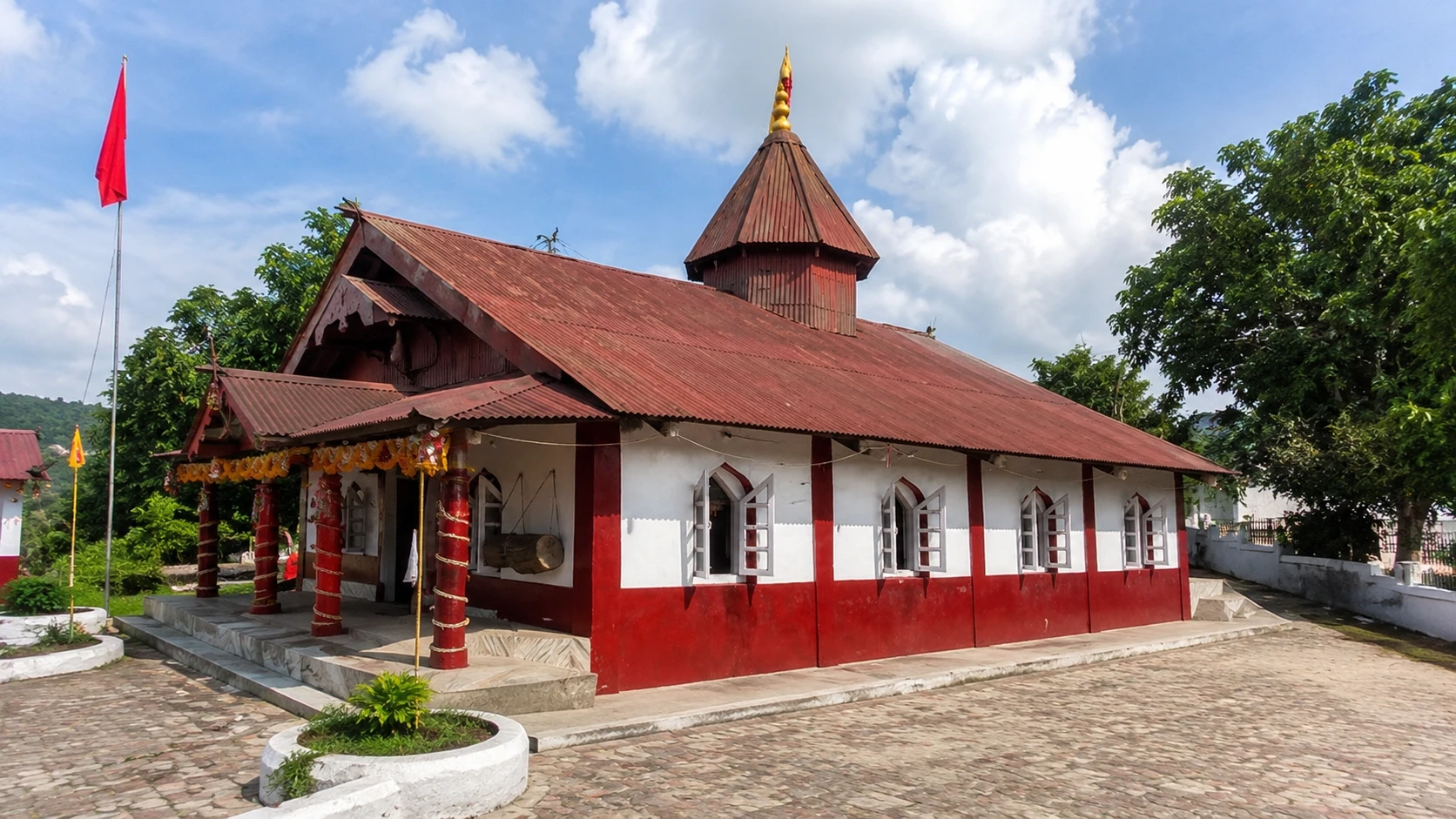
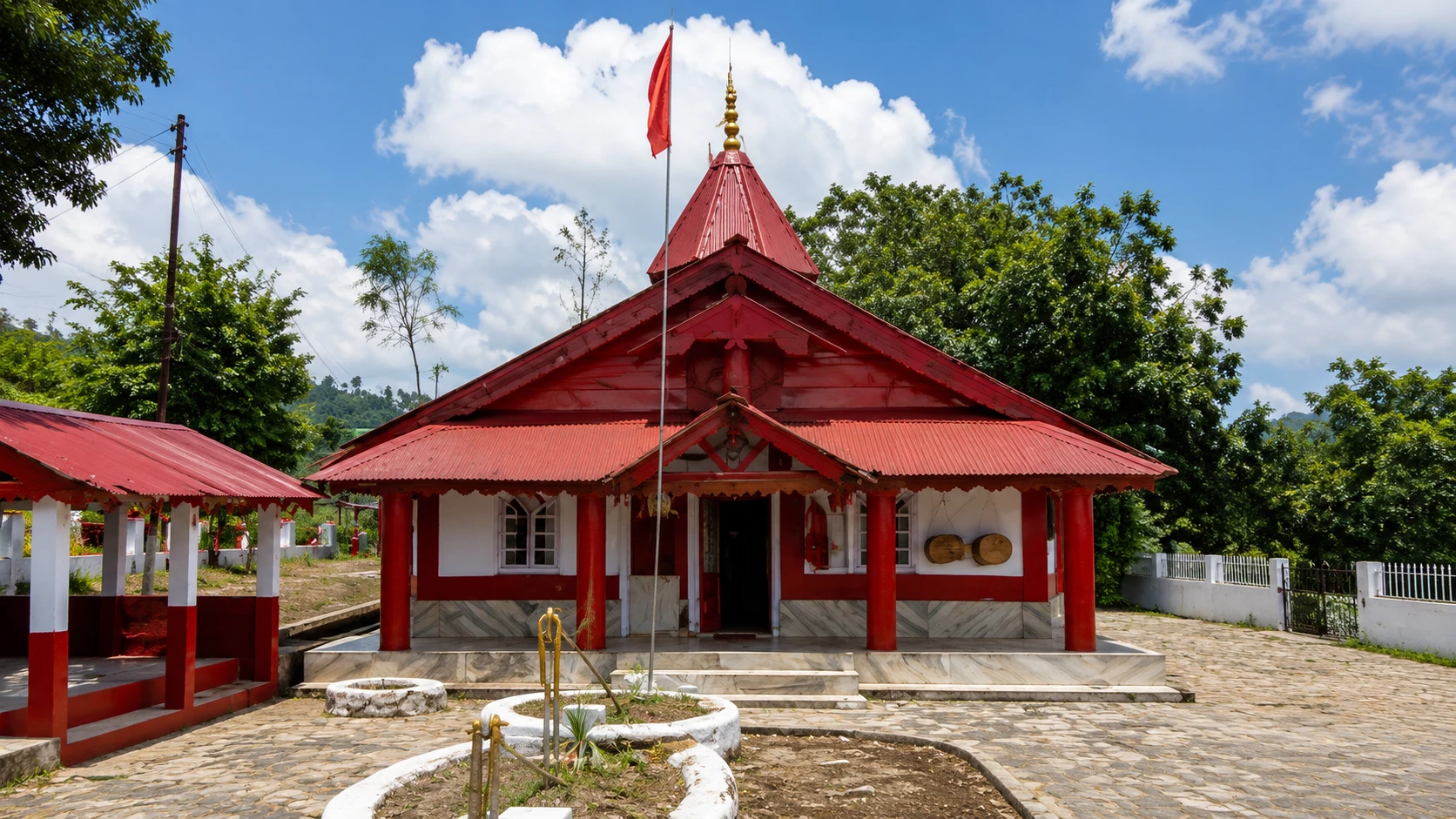
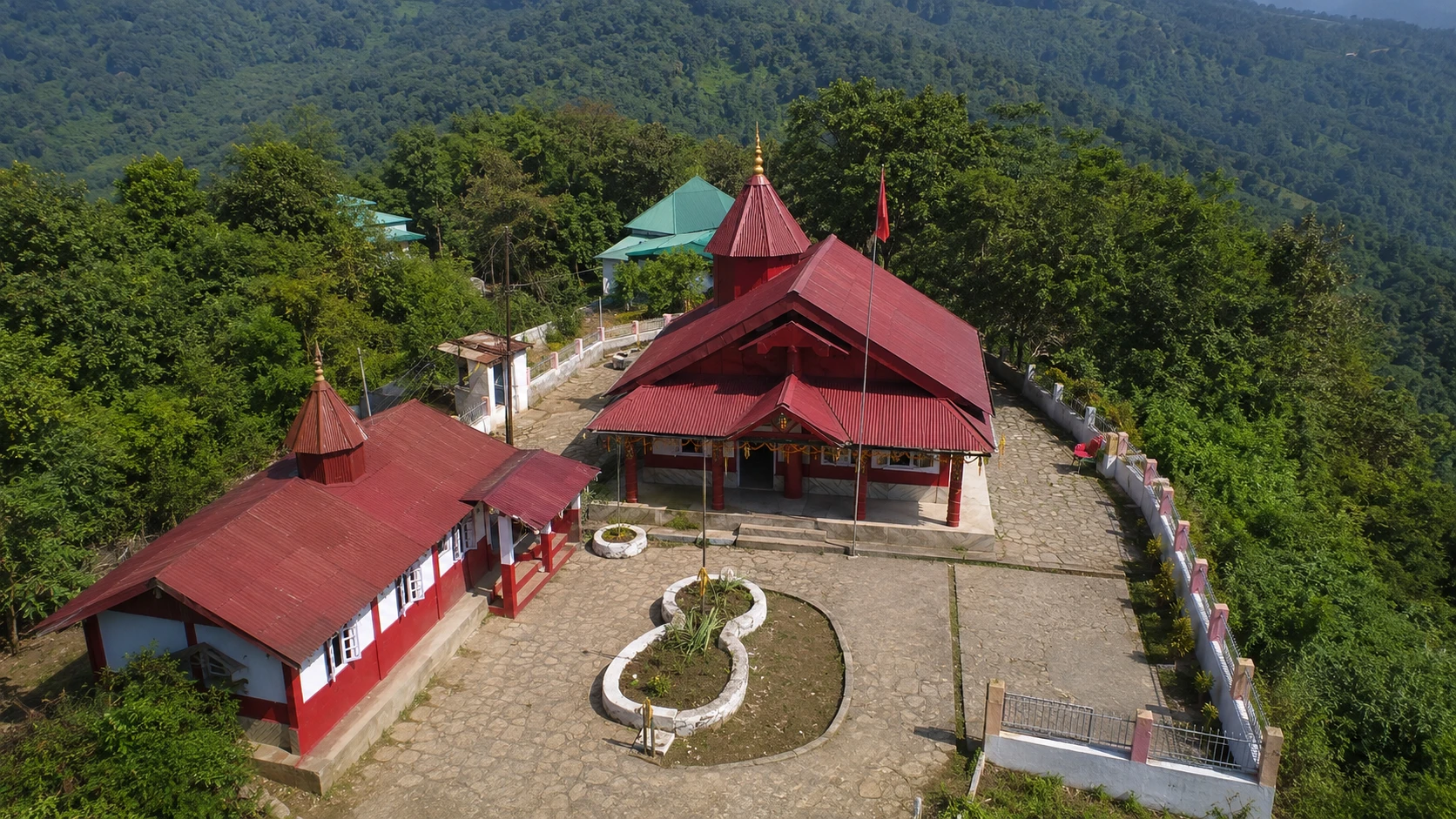
Regional Meghalaya Hindu temple-construction style with substantial Jaintia Kingdom-era architectural elaboration. The principal sanctum preserves the canonical regional North-East Indian Shakta architectural register, integrated with regional Khasi-Jaintia architectural traditions. The broader Nartiang temple-complex includes the principal Jayantī Devi sanctum, the canonical Nartiang Monoliths Park (a notable adjacent regional cultural-historical site featuring the world's largest collection of Khasi-Jaintia monoliths, set up during the historical Jaintia Kingdom period and integrated into the broader regional cultural-religious landscape), and the broader pilgrim-infrastructure within the temple precinct. The temple operates within a relatively rural Meghalaya hill setting compared to the major South Asian Pīṭha urban contexts
खुला
06:00 – 20:00
आरती
06:30 · 12:00 · 18:30 · 19:30
विशेष
Śāradīya Navarātri and Durgā Pūjā (Sep-Oct) bring the canonical regional Devī-festival cycle at the Jayanti Peeth with the canonical Nartiang Durga Puja operating as the principal annual festival programming, the canonical festival traces its continuity to the Jaintia Kingdom-era patronage tradition and operates as one of the canonical regional North-East Indian Shakta-tradition festivals; the canonical regional Pnar cultural-religious calendar's coordinated programming integrates the Jayanti Peeth with the broader regional cultural-religious festival cycle; Vasantī Navarātri (Mar-Apr) brings the spring Devī-festival cycle
पवित्र कथा · पवित्र कथा
Jayantī Devī sits at the canonical Jayanti Shakti Peeth at Nartiang village in West Jaintia Hills district of Meghalaya, in the broader Khasi-Jaintia hills of the North-East Indian regional sacred-geography. The Pīṭha occupies a structurally distinctive position in the canonical 51-Pīṭha enumeration through the dominant Pīṭhanirṇaya tradition's left-thigh (vāma-ūru) body-part attribution and the canonical Bhairava-pair Krameśvara. The canonical Devī-name Jayantī (literally 'the Victorious One') reflects the canonical Devī-iconographic register, with the regional name Jainteshwari (literally 'the Goddess of Jaintia,' from Sanskrit jainti = the Jaintia region + īśvarī = goddess) operating as the regional devotional appellation that reflects the canonical Devī's historical role as the tutelary deity of the medieval Jaintia Kingdom. The two names operate as parallel canonical-regional designations for the same canonical Devī within the broader Hindu Shakta tradition's regional naming framework, a pattern parallel to the canonical Sanskrit-vs-regional naming convention documented at numerous other Pīṭha sites in the corpus. The Nartiang site's broader regional canonical context integrates the Jayanti Peeth with the broader North-East Indian Hindu Shakta sacred-geography network, with the canonical Kāmākhyā Devī shrine in adjacent Assam (Nilachal Hill, Guwahati) operating as the principal regional Shakta anchor of the broader North-East Indian Shakta-tradition framework and the Jayanti Peeth operating as the canonical Meghalaya regional anchor within this broader regional network. The Nartiang site is structurally distinctive within the corpus through several converging dimensions: (a) the canonical 51-Pīṭha attestation with the left-thigh (vāma-ūru) body-part attribution, extending the broader corpus body-part-distribution into the canonical thigh-region anatomical framework; (b) the canonical Bhairava-pair Krameśvara, the canonical Pīṭhanirṇaya-attested Bhairava-form operating within the broader canonical Bhairava-iconographic register; (c) the canonical Jaintia Kingdom tutelary-deity tradition, the medieval Jaintia Kingdom (which ruled from Nartiang as its historical capital from approximately the 16th to 19th centuries until British annexation in 1835) operated the Jayanti Peeth as the canonical kingdom's tutelary-deity shrine, with the kingdom's substantial Hindu Shakta-tradition patronage operating through the canonical Devī-tutelary infrastructure; (d) the canonical Khasi-Jaintia (Pnar) cultural-religious context, the Jayanti Peeth operates within the broader Khasi-Jaintia hill-zone's distinctive cultural-religious framework that integrates the canonical Hindu Shakta-tradition with the broader regional Pnar indigenous cultural-religious framework and (in the contemporary Meghalaya state context) with the broader regional Christian-majority demographic framework that emerged through the 19th and 20th centuries' colonial-era missionary engagement; (e) the corpus's first formally-documented Meghalaya entry, operating distinct from but in canonical regional coordination with the broader North-East Indian Hindu Shakta sacred-geography. The Jayanti site's particular position within the broader regional cultural-religious framework reflects the canonical Hindu Shakta-tradition's regional coexistence with the broader Pnar indigenous and Christian cultural-religious frameworks of contemporary Meghalaya, a regional canonical co-residence pattern that the corpus documents through honest treatment without overstating or understating the canonical Hindu-tradition prominence in the broader Meghalaya regional cultural-religious framework.
Sacred Designationपवित्र पदनाम
Shakti Peeth
शरीर का अंग: Left Thigh (Vāma-ūru) per the dominant Pīṭhanirṇaya tradition and Sircar 1948
शक्ति: Jayantī (the canonical Devī-name, literally 'the Victorious One'); regionally Jainteshwari (the canonical regional appellation reflecting the canonical Devī's historical role as the tutelary deity of the medieval Jaintia Kingdom). The corpus records both names as parallel canonical-regional designations for the canonical Jayanti Pīṭha Devī within the broader Hindu Shakta tradition's regional naming framework
भैरव: Krameśvara (canonical Pīṭhanirṇaya attestation; operating within the broader canonical Bhairava-iconographic register)
Sacred Origin Storyपवित्र उत्पत्ति कथा
Source: Devī Bhāgavata Purāṇa, Skandha VII (canonical 51-Pīṭha enumeration); Kālikā Purāṇa, Chapters 18 and 60, 62 (52-list tradition; vāma-ūru body-part attribution at Jayanti Peeth); Pīṭhanirṇaya (Jayantī at Nartiang paired with Bhairava Krameśvara); regional North-East Indian Shakta Sthala Purāṇa tradition on the Nartiang site; Jaintia Kingdom historical chronicles and regional Khasi-Jaintia ethnographic-historical literature
The Pīṭha-narrative at Jayanti Peeth follows the canonical Pīṭha-formation cycle: Sati's body-fragment (canonically the left thigh / vāma-ūru per the dominant Pīṭhanirṇaya attestation) fell at the Nartiang site, giving rise to the canonical Jayanti Pīṭha.
The canonical Devī-name Jayantī (literally 'the Victorious One') operates within the broader canonical Devī-iconographic register, with the regional name Jainteshwari operating as the regional appellation reflecting the canonical Devī's historical role as the tutelary deity of the medieval Jaintia Kingdom.
The site's canonical theological framework integrates the canonical body-part-fall Pīṭha-formation narrative with the canonical Jaintia Kingdom tutelary-deity tradition, with the medieval kingdom's substantial Hindu Shakta-tradition patronage operating through the canonical Devī-tutelary infrastructure across the kingdom's regional administrative framework.
The medieval Jaintia Kingdom (which ruled from Nartiang as its historical summer capital from approximately the 16th to 19th centuries; the kingdom's winter capital was at Jaintiapur, now in Bangladesh) integrated the canonical Hindu Shakta-tradition with the broader regional Khasi-Jaintia (Pnar) cultural-religious framework through the kingdom's distinctive synthesis pattern, the kingdom's royal family adopted the canonical Devī-tutelary tradition while the broader population continued the canonical Pnar indigenous cultural-religious framework alongside the kingdom-level Hindu Shakta-tradition patronage.
The canonical Bhairava-pair Krameśvara operates as the canonical Pīṭhanirṇaya-attested Bhairava-form at the site. The Nartiang site's broader regional canonical context integrates the Jayanti Peeth with the broader North-East Indian Hindu Shakta sacred-geography network, the canonical Kāmākhyā Devī shrine in adjacent Assam (Nilachal Hill, Guwahati) operates as the principal regional Shakta anchor, with the Jayanti Peeth operating as the canonical Meghalaya regional anchor within this broader regional network.
The contemporary Meghalaya state context (state created 1972) places the canonical Jayanti Peeth within a broader regional cultural-religious framework that includes substantial Christian-majority demographic composition, the broader Khasi-Jaintia communities have experienced substantial historical missionary engagement through the 19th and 20th centuries, with the Welsh Presbyterian and other Christian missionary frameworks operating across the broader Khasi-Jaintia hill-zone during the colonial period.
The 2011 Census documents Meghalaya's broader demographic composition as approximately 75% Christian, with substantial Khasi-Jaintia community engagement with both the historical indigenous cultural-religious frameworks and the Christian frameworks.
The canonical Hindu Shakta-tradition's regional context at the Jayanti Peeth operates as a canonical sacred-site that the broader regional cultural-religious framework's pluralism preserves through coordinated coexistence, the canonical Hindu pilgrim infrastructure operates alongside the broader regional Pnar cultural-religious framework and the broader regional Christian framework, with the canonical Devī-shrine continuing operations under the post-1972 Meghalaya state administrative framework.
उद्धृत स्रोत:
- Devī Bhāgavata Purāṇa, Skandha VII (canonical 51-Pīṭha enumeration)
- Kālikā Purāṇa, Chapters 18 and 60, 62 (52-list tradition; vāma-ūru body-part attribution at Jayanti Peeth)
- Pīṭhanirṇaya (Jayantī at Nartiang paired with Bhairava Krameśvara)
- Regional North-East Indian Shakta Sthala Purāṇa tradition on the Nartiang site
- Jaintia Kingdom historical chronicles (medieval-and-early-modern royal records)
- Regional Khasi-Jaintia ethnographic-historical literature
- Sircar, D. C., 'The Śākta Pīṭhas' (Motilal Banarsidass, 1948; revised 1973)
- Bhattacharya, N. N., 'History of the Sakta Religion' (Manohar, 1974)
- Bareh, H., 'The History and Culture of the Khasi People' (Spectrum Publications, 1985), regional Khasi-Jaintia historical-ethnographic framework
- Gurdon, P. R. T., 'The Khasis' (Macmillan, 1907; reprint 1975), colonial-era Khasi-Jaintia ethnographic foundational text
- Jha, J. C., 'The Jaintia Hills under the British Raj' (Punthi Pustak, 1980), Jaintia Kingdom historical framework
अन्य परंपराएँ · अन्य परंपराएँ
Jayantī-vs-Jainteshwari canonical-regional naming convention at the Jayanti Peeth
The canonical Devī of the Jayanti Peeth shows a documented canonical-vs-regional naming convention pattern. The dominant Pīṭhanirṇaya tradition and Sircar 1948 attestation identify the Devī as Jayantī (Jayanti, literally 'the Victorious One'), with this name operating as the canonical Devī-designation across the broader Sanskrit Pīṭha-textual corpus.
The regional Jaintia Kingdom devotional tradition and the broader regional Khasi-Jaintia cultural-religious context use the name Jainteshwari (Jainti-Īśvarī, 'the Goddess of Jaintia') as the regional devotional appellation that reflects the canonical Devī's historical role as the tutelary deity of the medieval Jaintia Kingdom.
The two names operate as parallel canonical-regional designations for the canonical Jayanti Pīṭha Devī rather than as references to distinct deities, a canonical-regional naming convention pattern documented at numerous Pīṭha sites across the broader Hindu Shakta tradition where the Sanskrit canonical name and the regional devotional name coexist as parallel attestations of the same canonical Devī (parallel to the Tripurmalini-vs-Bhairavi pattern documented at the Jalandhar Pīṭha in the corpus).
Jaintia Kingdom tutelary-deity historical tradition and the canonical Khasi-Jaintia cultural-religious synthesis framework
The canonical Jaintia Kingdom tutelary-deity tradition at the Jayanti Peeth represents one of the corpus's documented cases of canonical Hindu Shakta-tradition integration with a regional indigenous cultural-religious framework.
The medieval Jaintia Kingdom (which ruled from Nartiang as its historical summer capital from approximately the 16th to 19th centuries until British annexation in 1835) integrated the canonical Hindu Shakta-tradition with the broader regional Khasi-Jaintia (Pnar) cultural-religious framework through the kingdom's distinctive synthesis pattern.
The kingdom's royal family adopted the canonical Devī-tutelary tradition, with the Jayanti / Jainteshwari Devī operating as the canonical kingdom's tutelary deity and the principal regional Hindu Shakta-shrine of the kingdom's administrative framework.
The broader population's cultural-religious framework continued the canonical Pnar indigenous cultural-religious framework (Niam Tre, the canonical Pnar indigenous religion) alongside the kingdom-level Hindu Shakta-tradition patronage, with the kingdom's distinctive synthesis pattern operating as a regional canonical co-residence framework.
The canonical Hindu Shakta-tradition's integration at the Jayanti Peeth operated through the canonical Pīṭha-attestation that gave the site its broader pan-Indian Hindu sacred-site standing alongside its regional Jaintia Kingdom canonical role.
The 19th and 20th centuries' colonial-era missionary engagement substantially transformed the broader Khasi-Jaintia regional cultural-religious framework, with Christian missionary frameworks (particularly the Welsh Presbyterian) operating across the broader Khasi-Jaintia hill-zone and the broader regional population substantially engaging with the Christian frameworks through the colonial-and-post-Independence periods.
The contemporary Meghalaya state's broader demographic composition (approximately 75% Christian per the 2011 Census) reflects this broader regional cultural-religious transformation. The canonical Hindu Shakta-tradition's continuing operations at the Jayanti Peeth operate within this broader regional cultural-religious framework of canonical co-residence, with the canonical Hindu pilgrim infrastructure and the canonical Devī-shrine continuing operations under the post-1972 Meghalaya state administrative framework alongside the broader regional Pnar indigenous and Christian cultural-religious frameworks.
विद्वत संदर्भ
Jayanti Peeth at Nartiang (West Jaintia Hills district, Meghalaya) occupies a structurally distinctive position in the corpus as the principal documented Meghalaya Pīṭha entry, operating distinct from but in canonical regional coordination with the broader North-East Indian Hindu Shakta sacred-geography (anchored by Kāmākhyā in adjacent Assam). The canonical 51-Pīṭha attestation operates through the dominant Pīṭhanirṇaya tradition's left-thigh (vāma-ūru) body-part attribution and the canonical Bhairava-pair Krameśvara. The canonical Jayantī-vs-Jainteshwari regional naming convention operates parallel to the Tripurmalini-vs-Bhairavi pattern documented at the Jalandhar Pīṭha, both cases reflect the corpus-documented canonical-regional naming convention framework within the broader Hindu Shakta tradition. The medieval Jaintia Kingdom's canonical tutelary-deity tradition at the Jayanti Peeth represents a documented case of canonical Hindu Shakta-tradition integration with a regional indigenous cultural-religious framework, the kingdom's royal family adopted the canonical Devī-tutelary tradition while the broader population's cultural-religious framework continued the canonical Pnar indigenous cultural-religious framework alongside the kingdom-level Hindu Shakta-tradition patronage. The contemporary Meghalaya state's broader regional cultural-religious framework integrates the canonical Hindu Shakta-tradition's continuing operations at the Jayanti Peeth with the broader regional Pnar indigenous cultural-religious framework (Niam Tre) and the broader regional Christian-majority demographic framework (approximately 75% per the 2011 Census). The canonical co-residence framework operates as the contemporary regional cultural-religious reality. Bareh 1985 provides the principal modern academic treatment of the regional Khasi-Jaintia historical-ethnographic framework; Gurdon 1907 (reprint 1975) provides the colonial-era foundational Khasi-Jaintia ethnographic text; Jha 1980 provides the principal modern academic treatment of the Jaintia Kingdom-and-British-colonial historical framework. Sircar 1948 and Bhattacharya 1974 provide the principal modern academic treatments of the canonical Jayanti Peeth's Pīṭha-tradition attestation. The corpus documents the regional cultural-religious context honestly without overstating or understating the canonical Hindu-tradition prominence in the broader Meghalaya regional framework, with the canonical Hindu Shakta-tradition's continuing operations at the Jayanti Peeth presented as one canonical cultural-religious framework operating within the broader regional canonical co-residence framework.
Historyइतिहास
Jayanti Peeth's historical depth as a sacred site is integrated with the broader Khasi-Jaintia hill-zone's regional cultural-religious framework. The pre-canonical layer (continuous regional cultural-religious practice in the broader Khasi-Jaintia hill-zone from the deep antiquity period through the early historical period) places the broader Nartiang site within the deep regional Pnar indigenous cultural-religious tradition.
The canonical 51-Pīṭha attestation of the Jayanti Peeth arrived through the 8th, 12th c. textualization period via the Devī Bhāgavata, the Kālikā Purāṇa, the Pīṭhanirṇaya, and the broader Pīṭha-network textualization. The early medieval period saw the broader Khasi-Jaintia hill-zone's developing political-administrative consolidation, with the medieval Jaintia Kingdom emerging through the 12th, 16th centuries period and consolidating substantial regional administrative control across the broader Jaintia Hills and adjacent regions.
The Jaintia Kingdom's substantive patronage period of the Jayanti Peeth runs from approximately the 16th through the early 19th centuries, with the kingdom's royal family adopting the canonical Devī-tutelary tradition and operating the Jayanti / Jainteshwari Devī as the canonical kingdom's principal tutelary deity.
The Jaintia Kingdom's distinctive cultural-religious synthesis pattern, integrating the canonical Hindu Shakta-tradition with the broader regional Pnar indigenous cultural-religious framework, represents one of the documented cases of regional cultural-religious integration in the broader North-East Indian historical framework.
The British annexation of the Jaintia Kingdom in 1835 transitioned the broader regional administrative framework into the colonial administrative arrangements; the colonial-era missionary engagement (particularly the Welsh Presbyterian and other Christian missionary frameworks operating across the broader Khasi-Jaintia hill-zone) substantially transformed the broader regional cultural-religious composition through the 19th and 20th centuries.
The post-Independence period (1947, 1972) initially placed the broader Khasi-Jaintia hill-zone within the Assam state administrative framework; the creation of Meghalaya state in 1972 (carved out from Assam through the North-Eastern Areas Reorganisation Act) brought the canonical Jayanti Peeth within the contemporary Meghalaya state administrative framework.
The contemporary Meghalaya state's broader demographic composition (approximately 75% Christian per the 2011 Census, with substantial Khasi-Jaintia community engagement with both the historical Pnar indigenous cultural-religious frameworks and the Christian frameworks) reflects the broader regional cultural-religious transformation.
The canonical Hindu Shakta-tradition's continuing operations at the Jayanti Peeth operate within this broader regional cultural-religious framework of canonical co-residence under the Government of Meghalaya Hindu temple framework.
The 21st century has brought modest infrastructure improvements including coordinated pilgrim management during Śāradīya Navarātri and the canonical Nartiang Durga Puja, alongside the broader regional Meghalaya-Assam pilgrim infrastructure development that integrates the Jayanti Peeth with the broader regional North-East Indian Hindu sacred-geography network anchored by Kāmākhyā.
Historical Timelineऐतिहासिक कालक्रम
Pre-canonical regional cultural-religious practice in the broader Khasi-Jaintia hill-zone. The broader Nartiang site is situated within the deep regional Pnar indigenous cultural-religious tradition (Niam Tre) that operates as the historical foundational cultural-religious framework of the broader regional zone. The canonical Hindu Shakta-tradition's 51-Pīṭha attestation would integrate with this broader regional cultural-religious framework through the canonical textualization period.
Canonical 51-Pīṭha attestation of the Jayanti Peeth through textualization in the Devī Bhāgavata Purāṇa (Skandha VII), the Kālikā Purāṇa (Chapters 18 and 60, 62), the Pīṭhanirṇaya (Jayantī at Nartiang paired with Bhairava Krameśvara), and the broader Pīṭha-network textual corpus. The left-thigh (vāma-ūru) body-part attribution arrives at the site within the broader 8th, 12th c. textualization period during which the canonical 51-network framework was consolidated.
Pre-Jaintia Kingdom consolidation period of the broader Khasi-Jaintia hill-zone, with the regional political-administrative framework developing through the period that would lead to the medieval Jaintia Kingdom's emergence. The broader regional cultural-religious framework of canonical Pnar indigenous practice operating alongside the developing canonical Hindu Shakta-tradition influence during this period is documented unevenly across primary sources but consistent with the broader regional historical-ethnographic framework.
Substantive Jaintia Kingdom patronage period of the Jayanti Peeth. The medieval Jaintia Kingdom (ruling from Nartiang as its historical summer capital from approximately the 16th to 19th centuries; the kingdom's winter capital was at Jaintiapur, now in Bangladesh) operated the Jayanti / Jainteshwari Devī as the canonical kingdom's tutelary deity, with substantial Hindu Shakta-tradition patronage operating through the canonical Devī-tutelary infrastructure. The kingdom's royal family adopted the canonical Devī-tutelary tradition while the broader population's cultural-religious framework continued the canonical Pnar indigenous cultural-religious framework (Niam Tre) alongside the kingdom-level Hindu Shakta-tradition patronage. The kingdom's distinctive cultural-religious synthesis pattern operated as a regional canonical co-residence framework that integrated the canonical Hindu Shakta-tradition with the broader regional Pnar indigenous cultural-religious framework. The Nartiang Monoliths Park, the world's largest collection of Khasi-Jaintia monoliths set up during the historical Jaintia Kingdom period, is integrated into the broader regional cultural-religious landscape adjacent to the canonical Jayanti Peeth.
British colonial annexation of the Jaintia Kingdom in 1835 transitioned the broader regional administrative framework into the colonial administrative arrangements. The colonial period (1835, 1947) saw substantial Christian missionary engagement across the broader Khasi-Jaintia hill-zone, with the Welsh Presbyterian and other Christian missionary frameworks operating across the broader region and the broader regional population substantially engaging with the Christian frameworks. The post-Independence period (1947, 1972) initially placed the broader Khasi-Jaintia hill-zone within the Assam state administrative framework, with the canonical Hindu Shakta-tradition's operations at the Jayanti Peeth continuing under the post-Independence administrative framework. The creation of Meghalaya state in 1972 (carved out from Assam through the North-Eastern Areas Reorganisation Act) brought the canonical Jayanti Peeth within the contemporary Meghalaya state administrative framework.
Post-1972 administration of the Jayanti Peeth under the Government of Meghalaya Hindu temple framework. The contemporary Meghalaya state's broader demographic composition (approximately 75% Christian per the 2011 Census, with substantial Khasi-Jaintia community engagement with both the historical Pnar indigenous cultural-religious frameworks and the Christian frameworks) reflects the broader regional cultural-religious transformation. The canonical Hindu Shakta-tradition's continuing operations at the Jayanti Peeth operate within this broader regional cultural-religious framework of canonical co-residence. The 21st century has brought modest infrastructure improvements including coordinated pilgrim management during Śāradīya Navarātri and the canonical Nartiang Durga Puja, alongside the broader regional Meghalaya-Assam pilgrim infrastructure development that integrates the Jayanti Peeth with the broader regional North-East Indian Hindu sacred-geography network anchored by Kāmākhyā in adjacent Assam. The site continues to draw regional North-East Indian pilgrim flow alongside broader pan-Indian 51-Pīṭha pilgrim engagement, with the canonical Nartiang Durga Puja operating as the principal annual festival programming maintaining the canonical Jaintia Kingdom-era patronage tradition's living-tradition continuity.
What You'll Seeदर्शन में
The Jayantī Devī sanctum at Nartiang preserves the canonical Jayantī iconographic register integrating the canonical Devī-mythological framework with the canonical regional North-East Indian Shakta sculptural tradition.
The principal sanctum houses the canonical Jayantī murti sculpted in regional stone characteristic of the Jaintia Kingdom-era sculptural tradition, depicting the Devī in the canonical anthropomorphic form bearing the canonical Devī-iconographic attributes (multiple arms with canonical weapons and gestures including the canonical sword, trident, and the canonical abhaya-mudrā and varada-mudrā configurations).
The Devī is draped in red silk vestments per the regional Bengali-Assamese Shakta convention with substantial gold and silver ornamentation; the canonical regional festival-period vestment infrastructure operates at substantive scale during the Nartiang Durga Puja.
The principal sanctum's architectural envelope preserves the canonical Jaintia Kingdom-era architectural register, integrated with regional Khasi-Jaintia architectural traditions, with the broader temple-complex including the principal sanctum and adjacent canonical sub-shrines within the temple precinct.
The broader Nartiang site is also notable for its adjacent Nartiang Monoliths Park, the world's largest collection of Khasi-Jaintia monoliths set up during the historical Jaintia Kingdom period. The Monoliths Park's substantial collection of canonical Pnar memorial monoliths (the canonical regional ancestor-veneration cultural-religious infrastructure) is integrated into the broader regional cultural-religious landscape, operating as the canonical regional Pnar indigenous cultural-religious feature adjacent to the canonical Hindu Shakta-tradition Jayanti Peeth.
The integrated regional landscape preserves the canonical Hindu Shakta-tradition's Jayanti Peeth alongside the canonical Pnar indigenous cultural-religious monolith infrastructure as the regional coordinated cultural-religious framework.
The broader Khasi-Jaintia hill-zone sub-tropical landscape provides the canonical sacred-geographical context within which the Jayanti Peeth operates, with the broader regional elevation (approximately 1,200-1,300 m) and the broader regional North-East Indian hill-zone climate operating as the canonical regional environmental framework.
The integrated principal-sanctum + Nartiang Monoliths Park regional landscape is corpus-distinctive at the Jayanti Peeth as the principal documented Hindu Pīṭha-tradition + indigenous-monolith-tradition canonical regional coordination within the broader corpus.
Distinctive Practicesविशिष्ट परंपराएँ
Canonical Nartiang Durga Puja, Jaintia Kingdom-Era Patronage Continuity Tradition
प्रामाणिक नर्तियांग दुर्गा पूजा, जैंतिया राज्य-कालीन संरक्षण निरंतरता परंपरा
Annually during Śāradīya Navarātri (Sep-Oct, Āśvina month), with the canonical Nartiang Durga Puja operating as the principal annual festival programming. The festival's nine-night observance follows the canonical Bengali-Assamese Shakta Navarātri cycle with substantial regional pilgrim flow during the Durgāṣṭamī and Mahānavamī peak days
The canonical Nartiang Durga Puja at the Jayanti Peeth represents the corpus-distinctive Jaintia Kingdom-era patronage continuity tradition, the canonical regional festival that traces its continuity to the medieval Jaintia Kingdom's tutelary-deity patronage tradition (approximately 16th, 19th centuries) and continues to operate as the principal annual festival programming at the Jayanti Peeth in the contemporary Meghalaya state context. The canonical festival operates through coordinated devotional practices: (a) canonical regional Bengali-Assamese Shakta liturgical infrastructure operating across the nine-night Navarātri cycle with substantial festival-scale liturgical engagement at the principal sanctum; (b) canonical regional Pnar cultural-religious framework participation, the canonical Nartiang Durga Puja operates as a canonical regional festival that integrates the canonical Hindu Shakta-tradition with the broader regional Khasi-Jaintia cultural-religious framework, with the broader regional community's coordinated festival engagement reflecting the canonical regional co-residence framework; (c) canonical Jaintia Kingdom-era ritual continuity, specific canonical ritual elements at the Nartiang Durga Puja trace their continuity to the canonical Jaintia Kingdom's royal-family patronage tradition, with the canonical kingdom's tutelary-deity ritual infrastructure preserved through living-tradition continuity into the contemporary period. The corpus-distinctive Nartiang Durga Puja is the principal documented Jaintia Kingdom-era patronage continuity tradition within the broader 51-Pīṭha network, operating as one of the canonical regional North-East Indian Shakta-tradition festivals.
The canonical Nartiang Durga Puja operates as the canonical regional festival that maintains the canonical Jaintia Kingdom-era tutelary-deity patronage tradition's living-tradition continuity into the contemporary period. The canonical festival's coordinated regional cultural-religious framework integrates the canonical Hindu Shakta-tradition with the broader regional Pnar cultural-religious framework, with the canonical festival operating as the canonical regional coordinated devotional infrastructure.
North-East Indian Shakta Corridor Integration, Jayanti Peeth + Kāmākhyā Coordinated Devotional Engagement
उत्तर-पूर्व भारतीय शाक्त गलियारा एकीकरण, जयन्ती पीठ + काम्ख्या समन्वित भक्ति संलग्नता
Year-round; particularly weighted during the canonical Navarātri cycles when the broader North-East Indian Shakta-corridor pilgrim flow operates at festival-scale intensity. The corridor's coordinated pilgrim infrastructure also operates during the canonical Ambubachi Mela at Kāmākhyā (June-July, the annual canonical Kāmākhyā festival) which brings the broader North-East Indian Shakta-tradition's coordinated pilgrim engagement
The Jayanti Peeth operates as the canonical Meghalaya regional Shakta anchor of the broader North-East Indian Hindu Shakta sacred-geography corridor, the canonical regional Shakta-pilgrimage network anchored by Kāmākhyā in adjacent Assam. The corridor's canonical regional sites include Kāmākhyā Devī shrine at Nilachal Hill, Guwahati (the principal regional Shakta-tradition anchor of the broader North-East Indian Shakta-tradition framework; canonical 51-Pīṭha attestation; corpus-documented entry), Jayanti Peeth at Nartiang (the canonical Meghalaya regional anchor; this entry), and the broader regional canonical Devī-sites distributed across Assam, Manipur, and the broader North-East Indian regional cultural-religious framework. The canonical regional pilgrim circuit operates through coordinated multi-day pilgrim engagement, with pilgrims typically allocating 3, 5 days for the canonical extended North-East Indian Shakta-circuit covering Jayanti Peeth + Kāmākhyā + the broader regional Devī-sites. Jayanti Peeth's geographical position in the broader Khasi-Jaintia hill-zone makes it a canonical logistical complement to the Kāmākhyā shrine at adjacent Assam, with the broader regional transport infrastructure (200 km between Nartiang and Guwahati via the Shillong-Guwahati corridor) supporting the canonical multi-site circuit. The integrated North-East Indian Shakta-corridor pilgrim engagement is corpus-distinctive at Jayanti Peeth as the canonical Meghalaya regional anchor of this broader regional corridor.
The canonical North-East Indian Shakta-pilgrimage corridor operates as the canonical regional Shakta-pilgrimage network that integrates the multiple canonical regional Devī-sites within a coordinated devotional infrastructure. The Jayanti Peeth's canonical Meghalaya regional anchor role gives the broader North-East Indian Shakta-tradition pilgrim infrastructure its coordinated multi-state pilgrimage architecture, extending the canonical regional Shakta-tradition's reach across the broader North-East Indian regional framework.
Khasi-Jaintia (Pnar) Cultural-Religious Coordinated Devotional Engagement, Canonical Regional Co-Residence Framework
खासी-जैंतिया (प्नार) सांस्कृतिक-धार्मिक समन्वित भक्ति संलग्नता, प्रामाणिक क्षेत्रीय सह-निवास ढाँचा
Year-round; particularly visible during the canonical Nartiang Durga Puja festival programming when the broader regional Khasi-Jaintia community's coordinated festival engagement operates at festival-scale intensity
The corpus-distinctive Khasi-Jaintia (Pnar) cultural-religious coordinated devotional engagement at the Jayanti Peeth operates through the canonical regional co-residence framework that integrates the canonical Hindu Shakta-tradition with the broader regional Pnar indigenous cultural-religious framework. The coordinated engagement operates through: (a) the canonical Hindu Shakta-tradition's pilgrim infrastructure operating at the canonical Jayanti Peeth principal sanctum; (b) the broader regional Pnar cultural-religious framework's integration with the canonical Jaintia Kingdom-era tutelary-deity tradition, with the canonical regional Khasi-Jaintia community's coordinated engagement at the canonical festival programming reflecting the broader regional co-residence framework; (c) the broader regional cultural-religious landscape's integration, the canonical Hindu Shakta-tradition's Jayanti Peeth operates adjacent to the canonical Pnar indigenous cultural-religious infrastructure (the Nartiang Monoliths Park), with the integrated regional landscape preserving the canonical Hindu Pīṭha-tradition + indigenous-monolith-tradition canonical regional coordination. The canonical regional cultural-religious framework's contemporary context, operating within the broader Meghalaya state's Christian-majority demographic composition (approximately 75% per the 2011 Census), maintains the canonical co-residence framework as the operational regional cultural-religious reality. The integrated devotional engagement is corpus-distinctive at the Jayanti Peeth as the principal documented Hindu Pīṭha-tradition operating within an indigenous-cultural-religious + Christian-majority regional state framework.
The canonical regional co-residence framework at the Jayanti Peeth operates as the documented contemporary regional cultural-religious reality, with the canonical Hindu Shakta-tradition's continuing operations integrated into the broader Khasi-Jaintia (Pnar) cultural-religious framework and the broader Meghalaya state's regional Christian-majority demographic context. The canonical co-residence framework's pluralism preserves the canonical Pīṭha-attestation while operating in coordinated coexistence with the broader regional cultural-religious frameworks.
Did You Know?क्या आप जानते हैं?
The Jayanti Peeth at Nartiang is the corpus's first formally-documented Meghalaya entry, the principal documented Pīṭha-tradition site within the broader Meghalaya regional cultural-religious framework. The canonical 51-Pīṭha attestation operates within a broader regional context that integrates the canonical Hindu Shakta-tradition with the broader regional Khasi-Jaintia (Pnar) cultural-religious framework (the canonical regional indigenous religion Niam Tre operating alongside the canonical Pīṭha) and the broader Meghalaya state's substantial Christian-majority demographic context (approximately 75% per the 2011 Census, emerging through 19th-and-20th-century colonial-era missionary engagement). The corpus documents this canonical co-residence framework honestly without overstating or understating the canonical Hindu-tradition prominence in the broader regional cultural-religious framework.
Sircar, 'The Śākta Pīṭhas' (1948); Bareh, 'The History and Culture of the Khasi People' (1985); Census of India 2011, Meghalaya state demographic data; regional Khasi-Jaintia ethnographic-historical literature
Nartiang village is also notable for its adjacent Nartiang Monoliths Park, the world's largest collection of Khasi-Jaintia memorial monoliths, set up during the historical Jaintia Kingdom period (approximately 16th, 19th centuries) as part of the canonical regional Pnar ancestor-veneration cultural-religious infrastructure. The Monoliths Park is integrated into the broader regional cultural-religious landscape adjacent to the canonical Jayanti Peeth, preserving the canonical Pnar indigenous cultural-religious tradition alongside the canonical Hindu Shakta-tradition Pīṭha. The integrated regional landscape is corpus-distinctive at the Jayanti Peeth as the principal documented Hindu Pīṭha-tradition + indigenous-monolith-tradition canonical regional coordination within the broader corpus.
Bareh, 'The History and Culture of the Khasi People' (1985); Government of Meghalaya, regional cultural-historical documentation; Jha, 'The Jaintia Hills under the British Raj' (1980)
The medieval Jaintia Kingdom (ruling from Nartiang as its historical summer capital from approximately the 16th to 19th centuries until British annexation in 1835; the kingdom's winter capital was at Jaintiapur, now in Bangladesh) operated the Jayanti / Jainteshwari Devī as the canonical kingdom's tutelary deity. The kingdom's distinctive cultural-religious synthesis pattern, integrating the canonical Hindu Shakta-tradition with the broader regional Khasi-Jaintia (Pnar) cultural-religious framework, represents one of the corpus's documented cases of canonical Hindu Shakta-tradition integration with a regional indigenous cultural-religious framework. The canonical Nartiang Durga Puja traces its continuity to the canonical kingdom's tutelary-deity patronage tradition.
Jha, 'The Jaintia Hills under the British Raj' (1980); Bareh, 'The History and Culture of the Khasi People' (1985)
The canonical Devī of the Jayanti Peeth shows a documented canonical-vs-regional naming convention pattern parallel to the Tripurmalini-vs-Bhairavi pattern at the Jalandhar Pīṭha. The dominant Pīṭhanirṇaya tradition and the broader Sanskrit Pīṭha-textual corpus name the Devī as Jayantī (literally 'the Victorious One'), while the regional Jaintia Kingdom devotional tradition and the broader regional Khasi-Jaintia cultural-religious context use the name Jainteshwari (Jainti-Īśvarī, 'the Goddess of Jaintia') as the regional devotional appellation reflecting the canonical Devī's historical role as the tutelary deity of the medieval Jaintia Kingdom. Both names operate as parallel canonical-regional designations for the same canonical Devī within the broader Hindu Shakta tradition's regional-naming framework.
Pīṭhanirṇaya; Sircar, 'The Śākta Pīṭhas' (1948); regional Khasi-Jaintia devotional and historical sources
The Jayanti Peeth operates in canonical regional coordination with the Kāmākhyā Devī shrine in adjacent Assam (Nilachal Hill, Guwahati, approximately 200 km away). Kāmākhyā operates as the principal regional Shakta-tradition anchor of the broader North-East Indian Hindu Shakta sacred-geography corridor, with the Jayanti Peeth operating as the canonical Meghalaya regional anchor within this broader regional network. The integrated North-East Indian Shakta-corridor pilgrim engagement is corpus-distinctive at the Jayanti Peeth as the canonical Meghalaya regional anchor of this broader regional corridor, pilgrims undertaking the canonical extended North-East Indian Shakta-circuit typically engage Kāmākhyā and the Jayanti Peeth alongside the broader regional Devī-sites in a coordinated multi-day pilgrim infrastructure.
Sircar, 'The Śākta Pīṭhas' (1948); Bhattacharya, 'History of the Sakta Religion' (1974); regional North-East Indian Shakta-tradition documentation
Visitor Accessप्रवेश जानकारी
The temple is open to all pilgrims regardless of background. Photography and videography are restricted inside the principal Jayantī Devī sanctum particularly during aarti and the canonical festival-period observances; mobile phones should be carried switched off or deposited at the designated counter when entering the inner sanctum. Footwear is removed at the entrance to the temple precinct. The adjacent Nartiang Monoliths Park operates with its own access conventions per the canonical regional Khasi-Jaintia cultural-religious framework, pilgrims engaging the Monoliths Park should follow the regional cultural-religious conventions and respect the canonical Pnar indigenous ancestor-veneration significance. The temple operates from approximately 06:00 to 20:00 with four canonical aarti times.
आध्यात्मिक आधार
The photography prohibition reflects the standard major Pīṭha shrine sanctum-photography policy. The Nartiang Monoliths Park access conventions reflect the canonical regional Pnar indigenous cultural-religious tradition's ancestor-veneration framework, with appropriate decorum expected at the canonical regional cultural-religious infrastructure.
समकालीन संदर्भ
The Jayanti Peeth operates under the Government of Meghalaya Hindu temple administration framework, with the canonical Hindu Shakta-tradition's continuing operations integrated within the broader regional cultural-religious framework of canonical co-residence with the Pnar indigenous and Christian-majority demographic frameworks. The 21st century has brought modest infrastructure improvements including coordinated pilgrim management during Śāradīya Navarātri and the canonical Nartiang Durga Puja, alongside the broader regional Meghalaya-Assam pilgrim infrastructure development. There are no caste, gender, or sectarian access restrictions in modern practice, the canonical co-residence framework operates as the foundational regional cultural-religious principle.
व्यावहारिक मार्गदर्शन
Allow approximately 1.5, 2 hours at the Jayanti Peeth for the integrated principal-sanctum + Nartiang Monoliths Park engagement during off-peak periods (longer during the Nartiang Durga Puja festival peak). Pilgrims undertaking the canonical North-East Indian Shakta-corridor pilgrim circuit typically allocate 3, 5 days for the canonical extended circuit (Jayanti Peeth + Kāmākhyā in adjacent Assam + the broader regional Devī-sites). Modest, traditional dress is expected; head covering is customary at the sanctum during aarti. The Meghalaya sub-tropical hill climate brings cool winters (December-February, with 5-15°C range at the broader regional zone), mild springs (March-May, 15-25°C), substantial monsoon (June-September, with the broader Meghalaya region being one of the wettest in India, particularly nearby Cherrapunji and Mawsynram), and mild autumns (October-November, 10-20°C). The autumn Nartiang Durga Puja period (October) typically has agreeable weather following the monsoon's gradual recession.
Festivalsत्योहार
Canonical Nartiang Durga Puja (Śāradīya Navarātri Jaintia Kingdom-Era Patronage Continuity Tradition)
प्रामाणिक नर्तियांग दुर्गा पूजा (शारदीय नवरात्र जैंतिया राज्य-कालीन संरक्षण निरंतरता परंपरा)
Sep-Oct (Āśvina month)
The canonical Nartiang Durga Puja during Śāradīya Navarātri is the principal annual festival programming at the Jayanti Peeth, operating as the corpus-distinctive Jaintia Kingdom-era patronage continuity tradition that traces its canonical continuity to the medieval Jaintia Kingdom's tutelary-deity patronage tradition. The canonical festival operates through the full nine-night Navarātri cycle with substantial festival-scale liturgical infrastructure at the principal sanctum, drawing regional North-East Indian pilgrim flow alongside the broader regional Khasi-Jaintia community's coordinated festival engagement. Durgāṣṭamī and Mahānavamī during the nine-night cycle bring the festival's peak crowd. The canonical festival integrates the canonical Hindu Shakta-tradition's pan-Indian Devī-festival framework with the regional Jaintia Kingdom-era ritual continuity and the broader regional Khasi-Jaintia cultural-religious framework's coordinated participation.
Vasantī Navarātri
वासंती नवरात्र
Mar-Apr (Caitra month)
Vasantī Navarātri at the Jayanti Peeth follows the canonical Devī observance cycle with full nine-night observance at the principal sanctum. The festival's pilgrim flow operates at substantial regional scale though typically less than the autumn Nartiang Durga Puja peak. The canonical Vasantī Navarātri programming integrates with the broader regional North-East Indian Shakta-tradition's spring festival cycle.
Kālī Pūjā (Regional North-East Indian Shakta Nocturnal Devī-Festival)
काली पूजा (क्षेत्रीय उत्तर-पूर्व भारतीय शाक्त रात्रिकालीन देवी-उत्सव)
Oct-Nov (Kārtika Amāvasyā)
Kālī Pūjā at the Jayanti Peeth integrates the broader Bengali-Assamese Shakta nocturnal-festival cycle's canonical Devī observance with the site's canonical Jayantī devotional infrastructure. The festival operates within the broader regional North-East Indian Shakta-tradition's nocturnal Devī-festival framework, drawing regional pilgrim flow from the broader Bengali-Assamese diaspora settled across Meghalaya and the broader North-East Indian regional cultural-religious framework.
Annual Jainteshwari Commemorative Observance (Jaintia Kingdom-Era Tutelary-Deity Anniversary)
वार्षिक जैन्तेश्वरी स्मरणीय आचरण (जैंतिया राज्य-कालीन कुलदेवी वर्षगाँठ)
Regional North-East Indian Shakta liturgical calendar (per the canonical regional observance, dating varies)
The Annual Jainteshwari Commemorative Observance at the Jayanti Peeth operates as the canonical site-specific annual Devī-observance honoring the canonical Devī's historical role as the tutelary deity of the medieval Jaintia Kingdom. The festival's specific dating varies across the regional North-East Indian Shakta tradition; the canonical observance is documented at the regional liturgical-calendar level. The festival's principal liturgical attention focuses on the canonical Jainteshwari tutelary-deity tradition and the canonical Jaintia Kingdom-era ritual continuity framework.
Regional Pnar Cultural-Religious Calendar's Coordinated Programming
क्षेत्रीय प्नार सांस्कृतिक-धार्मिक कैलेंडर का समन्वित कार्यक्रम
Various dates per the canonical regional Pnar cultural-religious calendar
The broader regional Pnar cultural-religious calendar's coordinated programming integrates the canonical Hindu Shakta-tradition's Jayanti Peeth with the broader regional Khasi-Jaintia (Pnar) cultural-religious framework. Specific regional Pnar cultural-religious observances (canonical regional festivals operating within the canonical Niam Tre indigenous cultural-religious framework) operate alongside the canonical Hindu Shakta-tradition festival cycle in the canonical regional co-residence framework. The integrated regional calendar reflects the canonical regional cultural-religious framework's coordinated operation.
Traditional Offeringsपारंपरिक अर्पण
प्राथमिक अर्पण
Red flowers, hibiscus (japā-kusum), marigold, red roses
लाल पुष्प, गुड़हल (जपा-कुसुम), गेंदा, लाल गुलाब
पुष्प-माल्य
Red flowers are the canonical floral offering across the Shākta tradition. At the Jayanti Peeth the offering is placed at the parapet of the principal Jayantī Devī sanctum, integrated into the canonical daily Devī-adornment cycle. The regional Bengali-Assamese Shakta floral convention emphasizes hibiscus (japā-kusum), marigold, and the canonical regional floral combinations.
Silk Saree and Chunari
रेशम साड़ी और चुनरी
क्षौम; उत्तरीय
Silk saree offerings at the principal sanctum are the canonical regional Bengali-Assamese Devī-vestment offering. The regional Assamese silk-weaving traditions (Muga silk, Eri silk, Pat silk) provide regional pilgrims with locally-significant offering options; red Muga or Pat silk in particular carries particular ritual weight at the Jayanti Peeth.
Coconut
नारियल
नारिकेल
Coconut, offered whole or broken at the sanctum, represents the egoic self surrendered to the Devī. At the Jayanti Peeth the coconut offering follows the standard regional Hindu Shakta temple convention, with the broken coconut's interior fluid offered as part of the canonical abhiṣeka sequence.
Sindoor and Kumkum (vermilion offerings)
सिंदूर और कुंकुम
सिन्दूर; कुङ्कुम-तिलक
Sindoor and kumkum are applied at the canonical Jayantī Devī murti's consecrated application points, on the chunari, and as tilak on the pilgrim's forehead. The consecrated kumkum returned as prasad carries the canonical Devī-presence consecration.
Akhand-Jyot ghee and wicks
अखंड-ज्योत हेतु घी और बत्तियाँ
अखण्ड-ज्योतिः घृत-वर्तिका
The temple-precinct maintains continuously-burning lamps at the principal Jayantī sanctum, with the integrated lamp-maintenance operating across the broader temple-complex. Pilgrims offer ghee and wicks to be added to these lamps per the canonical regional Hindu Shakta temple convention.
इस मंदिर की विशेषता
Canonical Nartiang Durga Puja Jaintia Kingdom-Era Continuity Offering (Corpus-Distinctive Jaintia Kingdom-Era Patronage Continuity)
प्रामाणिक नर्तियांग दुर्गा पूजा जैंतिया राज्य-कालीन निरंतरता अर्पण (संग्रह-विशिष्ट जैंतिया राज्य-कालीन संरक्षण निरंतरता)
The corpus-distinctive canonical Nartiang Durga Puja Jaintia Kingdom-era continuity offering tradition at the Jayanti Peeth operates through the canonical regional festival's living-tradition continuity into the contemporary period. The offering operates through coordinated devotional practices: (a) canonical regional Bengali-Assamese Shakta liturgical infrastructure operating across the nine-night Navarātri cycle alongside the canonical offerings at the principal sanctum; (b) canonical Jainteshwari Stotram recitation engaging the regional canonical Devī-stotra alongside the broader offering; (c) canonical regional Pnar cultural-religious framework's coordinated festival engagement reflecting the broader regional co-residence framework; (d) specific canonical ritual elements at the Nartiang Durga Puja that trace their continuity to the canonical Jaintia Kingdom's royal-family patronage tradition. The integrated festival-period offering is corpus-distinctive at the Jayanti Peeth as the principal documented Jaintia Kingdom-era patronage continuity offering pattern within the broader 51-Pīṭha network.
North-East Indian Shakta Corridor Coordinated Multi-Site Offering (Jayanti Peeth + Kāmākhyā Integrated Pilgrim Engagement)
उत्तर-पूर्व भारतीय शाक्त गलियारा समन्वित बहु-स्थल अर्पण (जयन्ती पीठ + काम्ख्या एकीकृत तीर्थयात्री संलग्नता)
The corpus-distinctive North-East Indian Shakta corridor coordinated multi-site offering tradition at the Jayanti Peeth operates through the canonical extended regional Shakta-circuit pilgrim engagement that integrates the Jayanti Peeth with Kāmākhyā in adjacent Assam and the broader regional Devī-sites. Pilgrims undertaking the canonical regional Shakta-corridor circuit bring coordinated offerings across the canonical multi-site network, Kāmākhyā (the principal regional Shakta anchor at Nilachal Hill, Guwahati) + Jayanti Peeth (the canonical Meghalaya regional anchor at Nartiang) + the broader regional canonical Devī-sites. The coordinated multi-site offering preparation operates through pilgrims bringing offerings calibrated to each site's regional canonical devotional infrastructure. The integrated multi-site offering is corpus-distinctive at the Jayanti Peeth as the canonical Meghalaya regional anchor of the broader North-East Indian Shakta-corridor framework.
Khasi-Jaintia (Pnar) Cultural-Religious Co-Residence Framework Coordinated Devotional Offering
खासी-जैंतिया (प्नार) सांस्कृतिक-धार्मिक सह-निवास ढाँचा समन्वित भक्ति अर्पण
The corpus-distinctive Khasi-Jaintia (Pnar) cultural-religious co-residence framework coordinated devotional offering tradition at the Jayanti Peeth operates through the canonical regional co-residence framework that integrates the canonical Hindu Shakta-tradition offering infrastructure with the broader regional Pnar cultural-religious framework's coordinated engagement. The offering operates through: (a) canonical Hindu Shakta-tradition offerings at the canonical Jayanti Peeth principal sanctum (red flowers, silk, sindoor/kumkum, ghee for the lamps, coconut); (b) canonical regional Pnar cultural-religious framework's coordinated engagement during the canonical festival programming, with the broader regional Khasi-Jaintia community's coordinated participation reflecting the regional co-residence framework; (c) integrated regional landscape engagement that includes the adjacent Nartiang Monoliths Park's canonical Pnar ancestor-veneration cultural-religious infrastructure alongside the canonical Hindu Shakta-tradition Pīṭha. The coordinated devotional offering is corpus-distinctive at the Jayanti Peeth as the principal documented Hindu Pīṭha-tradition + indigenous-cultural-religious-framework coordinated offering pattern within the broader corpus.
Offerings may be brought from outside or purchased at vendor counters near the temple precinct. The integrated canonical Nartiang Durga Puja Jaintia Kingdom-era continuity offering + North-East Indian Shakta corridor coordinated multi-site offering + Khasi-Jaintia (Pnar) cultural-religious co-residence framework coordinated offering frameworks are corpus-distinctive at the Jayanti Peeth. The Government of Meghalaya Hindu temple administration through the Jayanti Peeth Trust coordinates the offering ecology including the canonical multi-component ritual materials and the festival-period coordinated offering arrangements.
How to Reachकैसे पहुँचें
The Jayanti Peeth at Nartiang is accessible via the broader North-East Indian regional transport network. By air, Lokpriya Gopinath Bordoloi International Airport, Guwahati (GAU, approximately 200 km from Nartiang) provides full domestic and limited international connectivity as the principal regional airport for the broader North-East India; Shillong Airport, Umroi (SHL, 90 km from Nartiang) provides limited domestic connectivity to Kolkata.
By rail, Guwahati Railway Station (GHY, approximately 175 km from Nartiang) is the principal regional rail hub of the broader North-East India with comprehensive Northeast Frontier Railway connectivity and extensive long-distance pan-Indian rail connectivity from Kolkata, Mumbai, Chennai, Delhi, Bengaluru, Hyderabad, and the broader pan-Indian rail network.
There is no operational railway in Meghalaya state itself; pilgrims connecting via rail use Guwahati as the principal regional rail hub before transitioning to road transport for the broader Meghalaya regional access. By road, Nartiang is connected via the Shillong-Guwahati corridor (National Highway 6) and the regional Meghalaya state highway network, Meghalaya Transport Corporation (MTC) and the broader regional bus services operate from Shillong (65 km), Guwahati (200 km), and the broader regional North-East Indian transport network.
Pilgrims undertaking the canonical North-East Indian Shakta-corridor circuit typically arrange hired multi-day road transport linking the Jayanti Peeth with Kāmākhyā in adjacent Assam (approximately 200 km via the Shillong-Guwahati corridor) and the broader regional Devī-sites distributed across Assam and the broader North-East Indian regional framework.
Plan Your Visitयात्रा की योजना
🌤 सर्वोत्तम मौसम
October through May offers the most agreeable weather in the Khasi-Jaintia hill-zone for the Jayanti Peeth and the broader regional pilgrim engagement. October-November (the post-monsoon recession period) brings agreeable weather with the canonical Nartiang Durga Puja festival programming operating at festival-scale intensity. December-February brings cool winters with 5-15°C range; March-May brings mild springs with 15-25°C range. The monsoon months (June-September) bring substantial rainfall typical of the broader Meghalaya regional climate, the broader Meghalaya region (particularly nearby Cherrapunji and Mawsynram) is among the wettest in India, and the monsoon-period travel can be substantially affected by intense rainfall. The major festival seasons, the canonical Nartiang Durga Puja during Śāradīya Navarātri (Sep-Oct), Vasantī Navarātri (Mar-Apr), Kālī Pūjā (Oct-Nov), and the Annual Jainteshwari Commemorative Observance, bring substantial pilgrim flow.
👘 पहनावे का नियम
Modest, traditional attire is expected at the Jayanti Peeth. Both traditional Bengali-Assamese convention (saree for women, dhoti or modern modest attire for men) and modern modest dress are accepted; head covering is customary at the sanctum during aarti. The canonical Nartiang Durga Puja festival period brings substantial regional Khasi-Jaintia community engagement with festival-period attire reflecting the broader regional cultural-religious framework's pluralism. For visits to the adjacent Nartiang Monoliths Park, respectful decorum is expected per the canonical regional Pnar ancestor-veneration cultural-religious framework.
📱 फोन और फोटोग्राफी
Mobile phones must be deposited at the cloak counter before entering the principal Jayantī Devī sanctum or carried in switched-off state during aarti. Photography and videography are restricted within the inner sanctum particularly during aarti and the canonical festival-period observances. Photography is generally permitted in the outer prākāra, on the temple-complex's open-air precincts, and at the adjacent Nartiang Monoliths Park (subject to the canonical regional Pnar cultural-religious conventions at the monolith site).
🏨 आवास
Nartiang has limited local accommodation infrastructure given the rural Meghalaya hill setting. Most pilgrims base in Shillong (65 km, with substantial regional accommodation infrastructure including hotels of various budget categories, government-coordinated guesthouse facilities, and the broader regional Meghalaya state capital tourism infrastructure) or Guwahati (200 km, with elaborate accommodation infrastructure including business hotels, international-standard accommodation, and the broader regional Guwahati-Kāmākhyā pilgrim-services framework) and undertake the Jayanti Peeth as a day-trip. Pilgrims undertaking the canonical North-East Indian Shakta-corridor circuit typically arrange coordinated multi-site accommodation across Guwahati (for Kāmākhyā engagement) and Shillong (for the Jayanti Peeth and broader Meghalaya regional engagement). During the canonical Nartiang Durga Puja festival period, regional accommodation demand exceeds local supply; advance booking is strongly recommended.
Book a Pujaपूजा बुक करें
The Jayanti Peeth at Nartiang draws regional North-East Indian pilgrim flow with substantial increase during the canonical Nartiang Durga Puja festival period (Śāradīya Navarātri). Pilgrim flow is more moderate compared to the major Indian Pīṭha sites given the rural Meghalaya hill setting and the more limited regional infrastructure. Third-party activity to navigate with care includes: informal-pandit intermediaries at the temple-precinct entrance soliciting 'authenticated Jayantī Devī VIP darshan' or 'priority Jainteshwari Stotram VIP coordination' at cost outside the Trust-recognized priest-roster, pilgrims should engage ONLY the Trust's official priest roster for canonical ritual coordination; travel-agency operators offering 'North-East Indian Shakta yatra packages' combining Jayanti Peeth with Kāmākhyā and the broader regional Devī-sites, verify all multi-site circuit operators against each site's respective administrative office recognition before payment; online booking aggregators selling 'guaranteed Nartiang Durga Puja VIP darshan' outside official Trust channels; informal-vendor intermediaries near the temple selling 'authenticated Jayantī-blessed prasad' or 'pre-prepared Jaintia Kingdom-era ritual ready-prepared sets', pilgrims seeking these items should source through reputable Shillong or Guwahati vendors or Trust-recognized retail counters rather than informal sellers. Pilgrims engaging the adjacent Nartiang Monoliths Park should follow regional Khasi-Jaintia cultural-religious decorum conventions; the canonical regional Pnar ancestor-veneration cultural-religious significance of the monoliths requires respectful engagement. Any third-party website or service claiming to offer 'guaranteed Jayanti Peeth VIP darshan,' 'authenticated Jaintia Kingdom-era ritual VIP coordination,' or 'priority Nartiang Monoliths Park VIP integrated coordination' should be verified through the Sri Jayanti Devi Peeth Trust official channels before any payment.
Managed by: Sri Jayanti Devi Peeth Trust, the temple's local administrative trust framework operating under the Government of Meghalaya Hindu temple oversight. The Trust coordinates festival programming during the canonical Nartiang Durga Puja (Śāradīya Navarātri), Vasantī Navarātri, Kālī Pūjā, and the Annual Jainteshwari Commemorative Observance, alongside the standard daily integrated darshan operations across the principal Jayantī Devī sanctum and the broader temple-precinct's canonical infrastructure
Booking information verified: 2026-05-17
Sacred Soundsपवित्र ध्वनि
Durgā Saptaśatī / Devī Māhātmya Pāṭha (the 700-verse Shākta liturgy from the Mārkaṇḍeya Purāṇa), recited at the principal Jayantī Devī sanctum during the canonical Nartiang Durga Puja Śāradīya Navarātri cycle in coordinated nine-night observance, and during Vasantī Navarātri
path
Ashtadasha Shakti Pīṭha Stotram (attributed to Ādi Śaṅkarācārya), recited at the Jayanti Peeth as part of the broader canonical 51-Pīṭha network's Pīṭha-stotra liturgical engagement, though Jayanti does not appear in the canonical Aṣṭādaśa eighteen-shrine enumeration itself
stotram
Jainteshwari Stotram, regional canonical Sanskrit Devī-stotra invoking the canonical Devī under the regional Jainteshwari appellation reflecting the canonical Devī's historical role as the tutelary deity of the medieval Jaintia Kingdom. The Stotram operates within the broader regional Khasi-Jaintia devotional infrastructure at the Jayanti Peeth
stotram
Regional Pnar cultural-religious devotional corpus, the broader regional Khasi-Jaintia (Pnar) cultural-religious framework's coordinated devotional corpus operating in canonical co-residence with the canonical Hindu Shakta-tradition's Jayanti Peeth liturgical infrastructure. The regional Pnar corpus operates within the broader regional canonical Niam Tre indigenous cultural-religious framework
devotional_poetry
Śrī Vidyā Tri-Bīja (Om Aim Hrīṁ Śrīm), the three-seed Devī mantra suitable for non-initiated recitation; the Pañcadaśākṣarī and longer Śrī Vidyā mantras require initiation and are not published
mantra
क्या आप जानते हैं? · Did You Know?
वही अनुवाद त्रुटि जिसने हिन्दू धर्म में '33 कोटि' को '33 करोड़' बनाया, बौद्ध धर्म में भी हुई। बौद्ध ग्रन्थों के चीनी अनुवाद ने 'सप्त कोटि बुद्ध' (7 श्रेष्ठ बुद्ध) का अनुवाद '7 करोड़ बुद्ध' कर दिया। तिब्बती अनुवाद ने सही किया: 7 प्रकार, 7 करोड़ नहीं। एक संस्कृत शब्द, दो प्रमुख विश्व धर्मों में गलत पढ़ा गया, ने दो एकसमान भ्रम स्वतन्त्र रूप से उत्पन्न किए।
Related Contentसंबंधित सामग्री
Related Scriptures
Related Temples
Kamakhya Temple
कामाख्या मंदिर
Guwahati, Assam
Bhramari Devi (Trisrota)
भ्रामरी देवी
Jalpaiguri, West Bengal
Bhairavi Mata (Jalandhar)
भैरवी माता
Jalandhar, Punjab
Kalighat
कालीघाट
Kolkata, West Bengal
Dakshineswar Kali
दक्षिणेश्वर काली
Kolkata, West Bengal
Tarapith
तारापीठ
Tarapith, West Bengal
Kankalitala Shakti Peeth
कंकालीतला शक्तिपीठ
Bolpur, West Bengal
Bakreshwar Mahishmardini
बक्रेश्वर शक्तिपीठ
Bakreshwar, West Bengal
Attahas Shakti Peeth
अट्टहास शक्तिपीठ
Labpur, West Bengal
Bahula Shakti Peeth
बहुला शक्तिपीठ
Ketugram, West Bengal
Yogadya (Kshirgram)
योगाद्या शक्तिपीठ
Kshirgram, West Bengal
Tara Tarini Temple
तारा तारिणी मंदिर
Berhampur, Odisha
Biraja Devi (Girija)
बिरजा देवी (गिरिजा)
Jajpur, Odisha
Community Reflections
🕉️
Be the first to share your reflection.