Vrindavan (Uma Devi)
वृंदावन शक्तिपीठ
Where Satī's ringlets fell at the heart of Braj, Pīṭha at the crossing of Shākta and Vaiṣṇava
Vrindavan, Uttar Pradesh, India
Umā / Kātyāyanī (Vṛndāvana Pīṭha)Also known as: Vrindavan Uma Devi, Vrindavan Katyayani Pith, Kātyāyanī Pīṭha (Vṛndāvana), Umā Devī Vṛndāvana, Vrindavan Shakti Peeth
युग
Pre-Pīṭhanirṇaya canonical inclusion (medieval); reactivation through Bengali Vaiṣṇava pilgrimage from early sixteenth century (Chaitanya c. 1514); current temple structures in their substantive form sixteenth, nineteenth centuries with later restorations and multiple competing site-claims
वास्तुकला
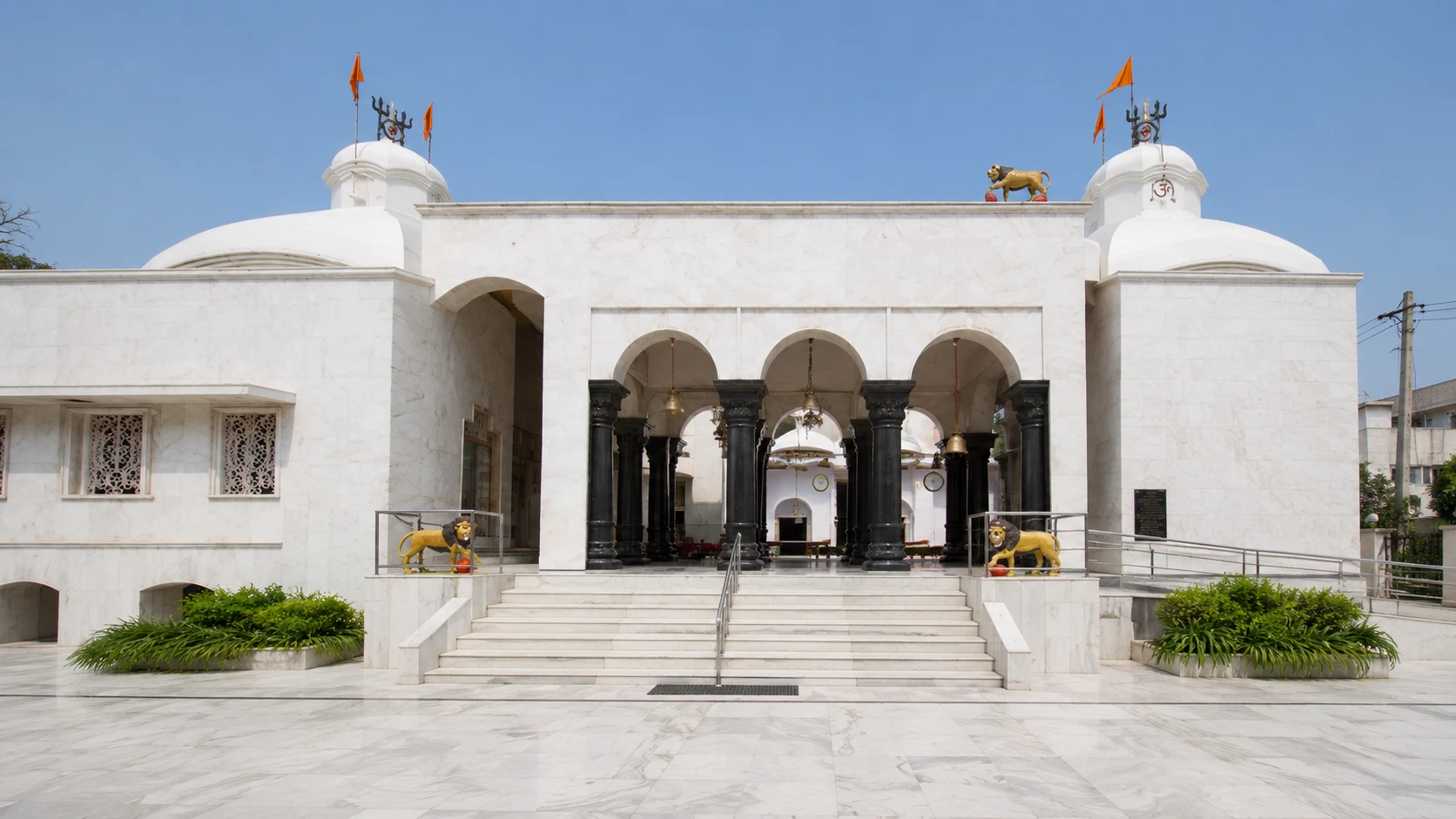
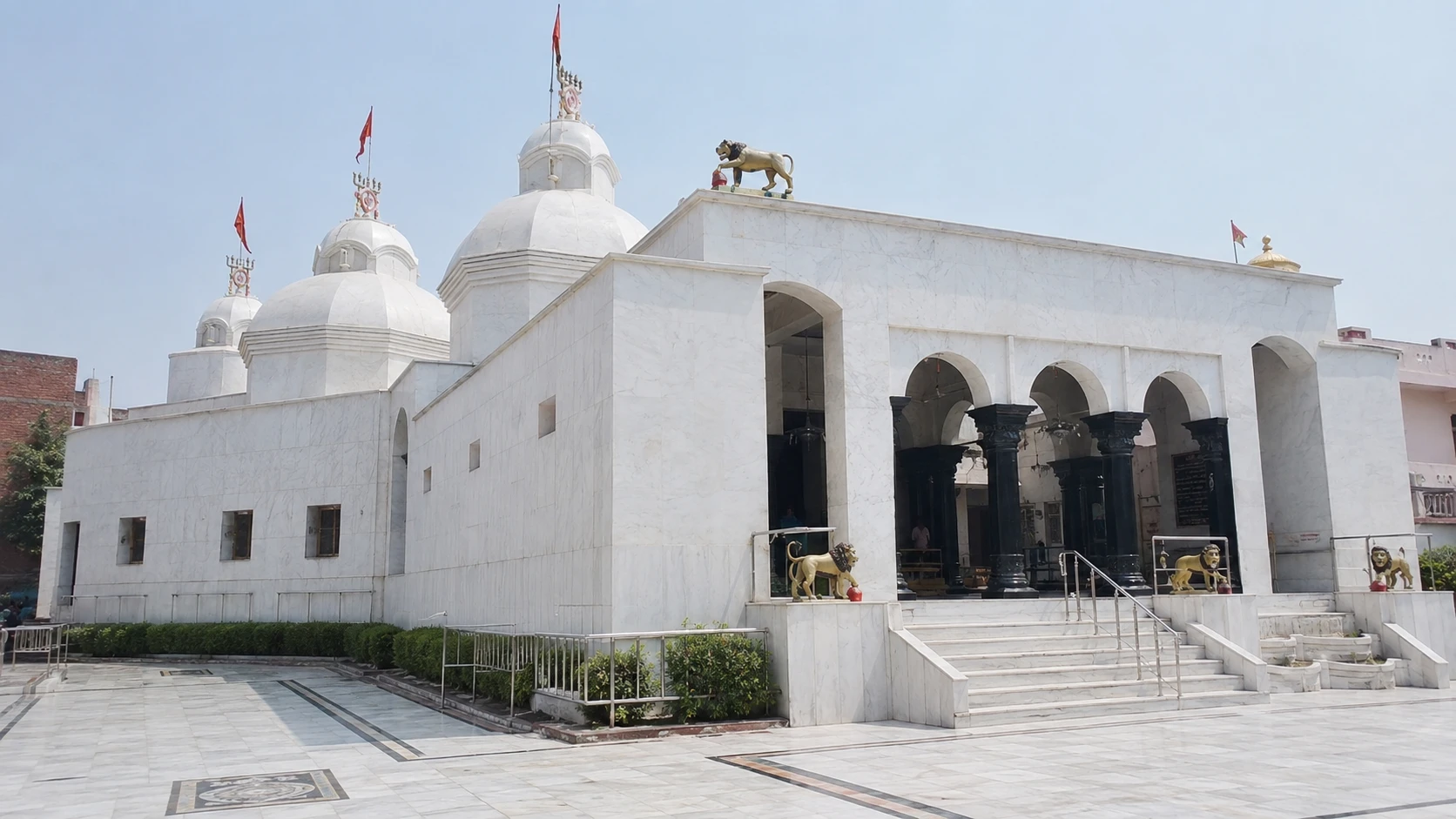
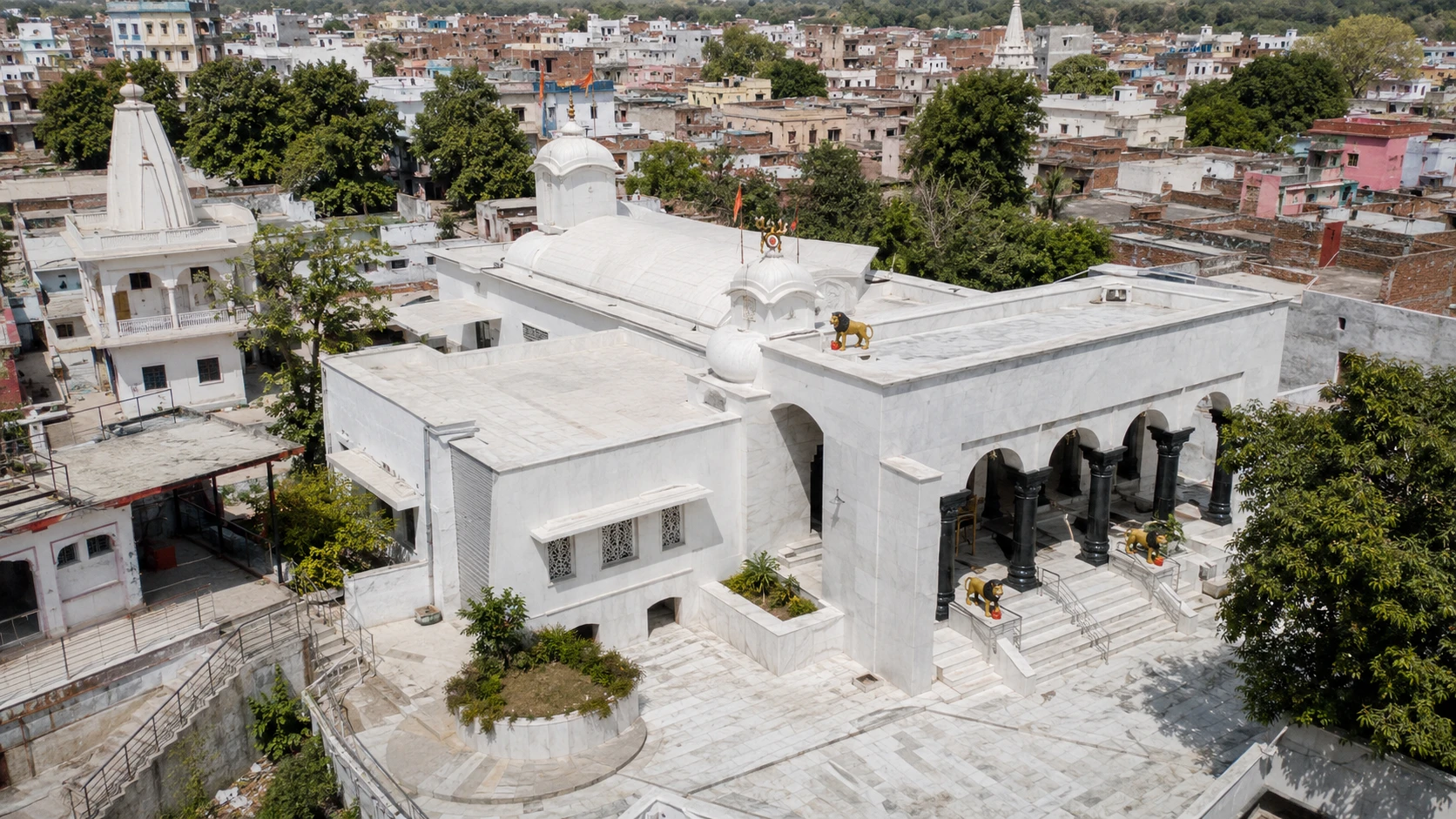
Braj-region North Indian temple architecture with Bengali-influenced detailing reflecting the long Bengali Vaiṣṇava patronage of the Vrindavan complex; modest scale shrine rather than monumental temple, in keeping with the Pīṭha's character as a focal point within a larger Vaiṣṇava ritual geography
खुला
05:00 – 21:00
आरती
05:30 · 12:00 · 19:30
विशेष
Kātyāyanī Vrata observance during Mārgaśīrṣa (November, December, the Gopī tradition's principal Kātyāyanī-vrata month from Bhāgavata Purāṇa); Durgā Pūjā in Aswin; Vasanta-pañcamī in Māgha; integration into the Vrindavan-Braj annual festival calendar including Janmāṣṭamī, Rādhāṣṭamī, and Holī
पवित्र कथा · पवित्र कथा
Vrindavan Uma Devi is the Shakti Pīṭha at the heart of Braj, the place where Satī's ringlets (cūḍā / alaka) are said to have fallen as Viṣṇu's Sudarśana cakra cut her body apart upon the back of the grieving Śiva. The canonical Pīṭhanirṇaya enumeration places the presiding Devī as Umā, paired with the Bhairava Bhūteśvara; the living local tradition of Vrindavan, transmitted through Bengali Vaiṣṇava lineages since the early sixteenth century, also reads her through the figure of Kātyāyanī, the Devī whom the Gopīs of the Bhāgavata Purāṇa worshipped to receive Kṛṣṇa as their cosmic beloved. Among the West Bengal Shākta Pīṭha network, Vrindavan Uma Devi is the geographic outlier: situated not on the Bhāgīrathī but on the Yamunā, not in the rāḍh Bengal heartland but in the Braj of Mathura district in Uttar Pradesh, and standing not within a Shākta-exclusive ritual ground but at the crossing of two of the great devotional traditions of South Asia, Shākta and Vaiṣṇava. Bengali Vaiṣṇavas following Chaitanya since 1514 have incorporated this Pīṭha into their Vrindavan pilgrimage cycle, and Bengali Shāktas have followed the same trail, so that the temple holds, in living memory, a doubled significance that few Pīṭhas anywhere can match.
Sacred Designationपवित्र पदनाम
Shakti Peeth
शरीर का अंग: Ringlets / hair-locks (cūḍā / alaka / keśapāśa)
शक्ति: Umā (canonical Pīṭhanirṇaya); Kātyāyanī (living Vrindavan tradition through the Bhāgavata Purāṇa Gopī episode)
भैरव: Bhūteśvara
Sacred Origin Storyपवित्र उत्पत्ति कथा
Source: Pīṭhanirṇaya (canonical Tantric pīṭha-enumeration text) and Bṛhannīla Tantra, paired with the Vrindavan Vaiṣṇava living tradition that overlays the Devī's local identity through the Bhāgavata Purāṇa Gopī-Kātyāyanī episode
When Dakṣa Prajāpati performed his great sacrifice and refused to invite his daughter Satī's husband, the ascetic Śiva, whom Dakṣa had never accepted as a son-in-law, Satī went to her father's court uninvited, intending to confront him.
Dakṣa met her not with welcome but with public condemnation: he spoke of Śiva as one fit only for cremation grounds, as the consort of ghosts, as no proper husband for the daughter of a Prajāpati. Satī, hearing her husband mocked in the assembly of the gods, would not return to him bearing such humiliation.
She invoked her own yogic fire at her father's hearth and consumed her body in it.
When Śiva learned of his wife's self-immolation, his grief broke the cosmos. He destroyed Dakṣa's yajña, sending Vīrabhadra to scatter the gods and behead Dakṣa himself, and then, taking up Satī's burned body across his shoulders, he began the wandering called the Tāṇḍava of grief.
He walked across the earth without rest, the dead weight of his wife borne on his back, and as he walked, all creation began to shudder.
Viṣṇu, who alone of the gods could intervene, took up his Sudarśana cakra and, walking behind Śiva on his unending journey, he reached his discus forward and began to cut. Piece by piece, almost surgically, the cakra severed Satī's body from Śiva's shoulders.
Each part fell to earth at the place where the cakra's stroke had cut, and each place where a piece of the goddess fell became sanctified, a Pīṭha, a seat of the goddess's power, where she could thereafter be worshipped in fragmentary but inexhaustible presence.
At one such cut, Satī's ringlets, her cūḍā, her alaka, the curls of her hair, fell to the Braj plain on the eastern bank of the Yamunā, at the place where, in another age and in another order of cosmic time, Kṛṣṇa would walk among the gopīs and play the flute that drew them out of their household lives.
The Pīṭhanirṇaya canonical enumeration registers this place's presiding Devī as Umā, Satī herself in the form she takes in subsequent cosmic cycles, paired with Śiva as Pārvatī, and her companion Bhairava as Bhūteśvara, 'the lord of the bhūtas,' the ghosts and elemental beings whose dominion is shared with Śiva.
The canonical reading is straightforward; but Vrindavan, where the ringlets fell, was not to remain a Shākta Pīṭha in any pure sense. The Bhāgavata Purāṇa, composed in the centuries after the Pīṭhanirṇaya, places at this very Vrindavan the great episode of the Gopīs' Kātyāyanī-vrata: the young cowherd women of Braj, longing for Kṛṣṇa as their cosmic beloved, undertake a Mārgaśīrṣa-month worship of Kātyāyanī Devī, the same Devī, in living Vrindavan tradition, who is worshipped at the Uma Devi Pīṭha.
They bathe at dawn in the Yamunā, build a Kātyāyanī image from sand on the bank, and call upon her with a single, joined prayer: that the Devī grant them Kṛṣṇa as husband, as cosmic lover, as the meeting-place of all their longing. Kātyāyanī, the Devī of the Pīṭha, becomes in this episode the doorway through which the gopīs reach Kṛṣṇa.
The Pīṭha that holds Satī's ringlets thus holds, in Vrindavan's living tradition, the Devī who connects Shākta-worship to Vaiṣṇava-love.
This layered theology, Satī's body falling here, Kātyāyanī receiving the gopīs' worship here, Kṛṣṇa being granted as the gopīs' beloved through this Devī's intercession, gives Vrindavan Uma Devi a register no other Bengal Pīṭha can replicate. The Devī is the seat of Shākta power and the gateway to Vaiṣṇava devotion at the same place, at the same shrine.
For Bengali Vaiṣṇavas following Chaitanya from the early sixteenth century onward, this layered identity is not a contradiction to be resolved but a doubled gift to be received: at Vrindavan Uma Devi, the path from Satī's ringlets to Kṛṣṇa's flute runs through a single threshold.
उद्धृत स्रोत:
- Pīṭhanirṇaya (canonical Tantric pīṭha-enumeration), entry for the Mathura-Vrindavan locus
- Bṛhannīla Tantra, sections on the Pīṭhas
- Kālīkā Purāṇa, Chapters 18 and 60, 62
- Devī Bhāgavata Purāṇa, Skandha VII
- Śrīmad Bhāgavata Purāṇa, Skandha X, Chapter 22 (Kātyāyanī-vrata of the Gopīs)
- Sircar, D. C., 'The Śākta Pīṭhas' (Journal of the Royal Asiatic Society of Bengal, 1948; revised monograph 1973)
- Entwistle, A. W., 'Braj: Centre of Krishna Pilgrimage' (Egbert Forsten, 1987)
- Haberman, David L., 'Journey Through the Twelve Forests: An Encounter with Krishna' (Oxford University Press, 1994)
अन्य परंपराएँ · अन्य परंपराएँ
Kātyāyanī Devī of the Bhāgavata Purāṇa Gopī-vrata episode, Vaiṣṇava-Shākta convergence reading
A primary alternative reading of Vrindavan Uma Devi approaches the Pīṭha not through the body-fall narrative but through the Bhāgavata Purāṇa episode in which the gopīs of Braj worship Kātyāyanī Devī during Mārgaśīrṣa (November, December) to receive Kṛṣṇa as their cosmic beloved.
In Skandha X, Chapter 22 of the Bhāgavata, the unmarried young women of Vraja bathe at dawn in the Yamunā, form a Kātyāyanī image from sand on the riverbank, and offer her sandalwood, lamps, garlands, and incense, calling upon her with a refrain that the Vaiṣṇava commentarial tradition has memorialised across the medieval and early-modern centuries: 'Kātyāyanī Mahāmāye, Mahā-yoginī Adhīśvari, give us, O Devī, the son of Nanda as our husband.' The episode places Kātyāyanī at the heart of the Vaiṣṇava theology of bhakti-rasa: she is the doorway through whom the gopīs' worldly longing is transmuted into divine union with Kṛṣṇa.
In this reading, the Vrindavan Uma Devi Pīṭha is not primarily a body-fall locus but the seat of the Devī who mediates between mundane longing and cosmic love, a role that the canonical Pīṭha tradition does not foreground but that Vrindavan's living tradition makes central.
The two readings do not conflict; they hold together as the upper and lower layers of a single Devī's identity at this place.
Bengali Vaiṣṇava-Shākta pilgrimage circuit reading, Chaitanya-tradition (Gauḍīya Vaiṣṇava) reclamation of Vrindavan from 1514 onward
A second alternative reading places Vrindavan Uma Devi within the specific historical project of the Bengali Vaiṣṇava reclamation of Vrindavan that began with Chaitanya's pilgrimage to the city in 1514. When Chaitanya arrived, much of the Vrindavan associated with the Bhāgavata Purāṇa's gopī-līlā had been forgotten as a physical location, the village had been a relatively obscure settlement on the Yamunā for centuries.
Chaitanya and the six Goswamis he sent (Rūpa, Sanātana, Jīva, Gopāl Bhaṭṭa, Raghunātha Bhaṭṭa, Raghunātha Dāsa) systematically identified and re-consecrated the sites of Kṛṣṇa-līlā across Braj, building the Vrindavan that the Bengali Vaiṣṇava tradition would know thereafter.
In this Bengali Vaiṣṇava reading, the Uma Devi Pīṭha is integrated into a larger Vrindavan ritual geography that the Gauḍīya tradition built and patronised; for Bengali pilgrims, visiting the Pīṭha at Vrindavan is part of the same pilgrimage that includes Govinda-deva, Madana-Mohana, Govardhan, and the gopī-līlā sites.
This account makes the temple's Bengali connection not just a matter of canonical attestation but of specific historical re-discovery: the Bengali pilgrims who come here come because their own community's Vaiṣṇava teachers walked these grounds and named these places.
For these pilgrims, the Pīṭha at Vrindavan and the Pīṭhas of West Bengal are bound into a single trans-regional Bengali Shākta-Vaiṣṇava network.
विद्वत संदर्भ
Modern scholarship treats Vrindavan Uma Devi as a Pīṭha at the convergence of three distinct devotional registers: the canonical Pīṭhanirṇaya Tantric body-fall tradition; the Bhāgavata Purāṇa Vaiṣṇava-bhakti tradition of the gopīs' Kātyāyanī-vrata; and the Bengali Gauḍīya Vaiṣṇava-Shākta pilgrimage tradition that re-discovered and re-built Vrindavan from 1514 onward. The body-part attribution (ringlets / cūḍā / alaka) varies across the 51-list traditions, and some lists place the Mathura-Vrindavan Pīṭha at a slightly different locus (Bhūteśvar near Mathura proper) with a different Devī attribution (Devakī, Bhūtadhātrī, or Umā); D. C. Sircar's foundational compilation ('The Śākta Pīṭhas', 1948/1973) treats the Vrindavan Uma identification as one of the principal regional readings. A. W. Entwistle's monograph ('Braj: Centre of Krishna Pilgrimage', 1987) is the foundational modern scholarship on the broader Vrindavan-Braj sacred geography within which the Pīṭha sits. The Bengali Vaiṣṇava reclamation history is best documented in Kṛṣṇadāsa Kavirāja's Caitanya-caritāmṛta and in the works of the six Goswamis themselves. Among the West Bengal Shakti Pīṭha network, Vrindavan Uma Devi is unique in being geographically outside Bengal (Uttar Pradesh, not West Bengal) while being culturally and historically networked into Bengali pilgrimage through the Chaitanya tradition, a 'Bengali Shākta diaspora' position no other Cluster A entry shares.
Historyइतिहास
Vrindavan Uma Devi's documented history unfolds in two principal layers, separated by a long period of regional obscurity. The first layer is canonical-Tantric: the Pīṭhanirṇaya enumeration tradition of the medieval period locates a Mathura-Vrindavan Pīṭha at the cūḍā / alaka-fall and pairs the Devī Umā with the Bhairava Bhūteśvara.
Through the medieval period, Vrindavan itself appears to have been a relatively obscure agricultural settlement on the Yamunā; the Bhāgavata Purāṇa's Vrindavan of the gopī-līlā was largely held in memory and text rather than in active site-pilgrimage.
The second, decisive historical layer opens in 1514 with the pilgrimage of Caitanya Mahāprabhu, the Bengali Vaiṣṇava reformer whose movement would become the Gauḍīya Vaiṣṇava tradition, to Vrindavan. Chaitanya's stay was brief, but his project of identifying and re-consecrating the sites of Kṛṣṇa-līlā set in motion the systematic Vaiṣṇava reconstruction of Vrindavan that the six Goswamis (Rūpa, Sanātana, Jīva, Gopāl Bhaṭṭa, Raghunātha Bhaṭṭa, Raghunātha Dāsa) would carry forward through the sixteenth and seventeenth centuries.
Under the patronage of the Mughal emperor Akbar (who issued formal land-grants to the Vrindavan Vaiṣṇava temples in the 1560s, 1580s) and the Rajput kings of Amber and Bharatpur, Vrindavan became a major North Indian pilgrimage centre.
The Uma Devi Pīṭha, while never the largest temple of the Vrindavan complex, was integrated into the wider Vaiṣṇava ritual geography as the Devī-shrine within which the gopī-Kātyāyanī episode was anchored.
Through the eighteenth and nineteenth centuries, Vrindavan's status as a pilgrimage centre was consolidated under the successive patronages of Jaipur, Marwar, Gwalior, and other Rajput and central-Indian royal houses. The British colonial period brought no destruction but did bring administrative re-organisation of the temple complex; the late nineteenth century saw the documentation of the Vrindavan temples in the Mathura District Gazetteer and the early Archaeological Survey of India reports.
The twentieth century has been transformative for Vrindavan as a whole. The founding of the International Society for Krishna Consciousness (ISKCON) by A. C. Bhaktivedanta Swami Prabhupāda in 1965, a movement directly continuous with the Gauḍīya Vaiṣṇava tradition that Chaitanya began, opened Vrindavan to a global devotional public.
The construction of the ISKCON Krishna-Balaram Mandir in 1975, of numerous large āśram complexes by Vaiṣṇava-Shākta orders from across India, and of growing devotional infrastructure has transformed Vrindavan from a regional pilgrimage town into one of the most internationally trafficked Hindu sacred cities.
Through this transformation, the Uma Devi Pīṭha has remained a continuously-active Devī shrine, smaller and quieter than the major Vaiṣṇava temples of the complex but recognised by both Shākta and Vaiṣṇava devotees as the seat of the goddess at the heart of Braj.
Historical Timelineऐतिहासिक कालक्रम
Pīṭhanirṇaya canonical inclusion of Mathura-Vrindavan as the cūḍā / alaka-fall locus, with Umā as the presiding Devī and Bhūteśvara as the companion Bhairava. The canonical-Tantric layer pre-dates the documented site-level reactivation that begins with Chaitanya's 1514 pilgrimage. Through the medieval period, Vrindavan itself appears to have been a relatively obscure Yamunā settlement; the Pīṭha existed in canonical enumeration before it existed in active site-pilgrimage.
Body-part attributions vary slightly across the 51-list traditions. Some lists place the Mathura-Vrindavan Pīṭha at a slightly different locus (Bhūteśvar near Mathura proper) with a different Devī attribution (Devakī, Bhūtadhātrī, or Umā). The Vrindavan Uma Devi identification used here is the principal living-tradition reading at the temple itself, but is not universally unanimous across the canonical lists.
Caitanya Mahāprabhu's pilgrimage to Vrindavan. The Bengali Vaiṣṇava reformer arrived in Vrindavan in 1514 and began the project of identifying and re-consecrating the sites of Kṛṣṇa-līlā that had been largely forgotten as physical locations. Chaitanya's stay was brief but his presence opened the systematic Bengali Vaiṣṇava engagement with Vrindavan that would unfold across the sixteenth and seventeenth centuries. The Uma Devi Pīṭha is integrated into the wider re-consecrated Vrindavan ritual geography that Chaitanya's project established; from this point forward, Bengali Shākta-Vaiṣṇava pilgrims become a regular presence at the temple.
The Six Goswamis of Vrindavan, Rūpa, Sanātana, Jīva, Gopāl Bhaṭṭa, Raghunātha Bhaṭṭa, and Raghunātha Dāsa Gosvāmīs, settle in Vrindavan over the sixteenth and early seventeenth centuries, systematically identifying Kṛṣṇa-līlā sites, composing the theological works that would define Gauḍīya Vaiṣṇava tradition (Bhakti-rasāmṛta-sindhu, Bṛhad-bhāgavatāmṛta, Gopāla-campū, others), and integrating local Devī shrines including the Uma Devi Pīṭha into the wider Vaiṣṇava ritual geography. The major Vrindavan Vaiṣṇava temples, Govinda-deva (1590), Madana-Mohana, Rādhā-Vallabha, are constructed under Mughal Akbar-era land-grants. The Uma Devi Pīṭha receives Bengali pilgrim patronage through this period.
Successive Rajput and central-Indian royal patronages consolidate Vrindavan as a major North Indian pilgrimage centre. The Jaipur, Marwar, Gwalior, and Bharatpur royal houses extend formal patronage to Vrindavan's Vaiṣṇava temples and ancillary Devī shrines. The British colonial period (post-1803, after the East India Company's annexation of the Doab region) brings no destruction but does bring administrative re-organisation; the late nineteenth century sees the documentation of Vrindavan temples in the Mathura District Gazetteer and early Archaeological Survey of India reports. The Uma Devi Pīṭha is documented as a continuously-active Devī shrine through this period.
The founding of the International Society for Krishna Consciousness (ISKCON) by A. C. Bhaktivedanta Swami Prabhupāda in 1965, a movement directly continuous with the Gauḍīya Vaiṣṇava tradition Chaitanya began, opens Vrindavan to a global devotional public. The construction of the ISKCON Krishna-Balaram Mandir in 1975, of numerous large āśram complexes by Vaiṣṇava-Shākta orders from across India, and of growing infrastructure has transformed Vrindavan from a regional pilgrimage town into one of the most internationally trafficked Hindu sacred cities. Through this transformation, the Uma Devi Pīṭha has remained a continuously-active Devī shrine, smaller and quieter than the major Vaiṣṇava temples of the complex but recognised by both Shākta and Vaiṣṇava devotees as the seat of the goddess at the heart of Braj.
The post-1965 transformation of Vrindavan from regional pilgrimage town to international Krishna-bhakti destination is one of the most dramatic 20th-century transformations of any Hindu sacred city. The Uma Devi Pīṭha's continued operation through this transformation, without losing its Shākta-distinct identity but also without becoming peripheral to the wider sacred-geographic activity, is itself a feature of the temple's contemporary character.
What You'll Seeदर्शन में
The Vrindavan Uma Devi mūrti is enshrined in a North Indian shikhara-style temple structure with Bengali-influenced detailing reflecting the long Bengali Vaiṣṇava patronage of the wider Vrindavan complex. The presiding image is a stone Devī form in a Kātyāyanī register, seated or standing in the classical Mahiṣāsuramardinī-adjacent posture but with the facial register more contemplative and bestowing than fierce-protective, in keeping with the Devī's role in the Gopī-vrata as the granter of cosmic union rather than the conqueror of demonic force.
The mūrti is robed in red and gold textile, with hair-imagery (the cūḍā / alaka body-part-fall) discreetly present in the iconographic programme, a small bundle of carved or sculpted ringlets in the upper register of the icon, often gilded or polished.
Unlike the body-organ-Pīṭhas elsewhere in Cluster A, Vrindavan Uma Devi (along with Kireet's kirīṭa) belongs to the adornment-Pīṭha subset: the fallen item is part of the goddess's regalia rather than her flesh, and the iconographic programme accommodates this with a quieter, ornamental rather than visceral register.
The Bhairava Bhūteśvara is represented by a small companion linga adjacent to the sanctum. The temple compound is modest by comparison to the major Vaiṣṇava temples of Vrindavan (Govinda-deva, Madana-Mohana, Banke-Bihari, ISKCON Krishna-Balaram), but it is integrated into the network of the city's sacred geography, pilgrims following the standard Vrindavan circuit visit Uma Devi alongside the major Vaiṣṇava temples, and Bengali pilgrims in particular regard the Pīṭha-visit as a defining moment of their Vrindavan pilgrimage.
The approach is by foot through Vrindavan's narrow lanes, past the Yamunā ghāts, with the sacred-geographic density of the city pressing in on all sides.
Distinctive Practicesविशिष्ट परंपराएँ
Mārgaśīrṣa Kātyāyanī-vrata observance (Gopī tradition)
मार्गशीर्ष कात्यायनी-व्रत अनुष्ठान (गोपी परम्परा)
Annual; the full Mārgaśīrṣa month (mid-November to mid-December)
The most distinctive practice at Vrindavan Uma Devi: a re-enactment of the Bhāgavata Purāṇa Gopī-vrata in which the gopīs of Braj worshipped Kātyāyanī Devī to receive Kṛṣṇa as their cosmic beloved. The vrata is observed throughout the Mārgaśīrṣa month: devotees, predominantly women, in continuity with the gopī tradition, rise before dawn, bathe in the Yamunā at the temple's ghāts, and offer Kātyāyanī sandalwood, lamps, garlands, and incense. The Sanskrit prayer that the Bhāgavata Purāṇa places in the gopīs' voice, 'Kātyāyanī Mahāmāye, Mahā-yoginī Adhīśvari, dehi me patiṃ deveśi nanda-gopa-sutaṃ vibhuṃ', is recited daily for the full month. The practice is unique among West Bengal-networked Pīṭhas: nowhere else in the Cluster A network is a Devī worshipped explicitly as the intercessor through whom Vaiṣṇava cosmic love is to be obtained, and nowhere else does the full Mārgaśīrṣa-month observance from the Bhāgavata Purāṇa anchor the Pīṭha's annual cycle.
The Kātyāyanī-vrata makes the Devī the doorway through whom worldly longing is transmuted into divine love. The gopīs' wish, to receive Kṛṣṇa as cosmic beloved, is not a wish to be denied or transcended but a wish to be deepened, and Kātyāyanī is the Devī who deepens it. To re-enact the vrata at the place where the gopīs first performed it is to enter, even briefly, into the same theology of bhakti-rasa that the Six Goswamis systematised: the goddess is not the obstacle to Vaiṣṇava love but its precondition, the threshold through whom the devotee approaches the cosmic beloved.
Bengali Vaiṣṇava-Shākta pilgrimage circuit integration
बंगाली वैष्णव-शाक्त तीर्थ-सर्किट समाकलन
Year-round; intensifies during the major Bengali Vaiṣṇava pilgrimage windows (Gaura Pūrṇimā, Janmāṣṭamī, Rādhāṣṭamī, the Mārgaśīrṣa Kātyāyanī-vrata)
A practice that has defined the Pīṭha's identity from 1514 onward: integration into the Bengali Vaiṣṇava pilgrimage circuit that Chaitanya's tradition built across Braj. Bengali pilgrims arriving in Vrindavan visit the Uma Devi Pīṭha as part of the same itinerary that includes Govinda-deva, Madana-Mohana, Banke-Bihari, Rādhā-Vallabha, the major Vaiṣṇava temples, and the Yamunā ghāts, Sevā Kuñja, Nidhi-vana, and the gopī-līlā sites. For Bengali pilgrims, the Pīṭha is not visited as a Shākta detour from a Vaiṣṇava pilgrimage but as part of the same continuous itinerary: the Devī and Krishna are encountered along a single trail. This integration is unique among the Cluster A entries; the other West Bengal Pīṭhas are not embedded in a Vaiṣṇava pilgrimage circuit of comparable scale. The Bengali Maṅgalkāvya tradition's Vaiṣṇava-Shākta integration that Cluster A entries like Bahulā (Bahulā Caturthī double observance) carry domestically reaches its fullest geographic expression in this Vrindavan integration.
The integrated circuit allows the devotee to encounter the goddess and her cosmic beloved at consecutive thresholds. To begin a Vrindavan pilgrimage at the gopī-līlā sites, pass through Govinda-deva and Madana-Mohana, and arrive at Uma Devi is to follow the same arc the gopīs themselves followed: from worldly longing through Kātyāyanī's intercession into Kṛṣṇa-union. For Bengali Vaiṣṇavas in the Gauḍīya tradition, this trail is not a metaphor but a topography, the physical city of Vrindavan holds the path of the gopīs' theology in walkable sequence.
Vaiṣṇava-Shākta dual-register offerings
वैष्णव-शाक्त द्वैत-रजिस्टर अर्पण
Year-round at the Pīṭha; both offering registers coexist within the same ritual cycle
A pattern unique to Vrindavan Uma Devi among Cluster A: the offerings made at the Pīṭha integrate both Shākta-tradition and Vaiṣṇava-tradition material registers. Devī-tradition offerings, red japā hibiscus, kumkum and sindūr, red bangles, coconut, pān-supāri, coexist with Vaiṣṇava-tradition offerings, Tulsī leaves (sacred to Viṣṇu / Kṛṣṇa, ordinarily not associated with Devī worship), sandalwood, banana, prasāda associated with the Vrindavan Vaiṣṇava complex. The dual register is not a confusion of two traditions but their explicit conjunction at this Pīṭha: the Devī here receives offerings from both lineages because she stands at the threshold of both. The pattern is one of the more vivid corpus-level expressions of the Vaiṣṇava-Shākta convergence that defines Vrindavan Uma Devi within the Cluster A network.
The dual-register offering is a small theological act: it refuses the boundary that ordinarily separates Devī-worship from Viṣṇu-worship and treats the Devī here as the threshold at which the two unite. To offer Tulsī to the Devī at her Pīṭha is to recognise that this Devī is not the Devī of the Pīṭhanirṇaya alone but also the Kātyāyanī of the Bhāgavata Purāṇa, the goddess through whom Vaiṣṇava love passes. The offering's material form is a quiet enactment of the theology that the temple's whole identity carries.
Did You Know?क्या आप जानते हैं?
Vrindavan Uma Devi is the only Cluster A West Bengal-networked Pīṭha where Vaiṣṇava and Shākta traditions explicitly converge through a canonical scriptural episode. The Bhāgavata Purāṇa's Mārgaśīrṣa Kātyāyanī-vrata (Skandha X, Chapter 22), in which the gopīs of Braj worship Kātyāyanī Devī to receive Kṛṣṇa as their cosmic beloved, places at this very temple the Devī through whom Vaiṣṇava bhakti-rasa theology is constructed. Nowhere else in the Cluster A network is a Devī worshipped explicitly as the intercessor through whom Vaiṣṇava cosmic love is to be obtained, and nowhere else does a Pīṭha sit at the heart of Krishna-bhakti's central pilgrimage city.
Bhāgavata Purāṇa Skandha X.22; Six Goswamis' theological works; Haberman (1988, 1994); Hawley (1981); comparative observation across Cluster A entries
Vrindavan Uma Devi is the only Cluster A entry not in West Bengal. The other seven Cluster A Pīṭhas (Tarapith, Bakreshwar, Bahulā, Kankalitala, Aṭṭahāsa, Kireet, Yogadya) are all in West Bengal, Birbhum, Bardhaman, and Murshidabad districts. Vrindavan sits in Mathura district, Uttar Pradesh, approximately 1,250 km north-west of the Bengal heartland. The Pīṭha's inclusion in a 'West Bengal Shākta' cluster reflects not geography but the Chaitanya-tradition pilgrim trail since 1514: Bengali Vaiṣṇavas (and Bengali Shāktas following the same routes) have walked to this Pīṭha from West Bengal for half a millennium, making it part of the same trans-regional Bengali Shākta-Vaiṣṇava pilgrimage network.
Kṛṣṇadāsa Kavirāja, 'Caitanya-caritāmṛta'; Entwistle (1987); O'Connell (2014); comparative geographic analysis of Cluster A
Vrindavan Uma Devi belongs to the small subset of Shakti Pīṭhas where the fallen item is an adornment rather than a body organ, alongside Kirīṭeśvarī (kirīṭa / crown) in this same cluster. Most of the 51 Pīṭhas locate themselves on body parts proper (face, tongue, eye, breast, navel, yoni, hand, foot), but a handful inscribe themselves on royal-adornment or hair-arrangement (cūḍā / alaka / keśapāśa for Vrindavan; kirīṭa for Kireet). The 'adornment subset' is theologically distinct: where most Pīṭhas mark the Devī's physical extension into the territory, adornment-Pīṭhas mark the falling-away of her external manifestations, which the Pīṭha then anchors as devotional memory.
Sircar, D. C., 'The Śākta Pīṭhas' (1948/1973); comparative analysis with Kireet (Kirīṭeśvarī)
Multiple Vrindavan temples have at times claimed Pīṭha identity for the cūḍā / alaka-fall locus; the canonical Mathura-Vrindavan attribution in some 51-list traditions is to Bhūteśvar near Mathura proper rather than to Vrindavan Uma Devi. The Uma Devi identification at Vrindavan is the principal living-tradition reading, sustained by the Bengali Vaiṣṇava pilgrimage circuit and the Vrindavan Vaiṣṇava community, but it sits within a broader set of competing attributions across the Mathura-Vrindavan complex. Modern scholarship (Sircar 1948/1973; Entwistle 1987) discusses these competing claims without adjudicating between them.
Sircar (1948/1973); Entwistle (1987); Growse, F. S., 'Mathura: A District Memoir' (1882)
The ISKCON-era transformation of Vrindavan since 1965 has placed Vrindavan Uma Devi within one of the world's most internationally-trafficked Hindu sacred geographies. Estimates place Vrindavan's annual visitor count well above ten million, drawn from across India and from a global Krishna-bhakti diaspora that ISKCON has built since A. C. Bhaktivedanta Swami Prabhupāda founded the movement in New York in 1965. The Uma Devi Pīṭha is one of the smaller, quieter shrines within this transformed city, but its position at the crossing of Shākta and Vaiṣṇava lineages has given it continued visibility within both communities of the transformed pilgrim public.
Bryant and Ekstrand (eds.), 'The Hare Krishna Movement' (2004); UP Tourism visitor statistics; modern Vrindavan ethnographic scholarship
Visitor Accessप्रवेश जानकारी
Vrindavan Uma Devi welcomes devotees of all backgrounds for darshan throughout the temple's open hours. There are no caste-based, sectarian, or gender-based entry restrictions. The temple's location within central Vrindavan means that the visitor experience is shaped by the wider rhythms of the city, a busy, international Krishna-bhakti pilgrimage city rather than a quiet village shrine. Dress, conduct, and offering practices accommodate both Shākta and Vaiṣṇava conventions; offerings of Tulsī leaves alongside red japā flowers are received without distinction. Photography of the inner sanctum is not permitted; outer-courtyard photography follows the practices of the wider Vrindavan temple network and is generally accepted. International visitors are accustomed to and welcomed at Vrindavan; basic English alongside Hindi is widely spoken at the temple gate.
Festivalsत्योहार
Mārgaśīrṣa Kātyāyanī-vrata
मार्गशीर्ष कात्यायनी-व्रत
Nov, Dec (full Mārgaśīrṣa month)
The temple's most distinctive annual observance and the moment of strongest Vaiṣṇava-Shākta convergence in the temple's calendar. The full Mārgaśīrṣa month is observed as the gopī Kātyāyanī-vrata: predawn Yamunā bathing, sand-imagery of Kātyāyanī on the riverbank, daily recitation of the Bhāgavata Purāṇa Skandha X.22 verses, and devotional engagement with both the Pīṭha-Devī and her Vaiṣṇava-tradition Kṛṣṇa-bestowing aspect. Drawing primarily women devotees in continuity with the gopī tradition, but with mixed-gender participation in the wider observance.
Durgā Pūjā / Navarātri
दुर्गा पूजा / नवरात्रि
Sep, Oct (Aswin śuklapakṣa) and Mar, Apr (Caitra śuklapakṣa)
The Devī's pan-Indian Aswin and Caitra Navarātri cycles are observed at Vrindavan Uma Devi with a register that combines the Bengali Shākta convention (carried by visiting Bengali Vaiṣṇava-Shākta pilgrims) with the wider Braj-region Navarātri observance. The Aswin observance brings particularly substantial Bengali pilgrim attendance; the Caitra observance is regionally lower-attendance but is preserved as a continuous part of the temple's annual cycle.
Janmāṣṭamī (Krishna's birthday observed at the Pīṭha)
जन्माष्टमी (पीठ पर अनुष्ठित कृष्ण-जन्मोत्सव)
Aug, Sep (Bhādrapada kṛṣṇāṣṭamī)
Distinctive among Cluster A entries: the Pīṭha observes Janmāṣṭamī, Kṛṣṇa's birthday, as part of its calendar because the wider Vrindavan-Mathura sacred geography is centred on this day. The observance reflects the Vaiṣṇava-Shākta convergence: the Devī of the Pīṭha is also the Kātyāyanī through whom Kṛṣṇa was first received by the gopīs, and the celebration of his birth therefore touches the temple. No other Cluster A West Bengal Pīṭha observes Janmāṣṭamī as a temple-level festival.
Holī / Vasanta Pañcamī (Braj-regional spring observances)
होली / वसन्त पञ्चमी (ब्रज-क्षेत्रीय वसन्त अनुष्ठान)
Feb (Vasanta Pañcamī, Māgha śuklapakṣa) and Mar (Holī, Phālguna Pūrṇimā)
Vrindavan's distinctive Braj-regional Holī (held over multiple days including the Lath-mār Holī of Barsana-Nandgaon) and Vasanta Pañcamī observances pull the Uma Devi Pīṭha into the wider Braj festival calendar. The Devī receives offerings in keeping with the Vaiṣṇava-Shākta dual register: red powders alongside Tulsī, devotional songs that blend Shākta and Krishna-bhakti repertoires. The Holī observance is more atmospherically vivid than the formal Pīṭha-pūjā observances, but the temple is integrated into the city-wide rhythm during these days.
Traditional Offeringsपारंपरिक अर्पण
प्राथमिक अर्पण
Red Japā (Hibiscus) flowers
लाल जपा (गुड़हल) के पुष्प
जपा-पुष्प
The red hibiscus is the canonical floral offering to the Devī across Shākta tradition. At Vrindavan Uma Devi the offering carries its standard Shākta significance: the deep red signifies the goddess's life-force and her victory over asuric power. The offering is brought by Bengali Shākta pilgrims in particular as part of the dual-register practice that defines the temple.
Kumkum and Sindūr (Vermilion)
कुमकुम और सिन्दूर
कुङ्कुम / सिन्दूर
Vermilion is offered at the Devī's feet. The red of sindūr carries the Devī's manifest power, the life-force she protects, and the sovereignty she bestows. At Vrindavan, sindūr is offered both as Shākta-tradition material and as part of the Kātyāyanī-vrata's traditional cosmetic-imagery for the gopīs' ritual address to the Devī.
Red bangles and red-bordered cloth
लाल चूड़ियाँ और लाल-किनारी वस्त्र
Bengali Shākta devotees in particular offer red bangles and lengths of red-and-white cloth (śādā-lāl) to the Devī, sustaining the Bengali Shākta convention within the Vrindavan setting. The bangles carry the everyday Bengali Shākta association of the Devī with the married woman, the householder's protectress, and the goddess as bestower of saubhāgya.
Coconut
नारियल
नारिकेल
The coconut is broken before the Devī as a symbolic offering of the ego. The breaking of the coconut at the threshold of darshan is a near-universal Hindu temple practice; at Vrindavan Uma Devi it is observed in continuity with both Shākta and the wider Vaiṣṇava-tradition coconut-offering practices.
Pān-supāri (Betel leaf and areca)
पान-सुपारी
ताम्बूल-पूगफल
Betel leaf with areca and lime is a traditional auspicious offering across Hindu tradition. At Vrindavan Uma Devi it is observed with both the Bengali Shākta and the Braj-regional pān-offering registers in continuity, with the offered platter typically distributed at the close of major aartis as a token of the Devī's welcome.
इस मंदिर की विशेषता
Tulsī leaves (Vaiṣṇava-register offering, distinctive at this Pīṭha)
तुलसी पत्र (वैष्णव-रजिस्टर अर्पण, इस पीठ पर विशिष्ट)
Tulsī leaves are sacred to Viṣṇu and Kṛṣṇa and are ordinarily not offered in Devī-worship; their offering at Vrindavan Uma Devi is the temple's most distinctive iconic departure from standard Pīṭha practice. The offering recognises that the Devī here is also the Kātyāyanī of the Bhāgavata Purāṇa Gopī episode, the goddess through whom Vaiṣṇava love is granted. Tulsī before the Devī is thus a small philological liturgy of the Vaiṣṇava-Shākta convergence: the Vaiṣṇava-tradition's most distinctive offering is here folded into Shākta worship because the Devī of this place holds both lineages together.
Kātyāyanī-vrata observance materials (sandalwood paste, lamps, garlands per Bhāgavata X.22)
कात्यायनी-व्रत अनुष्ठान सामग्री (चन्दन-लेप, दीप, मालाएँ, भागवत X.22 के अनुसार)
During the Mārgaśīrṣa Kātyāyanī-vrata month, devotees bring the specific offering materials the Bhāgavata Purāṇa Skandha X.22 names for the gopīs' worship: sandalwood paste, lamps (dīpa), flower garlands, and fragrant incense. These offerings re-enact the gopīs' canonical worship of Kātyāyanī Devī directly; the practice is observed only at this Pīṭha among Cluster A entries because only here does the Bhāgavata-named Kātyāyanī overlap with the Pīṭha-Devī.
Most devotees bring offerings from outside the temple grounds. Local vendors near the Vrindavan temple network sell pre-packaged offering bundles for both Shākta and Vaiṣṇava registers; Bengali pilgrims often source offerings from Bengali-tradition shops near the major Bengali āśrams. The temple itself does not maintain a formal offerings counter; offering arrangements are locally-paced in keeping with the wider Vrindavan temple convention.
How to Reachकैसे पहुँचें
Vrindavan Uma Devi is reached most commonly from Mathura Junction (12 km), the principal long-distance rail hub for the Mathura-Vrindavan complex, with direct services to Delhi, Agra, Mumbai, Kolkata, Chennai, and most other major Indian cities. Vrindavan's own railway station has limited local services.
From Delhi, the road journey via the Yamunā Expressway takes three to four hours; from Agra, one to two hours via NH-19. The nearest airports are Agra Kheria (60 km, limited connectivity), Indira Gandhi International Airport, Delhi (180 km, full international and domestic connectivity), and Jewar / Noida International (130 km, expanding connectivity).
Once in Vrindavan, the temple is reached on foot through the city's narrow lanes; Vrindavan's central area is largely pedestrian-friendly with cycle-rickshaws and shared autos for longer movement. The Uma Devi Pīṭha is typically visited as part of a broader Vrindavan darshan circuit that includes Govinda-deva, Madana-Mohana, Banke-Bihari, and the Yamunā ghāts.
Bengali pilgrims often base themselves at a Bengali āśram or guesthouse in Vrindavan; specifically Bengali-tradition accommodation has been available in Vrindavan since the sixteenth century and remains so.
Plan Your Visitयात्रा की योजना
🌤 सर्वोत्तम मौसम
October to March is the most comfortable visiting window, cool to mild Braj weather, dry conditions, and the convergence of the Mārgaśīrṣa Kātyāyanī-vrata (Nov, Dec) at the temple's calendar peak. The April, June pre-monsoon period brings extreme heat to the Braj region; daytime temperatures often exceed 40°C and visitors should be prepared for substantial heat-stress, particularly during midday darshan windows. The July, September monsoon brings significant rain and humidity; the Yamunā can flood the ghāts during peak monsoon weeks. Janmāṣṭamī in Bhādrapada (Aug, Sep) is the city's single most-attended day with crowds throughout Vrindavan; pilgrims who wish to attend Janmāṣṭamī should plan logistics carefully.
👘 पहनावे का नियम
Modest full-coverage attire is appropriate in keeping with the conventions of the wider Vrindavan temple network. For women: saree, salwar-kameez, or other modest full-coverage clothing; many Bengali pilgrims wear the traditional red-bordered white cotton saree during festival days. For men: dhoti-kurta, kurta-pyjama, or modest trousers and shirt. International visitors are accustomed to and welcomed at Vrindavan; shorts, sleeveless tops, and Western-cut clothing are common in the streets but are generally adjusted at the threshold of the temple sanctum. Footwear is removed before entering the temple proper; covered shoe-storage is available near most temple entrances.
📱 फोन और फोटोग्राफी
Mobile phones are permitted on the temple grounds. Photography is not permitted in the inner sanctum (garbhagriha); outer-courtyard and approach-lane photography follow the practices of the wider Vrindavan temple network. Vrindavan as a whole has become accustomed to international visitor photography in recent decades; nonetheless, courtesy toward fellow devotees during darshan and aarti is expected, and flash photography near the mūrti is not appropriate. The Yamunā ghāts near the temple are generally photography-friendly except during specific ritual moments.
🏨 आवास
Vrindavan offers a uniquely deep accommodation range for a temple city of its size: hundreds of options from village dharamshalas and basic guesthouses to mid-range hotels, large āśram complexes operated by Vaiṣṇava-Shākta orders from across India, and a smaller number of premium-segment hotels developed in recent decades. Bengali pilgrims are particularly well-served by Bengali-tradition āśrams and guesthouses that have been continuously available in Vrindavan since the sixteenth century. ISKCON maintains its own large guest accommodation near the Krishna-Balaram Mandir. Major Vaiṣṇava-Shākta orders from Bengal, Maharashtra, Tamil Nadu, and elsewhere maintain mid-to-large guesthouses serving their pilgrim networks. The Mārgaśīrṣa Kātyāyanī-vrata period (Nov, Dec), the Janmāṣṭamī period (Aug, Sep), and the Holī period (Mar) see substantial accommodation pressure; advance booking is recommended for these windows.
Sacred Soundsपवित्र ध्वनि
Kātyāyanī-vrata Mantra (Bhāgavata Purāṇa Skandha X.22 Gopī invocation)
mantra · 142
Śrīmad Bhāgavata Purāṇa, Skandha X, Chapter 22 (Gopī-Kātyāyanī-vrata recitation)
path · 1456
Śakti Pīṭha Stotram (51-Pīṭha enumeration)
stotram · 894
Caṇḍī Pāṭh, Devī Māhātmya Chapter 1
path · 1247
Ramprasad Sen Śyāma-saṅgīt (Bengali Shākta tradition, sustaining the Bengali pilgrim register)
bhajan · 423
क्या आप जानते हैं? · Did You Know?
वही अनुवाद त्रुटि जिसने हिन्दू धर्म में '33 कोटि' को '33 करोड़' बनाया, बौद्ध धर्म में भी हुई। बौद्ध ग्रन्थों के चीनी अनुवाद ने 'सप्त कोटि बुद्ध' (7 श्रेष्ठ बुद्ध) का अनुवाद '7 करोड़ बुद्ध' कर दिया। तिब्बती अनुवाद ने सही किया: 7 प्रकार, 7 करोड़ नहीं। एक संस्कृत शब्द, दो प्रमुख विश्व धर्मों में गलत पढ़ा गया, ने दो एकसमान भ्रम स्वतन्त्र रूप से उत्पन्न किए।
Related Contentसंबंधित सामग्री
Related Scriptures
Related Temples
Kireet Shakti Peeth
किरीट शक्तिपीठ
Lalbagh (Murshidabad), West Bengal
Yogadya (Kshirgram)
योगाद्या शक्तिपीठ
Kshirgram, West Bengal
Tarapith
तारापीठ
Tarapith, West Bengal
Bakreshwar Mahishmardini
बक्रेश्वर शक्तिपीठ
Bakreshwar, West Bengal
Bahula Shakti Peeth
बहुला शक्तिपीठ
Ketugram, West Bengal
Kankalitala Shakti Peeth
कंकालीतला शक्तिपीठ
Bolpur, West Bengal
Attahas Shakti Peeth
अट्टहास शक्तिपीठ
Labpur, West Bengal
Kalighat
कालीघाट
Kolkata, West Bengal
Community Reflections
🕉️
Be the first to share your reflection.