Vaitheeswaran Koil (Mars)
वैद्येश्वरन कोविल
The temple where Shiva is the doctor and Mars was his patient
Vaitheeswaran Koil, Tamil Nadu, India
Vaidyīśvaran KōvilAlso known as: Vaitheeswaran Koil, Pullirukkuvelur, Angaraka Sthalam, Vaidyanatha Swamy Temple
युग
A paadal petra sthalam praised in the Tevaram hymns, establishing its antiquity as a Shaiva shrine well before the medieval structures now standing; assigned Mars in the later Navagraha circuit
वास्तुकला
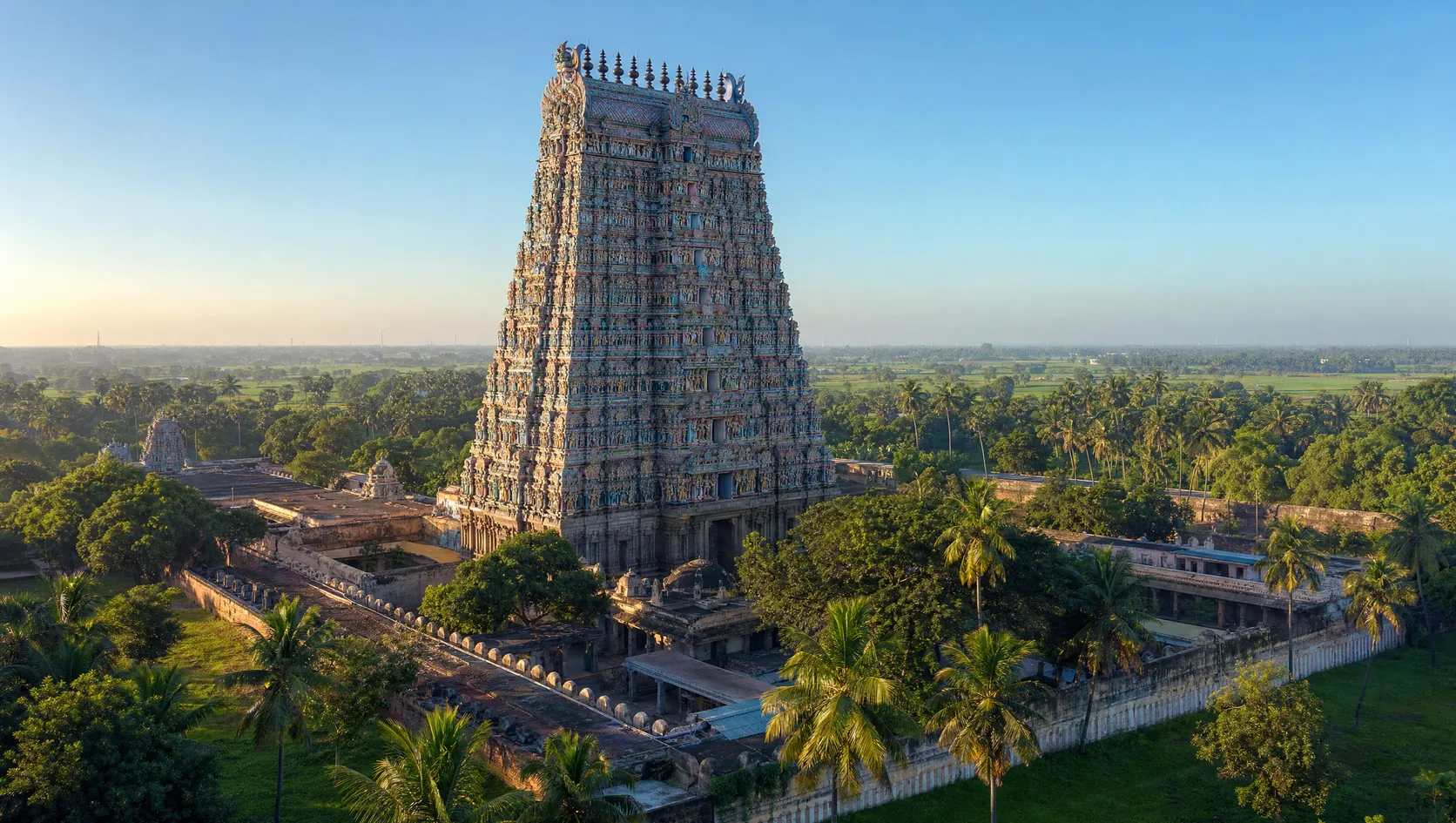
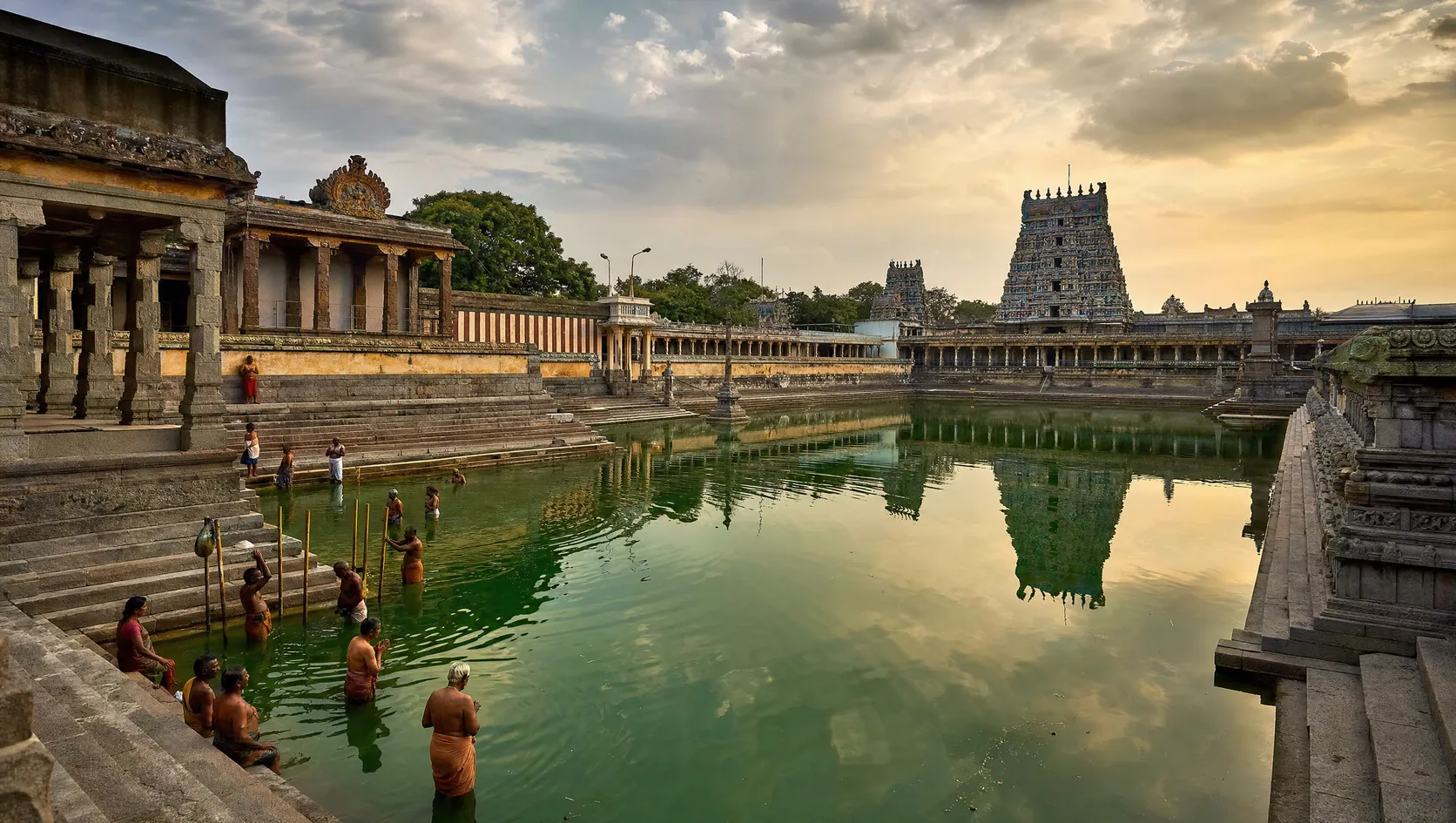
Dravidian, with a gopuram over the entrance, the Siddhamirtham tank within the complex, and the Angaraka shrine among the subsidiary shrines
विशेष
Pilgrims come both for healing, addressed to the presiding deity Vaidyanatha, and for Mars afflictions, addressed at the Angaraka shrine. Tuesdays, the day of Mars, draw the largest gatherings.
पवित्र कथा · पवित्र कथा
Vaitheeswaran means the god who is a doctor: vaidya, physician, joined to ishvara, lord. This is the healing temple of the Cauvery delta, and the name is not metaphor. Pilgrims come here for disease, and the whole apparatus of the place is medical: a tank whose water is held to cure, a well of medicinal earth, a prasad made of jaggery and pepper taken as a remedy rather than a sweet. It is also the Mars temple of the Navagraha circuit, and the two identities fit together with unusual neatness. Mars, Angaraka, governs blood in the graha system, and the tradition holds that Angaraka himself was cured of leprosy at this place by the divine physician. The planet associated with blood and affliction came to the god who heals, and was healed. So the pilgrim who arrives for a Mars affliction in a horoscope is standing where the planet was once the patient.
Sacred Designationपवित्र पदनाम
Navagraha
ग्रह:
Sacred Origin Storyपवित्र उत्पत्ति कथा
Source: The healing tradition of Vaidyanatha in the temple's sthala purana, together with the Angaraka affliction account of the Navagraha circuit
The temple gathers several accounts of healing, and they are all of a piece.
In one, Angaraka, the Mars deity, was afflicted with leprosy and came to this place, where the divine physician cured him. In gratitude the planet asked that those who worship here be relieved of the afflictions he governs, and the boon was granted, which is why the Mars shrine draws those seeking relief from disease of the blood and skin.
In another, the temple is where Shiva healed the wounds of Jatayu, the vulture who fought Ravana to save Sita and was struck down. And in the tradition surrounding the great war of the Ramayana, this is where Rama is said to have performed the last rites for Jatayu, so the place is tied both to healing and to the proper care of the dying.
What runs through all of them is the same figure: not a god who grants boons from a distance but one who treats. The Siddhamirtham tank, whose water is held to cure, and the well of medicinal earth are the physical form of that idea. The pilgrim does not petition here so much as present themselves for treatment.
उद्धृत स्रोत:
- Temple sthala purana (Vaidyanatha healing tradition)
- Navagraha circuit tradition (Angaraka sthalam account)
- Ramayana-associated local tradition of Jatayu
विद्वत संदर्भ
Vaitheeswaran Koil is a paadal petra sthalam, praised in the Tevaram, which establishes it as a Shaiva healing shrine of established antiquity independent of its later role as the Mars station of the Navagraha circuit. The old name Pullirukkuvelur encodes several of the temple's associations, including the vulture (Jatayu) of the Ramayana tradition. The fit between the healing identity and the Mars assignment is worth noting as an example of how the circuit was constructed. Mars governs blood and the accidents of the body in the graha system, and a temple already famous for healing was a natural choice for the planet of affliction. The circuit did not create the healing tradition; it recognised an existing one and attached a planet to it. The temple is also a well-known centre of Naadi astrology, the palm-leaf divination tradition, which developed around the site as an independent practice and should not be confused with the temple's own ritual.
Historyइतिहास
Vaitheeswaran Koil is one of the paadal petra sthalams, the Shiva temples praised in the Tevaram hymns of the Nayanar saints, which places its importance as a Shaiva shrine long before the medieval structures now standing. Its old name, Pullirukkuvelur, gathers several of its associations in a single word.
The temple's distinctive identity is medical. It is dedicated to Shiva as Vaidyanatha, the divine physician, and its ritual apparatus is organised around healing: the Siddhamirtham tank whose water is held curative, a well of medicinal earth, and a prasad of jaggery and pepper taken as a remedy. This healing identity is older than and independent of the temple's place in the Navagraha circuit.
When the circuit of nine planet temples took shape across the delta, Vaitheeswaran Koil was assigned Mars, Angaraka, whose governance of blood and bodily affliction fitted a temple already known for cure. The Angaraka shrine within the complex became the focus for pilgrims addressing Mars afflictions in a horoscope, and the temple thus came to carry two overlapping identities, the healer and the Mars station, that reinforce rather than compete with each other.
The temple received Chola and later patronage as part of the delta's dense network of Shaiva shrines, and much of the standing structure dates from these periods. Around the site an independent tradition of Naadi astrology, palm-leaf divination, grew up and made the town's name widely known. In the modern period the temple comes under the Tamil Nadu Hindu Religious and Charitable Endowments Department, and its visitor numbers rose considerably as the Navagraha circuit became an organised pilgrimage.
Historical Timelineऐतिहासिक कालक्रम
The temple is praised in the Tevaram hymns of the Nayanar saints, establishing it as a paadal petra sthalam and fixing its antiquity as a Shaiva healing shrine centuries before the structures now standing.
Inclusion in the Tevaram is the strongest available marker of antiquity for a Tamil Shiva temple.
The healing identity of the temple as Vaidyanatha, the divine physician, becomes established, with the Siddhamirtham tank and the well of medicinal earth as its physical apparatus.
The healing tradition is independent of and older than the temple's later Navagraha role.
The temple receives Chola patronage as part of the dense network of Shaiva shrines endowed across the Cauvery delta, and much of the standing structure dates from this and later periods.
The gopuram, the pillared halls, the Siddhamirtham tank and the subsidiary shrines take their present form across successive campaigns of building and repair.
The Navagraha circuit of the Cauvery delta takes shape, and Vaitheeswaran Koil is assigned Mars, its existing healing identity fitting the planet that governs blood and bodily affliction.
The circuit recognised an existing healing tradition and attached a planet to it rather than creating the association.
Later patronage under the Thanjavur Nayakas and Marathas supports additions and repairs, as across the delta's temple landscape.
An independent tradition of Naadi astrology, palm-leaf divination, develops around the town and makes its name widely known beyond the circuit.
The Naadi tradition is an independent practice around the site and is distinct from the temple's own ritual.
Colonial-era gazetteers record the temple within the delta's religious landscape, noting both its healing reputation and its place in the Navagraha circuit.
Administration passes to the Tamil Nadu Hindu Religious and Charitable Endowments Department, and periodic renovation and kumbhabhishekam are carried out.
As the Navagraha circuit grows into an organised pilgrimage and the healing reputation continues to draw the sick, Vaitheeswaran Koil sees visitor numbers well beyond its earlier scale, arriving both for cure and for Mars remedies.
What You'll Seeदर्शन में
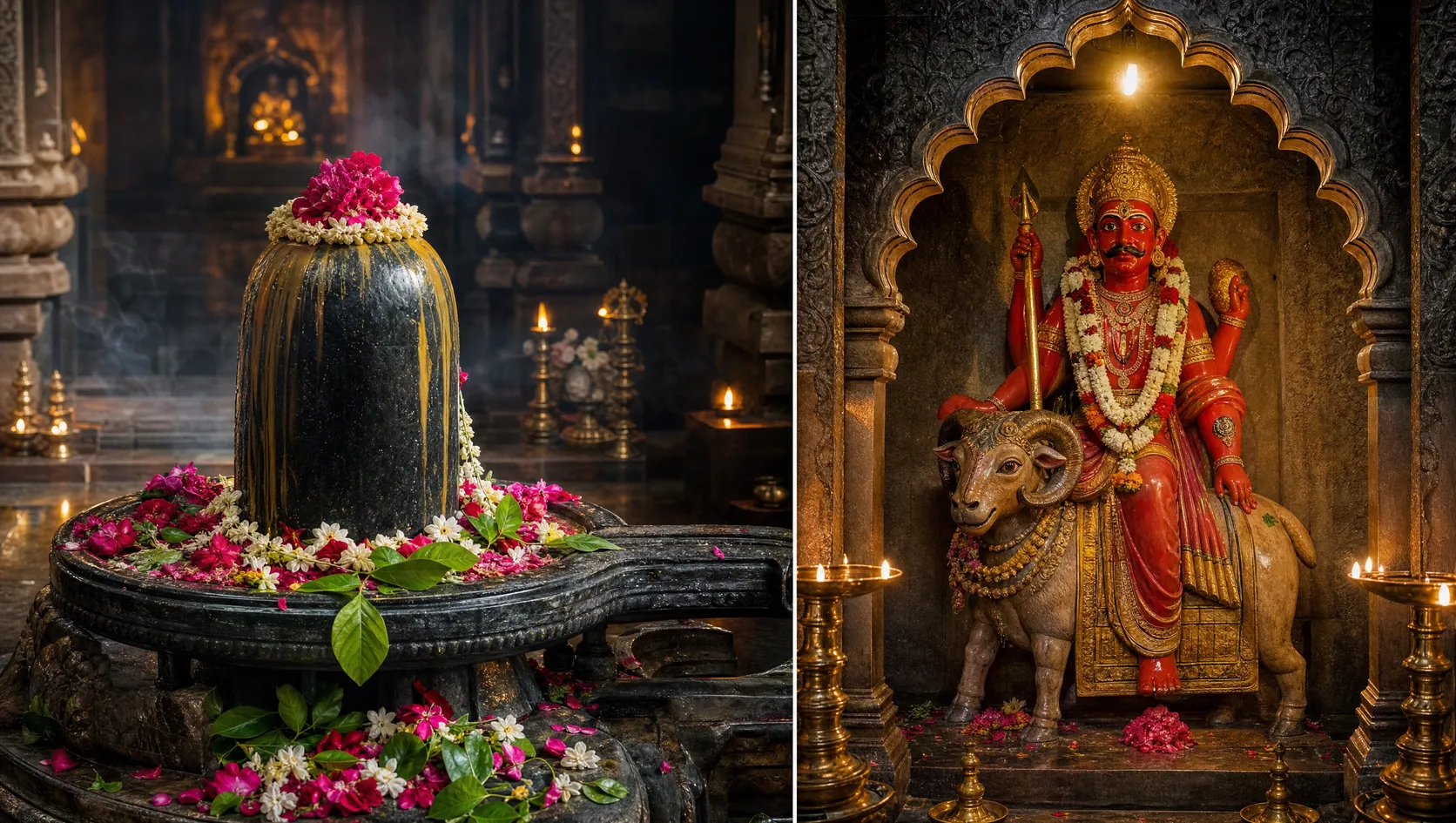
The presiding deity is Shiva as Vaidyanatha, worshipped as a linga in the main sanctum, and the goddess is Thaiyalnayaki, whose name carries the sense of one who holds medicine. The building follows the Dravidian idiom of the delta, with a gopuram over the entrance, pillared halls and the large Siddhamirtham tank within the complex.
The Angaraka shrine, which brings the circuit pilgrim, holds Mars in his graha form, red in complexion, mounted on a ram, associated by the correspondences of graha worship with red, with toor dal, with coral and with Tuesday.
But the objects that define this temple are not images so much as instruments of treatment. The Siddhamirtham tank, whose water is held to cure; the well from which medicinal earth is taken; the niches where the prasad of jaggery and pepper is prepared; the thread and the powder that pilgrims carry away for the sick. The temple is arranged less like a shrine than like a dispensary, and the iconography is subordinate to the function.
Distinctive Practicesविशिष्ट परंपराएँ
Bathing in the Siddhamirtham Tank
सिद्धामृतम् सरोवर में स्नान
Before darshan, particularly for the sick
Pilgrims, especially those seeking cure from disease, bathe in the Siddhamirtham tank within the complex, whose water is held to carry healing power. The name means the nectar of the siddhas, the accomplished ones.
At a temple whose deity is a physician, the bath is treatment rather than only purification. The water is approached as a medicine, and the act of immersing before darshan casts the whole visit as a course of care rather than a request for a favour.
The Prasad of Jaggery and Pepper
गुड़ और काली मिर्च का प्रसाद
Received after worship, taken as a remedy
The temple's characteristic prasad is chandanam and a preparation of jaggery mixed with pepper and other substances, taken not as a sweet but as a remedy. Pilgrims with specific ailments receive it accordingly, and it is carried home for the sick who could not come.
The prasad completes the medical logic of the place. What one takes away from most temples is a blessing; what one takes away from here is closer to a prescription, a substance to be consumed for its effect, given by the god who is a doctor.
Mars Remedy at the Angaraka Shrine
अंगारक मंदिर में मंगल-निवारण
Tuesdays and according to horoscope
Pilgrims addressing a Mars affliction come to the Angaraka shrine, offering red flowers, red cloth and toor dal according to the graha's correspondences, particularly on Tuesdays, the day of Mars.
Mars governs blood, energy and the accidents of the body, and its afflictions are read into disputes, injuries and delays in marriage. At a healing temple the Mars remedy and the pilgrimage for cure become almost the same act, addressed to the planet that was itself once healed here.
Offering Thread and Salt for the Sick
रोगियों के लिए धागा और नमक अर्पित करना
On behalf of those who cannot come
Pilgrims carry away sacred thread, ash and other substances from the temple for family members too ill to travel, so the temple's treatment reaches the bedridden through a proxy. Salt and pepper are sometimes offered in dissolution in the tank as a vow for recovery.
A healing temple must have a way of treating the absent, since the sickest cannot make the journey. The carried substances and the proxy offerings extend the dispensary beyond its walls, which is consistent with a god whose role is to cure rather than merely to be seen.
Did You Know?क्या आप जानते हैं?
The name Vaitheeswaran means the god who is a doctor, from vaidya, physician, and ishvara, lord. The temple's whole apparatus is medical, and pilgrims come for cure as much as for worship.
Temple tradition; standard etymology of Vaidyanatha
In the circuit tradition the Mars deity Angaraka was himself cured of leprosy at this place, so the pilgrim who comes for a Mars affliction stands where the planet was once the patient.
Navagraha circuit tradition (Angaraka sthalam)
The temple's prasad is a preparation of jaggery, pepper and other substances taken as a remedy rather than a sweet, closer to a prescription than to an ordinary offering returned.
Temple practice
The Siddhamirtham tank within the complex, whose name means the nectar of the siddhas, is held to carry healing power, and bathing in it is treated as treatment rather than only purification.
Temple tradition
The town is a well-known centre of Naadi astrology, the palm-leaf divination tradition, which grew up around the site as an independent practice distinct from the temple's own ritual.
Regional accounts of the Naadi tradition
By local tradition this is where Rama performed the last rites for Jatayu, the vulture killed defending Sita, tying the healing temple also to the proper care of the dying.
Ramayana-associated local tradition
Mars governs blood in the graha system, so remedies here are sought for disorders of the blood and skin, for injuries, and for the delays in marriage that the tradition reads as a Mars affliction.
Standard graha correspondences
Visitor Accessप्रवेश जानकारी
The temple is open to devotees without entry restriction. Traditional dress is customary, as at other temples in the Tamil delta, and footwear is removed at the entrance. Pilgrims come both for healing, addressed to the presiding Vaidyanatha, and for Mars afflictions, addressed at the Angaraka shrine. Those seeking cure often bathe in the Siddhamirtham tank first and receive the medicinal prasad; those on the Navagraha circuit make the Mars offering at the Angaraka shrine. It is commonly visited as one station of the circuit, though its healing reputation also draws pilgrims independently. Tuesdays, the day of Mars, are the busiest.
If coming for healing, plan to bathe in the Siddhamirtham tank and to receive the medicinal prasad; carry a container if you intend to take the tank water or prasad home for someone who could not come. If on the Navagraha circuit, make the Mars offering at the Angaraka shrine with the red flowers and toor dal associated with the planet, ideally on a Tuesday. Take darshan of the presiding Vaidyanatha regardless of which purpose brings you. Be wary of the palm-leaf astrology touts around the town, who are unconnected to the temple. The temple has its own railway station, which makes it one of the more accessible stations of the circuit.
Festivalsत्योहार
Tuesday Worship (Mangala Vaaram)
मंगलवार उपासना
Weekly, throughout the year
Tuesday, the day of Mars, is the temple's weekly high point, when both the Angaraka shrine and the healing worship draw the largest gatherings. For a Mars temple the recurring Tuesday matters more than most annual festivals do elsewhere.
Angaraka Chaturthi
अंगारक चतुर्थी
When a Chaturthi falls on a Tuesday
When the fourth lunar day coincides with a Tuesday, the day is held especially potent for Mars worship and for addressing Mars afflictions, and the Angaraka shrine draws exceptional crowds.
Maha Shivaratri
महाशिवरात्रि
Feb-Mar (Phalgun Krishna Chaturdashi)
As the presiding deity is Shiva, Maha Shivaratri is observed with night-long vigil and worship, a reminder that the temple is a Shiva shrine before it is either a healing centre or a Mars station.
Brahmotsavam
ब्रह्मोत्सवम्
Varies by temple calendar
The annual festival of the presiding deity, with processions of the utsava murti and the associated ritual sequence over several days, drawing pilgrims beyond the regular circuit and healing traffic.
Traditional Offeringsपारंपरिक अर्पण
प्राथमिक अर्पण
Bel Patra (Bilva leaves)
बेल पत्र
बिल्व पत्र
The bilva leaf, the offering most closely associated with Shiva, is given to the presiding Vaidyanatha. Its own tradition holds it to have cooling and medicinal properties, which at a healing temple gives the standard Shiva offering an added fitness.
Red flowers and toor dal for Mars
मंगल के लिए लाल पुष्प और तूर दाल
Red is the colour assigned to Mars and toor dal, red gram, its grain. These are offered at the Angaraka shrine according to the graha's correspondences, and the grain is often donated afterwards as part of a prescribed remedy.
Jaggery-and-pepper prasad
गुड़-काली मिर्च प्रसाद
The temple's characteristic prasad, a preparation of jaggery, pepper and other substances, is received as a remedy and carried home for the sick. It is the offering that most distinguishes this temple, given by the god who is a physician.
Salt and pepper offered to the tank
सरोवर को अर्पित नमक और काली मिर्च
As a vow for recovery, salt, pepper and jaggery are sometimes dissolved in the Siddhamirtham tank, a practice particular to this healing temple. The vow is completed when the person recovers and returns to give thanks.
इस मंदिर की विशेषता
The Medicinal Prasad and Tank Water
औषधीय प्रसाद और सरोवर-जल
What is distinctive to Vaitheeswaran Koil is that its principal offerings function as medicine: the jaggery-and-pepper prasad taken for ailments, the sacred ash applied to affected parts of the body, and the water of the Siddhamirtham tank carried home for those too ill to travel. The logic is that of a dispensary. The pilgrim leaves not with a token of a visit but with a substance to be used, and the healing is understood to continue after they have gone, through the prasad, the ash and the water they carry. It is the clearest instance in the delta of a temple whose offerings are treatments rather than symbols.
Offering materials for both the healing worship and the Mars remedy are sold near the temple, and it is simplest to buy them there. The medicinal prasad is received from the temple itself; those carrying it home for the sick should ask about how it is to be used. If a specific Mars remedy has been prescribed, arrange the archana at the Angaraka shrine on arrival. Eternal Raga presents these practices as devotional tradition and offers neither medical nor astrological advice; the medicinal prasad is not a substitute for medical care.
How to Reachकैसे पहुँचें
Vaitheeswaran Koil lies in the Cauvery delta near Mayiladuthurai, and it is one of the more accessible stations of the Navagraha circuit because it has its own railway station.
By air: Tiruchirappalli International Airport is roughly 90 km away and is the nearest useful airport. Chennai is considerably further but far better connected.
By rail: Vaitheeswaran Koil railway station is on the line between Mayiladuthurai and Tiruchirappalli, which makes the temple directly reachable by train, unusual among the circuit stations. Mayiladuthurai is the larger junction nearby.
By road: The temple is reached by road from Mayiladuthurai or Chidambaram, and taxis are readily hired at Kumbakonam, the usual circuit base. The delta roads are flat and the driving is easy.
Most pilgrims visit as one station of the Navagraha circuit, though those coming for healing often make it a destination in itself. Hiring a vehicle for a day or two from Kumbakonam covers all nine temples comfortably.
Plan Your Visitयात्रा की योजना
🌤 सर्वोत्तम मौसम
November to February is the most comfortable period in the delta, with cooler air and manageable humidity, and it is when the multi-stop circuit is most pleasant to drive. March to June is hot, often severely so. The northeast monsoon, roughly October to December, brings rain that can affect road travel, though the delta roads recover quickly and the town's own railway station makes it reachable in most conditions. Tuesdays and Angaraka Chaturthi are the busiest days, being tied to Mars. For a quieter visit, an ordinary weekday morning in the cool season is best.
👘 पहनावे का नियम
Traditional dress is customary, as at Tamil temples generally. Men commonly wear a dhoti or trousers with a shirt; in the inner areas a dhoti without an upper garment may be expected. Women wear saree or salwar kameez. Footwear is removed at the entrance. Those intending to bathe in the Siddhamirtham tank should bring a change of clothes.
📱 फोन और फोटोग्राफी
Photography restrictions apply within the sanctum, as at Tamil temples generally; the outer areas and the tank are usually less restricted, but check locally rather than assuming. Phones should be silenced, and recording during a scheduled archana is inappropriate without the priest's agreement.
🏨 आवास
There is modest accommodation in Vaitheeswaran Koil town itself, more than at most circuit stations because of the healing pilgrims who stay longer than a darshan. Mayiladuthurai nearby and Kumbakonam, the usual circuit base, both offer a fuller range of hotels and lodges. Those coming for a course of healing rather than a single visit may stay in the town; those on the circuit generally base themselves at Kumbakonam and cover the temple in a day.
Sacred Soundsपवित्र ध्वनि
क्या आप जानते हैं? · Did You Know?
वही अनुवाद त्रुटि जिसने हिन्दू धर्म में '33 कोटि' को '33 करोड़' बनाया, बौद्ध धर्म में भी हुई। बौद्ध ग्रन्थों के चीनी अनुवाद ने 'सप्त कोटि बुद्ध' (7 श्रेष्ठ बुद्ध) का अनुवाद '7 करोड़ बुद्ध' कर दिया। तिब्बती अनुवाद ने सही किया: 7 प्रकार, 7 करोड़ नहीं। एक संस्कृत शब्द, दो प्रमुख विश्व धर्मों में गलत पढ़ा गया, ने दो एकसमान भ्रम स्वतन्त्र रूप से उत्पन्न किए।
Related Contentसंबंधित सामग्री
Related Scriptures
Community Reflections
🕉️
Be the first to share your reflection.