Kulathupuzha Sastha
कुलथुपुझा शास्ता
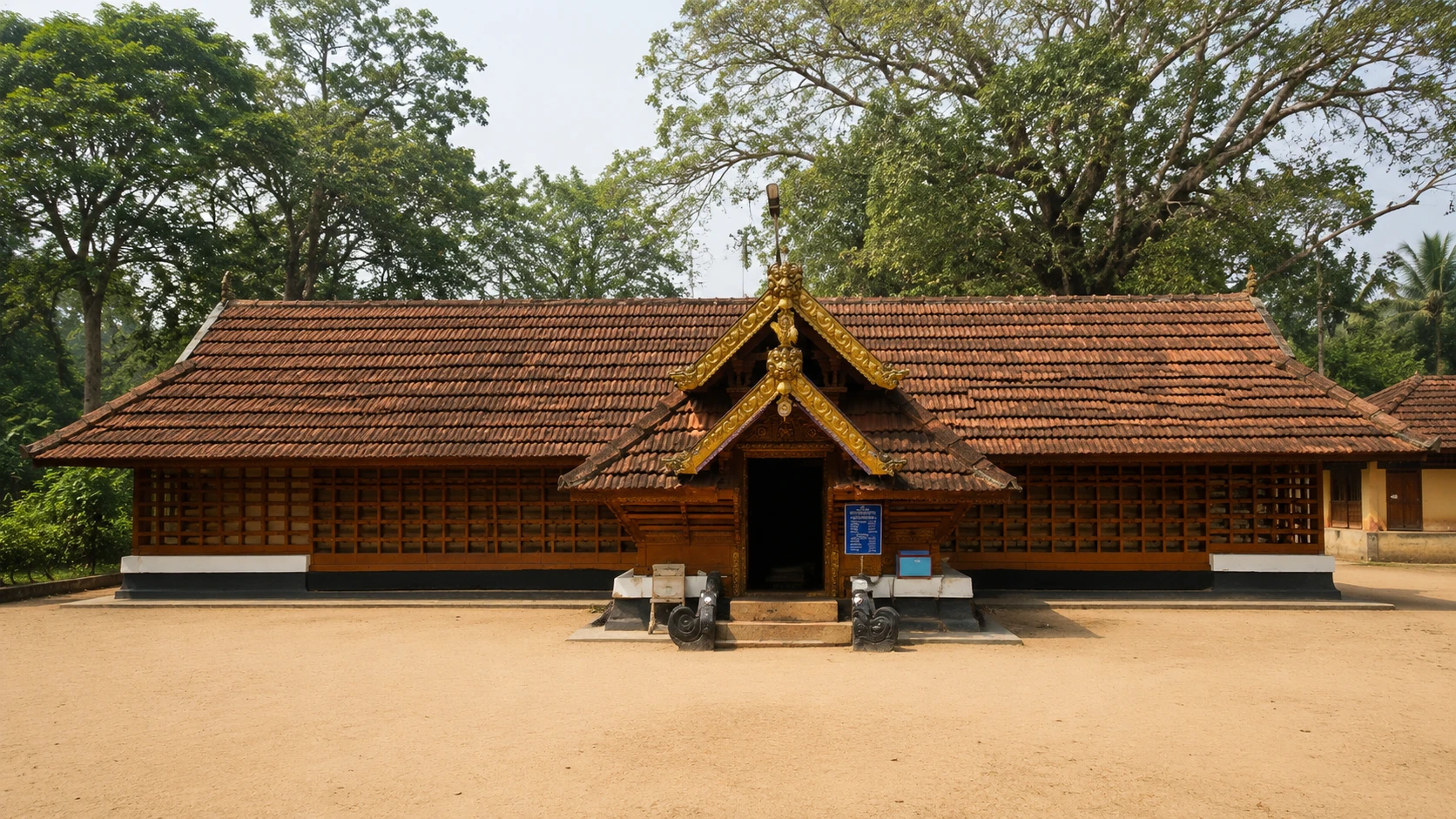
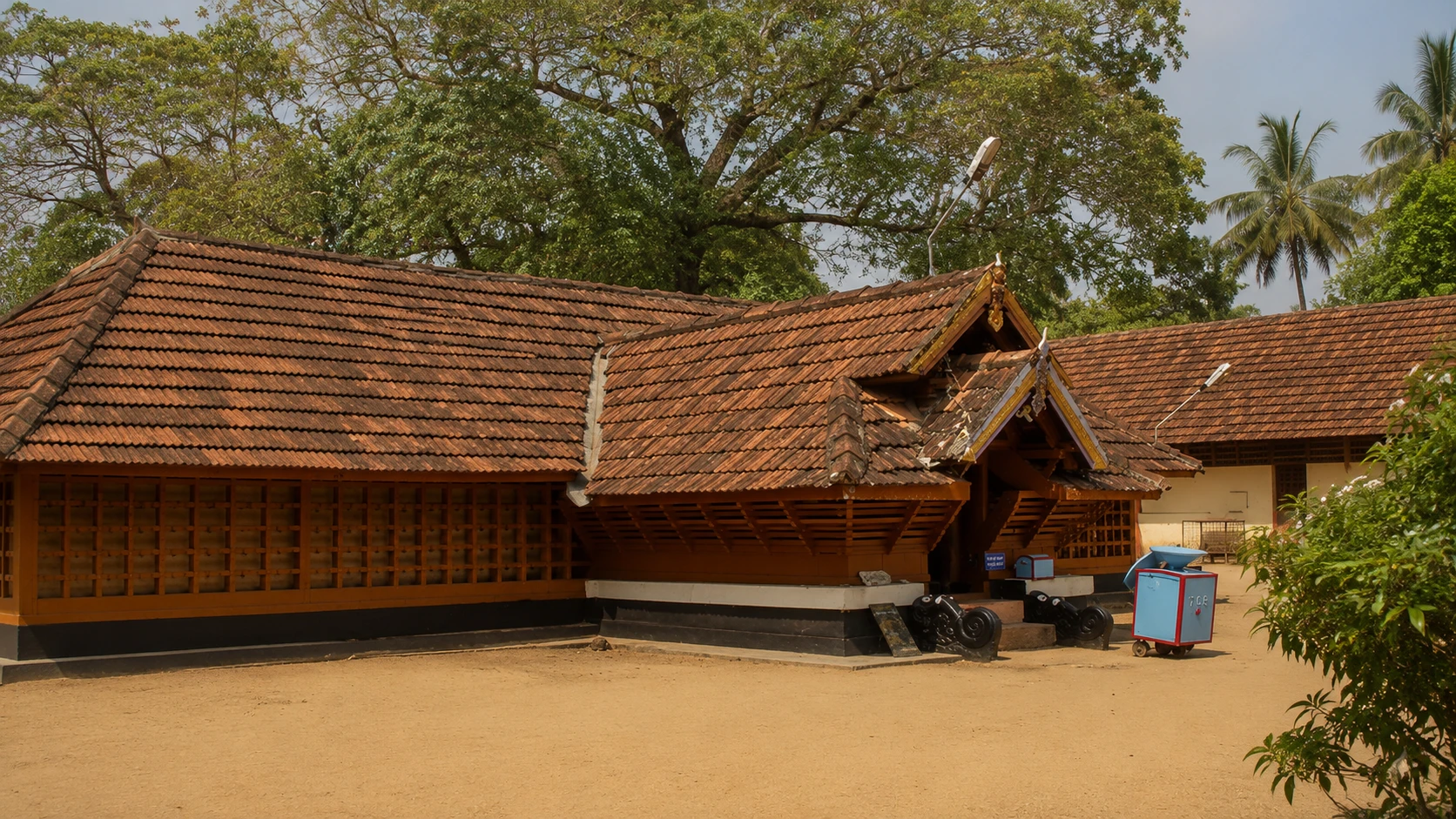
The primal forest Sastha on the banks of the Kallada
Kulathupuzha, Kerala, India
Kuḷattupuḻa ŚāstāAlso known as: Katu Sastha, Vana Sastha, Aranya Sastha, Kulathupuzha Dharmasastha Temple
Era
Pre-modern (Kani tribal tradition predating current temple structure; current structure 20th century)
Architecture
Kerala forest-temple tradition (Nāḷu-kettu)
Open
05:30 – 20:00
Aarti
05:30 · 10:30 · 17:30 · 19:30
Special
Kallada River ablution before darshan is a traditional practice. Forest Department entry regulations for Shendurney Wildlife Sanctuary apply to pilgrims approaching via forest routes — verify current rules with the Kerala Forest Department before travel.
The Sacred Legend · पवित्र कथा
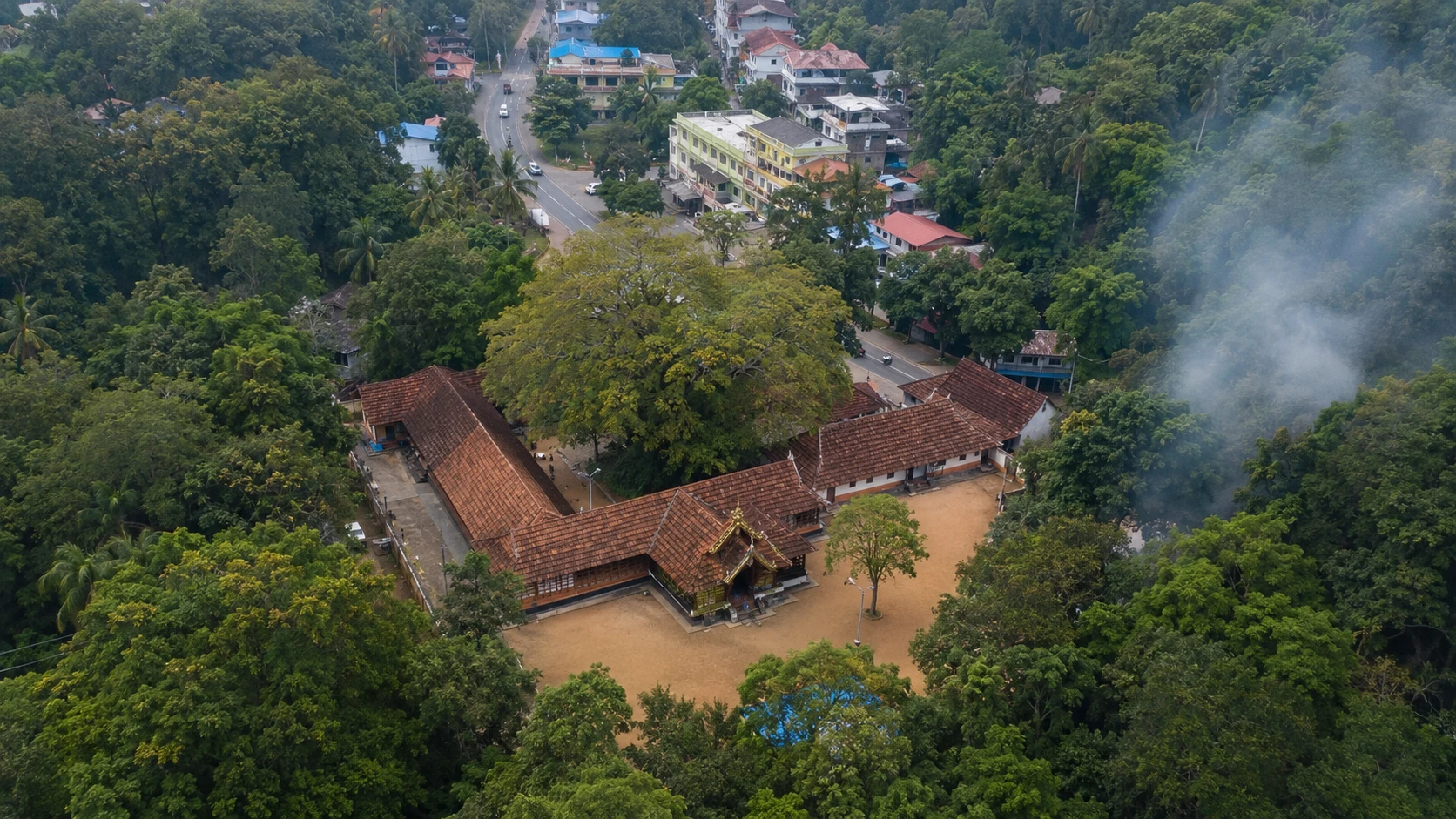
Kulathupuzha is the Sastha of the deep forest — the most ancient, most wilderness-immersed of the five Pancha Sabari Sastha temples, set within the Shendurney Wildlife Sanctuary on the banks of the Kallada River in Kollam district. Where Sabarimala is the ascetic on the summit and Erumeli is the warrior at the threshold, Kulathupuzha is Ayyappa in his primal, pre-civilization form: the guardian of the jungle itself, worshipped by the Kani and Mala Arayan tribal communities of the Western Ghats long before the Brahminic temple was established. Pilgrims bathe in the Kallada's clear water before darshan, and the forest encloses the temple on all sides. Elephants and gaur move through the surrounding sanctuary. This is the one Sastha shrine where the deity's forest nature is not metaphor — it is the literal, living reality outside the temple walls.
Sacred Designationपवित्र पदनाम
Sacred Origin Storyपवित्र उत्पत्ति कथा
Source: Shaiva-Vaishnava composite (Hariharaputra tradition); Kulathupuzha Sastha Sthala Purana; Kani tribal tradition
The tradition of Kulathupuzha holds that this is where Ayyappa — the divine child of Shiva and Vishnu who came to earth as Manikanta to slay the demoness Mahishi — first entered the deep forest of the Western Ghats and revealed himself as the protector and sovereign of the wilderness. On the banks of the Kallada River, moving through the dense jungle between the human world he was departing and the Sabarimala summit that would become his eternal seat, Ayyappa paused and blessed the forest itself: its creatures, its rivers, its trees, and its indigenous guardians — the Kani and Mala Arayan people who had known the sanctity of these hills for generations before the Brahminic tradition gave it a name.
The Katu Sastha — the forest form — is understood as Ayyappa in his most elemental aspect: before the ascetic vow of Sabarimala, before the warrior confrontation of Erumeli, before the householder responsibilities of Aryankavu and Achankovil, there is the forest itself, ancient and unbounded. The Kulathupuzha murti is considered by the tradition to embody this primal energy — the Sastha who is co-extensive with the jungle, whose protection is indistinguishable from the protection of the living forest around the temple.
Sources cited:
- Kulathupuzha Sastha Sthala Purana (Malayalam oral tradition)
- Bhuta Purana (regional Kerala Purana)
- Kani tribal oral tradition (Agasthyamala Biosphere Reserve ethnobotanical records reference the Kani relationship with the Kulathupuzha forest landscape)
- Kerala Forest Department documentation on Shendurney Wildlife Sanctuary sacred groves
Historyइतिहास
Kulathupuzha's sacred history begins with the Kani (Kanikar) people — one of the most ancient tribal communities of the Kerala Western Ghats — whose veneration of a forest Sastha at this location in the Kallada River valley predates the establishment of the formal temple. The Kani are known also as custodians of the Agasthyamala forest knowledge tradition, and their relationship with the Kulathupuzha Sastha reflects the deep entanglement of this site's sacred geography with the ecology of the Shendurney forests. The Brahminic temple at Kulathupuzha formalised the site's worship within the wider Ayyappa tradition, incorporating it into the Pancha Sabari Sastha circuit as the Katu Sastha — the forest-form seat. The temple is administered by a local devaswom trust. The designation of the surrounding forests as the Shendurney Wildlife Sanctuary in 1984 changed the pilgrimage logistics: access to the temple now passes through protected forest, and the sanctuary's wildlife presence — particularly elephants and gaur — is a constant feature of the pilgrimage experience. The site's ecology has become inseparable from its spiritual identity: the forest is not the backdrop to the temple but its living context.
Historical Timelineऐतिहासिक कालक्रम
The Kani (Kanikar) tribal community establishes the Kulathupuzha Sastha as a sacred forest site: the Kani people's veneration of the Katu Sastha at the Kallada River site represents the oldest continuous sacred tradition at this location, predating the Brahminic temple. The Kani community's relationship with this Sastha form is documented in Kerala's ethnobotanical and ethnographic records as an ancient, uninterrupted tradition.
The founding date is traditional and not inscriptionally confirmed. The Kani community's pre-Brahminic relationship with the site is referenced in Kerala ethnographic literature but precise historical dating is unavailable.
Formalisation of the Kulathupuzha Sastha temple within the Pancha Sabari Sastha circuit: the current temple structure is established and the site is formally recognised in Kerala pilgrimage literature as the Katu Sastha seat of the five-temple Ayyappa circuit. Administration by a local devaswom trust is formalised.
The forests surrounding Kulathupuzha are designated as the Shendurney Wildlife Sanctuary by the Government of Kerala. The designation changed the practical access conditions for pilgrims: the approach to the temple now passes through protected forest, and entry is subject to Forest Department regulations. The sanctuary's wildlife — including elephant herds, gaur, and leopards — became a feature of the pilgrimage approach.
What You'll Seeदर्शन में
The Kulathupuzha Sastha murti is understood within the tradition as an unusually ancient and potent form — the Katu Sastha whose power is inseparable from the living forest. The deity is enshrined in a seated posture, reflecting the contemplative aspect of this forest form, but the spiritual register is distinct from the refined yoga-pattam meditation of Sabarimala: this is the earth-seated forest guardian, grounded in the landscape itself. The murti is said to radiate a particular forest energy (aranya shakti) that pilgrims consistently describe as different in quality from the hilltop darshan at Sabarimala — wilder, more elemental, less removed from the natural world. Photography inside the inner sanctum is not permitted.
Did You Know?क्या आप जानते हैं?
Kulathupuzha is the only one of the five Pancha Sabari Sastha temples located within a designated wildlife sanctuary — the Shendurney Wildlife Sanctuary, part of the Western Ghats biodiversity hotspot and the Agasthyamala Biosphere Reserve. The sanctuary protects the last remaining elephant and gaur populations in southern Kerala's forests. Pilgrims visiting Kulathupuzha may encounter wildlife on the approach roads and forest paths — a feature that makes the pilgrimage uniquely attentive to the living forest that the Katu Sastha is understood to protect.
Kerala Forest Department; Shendurney Wildlife Sanctuary management plan; Agasthyamala Biosphere Reserve documentation
The Kani (Kanikar) community — the indigenous people of the Agasthyamala hills — have a documented hereditary relationship with the Kulathupuzha Sastha shrine predating the Brahminic temple. The Kani are known globally in ethnobotanical circles for their traditional knowledge of medicinal plants in the Agasthyamala forests — knowledge that was partly shared with researchers in a landmark 1987 study that led to the development of a herbal anti-fatigue drug (Jeevani), with benefit-sharing payments going to the Kani community. The Kani's sacred geography and their Sastha veneration are part of the same knowledge-landscape.
P. Pushpangadan et al., 'Ethnobotanical studies on Kani tribe of Kerala', Journal of Ethnopharmacology (1988); Tropical Botanic Garden and Research Institute (TBGRI) Jeevani benefit-sharing documentation
The Kallada River that flows past the Kulathupuzha Sastha temple originates in the Agasthyamala hills and is one of the cleanest rivers in Kerala — its upper reaches through the Shendurney sanctuary remain largely unpolluted. The tradition of bathing in the Kallada before darshan at Kulathupuzha connects the pilgrimage practice directly to the living ecology of the sanctuary: the river water that purifies the pilgrim is the same water that sustains the forest and its creatures.
Kerala State Pollution Control Board river quality data; Kerala Forest Department Shendurney documentation
Among the five Pancha Sabari Sastha temples, Kulathupuzha is the one where non-pilgrimage forest devotees — local farmers, forest department workers, and tribal community members — form the largest share of the regular worshippers. Unlike Sabarimala (which draws a global pilgrimage audience concentrated in specific seasons) or Erumeli (which functions primarily as a pilgrimage waystation), Kulathupuzha has a quieter, local year-round devotional life centred on its role as the forest Sastha of this particular valley and its people.
Kerala Tourism documentation on Pancha Sabari Sastha circuit temples; local devaswom trust records
Festivalsत्योहार
Ashtami Rohini Utsavam
अष्टमी रोहिणी उत्सवम्
Aug–Sep (Rohini nakshatra on Ashtami tithi, Chingam/Bhadra month)
Ashtami Rohini — the birth anniversary of Ayyappa (Dharmasastha) — is the principal festival of the Kulathupuzha temple. The festival involves special abhishekam with forest materials (flowers, fruits, and herbs gathered from the surrounding Shendurney forest), the singing of Ayyappa compositions, and a procession around the temple premises. The use of forest-gathered offerings rather than market-bought flowers is a distinctive feature of the Kulathupuzha festival that reflects the Katu Sastha tradition of direct relationship with the forest.
Mandala Vilakku
मण्डल विलक्कू
Nov–Dec (coinciding with Sabarimala Mandala season)
During the Sabarimala Mandala season, Kulathupuzha observes its own Mandala Vilakku — a daily lamp-lighting ceremony maintained throughout the forty-one days. Pilgrims on the traditional Sabarimala pada yatra routes that pass through the Kollam-district forests sometimes include a Kulathupuzha darshan in their circuit, and the Mandala season accordingly sees an increase in the temple's visitors.
Karkidaka Masa Puja
कर्कडक मास पूजा
July–August (Karkidakam, the Malayalam monsoon month)
The month of Karkidakam — the final month of the Malayalam calendar, coinciding with the monsoon — is associated with introspection, Ramayana reading, and forest-deity worship in Kerala. At Kulathupuzha, Karkidakam is observed with special pujas to the Katu Sastha, acknowledging the deity's intimate connection with the monsoon forest in its most elemental state: the season when the forest is fullest, most alive, and most inaccessible to human movement.
Traditional Offeringsपारंपरिक अर्पण
Primary Offerings
Forest Flowers and Leaves (Aranya Pushpam)
वन-फूल और पत्तियाँ (अरण्य पुष्पम्)
At Kulathupuzha, flowers and leaves gathered from the surrounding Shendurney forest are considered among the most appropriate offerings — reflecting the Katu Sastha tradition of direct forest relationship. The offering of forest-gathered materials rather than market flowers is a recognition that the deity and the forest are not separate: to offer what the forest itself provides is to return the forest's own gifts to their source.
Neyyabhishekam Coconut (Ghee Ablution Coconut)
नेय्याभिषेकम् नारियल
The ghee-filled coconut — central to the Sabarimala offering tradition — is also offered at Kulathupuzha by pilgrims who include this temple in their Pancha Sastha circuit. The same symbolism applies: the coconut as the pilgrim's ego offered in surrender, the ghee as the stored discipline of forty-one days.
Kallada River Water (for abhishekam)
कल्लडा नदी जल (अभिषेकम् के लिए)
Water drawn from the Kallada River — which flows past the temple through the Shendurney sanctuary — is used in the temple's abhishekam and is also offered by individual pilgrims. The Kallada's water is understood as itself sacred in this location, sanctified by its passage through the forest that the Katu Sastha protects. Offering it to the deity is returning the forest's own purity to its source.
Forest-gathered offerings — leaves, fruits, and flowers from the Shendurney sanctuary — are available from local vendors near the temple entrance and from traditional gatherers within the Kani community. Pilgrims should not gather forest materials independently from within the wildlife sanctuary, as this is subject to Forest Department regulations.
How to Reachकैसे पहुँचें
Kulathupuzha is located approximately 25 km northeast of Punalur town in Kollam district, reached via Punalur on the Kollam–Shencottah state highway. From Punalur, a forest road runs to Kulathupuzha — this section passes through the Shendurney Wildlife Sanctuary and is subject to Forest Department entry regulations; verify current rules before travel. KSRTC buses run between Kollam and Punalur frequently; from Punalur, shared autos or private taxis are available to Kulathupuzha.
The nearest railway station is Punalur (~25 km), on the Kollam–Punalur metre-gauge rail line. Kollam Junction (~60 km) is the nearest broad-gauge station with onward connectivity to Thiruvananthapuram and Ernakulam.
From Thiruvananthapuram the drive takes approximately 2.5–3 hours via Kollam–Punalur. From Kochi, approximately 4 hours.
During the monsoon months (June–September), the Kallada River can flood and approach roads may be affected. Night travel through the sanctuary section is generally not advised given the active wildlife presence.
Book a Pujaपूजा बुक करें
Kulathupuzha Sastha Devaswom does not operate an online booking portal. Verify current puja timings and any entry requirements directly with the temple on arrival. No online booking URLs or phone numbers are currently available for publication; always verify contact details directly.
Managed by: Kulathupuzha Sastha Devaswom Trust (local administration)
Abhishekam and archana (walk-in)
अभिषेकम् और अर्चना (वॉक-इन)
Booking information verified: 2026-05-23
Sacred Soundsपवित्र ध्वनि
Did You Know? · क्या आप जानते हैं?
The same translation error that turned '33 Koti' into '33 crore' in Hinduism also happened in Buddhism. The Chinese translation of Buddhist texts rendered 'Sapta Koti Buddha' (7 Supreme Buddhas) as '7 Crore Buddhas.' The Tibetan translation got it right: 7 types, not 7 crore. One Sanskrit word, misread across two major world religions, generated two identical misconceptions independently.
Related Contentसंबंधित सामग्री
Related Scriptures
Community Reflections
🕉️
Be the first to share your reflection.