Thiruvellarai Pundarikakshan
तिरुवेल्लारै
One of the oldest of the 108 Divya Desams, on a small white-rock hill north of Srirangam, where Vishnu stands as Pundarikakshan, the lotus-eyed
Thiruvellarai, Tamil Nadu, India
Tiruveḷḷaṟai (Puṇḍarīkākṣan)Also known as: Pundarikakshan Perumal Temple, Thiruvellarai, Sri Pundarikakshan
Era
One of the oldest of the Divya Desams, sung by the Alvars in the first millennium and bearing Pallava-period inscriptions among the earliest in the region, expanded under later dynasties
Architecture
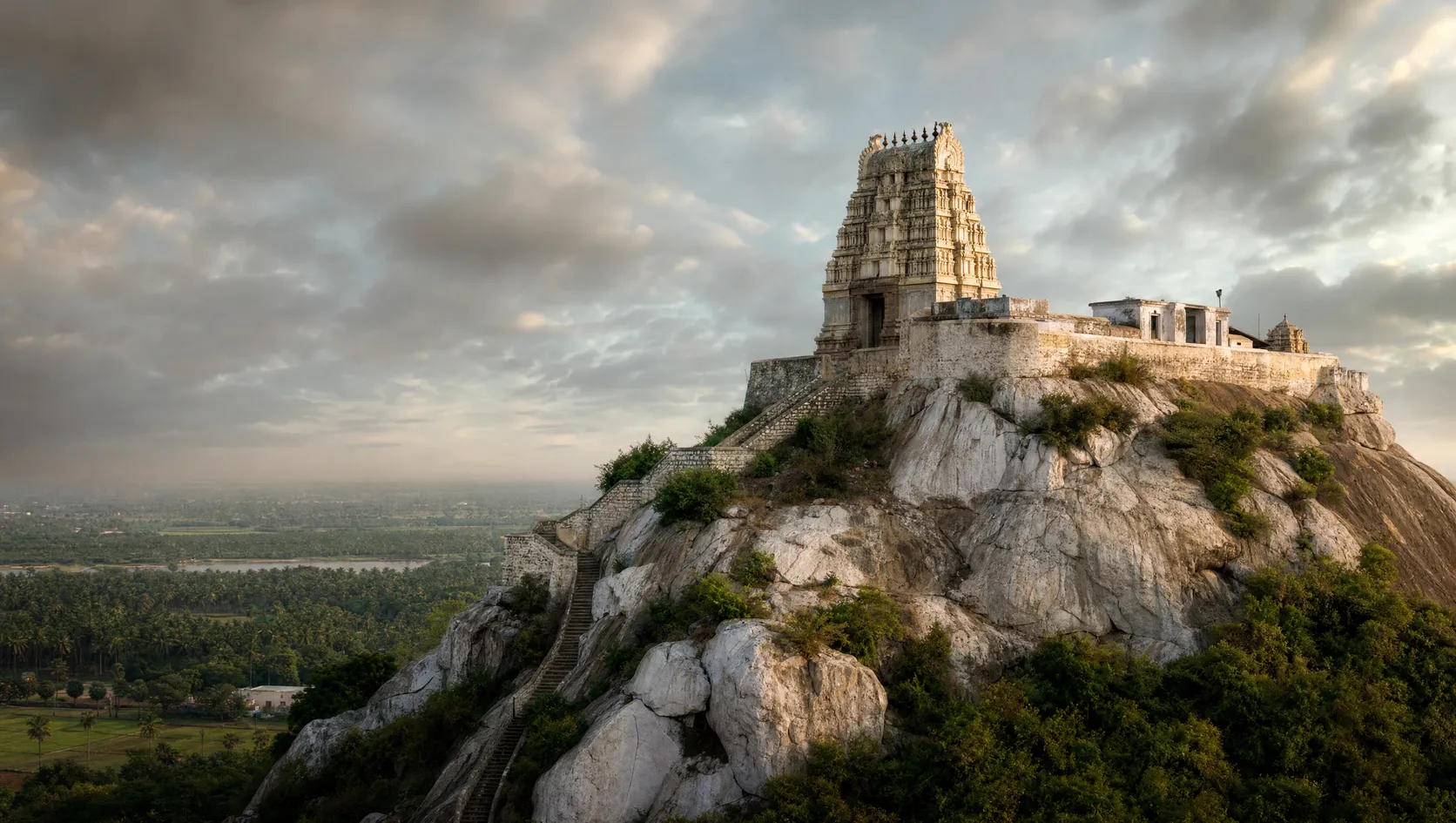
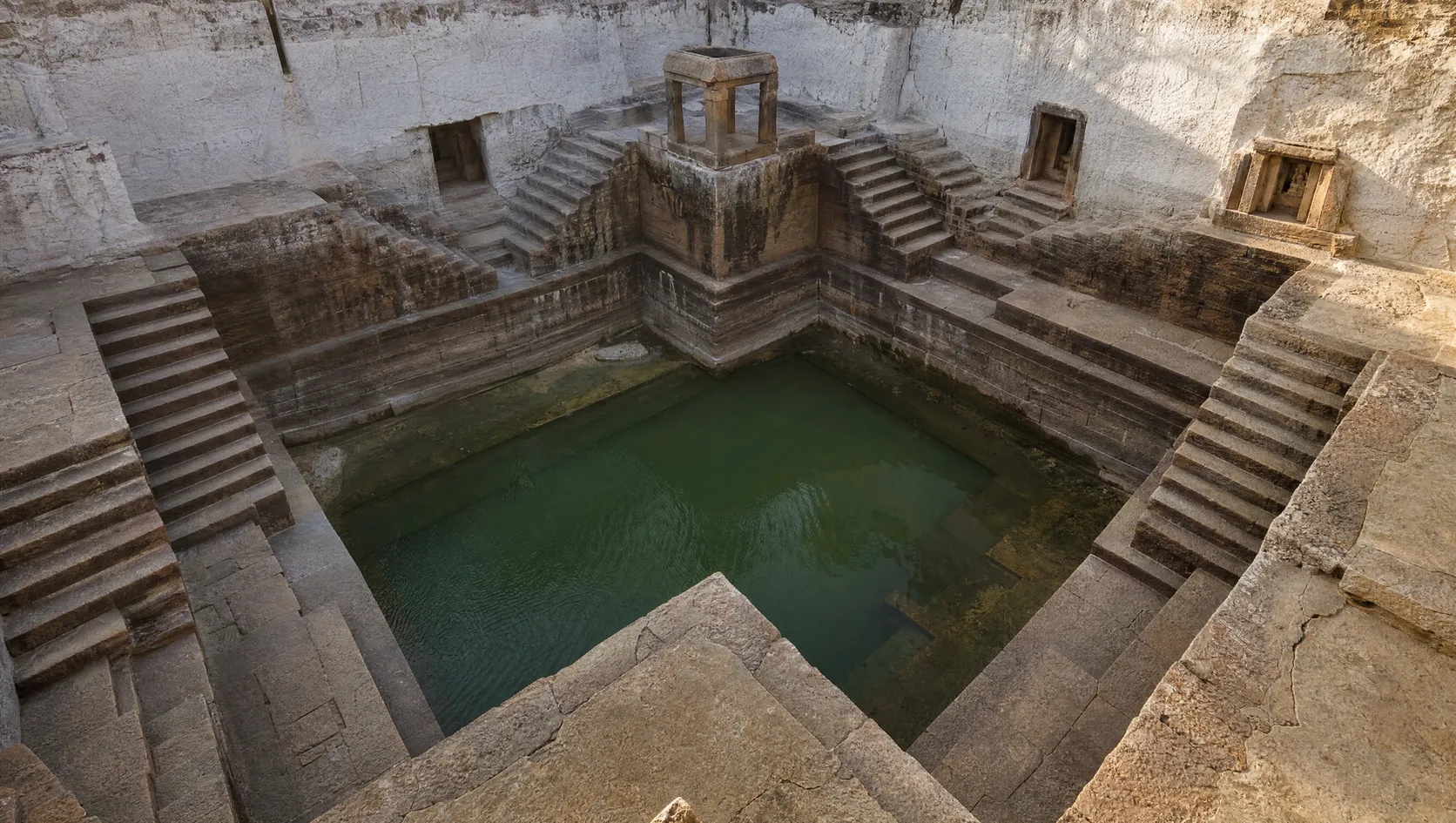
Dravidian, set upon a small white-rock hill reached by a flight of steps, with two entrances (a northern and a southern door) used in the two halves of the year and an ancient swastika-shaped stepwell
Open
07:00 – 20:00
Special
The temple observes the Srivaishnava round of daily worship to Pundarikakshan and his consort, with recitation of the Nalayira Divya Prabandham at set occasions. Timings run in a morning and an evening session with a midday break and vary with the festival calendar; they should be confirmed locally.
The Sacred Legend · पवित्र कथा
Among the hundred and eight Divya Desams, the abodes of Vishnu sung by the Alvar poet-saints, Thiruvellarai is remembered as one of the very oldest, and the tradition holds it older even than the great Srirangam that lies a short way to its south. Its name says what it is: Vellarai, the white rock, for the temple stands upon a small hill of pale stone, reached by a flight of steps, and the Vishnu who stands here in the sanctum is Pundarikakshan, the lotus-eyed, worshipped upright rather than reclining. Where Srirangam is vast and folded inward, Thiruvellarai is compact, ancient and quietly strange, holding in a small compass some of the rarest things in the temple world of the south. Its tank is not an open pool but a stepwell cut in the form of a swastika, a great auspicious geometry sunk into the rock, one of the most beautiful ancient wells of the Tamil land. Its temple has not one main entrance but two, a northern door and a southern door, opened in turn through the two halves of the year as the sun moves north and south, so that the very calendar of the heavens is written into the way one enters the god's house. Here sages are said to have done their penance, Markandeya and Pundarika among them, and here the Pallava kings left some of the oldest inscriptions of the region on the temple's stone. To come to Thiruvellarai is to come to a small, deep root of Srivaishnavism, a place older than its famous neighbour, where the lotus-eyed Lord has stood upon the white rock through more centuries than the tradition can count.
Sacred Designationपवित्र पदनाम
Sacred Origin Storyपवित्र उत्पत्ति कथा
Source: The Srivaishnava tradition and the Sthala Purana of Thiruvellarai, with the penances of the sages Markandeya and Pundarika
The tradition traces the sanctity of Thiruvellarai to the penances of great sages upon the white rock, and above all to the sage Pundarika, from whom the standing Lord takes his name of Pundarikakshan, the lotus-eyed. In the cherished accounts a rishi worships here upon the pale hill, and Vishnu, pleased with his devotion, makes the white rock his standing abode, so that the hill itself becomes the seat of the god.
The sage Markandeya too is bound to this place, the seer whom the Lord saved from death and who is remembered across the sthalas of the south for his long penance and his deathless devotion. At Thiruvellarai the tradition holds that Markandeya did tapas upon the rock and that the sacred waters of the hill, the swastika-shaped stepwell among them, are gifts of that age of the sages, drawn from the earth for the worship of the standing Lord.
Unusually the deity here stands upright, Pundarikakshan facing his devotees with the lotus-eyes that give him his name, and the whole small temple upon its white rock is built as the meeting place of the ancient sages and the god who answered them. Where Srirangam tells of Vibhishana and the reclining Lord who came from Ayodhya, Thiruvellarai tells of the rishis upon the rock and the lotus-eyed Vishnu who chose to stand among them, older, the tradition says, than the great neighbour to its south.
Sources cited:
- Sthala Purana of Thiruvellarai
- Srivaishnava tradition and the Nalayira Divya Prabandham
- Traditions of the sages Markandeya and Pundarika
Other Traditions · अन्य परंपराएँ
The Srivaishnava tradition on the antiquity of Thiruvellarai
Scholarly Context
Thiruvellarai is of particular interest to historians of the Tamil country for its great antiquity and for the early inscriptions cut on its stone. The temple is sung in the Nalayira Divya Prabandham of the Alvars, the Tamil poet-saints of Vishnu, whose hymns place its sanctity firmly in the first millennium, and it bears Pallava-period inscriptions that are among the oldest surviving records of the region, giving the site an attested history of great depth. The temple stands upon a low hill of pale stone, from which it takes its name, Vellarai, the white rock, and its architecture preserves several rare and archaic features: the two entrances used in the two halves of the year according to the northward and southward course of the sun, and above all the ancient stepwell cut in the form of a swastika, a striking piece of early hydraulic and sacred design. These features, together with the Pallava inscriptions, make Thiruvellarai a site studied by epigraphists and architectural historians as well as pilgrims. Scholars note the temple's place in the dense sacred landscape around Srirangam and Tiruchirappalli, where a cluster of Divya Desams and ancient shrines gather along the Kaveri and Kollidam. Within that landscape Thiruvellarai holds the reputation of an elder site, older in tradition than its great neighbour, and its unbroken worship of the standing Pundarikakshan upon the white rock is treated as a case of deep continuity in the Srivaishnava tradition of the south.
Historyइतिहास
Thiruvellarai is one of the oldest of the 108 Divya Desams, the abodes of Vishnu sung by the Alvar poet-saints, sacred to Vishnu who stands here as Pundarikakshan, the lotus-eyed, upon a small hill of white rock from which the place takes its name. The tradition holds it older even than the great Srirangam a short way to its south, an elder among the Vishnu shrines of the Kaveri country.
Its antiquity is attested from deep in the first millennium by the hymns of the Alvars, above all Periyalvar and Thirumangai Alvar, who sang it in the Nalayira Divya Prabandham, and by the Pallava-period inscriptions cut upon its stone, which are among the oldest surviving records of the region. The Pallava kings, whose rule shaped the early temple architecture of the Tamil country, left their mark here, and later dynasties, the Cholas, the Pandyas, and after them the Vijayanagara emperors and the Nayakas, endowed and enlarged the temple over the centuries.
The temple preserves several rare and ancient features. It stands on the white-rock hill and is reached by a flight of steps. It has not one but two main entrances, a northern door and a southern door, opened in turn through the two halves of the year as the sun moves north in the Uttarayana and south in the Dakshinayana, a striking arrangement found in few temples. And its tank is an ancient stepwell cut in the auspicious form of a swastika, one of the most beautiful early wells of the Tamil land.
The presiding Lord, Pundarikakshan, stands upright in the sanctum, worshipped with his consort Pankajavalli, also called Shenbagavalli, the goddess of the champak flower. The tradition binds the place to the penances of the sages Markandeya and Pundarika, from whom the lotus-eyed Lord takes his name. Through the long history of Srivaishnavism in the region, gathered around Ramanuja and the acharyas at neighbouring Srirangam, Thiruvellarai has kept its worship of the standing Lord upon the white rock.
Thiruvellarai remains a living Divya Desam, quieter than its vast neighbour but treasured for its antiquity, its swastika stepwell and its two seasonal doors. It draws pilgrims through the Srivaishnava year, above all at Vaikuntha Ekadasi and its annual Brahmotsavam, as one of the deep and ancient roots of the tradition in the Kaveri country.
Historical Timelineऐतिहासिक कालक्रम
The Alvars, the Tamil poet-saints of Vishnu, sing Thiruvellarai in the hymns gathered as the Nalayira Divya Prabandham; Periyalvar and Thirumangai Alvar among them dedicate verses to the lotus-eyed Lord, giving the temple an attested sanctity of great antiquity.
The Alvars' activity is generally placed across the middle centuries of the first millennium; their hymns are among the earliest firm evidence of Thiruvellarai's importance as a Divya Desam.
The Pallava kings, whose rule shaped the early temple architecture of the Tamil country, leave inscriptions on the stone of Thiruvellarai that are among the oldest surviving records of the region, marking the temple's deep historical roots.
The Pallava inscriptions of Thiruvellarai are studied by epigraphists as among the earliest historical records of the Tiruchirappalli region.
The temple is established upon the small hill of white rock, from which it takes its name, Vellarai, and is reached by a flight of steps; the standing Lord Pundarikakshan is worshipped in the hill sanctum from deep antiquity.
The ancient stepwell of the temple is cut in the auspicious form of a swastika, sunk into the rock as one of the most beautiful early wells of the Tamil land and a striking piece of sacred and hydraulic design.
The swastika-shaped stepwell is among the rarest architectural survivals of the temple and is noted by historians of early Tamil temple design.
Under the Cholas, whose rule centred on the Kaveri country, Thiruvellarai is endowed and expanded, its shrines and halls enlarged in the pattern of growth followed across the temples of the region.
As Ramanuja and the acharyas make neighbouring Srirangam the centre of the Srivaishnava tradition, Thiruvellarai, a short way to its north, is drawn firmly into the living devotional world of the region as one of its ancient Divya Desams.
Thiruvellarai's proximity to Srirangam ties it closely to the great Srivaishnava developments of the eleventh and twelfth centuries.
The Pandyas, succeeding the Cholas in the far south, continue the endowment of the temple, adding to its structures as the sacred landscape around Srirangam and Tiruchirappalli takes fuller shape.
The Vijayanagara emperors and the Madurai Nayakas endow and further build at Thiruvellarai, enriching its halls, its worship and its festivals as they did across the temples of the Tamil country in these centuries.
The temple's distinctive arrangement of two entrances, a northern and a southern door opened in turn through the Uttarayana and Dakshinayana halves of the year, is maintained as a rare and enduring feature of its worship.
The use of two seasonal entrances aligned to the sun's northward and southward course is found in very few temples and is among Thiruvellarai's most distinctive customs.
The temple, its ancient inscriptions and its swastika stepwell are documented in colonial-era epigraphic and archaeological surveys of the south, which record its antiquity and its rare architectural features.
The Pallava and later inscriptions of Thiruvellarai were among the records copied and studied in the epigraphic surveys of southern India.
Thiruvellarai remains a living Divya Desam, quieter than nearby Srirangam but treasured for its antiquity, its swastika stepwell and its two seasonal doors, drawing pilgrims through the Srivaishnava year, above all at Vaikuntha Ekadasi and its annual Brahmotsavam.
What You'll Seeदर्शन में
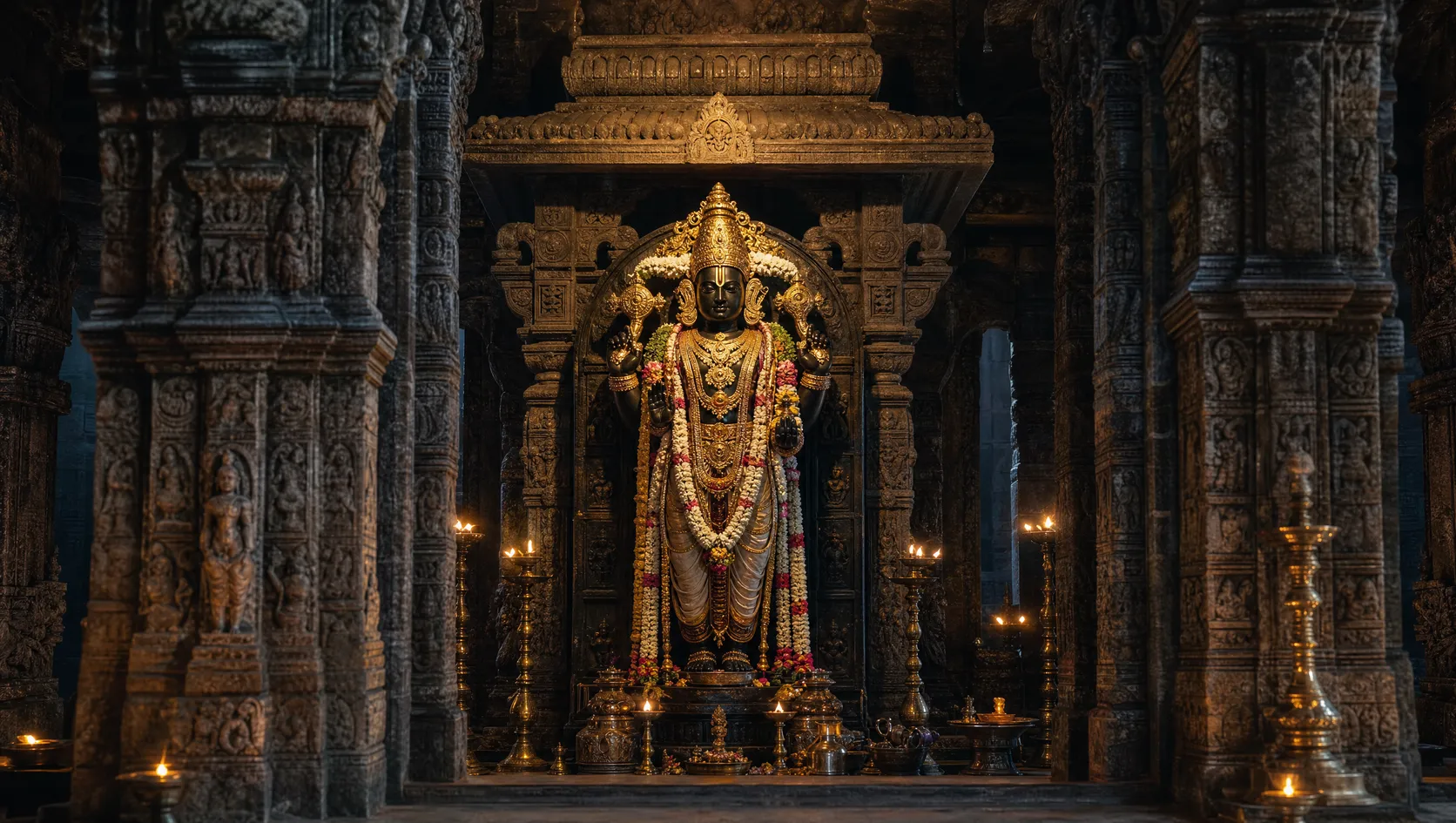
The presiding image of Thiruvellarai is Pundarikakshan, Vishnu standing upright in the hill sanctum, the lotus-eyed Lord from whom the temple takes its principal name. Unlike the reclining Ranganatha of neighbouring Srirangam, the Lord here stands, facing his devotees, his great lotus-eyes, the pundarika of his name, the feature the tradition dwells upon, so that to have his darshan is to be looked upon by the eyes of the Lord.
He is worshipped with his consort Pankajavalli, also called Shenbagavalli, the goddess named for the lotus and for the champak flower, who has her own shrine within the temple, so that the standing Lord and the Goddess are each honoured in their own precinct upon the white rock. The Moolavar, the fixed stone image in the sanctum, stands beneath the Vimalakriti Vimana that rises over the innermost shrine.
The temple's iconography is inseparable from its ancient setting: the white-rock hill on which it stands, the flight of steps by which it is reached, the two entrances aligned to the northward and southward course of the sun, and the swastika-shaped stepwell sunk into the rock. These are not ornaments but part of how the god is approached and worshipped, the geometry of the auspicious swastika and the calendar of the two doors folded into the very fabric of the shrine.
Beside the standing Lord and his consort, the temple holds the memory of the sages who did penance upon the rock, Markandeya and Pundarika, and the shrines and sacred waters bound to their tradition. The lotus-eyed Vishnu standing upon the white hill, worshipped with his flower-named Goddess amid the rare and ancient forms of the swastika well and the two seasonal doors, is the iconographic pattern of Thiruvellarai: an old and quiet shrine where the standing Lord has looked upon his devotees since a beginning beyond memory.
Distinctive Practicesविशिष्ट परंपराएँ
The Two Seasonal Doors, Uttarayana and Dakshinayana
दो ऋतु-द्वार, उत्तरायण और दक्षिणायन
Through the two halves of the year, with the sun's northward and southward course
The temple has two main entrances, a northern door and a southern door, and these are opened in turn through the two halves of the year: one is used through the Uttarayana, when the sun moves north, and the other through the Dakshinayana, when it moves south. The devotee enters the god's house through the door proper to the season, so that the movement of the sun through the year is written into the very way one comes to the Lord.
The two doors make the temple a small image of the turning year and the moving heavens. The Uttarayana and the Dakshinayana, the sun's northward and southward halves, are laden with meaning in the tradition, the Uttarayana held the more auspicious for the passage of the soul, and to align the very entrance of the shrine to these two courses is to place the worship of the standing Lord within the great rhythm of time. The devotee who enters through the door of the season enters not only a building but the ordered cosmos, coming to the god by the path the sun itself keeps.
The Swastika Stepwell
स्वस्तिक बावली
Year-round, as the temple's sacred tank
The temple's tank is not an open pool but an ancient stepwell cut into the rock in the auspicious form of a swastika, its four arms descending in steps to the water. It is among the most beautiful early wells of the Tamil land, and its sacred waters are drawn into the worship of the standing Lord; devotees come to it as to a holy tirtha bound to the antiquity of the shrine.
The swastika is among the oldest auspicious signs of the tradition, a mark of well-being, of the turning wheel and the ordered flow of things, and to sink the temple's well in that very form is to make the drawing of sacred water an act shaped by the auspicious. The stepwell gathers the meaning of the shrine into a single figure: the deep antiquity, the care for sacred water, and the sign of auspiciousness cut into the living rock, so that the tirtha of the standing Lord carries in its shape the blessing it is meant to give.
Recitation of the Nalayira Divya Prabandham
नालायिर दिव्य प्रबंधम् का पाठ
Daily in worship and centrally in the Adhyayana Utsavam
As at every Divya Desam, the Tamil hymns of the Alvars, the Nalayira Divya Prabandham, are recited in the temple's worship beside the Sanskrit Veda, and the verses of Periyalvar and Thirumangai Alvar that sing Thiruvellarai are cherished here as the hymns proper to the standing Lord of the white rock.
That the Tamil hymns are given standing beside the Sanskrit Veda is the defining claim of Srivaishnavism: the Prabandham is the Dravida Veda, the Veda in Tamil, and the Alvars are seers on a level with the ancient rishis. To sing at Thiruvellarai the very verses in which the Alvars praised this shrine is to worship the lotus-eyed Lord in the words that first sang his antiquity, joining the devotee of today to the poet-saints who came to the white rock long ago.
Ascent of the White Rock and Veneration of the Sages
श्वेत शैल का आरोहण और ऋषियों की श्रद्धा
Year-round, in the ordinary approach to the shrine
The temple is reached by climbing a flight of steps up the white-rock hill, and the ascent is itself part of the pilgrimage, a rising from the plain to the standing Lord upon his hill. Devotees honour too the sages Markandeya and Pundarika, whose penances upon the rock the tradition binds to the sanctity of the place and to the very name of Pundarikakshan.
To climb to the god upon his hill is an old form of pilgrimage, the effort of the ascent making the darshan at its top the more earned and the more complete. And to remember the sages upon the rock is to place oneself in their line: Markandeya the deathless devotee and Pundarika whose name the Lord bears did their penance here, and the pilgrim who climbs the white rock follows where they went, coming to the standing Lord by the path the seers first opened.
Did You Know?क्या आप जानते हैं?
Thiruvellarai is one of the oldest of the 108 Divya Desams, and the tradition holds it older even than the great Srirangam that lies a short way to its south.
Srivaishnava tradition
The temple takes its name from Vellarai, the white rock, for it stands upon a small hill of pale stone reached by a flight of steps.
Temple tradition
The Lord here stands upright as Pundarikakshan, the lotus-eyed, unlike the reclining Ranganatha of neighbouring Srirangam, taking his name from the sage Pundarika and from his great lotus-eyes.
Sthala Purana of Thiruvellarai
The temple's tank is an ancient stepwell cut in the auspicious form of a swastika, one of the most beautiful and rare early wells of the Tamil land.
Architectural surveys
The temple has two main entrances, a northern and a southern door, opened in turn through the two halves of the year with the sun's northward Uttarayana and southward Dakshinayana course, a rare arrangement found in few temples.
Temple tradition
The temple bears Pallava-period inscriptions among the oldest surviving records of the Tiruchirappalli region, studied by epigraphists as early historical evidence.
Epigraphic surveys
The standing Lord is worshipped with his consort Pankajavalli, also called Shenbagavalli, the goddess named for the lotus and for the fragrant champak flower.
Temple tradition
Thiruvellarai was sung by the Alvars Periyalvar and Thirumangai Alvar in the Nalayira Divya Prabandham, giving it an attested sanctity reaching deep into the first millennium.
Nalayira Divya Prabandham
The tradition binds the temple to the penances of the sages Markandeya and Pundarika upon the white rock, whose age of the seers is remembered in the shrine's sacred waters.
Sthala Purana of Thiruvellarai
Visitor Accessप्रवेश जानकारी
The temple is open to Hindus, and the standing Lord Pundarikakshan is worshipped in the sanctum upon the white-rock hill, reached by a flight of steps. As at many Vaishnava temples of the south, entry to the innermost precinct is restricted to Hindus, and this should be respected at the shrine. The temple is compact compared with vast Srirangam nearby, but there are some steps to climb up the white rock to reach it. A dress code of traditional attire applies, and footwear is left outside the temple. The ancient swastika stepwell and the two seasonal entrances are among the features visitors come to see. Timings run in a morning and an evening session with a midday closure, and vary with the festival calendar. Confirm current timings and any restrictions locally before visiting.
Spiritual Basis
The ascent of the white rock to reach the standing Lord is itself a spiritual form: the effort of the climb makes the darshan at the top the more earned, and the pilgrim rises from the plain to the hill where Pundarikakshan has stood since a beginning beyond memory. The restriction of the innermost precinct to Hindus follows the practice of the Vaishnava temples of the south, which preserve the ritual purity of the sanctum according to their tradition. The two seasonal doors and the swastika stepwell place the worship within the order of the cosmos and the sign of auspiciousness, so that the very approach to the shrine, by the door proper to the season and past the auspicious well, is shaped as a graded and meaningful coming to the god. The Lord's grace is held real for all his devotees within these ancient forms.
Contemporary Context
Thiruvellarai is a quieter temple than the vast Srirangam nearby, and a visit is generally unhurried, allowing an unhurried darshan of the standing Lord and time to see the swastika stepwell and the two seasonal doors. It is a favourite of pilgrims making the round of the Divya Desams of the Kaveri country and of those drawn to its great antiquity and rare architecture. The temple lies north of the Kollidam, about 20 km from Tiruchirappalli, and is easily reached on a day that also takes in Srirangam and the other shrines of the region. Crowds gather at the great festivals, above all Vaikuntha Ekadasi and the annual Brahmotsavam, but on ordinary days the temple keeps the calm of an ancient hill shrine.
Practical Guidance
Allow an hour or two to climb the white rock, take darshan of Pundarikakshan and his consort Pankajavalli, and see the temple's rare features, the swastika stepwell and the two seasonal entrances. There are some steps to climb, so allow for the ascent. Dress traditionally and leave footwear outside. Thiruvellarai is best combined with Srirangam and the other Divya Desams and ancient shrines around Tiruchirappalli, which lie within easy reach; many pilgrims see it on the same circuit. Avoid the peak of the great festivals if a quiet darshan is wanted, and confirm the temple's session timings locally, as it closes in the middle of the day.
Festivalsत्योहार
Vaikuntha Ekadasi
वैकुण्ठ एकादशी
Dec-Jan (Margazhi)
The great Vaishnava festival of the month of Margazhi, observed at Thiruvellarai as at every Divya Desam, when the standing Lord is worshipped with special devotion and the gate of the highest heaven is honoured. It is among the most sacred days of the temple's year.
Brahmotsavam
ब्रह्मोत्सवम्
Annual festival (varies by temple calendar)
The great annual Brahmotsavam of Thiruvellarai, over its days the processional Pundarikakshan is taken in procession on the vahanas around the temple and the streets of the white rock, the fullest celebration of the standing Lord's public presence.
Panguni Festival
पंगुनि उत्सव
Mar-Apr (Panguni)
The festival of the month of Panguni, a season of celebration at the temples of the south, marked at Thiruvellarai with the worship and procession of the standing Lord and his consort Pankajavalli, a joyful occasion of the temple year.
Adhyayana Utsavam
अध्ययन उत्सवम्
Dec-Jan (Margazhi), around Vaikuntha Ekadasi
The festival of the recitation of the Nalayira Divya Prabandham, when the Tamil hymns of the Alvars, including the verses of Periyalvar and Thirumangai Alvar that sing Thiruvellarai, are chanted before the standing Lord, a central observance of the Srivaishnava year.
Traditional Offeringsपारंपरिक अर्पण
Primary Offerings
Tulasi (holy basil)
तुलसी
तुलसी
Tulasi, the holy basil beloved of Vishnu, is the offering most proper to Pundarikakshan as to any form of Vishnu, laid at his feet and woven into his garlands. No worship of Vishnu is complete without it, and at Thiruvellarai it is offered to the standing lotus-eyed Lord upon the white rock.
Garlands of flowers
पुष्प-मालाएँ
पुष्पमाला
Garlands of flowers, with tulasi, are offered to Pundarikakshan and to the goddess Pankajavalli, called Shenbagavalli, the goddess of the champak flower; garlands that have adorned the deities are returned to devotees as a blessing carrying the touch of the Lord.
Sacred food (prasadam)
प्रसाद
प्रसाद
The food offered to Pundarikakshan and shared with devotees as prasadam is received as the Lord's grace made tangible. To take the prasadam of the standing Lord is to carry away his blessing from the ancient hill shrine.
Lamps and camphor (deepa-aradhana)
दीप और कर्पूर (दीप-आराधना)
दीप
The offering of lamps and the waving of camphor before the standing Lord light his lotus-eyes in the darkness of the hill sanctum, and the aradhana of light is a central act of the daily worship of Pundarikakshan.
Recitation of the Prabandham and the Sahasranama
प्रबंधम् और सहस्रनाम का पाठ
स्तोत्रपाठ
Beyond material offerings, the recitation of the Alvars' Tamil hymns, above all the verses of Periyalvar and Thirumangai Alvar that sing this shrine, and of the Vishnu Sahasranama, the thousand names of Vishnu, is held a high offering to Pundarikakshan, the god worshipped as much in sung word as in flower and food.
Unique to This Temple
Sacred Water of the Swastika Stepwell
स्वस्तिक बावली का पवित्र जल
What is particular to Thiruvellarai is the sacred water drawn from its ancient swastika-shaped stepwell, the tank cut into the white rock in the auspicious swastika form. The water of this rare and beautiful well is bound to the antiquity of the shrine and the age of the sages, and it is drawn into the worship of the standing Lord. A pilgrim brings tulasi, flowers and food as at any shrine of Vishnu, but the water of the swastika well is the offering the place gives back, a tirtha shaped by the sign of auspiciousness itself, carrying the blessing of the ancient hill and the standing lotus-eyed Lord who has looked upon his devotees here since a beginning beyond memory. To take this water is to receive the grace of one of the oldest of the Divya Desams.
Offerings at Thiruvellarai follow the Srivaishnava tradition, with tulasi, flowers, garlands, prasadam and the aradhana of lamps central, and the recitation of the Prabandham and the Vishnu Sahasranama held as offerings of word. The sacred water of the ancient swastika stepwell is particular to this shrine. Eternal Raga presents these practices as a devotional tradition; specific seva and offering arrangements should be confirmed with the temple.
How to Reachकैसे पहुँचें
Thiruvellarai lies on a small white-rock hill north of the Kollidam river, about 20 km from Tiruchirappalli (Trichy) in central Tamil Nadu, near the great temple island of Srirangam, and is easily reached.
By air: Tiruchirappalli International Airport is about 25 km away, connected to Chennai and several domestic and international destinations.
By rail: The nearest major railheads are at Srirangam and Tiruchirappalli Junction, about 20 km away, connected to Chennai, Madurai and the wider network of the south.
By road: Thiruvellarai is reached by road from Tiruchirappalli and Srirangam, and is served by local buses, autos and taxis; the temple stands on its hill in the village. The roads of the Kaveri country connect it to Trichy, Srirangam and the other temple towns of the region.
Many pilgrims combine Thiruvellarai with Srirangam and the cluster of Divya Desams and ancient shrines around Tiruchirappalli, seeing them together on a circuit of the sacred sites of the Kaveri and Kollidam.
Plan Your Visitयात्रा की योजना
🌤 Best Season
October to March is the most comfortable time to visit, with milder temperatures in the Kaveri plain. The Margazhi month (December-January) brings the temple's great observances, Vaikuntha Ekadasi and the Adhyayana Utsavam, a spiritually rich season, while the Panguni festival falls in the spring. April to June is hot in central Tamil Nadu. The southwest and northeast monsoons bring rain but the temple remains accessible. Early morning and evening sessions are the most atmospheric and cool, when the temple is active with worship; note that the temple closes in the middle of the day. On ordinary days a visit is calm and unhurried; on the great festival days the hill shrine gathers larger crowds.
👘 Dress Code
Traditional and modest dress is required. Men commonly wear a dhoti or trousers with a shirt; women a saree or salwar kameez. Footwear is left outside the temple, and there are some steps to climb up the white rock, so comfortable arrangements for the ascent help. As a Vaishnava temple, Thiruvellarai expects respectful traditional attire in the shrine.
📱 Phones & Photography
Photography is generally restricted within the inner enclosures and the sanctum; follow the posted rules and the directions of temple staff, and keep phones silenced within the shrine. Photography of the exterior, the white rock and the ancient swastika stepwell may be permitted where signage allows.
🏨 Accommodation
Thiruvellarai is a village shrine, and most visitors stay in nearby Srirangam or the city of Tiruchirappalli, which together offer a full range of accommodation, from temple-related lodges and guest houses to hotels of all standards across Trichy, all within easy reach of the temple. Being a large city a short distance away, Tiruchirappalli has ample options, and demand rises around the great festivals, above all Vaikuntha Ekadasi and the Brahmotsavam, when booking ahead is advisable. Outside the festivals the area absorbs its pilgrims easily.
Sacred Soundsपवित्र ध्वनि
Did You Know? · क्या आप जानते हैं?
The same translation error that turned '33 Koti' into '33 crore' in Hinduism also happened in Buddhism. The Chinese translation of Buddhist texts rendered 'Sapta Koti Buddha' (7 Supreme Buddhas) as '7 Crore Buddhas.' The Tibetan translation got it right: 7 types, not 7 crore. One Sanskrit word, misread across two major world religions, generated two identical misconceptions independently.
Related Contentसंबंधित सामग्री
Related Scriptures
Community Reflections
🕉️
Be the first to share your reflection.