The Blog · ब्लॉग
Stories, Festivals
& Spiritual Living
कहानियाँ, त्योहार और आध्यात्मिक जीवन
 JYOTIRLINGA
Amrita Chatterjee
Jun 6, 2026
Seven Jyotirlingas, One Rail Route
Indian Railways now runs a packaged train that covers seven of the twelve Jyotirlingas in a single trip. Here is which seven, why they sit close enough to string together, and what the package actually includes.
 BRAHMA MUHURTA
Brahma Muhurta: What the Tradition Actually Says (and What It Doesn't)
Social media has turned Brahma Muhurta into a productivity hack: wake at 4 AM, activate your pineal gland, synchronize with the Universe. Most of these claims would not survive a conversation with either a Sanskrit scholar or a sleep researcher. The tradition says something simpler, older, and more useful than any of that.
 SADHANA
Building a Daily Sadhana in 15 Minutes
The most common reason people do not have a daily practice is not laziness. It is ambition. They imagine sadhana as a ninety-minute pre-dawn ritual with a full puja setup, and since they cannot do that on a Tuesday in Bengaluru with a 9 AM standup call, they do nothing. Fifteen minutes is enough. It has always been enough. The tradition says so explicitly.
 TEMPLES
Sacred Temples of India: Stories Guidebooks Don't Tell
Every temple guidebook will tell you the year of construction, the dynasty that built it, and the deity inside. Very few will tell you why the sanctum at Chidambaram is empty, why the goddess at Kamakhya bleeds, or what sits behind the sealed vault at Padmanabhaswamy. The stories that matter most in Indian temples are the ones the plaques leave out.
 MANTRA
The Science of Mantra: Why 108 Times?
Ask anyone who chants why they repeat a mantra 108 times and you will get one of two answers: because that is what my grandmother did, or because 108 is a sacred number. Both are true. Neither is complete. The number 108 sits at the intersection of mathematics, astronomy, physiology, and a very old tradition of counting what the mind does when it repeats the same sound over and over.
 SHASTRA
Shastra Vriksha: A Visual Map of Hindu Scripture
Hindu scripture is not a single book. It is a library that grew over three thousand years, and no one alive has read all of it. Most educated Hindus can name the Vedas, the Gita, and a few Puranas. Fewer can explain how these texts relate to each other, which ones carry more authority, or where a given teaching originates. The Shastra Vriksha, the "tree of scriptures," is a way to see the whole structure at once.
 SOUNDARYA LAHARI
Soundarya Lahari: The Most Misunderstood Poem in Sanskrit
People read the Soundarya Lahari in one of two ways. Devotees read it as a hymn to the Goddess, a hundred verses praising her beauty from crown to toe. Scholars read it as a coded manual of Sri Vidya tantra, each verse encoding a yantra, a mantra, and a ritual application. Both readings are incomplete. The poem holds both layers at once, and that is what makes it unlike anything else in Sanskrit literature.
 SANSKRIT
Why Most Devotional Apps Get Sanskrit Wrong
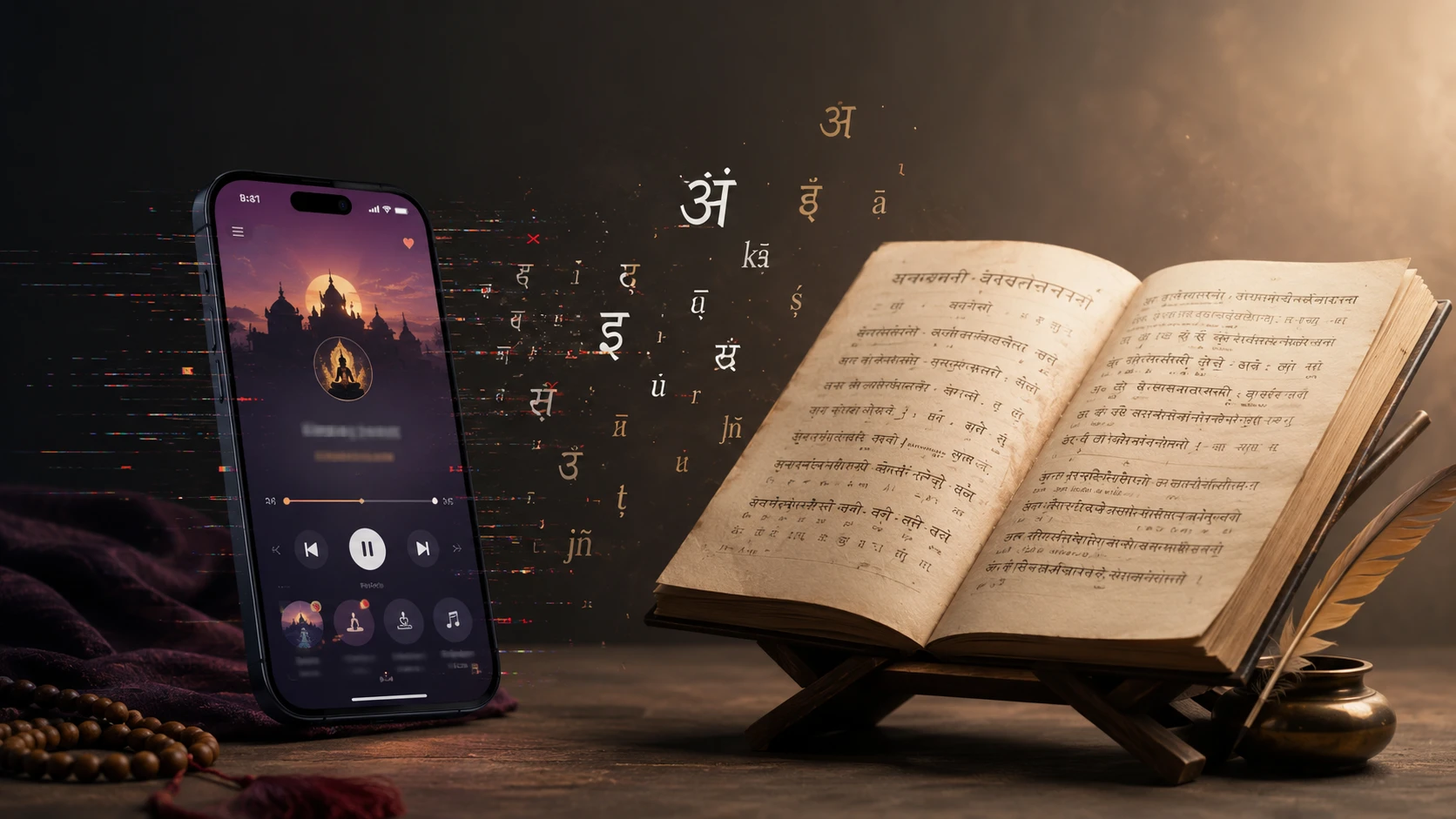
Open any devotional app on your phone. Search for the Gayatri Mantra. You will find three different spellings on three different apps, none of them consistent, and at least one that would make a Sanskrit teacher wince. The problem is not carelessness. The problem is that most app developers treat Sanskrit as decoration, not as a language with rules.
 JYOTIRLINGA
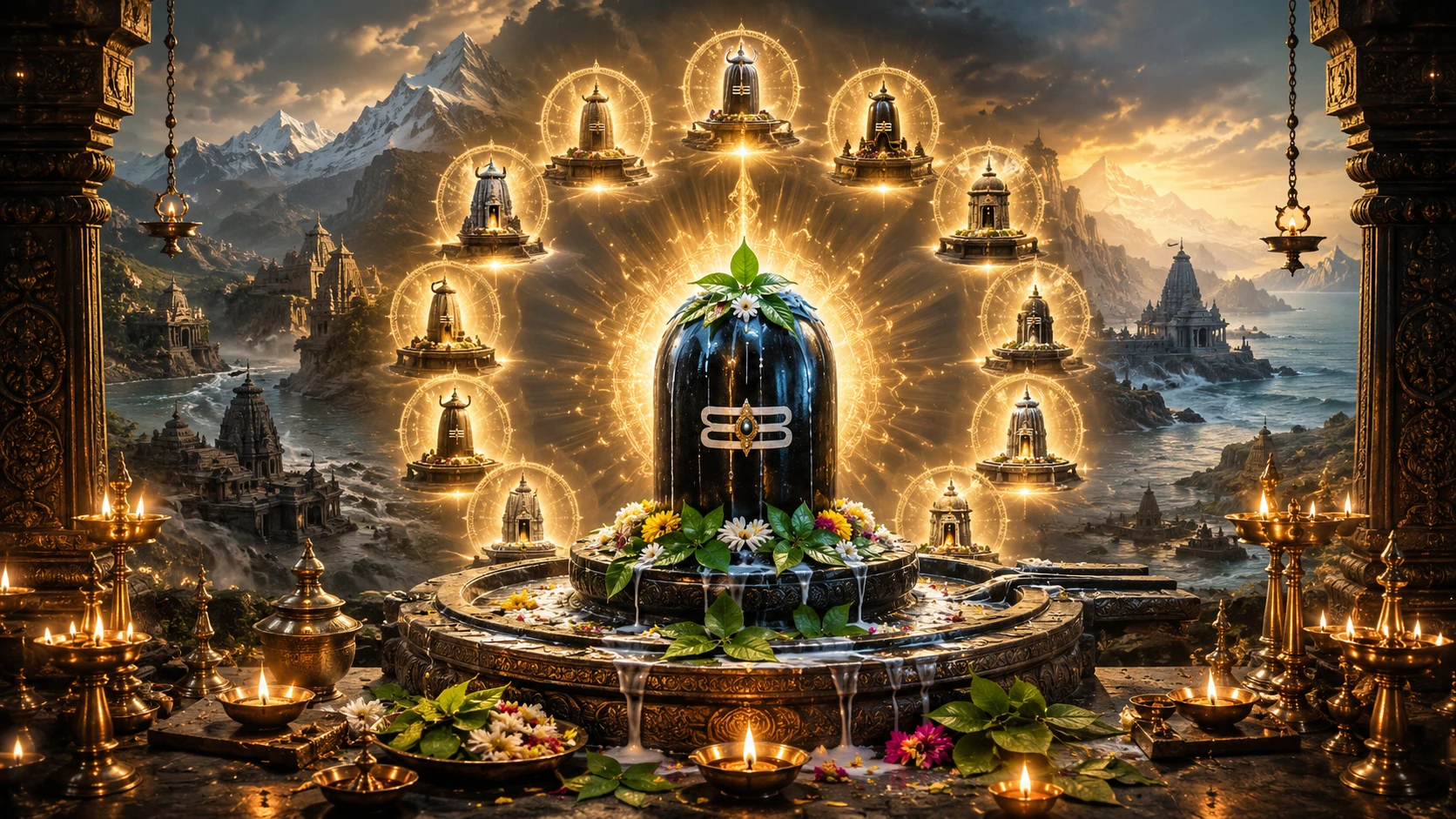
12 Jyotirlinga -- The Sacred Shiva Temples of India
Twelve temples across India mark the spots where Shiva appeared as an endless pillar of light. Each Jyotirlinga carries its own geography, its own legend, and its own texture of worship. This is a pilgrim's guide for those who cannot yet travel, and a reminder for those who have.
 BHAGAVAD GITA
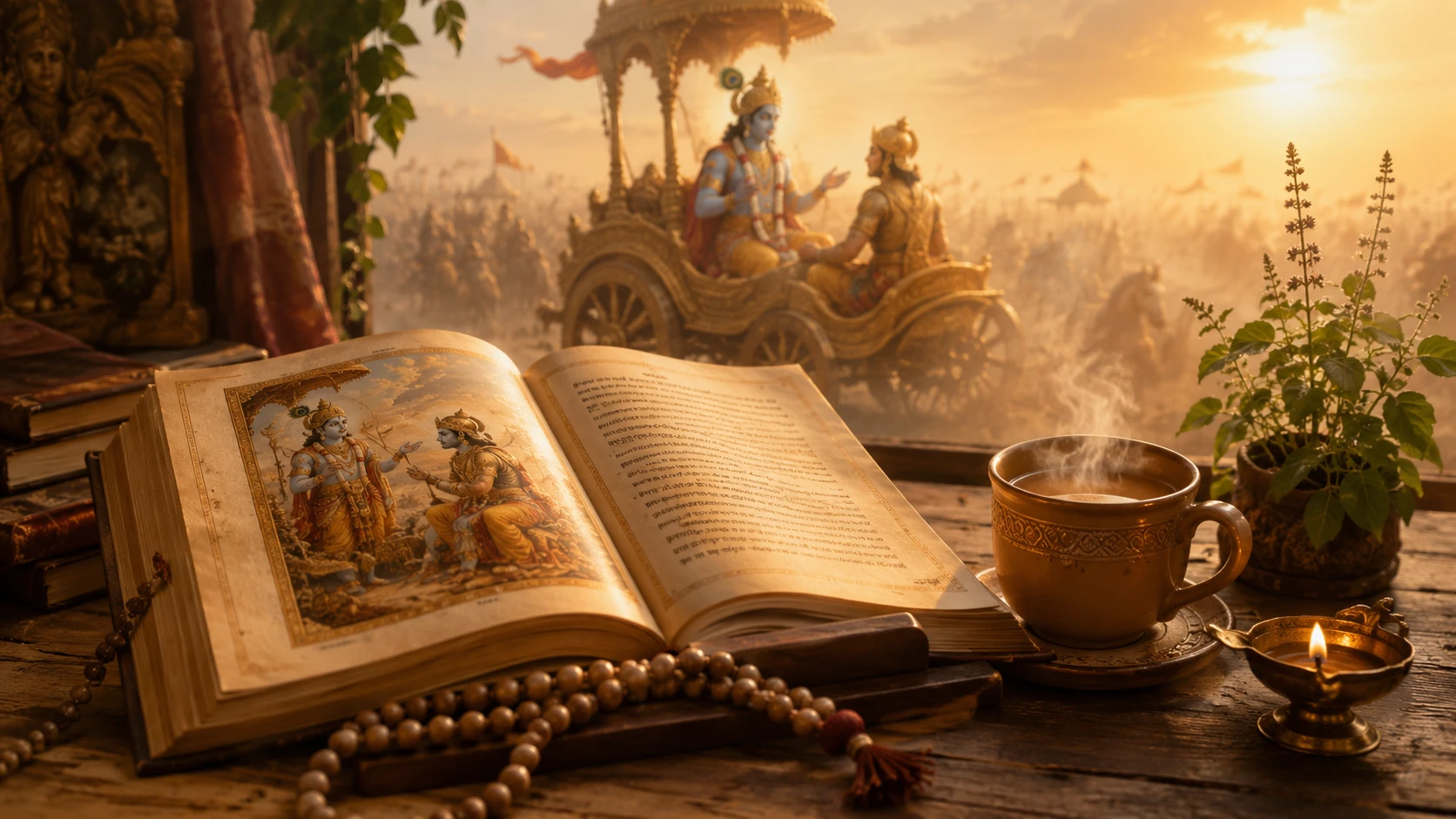
A Beginner's Guide to the Bhagavad Gita
You have heard about the Gita your whole life. Someone quoted it at a wedding. Your grandfather kept a pocket copy in his kurta. A colleague mentioned it during a tough quarter at work. And yet most people who own a copy have never read it cover to cover. If that describes you, this is a good place to start.
 CHALISA
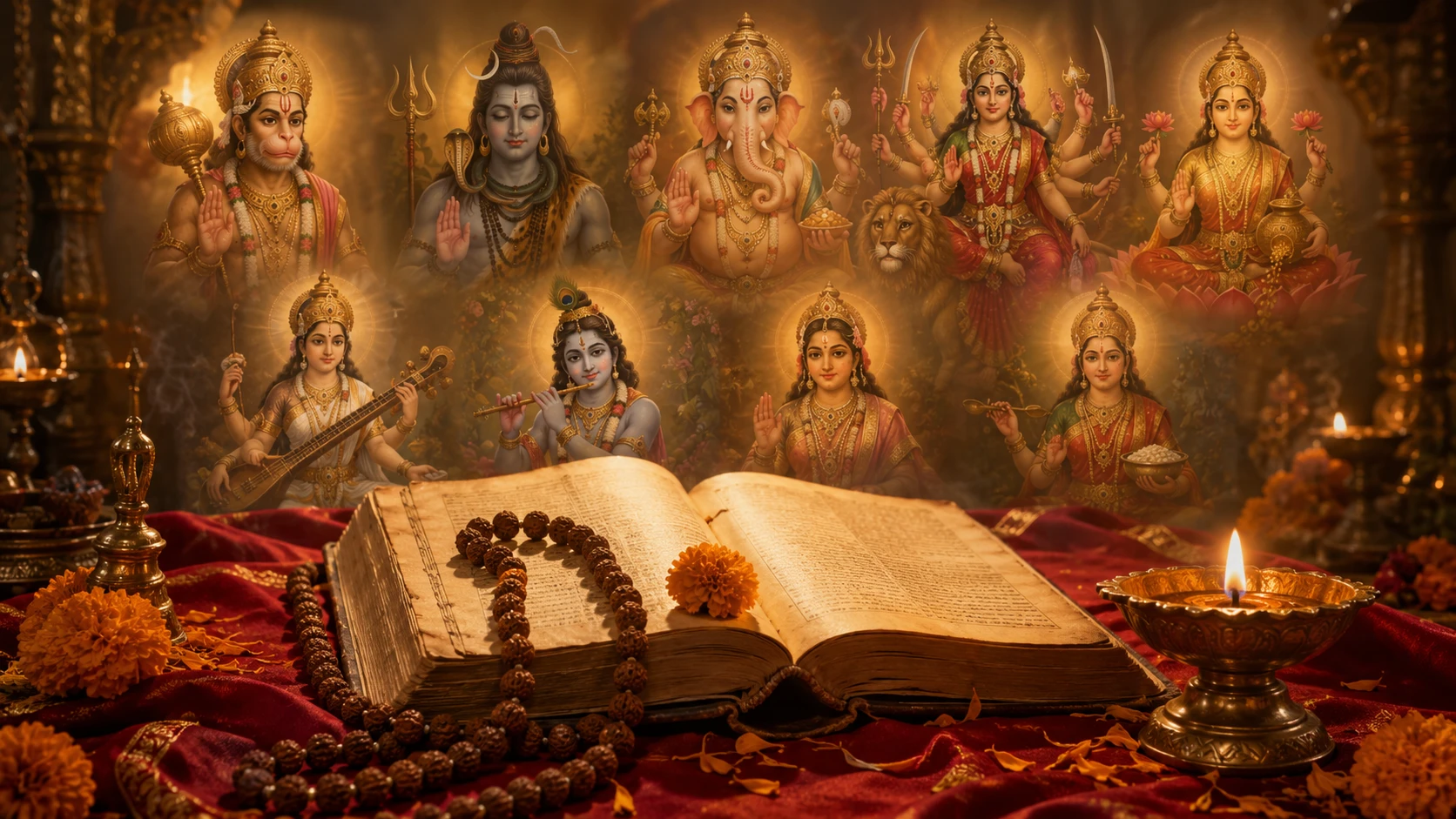
The 9 Chalisas of the Hindu Tradition -- and What Each One Carries
Most people know the Hanuman Chalisa by heart. Fewer know that eight other Chalisas exist in the same tradition, each addressed to a different deity, each carrying its own weight and occasion. This article introduces all nine.
 SAHASRANAMA
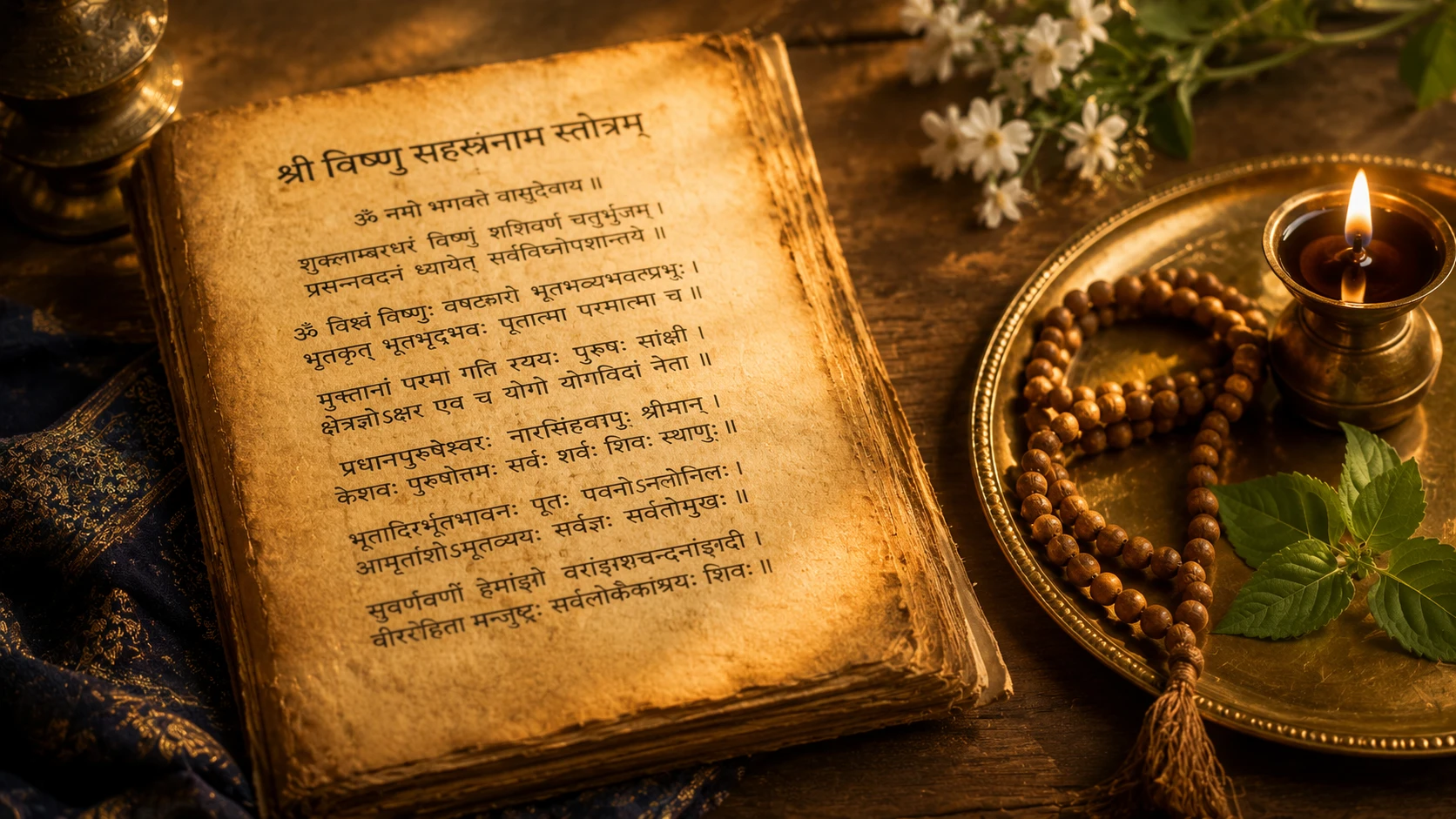
What Is a Sahasranama? The Tradition of 1,008 Sacred Names
Sahasra means thousand. Nama means name. A Sahasranama is a hymn that holds a thousand names of a single deity, each name a facet, each facet a meditation. This article explains where the tradition comes from, which Sahasranamas exist, and how to begin reciting one.