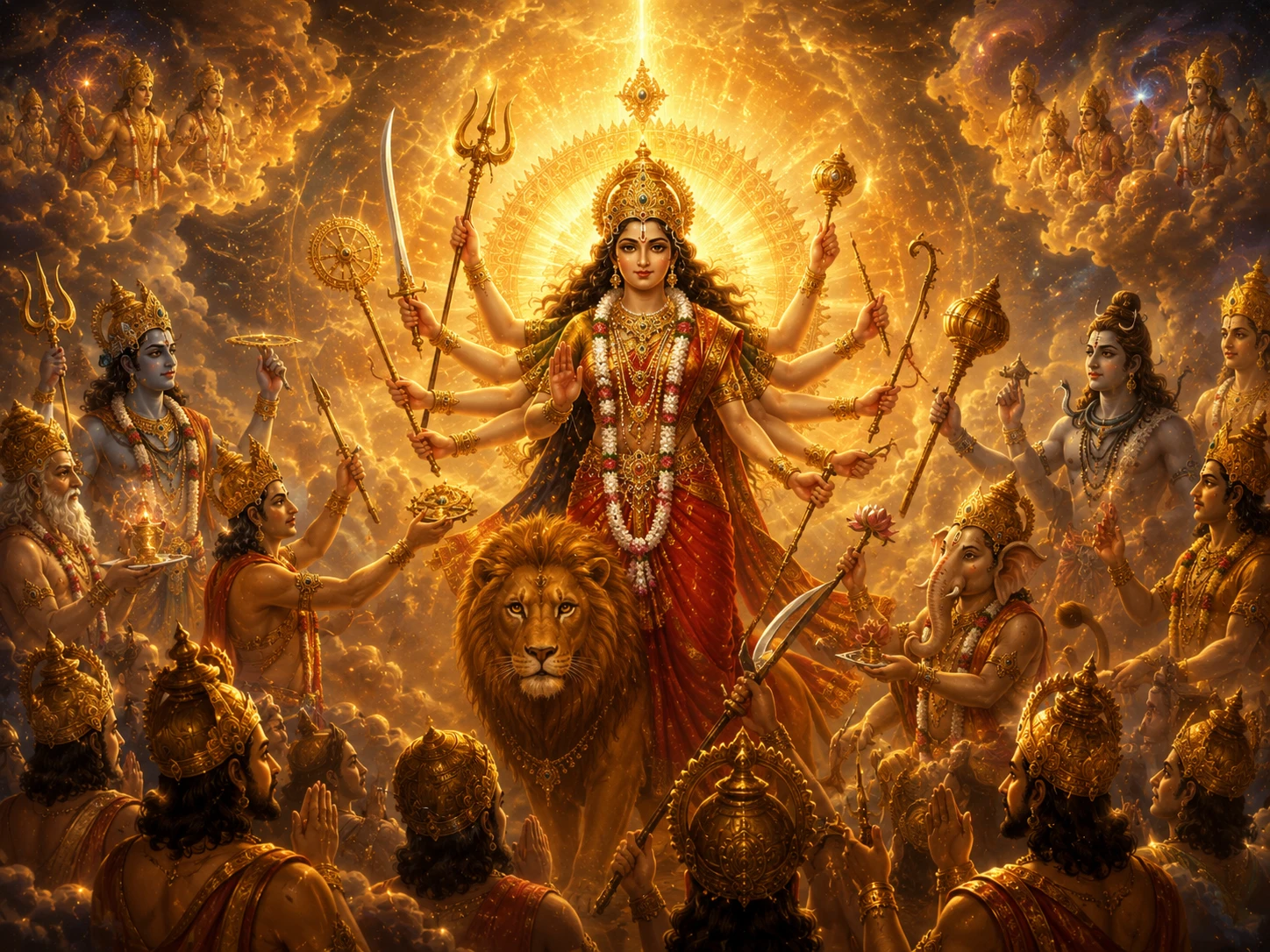
Madhu and Kaitabha -- The Demons Born from Vishnu's Ear Wax
मधु और कैटभ -- विष्णु के कर्णमल से जन्मे दैत्य
देवी माहात्म्य -- मार्कण्डेय पुराण (अध्याय 81-93) में समाहित देवी का 700-श्लोकी स्तोत्र -- शुभ-अशुभ के युद्ध से नहीं, आसक्ति के प्रश्न से शुरू होता है। एक अपदस्थ राजा सुरथ और एक ठगा हुआ व्यापारी समाधि वन में ऋषि मेधा के पास जाते हैं। दोनों को विश्वसनीय लोगों ने धोखा दिया। सब खो दिया। फिर भी जिन्होंने नुक़सान पहुँचाया, उनसे आसक्ति बनी है। क्यों?
ऋषि का उत्तर है महामाया -- महान भ्रम, सर्वोच्च देवी जो बुद्धिमान से बुद्धिमान प्राणियों की आसक्तियों और भ्रमों को नियन्त्रित करती है। उसकी शक्ति समझाने के लिए वे तीन कथाएँ सुनाते हैं। पहली है मधु-कैटभ कथा -- और यह सबसे अजीब जगह से शुरू होती है: सोते हुए देवता के कान की नली।
ब्रह्माण्डीय चक्र के अन्त में ब्रह्माण्ड एक विशाल, अँधेरे सागर में विलीन हो चुका है। न ज़मीन, न आकाश, न तारे। विष्णु शेषनाग (अनन्त) की कुण्डलियों पर योगनिद्रा में सोए हैं -- स्वयं देवी द्वारा नियन्त्रित गहन ध्यान-निद्रा। उनकी नाभि से कमल उगता है, उस पर ब्रह्मा बैठे हैं, अगले ब्रह्माण्ड की सृष्टि की तैयारी में।
पर सृष्टि शुरू नहीं हो सकती। दो दैत्य -- मधु और कैटभ -- विष्णु के कानों के मैल से प्रकट हुए हैं। मधु, एक मीठी बूँद से जन्मा, तमस (जड़ता, अन्धकार) का प्रतीक। कैटभ, एक कठोर बूँद से, रजस (उत्कट, आक्रामकता) का। साथ मिलकर ये दो मनोवैज्ञानिक शक्तियों का प्रतिनिधित्व करते हैं जो हर रचनात्मक कार्य में बाधा डालती हैं: आलस्य और अनियन्त्रित महत्त्वाकांक्षा। और उनका पहला कार्य ब्रह्मा से वेद चुराना -- सृष्टि के लिए आवश्यक ज्ञान -- और ब्रह्माण्डीय सागर की गहराइयों में छिपाना।
ब्रह्मा असहाय हैं। विष्णु सोए हैं। ब्रह्मा क्या करें? प्रार्थना करें। विष्णु से नहीं -- क्योंकि विष्णु जाग नहीं सकते। विष्णु को देवी ने निद्रा में बाँधा है। तो ब्रह्मा सीधे देवी से प्रार्थना करते हैं। रात्रि सूक्तम् पढ़ते हैं, उन्हें विश्वेश्वरी, निद्रा, स्वाहा, स्वधा, महाविद्या, महामाया, कालरात्रि, ईश्वरी स्तुति करते हुए -- और विनती करते हैं कि अच्युत को अपने ही मोहपाश से मुक्त करें।
यह देवी माहात्म्य की शुरुआत का धार्मिक विस्फोट है: देवी विष्णु की सहायिका नहीं हैं। वे वह शक्ति हैं जो विष्णु की चेतना नियन्त्रित करती हैं। उनकी सहमति बिना ब्रह्माण्ड के संरक्षक अपनी आँखें भी नहीं खोल सकते। वे वह operating system हैं जिस पर देवता भी चलते हैं।
विष्णुः शरीरग्रहणमहमाया जगत्प्रभोः। यया निद्रां समाश्रित्य जगत्येकार्णवीकृते॥
viṣṇuḥ śarīragrahaṇam ahamāyā jagatprabhoḥ | yayā nidrāṃ samāśritya jagaty ekārṇavīkṛte ||
योगनिद्रा देवी, जिनकी शक्ति से जगत् के प्रभु (विष्णु) निद्रा में थे जब ब्रह्माण्ड एकमात्र सागर बन चुका था।
— Devi Mahatmya (Durga Saptashati), Chapter 1, Markandeya Purana 81
पाँच हज़ार वर्ष का युद्ध और चाल
ब्रह्मा की प्रार्थना से प्रसन्न, देवी विष्णु के शरीर से निकलीं -- आँखों, नासिका, भुजाओं, हृदय, और वक्ष से। विष्णु जागे। दो दैत्यों को ब्रह्मा को धमकाते देखा और युद्ध किया।
जो हुआ वह त्वरित विजय नहीं था। विष्णु ने मधु और कैटभ से पाँच हज़ार दिव्य वर्ष लड़ाई की। ये साधारण असुर नहीं थे। उन्होंने वाग्बीज मन्त्र पर तपस्या की थी और स्वयं देवी से वरदान पाया था: वे केवल अपनी सहमति से मर सकते थे। वे देवी के अपने अनुदान से लगभग अजेय थे।
जो केवल सहमति से मरे, उसे कैसे मारो? विष्णु ने माया -- देवी का अपना उपकरण -- प्रयोग किया। पाँच हज़ार वर्ष के अनिर्णायक युद्ध के बाद, विष्णु ने दैत्यों की वीरता की इतनी लम्बी-चौड़ी प्रशंसा की कि उनका अहंकार फूल गया। चापलूसी के नशे में मधु और कैटभ ने घातक भूल की: विष्णु को वरदान देने की पेशकश की। 'हमसे कुछ भी माँगो, हे विष्णु।'
विष्णु ने माँगा: 'मुझे तुम्हें मारने का वरदान दो।'
अपने ही शब्दों में फँसे दैत्यों ने असम्भव शर्त लगाने की कोशिश की: 'हमें वहाँ मारो जहाँ पानी न हो।' चूँकि पूरा ब्रह्माण्ड जलमग्न था, उन्हें लगा यह मृत्यु असम्भव बनाता है। पर विष्णु ने अपनी जाँघें जल-सतह से ऊपर फैलाईं -- अपने शरीर पर सूखी भूमि रचकर -- और मधु-कैटभ को उन पर रखा। फिर सुदर्शन चक्र से उनके सिर काट दिए।
दैत्यों के शरीर की चर्बी और मज्जा ब्रह्माण्डीय जल पर फैलकर पृथ्वी बनी। कुछ पुराण-परम्पराएँ मानती हैं कि 'मेदिनी' (पृथ्वी) शब्द मधु-कैटभ की 'मेद' (चर्बी) से निकला -- जिस ज़मीन पर चलते हैं वह शाब्दिक रूप से आदिम अज्ञान और उत्कट का रूपान्तरित अवशेष है।
विष्णु को 'मधुसूदन' -- मधु का वध करने वाला -- विशेषण मिला जो आज भी उनके सबसे प्रचलित नामों में है।
मधु बनाम कैटभ -- जुड़वाँ दैत्यों का विश्लेषण
| Aspect | Madhu | Kaitabha |
|---|---|---|
| Meaning of Name | Honey; sweetness | Insect; the one who stings |
| Born From | Sweet droplet of Vishnu's ear wax | Hard droplet of Vishnu's ear wax |
| Guna Embodied | Tamas (inertia, darkness, lethargy) | Rajas (passion, aggression, restlessness) |
| Psychological Parallel | Procrastination; comfort-zone addiction; Netflix-binge paralysis | Hustle culture; burnout; manic ambition without direction |
| Combined Effect | Steals knowledge (Vedas) and paralyses creative action | Attacks the creator (Brahma) before creation can begin |
| How Defeated | Tricked by ego-flattery into consenting to their own death | Vishnu created 'dry land' on his own thighs -- the impossible condition made possible |
| Legacy | Vishnu called 'Madhusudana' (Madhu's slayer) | Earth (Medini) formed from their body-fat |
मधु और कैटभ बाहरी शत्रु नहीं हैं। ये आन्तरिक अवस्थाएँ हैं -- आलस्य और पागल महत्त्वाकांक्षा -- जिनसे हर रचनाशील व्यक्ति किसी भी सार्थक काम से पहले लड़ता है।
देवी माहात्म्य (दुर्गा सप्तशती / चण्डी पाठ) नवरात्रि में लाखों हिन्दू घरों में पूर्ण रूप से पाठ की जाती है। इसमें तीन प्रसंग हैं, हर एक में देवी का भिन्न रूप भिन्न वर्ग के दैत्य को हराता है: महाकाली मधु-कैटभ (तमस) को, महालक्ष्मी महिषासुर (रजस) को, और महासरस्वती शुम्भ-निशुम्भ (अहंकार) को। तीन प्रसंग तीन गुणों और आध्यात्मिक प्रगति के तीन चरणों पर map होते हैं: पहले आलस्य जीतो, फिर अनियन्त्रित इच्छा, फिर अहंकार। संरचना आकस्मिक नहीं -- यह आन्तरिक रूपान्तरण का क्रमिक पाठ्यक्रम है।
देवी माहात्म्य का मधु-कैटभ अध्याय पढ़ो
मधु-कैटभ की कथा दुर्गा सप्तशती का पहला अध्याय है। यह एटर्नल राग पर मार्कण्डेय पुराण के अध्याय 81 के रूप में, संस्कृत और अनुवाद सहित, है; इसे ज़ोर से पढ़ो, और आगे के अध्यायों में बढ़ते रहो।
Tags
Eternal Raga · शाश्वत राग
Institutional voice — scholarly articles on Sanatan Dharma
अपनी समझ गहरी करें
अपनी समझ और गहरी करें
scriptural exegesis
Samudra Manthan -- When Gods and Demons Ran a Joint Venture and the Universe Almost Died
A cosmic ocean. A mountain for a churning rod. A serpent king for a rope. Gods on one end, demons on the other. And out came 14 treasures -- including wealth, beauty, medicine, immortality, and one poison so lethal it could end creation itself. The Samudra Manthan is not mythology. It is the original playbook for collaboration, crisis management, and how to handle it when your joint venture partner tries to cheat you.
deities avatars
Devi Swaroopa -- Forms of the Goddess
She is Durga on the battlefield and Annapurna in the kitchen. She is Kali at the cremation ground and Lakshmi in the boardroom. She is Saraswati at the university and Parvati in the family. The Hindu Goddess is not one deity with accessories -- she is the entire spectrum of feminine power, from terrifying to tender, from cosmic to domestic. Understanding her forms is understanding the universe itself.
scriptural exegesis
Devi Mahatmya -- The Three Charitas That Changed How India Worships the Feminine
700 verses. 13 chapters. Three battles. One thesis: when every god in the universe has failed, a woman finishes the job. The Devi Mahatmya from the Markandeya Purana is not just a scripture -- it is the founding document of Shakta theology and the reason 300 million people celebrate Navaratri.
deities avatars
Dashavatara -- Why Vishnu Comes Back Ten Times
Fish, tortoise, boar, half-lion, dwarf, axe-warrior, prince, cowherd, enlightened teacher, future horseman. The ten avatars of Vishnu are not random folklore. Read them in sequence and you get something startling -- a narrative that mirrors evolutionary biology, tracks the rise and fall of political systems, and argues that God does not sit above history but enters it, gets dirty, and does the work. The Dashavatara is Hinduism's answer to the question every civilisation asks: why does the world keep breaking, and who fixes it?
deities avatars
Rahu and Ketu -- How a Demon Lost His Body and Became the Enemy of Sun and Moon
During the distribution of the nectar of immortality, one demon disguised himself as a god and drank. Vishnu's Sudarshana Chakra severed his head -- but the amrit had already passed his throat. The head became Rahu. The body became Ketu. And their eternal grudge against the Sun and Moon who exposed them is why eclipses happen. At least, that is what the Puranas say.
deities avatars
Chandra Dev and His 27 Wives -- Why the Moon Waxes and Wanes
Chandra married all 27 daughters of Daksha -- one for each nakshatra in the zodiac. He was supposed to love them equally. He did not. His obsessive favouritism toward Rohini left the other 26 wives neglected. Their father cursed him to waste away and die. And that is why the moon shrinks for fifteen days every month -- and why the full moon and new moon exist at all.
देवी माहात्म्य (दुर्गा सप्तशती / चण्डी पाठ) नवरात्रि में लाखों हिन्दू घरों में पूर्ण रूप से पाठ की जाती है। इसमें तीन प्रसंग हैं, हर एक में देवी का भिन्न रूप भिन्न वर्ग के दैत्य को हराता है: महाकाली मधु-कैटभ (तमस) को, मह…
More in Scriptural Exegesis
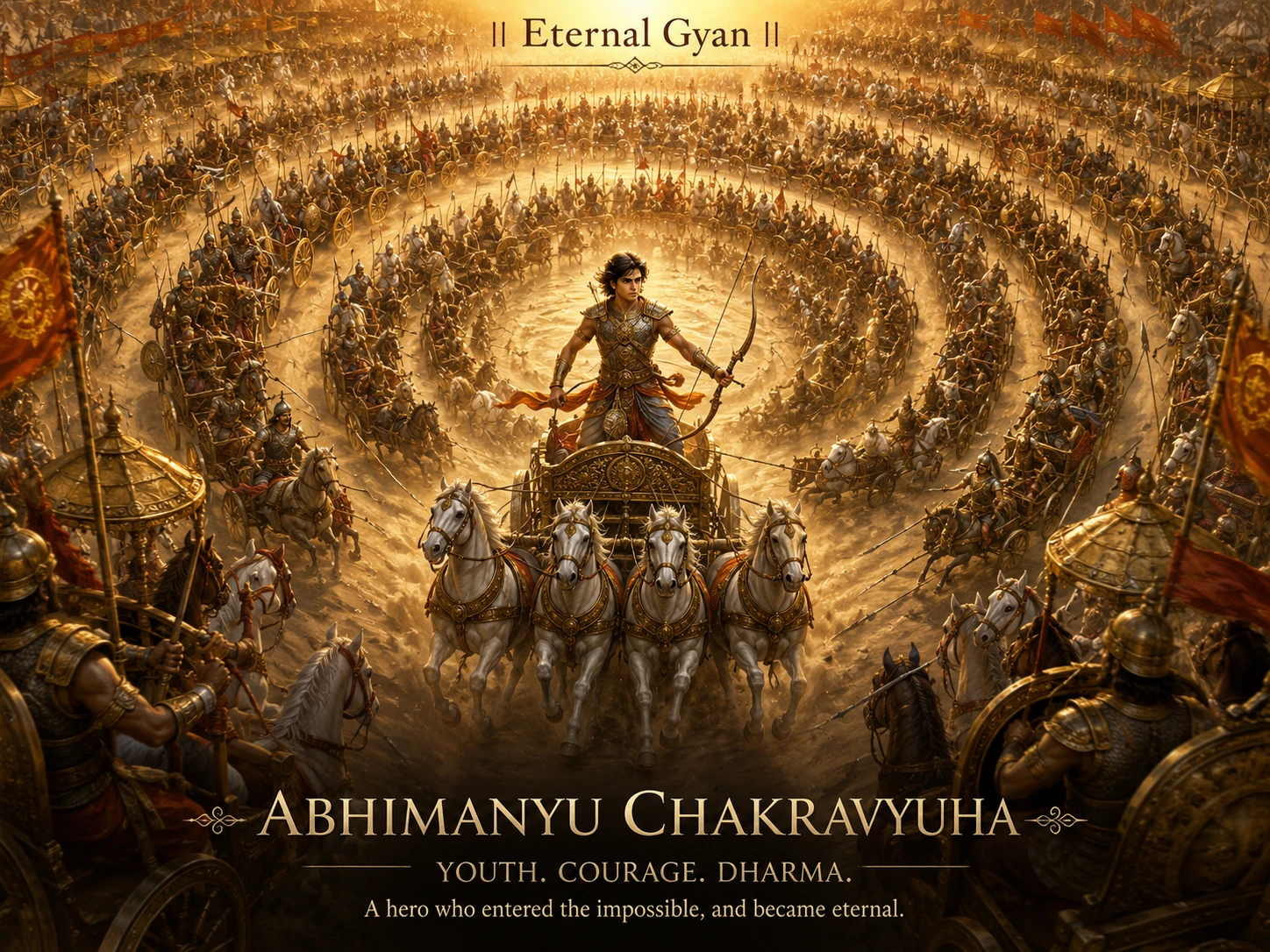
Abhimanyu and the Chakravyuha -- The Boy Who Knew How to Enter but Not How to Leave
14 मिनट पढ़ें
Adbhuta Ramayana -- The Ramayana Where Sita Becomes Kali
9 मिनट पढ़ें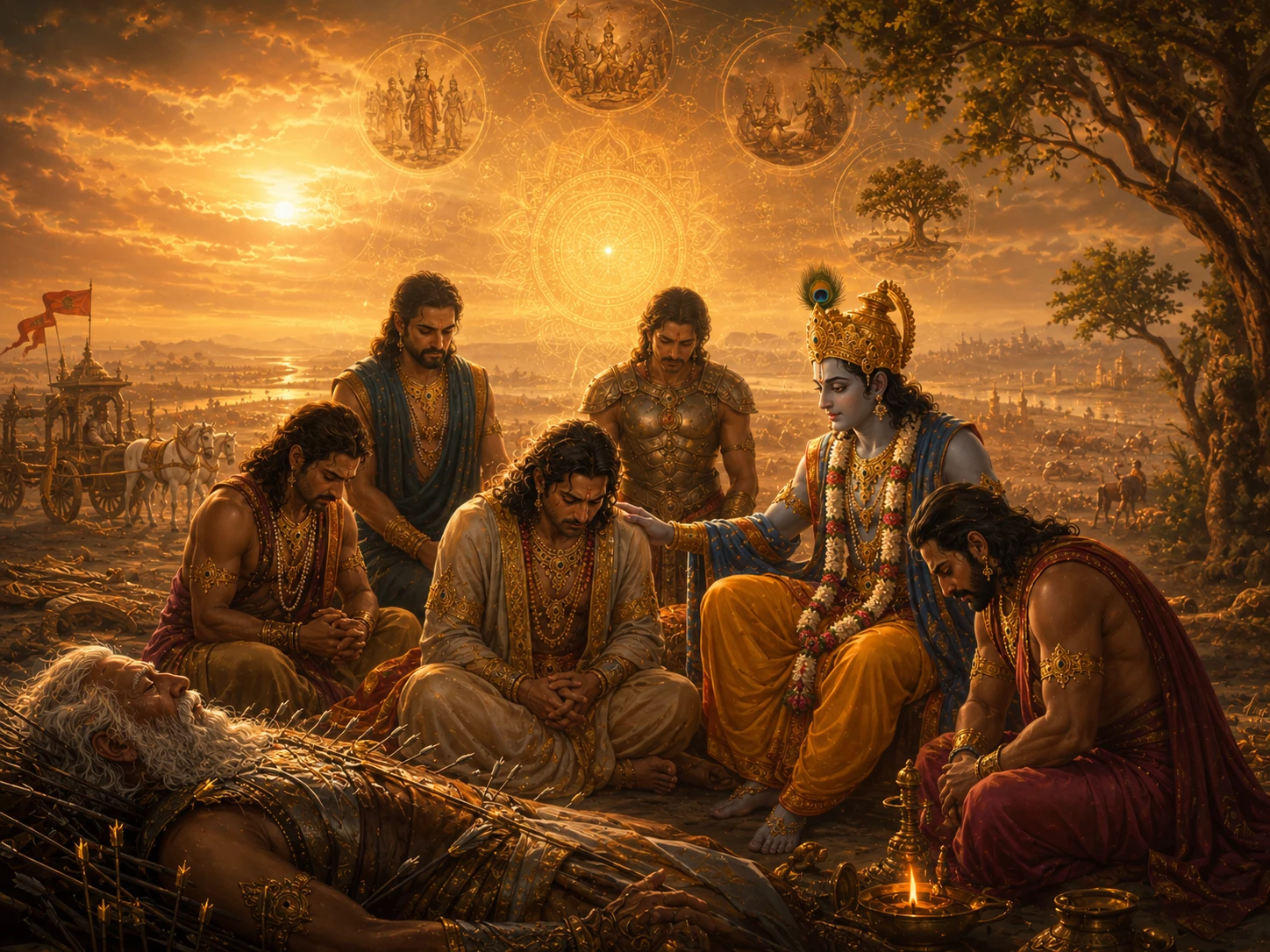
After Kurukshetra -- What Happened Next
14 मिनट पढ़ेंवही अनुवाद त्रुटि जिसने हिन्दू धर्म में '33 कोटि' को '33 करोड़' बनाया, बौद्ध धर्म में भी हुई। बौद्ध ग्रन्थों के चीनी अनुवाद ने 'सप्त कोटि बुद्ध' (7 श्रेष्ठ बुद्ध) का अनुवाद '7 करोड़ बुद्ध' कर दिया। तिब्बती अनुवाद ने सही …
Deities AvatarsCommunity Reflections
🕉️
Be the first to share your reflection.