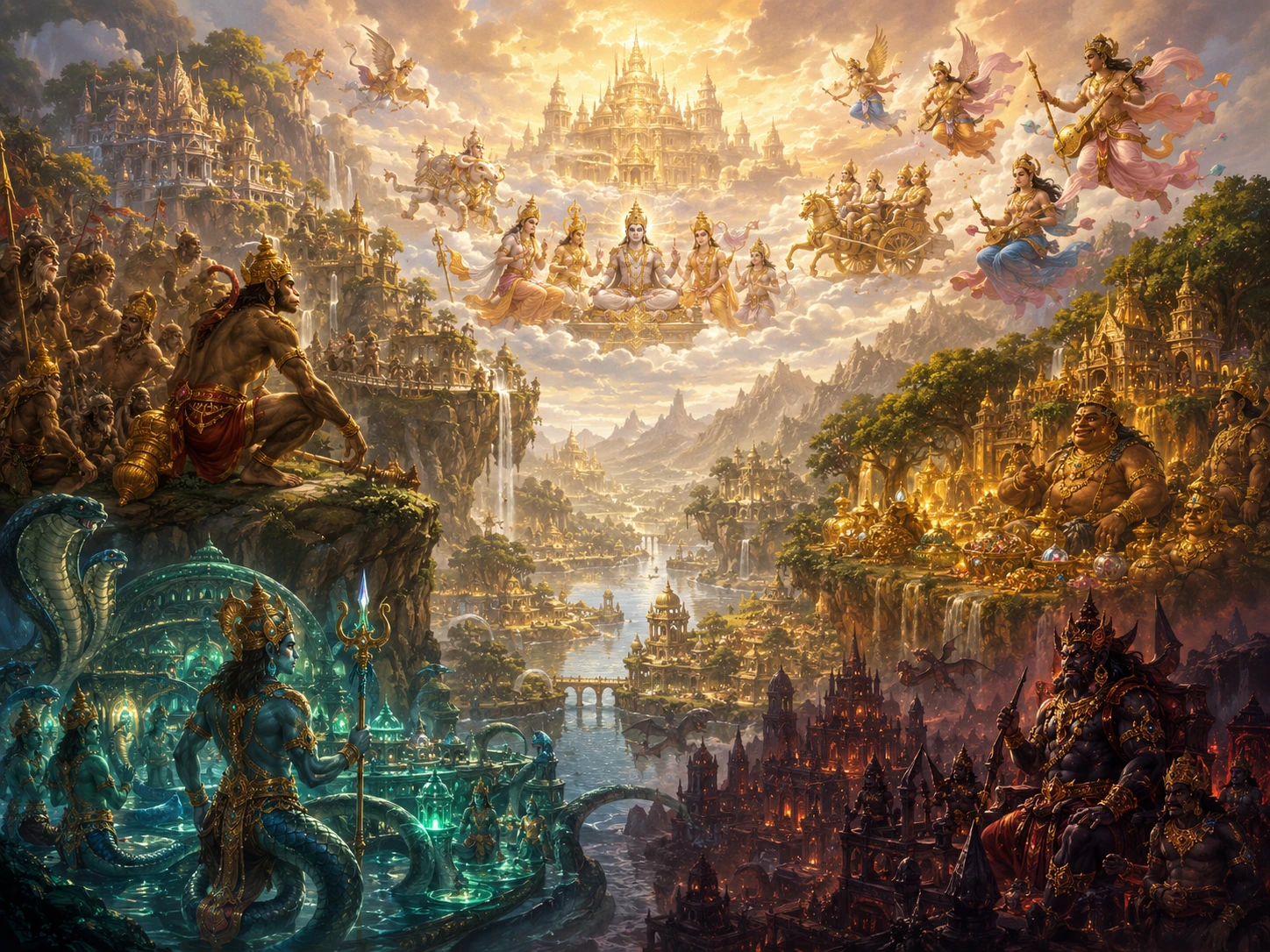
Non-Human Races of the Epics -- Vanaras, Nagas, Yakshas & Beyond
महाकाव्यों की अमानव जातियाँ -- वानर, नाग, यक्ष और अन्य
रामायण और महाभारत को ताज़ी नज़र से खोलो और कुछ दिखता है जो बच्चों की retellings लगातार चपटा कर देती हैं: ये महाकाव्य मनुष्यों और देवताओं की कहानियाँ नहीं हैं। ये चेतन प्रजातियों के पूरे ecosystem की कहानियाँ हैं -- अलग-अलग जैविक संरचनाओं, क्षेत्रों, शासन-व्यवस्थाओं, तकनीकों, और सांस्कृतिक प्रथाओं वाली कई सभ्यताएँ -- सब एक-दूसरे से बातचीत कर रही हैं, अन्तर्विवाह कर रही हैं, गठबन्धन बना रही हैं, युद्ध लड़ रही हैं, और ब्रह्माण्डीय इतिहास की दिशा तय कर रही हैं।
किष्किन्धा के वानर 'बन्दर' नहीं हैं। ये एक वन-निवासी सभ्यता हैं जिनके पास राजा (सुग्रीव), अपदस्थ सम्राट (वालि), सेनापति (हनुमान), मन्त्रिपरिषद्, उपमहाद्वीप भर में फैला गुप्तचर जाल, और समुद्र पर सेतु बनाने की इंजीनियरिंग क्षमता है। नाग 'साँप' नहीं हैं। ये एक भूमिगत सभ्यता हैं जिनकी अपनी राजधानी (पाताल लोक में भोगवती), राजा (वासुकि, बाद में तक्षक), मानव राजवंशों से विवाह-गठबन्धन (अर्जुन ने नाग राजकुमारी उलूपी से विवाह किया), और इतनी राजनीतिक शक्ति है कि जनमेजय का सर्वनाशकारी सर्प-सत्र भड़का दें। राक्षस केवल 'दानव' नहीं हैं। रावण के अधीन लंका एक स्वर्णिम नगरी थी जिसमें उन्नत विमान तकनीक, परिष्कृत नगर-नियोजन, और एक राजा था जो ब्राह्मण विद्वान् और शिव भक्त था।
हिन्दू महाकाव्यों में जो है वह fantasy नहीं है। यह उस पैमाने की worldbuilding है जिसके पास आधुनिक fiction अभी पहुँच रहा है -- एक बहु-प्रजाति, बहु-आयामी सभ्यता-ढाँचा जहाँ मनुष्य कहानी के केन्द्र में नहीं बल्कि कई प्रजातियों में एक हैं।
देवदानवगन्धर्वा यक्षराक्षसपन्नगाः। न शक्नुवन्ति तं द्रष्टुं मर्त्यः किमु सत्त्वजः॥
devadānavagandharva yakṣarākṣasapannagāḥ | na śaknuvanti taṃ draṣṭuṃ martyaḥ kimu sattvjaḥ ||
देव, दानव, गन्धर्व, यक्ष, राक्षस, और पन्नग (नाग) -- वे भी उसे देखने में समर्थ नहीं। तो भौतिक जन्मे मर्त्य की क्या बिसात?
— Mahabharata, Anushasana Parva (taxonomy of sentient beings referenced in discussions of Brahman)
हिन्दू पौराणिक कथाओं की प्रमुख अमानव जातियाँ
| Race | Sanskrit | Realm | Key Figures | Role in Epics | Modern Resonance |
|---|---|---|---|---|---|
| Vanaras | वानर | Kishkindha (Southern forests) | Hanuman, Sugriva, Vali, Angada, Jambavan | Rama's allies; built Rama Setu; Sundara Kanda espionage | Special forces; guerrilla intelligence; distributed teamwork |
| Nagas | नाग | Patala Loka / Bhogavati | Vasuki, Takshaka, Shesha, Ulupi, Astika | Samudra Manthan; Arjuna's marriage to Ulupi; Parikshit's death; Sarpa Satra | Underground networks; diplomatic marriages; geopolitical alliances |
| Rakshasas | राक्षस | Lanka; various forest kingdoms | Ravana, Kumbhakarna, Vibhishana, Ghatotkacha, Hidimba | Primary antagonists of Ramayana; Bhima's wife Hidimbi; Ghatotkacha in Kurukshetra | Technological power without dharma; surveillance states; misused innovation |
| Yakshas | यक्ष | Alaka (Kubera's city); forests and lakes | Kubera, the Yaksha of the Lake (Yaksha Prashna) | Wealth guardians; Kubera's flying Pushpaka Vimana (stolen by Ravana); Yudhishthira's test | Central bankers; wealth custodians; institutional governance |
| Gandharvas | गन्धर्व | Celestial realms | Chitrasena, Tumburu, Vishvavasu | Celestial musicians; trained Arjuna in music/dance during exile; Gandharva Vivaha marriage form | Musicians; cultural ambassadors; soft power diplomacy |
| Kinnaras | किन्नर | Mountain regions near Kailasa | Kinnara-Kinnari pairs | Horse-headed celestial musicians; associated with devotion and romantic fidelity | Trans and non-binary identity in Indian tradition; third gender recognition |
| Apsaras | अप्सरा | Indra's court (Amaravati) | Urvashi, Menaka, Rambha, Tilottama | Celestial dancers; sent to disrupt tapasya; Urvashi cursed Arjuna; Menaka seduced Vishwamitra | Beauty industry; distraction as geopolitical weapon; honey traps |
| Danavas / Asuras | दानव / असुर | Various subterranean realms | Hiranyakashipu, Mahabali, Vritra, Narakasura | Cosmic adversaries of Devas; not 'evil' but driven by ambition and ego | Disruptors; anti-establishment forces; innovators who challenge the status quo |
ये 'राक्षस' नहीं हैं। हर जाति का अपना धर्म है, अपने गुण हैं, और अपनी सभ्यतागत उपलब्धियाँ। महाकाव्य इन्हें स्वायत्त जन-समूह मानते हैं, मानवीय वीरता की सामग्री नहीं।
वानर प्रश्न -- क्या वे सच में बन्दर थे?
सबसे बहस-योग्य अमानव जाति वानर हैं। 'वानर' शब्द का अनुवाद अक्सर 'बन्दर' किया जाता है, पर संस्कृत व्युत्पत्ति खुलासा करती है: 'वन' का अर्थ जंगल, और 'नर' का अर्थ मनुष्य। वानर शाब्दिक अर्थ में 'वन-मानव' है -- एक ऐसा प्राणी जो वन में रहता है और मानव-जैसे गुण रखता है। रामायण वानरों को वाक्-शक्ति, राजनीतिक संगठन, रणनीतिक चिन्तन, भावनात्मक जटिलता, वास्तुशिल्प निर्माण (राम सेतु), और गहरी भक्ति में सक्षम बताती है। हनुमान वैदिक शास्त्र उद्धृत करते हैं। सुग्रीव दरबार लगाते हैं। अंगद कूटनीति करता है। ये प्राइमेट्स से जुड़े व्यवहार नहीं हैं।
कुछ विद्वान वानरों को एक जनजातीय वन-निवासी मानव समुदाय मानते हैं जिसे रामायण की आर्य-केन्द्रित कथा ने 'बन्दर-जैसा' coded किया। अन्य सुझाते हैं कि ये एक वास्तविक hominid प्रजाति का प्रतिनिधित्व करते हैं -- शायद Homo sapiens और किसी अन्य प्रजाति जैसे Homo erectus या Denisovans के सम्पर्क की स्मृति, सहस्राब्दियों से मौखिक परम्परा में संरक्षित।
नाग भी उतने ही जटिल हैं। उन्हें रूप-बदलने वाले बताया गया है जो मानव या सर्प रूप ले सकते हैं। उनकी पूरी भूमिगत सभ्यता है। अर्जुन ने अपने वनवास के दौरान उनके बीच निवास किया। नाग राजकुमारी उलूपी ने एक जादुई मणि से अर्जुन का प्राण बचाया। तक्षक ने अर्जुन के पौत्र परीक्षित को मारा -- जिसने जनमेजय के सर्प-सत्र को जन्म दिया, जो पूरी महाभारत की framing narrative है।
आधुनिक भारत में नाग-पूजा जीवित है। नाग पंचमी प्रमुख त्योहार है। कर्नाटक, केरल, और तमिलनाडु में हज़ारों मन्दिरों के बाहर नाग-पत्थर (नाग-कल) मिलते हैं। नाग परम्परा उपमहाद्वीप की सबसे पुरानी पूर्व-वैदिक धार्मिक परतों में से एक प्रतीत होती है, जो बाद में पुराण-ढाँचे में समाहित हुई।
दार्शनिक निष्कर्ष महत्त्वपूर्ण है। हिन्दू महाकाव्य ऐसा ब्रह्माण्ड प्रस्तुत करते हैं जहाँ चेतना कई प्रजातियों और लोकों में वितरित है। धर्म मानव एकाधिकार नहीं है। नागों का धर्म है। वानरों का धर्म है। विभीषण जैसे राक्षस भी वंश के ऊपर धर्म चुनते हैं। यह आमूल समावेशिता का विश्वदृष्टिकोण है -- जहाँ नैतिक ब्रह्माण्ड एक प्रजाति की सीमाओं से बहुत आगे फैलता है।
महाभारत की framing narrative स्वयं एक अन्तर-प्रजाति घटना है। पूरा महाकाव्य वैशम्पायन द्वारा राजा जनमेजय को उनके सर्प-सत्र के दौरान सुनाया गया -- एक विशाल अग्नि-अनुष्ठान जिसका उद्देश्य पृथ्वी से सभी नागों (सर्पों) को समाप्त करना था। कारण? नाग राजा तक्षक ने जनमेजय के पिता परीक्षित को मारा। अनुष्ठान अन्ततः आस्तीक नामक एक युवा ब्राह्मण बालक द्वारा रोका जाता है, जो स्वयं अर्ध-नाग है (उसकी माँ मनसा नाग राजकुमारी हैं)। तो महाभारत शाब्दिक रूप से एक नरसंहार रोकने के लिए सुनाई गई कहानी है -- और रोकने वाला मिश्रित-प्रजाति का बच्चा है। वह framing आकस्मिक नहीं है। यह सह-अस्तित्व पर महाभारत की अन्तिम टिप्पणी है।
हनुमान चालीसा पढ़ो -- वानर की भक्ति
हनुमान ऐसे प्राणी का सर्वोच्च उदाहरण हैं जिनकी भक्ति ने प्रजाति की सीमा लाँघ दी। हनुमान चालीसा का पाठ करो, जो अर्थ सहित एटर्नल राग पर है।
Tags
Eternal Raga · शाश्वत राग
Institutional voice — scholarly articles on Sanatan Dharma
अपनी समझ गहरी करें
अपनी समझ और गहरी करें
scriptural exegesis
Pandavas in Hell -- The Shocking Finale of the Mahabharata
The Mahabharata does not end with victory. It ends with the heroes falling dead on a Himalayan climb, the villains seated in heaven, and the one righteous king demanding to be sent to hell. The Swargarohana Parva is the most unsettling, most philosophically radical, and most misunderstood finale in all of world literature.
scriptural exegesis
After Kurukshetra -- What Happened Next
The war ended. The Pandavas won. And then everything fell apart. Krishna's clan destroyed itself in a drunken brawl. Dwaraka sank into the sea. Arjuna's divine powers vanished. And the five brothers who fought the greatest war in history walked into the Himalayas to die. The Mahabharata's post-war chapters are darker, stranger, and more relevant than the war itself.
scriptural exegesis
Sugriva's Search for Sita -- The Intelligence Network Hidden in the Ramayana
No phones, no satellites, no maps. Yet Sugriva found Sita across an entire continent. He did not send a random army -- he built a four-directional intelligence network with designated leaders, precise geographical routes, and a strict one-month deadline. Kishkindha Kanda, Sargas 40-43, reads less like an ancient epic and more like a military operations manual. The Ramayana was not just telling a story. It was teaching strategy.
scriptural exegesis
Hanuman's Leap Across the Ocean
100 yojanas of open ocean. Three supernatural obstacles. Zero backup. Hanuman's leap to Lanka is not just mythology's greatest action sequence -- it is a masterclass in overcoming self-doubt, navigating temptation, and executing under impossible pressure.
scriptural exegesis
Samudra Manthan -- When Gods and Demons Ran a Joint Venture and the Universe Almost Died
A cosmic ocean. A mountain for a churning rod. A serpent king for a rope. Gods on one end, demons on the other. And out came 14 treasures -- including wealth, beauty, medicine, immortality, and one poison so lethal it could end creation itself. The Samudra Manthan is not mythology. It is the original playbook for collaboration, crisis management, and how to handle it when your joint venture partner tries to cheat you.
deities avatars
Dashavatara -- Why Vishnu Comes Back Ten Times
Fish, tortoise, boar, half-lion, dwarf, axe-warrior, prince, cowherd, enlightened teacher, future horseman. The ten avatars of Vishnu are not random folklore. Read them in sequence and you get something startling -- a narrative that mirrors evolutionary biology, tracks the rise and fall of political systems, and argues that God does not sit above history but enters it, gets dirty, and does the work. The Dashavatara is Hinduism's answer to the question every civilisation asks: why does the world keep breaking, and who fixes it?
महाभारत की framing narrative स्वयं एक अन्तर-प्रजाति घटना है। पूरा महाकाव्य वैशम्पायन द्वारा राजा जनमेजय को उनके सर्प-सत्र के दौरान सुनाया गया -- एक विशाल अग्नि-अनुष्ठान जिसका उद्देश्य पृथ्वी से सभी नागों (सर्पों) को समाप…
More in Scriptural Exegesis
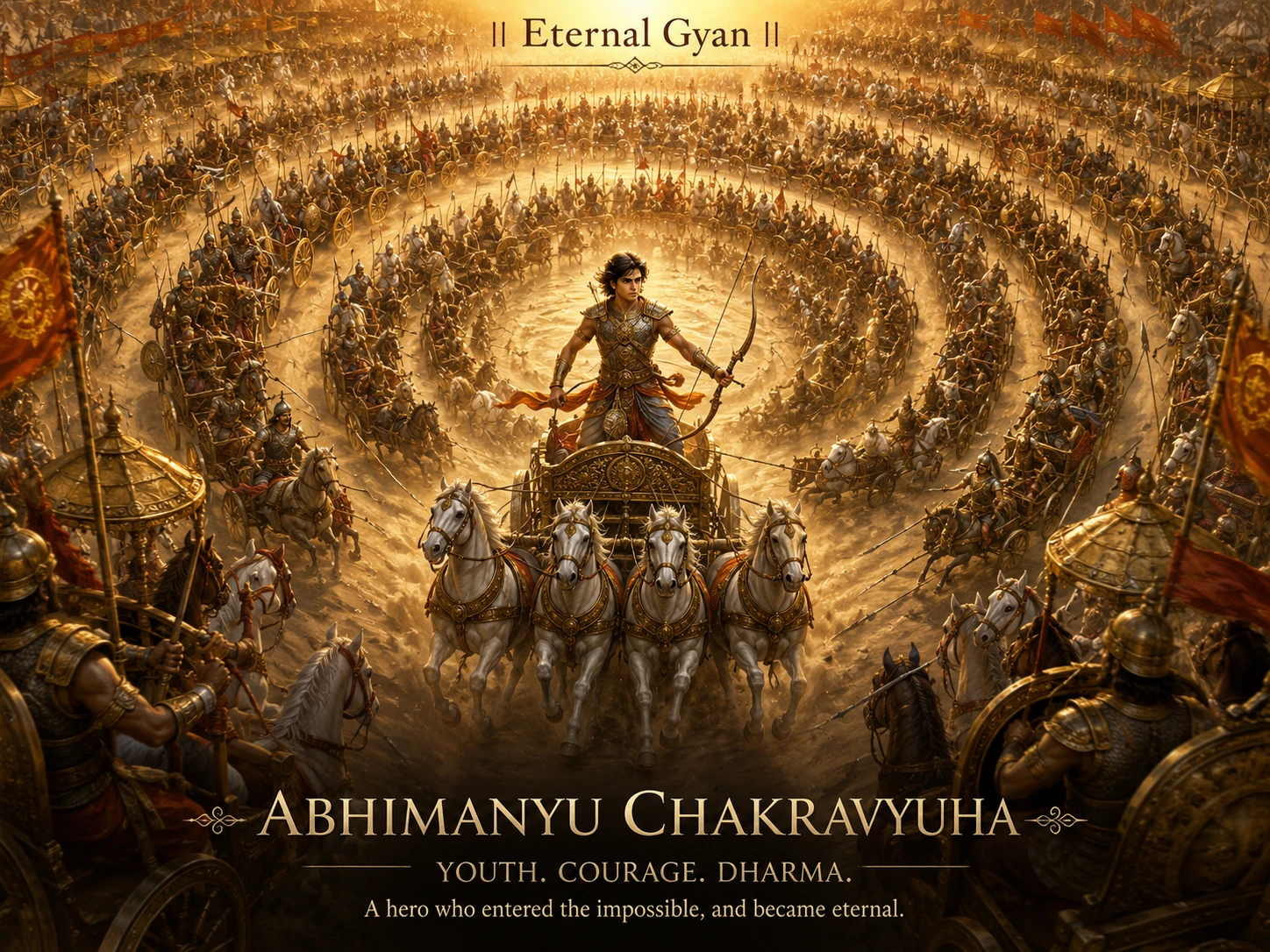
Abhimanyu and the Chakravyuha -- The Boy Who Knew How to Enter but Not How to Leave
14 मिनट पढ़ें
Adbhuta Ramayana -- The Ramayana Where Sita Becomes Kali
9 मिनट पढ़ें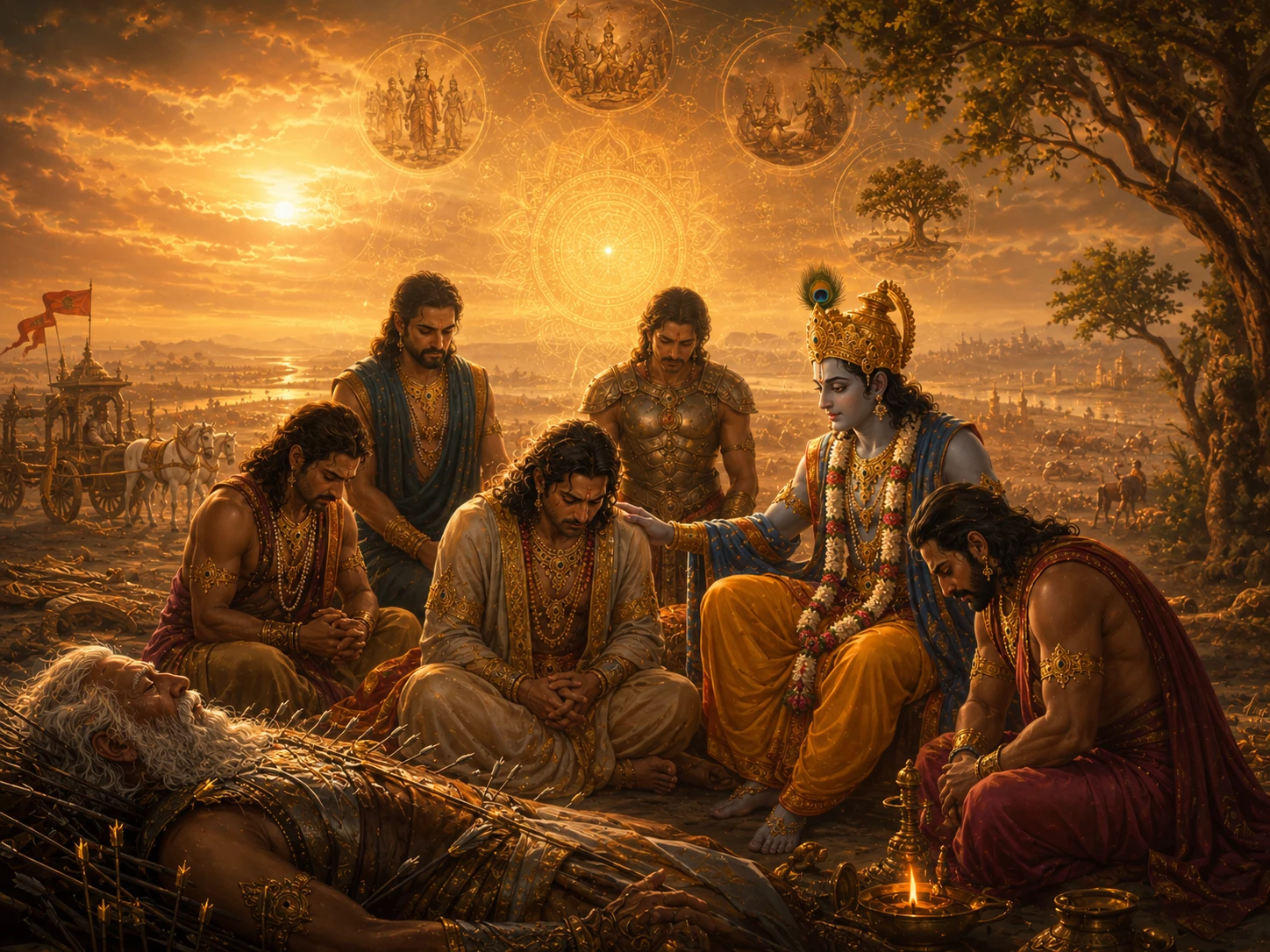
After Kurukshetra -- What Happened Next
14 मिनट पढ़ेंवही अनुवाद त्रुटि जिसने हिन्दू धर्म में '33 कोटि' को '33 करोड़' बनाया, बौद्ध धर्म में भी हुई। बौद्ध ग्रन्थों के चीनी अनुवाद ने 'सप्त कोटि बुद्ध' (7 श्रेष्ठ बुद्ध) का अनुवाद '7 करोड़ बुद्ध' कर दिया। तिब्बती अनुवाद ने सही …
Deities AvatarsCommunity Reflections
🕉️
Be the first to share your reflection.