The Four Vedas -- An Overview of Hinduism's Oldest Scriptures
चार वेद -- हिन्दू धर्म के सबसे प्राचीन शास्त्रों का परिचय
इसके लिखे जाने से बहुत पहले, उत्तर-पश्चिमी भारत के पुरोहित-परिवारों में स्तुतियों, यज्ञ-विधियों और उपदेशों का एक समूह अक्षर-अक्षर करके, गुरु से शिष्य तक, कण्ठस्थ किया जा रहा था। ध्वनि का यही समूह वेद है, जो "विद्" धातु से बना है, अर्थात् "जानना"। हिन्दू इसे "श्रुति" -- "जो सुना गया" -- कहते आए हैं, क्योंकि परम्परा के अनुसार ऋषियों ने इसे रचा नहीं, बल्कि गहन अन्तर्दृष्टि में सुना, और इसे अपरिवर्तित आगे दिया। हिन्दू साहित्य में बाकी सब कुछ, महाकाव्य, पुराण और धर्मशास्त्र भी, "स्मृति" है -- "जो स्मरण किया गया" -- और वहीं तक प्रमाण है जहाँ तक वह वेद से मेल खाता है।
वेद चार हैं। अधिकांश विद्वान सबसे प्राचीन स्तुतियों, ऋग्वेद की ऋचाओं, को ईसा-पूर्व दूसरी सहस्राब्दी में रखते हैं, और चारों संग्रहों की बाद की परतें उसके बाद अनेक शताब्दियों में आकार लेती गईं। परम्परा उन्हें अनादि मानती है। वेदों को कैसे पढ़ा जाए, इसके लिए जो बात मायने रखती है उस पर दोनों सहमत हैं: वेद पढ़े जाने से बहुत पहले बोले और गाए गए।
चारों वेद एक दृष्टि में
| Veda | What it mainly contains | Its role in the ritual |
|---|---|---|
| Rigveda | Over a thousand hymns in ten books (mandalas), praising Agni, Indra, Soma, Varuna and others, with philosophical hymns such as the Nasadiya Sukta | The hotri priest recites its verses to invoke the deities |
| Yajurveda | Ritual formulas, partly in prose, for performing the sacrifice; two branches, Shukla (White) and Krishna (Black) | The adhvaryu priest performs the actions and murmurs its formulas |
| Samaveda | Melodies (saman) set to verses, most of them taken from the Rigveda | The udgatri priest sings its chants; the root of Indian music in tradition |
| Atharvaveda | Hymns and charms for healing, protection, household life and kingship, alongside speculative hymns | Associated with the brahman priest who oversees the whole rite |
गीता (9.17) पहले तीन -- ऋक्, साम और यजुः -- को एक साथ गिनाती है, जो "त्रयी" विद्या की प्राचीन धारणा को दर्शाता है। अथर्ववेद इस मूल में बाद में जुड़ा, और यही एक कारण है कि उसका स्वरूप कुछ अलग है।
हर वेद एक पुस्तक नहीं, परतों में बना एक पुस्तकालय है। केन्द्र में संहिता है, स्तुतियों या मन्त्रों का संग्रह। उसके चारों ओर ब्राह्मण ग्रन्थ बने, गद्य ग्रन्थ जो यज्ञ-विधि और हर कर्म के पीछे के अर्थ की व्याख्या करते हैं। फिर आरण्यक आते हैं, "वन के ग्रन्थ", जो यज्ञ को भीतर की ओर मोड़कर उसे ध्यान के रूप में देखते हैं। अन्त में उपनिषद् हैं, जो पूछते हैं कि यज्ञ और उसके देवताओं के पीछे क्या है, और उत्तर देते हैं ब्रह्म -- एक सत्य -- और आत्मा। क्योंकि उपनिषद् वेद के अन्त में आते हैं, उनकी शिक्षा को वेदान्त कहते हैं, "वेद का अन्त"।
यह परतदार संरचना बताती है कि एक ही परम्परा विस्तृत अग्नि-यज्ञ और यह शिक्षा, कि यज्ञ परम लक्ष्य नहीं दे सकता, दोनों को कैसे धारण करती है। मुण्डक उपनिषद् यह स्पष्ट कहता है: वह चारों वेदों और उनके छह अंगों को "अपरा विद्या" कहता है, और जिस ज्ञान से अक्षर ब्रह्म जाना जाता है उसे "परा"।
तत्रापरा ऋग्वेदो यजुर्वेदः सामवेदोऽथर्ववेदः शिक्षा कल्पो व्याकरणं निरुक्तं छन्दो ज्योतिषमिति । अथ परा यया तदक्षरमधिगम्यते ॥
tatrāparā ṛgvedo yajurvedaḥ sāmavedo'tharvavedaḥ śikṣā kalpo vyākaraṇaṃ niruktaṃ chando jyotiṣamiti | atha parā yayā tadakṣaramadhigamyate ||
इनमें अपरा विद्या है ऋग्वेद, यजुर्वेद, सामवेद, अथर्ववेद, शिक्षा, कल्प, व्याकरण, निरुक्त, छन्द और ज्योतिष। परा वह है जिससे अक्षर ब्रह्म प्राप्त होता है।
— Mundaka Upanishad 1.1.5
किसी ग्रन्थ को बिना लिखे तीन हज़ार वर्ष तक शुद्ध कैसे रखा जाए? वैदिक उत्तर था, उसे कई बार, अलग-अलग क्रमों में कण्ठस्थ करना। विद्यार्थी पहले निरन्तर पाठ (संहिता-पाठ) सीखते, फिर हर शब्द अलग से (पद-पाठ), फिर शब्दों को परस्पर जुड़े जोड़ों में (क्रम-पाठ), और सबसे कठिन विधियों, जैसे जटा और घन, में जोड़ों को आगे-पीछे दोहराते हुए। एक क्रम की भूल दूसरों के सामने पकड़ी जाती है। पाठ करते समय स्वरों को हाथ की गतियों से चिह्नित किया जाता था। परिणाम ज्ञात सबसे सटीक मौखिक परम्पराओं में से एक है, और 2008 में यूनेस्को ने वैदिक पाठ-परम्परा को मानवता की अमूर्त सांस्कृतिक धरोहर की सूची में अंकित किया।
वेदों से भारत के पहले विज्ञान भी जन्मे। शुद्ध उच्चारण, उचित समय पर यज्ञ और सही माप से वेदी बनाने के लिए छह सहायक शास्त्र विकसित हुए: शिक्षा, कल्प, व्याकरण, निरुक्त, छन्द और ज्योतिष -- छह वेदांग। पाणिनि का व्याकरण और शुल्बसूत्रों की ज्यामिति, दोनों यहीं से आरम्भ हुए।
परम्परा महर्षि व्यास को एक अविभक्त वेद को चार संग्रहों में व्यवस्थित करने का श्रेय देती है, ताकि अल्पायु युग के लोग उन्हें सीख सकें -- इसी से उनका नाम वेदव्यास पड़ा, "वेद का विभाजन करने वाले"। गुरु पूर्णिमा, जिसे व्यास पूर्णिमा भी कहते हैं, इसी के लिए उनका सम्मान करती है।
पिताहमस्य जगतो माता धाता पितामहः । वेद्यं पवित्रमोंकार ऋक्साम यजुरेव च ॥
pitāhamasya jagato mātā dhātā pitāmahaḥ | vedyaṃ pavitramoṃkāra ṛksāma yajureva ca ||
मैं इस जगत का पिता, माता, धारण करने वाला और पितामह हूँ; जानने योग्य, पवित्र करने वाला, ओंकार, और ऋक्, साम तथा यजुः भी मैं ही हूँ।
— Bhagavad Gita 9.17
आज अधिकांश हिन्दू वेदों से पूरे ग्रन्थों के रूप में नहीं, उन अंशों के रूप में मिलते हैं जो दैनिक जीवन से कभी अलग नहीं हुए: ऋग्वेद का गायत्री मन्त्र, जो भोर में जपा जाता है; पूजा में पुरुष सूक्त और श्री सूक्त; शिव मन्दिरों में कृष्ण यजुर्वेद का रुद्रम्; हर विवाह और अन्त्येष्टि में वैदिक मन्त्र। और उपनिषदों के माध्यम से, जो वेदों का दार्शनिक अन्त हैं, वेद आज भी उन प्रश्नों को आकार देते हैं जो हिन्दू चिन्तन पूछता है: सत्य क्या है, आत्मा क्या है, और उसे कैसे जाना जाता है।
उपनिषद् और वेदांग पढ़ें
एटर्नल राग पर ग्यारह प्रमुख उपनिषद्, श्लोक-दर-श्लोक, और सभी छह वेदांगों के ग्रन्थ।
Tags
Eternal Raga · शाश्वत राग
Institutional voice — scholarly articles on Sanatan Dharma
अपनी समझ गहरी करें
अपनी समझ और गहरी करें
vedic sciences
Upavedas -- The Four Applied Sciences of Hindu Tradition
The Vedas gave India its philosophy and rituals. The Upavedas gave India its professions. Four applied knowledge systems -- Ayurveda (medicine), Dhanurveda (warfare), Gandharvaveda (music and performing arts), and Sthapatyaveda (architecture) -- were classified as subsidiary Vedas, each attached to one of the four main Vedas. They represent the Hindu tradition's insistence that sacred knowledge must produce practical results: a healed body, a defended nation, a beautiful performance, a well-built home. Together, the Upavedas form the intellectual infrastructure of pre-modern Indian civilisation -- from the surgeon's scalpel to the architect's blueprint to the musician's raga.
vedic sciences
Shad Vedangas -- The Six Limbs of the Veda
The Vedas are not a single book you can pick up and read. They are a living system with six auxiliary sciences -- phonetics, metre, grammar, etymology, astronomy, and ritual procedure -- that function like limbs of a body. Without them, the Vedas are a voice without a mouth, a path without eyes. Here is the operating manual India's knowledge system ran on for three thousand years.
scriptural exegesis
Nasadiya Sukta -- The Rigvedic Hymn That Questioned Creation Itself
Seven verses in the tenth mandala of the Rigveda. No cosmic egg, no deity speaking creation into being, no parted waters. Just a rishi asking, without flinching, where everything came from -- and whether even the overseer of creation in the highest heaven knows the answer.
tantra mantra yantra
The Gayatri Mantra -- 24 Syllables That Illuminate the Mind
The most chanted verse in human history is not a prayer for wealth, power, or protection. It is a prayer for light -- for the divine radiance to illuminate the intellect. 24 syllables from Rig Veda 3.62.10, attributed to Rishi Vishwamitra, have shaped Indian civilisation for over three thousand years.
philosophy darshana
The Four Mahavakyas -- Upanishadic Sentences That Changed Civilisation
Four sentences. Twelve words of Sanskrit. Three thousand years of commentary. The Mahavakyas are the most compressed, most powerful, and most debated statements in all of Indian philosophy. Each one claims that the individual self and the ultimate reality of the universe are not two different things. And each one has been interpreted to mean something completely different by every major school of Vedanta.
scriptural exegesis
Chandogya Upanishad -- Tat Tvam Asi
A 24-year-old returns from 12 years of Vedic study, bloated with pride and stuffed with textbook knowledge, only to have his father demolish his certainty with nine repetitions of three words: Tat Tvam Asi -- You Are That. The Chandogya Upanishad is the text that broke the wall between God and you.
philosophy darshana
The Brahma Sutras -- The Short Book Every School of Vedanta Had to Explain
Some five hundred and fifty terse sentences that set out to organise the teaching of the Upanishads -- so terse that they cannot be read without a commentary, and every great teacher of Vedanta wrote one. What the Brahma Sutras are, how they are arranged, and why their first sutra is famous.
परम्परा महर्षि व्यास को एक अविभक्त वेद को चार संग्रहों में व्यवस्थित करने का श्रेय देती है, ताकि अल्पायु युग के लोग उन्हें सीख सकें -- इसी से उनका नाम वेदव्यास पड़ा, "वेद का विभाजन करने वाले"। गुरु पूर्णिमा, जिसे व्यास प…
More in Scriptural Exegesis
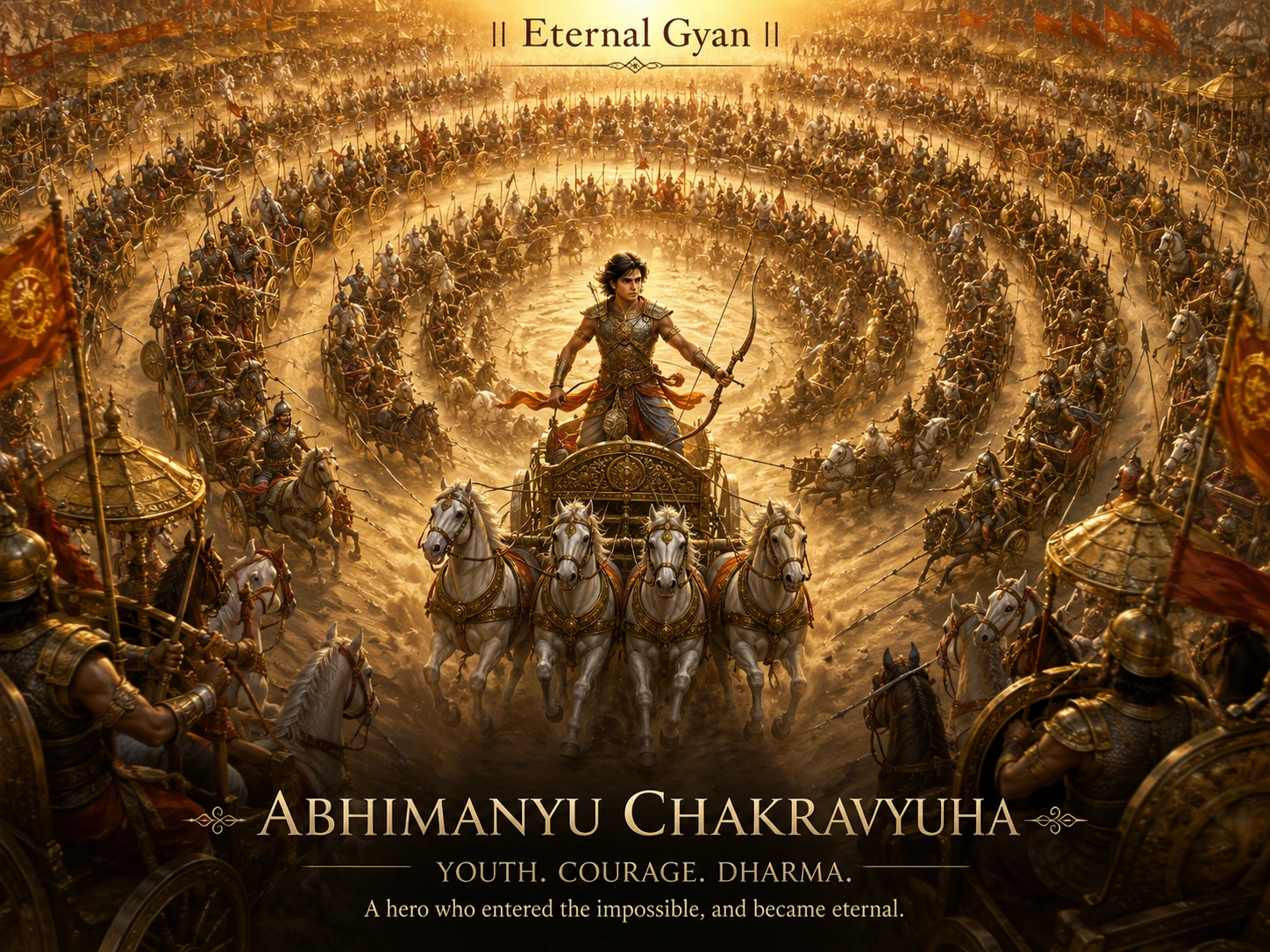
Abhimanyu and the Chakravyuha -- The Boy Who Knew How to Enter but Not How to Leave
14 मिनट पढ़ें
Adbhuta Ramayana -- The Ramayana Where Sita Becomes Kali
9 मिनट पढ़ें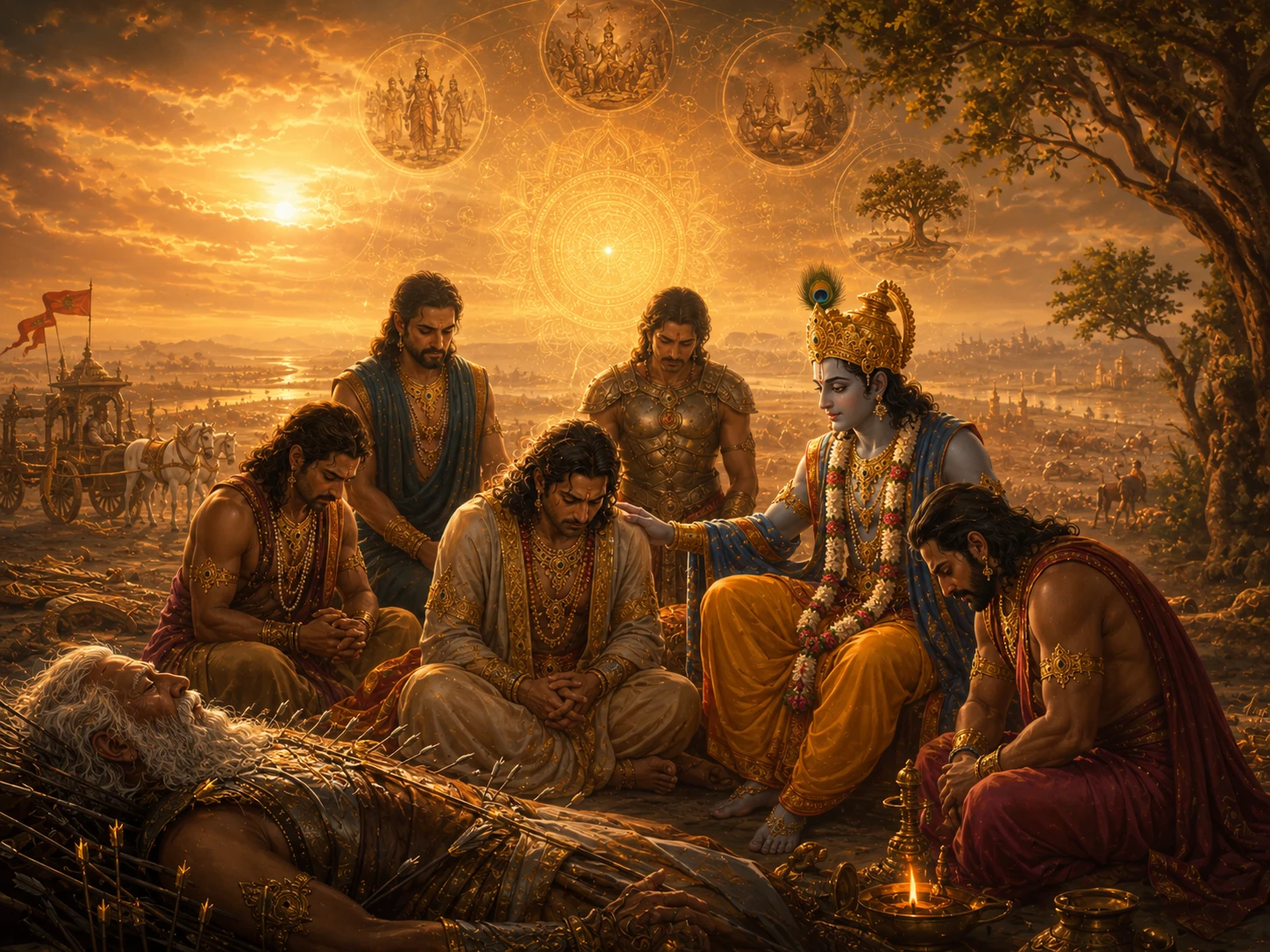
After Kurukshetra -- What Happened Next
14 मिनट पढ़ेंवही अनुवाद त्रुटि जिसने हिन्दू धर्म में '33 कोटि' को '33 करोड़' बनाया, बौद्ध धर्म में भी हुई। बौद्ध ग्रन्थों के चीनी अनुवाद ने 'सप्त कोटि बुद्ध' (7 श्रेष्ठ बुद्ध) का अनुवाद '7 करोड़ बुद्ध' कर दिया। तिब्बती अनुवाद ने सही …
Deities AvatarsCommunity Reflections
🕉️
Be the first to share your reflection.