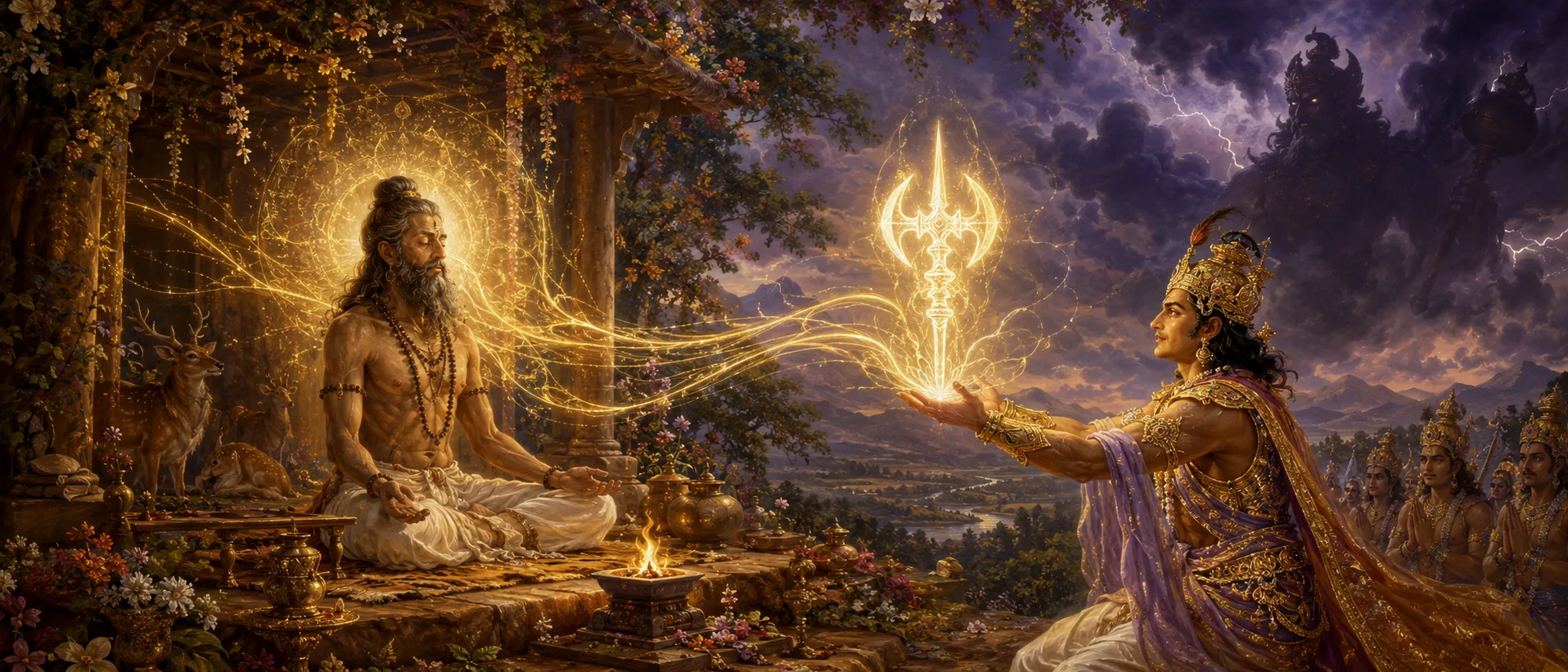
Skandha 6 begins with one of the Bhagavatam's most quoted stories: Ajamila, a priest's son who abandons every vow for a life of theft and vice, and who is saved from Yama's agents at the very last moment for no reason he intended — he was calling his youngest son, who happened to share a name with God. The argument that follows, between death's messengers and the Lord's own, over whether an accidental utterance can outweigh a lifetime of sin, becomes the skandha's real subject: what devotion actually requires, and what it doesn't. The book then widens into the affairs of heaven itself. Indra insults his own teacher and loses divine protection; the priest Vishvarupa is executed for a private loyalty to the demons he served in secret; and Vritrasura rises as the greatest threat the gods have faced — a demon, yet also a soul of such genuine devotion that his death at Indra's hands leaves Indra guilt-ridden rather than triumphant, purified only by penance and by the sage Dadhichi's own bones, given freely to become the weapon that ends it.
Chapters
Why it matters today
Skandha 6 keeps returning to the same question from different angles: does intention matter more than the act, or the act more than the intention? Ajamila is saved by an accident of naming; Vritrasura's demonhood coexists with real devotion; Indra's victory leaves him guiltier than his enemy's death should. The book resists a tidy answer, which is arguably its most honest feature.