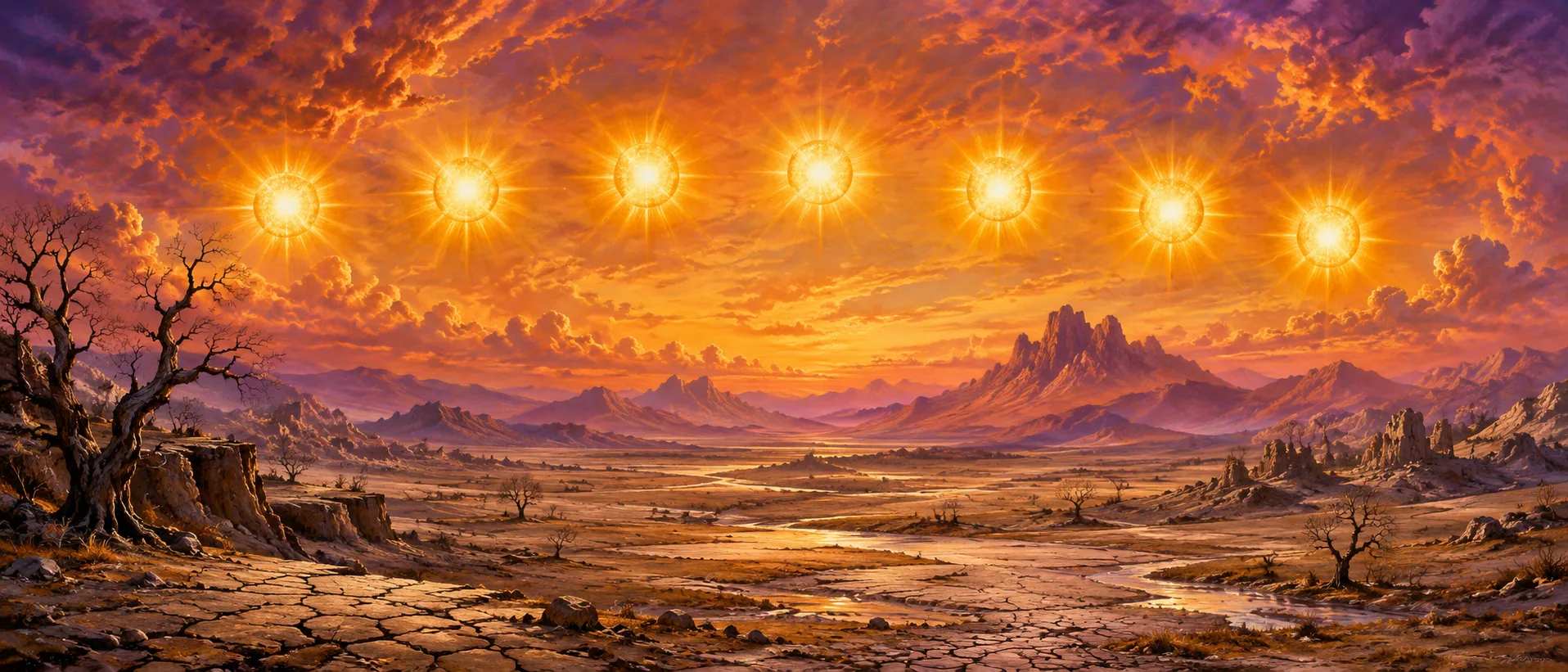
The final Amsa turns from narrative to teaching and closes the whole Purana. It opens with a frank description of Kali Yuga's moral collapse — wealth over virtue, appearance over substance — before Vyasa offers the age's one consolation: where earlier ages required elaborate practice for liberation, Kali Yuga yields the same fruit to anyone who simply chants the names of Hari. A cosmological section follows: the threefold dissolution of the universe (a daily withdrawal, a periodic destruction at Brahma's death, and the final absolute dissolution), narrated through the image of seven suns rising to scorch the earth before the deluge. The text then turns inward, describing the three sorrows inherent to embodied life and the liberating knowledge that ends them, illustrated by the dialogue of King Khandikya and his former rival Keshidhvaja — now a renunciant king — on the true nature of karma and its transcendence. In its closing movement the Purana speaks about itself: what merit accrues to one who hears or recites it, and it ends, as it began, with a hymn of praise to Hari, whose name alone frees a person from birth and death.
Chapters
Why it matters today
The declaration that Kali Yuga's one virtue — nama-sankirtana, simply chanting the divine name — suffices where elaborate Vedic ritual once was required, is the textual root of an enormous later devotional (bhakti) tradition, and this exact passage is among the most frequently cited justifications for congregational chanting practice across Vaishnava traditions to this day.