Biraja Devi (Girija)
बिरजा देवी (गिरिजा)
The Navel-Pīṭha at Jajpur on the Vaitaraṇī river, Odisha's foundational Devī seat where Sati's navel fell, Bhairava-paired with Jagannātha of Puri
Jajpur, Odisha, India
Birajā / GirijāAlso known as: Biraja Devi, Birajā Kṣetra Devī, Girijā, Biraja Mata, Biraja-Bhagavati, Jajpur Biraja, Nābhi-Gayā Devī
Era
Pre-canonical sacred geography of the Vaitaraṇī river-delta region (continuous Devī worship from at least the Bhaumakara period, 8th c. CE); canonical Pīṭha attestation by 8th, 12th c.; substantial Soma/Kesari (9th, 11th c.) and Eastern Ganga (12th, 13th c.) renovation phases give the present temple its preserved historical layering; Maratha-period (18th c.) and modern administrative phases bring continuing renovation
Architecture
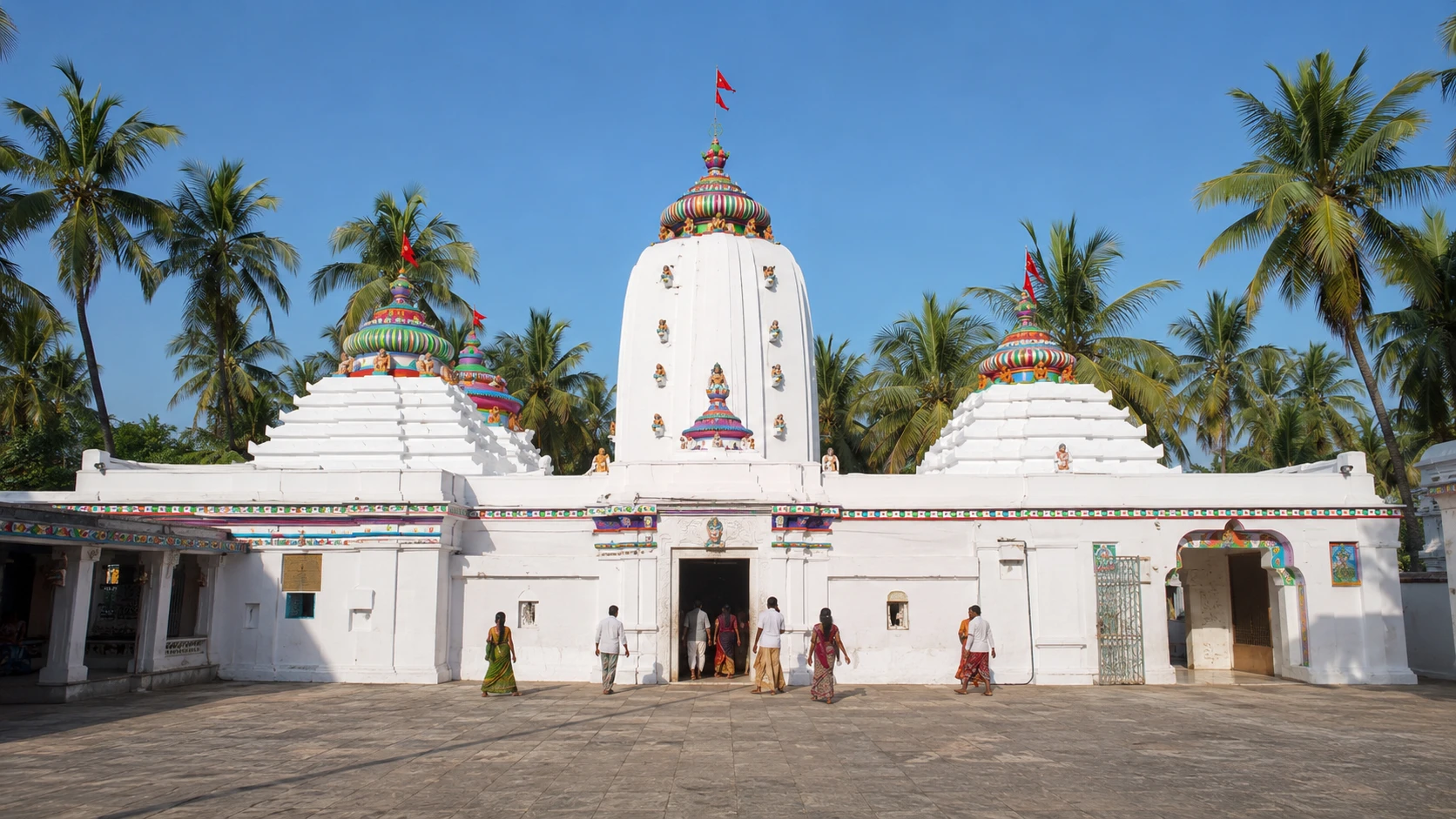
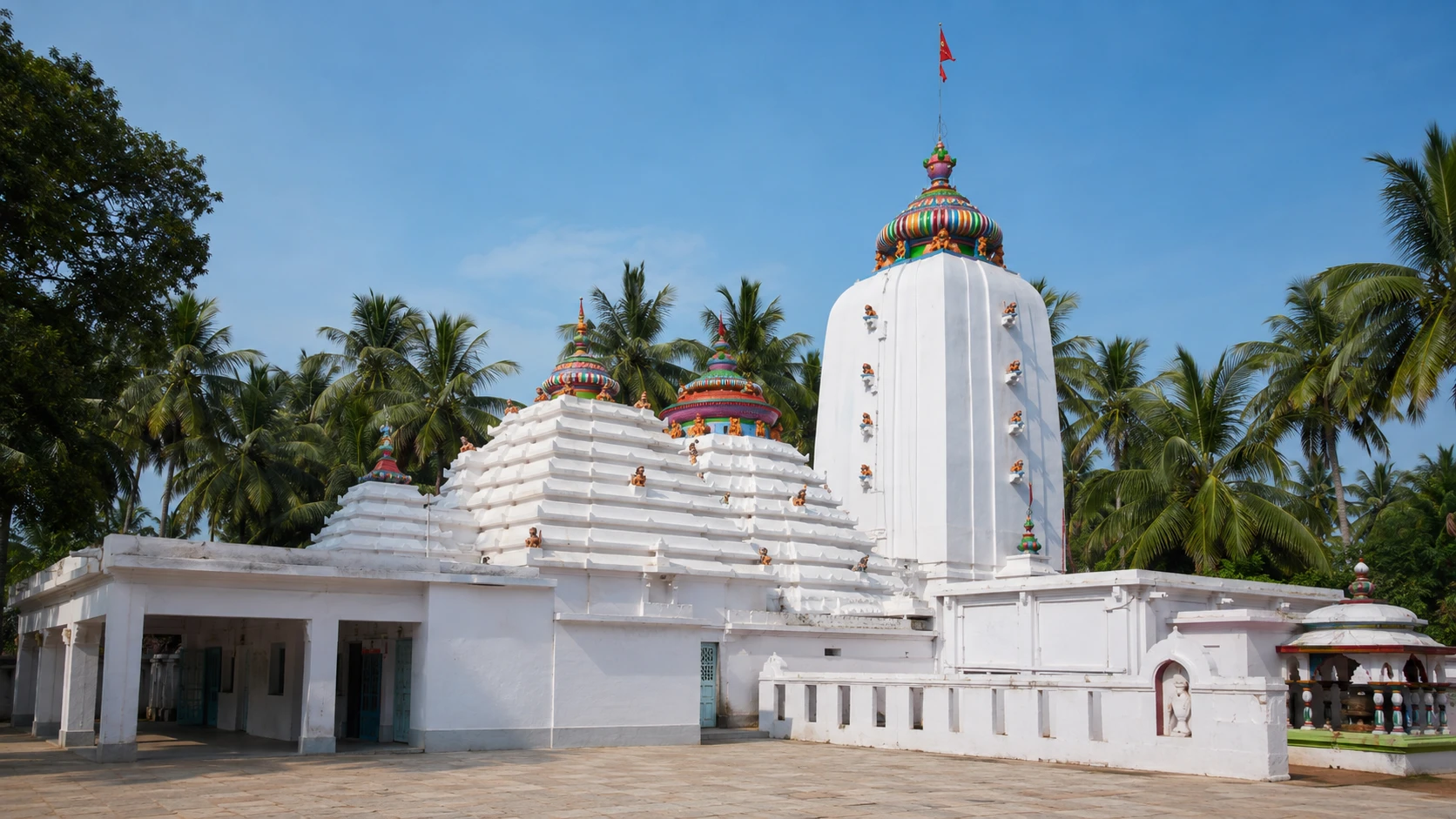
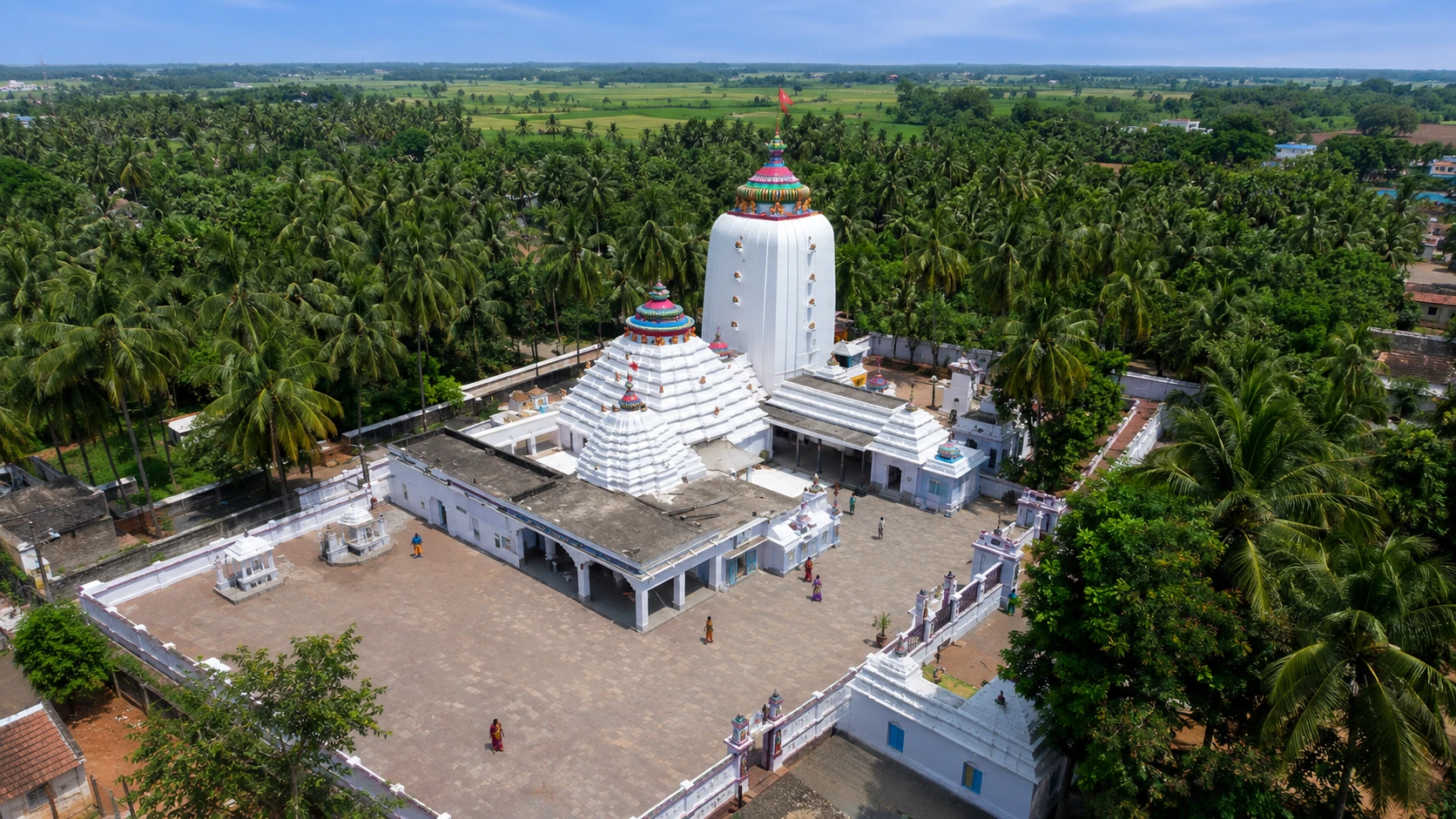
Odia Kalinga architectural register with substantial Eastern Ganga (12th, 13th c.) layering over earlier Bhaumakara and Soma/Kesari foundation phases; the principal deul follows the rekha-deula tradition characteristic of central Odisha temple architecture, with the inner sanctum's iconographic integrity among the most-preserved early-medieval Odia Devī temple interiors. The Yajñameśvara Liṅga (within the temple's integrated Pīṭha-Śaiva precinct), the Sapta-Mātṛkā shrine cluster, and the Kṣetrapāla shrine give the precinct its distinctive Pīṭha + Śaiva + Mātṛkā architectural integration
Open
05:00 – 22:00
Aarti
05:30 · 12:00 · 19:00 · 21:00
Special
The Śāradīya Navarātri (Sep, Oct) is the principal annual pilgrim event with substantial regional Odia pilgrim flow; Vaitaraṇī Snāna observance days (particularly during the Kārtika month and during ancestral-rite cycles) bring significant ritual-driven flow tied to the river's śrāddha-geography standing; Akṣaya Tṛtīyā (Apr, May) marks the canonical day on which the temple's renovation cycles have historically been undertaken; Durgāṣṭamī observances draw the festival's peak crowd during Navarātri; the Birajā Yātrā (annual processional festival, regional Odia tradition) brings substantial localized pilgrim concentration
The Sacred Legend · पवित्र कथा
Birajā at Jajpur sits on the Vaitaraṇī river in central coastal Odisha, and the Pīṭha occupies a structurally significant position in the canonical Aṣṭādaśa enumeration, position 11 in the Adi Shankara recension's Stotram, named as Girijā Oḍḍiyāne (the recension's identification of Oḍḍiyāna with Jajpur is the dominant Hindu reading, though the Oḍḍiyāna toponym carries documented recension variability across traditions). The body-part attribution at Birajā is the navel (nābhi), and the Devī's name and her positioning at the navel-Pīṭha together encode a corpus-distinctive theological identity: the navel is the body's centre of pranic gathering and the canonical seat of the embryonic origin of life, and Birajā as the navel-Devī presides over the cosmic-feminine source-point that the body's navel iconographically figures. The Bhairava-pair at Birajā is canonically Jagannātha, the Pīṭha-Bhairava attestation that ties Birajā at Jajpur to Jagannātha at Puri across the geography of Odia sacred space, with the pairing reflecting both temples' ancient theological-architectural co-emergence in the Odia Shakta-Vaishnava devotional ecology. Jajpur itself has standing as Birajā Kṣetra, one of the few Devī-Kṣetras whose entire geographic district carries the Devī's name, and the Vaitaraṇī river, which crosses through the temple's southern precinct, is identified in the Garuda Purāṇa as the cosmic river that souls cross at death and is the principal site for Vaitaraṇī Snāna and Piṇḍa-pradāna rites (Jajpur stands alongside Gayā and Allahabad in the canonical Hindu śrāddha-geography as one of the foundational sites for ancestral-offering rites, with Jajpur particularly identified as Nābhi-Gayā, the Navel-Gayā, complementing Gayā's standing as the Piṇḍa-Gayā). The temple complex preserves substantial Eastern Ganga, period (12th, 13th c.) renovation phases over what scholarly consensus identifies as a pre-medieval foundation phase rooted in the early Bhaumakara and Soma/Kesari dynastic patronage (8th, 11th c.); the Devī's iconographic register is the canonical Odia Mahiṣamardinī form with corpus-distinctive two-armed iconography (rather than the more common eight-armed form), a foot on the buffalo, the trident piercing the demon's chest, the second hand holding either a serpent or the demon's hair, and the demon's severed head from which the asura Mahiṣa emerges. The temple complex includes the Yajñameśvara Liṅga (theologically held to have been installed by the divine Yajña personification), the Sapta-Mātṛkā shrine cluster, and the Kṣetrapāla shrine, together giving the precinct an integrated Pīṭha-Śaiva-Mātṛkā architecture distinctive in eastern India.
Sacred Designationपवित्र पदनाम
Shakti Peeth
Body part: Navel (Nābhi)
Shakti: Birajā (also enumerated as Girijā in the Aṣṭādaśa Stotram recension)
Bhairava: Jagannātha (canonical Pīṭha-Bhairava attestation tying Birajā at Jajpur to Jagannātha at Puri across the geography of Odia sacred space)
Sacred Origin Storyपवित्र उत्पत्ति कथा
Source: Devī Bhāgavata Purāṇa, Skandha VII (canonical 51-Pīṭha enumeration); Kālikā Purāṇa, Chapters 18 and 60, 62 (52-list, nābhi body-part attribution); Pīṭhanirṇaya (Birajā at Jajpur paired with Bhairava Jagannātha); Ashtadasha Shakti Pīṭha Stotram attributed to Ādi Śaṅkarācārya (Girijā Oḍḍiyāne, position 11, Oḍḍiyāna identified with Jajpur in the dominant Hindu recension); Skanda Purāṇa Utkala Khaṇḍa (regional Odia Sthala Purāṇa tradition on Birajā Kṣetra and Vaitaraṇī); Garuda Purāṇa (Vaitaraṇī as the cosmic śrāddha-river); Bhaumakara, Soma/Kesari, and Eastern Ganga, period inscriptional evidence at Jajpur
The Pīṭha-narrative at Birajā is anchored in the canonical Pīṭha-formation cycle: when Sati immolated herself in the fire of Dakṣa's yajña in protest at her father's insult to Śiva, and Śiva, in extreme grief, carried her corpse across the cosmos performing the tāṇḍava that threatened to destroy the universe, Viṣṇu followed and severed Sati's body with the Sudarśana Cakra so that Śiva might be released from his unbearable grief.
The 51/52 fragments fell at the 51/52 Pīṭha sites across the South Asian sacred-geographic network, and the navel (nābhi) fell at the site that became Birajā Kṣetra on the Vaitaraṇī river. The Devī's name Birajā (also Girijā in the Aṣṭādaśa Stotram recension) reflects her standing as the foundational Mountain-Daughter who emerges as the navel-Devī at the site, presiding over the cosmic-feminine source-point that the body's navel iconographically figures as the embryonic origin of life.
The Bhairava-pair Jagannātha at Puri reflects the canonical Pīṭhanirṇaya attestation that the Birajā Pīṭha's Bhairava is not a local intra-site Liṅga but the Vaiṣṇava-Purī Lord at the southern axis of Odia sacred geography, the Pīṭha-Bhairava architecture at Birajā operates across the cross-shrine Odia geographical axis connecting Birajā Kṣetra at Jajpur to Jagannātha Dhāma at Puri, the two foundational anchor-sites of Odia sacred geography.
Onto this Pīṭha narrative the Vaitaraṇī-śrāddha tradition arrived: the Garuda Purāṇa identifies the Vaitaraṇī as the cosmic river that souls cross at death, with the Jajpur Vaitaraṇī (the geographical river at Birajā Kṣetra) standing as the canonical site for Vaitaraṇī Snāna and the foundational śrāddha-rite of ancestral-offering.
Jajpur stands alongside Gayā and Allahabad in the canonical Hindu śrāddha-geography as one of the three foundational sites for Piṇḍa-pradāna; Jajpur in particular is identified as Nābhi-Gayā (the Navel-Gayā), complementing Gayā's standing as the Piṇḍa-Gayā in some regional traditions where Jajpur is read as the canonical site for maternal-lineage ancestral rites while Gayā handles paternal lineage.
The temple complex preserves the integrated layered devotional architecture: Pīṭha (Birajā Devī), Śaiva (Yajñameśvara Liṅga, theologically held to have been installed by the divine Yajña personification), Mātṛkā (Sapta-Mātṛkā shrine cluster), and Kṣetrapāla (the precinct's protector-deity) shrines together giving the site its corpus-distinctive Pīṭha-Śaiva-Mātṛkā integration alongside the Vaitaraṇī-śrāddha river-geography.
Sources cited:
- Devī Bhāgavata Purāṇa, Skandha VII (canonical 51-Pīṭha enumeration)
- Kālikā Purāṇa, Chapters 18 and 60, 62 (52-list tradition; nābhi body-part attribution)
- Pīṭhanirṇaya (Birajā at Jajpur with Bhairava Jagannātha attestation)
- Ashtadasha Shakti Pīṭha Stotram attributed to Ādi Śaṅkarācārya (Girijā Oḍḍiyāne, position 11)
- Skanda Purāṇa, Utkala Khaṇḍa (regional Odia Sthala Purāṇa tradition on Birajā Kṣetra)
- Garuda Purāṇa (Vaitaraṇī as the cosmic śrāddha-river crossed by souls at death)
- Mahābhārata, Tīrtha-yātrā parva (references to the Vaitaraṇī river in the canonical Mahābhārata pilgrimage geography)
- Bhaumakara, Soma/Kesari, and Eastern Ganga, period inscriptional evidence at Birajā Jajpur
- Sircar, D. C., 'The Śākta Pīṭhas' (Motilal Banarsidass, 1948; revised 1973)
- Bhattacharya, N. N., 'History of the Sakta Religion' (Manohar, 1974)
- Donaldson, Thomas E., 'Hindu Temple Art of Orissa' (3 vols., E.J. Brill, 1985, 1987)
- Donaldson, Thomas E., 'Tantra and Śākta Art of Orissa' (D.K. Printworld, 2002)
Other Traditions · अन्य परंपराएँ
Oḍḍiyāna toponym recension variability (Hindu Aṣṭādaśa enumeration vs Tantric Buddhist Oḍḍiyāna)
The Ashtadasha Stotram's naming of position 11 as 'Girijā Oḍḍiyāne' carries documented toponym recension variability across Hindu and Tantric Buddhist traditions. The dominant Hindu reading identifies Oḍḍiyāna with Jajpur in Odisha (and Girijā with Birajā at the Birajā Kṣetra), this is the canonical identification used in standard Hindu Aṣṭādaśa pilgrimage practice, in Pīṭhanirṇaya, and in Sircar's authoritative reference.
A separate Tantric Buddhist tradition identifies Oḍḍiyāna (Uḍḍiyāna) with the Swat valley in present-day Pakistan, treating it as one of the Vajrayāna pīṭhas linked to Padmasambhava's origin and the broader Vajrayāna sacred geography. A small number of regional Hindu Tantric readings give yet other identifications.
Within the Hindu Aṣṭādaśa Pīṭha tradition specifically, the Jajpur/Birajā identification is the canonical one; the Buddhist and alternative identifications operate within different theological-geographic frameworks and are not in direct competition with the Hindu canonical attestation.
The corpus uses Jajpur/Birajā as the canonical Hindu Aṣṭādaśa #11 while acknowledging the toponym's broader recension variability.
Birajā-Vimalā theological proximity (Jajpur Birajā and Puri Vimalā)
A minor scholarly thread observes the theological and iconographic proximity between Birajā at Jajpur and Vimalā at Puri (the Devī within the Jagannātha temple precinct at Puri, sometimes treated as a 51-Pīṭha alternate identification in regional Odia recensions).
The dominant canonical Pīṭha attestation places the navel-Pīṭha at Birajā Jajpur, with Vimalā at Puri standing as Jagannātha's consort within his temple's integrated Pīṭha-Vaiṣṇava architecture. The two Devīs are theologically distinct and the corpus treats them as separate canonical entities, Birajā at Jajpur as the Aṣṭādaśa #11 navel-Pīṭha, Vimalā at Puri as the Jagannātha-temple Pīṭha (which itself receives separate canonical Pīṭha attestations in some recensions of the 51-list, distinct from Birajā's navel-attribution).
The relationship between the two Devīs is part of the broader Odia Shakta-Vaishnava co-emergence that the Birajā-Jagannātha cross-shrine Pīṭha-Bhairava pairing also encodes.
Scholarly Context
Birajā at Jajpur occupies a structurally distinctive position in the Pīṭha network through multiple convergent dimensions. First, the Bhairava-attestation (Jagannātha at Puri) is cross-shrine rather than intra-site, the Pīṭha-Bhairava architecture at Birajā operates across the Odia sacred-geographic axis connecting Birajā Kṣetra at Jajpur to Jagannātha Dhāma at Puri, approximately 105 km of central coastal Odisha geography. This is structurally distinct from the intra-site Pīṭha-Bhairava co-locations the corpus has documented elsewhere (Bhramarāmbā-Mallikārjuna, Jogulāmbā-Bāla-Brahmeśvara, Māṇikyāmbā-Bhīmeśvara), and structurally parallel to the Vaiṣṇavī-Jwālāmukhī cross-shrine standing. Second, the Vaitaraṇī-śrāddha tradition adds a corpus-distinctive theological dimension: the Birajā Pīṭha is simultaneously a śrāddha-Kṣetra of the highest canonical order, with the Jajpur Vaitaraṇī standing alongside Gayā and Allahabad as one of the three foundational Hindu sites for Piṇḍa-pradāna. The Nābhi-Gayā designation (the Navel-Gayā) further encodes the structural pairing with Gayā's Piṇḍa-Gayā standing, Birajā at Jajpur and Mangalā Gaurī at Gayā together constitute a Pīṭha-pair within the corpus's documentation of paired Aṣṭādaśa Pīṭhas that share theological-functional architecture. Third, the temple complex's integrated Pīṭha-Śaiva-Mātṛkā architecture (Birajā Devī + Yajñameśvara Liṅga + Sapta-Mātṛkā cluster + Kṣetrapāla) gives the precinct a layered devotional infrastructure that reflects the early-medieval Odia Shakta-Shaiva-Vaishnava co-emergence in eastern Indian temple architecture. The Odia Mahiṣamardinī iconographic register at Birajā (two-armed rather than the more common eight-armed form, with the demon emerging from the buffalo's severed head) is corpus-distinctive and represents one of the most-preserved early-medieval Odia Devī sculpted forms in continuous worship. Thomas Donaldson's 'Tantra and Śākta Art of Orissa' (2002) and the Eschmann-Kulke-Tripathi edited volume 'The Cult of Jagannath and the Regional Tradition of Orissa' (1978) provide the principal modern academic treatments of the site's combined Pīṭha-Bhairava-Vaitaraṇī-Mātṛkā theological-architectural framework.
Historyइतिहास
Birajā at Jajpur's historical depth as a sacred site is anchored in the Vaitaraṇī river-delta's standing as one of the foundational religious-political centres of early-medieval Odia civilization. The pre-canonical layer (c. 4th, 8th c.
CE) places Jajpur within the broader Kalinga regional sacred geography with continuity from earlier Buddhist and Jain religious activity in the region (the broader Vaitaraṇī delta supported substantial Buddhist establishments including the Lalitagiri-Ratnagiri-Udayagiri complex approximately 60 km north-east of Jajpur). The Bhaumakara dynasty (8th, 10th c.
CE, capital initially at Guhadeva-pataka near Jajpur, then Jajpur itself) provided the foundational dynastic patronage period for Birajā's establishment as a major Devī Pīṭha; the Bhaumakaras (a Buddhist-Tantric-Shakta synthesizing dynasty) explicitly patronized the Birajā temple and the broader Birajā Kṣetra. The Soma/Kesari dynasty (10th, 11th c.
CE, capital at Jajpur and later Bhubaneswar) continued Devī temple patronage. The Eastern Ganga dynasty (12th, 14th c. CE, capital at Cuttack and substantial pan-Odia temple patronage) provided substantial renovation and elaboration of the Birajā temple in its present rekha-deula form, alongside their patronage of the Jagannātha temple at Puri (the canonical Bhairava-pair shrine).
The 8th, 12th c. textualization period brought the canonical Pīṭha attestation through the Devī Bhāgavata, Kālikā Purāṇa, Pīṭhanirṇaya, and the Aṣṭādaśa Stotram (the latter naming Girijā Oḍḍiyāne at position 11, with Jajpur as the dominant Hindu identification). The Gajapati dynasty (15th c.
CE) continued Birajā temple patronage as part of the broader Odia Devī-tradition consolidation. The Mughal period (16th, 17th c.) brought brief instability but the Birajā temple sustained continuous worship throughout. The Maratha period (1751, 1803 CE) brought renovation funding from the Bhonsle administration of central Odisha.
British colonial period (1803, 1947) brought continued temple operation under the Khurda Raja and later British arrangements. The Government of Odisha administers the Birajā temple through the Odisha Endowments Department, with the temple operating as the principal Devī Pīṭha of central Odisha and as one of the eighteen Aṣṭādaśa Śakti Pīṭhas with corpus-distinctive Nābhi-Gayā śrāddha-Kṣetra standing.
The 21st century has brought infrastructure improvements including coordinated pilgrim management during Navarātri and Vaitaraṇī Snāna observances.
Historical Timelineऐतिहासिक कालक्रम
Pre-canonical layer of the Vaitaraṇī river-delta sacred geography within which the Birajā site was established. The broader Kalinga regional sacred geography supported multi-tradition religious activity (Buddhist establishments at Lalitagiri-Ratnagiri-Udayagiri approximately 60 km north-east, Jain centers across the broader region, early Shaiva and Shakta presences). The Birajā Kṣetra likely functioned as an early Devī shrine within this multi-religious substrate prior to the later Bhaumakara dynastic elaboration.
Bhaumakara dynasty foundational patronage of the Birajā temple as a major Devī Pīṭha. The Bhaumakaras (8th, 10th c., capital initially at Guhadeva-pataka near Jajpur, then Jajpur itself) were a Buddhist-Tantric-Shakta synthesizing dynasty that explicitly patronized the Birajā temple and the broader Birajā Kṣetra. Multiple Bhaumakara rulers including the female monarchs (a corpus-distinctive aspect of the dynasty, at least six female rulers, the largest concentration of female sovereigns in early-medieval South Asia) supported the Birajā temple as a primary state shrine. The Bhaumakara-period architectural foundation is the substrate over which subsequent dynastic renovation layered the present temple structure.
The Bhaumakara dynasty's status as a Buddhist-Tantric-Shakta synthesizing dynasty is well-documented and gives the Birajā temple a corpus-distinctive establishment context, the temple's foundation came under the patronage of a dynasty that explicitly integrated Buddhist Tantric and Shakta-Tantric elements in its religious-political ideology. The female-sovereign aspect of the Bhaumakara dynasty (at least six female rulers, possibly more) is also a corpus-distinctive context for a Devī-temple foundation event.
Canonical Pīṭha attestation of Birajā at Jajpur through textualization in the Devī Bhāgavata Purāṇa (Skandha VII), Kālikā Purāṇa (Chapters 18, 60, 62; nābhi body-part attribution), Pīṭhanirṇaya, and the Ashtadasha Shakti Pīṭha Stotram attributed to Ādi Śaṅkarācārya (Girijā Oḍḍiyāne, position 11, with Oḍḍiyāna identified with Jajpur in the dominant Hindu recension). The Pīṭha attestation arrived at the site within the same broader textualization period during which the Bhaumakara and Soma/Kesari dynasties were building the architectural infrastructure that would carry the Pīṭha into its medieval canonical form. The Garuda Purāṇa's identification of the Vaitaraṇī as the cosmic śrāddha-river also crystallized in this period, integrating the river-geography with the Pīṭha-attestation as the canonical Birajā Kṣetra theological framework.
Eastern Ganga dynasty's substantial renovation and elaboration of the Birajā temple in its present rekha-deula form. The Eastern Gangas (capital at Cuttack, 12th, 14th c. CE) were the principal patrons of pan-Odia temple architecture in this period, they built the present-day Jagannātha temple at Puri (the Pīṭha's canonical Bhairava-pair shrine, beginning under Anantavarman Chodaganga c. 1135 CE) and substantially renovated the Birajā temple in coordinated regional temple-construction patronage. The temple's principal deul structure preserves the Eastern Ganga, period architectural register and stands as one of the most-preserved early-medieval Odia Devī temple interiors in continuous worship.
Maratha period administrative patronage of the Birajā temple under the Bhonsle administration of central Odisha. The Marathas (1751, 1803 in Odisha) brought structured temple-administration arrangements that included Birajā within the regional Devī-temple network, with renovation funding and ritual-administration support. The British takeover in 1803 absorbed these arrangements under the colonial administrative framework.
Modern administration of the Birajā temple under the Government of Odisha Endowments Department, with continuing recognition as one of the eighteen Aṣṭādaśa Śakti Pīṭhas and as the principal Devī Pīṭha of central Odisha. The temple's standing as a Nābhi-Gayā śrāddha-Kṣetra continues to draw substantial ritual-driven pilgrim flow for Vaitaraṇī Snāna and Piṇḍa-pradāna observances throughout the year, with peak flow during the Kārtika month and during ancestral-rite observance cycles. The 21st century has brought infrastructure improvements including coordinated pilgrim management during Śāradīya Navarātri (the principal annual festival) and during Vaitaraṇī Snāna peak days. Post-2011 the Government of Odisha's Endowments Department has progressively formalized the integrated pilgrim-service infrastructure for the Birajā temple complex.
What You'll Seeदर्शन में
The Birajā Devī sanctum at Jajpur preserves one of the most-distinctive early-medieval Odia Devī sculpted forms in continuous worship, a corpus-distinctive two-armed Mahiṣamardinī iconographic register (rather than the more common four-, eight-, or ten-armed Mahiṣamardinī forms documented elsewhere in the Devī sculptural tradition).
The Devī stands in sthānaka (standing) posture on the body of the buffalo-demon Mahiṣa, with the principal iconographic narrative depicting the moment immediately following the severing of the buffalo's head, from the severed head's neck, the asura Mahiṣa emerges in his true demonic form, and the Devī's two-armed iconography captures the moment of his emergence and her completing the slaying.
The right hand holds the triśūla which has pierced through the demon's chest; the left hand holds either the demon's hair (in some readings) or a serpent (in others). One foot rests on the buffalo's body, the other on the lion-vāhana that has accompanied her into battle.
The murti is sculpted in the dark chlorite/khondalite stone characteristic of early-medieval Odia temple iconography and preserves the tactile patina of approximately a thousand years of continuous abhiṣeka and worship. The Devī is draped through the day in red silk and ornamented with substantial gold jewellery; the navel (nābhi), the body-part attribution of the Pīṭha, receives particular iconographic and ritual weight in the daily abhiṣeka and alaṅkāra cycles, with the navel-region of the murti being the focal point for the body-part-thematic offerings that constitute the corpus-distinctive Birajā ritual register.
Subsidiary iconography in the integrated temple-precinct includes the Yajñameśvara Liṅga (the temple's local Śaiva pole, theologically held to have been installed by the divine Yajña personification; this is the precinct's intra-site Śaiva element, distinct from the canonical cross-shrine Pīṭha-Bhairava attestation that pairs Birajā with Jagannātha at Puri), the Sapta-Mātṛkā shrine cluster (housing the canonical seven Mātṛkā forms, Brāhmī, Māheśvarī, Kaumārī, Vaiṣṇavī, Vārāhī, Indrāṇī, and Cāmuṇḍā, in early-medieval Odia stone iconography), the Kṣetrapāla shrine (the precinct's protector-deity), and the southern-precinct's Vaitaraṇī-ghat structures that facilitate the canonical Vaitaraṇī Snāna and Piṇḍa-pradāna observances.
The Eastern Ganga, period rekha-deula architectural register preserves the 12th, 13th-century construction phase with selective Bhaumakara and Soma/Kesari foundation elements visible in the lower courses of the principal deul; the inner sanctum's iconographic integrity is among the most-preserved early-medieval Odia Devī temple interiors in continuous worship.
Distinctive Practicesविशिष्ट परंपराएँ
Vaitaraṇī Snāna and Piṇḍa-pradāna, the Nābhi-Gayā Śrāddha Tradition
वैतरणी स्नान और पिण्ड-प्रदान, नाभि-गया श्राद्ध परंपरा
Year-round; particularly weighted during the Kārtika month (Oct-Nov), Mahālaya Amāvasyā (Sep-Oct), Piṭṛ-pakṣa fortnight, and during individual ancestral-rite observance cycles
The corpus-distinctive practice at Birajā Jajpur is the Vaitaraṇī Snāna and Piṇḍa-pradāna observance that draws on the temple's standing as a śrāddha-Kṣetra of the highest canonical order. The Garuda Purāṇa identifies the Vaitaraṇī as the cosmic river that souls cross at death, a river of fire, blood, and pus in the unredeemed state, but rendered passable by the ritual gift of a cow (Vaitaraṇī-go-dāna) and by the Piṇḍa-pradāna offered at the canonical Vaitaraṇī Snāna sites. The Jajpur Vaitaraṇī, the geographical river that runs through the southern precinct of the Birajā temple complex, is the canonical primary Vaitaraṇī Snāna site in the Hindu tradition. Pilgrims undertake the practice in three integrated stages: (1) Vaitaraṇī Snāna at the temple's ghat on the river, with the ritual bath itself constituting the initial liturgical act; (2) the Piṇḍa-pradāna offering at the designated śrāddha-pīṭhas within the temple precinct, with rice-ball offerings made for departed ancestors across multiple generations; (3) the Vaitaraṇī-go-dāna (the cow-gift ritual) where prescribed, completing the canonical observance. Jajpur stands as one of the three foundational sites in the canonical Hindu śrāddha-geography alongside Gayā and Allahabad. Within this triad, Jajpur is specifically identified as Nābhi-Gayā, the Navel-Gayā, complementing Gayā's Piṇḍa-Gayā standing. In some regional Bengali and Odia traditions, the Jajpur Piṇḍa-pradāna is read as the canonical site for maternal-lineage ancestral rites (mātṛ-pakṣa), while Gayā handles paternal-lineage rites (pitṛ-pakṣa). The integration of the Pīṭha (Birajā) with the śrāddha-Kṣetra (Vaitaraṇī) within a single temple complex is corpus-distinctive, no other Aṣṭādaśa Pīṭha carries this specific śrāddha-Kṣetra theological dimension at the foundational canonical-Hindu level.
The Vaitaraṇī-śrāddha tradition at Birajā Jajpur encodes a theological architecture in which the Devī-Pīṭha and the śrāddha-Kṣetra are not separate religious domains but a single integrated devotional infrastructure. The navel (nābhi) body-part attribution of the Pīṭha and the maternal-lineage śrāddha tradition at the Vaitaraṇī together constitute an embodied theology of source and continuation, the navel as the body's site of embryonic origin and the maternal-line as the lineage of biological continuation are theologically homologous, and the Birajā temple complex makes this homology liturgically present through the integrated Pīṭha-Vaitaraṇī architecture.
Cross-Shrine Birajā-Jagannātha Pīṭha-Bhairava Pilgrimage
अंतर-मंदिर बिराजा-जगन्नाथ पीठ-भैरव तीर्थयात्रा
Year-round; particularly weighted during the Śāradīya Navarātri (when both the Birajā Devī sanctum and the Jagannātha temple's Devī-adjacent observances coordinate Devī-centered festival flow) and during the Pīṭha-Bhairava observance cycles that pilgrims engage as integrated devotional architecture
The canonical Pīṭha-Bhairava attestation of Birajā places her Bhairava-pair at Jagannātha of Puri, a cross-shrine attestation across the central coastal Odisha sacred-geographical axis, approximately 105 km separating Jajpur (Birajā Kṣetra) from Puri (Jagannātha Dhāma). The structural pattern is distinct from the corpus's more common intra-site Pīṭha-Bhairava co-locations (Bhramarāmbā-Mallikārjuna at Srisailam, Jogulāmbā-Bāla-Brahmeśvara at Alampur, Māṇikyāmbā-Bhīmeśvara at Drākṣārāmam, all single-site pairings) and structurally parallel to the Vaiṣṇavī-Jwālāmukhī cross-shrine standing where the Bhairava-pair is similarly located at a distinct geographical site. Pilgrims engaging the Birajā Pīṭha with full theological attention canonically pair the Birajā darshan at Jajpur with the Jagannātha darshan at Puri, traveling between the two sites as integrated Pīṭha-Bhairava pilgrimage rather than as two separate destinations. The two sites together constitute the corpus's principal early-medieval Odia Shakta-Vaishnava cross-shrine architectural-theological complex, Birajā Devī at the northern pole and Jagannātha at the southern pole of central coastal Odisha sacred geography. The pilgrimage is typically undertaken across 2, 3 days with Jajpur as the northern anchor and Puri as the southern anchor, with intermediate Devī and Vaiṣṇava shrines along the route (including Bhubaneswar's Lingaraj and the Khurda temple network) integrated into the journey.
The cross-shrine Pīṭha-Bhairava architecture at Birajā-Jagannātha encodes a theological geography in which the Devī and her Bhairava-pair are not co-located but are distributed across a region-defining sacred axis. Pilgrims who approach only Birajā at Jajpur without proceeding to Jagannātha at Puri (or vice versa) have engaged half of the canonical theological structure; the full devotional approach requires the integrated pilgrimage across the Odia sacred-geographic axis. The pattern reflects the broader Odia Shakta-Vaishnava co-emergence that characterized the early-medieval religious geography of the region.
Nābhi-Darshan and Body-Part-Thematic Navel Offering Tradition
नाभि-दर्शन और शरीर-अंग-विषयक नाभि अर्पण परंपरा
Daily; particularly weighted during the Śāradīya Navarātri Aṣṭamī and Navamī observances, the Vasantī Navarātri cycle (Mar-Apr), and during personal pilgrim observance cycles when devotees undertake structured fertility-blessing or maternal-lineage observances
The nābhi (navel) body-part attribution of the Birajā Pīṭha is engaged through a corpus-distinctive ritual register that centers the navel-region of the Devī's murti in the daily and festival liturgical cycles. During the daily abhiṣeka, the navel-region of the murti receives particular attention; during alaṅkāra cycles, the navel-region is the focal point for the central jewel-ornament of the Devī's adornment (the nābhi-maṇi or kaṭi-maṇi, the navel-jewel that anchors the central waistband ornament). Pilgrims bring body-part-thematic offerings that engage the nābhi attribution: red silk waistbands (with the central jewel-position aligned to the navel), gold and gem ornaments specifically designed for waistband or navel-pendant positioning, and ritual offerings of the materials associated with the body's nāḍī-system (the channels of pranic flow that the Tantric tradition identifies as converging at the navel-cakra / maṇipūra-cakra). Married women seeking the suhāg-blessing and women seeking fertility-blessing approach the Birajā Pīṭha through the navel-thematic register particularly, the consecrated kumkum returned as prasad is applied to the navel-region as well as the forehead, engaging the body-part-thematic theological resonance of the Devī's nābhi-Pīṭha attribution. The integration of body-part attribution (nābhi) + Devi-name (Birajā / Girijā) + iconographic register (the two-armed Mahiṣamardinī with the navel as the central iconographic anchor between her foot on the buffalo and her trident-piercing hand) forms a theologically coherent triad that is corpus-distinctive among the Ashtadasha Pīṭhas.
The navel is the body's centre of pranic gathering and the canonical Tantric site of the maṇipūra-cakra; the navel-Pīṭha at Birajā is theologically the cosmic-feminine source-point that the body's navel iconographically figures, and the embodied theology of source and continuation that the nābhi-Pīṭha encodes is engaged through the body-part-thematic offering tradition.
Did You Know?क्या आप जानते हैं?
Birajā at Jajpur is one of only two corpus Aṣṭādaśa Pīṭhas with a documented cross-shrine Pīṭha-Bhairava attestation, her canonical Bhairava-pair is Jagannātha at Puri, approximately 105 km south across the central coastal Odisha sacred-geographical axis, rather than a co-located intra-site Liṅga. The structural pattern is corpus-distinctive among the Ashtadasha (alongside Vaiṣṇavī-Jwālāmukhī as the comparative reference) and reflects the broader Odia Shakta-Vaishnava co-emergence that defined early-medieval religious geography in the region. Pilgrims engaging the Birajā Pīṭha with full theological attention canonically pair the Birajā darshan with a Jagannātha darshan at Puri as integrated cross-shrine pilgrimage.
Pīṭhanirṇaya; Eschmann-Kulke-Tripathi (eds.), 'The Cult of Jagannath and the Regional Tradition of Orissa' (1978); Sircar, 'The Śākta Pīṭhas' (1948)
Birajā is the only Aṣṭādaśa Pīṭha in the corpus that operates simultaneously as a śrāddha-Kṣetra of the highest canonical order, the Jajpur Vaitaraṇī is the canonical primary Vaitaraṇī Snāna site identified in the Garuda Purāṇa as the cosmic river that souls cross at death, and Jajpur stands alongside Gayā and Allahabad as one of the three foundational Hindu sites for Piṇḍa-pradāna. Jajpur is specifically identified as Nābhi-Gayā (the Navel-Gayā) complementing Gayā's Piṇḍa-Gayā standing, in some regional Bengali and Odia traditions, Jajpur Piṇḍa-pradāna is the canonical site for maternal-lineage ancestral rites (mātṛ-pakṣa) while Gayā handles paternal-lineage rites (pitṛ-pakṣa). The Pīṭha + śrāddha-Kṣetra integration at Birajā is corpus-distinctive, no other Aṣṭādaśa Pīṭha carries this specific dual theological-functional architecture at the foundational canonical level.
Garuda Purāṇa; Skanda Purāṇa Utkala Khaṇḍa; Sircar, 'The Śākta Pīṭhas' (1948); Donaldson, 'Tantra and Śākta Art of Orissa' (2002)
The Birajā temple was founded under the patronage of the Bhaumakara dynasty (8th, 10th c. CE), a Buddhist-Tantric-Shakta synthesizing dynasty corpus-distinctive for having at least six documented female sovereigns, the largest concentration of female sovereigns in early-medieval South Asian dynastic history. The Bhaumakara female monarchs (including Tribhuvana-mahādevī I, Daṇḍi-mahādevī, and others) ruled the Odra region during the 9th, 10th centuries and explicitly patronized the Birajā Devī temple as a primary state shrine, making Birajā corpus-distinctive among the Ashtadasha Pīṭhas as a Devī shrine whose foundational dynastic-patronage layer was substantially shaped by female sovereign rule.
Patnaik, 'Coastal Orissa' (1989); Mishra, 'Vajrayana Buddhism: Study in Social Iconography' (2009); Bhaumakara-period inscriptional record
The Birajā Devī murti preserves a corpus-distinctive two-armed Mahiṣamardinī iconographic register, most Mahiṣamardinī forms across the Devī sculptural tradition are four-, eight-, or ten-armed, but the Birajā murti at Jajpur is two-armed, capturing the moment immediately following the severing of the buffalo's head as the asura Mahiṣa emerges from the severed neck. The right hand holds the triśūla piercing through the demon's chest; the left hand holds either the demon's hair or a serpent. The two-armed Odia Mahiṣamardinī register at Birajā represents one of the most-preserved early-medieval Odia Devī sculpted forms in continuous worship, and the iconographic register is regionally distinctive within the broader Mahiṣamardinī tradition.
Donaldson, 'Hindu Temple Art of Orissa' (1985-1987); Donaldson, 'Tantra and Śākta Art of Orissa' (2002)
The Birajā temple complex preserves an integrated Pīṭha-Śaiva-Mātṛkā precinct architecture distinctive in eastern India: the principal Birajā Devī sanctum sits alongside the Yajñameśvara Liṅga (the local Śaiva pole, theologically held to have been installed by the divine Yajña personification, distinct from the canonical cross-shrine Bhairava-pair Jagannātha at Puri), the Sapta-Mātṛkā shrine cluster housing the canonical seven Mātṛkā forms in early-medieval Odia stone iconography, and the Kṣetrapāla shrine. The four-element precinct architecture (Pīṭha + intra-site Śaiva + Mātṛkā + Kṣetrapāla) reflects the integrated Shakta-Shaiva-Vaishnava co-emergence that characterized the Bhaumakara-era religious-political ideology and gives the Birajā precinct a layered devotional infrastructure rare among Aṣṭādaśa Pīṭhas.
Donaldson, 'Tantra and Śākta Art of Orissa' (2002); Bhaumakara-period inscriptional evidence; ASI documentation of the Birajā temple complex
Visitor Accessप्रवेश जानकारी
The shrine is open to all pilgrims regardless of background. Photography and videography are strictly prohibited inside the Birajā Devī sanctum; phones should be carried switched off or deposited at the designated counter. Footwear is removed at the entrance to the temple precinct. The Vaitaraṇī ghat in the southern precinct is open for ritual snāna throughout the day, with designated śrāddha-pīṭhas for the Piṇḍa-pradāna observance available within the broader precinct. Priests on the temple's official roster coordinate the canonical Vaitaraṇī Snāna and Piṇḍa-pradāna rituals. The shrine operates from approximately 05:00 to 22:00.
Spiritual Basis
The photography prohibition reflects the standard sanctum-photography policy of major Aṣṭādaśa Pīṭha shrines. The Vaitaraṇī-śrāddha rituals follow specific canonical observance sequences that pilgrims undertaking the rite should engage through the temple's official priest roster rather than informal arrangements, the ritual carries particular theological weight (ancestral-rite efficacy depends on canonical observance) that justifies engaging the official ritual infrastructure.
Contemporary Context
The Government of Odisha Endowments Department administers the Birajā temple with continuing recognition of its dual Aṣṭādaśa Pīṭha + Nābhi-Gayā śrāddha-Kṣetra standing. The 21st century has brought infrastructure improvements including coordinated pilgrim management during Śāradīya Navarātri and Vaitaraṇī Snāna peak observances. There are no caste, gender, or sectarian access restrictions in modern practice.
Practical Guidance
Allow approximately 2, 3 hours at the site for the standard Birajā Devī darshan during off-peak periods; pilgrims undertaking the integrated Vaitaraṇī Snāna and Piṇḍa-pradāna observance should allocate 4, 6 hours to cover the canonical three-stage ritual sequence (Vaitaraṇī Snāna at the ghat → Piṇḍa-pradāna at the designated śrāddha-pīṭha → Vaitaraṇī-go-dāna where prescribed). Pilgrims undertaking the integrated Birajā-Jagannātha cross-shrine pilgrimage typically allocate 2, 3 days, with Jajpur as the northern anchor and Puri as the southern anchor; intermediate Devī and Vaiṣṇava shrines (including Bhubaneswar's Lingaraj and the Khurda temple network) can be integrated into the journey. Modest, traditional dress is expected; head covering is customary at the sanctum. For Vaitaraṇī Snāna pilgrims, white or unstitched dhoti/saree is conventional ritual dress.
Festivalsत्योहार
Śāradīya Navarātri
शारदीय नवरात्र
Sep-Oct
The autumn Navarātri is the principal annual festival at Birajā, with full nine-night aarti liturgy, full daily abhiṣeka and alaṅkāra sequences featuring the corpus-distinctive navel-region body-part-thematic adornments, kanyā-pūjā observances on Aṣṭamī and Navamī, and substantial regional Odia pilgrim flow. The Bhaumakara-era patronage tradition of state-festival sponsorship continues in modern form through the Government of Odisha's coordinated festival management. Durgāṣṭamī typically brings the festival's peak crowd. Bali-pradāna observances follow the regional Odia Shakta tradition with the corpus-distinctive Birajā ritual variants.
Vasantī Navarātri
वासंती नवरात्र
Mar-Apr (Caitra month)
The spring Navarātri at Birajā follows the canonical Devī observance cycle in parallel with the autumn Navarātri but with regionally lower pilgrim flow. The Caitra Navarātri observance at Birajā weights the new-year and fertility-blessing dimensions of Devī worship and integrates with the corpus-distinctive nābhi body-part-thematic offering tradition (the navel-region as the body's site of fertility and embryonic origin).
Mahālaya Amāvasyā and Piṭṛ-pakṣa (Vaitaraṇī Śrāddha cycle peak)
महालय अमावस्या और पितृ-पक्ष (वैतरणी श्राद्ध चक्र शिखर)
Sep-Oct (Bhādrapada-Āśvina; sixteen-day Piṭṛ-pakṣa fortnight ending in Mahālaya Amāvasyā)
The Piṭṛ-pakṣa fortnight and culminating Mahālaya Amāvasyā mark the canonical Hindu śrāddha cycle's peak observance period, and Birajā Jajpur draws substantial śrāddha-pilgrim flow during this fortnight in recognition of its standing as the canonical Vaitaraṇī Snāna and Nābhi-Gayā Piṇḍa-pradāna site. The full sixteen-day cycle brings pilgrims undertaking generation-by-generation ancestral offerings; Mahālaya Amāvasyā itself, falling immediately before the Śāradīya Navarātri commencement, creates a layered festival-period in which the śrāddha cycle's conclusion gives way to the Devī's autumnal Navarātri.
Birajā Yātrā (Annual Processional Festival)
बिराजा यात्रा (वार्षिक यात्रा उत्सव)
Region-specific lunar calendar timing (annual processional cycle traditionally celebrated in the regional Odia festival calendar)
The Birajā Yātrā is the annual processional festival in which the Devī's utsava-mūrti is taken in procession around the Birajā Kṣetra in coordinated regional Odia Devī-festival format. The Yātrā draws substantial localized pilgrim concentration and integrates with the broader Odia annual Devī-festival calendar (alongside the Dolayatra and Rath-Yātrā cycles of the Vaiṣṇava-Puri tradition). The processional route engages key Birajā Kṣetra geographical points and concludes with the Devī's return to the principal sanctum.
Traditional Offeringsपारंपरिक अर्पण
Primary Offerings
Red flowers, hibiscus, marigold, jasmine, red roses
लाल पुष्प, गुड़हल, गेंदा, चमेली, लाल गुलाब
पुष्प-माल्य; जपा-कुसुम
Red flowers are the canonical floral offering across the Shākta tradition. At Birajā the hibiscus (japā-kusum) and marigold carry standard Devī weight; the offering is placed at the sanctum's parapet and incorporated into daily alaṅkāra. Hibiscus has particular resonance in the Odia Shakta tradition, where the deep-crimson japā-kusum is the preferred Devī-floral offering at all major Odia Devī shrines.
Silk vestment (Pattu Sari) and Chunari
रेशम वस्त्र (पट्टु साड़ी) और चुनरी
क्षौम; उत्तरीय
Silk offerings at Birajā are the canonical Devī-vestment offering. The regional Odia silk-weaving traditions (Sambalpuri, Berhampuri, Bomkai silk) provide regional pilgrims with locally-significant offering options; Sambalpuri silk in particular is widely offered at Odia Devī temples and is incorporated into the Devī's daily alaṅkāra rotation. The offered silk's central waistband-position (where the corpus-distinctive navel-region body-part-thematic adornment sits) receives particular ritual attention at Birajā given the Pīṭha's nābhi body-part attribution.
Coconut
नारियल
नारिकेल
Coconut, offered whole or broken before the sanctum, represents the egoic self surrendered to the Devī. At Birajā the coconut offering follows the standard Odia temple convention, with the broken coconut's interior fluid offered as part of the daily abhiṣeka sequence. Coconut is also a standard ingredient in the Vaitaraṇī Snāna and Piṇḍa-pradāna ritual materials.
Sindoor and Kumkum (vermilion offerings)
सिंदूर और कुंकुम
सिन्दूर; कुङ्कुम-तिलक
Sindoor and kumkum are applied at the sanctum's parapet, on the chunari, and as tilak on the pilgrim's forehead. At Birajā the kumkum offering carries corpus-distinctive body-part-thematic weight: the consecrated kumkum returned as prasad is applied not only to the forehead but specifically to the navel (nābhi) region of the devotee, particularly for married women seeking the suhāg-blessing and women seeking fertility-blessing, engaging the Devī's nābhi body-part attribution directly. The navel-kumkum application is a canonical sub-practice at this Pīṭha and reflects the corpus-distinctive body-part-thematic integration that the Devī's navel-Pīṭha attribution enables.
Akhand-Jyot ghee and wicks
अखंड-ज्योत हेतु घी और बत्तियाँ
अखण्ड-ज्योतिः घृत-वर्तिका
The shrine maintains continuously-burning lamps in the Birajā Devī sanctum. Pilgrims offer ghee and wicks to be added to these lamps. Pure cow-ghee (gaomata-ghṛta) carries particular ritual weight at Birajā given the Vaitaraṇī-go-dāna tradition's cosmological centering of the cow as the cosmic-river-crossing facilitator, and the ghee offering thereby integrates the daily-lamp tradition with the broader Vaitaraṇī cosmological framework.
Unique to This Temple
Vaitaraṇī-Go-Dāna and Piṇḍa-Pradāna Materials (corpus-distinctive Nābhi-Gayā śrāddha-Kṣetra offering tradition)
वैतरणी-गो-दान और पिण्ड-प्रदान सामग्री (संग्रह-विशिष्ट नाभि-गया श्राद्ध-क्षेत्र अर्पण परंपरा)
The Vaitaraṇī-Go-Dāna and Piṇḍa-pradāna offering tradition at Birajā is corpus-distinctive, the offering ritual is not directed to the Devī as a standalone act of devotion but operates within the integrated Pīṭha-śrāddha-Kṣetra theological architecture in which Birajā Jajpur stands as the canonical Vaitaraṇī Snāna and Nābhi-Gayā Piṇḍa-pradāna site. The Vaitaraṇī-Go-Dāna (the cow-gift ritual) is the canonical Hindu ritual gesture for facilitating souls' passage across the cosmic Vaitaraṇī river at death, with the Garuda Purāṇa as its foundational scriptural basis. At Jajpur the Go-Dāna is offered either as a literal cow-gift (where prescribed for major ancestral observances) or through the canonical symbolic substitution (gold cow-images, monetary offerings to designated recipients) per the temple's official priest-roster prescription. The Piṇḍa-pradāna offering uses canonical materials, rice (cooked into the piṇḍa rice-balls), kuśa grass, sesame seeds (tila), barley, water, offered at the designated śrāddha-pīṭhas within the temple precinct. Pilgrims completing the canonical observance sequence (Vaitaraṇī Snāna at the ghat → Piṇḍa-pradāna at the śrāddha-pīṭha → Vaitaraṇī-Go-Dāna where prescribed) typically engage the temple's official priest roster for the rite-coordination, given the canonical śrāddha observance's specific procedural requirements.
Nābhi-Maṇi / Kaṭi-Maṇi Offering (Navel-Jewel Body-Part-Thematic Adornment)
नाभि-मणि / कटि-मणि अर्पण (नाभि-रत्न शरीर-अंग-विषयक अलंकरण)
The nābhi-maṇi (navel-jewel) or kaṭi-maṇi (waistband-jewel) offering at Birajā is the corpus-distinctive body-part-thematic offering that engages the Pīṭha's nābhi body-part attribution through the iconographic register of the Devī's central waistband-jewel adornment. The murti's central waistband, the kaṭi-bandha that crosses the navel-region, receives the kaṭi-maṇi jewel-ornament as the focal piece of the Devī's body-adornment, and pilgrims bring nābhi-maṇi offerings (small jewel-pendants, gem-set waistband ornaments, gold or silver waistband chains with central jewel-positioning) as the body-part-thematic offering specifically engaging the navel-Pīṭha attribution. The Devī's name Birajā / Girijā and her navel-Pīṭha standing together encode an integrated theological-iconographic register that the nābhi-maṇi offering tradition directly engages. Married women seeking the suhāg-blessing and women seeking fertility-blessing particularly engage this offering tradition. The offering tradition reaches its peak during Śāradīya Navarātri when devotees undertake structured nābhi-maṇi offering observances as part of the festival devotional cycle.
Offerings may be brought from outside or purchased at vendor counters near the temple precinct. The integrated Pīṭha-śrāddha offering coordination is structurally important, pilgrims undertaking the Vaitaraṇī Snāna and Piṇḍa-pradāna observance should engage the temple's official priest roster for the rite-coordination, given the canonical śrāddha observance's specific procedural requirements (ancestral-rite efficacy depends on canonical observance accuracy). The Government of Odisha Endowments Department through the temple administration coordinates the offering ecology including the Vaitaraṇī-Go-Dāna and Piṇḍa-pradāna ritual materials.
How to Reachकैसे पहुँचें
Jajpur is accessible from major eastern Indian transport hubs. By air, Biju Patnaik International Airport at Bhubaneswar (BBI, 120 km) is the principal regional airport with full domestic connectivity and limited international connectivity.
By rail, Jajpur Keonjhar Road (JJKR, 16 km) is on the Howrah-Chennai trunk corridor with regular connectivity to Kolkata, Bhubaneswar, Cuttack, Visakhapatnam, and the broader eastern Indian rail network; Bhubaneswar (BBS, 110 km) is the principal regional rail junction with extensive connectivity.
From either railhead pilgrims complete the journey to the Birajā temple by road via local taxis or Odisha State Road Transport Corporation (OSRTC) bus services. By road, Jajpur is on NH 16 (the Kolkata-Chennai national highway), with the temple approximately 5 km from the NH 16 corridor through the historic Jajpur town.
OSRTC operates regular bus services from Bhubaneswar, Cuttack, Puri, and Balasore. Pilgrims undertaking the integrated Birajā-Jagannātha cross-shrine pilgrimage typically travel by road or rail between Jajpur and Puri, with Bhubaneswar as the intermediate base; the Bhubaneswar-Jajpur road journey is approximately 2, 2.5 hours and the Bhubaneswar-Puri journey is approximately 1.5 hours.
Plan Your Visitयात्रा की योजना
🌤 Best Season
October through February offers the most agreeable weather, cool, dry, and clear, ideal for the Birajā darshan and the integrated Birajā-Jagannātha cross-shrine pilgrimage. March through June bring intense pre-monsoon heat and humidity in the central coastal Odisha region; the monsoon months (July-September) bring substantial rainfall with occasional flooding affecting Vaitaraṇī ghat access. The major festival seasons, Śāradīya Navarātri (Sep-Oct), Mahālaya Amāvasyā and the Piṭṛ-pakṣa fortnight (Sep-Oct, śrāddha-peak), Vasantī Navarātri (Mar-Apr), and Kārtika month observances (Oct-Nov, Vaitaraṇī Snāna peak), bring substantial pilgrim flow.
👘 Dress Code
Modest, traditional attire is expected. For the standard Birajā Devī darshan, both traditional and modern modest dress are accepted; head covering is customary at the sanctum. For Vaitaraṇī Snāna and Piṇḍa-pradāna pilgrims, white or unstitched dhoti (men) or saree (women) is the conventional ritual dress per canonical śrāddha observance, many pilgrims bring the ritual garment as part of their pilgrimage preparation. Comfortable walking footwear is essential for the temple-precinct circumambulation and the Vaitaraṇī ghat approach (footwear is removed at the precinct entrance).
📱 Phones & Photography
Mobile phones must be deposited at the cloak counter before entering the Birajā Devī sanctum, or carried in switched-off state. Photography and videography are strictly prohibited within the sanctum. Photography is permitted in the outer prākāra, on the temple-precinct's exterior, and on the Vaitaraṇī ghat (subject to discretion during peak śrāddha-rite observances when photographing other pilgrims' ancestral-offering rites is inappropriate).
🏨 Accommodation
Jajpur has a limited local accommodation inventory, basic Devasthanam-coordinated guesthouse facilities for śrāddha-pilgrims, and a few small private hotels in the Jajpur town centre. Most pilgrims base in Bhubaneswar (120 km, with substantially more elaborated accommodation across budget categories) or Cuttack (90 km) and undertake Jajpur as a day-trip or overnight visit. Pilgrims completing the integrated Birajā-Jagannātha cross-shrine pilgrimage typically base in Bhubaneswar as the central hub for accessing both sites along with the broader Lingaraj-Khurda Devī and Vaiṣṇava temple networks. OTDC (Odisha Tourism Development Corporation) Panthanivas facilities are available in Bhubaneswar, Cuttack, and Puri. During Śāradīya Navarātri and Mahālaya Amāvasyā the accommodation demand in Jajpur exceeds local supply; advance booking at Bhubaneswar or Cuttack is recommended for these periods.
Book a Pujaपूजा बुक करें
Birajā Jajpur draws substantial pilgrim flow that includes a corpus-distinctive śrāddha-pilgrim category, pilgrims undertaking the Vaitaraṇī Snāna and Piṇḍa-pradāna observance, whose ritual needs are highly specific and whose vulnerability to non-Devasthanam-recognized informal intermediaries is consequently elevated. Third-party activity to navigate with care includes: informal-pandit intermediaries near the Vaitaraṇī ghat and the temple precinct soliciting Piṇḍa-pradāna ritual coordination at high cost outside the Devasthanam-recognized priest-roster, pilgrims should engage ONLY the Devasthanam's official priest roster for Vaitaraṇī Snāna and Piṇḍa-pradāna observances, both because canonical śrāddha-rite efficacy depends on procedural accuracy that the official priests are trained for, and because non-recognized intermediaries are documented to charge significantly above market for routine arrangements; travel-agency operators offering 'Vaitaraṇī Snāna 3-day Jajpur-Puri combined śrāddha-yātrā packages' that may charge significantly above market and may include non-official priest arrangements; online booking aggregators selling 'guaranteed Birajā Devī Aṣṭamī VIP darshan' or 'priority Vaitaraṇī Snāna coordination' outside official Devasthanam channels; and informal-vendor intermediaries at the temple precinct selling 'authenticated nābhi-maṇi gold ornaments' for the body-part-thematic offering tradition, pilgrims seeking nābhi-maṇi offering items should source through reputable jewellers or Devasthanam-recognized vendors rather than informal sellers. Any third-party website or service claiming to offer 'guaranteed Birajā Devī VIP darshan,' 'authenticated Vaitaraṇī Snāna and Piṇḍa-pradāna coordination,' or 'priority Birajā-Jagannātha integrated pilgrimage booking' should be verified through the Devasthanam's posted signage or Government of Odisha Endowments Department channels before any payment. The Piṇḍa-pradāna ritual carries particular vulnerability to fraud given pilgrims' emotional state (the rite is undertaken in mourning or post-mourning observance for departed family members) and the ritual's perceived theological efficacy-stakes; pilgrims are encouraged to plan the observance in advance through the Devasthanam rather than relying on point-of-arrival informal arrangements.
Managed by: Sri Birajā Devī Temple Devasthanam / Birajā Temple Trust, the temple's official administration under the Government of Odisha Endowments Department. The Devasthanam coordinates major sevas, the Vaitaraṇī Snāna and Piṇḍa-pradāna ritual scheduling, festival programming, and the official priest-roster for canonical śrāddha-rite coordination
Booking information verified: 2026-05-17
Sacred Soundsपवित्र ध्वनि
Ashtadasha Shakti Pīṭha Stotram (attributed to Ādi Śaṅkarācārya; names Girijā Oḍḍiyāne at position 11 in the eighteen-shrine canonical sequence, with Jajpur as the dominant Hindu identification of Oḍḍiyāna)
stotram
Durgā Saptaśatī / Devī Māhātmya Pāṭha (the 700-verse Shākta liturgy from the Mārkaṇḍeya Purāṇa), regularly recited at Birajā during the Śāradīya Navarātri and Vasantī Navarātri cycles; the Mahiṣamardinī episode (chapters 2, 4) has particular liturgical weight given the Devī's iconographic register as the canonical Mahiṣamardinī
path
Garuḍa Purāṇa Vaitaraṇī excerpt (the canonical Hindu text identifying the Vaitaraṇī as the cosmic river that souls cross at death; the foundational scriptural basis for the Vaitaraṇī Snāna and Vaitaraṇī-go-dāna rituals at Jajpur)
purana
Skanda Purāṇa Utkala Khaṇḍa (regional Odia Sthala Purāṇa tradition on Birajā Kṣetra, the Vaitaraṇī river, and the integrated Pīṭha-Vaiṣṇava-śrāddha sacred geography of central coastal Odisha)
purana
Śrī Vidyā Tri-Bīja (Om Aim Hrīṁ Śrīm), the three-seed Devī mantra suitable for non-initiated recitation; the Pañcadaśākṣarī and longer Śrī Vidyā mantras require initiation and are not published
mantra
Did You Know? · क्या आप जानते हैं?
The same translation error that turned '33 Koti' into '33 crore' in Hinduism also happened in Buddhism. The Chinese translation of Buddhist texts rendered 'Sapta Koti Buddha' (7 Supreme Buddhas) as '7 Crore Buddhas.' The Tibetan translation got it right: 7 types, not 7 crore. One Sanskrit word, misread across two major world religions, generated two identical misconceptions independently.
Related Contentसंबंधित सामग्री
Related Scriptures
Related Temples
Jagannath Puri
जगन्नाथ पुरी
Puri, Odisha
Bimala Temple
बिमला मंदिर
Puri, Odisha
Tara Tarini Temple
तारा तारिणी मंदिर
Berhampur, Odisha
Jwala Devi
ज्वाला देवी
Jwalamukhi, Himachal Pradesh
Kamakhya Temple
कामाख्या मंदिर
Guwahati, Assam
Kalighat
कालीघाट
Kolkata, West Bengal
Tarapith
तारापीठ
Tarapith, West Bengal
Bhramaramba Devi (Srisailam)
भ्रमरांबिका देवी (श्रीशैलम)
Srisailam, Andhra Pradesh
Jogulamba Temple
जोगुलाम्बा मंदिर
Alampur, Telangana
Manikyamba Devi
माणिक्यांबा देवी
Draksharamam, Andhra Pradesh
Mahalakshmi Kolhapur
महालक्ष्मी कोल्हापुर
Kolhapur, Maharashtra
Ambaji
अंबाजी
Ambaji, Gujarat
Community Reflections
🕉️
Be the first to share your reflection.