Kuravpur
कुरवपुर
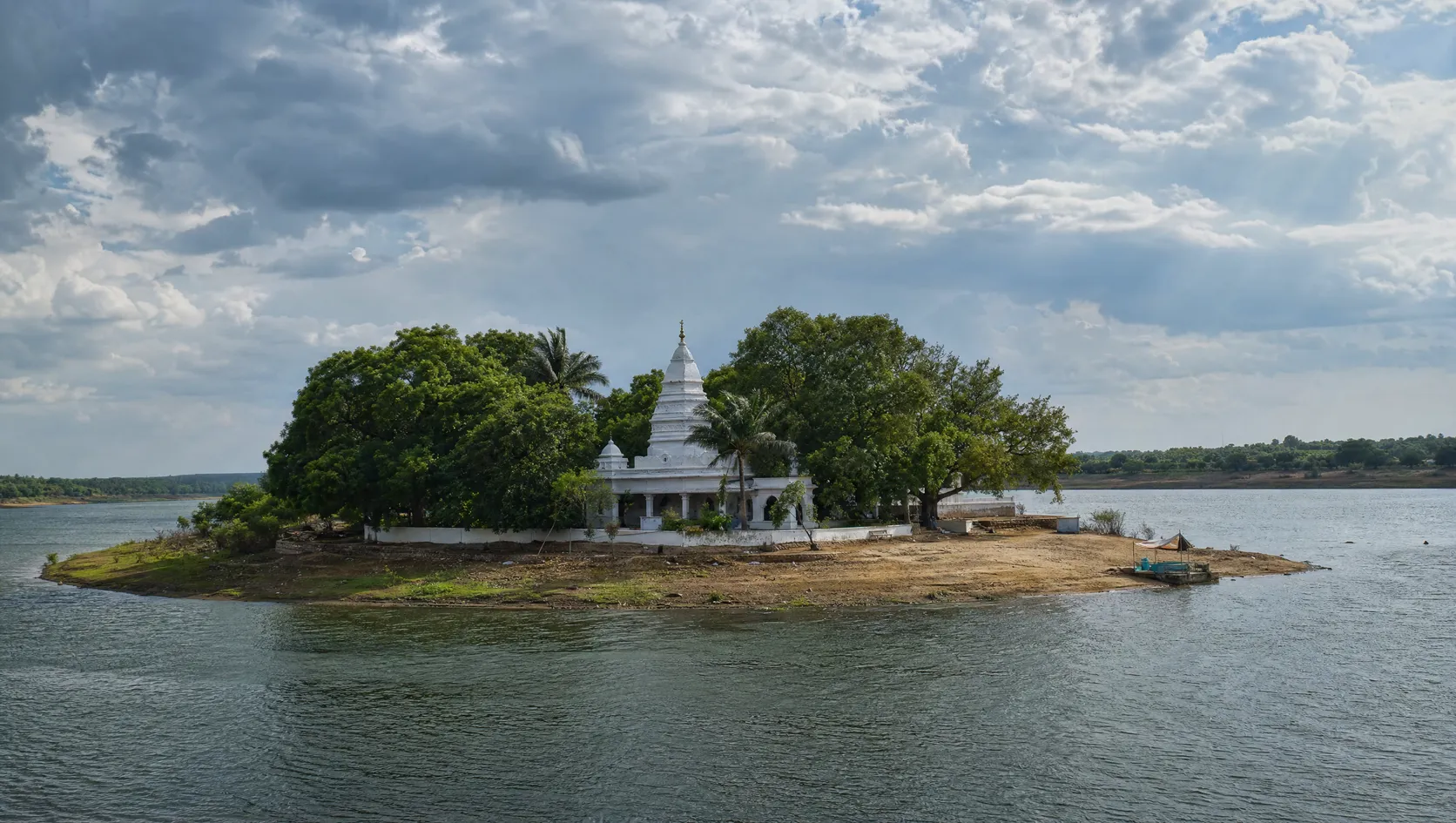
The island kshetra in the Krishna where Sripad Srivallabha, the first avatar of Dattatreya, kept his abode
Kuravpur, Karnataka, India
Kuravapura (Kuruvapura)Also known as: Kuravpur, Kuruvapur, Kurugadde, Sripad Srivallabha Kshetra
Era
The earliest of the great Datta kshetras, bound to Sripad Srivallabha, revered as the first avatar of Dattatreya; the shrine of the padukas on the island is the focus
Architecture
A Datta island kshetra in the Krishna, centred on the shrine of the padukas of Sripad Srivallabha, reached across the water, in the plain Deccan idiom
Special
The shrine keeps the daily worship of the padukas of Sripad Srivallabha, and pilgrims undertake the crossing to the island, the river bath and the recitation of the Sri Guru Charitra. Timings are set by the shrine and vary with the ritual calendar and the state of the river and the crossing.
The Sacred Legend · पवित्र कथा
On an island held in the stream of the Krishna, in the Raichur country of Karnataka, lies the earliest of the great Datta kshetras, the abode of Sripad Srivallabha, whom the tradition reveres as the first avatar of Dattatreya. Where Narsobawadi and Ganagapur belong to Nrisimha Saraswati, the second avatar, Kuravpur belongs to the first, the origin of the line of avatars the Sri Guru Charitra sets out, so that this quiet river island is, in the tradition's own reckoning, the beginning. Sripad Srivallabha was born, the tradition holds, at Pithapuram in the Andhra country, and came in his wanderings to Kuravpur, where he made his abode and where, at the end of his earthly presence, he is said to have passed from sight into the river, leaving his padukas and the promise of his continuing presence. He is the first of the Datta avatars, and Kuravpur the first of their kshetras. Set on an island reached across the water, Kuravpur has the character of a place apart, a spot that must be crossed to, held between the two arms of the Krishna. It is a kshetra of the padukas, the sacred crossing, the river bath and the recitation of the Sri Guru Charitra, drawing pilgrims of the Datta tradition who come to the source of the avatars, to the island where the first of them kept his abode and is held to be present still.
Sacred Designationपवित्र पदनाम
Sacred Origin Storyपवित्र उत्पत्ति कथा
Source: The Datta Sampradaya, the Sri Guru Charitra and the Sripad Srivallabha Charitamrutam, the life of the first avatar
The Sri Guru Charitra opens the line of the Datta avatars with Sripad Srivallabha, born, the tradition holds, at Pithapuram in the Andhra country to a devout brahmin family, a child of extraordinary marks who from the first showed himself to be no ordinary boy. Refusing the ordinary path of marriage and household, he set out as a renunciate, and in his wanderings came at last to the island of Kuravpur in the Krishna, where he made his abode.
At Kuravpur the deeds of the first avatar were done, the deeds recounted in the tradition: the poor helped, the suffering healed, the devoted raised, the doubting taught, in the manner that would be repeated by the avatars after him. The island, held between the two arms of the river, became the seat of his presence, a place apart, reached across the water.
At the end of his earthly presence Sripad Srivallabha did not die in the ordinary sense; the tradition holds that he passed from sight into the Krishna, leaving his padukas on the island and the promise, as with the avatars who followed, of his continuing unseen presence. So Kuravpur is the first of the Datta kshetras, the origin of the whole line, the island where the first avatar kept his abode and is held to be present still, and where the tradition of the padukas, worshipped as the presence of the guru, has its beginning.
Sources cited:
- Sri Guru Charitra
- Sripad Srivallabha Charitamrutam
- Datta Sampradaya tradition of Kuravpur
Scholarly Context
Kuravpur holds a distinctive place among the Datta kshetras as the abode of Sripad Srivallabha, the figure the Sri Guru Charitra and the later Sripad Srivallabha Charitamrutam present as the first of the avatars of Dattatreya. Where the better-known kshetras of Narsobawadi and Ganagapur belong to Nrisimha Saraswati, the second avatar, Kuravpur is bound to the first, and is thus, in the tradition's own account of itself, the earliest of the great Datta sites. The tradition connects Sripad Srivallabha with a birth at Pithapuram in the Andhra country and an abode and departure at Kuravpur on the Krishna, and the worship of his padukas on the island follows the guru-centred devotion of the tradition. Its island setting, reached across the river, gives Kuravpur the character of a place apart, and the crossing to it is part of the pilgrimage. Scholars note that the historical record of Sripad Srivallabha is thinner than that of the later avatars, and that he stands at the semi-legendary origin of the Datta avatar lineage as the tradition constructs it; the Sripad Srivallabha Charitamrutam, a later devotional text, elaborates his life. Kuravpur is treated as the origin-point of the Datta kshetra network, less visited than Ganagapur or Akkalkot for its remoteness but revered as the first abode of the first avatar.
Historyइतिहास
Kuravpur is the earliest of the great kshetras of the Datta Sampradaya, an island in the Krishna in the Raichur region of Karnataka, bound to Sripad Srivallabha, revered as the first avatar of Dattatreya. Where Narsobawadi and Ganagapur belong to Nrisimha Saraswati, the second avatar, Kuravpur belongs to the first, and is thus, in the tradition's own reckoning, the origin of the line of Datta avatars and their kshetras.
The tradition holds that Sripad Srivallabha was born at Pithapuram in the Andhra country and came in his wanderings to Kuravpur, where he made his abode and performed the deeds recounted in the tradition, and where, at the end of his earthly presence, he passed from sight into the Krishna, leaving his padukas and the promise of his continuing presence. His life is set out in the Sri Guru Charitra and elaborated in the later Sripad Srivallabha Charitamrutam.
The island setting gives Kuravpur its distinctive character, a place apart, reached across the water, and the crossing to it is part of the pilgrimage. The worship of the padukas of the first avatar, the bath in the Krishna and the recitation of the Sri Guru Charitra are the practices of the kshetra, as at the other Datta sites, and the audumbara, the tree of Dattatreya, is honoured here.
Less visited than Ganagapur or Akkalkot for its remoteness, and affected by the state of the river and the crossing, Kuravpur nonetheless holds a special place in the tradition as the first of the Datta kshetras, the island where the first avatar kept his abode. It remains a living kshetra, drawing pilgrims of the Datta tradition who make the crossing to the source of the avatars, in the belief that Sripad Srivallabha is present still on the island in the river.
Historical Timelineऐतिहासिक कालक्रम
Sripad Srivallabha, revered as the first avatar of Dattatreya, is held by tradition to have been born at Pithapuram in the Andhra country and, refusing household life, to have set out as a renunciate.
Pithapuram in Andhra is held to be the birthplace of Sripad Srivallabha, the first of the Datta avatars.
In his wanderings Sripad Srivallabha comes to the island of Kuravpur in the Krishna and makes there his abode, performing the deeds recounted in the tradition.
Kuravpur is the abode of the first avatar, making it the earliest of the great Datta kshetras.
At the end of his earthly presence Sripad Srivallabha is held to have passed from sight into the Krishna at Kuravpur, leaving his padukas and the promise of his continuing presence.
As with the later avatars, the departure is held to be a change of mode rather than an ending; the padukas mark the continuing presence.
As the first avatar, Sripad Srivallabha opens the line of Datta avatars that the Sri Guru Charitra sets out, of whom Nrisimha Saraswati is the second, so that Kuravpur is the origin of the tradition's network of kshetras.
The Sripad Srivallabha Charitamrutam, a later devotional text, elaborates the life and deeds of the first avatar, deepening the tradition of Kuravpur and Pithapuram.
The Charitamrutam is a principal devotional source for the life of Sripad Srivallabha.
The practices of the kshetra take enduring shape: the crossing to the island, the worship of the padukas of Sripad Srivallabha, the bath in the Krishna, and the recitation of the Sri Guru Charitra.
Kuravpur and the tradition of Sripad Srivallabha are recorded in colonial-era and devotional accounts of the Datta tradition of the Deccan, which note the island kshetra of the first avatar.
Kuravpur remains a living kshetra of the Datta tradition, less visited than Ganagapur or Akkalkot for its remoteness but revered as the first of the Datta kshetras, drawing pilgrims who make the crossing to the island of the first avatar.
What You'll Seeदर्शन में
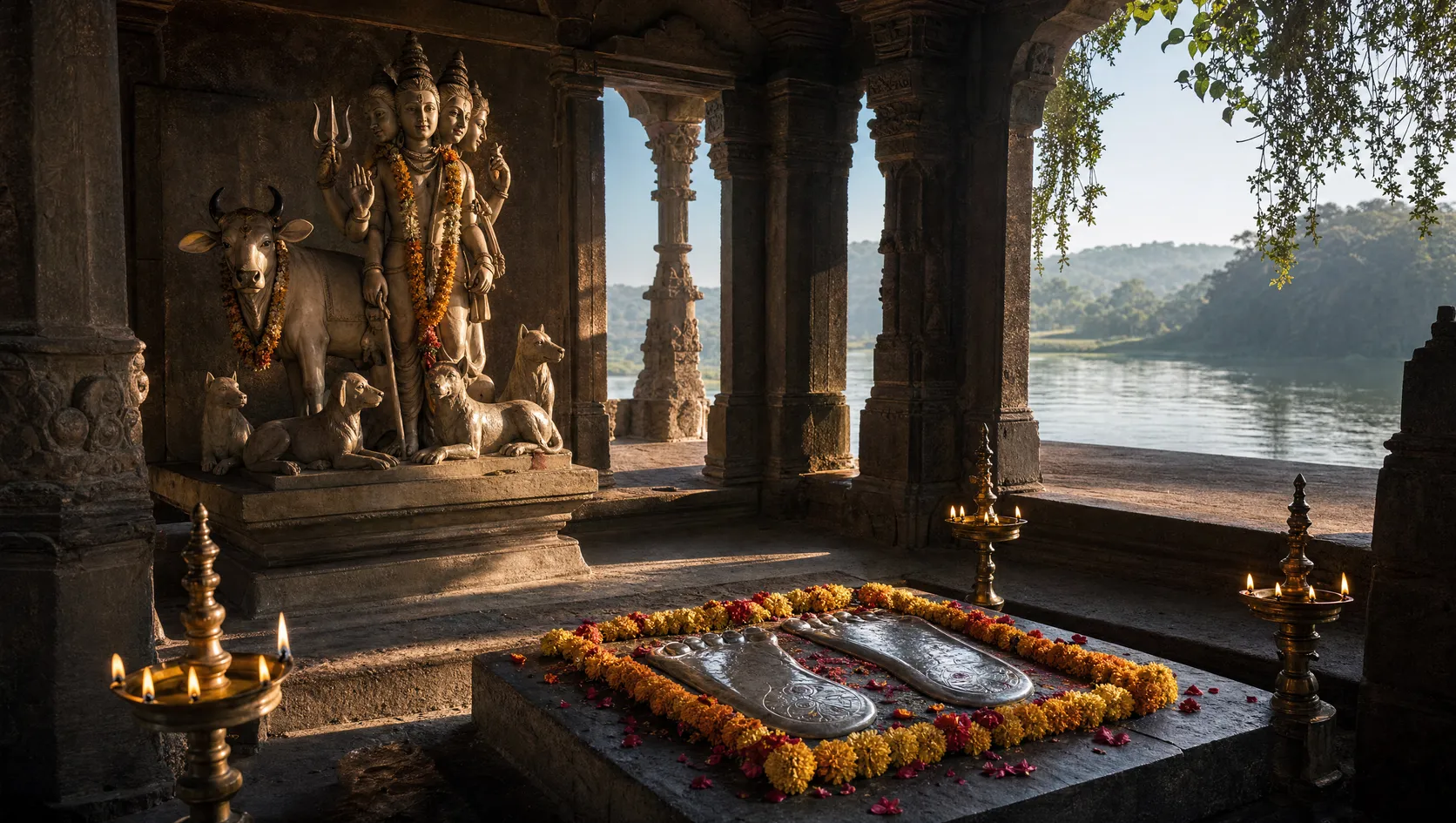
The object of worship at Kuravpur is the padukas of Sripad Srivallabha, the first avatar of Dattatreya, set on the island in the Krishna. As at the other Datta kshetras, the guru is worshipped not through an image of his form but through the footprint-impressions, the mark of his abode, held to be the sign of his continuing presence on the island from which he passed into the river.
The island setting is itself part of the iconography: the padukas held between the two arms of the Krishna, reached across the water, a place apart whose very inaccessibility marks it as the abode of the first avatar. The crossing to the island, over the river, is a threshold, and the padukas on the far bank are worshipped as the presence of the one who kept his abode there and passed from sight into the same waters.
The wider iconography of the tradition surrounds this centre: Dattatreya with three heads for Brahma, Vishnu and Shiva, six hands, the four dogs of the Vedas and the cow, standing by the audumbara, the tree honoured here as at the other Datta sites. Sripad Srivallabha himself is depicted, in the devotional tradition, as a radiant young renunciate, the first of the avatars in the form of a youth. But the controlling image remains the padukas on the island: the whole practice of Kuravpur is offered to the footprints of the first avatar, in the conviction that he is present still on the island in the river.
Distinctive Practicesविशिष्ट परंपराएँ
The Crossing to the Island
द्वीप तक पार-गमन
For every pilgrim to the kshetra
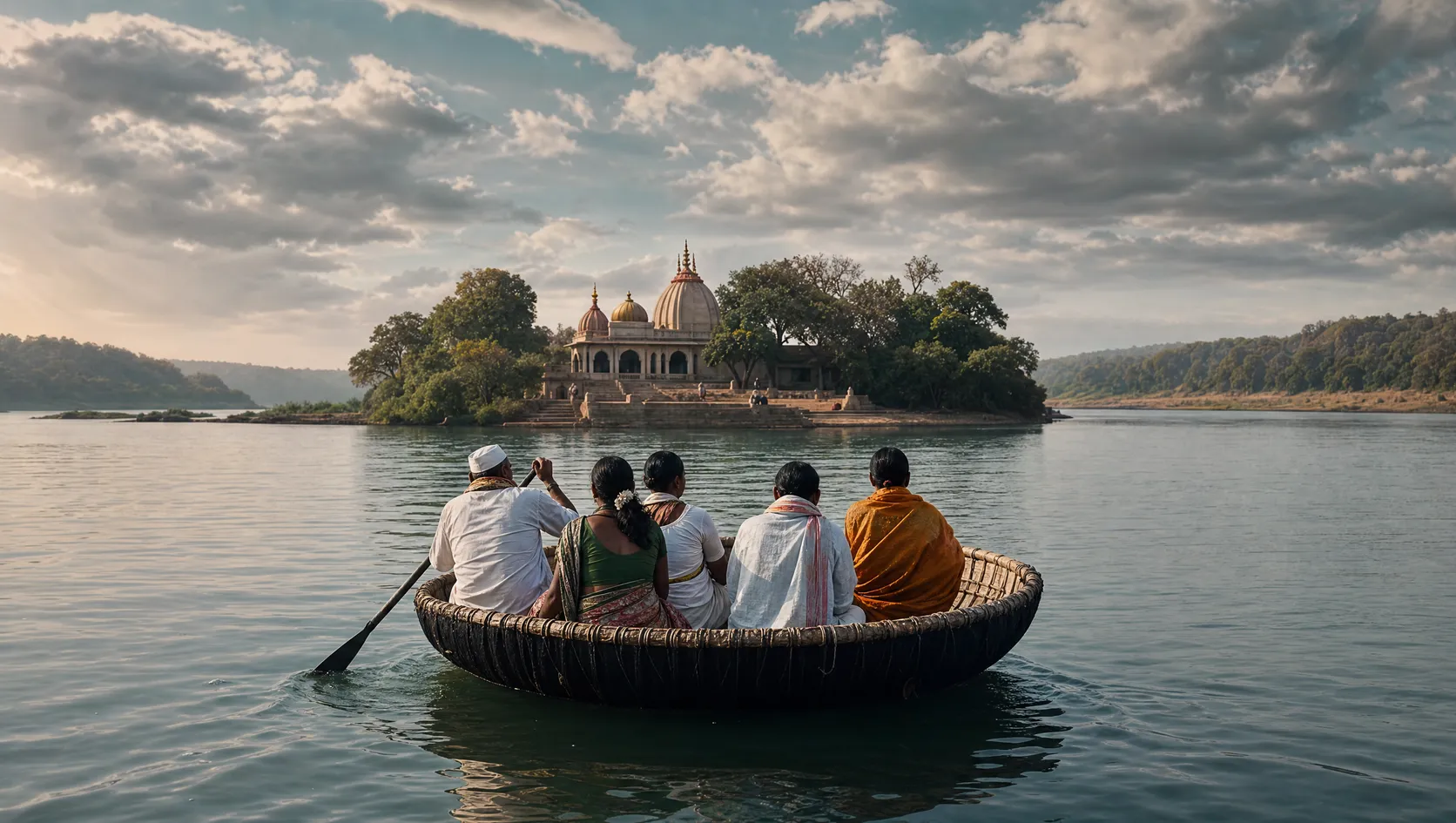
To reach Kuravpur the pilgrim must cross the Krishna to the island, over the water by boat or by the crossing in use, so that the very approach to the first avatar's abode is a passage across the river, a threshold that sets the island apart.
The crossing is not merely a means of access but part of the pilgrimage. To come to the island of the first avatar one must leave the ordinary bank behind and pass over the water, and the tradition treats the crossing as a small enactment of the passage the pilgrimage itself is: a leaving of the familiar shore for the abode of the guru. The island's separation by the river marks it as a place apart, and the effort and the crossing are held to be part of what is offered in coming.
Worship of the Padukas of the First Avatar
प्रथम अवतार की पादुकाओं की उपासना
Daily, at the shrine on the island
The central worship of the kshetra is offered to the padukas of Sripad Srivallabha on the island: their abhishekha, their adornment and the aarti, given to the footprints as to the presence of the first of the Datta avatars, from whom the whole line descends.
To worship the padukas of the first avatar is to worship at the source of the Datta lineage, the origin from which Nrisimha Saraswati, Swami Samarth and the whole line are held to descend. The tradition holds Sripad Srivallabha present at Kuravpur as the later avatars are present at their kshetras, and the worship of his footprints on the island is offered to the beginning of the tradition, the first abode of the first guru, where the practice of worshipping the padukas as the presence of the guru itself begins.
The River Bath and Recitation of the Charitra
नदी-स्नान और चरित्र का पाठ
For pilgrims at the kshetra
Pilgrims bathe in the Krishna, the river that holds the island and into which the first avatar is held to have passed, and undertake the recitation of the Sri Guru Charitra, joining the purification of the sacred river to the reading of the tradition's scripture at its origin.
The Krishna at Kuravpur is doubly sacred: the river that holds the island and the waters into which Sripad Srivallabha is held to have passed from sight. To bathe here is to enter the same river that received the first avatar, and to recite the Sri Guru Charitra at the origin of the Datta kshetras is to read the tradition's story where its line of avatars began. The river bath and the recitation together place the pilgrim at the source, in the waters and the words of the beginning.
Did You Know?क्या आप जानते हैं?
Kuravpur is the earliest of the great Datta kshetras, the island abode of Sripad Srivallabha, revered as the first avatar of Dattatreya.
Sri Guru Charitra; Datta Sampradaya tradition
Where Narsobawadi and Ganagapur belong to Nrisimha Saraswati, the second avatar, Kuravpur belongs to the first, and is thus the origin of the whole line of Datta avatars.
Sri Guru Charitra
Sripad Srivallabha was born, the tradition holds, at Pithapuram in the Andhra country before he came to Kuravpur and made it his abode.
Sripad Srivallabha Charitamrutam
The kshetra is an island held between the two arms of the Krishna, reached across the water, so the very approach to it is a crossing of the river.
Kshetra tradition of Kuravpur
The tradition holds that Sripad Srivallabha passed from sight into the Krishna at Kuravpur, leaving his padukas and the promise of his continuing presence.
Sri Guru Charitra
His life is set out in the Sri Guru Charitra and elaborated in the later Sripad Srivallabha Charitamrutam, a Telugu devotional text.
Sripad Srivallabha Charitamrutam
Less visited than Ganagapur or Akkalkot for its remoteness, Kuravpur is nonetheless revered as the first of the Datta kshetras, the source of the avatars.
Datta Sampradaya tradition
As at the other Datta kshetras, the audumbara, the tree of Dattatreya, is honoured at Kuravpur, and the guru is worshipped through his padukas rather than an image.
Kshetra tradition of Kuravpur
Visitor Accessप्रवेश जानकारी
The shrine is open to devotees, and traditional dress and conduct are expected as at a working kshetra. Footwear is removed at the shrine, and photography is generally not permitted at the padukas. Kuravpur is an island in the Krishna, reached across the water, so access depends on the crossing and the state of the river, which can change with the season and the flow. Pilgrims should plan for the crossing and confirm its arrangements before travelling, especially in the monsoon when the river runs high. The kshetra is remote and quiet compared with the busier Datta sites, a place of the crossing, the padukas, the river bath and the recitation of the Sri Guru Charitra. Confirm current arrangements locally, especially around Datta Jayanti and the days sacred to the first avatar.
Plan for the crossing to the island before travelling: Kuravpur is reached across the Krishna, and the crossing depends on the state of the river, so confirm current arrangements, especially in the monsoon when the river runs high. Reach the region by road via Raichur, then to the crossing point. Dress traditionally, remove footwear at the shrine, and respect the ban on photography at the padukas. Carry a change of clothes for the river bath, and plan for the simplicity and remoteness of the island kshetra. Committed Datta pilgrims often take Kuravpur as part of the circuit of the kshetras, and some also visit Pithapuram, the birthplace of Sripad Srivallabha in Andhra, in the same devotion.
Festivalsत्योहार
Datta Jayanti
दत्त जयंती
Nov-Dec (Margashirsha Purnima)
The birth-anniversary of Dattatreya, the great festival of the Datta tradition, observed at Kuravpur with special worship of the padukas of Sripad Srivallabha, recitation and gatherings, the central day of the kshetra's year.
Sripad Srivallabha observances
श्रीपाद श्रीवल्लभ अनुष्ठान
Varies (days sacred to the first avatar)
The days sacred to Sripad Srivallabha, the first avatar whose abode hallowed the island, are observed with special worship of the padukas and recitation of his charitra, honouring the origin of the Datta avatar lineage.
Guru Purnima
गुरु पूर्णिमा
Jun-Jul (Ashadha Purnima)
The day dedicated to the guru is of particular importance in a tradition centred on the guru principle, observed at Kuravpur with the worship of Dattatreya, the Adi Guru, and of Sripad Srivallabha, the first avatar.
Pournima and Amavasya observances
पूर्णिमा और अमावस्या अनुष्ठान
Monthly (the full-moon and new-moon days)
The full-moon and new-moon days each month draw pilgrims to Kuravpur for special worship of the padukas and the river bath, so that beyond the great annual festivals the island kshetra keeps a monthly rhythm of devotion.
Traditional Offeringsपारंपरिक अर्पण
Primary Offerings
Service to the padukas of the first avatar
प्रथम अवतार की पादुकाओं की सेवा
The central offering at Kuravpur is service to the padukas of Sripad Srivallabha on the island: their abhishekha, their adornment and the aarti, given to the footprints as to the presence of the first of the Datta avatars.
The crossing and the river bath
पार-गमन और नदी-स्नान
The crossing to the island and the bath in the Krishna, the waters into which the first avatar is held to have passed, are themselves offerings and purifications, the pilgrim coming to the guru across and through the sacred river.
Reverence at the audumbara and naivedya
औदुम्बर पर श्रद्धा और नैवेद्य
Reverence at the sacred audumbara, the tree of Dattatreya honoured here as at the other Datta sites, and the offering of food as naivedya, shared as prasad, join the tree and the guru's grace to the worship of the island kshetra.
Lamps and incense
दीप और धूप
Lamps and incense are offered in the daily worship of the padukas, marking the ritual rhythm of the island kshetra, the light and fragrance offered to the first avatar held present on the island in the river.
Unique to This Temple
The Offering at the Source of the Avatars
अवतारों के स्रोत पर भेंट
What is particular to Kuravpur is that its offering is made at the source of the whole Datta lineage, the abode of the first avatar from whom Nrisimha Saraswati, Swami Samarth and the rest are held to descend. To serve the padukas of Sripad Srivallabha, and to recite the Sri Guru Charitra on his island, is to offer at the origin of the tradition, where the worship of the padukas itself begins. A pilgrim makes the crossing, serves the padukas, bathes in the river and recites the Charitra, but the offering the tradition holds highest is the reverence brought to the first abode, the acknowledgment that here, on this island, the line of the avatars began. The offering and the blessing meet at the source: the devotee comes to the origin, and Sripad Srivallabha, the first avatar held present still on the island, is believed to receive him as the first of the gurus receives those who seek the beginning.
Offerings at Kuravpur follow the Datta tradition, centred on the crossing to the island, the service of the padukas of the first avatar, the river bath and the recitation of the Sri Guru Charitra. Eternal Raga presents these practices as a devotional tradition; specific arrangements, and the state of the river crossing, should be confirmed at the kshetra before travelling.
How to Reachकैसे पहुँचें
Kuravpur lies on an island in the Krishna in the Raichur region of northern Karnataka, and is reached by road to the crossing point and then across the water to the island.
By air: Hyderabad and Kalaburagi are the nearer airports at a distance; access to the region is by road.
By rail: Raichur railway station is the usual railhead for the region, connected to the wider network; from there the crossing point is reached by road.
By road: the region is reached by road via Raichur and the towns of the area; the island itself is reached by crossing the Krishna by boat or the crossing in use, which depends on the state of the river.
Because the crossing depends on the river, pilgrims should confirm its arrangements before travelling, especially in the monsoon when the Krishna runs high. Committed Datta pilgrims often take Kuravpur as part of the circuit of the kshetras, and some visit Pithapuram, the birthplace of Sripad Srivallabha in Andhra, in the same devotion.
Plan Your Visitयात्रा की योजना
🌤 Best Season
October to March is the most comfortable time to visit, with milder temperatures in the northern Karnataka plain and the Krishna generally settled after the monsoon, making the crossing to the island easier. Datta Jayanti, in November or December, is the great festival of the kshetra. April to June is hot in this part of the Deccan, and the middle of the day is best avoided. The monsoon, roughly June to September, raises the Krishna and can make the crossing difficult or unsafe, so it is best avoided for a visit to the island; the state of the river should always be checked. The cooler post-monsoon and winter months, with the river settled, are the best time to make the crossing and to keep the practices of the island kshetra.
👘 Dress Code
Traditional and modest dress is expected at the kshetra, as at a working religious centre. Men commonly wear a dhoti or trousers with a shirt; women a saree or salwar kameez. Footwear is removed at the shrine, and those bathing in the Krishna should carry a change of clothes.
📱 Phones & Photography
Photography is generally not permitted at the padukas and within the sanctum, and phones should be silenced across the shrine premises. Follow the directions of the shrine and the conventions of the kshetra, which is a remote place of quiet devotion.
🏨 Accommodation
Kuravpur, being a remote island kshetra, has only simple lodging for pilgrims, and facilities are basic. Many pilgrims stay in the larger town of Raichur, within reach by road, which offers a fuller range of accommodation, and make the crossing to the island for the day, though the more committed stay near the kshetra to keep its practices. Standards are simple, suited to the remote and devotional character of the place. Demand rises around Datta Jayanti, when arrangements should be confirmed and made in advance.
Sacred Soundsपवित्र ध्वनि
Did You Know? · क्या आप जानते हैं?
The same translation error that turned '33 Koti' into '33 crore' in Hinduism also happened in Buddhism. The Chinese translation of Buddhist texts rendered 'Sapta Koti Buddha' (7 Supreme Buddhas) as '7 Crore Buddhas.' The Tibetan translation got it right: 7 types, not 7 crore. One Sanskrit word, misread across two major world religions, generated two identical misconceptions independently.
Related Contentसंबंधित सामग्री
Related Scriptures
Community Reflections
🕉️
Be the first to share your reflection.