Vaikuntham (Sri Vaikuntam)
श्री वैकुंठम
One of the 108 Divya Desams and one of the Nava Tirupati on the Thamirabarani, where Vishnu is worshipped as Vaikunthanathan and famously as Kallapiran, the beautiful thief-Lord
Srivaikuntam, Tamil Nadu, India
Śrī Vaikuṇṭam (Kaḷḷapirāṉ)Also known as: Sri Vaikuntam, Kallapiran Temple, Vaikunthanathan Perumal
Era
An ancient temple sung by Nammalvar in the first millennium, built and expanded in stone under the Pandyas and enriched by the Nayakas of Madurai, whose fine mandapa sculptures survive
Architecture
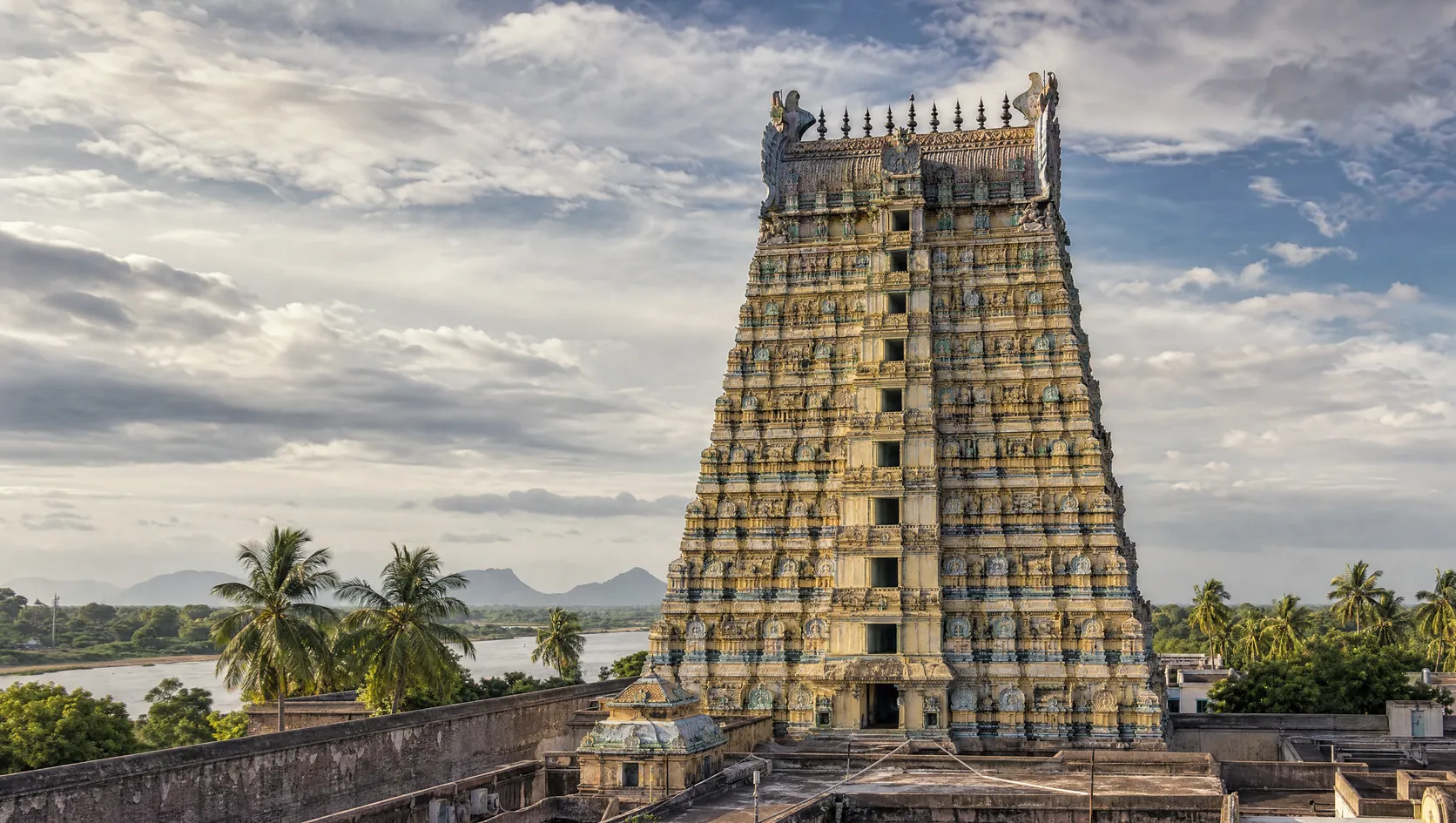
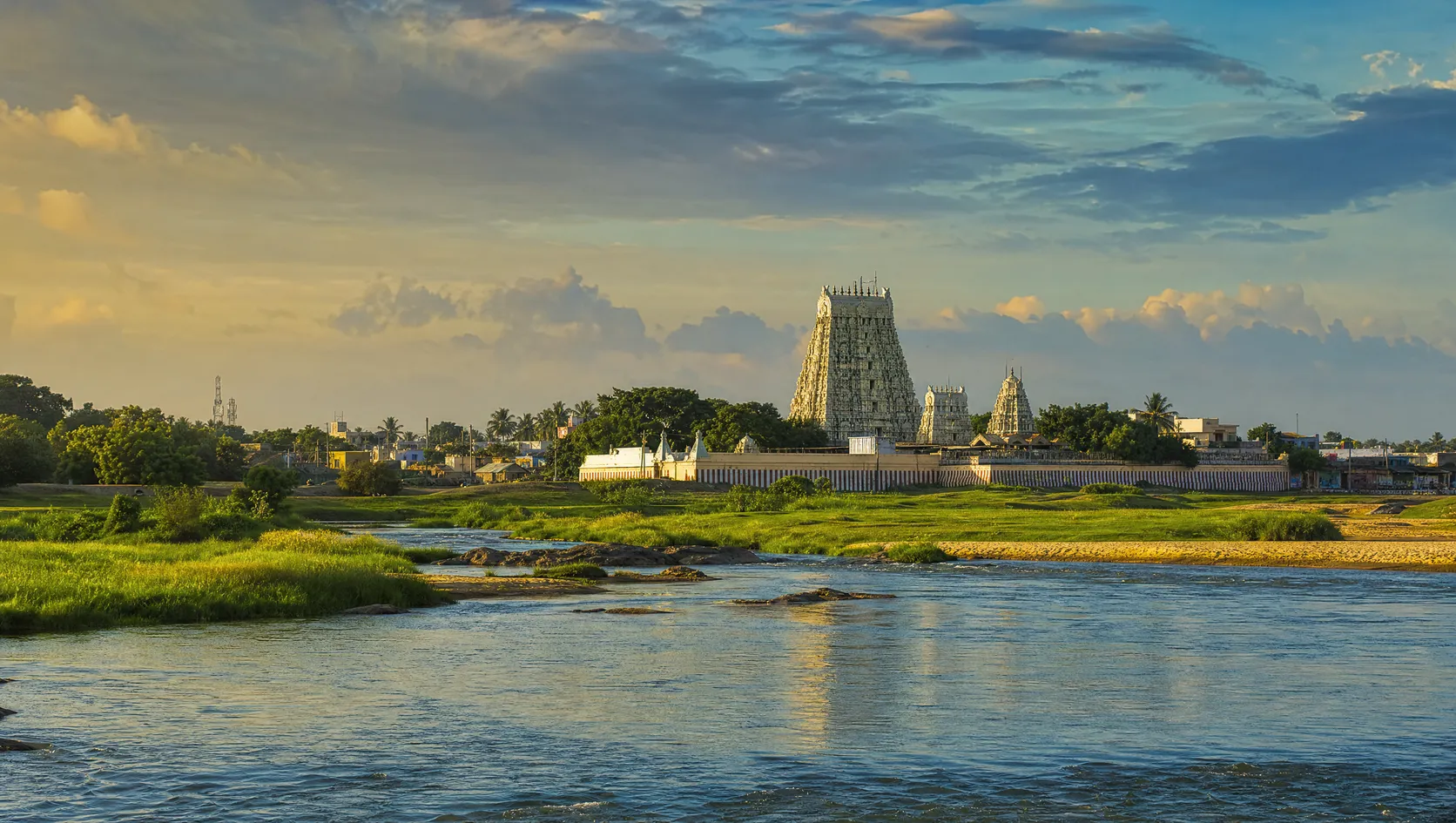
Dravidian, of the Pandya and Nayaka periods, with a towering gopuram, a pillared mandapa carrying celebrated Nayaka sculptures, and shrines set within a walled enclosure near the river
Open
07:00 – 20:00
Special
The temple follows a Srivaishnava ritual round with services to Vaikunthanathan (Kallapiran) and the goddess Vaikundavalli, and the recitation of the Nalayira Divya Prabandham of Nammalvar. Timings run in morning and evening sessions with a midday break and vary with the festival calendar; they should be confirmed locally.
The Sacred Legend · पवित्र कथा
Among the hundred and eight Divya Desams, the abodes of Vishnu sung by the Alvar poet-saints, nine stand together along the banks of the Thamirabarani river in the far south of the Tamil land, and these nine are called the Nava Tirupati. Srivaikuntam, on the northern bank of the river not far from where it reaches the sea, is the foremost of them, and the Vishnu who stands here is Vaikunthanathan, the Lord of Vaikuntha, the highest heaven brought down to the water's edge. But the name by which this Lord is loved is stranger and more tender: Kallapiran, the thief-Lord, the beautiful thief. The sthala legend tells of a devotee who was a robber, and of the Lord who took the thief's own part, standing between him and punishment, so that the god of Srivaikuntam is worshipped as the one who befriends the outlaw, who takes the blame that is not his, and who, in the deeper reading, is himself the thief of hearts, stealing away the self of the devotee who comes to him. His consort here is Vaikundavalli, also called Choranathavalli, the lady of the thief-Lord. Srivaikuntam is sung by Nammalvar, the greatest of the Alvars, whose birthplace at Alwarthirunagari lies among these same nine temples, so that the whole circuit of the Nava Tirupati is bound to his hymns. To come here is to come to a Vishnu who is at once the Lord of the highest heaven and the friend of the thief, majesty and mercy standing together on the bank of the southern river.
Sacred Designationपवित्र पदनाम
Sacred Origin Storyपवित्र उत्पत्ति कथा
Source: The Srivaishnava tradition and the Sthala Purana of Srivaikuntam, on the origin of the name Kallapiran, the thief-Lord
The tradition holds that the Lord of Srivaikuntam came to be called Kallapiran, the thief-Lord, through his mercy to a devotee who was a thief. In the most cherished account there lived near the river a man named Kaladushakan, a robber by trade and yet a great devotee of Vaikunthanathan, who never failed in his worship and offered to the Lord a share of all that he took.
One day the treasure of the local ruler was stolen, and the soldiers, tracing the theft, seized upon the devotee-thief and dragged him toward punishment. In his terror he cried out to the Lord of the temple, and the Lord, who does not weigh the worth of the one who calls but only the calling, came to his aid. In the telling most loved at Srivaikuntam, Vishnu himself took the form of the thief, or stood in his place, and received upon himself the blows meant for the devotee, so that the punishment fell upon the god and the man was spared.
Because the Lord thus took the thief's own part, standing surety for the outlaw and bearing what was not his to bear, he is worshipped here as Kallapiran, the Lord of the thief, the beautiful thief-Lord; and his consort is Choranathavalli, the lady of the thief-Lord. The deeper reading of the tradition is that the name holds a truth about the god himself: he is the thief of hearts, who steals away the self of the devotee, taking what is offered and giving himself in its place, so that the one who comes to Kallapiran is robbed of his own smallness and left with the Lord.
Sources cited:
- Sthala Purana of Srivaikuntam
- Srivaishnava tradition of the Nava Tirupati
- The Nalayira Divya Prabandham of Nammalvar
Other Traditions · अन्य परंपराएँ
The Nava Tirupati tradition of the Thamirabarani valley
Scholarly Context
Srivaikuntam is studied both as a Divya Desam sung in the Nalayira Divya Prabandham and as the chief of the Nava Tirupati, the group of nine Vishnu temples of the Thamirabarani valley in the Tirunelveli and Thoothukudi country. Its attested sanctity is ancient, resting on the hymns of Nammalvar, whose activity is placed in the middle centuries of the first millennium and whose birthplace at Alwarthirunagari lies among the same nine shrines; the physical temple was then built and enlarged in stone under the Pandyas and later enriched by the Nayakas of Madurai. The temple is noted in particular for the sculptures of its Nayaka-period mandapa, life-size figures carved on the pillars in the vivid manner of the late medieval south, which scholars treat as among the finer examples of Nayaka temple sculpture in the region. The grouping of the nine temples as the Nava Tirupati, worshipped as a single circuit and associated with the nine planets, is itself of interest as an example of how a river valley was organised into one sacred landscape. The name Kallapiran, the thief-Lord, and the consort Choranathavalli are treated as a striking instance of the affectionate and paradoxical naming of the deity in the Tamil bhakti tradition, in which the majesty of Vishnu as Lord of Vaikuntha is held together with the tender, almost domestic legend of the god who took the thief's part.
Historyइतिहास
Srivaikuntam is one of the 108 Divya Desams and the foremost of the Nava Tirupati, the nine temples of Vishnu that stand along the Thamirabarani river in the far south of Tamil Nadu. Its sanctity is attested from deep antiquity by the hymns of Nammalvar, the greatest of the Alvars, whose Tamil verses in the Nalayira Divya Prabandham sing the Lord of this place as Vaikunthanathan; Nammalvar's own birthplace at Alwarthirunagari lies among these same nine shrines, binding the whole circuit to his poetry.
The temple was built and expanded in stone under the Pandyas, the dynasty of the deep south, whose kings endowed the shrines of the Thamirabarani valley, and it was later enriched by the Nayakas of Madurai in the sixteenth and seventeenth centuries. To the Nayaka period belong the temple's celebrated mandapa sculptures, life-size figures carved upon the pillars in the vigorous manner of the age, which are among the finest of their kind in the region and are a chief reason the temple is remembered by lovers of art as well as by pilgrims.
The Lord of Srivaikuntam is worshipped as Vaikunthanathan, the Lord of the highest heaven, and by the tenderer name of Kallapiran, the thief-Lord, from the sthala legend of the devotee-thief whose part the Lord took; his consort is Vaikundavalli, also called Choranathavalli. The nine temples of the valley are grouped as the Nava Tirupati and associated with the nine planets, worshipped together as a single pilgrimage, and Srivaikuntam is counted the chief among them.
The temple has continued as a living centre of Srivaishnava worship through the centuries, its shrines maintained, its festivals kept, and its Prabandham recited in the tradition of Nammalvar. Its great occasion is the Nava Tirupati Garuda Sevai, when the deities of all nine temples are brought together on Garuda mounts in a single vast gathering, above all in the month of Vaikasi, one of the most striking festivals of the southern Tamil country. Srivaikuntam remains a much-visited shrine, its river-valley setting, its Nayaka sculptures and its beloved thief-Lord drawing pilgrims to the banks of the Thamirabarani.
Historical Timelineऐतिहासिक कालक्रम
Nammalvar, the greatest of the Alvars, sings the Lord of Srivaikuntam as Vaikunthanathan in the Nalayira Divya Prabandham, giving the temple an attested sanctity of great antiquity and binding it to the poetry of the saint born among these same nine shrines.
Nammalvar's activity is generally placed across the middle centuries of the first millennium; his hymns are the earliest firm evidence of Srivaikuntam's importance and of the Nava Tirupati as a sacred group.
Under the Pandyas, the dynasty of the deep south, the temple is built and enlarged in stone and endowed along with the other shrines of the Thamirabarani valley, establishing Srivaikuntam as a substantial temple of the region.
The temples of the Thamirabarani valley bear inscriptions of the Pandyas and their feudatories recording endowments and grants.
The nine Vishnu temples of the Thamirabarani valley are grouped and worshipped together as the Nava Tirupati, associated with the nine planets and treated as a single pilgrimage circuit, with Srivaikuntam counted foremost among them.
The grouping of the nine as the Nava Tirupati organises the river valley into a single sacred landscape worshipped as one round.
Successive rulers and their feudatories endow the temple with lands and grants, recorded in inscriptions on its walls, sustaining its worship and its festivals through the medieval centuries.
Under the overlordship of the Vijayanagara empire and its viceroys in the south, the temples of the far south including Srivaikuntam are protected and endowed, and their worship continues to flourish.
The Nayakas of Madurai enrich the temple, and to their period belong the celebrated mandapa sculptures, life-size figures carved upon the pillars in the vigorous manner of the late medieval south, among the finest of their kind in the region.
The Nayaka mandapa sculptures at Srivaikuntam are treated by scholars as among the finer examples of Nayaka temple sculpture in the Tirunelveli country.
The tradition of the Lord as Kallapiran, the thief-Lord who took the part of the devotee-thief, and of his consort Choranathavalli, is established as the temple's distinctive sthala legend, giving Srivaikuntam its beloved and paradoxical name.
The name Kallapiran and the consort Choranathavalli are a striking instance of the affectionate, paradoxical naming of the deity in the Tamil bhakti tradition.
The temple and the Nava Tirupati group are documented in colonial-era surveys and gazetteers of the Tirunelveli district, which record their antiquity, their grouping and their standing among the Vaishnava shrines of the far south.
The temple undergoes periodic renovation and reconsecration (samprokshanam or kumbhabhishekam) in the modern period, its shrines, gopuram and mandapas restored and the worship renewed under the temple administration.
The Nava Tirupati Garuda Sevai becomes and remains the great occasion of the circuit, when the deities of all nine temples are brought together on Garuda mounts in a single vast gathering, above all in the month of Vaikasi, drawing crowds from across the southern country.
The joint Garuda Sevai of the nine temples is among the most striking festivals of the far-southern Tamil country.
Srivaikuntam remains a living centre of Srivaishnava worship and the foremost of the Nava Tirupati, its beloved thief-Lord Kallapiran, its Nayaka mandapa sculptures and its river-valley setting drawing pilgrims to the banks of the Thamirabarani.
What You'll Seeदर्शन में
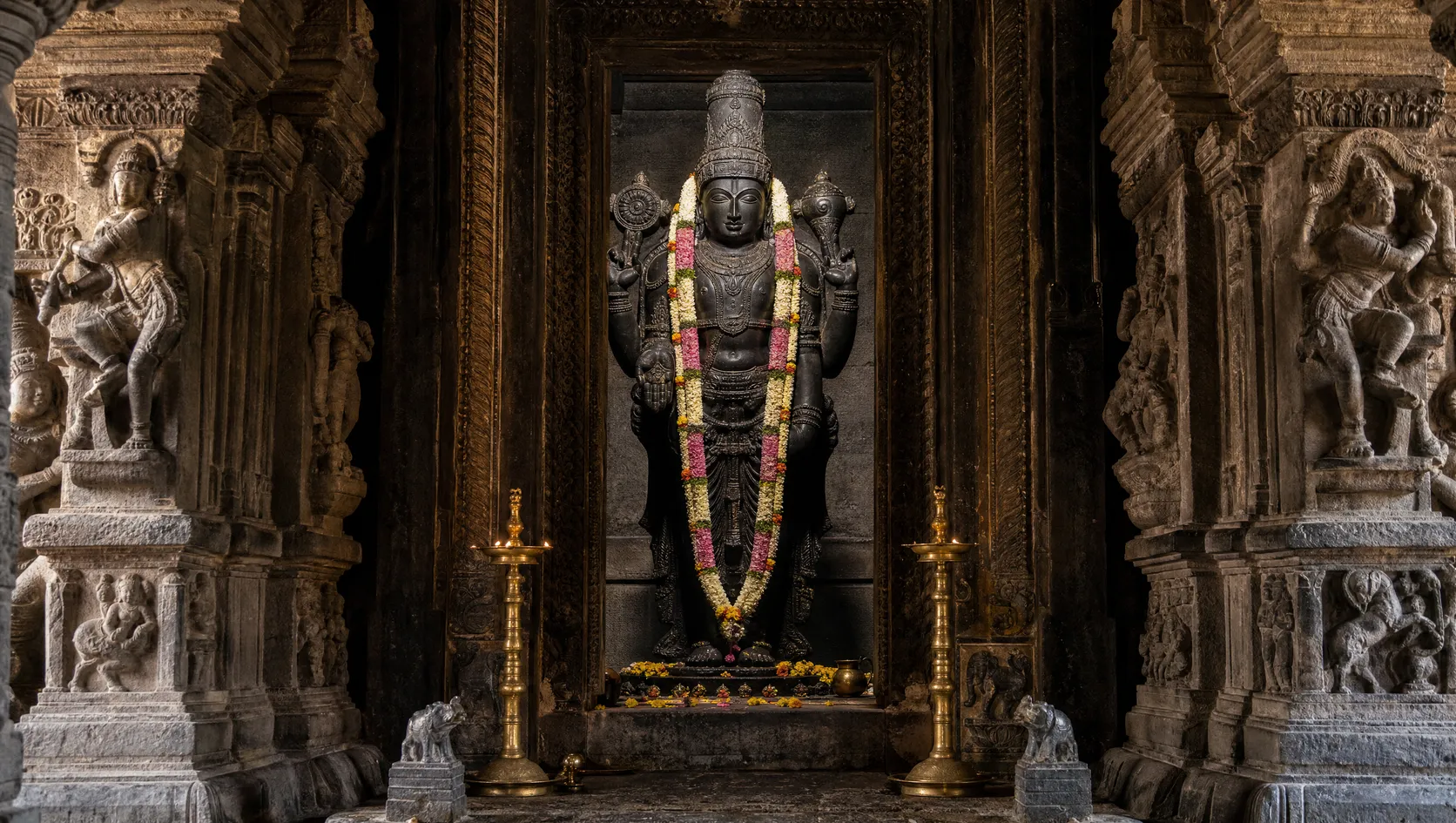
The presiding image of Srivaikuntam is Vaikunthanathan, Vishnu standing at his full height in the sanctum, facing east, the Lord of Vaikuntha made present at the edge of the river. This is the Moolavar, the immovable stone image of the innermost shrine, over which rises the Srikara Vimana. He holds the emblems of Vishnu and stands in the majesty proper to the Lord of the highest heaven, and yet it is by the tender name of Kallapiran, the thief-Lord, that he is loved, from the sthala legend of the devotee-thief whose part he took.
His consort is Vaikundavalli, also called Choranathavalli, the lady of the thief-Lord, who has her own shrine within the complex, so that the Lord and the Goddess are each worshipped in their own precinct. Beside the stone Moolavar stands the processional image, the utsava murti, which is carried in the festivals and, above all, is brought on the Garuda mount in the great Nava Tirupati Garuda Sevai.
The temple is famous for the sculptures of its Nayaka-period mandapa, life-size figures carved upon the pillars in the vivid and vigorous manner of the late medieval south, warriors, riders, celestial and courtly figures, which are among the finest of their kind in the region and give the temple a distinction in art as well as in devotion. Within the enclosure are the shrines of the Alvars and the acharyas of the tradition, above all Nammalvar, whose hymns sing this Lord and whose birthplace lies among these same nine temples. The standing Lord of Vaikuntha at the still centre, loved as the thief of hearts, and around him the sculptured mandapa and the shrines of his poets, is the iconographic pattern of Srivaikuntam.
Distinctive Practicesविशिष्ट परंपराएँ
The Nava Tirupati Garuda Sevai
नव तिरुपति गरुड़ सेवै
Chiefly in Vaikasi (May-Jun), on the great festival day of the circuit
On the great day of the Nava Tirupati, the processional deities of all nine temples of the Thamirabarani valley, Srivaikuntam foremost among them, are brought out on Garuda mounts and gathered together, above all at Alwarthirunagari, the birthplace of Nammalvar, in a single vast assembly of the nine Vishnus of the river. It is the most thronged and splendid occasion of the circuit, when the whole valley worships its nine Lords at once.
The joint Garuda Sevai makes visible the truth that the Nava Tirupati are not nine separate temples but one sacred field. Garuda, the eagle-mount of Vishnu, bears each Lord, and to see the nine borne together on their Garudas is to see the whole river valley gathered into a single vision of Vishnu, majesty repeated nine times along one water. The pilgrim who worships them together enacts bodily the tradition that the nine are one round, one grace, one Lord present in nine places.
Worship of the Lord as Kallapiran, the thief-Lord
प्रभु की कल्लपिरान, चोर-प्रभु, के रूप में उपासना
Year-round, in the daily worship of Vaikunthanathan
The Lord of Srivaikuntam is worshipped by the tender name of Kallapiran, the thief-Lord, from the sthala legend of the devotee-thief whose part he took, and his consort as Choranathavalli, the lady of the thief-Lord. Devotees come to him as to the god who befriends the outlaw and takes upon himself the punishment that is not his, and the name is kept alive in the daily naming and worship of the deity.
To worship the Lord as Kallapiran is to worship the mercy of Vishnu at its most unconditional. The god who takes the thief's own part does not weigh the worth of the one who calls, but only the calling; he stands surety for the outlaw and bears what is not his to bear. In the deeper reading, the name holds a truth about the god himself as the thief of hearts, who steals away the self of the devotee and gives himself in its place, so that the very name teaches the surrender the tradition asks: to be robbed by the Lord of one's own smallness.
Recitation of Nammalvar's Prabandham
नम्माळवार के प्रबंधम् का पाठ
Daily in worship, and centrally in the Adhyayana Utsavam
The Tamil hymns of Nammalvar, gathered in the Nalayira Divya Prabandham, are recited in the temple's worship beside the Sanskrit Veda, and are given full recitation in the festival of the Adhyayana Utsavam. The bond is especially close here, for Nammalvar's own birthplace lies among the Nava Tirupati, so that the hymns and the shrines belong to one landscape.
That the Tamil hymns of Nammalvar are given standing beside the Sanskrit Veda is the defining claim of Srivaishnavism, the Prabandham held as the Dravida Veda, the Veda in Tamil, and Nammalvar as a seer on a level with the ancient rishis. At Srivaikuntam, in the very valley of his birth, to sing his hymns before Vaikunthanathan is to worship the Lord in the language of the land and in the words of the saint who knew this place as home.
Bathing in the Thamirabarani
ताम्रपर्णी में स्नान
Year-round, especially on the great festival and Navagraha-circuit days
Pilgrims to Srivaikuntam and the Nava Tirupati bathe in the Thamirabarani, the river held sacred that carries the whole circuit of nine temples upon its banks, before entering for darshan. The river is regarded as a purifying and life-giving water, and the bath at its edge is a customary preparation for the worship of the Lord.
The Thamirabarani is not incidental to the Nava Tirupati but the thread on which the nine are strung; the river makes the valley one sacred field, and the Lord stands nine times along its course. To bathe in it before darshan is to enter the sanctity of the whole landscape, cleansed by the water that binds the nine temples, before coming to the Lord who stands upon its bank.
Did You Know?क्या आप जानते हैं?
Srivaikuntam is one of the 108 Divya Desams and the foremost of the Nava Tirupati, the nine temples of Vishnu strung along the banks of the Thamirabarani river in the far south of Tamil Nadu.
Srivaishnava tradition of the Nava Tirupati
The Lord here, Vaikunthanathan, the Lord of the highest heaven, is loved by the tender name Kallapiran, the thief-Lord or beautiful thief, from the legend of the devotee-thief whose part he took.
Sthala Purana of Srivaikuntam
The consort of Kallapiran is worshipped as Vaikundavalli, also called Choranathavalli, the lady of the thief-Lord, her name echoing his own.
Temple tradition
The temple is sung by Nammalvar, the greatest of the Alvars, whose own birthplace at Alwarthirunagari lies among the same nine Nava Tirupati shrines, binding the circuit to his hymns.
Nalayira Divya Prabandham
Srivaikuntam is famous for the life-size sculptures of its Nayaka-period mandapa, carved upon the pillars in the vigorous manner of the late medieval south, among the finest of their kind in the region.
Surveys of Nayaka temple sculpture
The nine Nava Tirupati temples are traditionally associated with the nine planets, the Navagraha, and are worshipped together as a single pilgrimage circuit along the river.
Nava Tirupati tradition
The great occasion of the circuit is the Nava Tirupati Garuda Sevai, when the deities of all nine temples are brought together on Garuda mounts in a single vast gathering, chiefly in the month of Vaikasi.
Nava Tirupati festival tradition
The temple stands on the northern bank of the Thamirabarani, the river held sacred that carries the whole circuit of nine temples upon its banks and in which pilgrims bathe before darshan.
Temple tradition
Visitor Accessप्रवेश जानकारी
The temple is open to Hindu devotees for darshan of Vaikunthanathan (Kallapiran) and the goddess Vaikundavalli. As at many Vaishnava temples of the south, entry to the innermost sanctum may be restricted, and this is signposted at the temple. Timings run in morning and evening sessions with a midday closure, and vary with the festival calendar. A dress code of traditional attire applies, and footwear is left outside the temple. On the great Nava Tirupati Garuda Sevai and other festival days, crowds are large and the whole circuit of nine temples draws pilgrims together. Confirm current timings and any restrictions locally before visiting.
Spiritual Basis
The restriction of the innermost sanctum follows the practice of the major Vaishnava temples of the south, which preserve the ritual purity of the sanctum according to their tradition. The god's accessibility is held to be real for all his devotees within these forms: the Lord of Srivaikuntam is Kallapiran, the thief-Lord who takes the part of the one who calls without weighing his worth, and the ordered approach to his sanctum is meant to hold that grace within a discipline, not to deny it. The worship of the Nava Tirupati as a single circuit gives the pilgrimage its own spiritual form: the devotee moves along the river from shrine to shrine, and the discipline of the round, temple after temple upon the one water, is itself part of the approach to the Lord.
Contemporary Context
Srivaikuntam is a much-visited temple of the Tirunelveli and Thoothukudi country, drawing pilgrims for the darshan of Kallapiran, for its Nayaka sculptures and as a station on the Nava Tirupati circuit. Many visitors come to do the whole round of the nine temples, and the town of Srivaikuntam serves as a natural base for that pilgrimage. On ordinary days the darshan is unhurried and the temple quiet, its mandapa sculptures easily seen; on the great Garuda Sevai and other festival days the crowds are large and the whole valley of the nine temples is astir. The temple is administered under the Tamil Nadu religious-endowments framework, with organised worship and festival arrangements for the major occasions.
Practical Guidance
Allow time to see the sanctum of Vaikunthanathan (Kallapiran), the shrine of the goddess Vaikundavalli and, above all, the sculptured Nayaka mandapa, which is a chief reason to visit. Srivaikuntam is best combined with the other Nava Tirupati temples of the Thamirabarani valley, and with Alwarthirunagari, the birthplace of Nammalvar, on the same circuit. Dress traditionally and leave footwear outside. Check the morning and evening session timings locally, as the temple closes at midday. If the aim is the great Nava Tirupati Garuda Sevai, expect large crowds and plan the circuit and accommodation well ahead; on ordinary days the temple can be seen at leisure. Tirunelveli and Thoothukudi are the nearest larger towns for onward travel and lodging.
Festivalsत्योहार
Nava Tirupati Garuda Sevai
नव तिरुपति गरुड़ सेवै
May-Jun (Vaikasi)
The great festival of the whole circuit, when the processional deities of all nine Nava Tirupati temples, Srivaikuntam foremost among them, are brought out on Garuda mounts and gathered together, above all at Alwarthirunagari, the birthplace of Nammalvar, in a single vast assembly of the nine Vishnus of the Thamirabarani. It is the most thronged and splendid occasion of the Nava Tirupati year.
Vaikuntha Ekadasi
वैकुण्ठ एकादशी
Dec-Jan (Margazhi)
The great Vaishnava festival of the gate of heaven, kept with special meaning at Srivaikuntam, whose very name is Vaikuntha, the highest heaven. On this day the Lord grants his devotees the vision of the abode after which the temple is named, and the observance is among the most sacred of the temple's year.
Brahmotsavam
ब्रह्मोत्सवम्
Annual, per the temple calendar
The great annual festival of the temple, over its days the processional Vaikunthanathan is taken in procession on the many vahanas around the shrine and streets, the fullest celebration of the Lord's public presence, with the Garuda vahana among the most beloved of the mounts.
Adhyayana Utsavam
अध्ययन उत्सवम्
Dec-Jan (Margazhi)
The festival of the recitation of the Nalayira Divya Prabandham, when the Tamil hymns of Nammalvar and the other Alvars are chanted in full over its days before the Lord. The bond is especially close at Srivaikuntam, in the very valley of Nammalvar's birth, whose hymns sing this Lord.
Traditional Offeringsपारंपरिक अर्पण
Primary Offerings
Tulasi (holy basil)
तुलसी
तुलसी
Tulasi, the holy basil beloved of Vishnu, is the offering most proper to Vaikunthanathan as to any form of Vishnu, laid at his feet and woven into his garlands. No worship of Vishnu is complete without it, and at Srivaikuntam it is offered to the standing Lord as the first and dearest of gifts.
Sacred food (prasadam)
प्रसाद
The food offered to Vaikunthanathan and shared with devotees as prasadam is a central offering, the cooked rice and sweet preparations sanctified by presentation to the Lord and returned to the pilgrim. To receive the Lord's prasadam is to receive his grace made tangible, carried home from the bank of the river.
Garlands of flowers
पुष्प-मालाएँ
Garlands of flowers, with tulasi, are offered to Vaikunthanathan and to the goddess Vaikundavalli, and garlands that have adorned the deity are returned to devotees as a blessing carrying the touch of the Lord and the Goddess.
Recitation of the Prabandham and the Sahasranama
प्रबंधम् और सहस्रनाम का पाठ
Beyond material offerings, the recitation of the Tamil hymns of Nammalvar and of the Vishnu Sahasranama, the thousand names of Vishnu, is held a high offering to Vaikunthanathan, the god worshipped as much in sung word as in flower and food. At Srivaikuntam, in the valley of Nammalvar's birth, the offering of hymn is central to the worship.
Water of the Thamirabarani
ताम्रपर्णी का जल
ताम्रपर्णी जल
Water from the Thamirabarani, the sacred river on whose bank the temple stands and which binds the whole Nava Tirupati circuit, is offered in the worship of the Lord, and pilgrims who bathe in the river carry its water to the shrine. The river is held a purifying and life-giving water, and its offering joins the sanctity of the landscape to the worship of the god.
Unique to This Temple
The Offering to Kallapiran, the Thief-Lord
कल्लपिरान, चोर-प्रभु, को भेंट
What is particular to Srivaikuntam is that its Lord is Kallapiran, the thief-Lord who took the part of the devotee-thief without weighing his worth, and the offering the tradition holds highest is the surrender of the self to such a god. A pilgrim brings tulasi, flowers, food and the water of the river as at any shrine of Vishnu, but the offering that answers the name is the turning of the heart to the Lord who befriends the outlaw and bears what is not his to bear. In the deeper reading, Kallapiran is himself the thief of hearts, and the true offering is to let oneself be robbed by him of one's own smallness. The devotee gives the self, and the Lord, taking it, gives himself in its place, so that the offering and the blessing meet in the very paradox of the name: the thief-Lord who steals the devotee only to make him rich.
Offerings at Srivaikuntam follow the Srivaishnava tradition, with tulasi, flowers, garlands, prasadam and the water of the Thamirabarani central, and the recitation of the Prabandham of Nammalvar and the Vishnu Sahasranama held as offerings of word. Eternal Raga presents these practices as a devotional tradition; specific seva and offering arrangements should be confirmed with the temple.
How to Reachकैसे पहुँचें
Srivaikuntam lies on the northern bank of the Thamirabarani river in the Thoothukudi (Tuticorin) district of southern Tamil Nadu, between the towns of Tirunelveli and Thoothukudi, and is easily reached.
By air: Tuticorin (Thoothukudi) Airport is about 35 km away, with flights to Chennai and other cities; Madurai Airport, further off, offers wider connections.
By rail: Srivaikuntam has its own railway station on the Tirunelveli-Tiruchendur line, and Tirunelveli Junction, a major railhead of the south, is a short distance away, connected to Chennai, Madurai and the wider network.
By road: Srivaikuntam is served by buses, autos and taxis from Tirunelveli and Thoothukudi, both a short drive away, and lies among the Nava Tirupati temples that are easily linked by road along the river valley.
Many pilgrims come to do the whole Nava Tirupati circuit, combining Srivaikuntam with Alwarthirunagari, the birthplace of Nammalvar, and the other seven shrines along the Thamirabarani, and often with the great seaside temple of Tiruchendur nearby.
Plan Your Visitयात्रा की योजना
🌤 Best Season
October to March is the most comfortable time to visit, with milder temperatures in the Thamirabarani plain. The month of Vaikasi (May-June) brings the great Nava Tirupati Garuda Sevai, a spiritually rich but very crowded season, and Margazhi (December-January) brings Vaikuntha Ekadasi and the Adhyayana Utsavam. April to June is hot in the far south, though the Garuda Sevai falls in this period and is a major draw. The monsoon brings rain to the river valley but the temple remains accessible. Early morning and evening, when the temple is open and active with worship, are the most atmospheric times; the temple closes at midday. On ordinary days a visit is unhurried, allowing time for the sanctum and the Nayaka sculptures; on the great festival days it becomes part of a vast gathering.
👘 Dress Code
Traditional and modest dress is expected. Men commonly wear a dhoti or trousers with a shirt; women a saree or salwar kameez. Footwear is left outside the temple. As a Vaishnava temple of the south, Srivaikuntam expects respectful traditional attire within its enclosure.
📱 Phones & Photography
Photography is generally restricted within the sanctum and inner shrines; the Nayaka mandapa and outer areas may be photographed where permitted. Follow the posted rules and the directions of temple staff, and keep phones silenced within the shrines. Confirm the current photography policy at the temple.
🏨 Accommodation
Srivaikuntam has modest lodges and guest houses near the temple, and the larger towns of Tirunelveli and Thoothukudi, both a short distance away, offer a full range of hotels of all standards. Being sizeable towns, they have ample options for pilgrims doing the Nava Tirupati circuit. Demand rises around the great Nava Tirupati Garuda Sevai in Vaikasi and at Vaikuntha Ekadasi, when booking ahead is advisable. Outside the great festivals the area absorbs its pilgrims easily, and many make Tirunelveli their base for the whole circuit.
Sacred Soundsपवित्र ध्वनि
Did You Know? · क्या आप जानते हैं?
The same translation error that turned '33 Koti' into '33 crore' in Hinduism also happened in Buddhism. The Chinese translation of Buddhist texts rendered 'Sapta Koti Buddha' (7 Supreme Buddhas) as '7 Crore Buddhas.' The Tibetan translation got it right: 7 types, not 7 crore. One Sanskrit word, misread across two major world religions, generated two identical misconceptions independently.
Related Contentसंबंधित सामग्री
Related Scriptures
Community Reflections
🕉️
Be the first to share your reflection.