Akkalkot Swami Samarth
अक्कलकोट स्वामी समर्थ
The town of Swami Samarth, the great Datta saint who assured his devotees: fear not, I am with you
Akkalkot, Maharashtra, India
Akkalkoṭ (Śrī Svāmī Samartha)Also known as: Akkalkot Swami Samarth, Shri Swami Samarth Maharaj, Akkalkot Swami, Vatavriksha Swami Maharaj Math
Era
Bound to Shri Swami Samarth, who resided at Akkalkot from the mid-nineteenth century until his mahasamadhi in 1878; the samadhi and the vatavriksha math are the focus of a large modern Datta movement
Architecture
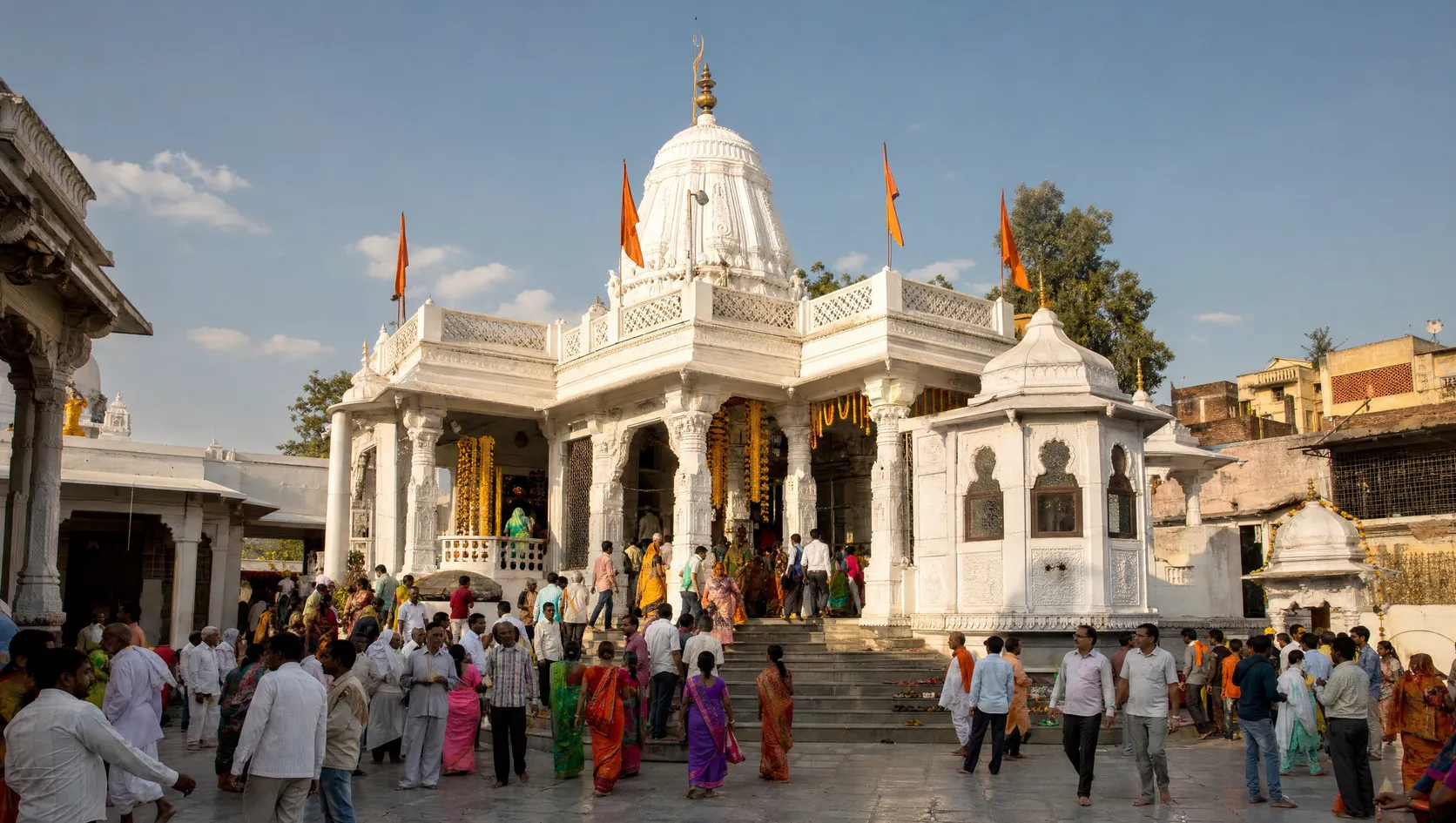
A Datta pilgrimage town centred on the samadhi mandir and the vatavriksha (banyan) math, with associated shrines, in the plain Maharashtrian idiom
Special
The samadhi mandir and the vatavriksha math keep their daily rounds of worship, aarti and the repetition of the mantra Shri Swami Samarth. Timings are set by the sansthans and vary with the ritual calendar; they should be confirmed locally.
The Sacred Legend · पवित्र कथा
In the town of Akkalkot in the Solapur country of Maharashtra there lived, in the nineteenth century, a saint whose origin no one could trace and whose power everyone felt. He is known simply as Shri Swami Samarth, and the Datta tradition reveres him as a later manifestation of Dattatreya, the guru who is the three great gods in one, come again in a mysterious old ascetic who settled at Akkalkot and drew to himself the devotion of thousands. Where he came from, no one knew. The tradition tells of him appearing in various places before he reached Akkalkot, and holds by some accounts that he was none other than Nrisimha Saraswati of Ganagapur continuing his presence across the centuries. He gave no account of himself; he simply was, and to those who came to him in trouble he gave the assurance that has become his most beloved word: Bhiu nakos, mi tujhya pathishi aahe, fear not, I am with you. Swami Samarth lived at Akkalkot for more than two decades until his mahasamadhi in 1878, and the town became, and remains, one of the great centres of the Datta tradition in Maharashtra. His samadhi and the ancient banyan, the vatavriksha, under which he sat are the heart of the pilgrimage, and his mantra, Shri Swami Samarth, is repeated by a vast devotional movement that has carried his name and his assurance across the whole region and beyond.
Sacred Designationपवित्र पदनाम
Sacred Origin Storyपवित्र उत्पत्ति कथा
Source: The Datta Sampradaya and the tradition of Shri Swami Samarth of Akkalkot
The tradition of Swami Samarth begins in mystery. He gave no account of his birth or origin, and when asked, is said to have answered only in ways that turned the question aside; some accounts have him say he came from a great tree or from the forest, and the tradition holds by some tellings that he was Nrisimha Saraswati of Ganagapur, emerged again after centuries to continue his work. What is agreed is that he appeared in the world as a fully realised master, without the ordinary marks of a human life, and that this uncertainty of origin is itself part of how the tradition understands him: not a man who became a saint, but the guru present in human form.
He wandered before he settled, and the tradition tells of him at various places before he came to Akkalkot around the middle of the nineteenth century. There he stayed, and there the deeds gathered in his tradition were done: the sick healed, the barren given children, the doubting convinced, the arrogant humbled, the devoted transformed, in the manner of the Datta avatars before him. He spoke often in riddles and acted in ways that tested and taught, and to those who came in fear or need he gave the assurance that has become the heart of his cult: fear not, I am with you.
He took mahasamadhi at Akkalkot in 1878, and the tradition holds, as with the Datta avatars, that his passing was not an ending but a change of mode: he remains present to his devotees, held to answer those who call his name and repeat his mantra. The town of Akkalkot is understood as the place of his continuing presence, where the guru who would give no account of his origin is nonetheless reliably to be found by those who come to him.
Sources cited:
- Tradition of Shri Swami Samarth of Akkalkot
- Datta Sampradaya tradition
- Devotional literature and accounts of Swami Samarth's life and deeds
Other Traditions · अन्य परंपराएँ
The continuity of the Datta avatars
Scholarly Context
Shri Swami Samarth of Akkalkot is one of the most important figures of the modern Datta Sampradaya and of the wider tradition of Deccan sant devotion. His historical activity falls in the nineteenth century, with his residence at Akkalkot generally placed from the 1850s to his mahasamadhi in 1878, and he is among the best documented of the recent Datta saints, remembered in a large body of devotional literature. His reverence as a manifestation of Dattatreya, and in one strong strand as the continuing presence of Nrisimha Saraswati, places him within the tradition's understanding of the guru as a recurring divine presence rather than a single historical teacher. Scholars note the way the Datta tradition weaves its historical and semi-historical saints into a single continuing figure, and Swami Samarth is a central modern instance of this. Akkalkot in the modern period has become the centre of one of the largest devotional movements of Maharashtra, with the mantra Shri Swami Samarth and the assurance fear not, I am with you carried by organised sampradayas and seva movements across the region and among the Marathi diaspora. The town, the samadhi mandir and the vatavriksha math are its living centre, and the growth of the movement in the twentieth and twenty-first centuries makes Akkalkot one of the most visited of the Datta kshetras.
Historyइतिहास
Akkalkot is one of the great kshetras of the Datta Sampradaya, the town of Shri Swami Samarth, who is revered as a later manifestation of Dattatreya and, in a strong strand of the tradition, as the continuing presence of Nrisimha Saraswati of Ganagapur. Swami Samarth resided at Akkalkot from about the middle of the nineteenth century until his mahasamadhi in 1878, and the town has since become one of the most important and most visited centres of the Datta tradition in Maharashtra.
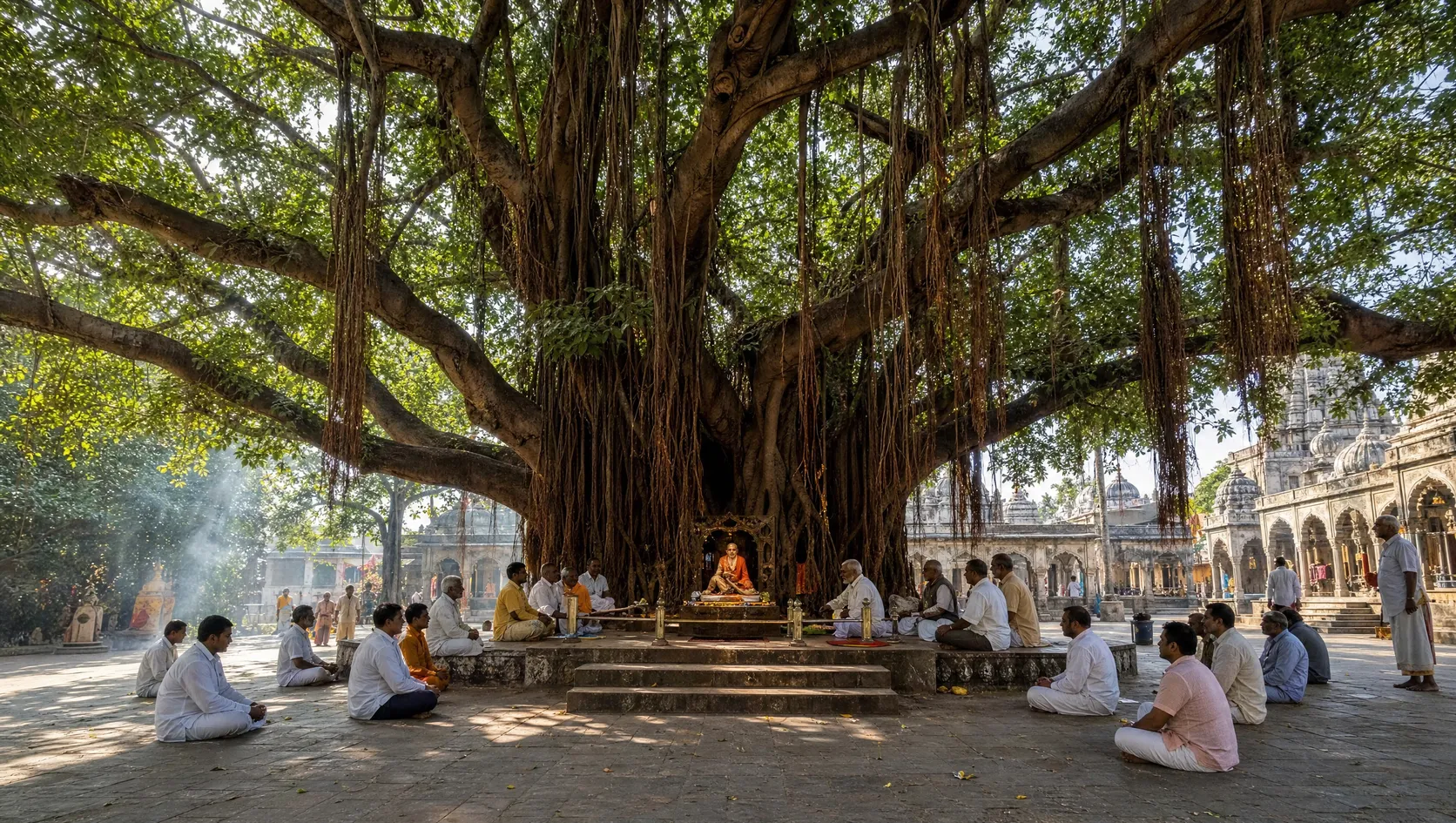
His origin was never known; he gave no account of himself, and the tradition treats this mystery as part of his nature as the guru present in human form. At Akkalkot the deeds of his tradition were done, and to those who came in trouble he gave his beloved assurance, fear not, I am with you, which has become the heart of his devotion. He sat beneath an ancient banyan, the vatavriksha, which remains a focus of the pilgrimage, and first stayed at the house of a devotee, Cholappa, which is also revered.
After his mahasamadhi his samadhi at Akkalkot became the centre of a growing devotion. The tradition holds, as with the Datta avatars, that he remains present, answering those who call his name, and the town developed as the place of that continuing presence, with the samadhi mandir and the vatavriksha math at its heart.
In the twentieth and twenty-first centuries the devotion to Swami Samarth has grown into one of the largest religious movements of Maharashtra, carried by organised sampradayas and seva movements, with his mantra, Shri Swami Samarth, repeated by vast numbers across the region and among the Marathi diaspora. Akkalkot today is a thronged pilgrimage town, drawing devotees year-round and great crowds on the days sacred to Swami Samarth, above all his Prakat Din and his Punyatithi, and it stands among the foremost living kshetras of the Datta tradition.
Historical Timelineऐतिहासिक कालक्रम
Shri Swami Samarth, a master of unknown origin, comes to Akkalkot and settles there, beginning the residence that would make the town one of the great kshetras of the Datta tradition.
His residence at Akkalkot is generally placed from around the 1850s; his origin is unknown and treated by the tradition as part of his nature.
Swami Samarth first stays at the house of the devotee Cholappa, which is revered to this day, and comes to sit beneath the ancient banyan, the vatavriksha, that becomes a focus of his devotees.
Cholappa's house and the vatavriksha are among the principal sacred spots of Akkalkot.
Over more than two decades at Akkalkot the deeds gathered in his tradition are done, and Swami Samarth gives his beloved assurance to those in need: fear not, I am with you.
The assurance 'Bhiu nakos, mi tujhya pathishi aahe' has become the central word of his devotion.
Swami Samarth takes mahasamadhi at Akkalkot; the tradition holds, as with the Datta avatars, that his passing is not an ending but a change of mode, and that he remains present to those who call him.
His mahasamadhi in 1878 is the central date of his historical life; the samadhi becomes the focus of the pilgrimage.
After his mahasamadhi the samadhi mandir and the vatavriksha math develop as the centre of a growing devotion, and the town of Akkalkot takes shape as the place of the guru's continuing presence.
The saint of Akkalkot and his growing following are recorded in colonial-era and early devotional accounts of the religious life of the Deccan, which note the spread of his devotion.
The devotion to Swami Samarth grows into one of the largest religious movements of Maharashtra, carried by organised sampradayas and seva movements that spread his mantra and his assurance across the region.
Organised movements have carried the mantra Shri Swami Samarth and his devotion widely through the twentieth century.
Akkalkot continues to grow as a pilgrimage centre, with the samadhi mandir and vatavriksha math drawing devotees year-round and the movement extending among the Marathi diaspora abroad.
Akkalkot remains among the foremost living kshetras of the Datta tradition, drawing devotees year-round and great crowds on the days sacred to Swami Samarth, above all his Prakat Din and his Punyatithi.
What You'll Seeदर्शन में
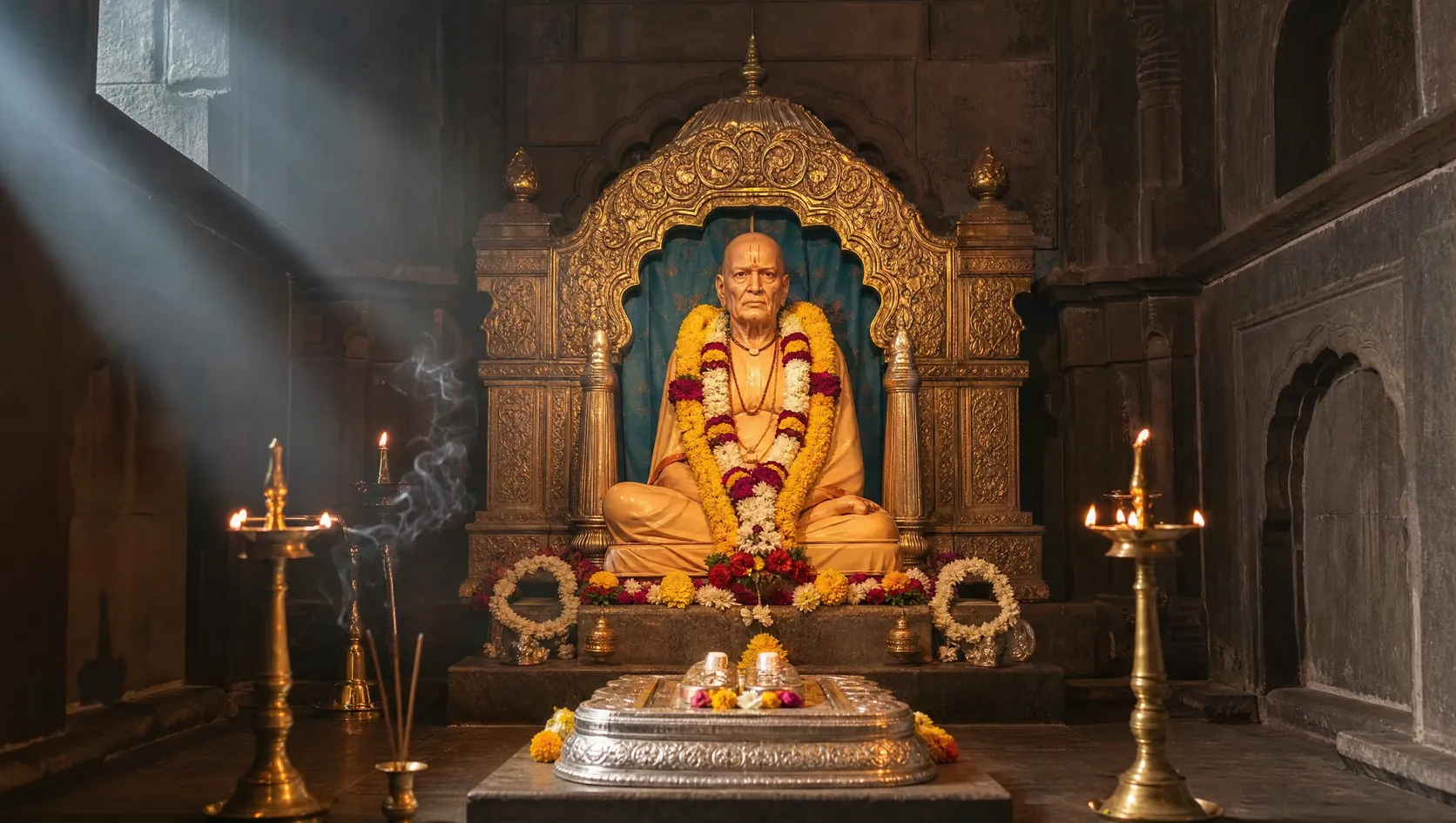
The centre of worship at Akkalkot is the samadhi of Swami Samarth, the tomb-shrine where the guru's body was laid, worshipped as the seat of his continuing presence, and the image and padukas of the master venerated within the mandir. Swami Samarth is depicted, and remembered, as a tall, powerfully built old ascetic with a long beard, often seated, an image of great authority and calm that his devotees hold in their homes as well as at the shrine.
Beside the samadhi stands the vatavriksha, the ancient banyan under which he sat, itself an object of reverence: as the audumbara is the tree of Dattatreya, so this banyan is bound to Swami Samarth, and devotees revere it as a living witness to his presence. The house of Cholappa, where he first stayed, is also honoured among the sacred spots of the town.
The deepest icon of Akkalkot, though, is not a form but a word and a name: the mantra Shri Swami Samarth, repeated by his devotees as the sound of his presence, and the assurance fear not, I am with you, held to be his living promise. In the Datta manner the guru is worshipped as present rather than remembered as past, and the samadhi, the banyan and the mantra together carry that presence, the tomb not as a memorial but as a place where the master is held still to be found.
Distinctive Practicesविशिष्ट परंपराएँ
Repetition of the Mantra Shri Swami Samarth
श्री स्वामी समर्थ मंत्र का जप
Continuous, in the devotee's practice
The central practice of the tradition is the repetition of the name and mantra Shri Swami Samarth, held to bring the guru's presence and protection, taken up by his devotees in daily japa and carried by the organised seva movements that have spread his devotion across Maharashtra and beyond.
In the Datta tradition the name of the guru is not a label but a presence: to repeat Shri Swami Samarth is held to call the master himself, and to place oneself within his assurance, fear not, I am with you. The mantra is short and plain, a name and nothing more, and that plainness is the point; it needs no learning and no qualification, only the trust that the guru answers to his name. The whole devotion of Akkalkot rests on this: that the master is reliably present to those who call him.
Darshan at the Samadhi and the Vatavriksha
समाधि और वटवृक्ष पर दर्शन
Year-round, at the samadhi mandir and the vatavriksha math
Devotees come for darshan at the samadhi of Swami Samarth, the seat of his continuing presence, and at the vatavriksha, the ancient banyan under which he sat, taking the two together as the heart of the Akkalkot pilgrimage.
The samadhi is worshipped not as a grave but as a living seat: the tradition holds that the guru is present there, and to take his darshan is to come into his company. The vatavriksha carries the same presence, the tree bound to the master as a place where he sat and where he is felt to sit still. Together they make Akkalkot a place where the guru is met rather than merely honoured, the tomb and the tree the two points where his presence is held to be closest.
Seva and the Assurance to the Fearful
सेवा और भयभीत को आश्वासन
In the devotee's life and in the seva movements
The tradition of Swami Samarth is marked by seva, selfless service, and by the bringing of the fearful and troubled to the guru's assurance; the organised movements in his name undertake service alongside the spread of his mantra, and devotees come to Akkalkot above all with their fears and needs, in trust of his promise.
The assurance fear not, I am with you is the tradition's answer to human fear, and it defines the character of the devotion: Swami Samarth is approached not as a distant power to be appeased but as a guardian who has promised his presence. Seva, service to others, is held to be the natural response of one who has received that assurance, and the movements in his name join the inward practice of the mantra to the outward practice of service, so that the fear taken to the guru is returned as care for others.
Did You Know?क्या आप जानते हैं?
Akkalkot is the town of Shri Swami Samarth, revered as a later manifestation of Dattatreya, who resided here until his mahasamadhi in 1878.
Tradition of Shri Swami Samarth
His origin was never known; the tradition treats the mystery of where he came from as part of his nature as the guru present in human form.
Devotional accounts of Swami Samarth
His most beloved word is the assurance Bhiu nakos, mi tujhya pathishi aahe: fear not, I am with you, the heart of his devotion.
Swami Samarth tradition
A strong strand of the tradition holds Swami Samarth to be the continuing presence of Nrisimha Saraswati of Ganagapur, binding the two great Datta kshetras as earlier and later abodes of one guru.
Datta Sampradaya tradition
The ancient banyan, the vatavriksha, under which Swami Samarth sat is revered beside his samadhi, as the audumbara is revered as the tree of Dattatreya.
Akkalkot tradition
The mantra Shri Swami Samarth, a name and nothing more, is repeated by one of the largest devotional movements of Maharashtra and carried among the Marathi diaspora abroad.
Modern history of the Swami Samarth movement
Swami Samarth first stayed at the house of the devotee Cholappa, which is revered among the sacred spots of Akkalkot alongside the samadhi and the vatavriksha.
Devotional accounts of Swami Samarth
His mahasamadhi in 1878 is the central date of his historical life, and the samadhi at Akkalkot became the focus of a devotion that has only grown since.
Tradition of Shri Swami Samarth
The devotion treats the samadhi not as a grave but as a living seat: the tradition holds Swami Samarth present there still, answering those who repeat his name.
Datta Sampradaya tradition
Visitor Accessप्रवेश जानकारी
The samadhi mandir and the vatavriksha math are open to devotees, and traditional dress and conduct are expected. Footwear is removed at the shrines. Akkalkot is a busy pilgrimage town, and the principal sacred spots, the samadhi, the vatavriksha and Cholappa's house, lie within it and are commonly taken together. Queues can be long, especially on the days sacred to Swami Samarth. The shrines are administered by sansthans that keep the daily worship and manage the crowds. The town is easily reached from Solapur, and facilities for pilgrims are good. Timings are set by the sansthans and vary with the ritual calendar; confirm current arrangements locally, especially around the great festival days.
See the principal sacred spots together: the samadhi mandir, the vatavriksha math and Cholappa's house, all within the town. Dress traditionally and remove footwear at the shrines. Expect long queues on the days sacred to Swami Samarth, and plan a visit on an ordinary day for a more unhurried darshan. Akkalkot is reached from Solapur, the nearest major junction, about 40 km away, by road, and from Akkalkot Road railway station. Many Datta pilgrims combine it with Ganagapur and the other Datta kshetras of the region. Take up the repetition of the mantra Shri Swami Samarth, the central practice of the tradition, and come, as its devotees do, in trust of the guru's assurance.
Festivalsत्योहार
Shri Swami Samarth Prakat Din
श्री स्वामी समर्थ प्रकट दिन
Varies (the day of the guru's appearance)
The day marking the appearance of Swami Samarth, celebrated with great devotion at Akkalkot as the coming of the guru into the world, drawing large crowds for special worship and the repetition of his mantra.
Swami Samarth Punyatithi
स्वामी समर्थ पुण्यतिथि
Apr-May (Chaitra, the day of his mahasamadhi in 1878)
The anniversary of the mahasamadhi of Swami Samarth, kept as a solemn and central observance at Akkalkot with special worship at the samadhi and the recollection of his continuing presence, one of the great days of the kshetra.
Datta Jayanti
दत्त जयंती
Nov-Dec (Margashirsha Purnima)
The birth-anniversary of Dattatreya, the great festival of the Datta tradition, observed at Akkalkot with special worship, since Swami Samarth is revered as a manifestation of Dattatreya himself.
Guru Purnima
गुरु पूर्णिमा
Jun-Jul (Ashadha Purnima)
The day dedicated to the guru is of particular importance in the guru-centred devotion of Akkalkot, observed with the worship of Swami Samarth and of Dattatreya, the Adi Guru.
Traditional Offeringsपारंपरिक अर्पण
Primary Offerings
Repetition of the mantra Shri Swami Samarth
श्री स्वामी समर्थ मंत्र का जप
The central offering at Akkalkot is the repetition of the guru's name and mantra, Shri Swami Samarth, offered as the sound of his presence and held to call the master himself and to place the devotee within his assurance.
Service at the samadhi and the vatavriksha
समाधि और वटवृक्ष पर सेवा
The worship offered at the samadhi of Swami Samarth and at the vatavriksha, the banyan under which he sat, given as service to a living presence: the adornment, the aarti and the reverence offered before them.
Prasad and the naivedya of the guru
प्रसाद और गुरु का नैवेद्य
Food offered to Swami Samarth as naivedya and shared as prasad is received as the guru's grace made tangible, carrying his blessing to those who partake and taken home for those who could not come.
Lamps, incense and seva
दीप, धूप और सेवा
Lamps and incense are offered in the daily worship at the samadhi, marking the ritual rhythm of the shrine, and seva, selfless service, is held a natural offering of one who has received the guru's assurance, joining the inward practice of the mantra to the outward practice of service.
Unique to This Temple
The Offering of Fear to the Guru's Assurance
गुरु के आश्वासन को भय की भेंट
What is particular to Akkalkot is that the offering the tradition holds highest is the bringing of one's fear and need to the guru, in trust of his assurance: fear not, I am with you. Devotees come above all with their troubles, and the offering is the trust itself, the casting of one's fear upon the master who has promised his presence. A devotee offers the mantra, serves at the samadhi and brings naivedya, but the deepest offering is the fearful heart laid before the guru, and the blessing sought is the peace of his assurance. The offering and the blessing meet in the trust: the devotee gives his fear, and Swami Samarth, held present still, is believed to answer with the promise that has become the heart of his devotion.
Offerings at Akkalkot follow the Datta tradition of guru devotion, centred on the repetition of the mantra Shri Swami Samarth, service at the samadhi and the vatavriksha, and the bringing of one's fears and needs to the guru in trust of his assurance. Eternal Raga presents these practices as a devotional tradition; specific seva and offering arrangements should be confirmed with the sansthans.
How to Reachकैसे पहुँचें
Akkalkot lies in Solapur district of southern Maharashtra, near the Karnataka border, and is easily reached from the city of Solapur.
By air: Solapur has an airport with limited connections; Pune and Hyderabad are larger airports at a greater distance, from which Akkalkot is reached by road or rail via Solapur.
By rail: Akkalkot Road railway station is about 12 km from the town; Solapur, a major junction connected to Mumbai, Pune, Hyderabad and the wider network, is the principal railhead, about 40 km away.
By road: Akkalkot is well connected by road to Solapur and the towns of the region, served by frequent buses and taxis; the drive from Solapur is short. Many Datta pilgrims combine it with Ganagapur and the other Datta kshetras.
Within the town the samadhi mandir, the vatavriksha math and Cholappa's house are close together and easily reached on foot or by autorickshaw.
Plan Your Visitयात्रा की योजना
🌤 Best Season
October to March is the most comfortable time to visit, with milder temperatures in the Solapur region. The days sacred to Swami Samarth, above all his Prakat Din and Punyatithi, and Datta Jayanti in November or December, are the great festival occasions and the busiest times. April to June is hot in this part of the Deccan, and the middle of the day is best avoided. The monsoon brings rain but the town remains accessible. Early morning and evening, around the aarti at the samadhi, are the most atmospheric times to be at the shrine, when worship is active and the crowds and heat least.
👘 Dress Code
Traditional and modest dress is expected at the shrines, as at a working religious centre. Men commonly wear a dhoti or trousers with a shirt; women a saree or salwar kameez. Footwear is removed at the shrines.
📱 Phones & Photography
Photography is generally restricted within the sanctum and at the samadhi; follow the posted rules and the directions of the sansthans, and keep phones silenced within the shrines.
🏨 Accommodation
Akkalkot has a range of accommodation geared to pilgrims, including bhakta nivas and guest houses maintained by the sansthans, dharamshalas and hotels in and around the town. Standards range from simple to comfortable, suited to the pilgrimage. Demand rises sharply around the days sacred to Swami Samarth and Datta Jayanti, when booking ahead is advisable. The larger city of Solapur, within easy reach by road, offers a fuller range of hotels for those who prefer to stay there and visit.
Sacred Soundsपवित्र ध्वनि
Did You Know? · क्या आप जानते हैं?
The same translation error that turned '33 Koti' into '33 crore' in Hinduism also happened in Buddhism. The Chinese translation of Buddhist texts rendered 'Sapta Koti Buddha' (7 Supreme Buddhas) as '7 Crore Buddhas.' The Tibetan translation got it right: 7 types, not 7 crore. One Sanskrit word, misread across two major world religions, generated two identical misconceptions independently.
Related Contentसंबंधित सामग्री
Related Scriptures
Community Reflections
🕉️
Be the first to share your reflection.