Audumbar
औदुम्बर
The Datta kshetra on the Krishna where Nrisimha Saraswati kept a chaturmas beneath the sacred audumbara tree
Audumbar, Maharashtra, India
Auduṃbara (Datta Kṣetra)Also known as: Audumbar, Bhuvaneshwari Audumbar, Audumbar Datta Kshetra, Oudumber
Era
Bound to Nrisimha Saraswati, revered as the second avatar of Dattatreya, held by tradition to have kept a chaturmas here; the shrine of the padukas beneath the audumbara is the focus
Architecture
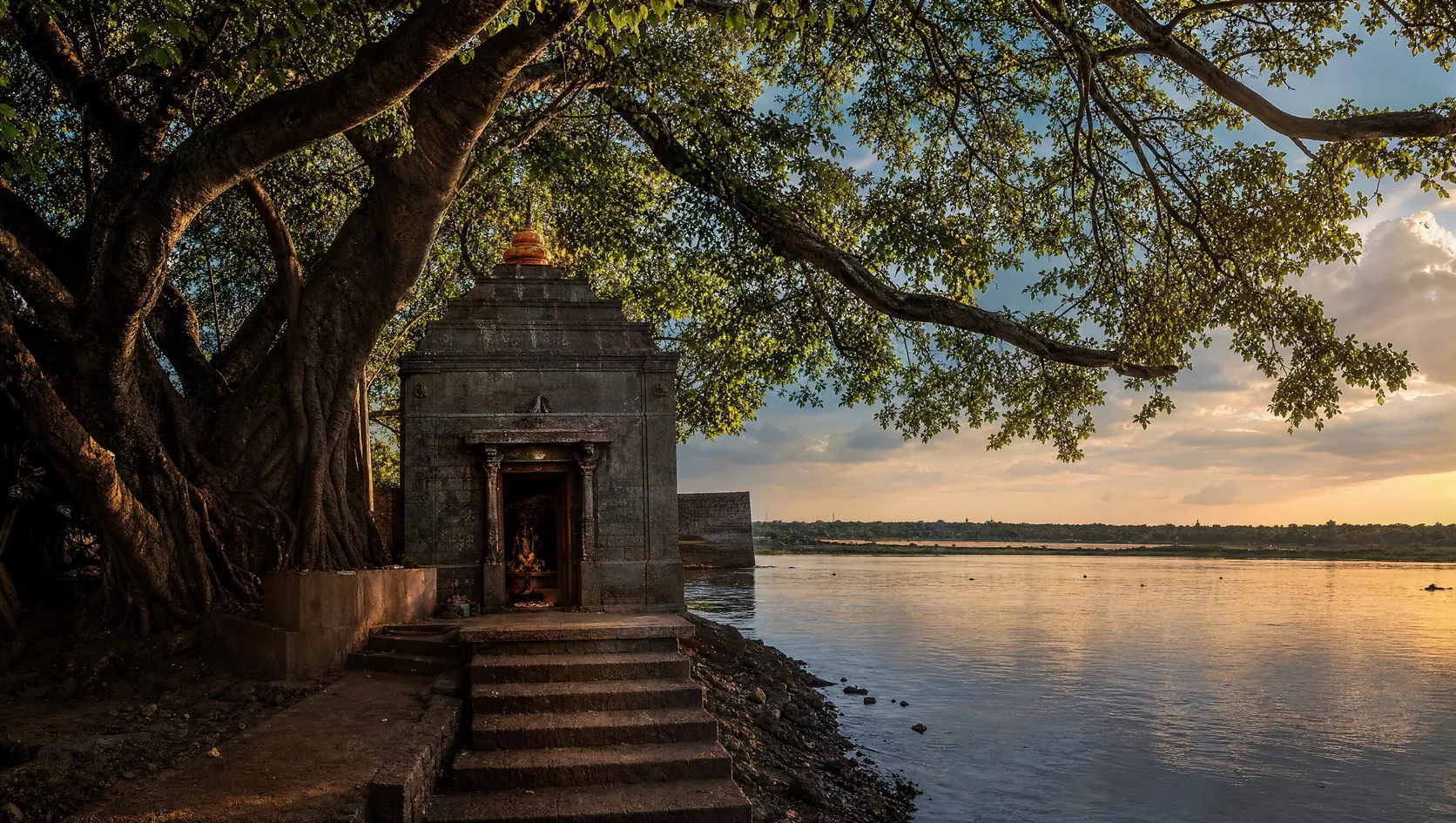
A Datta pilgrimage spot on the Krishna riverbank, centred on the padukas beneath the sacred audumbara, with the Bhuvaneshwari shrine, in the plain Maharashtrian idiom
Special
The shrine keeps the daily worship of the padukas beneath the audumbara with its rounds of abhishekha and aarti, and pilgrims undertake the recitation of the Sri Guru Charitra. Timings are set by the shrine and vary with the ritual calendar and the state of the river.
The Sacred Legend · पवित्र कथा
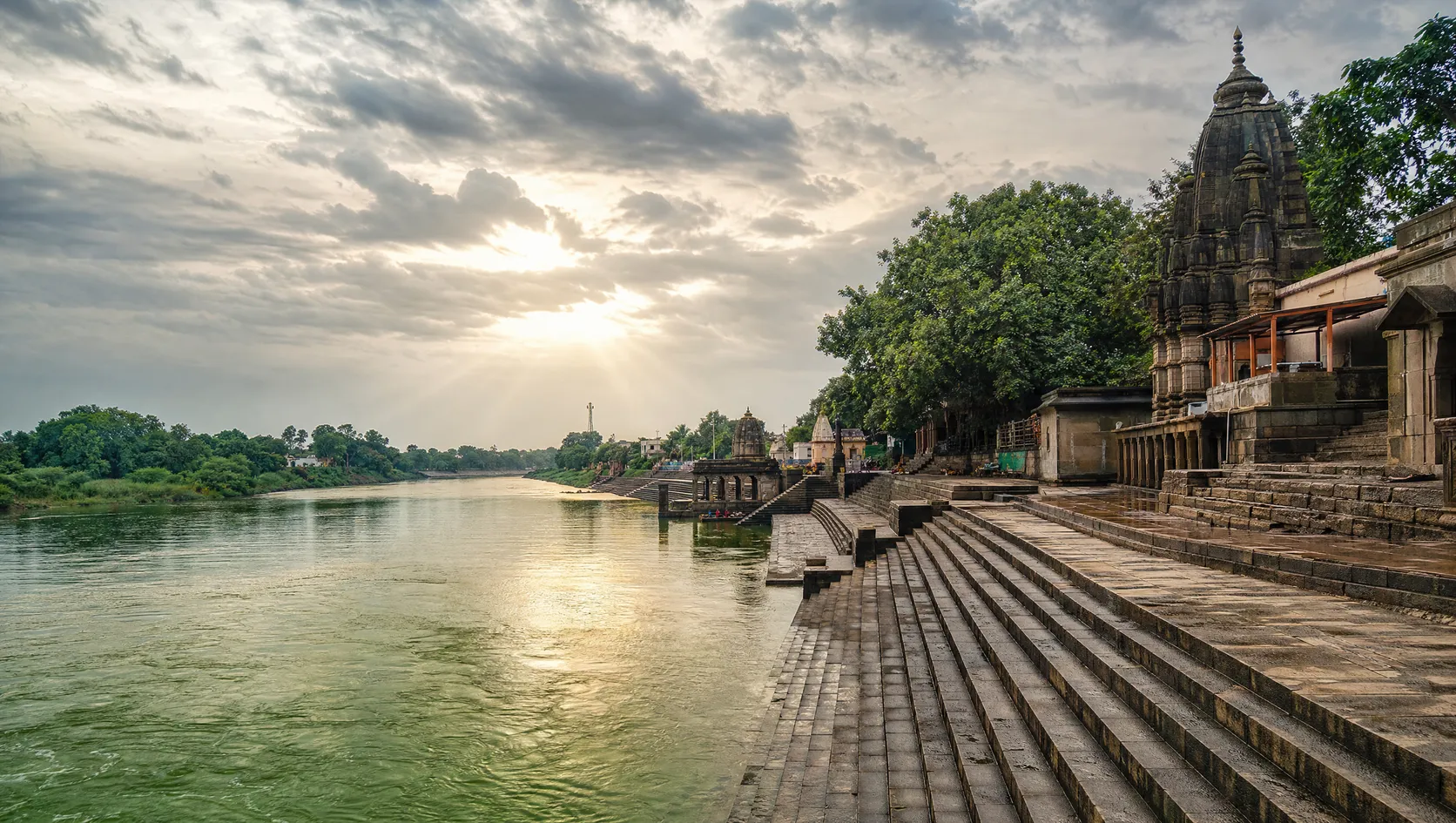
On the bank of the Krishna in the Sangli country of Maharashtra lies Audumbar, one of the cherished kshetras of the Datta tradition, named for the tree that is the very sign of Dattatreya. The audumbara, the cluster fig, is to the Datta tradition what the pipal is to Vishnu or the bilva to Shiva, and this place, named for it, is held to be a spot where the guru dwells at the foot of the tree. The Sri Guru Charitra tells that Nrisimha Saraswati, revered as the second avatar of Dattatreya, kept a chaturmas here, the four months of the rains during which a renunciate stays in one place, in deep austerity beneath the audumbara on the Krishna. Though his residence at Audumbar was short beside his years at Narsobawadi and Ganagapur, the tradition holds the place especially charged with his presence, and his padukas are worshipped here as the mark of his stay. Audumbar is a place of the tree, the river and the guru together: the sacred audumbara held to be his dwelling, the Krishna at whose edge he sat, and the padukas through which he is worshipped. Bound also to the goddess Bhuvaneshwari, whose shrine stands here, it is a quiet kshetra of the Krishna valley, drawing pilgrims of the Datta tradition who come to sit beneath the tree, bathe in the river, and recite the Sri Guru Charitra where the guru kept his rains.
Sacred Designationपवित्र पदनाम
Sacred Origin Storyपवित्र उत्पत्ति कथा
Source: The Datta Sampradaya and the Sri Guru Charitra, the chaturmas of Nrisimha Saraswati at Audumbar
The Sri Guru Charitra tells that Nrisimha Saraswati, in his wanderings along the Krishna, kept a chaturmas at Audumbar, the four months of the monsoon during which a renunciate remains in one place and turns to intense austerity. He chose this spot beneath the audumbara, the cluster fig that is the tree of Dattatreya, and there he stayed through the rains in tapas, so that the tree, the river and the guru are joined at the place.
Audumbar is bound in the Charitra to episodes of the guru's grace, above all the story of a dull and unlettered brahmin boy who, by the guru's blessing, became a master of learning, an instance of the power the tradition holds in the recitation and the grace given at this spot. The kshetra is remembered as a place where the slow are made wise and the barren of understanding are filled, and the recitation of the Guru Charitra here is held especially fruitful.
Though the guru's stay was a single chaturmas, short beside his years at Narsobawadi and Ganagapur, the tradition holds Audumbar especially charged with his presence, precisely because it is the tree-kshetra, the place named for the audumbara at whose foot Dattatreya is always held to dwell. The padukas worshipped here mark the guru's chaturmas, and the tradition holds that Nrisimha Saraswati is present at the foot of the audumbara at Audumbar as Dattatreya is present at every audumbara.
Sources cited:
- Sri Guru Charitra
- Datta Sampradaya tradition of Audumbar
- Tradition of the audumbara as the tree of Dattatreya
Scholarly Context
Audumbar is one of the network of Datta kshetras on the Krishna, closely associated with Nrisimha Saraswati, the figure the Sri Guru Charitra presents as the second avatar of Dattatreya. In the tradition's account it is the place of his chaturmas, the single monsoon retreat, distinct from his longer residences at Narsobawadi and Ganagapur but no less charged in the tradition's understanding. The kshetra is distinctive for taking its name and its whole meaning from the audumbara, the cluster fig, which the Datta tradition holds to be the dwelling of Dattatreya. This association of the guru with a particular tree is characteristic of the tradition, and Audumbar is the kshetra where that association is most explicit, the place being named for the tree itself. The worship of padukas beneath the tree, rather than an anthropomorphic image, follows the guru-centred devotion of the tradition. Audumbar is also bound to the goddess Bhuvaneshwari, whose shrine stands at the kshetra, joining the Datta devotion to the worship of the goddess, a pairing found at several Datta sites. Scholars note Audumbar among the cluster of Krishna-valley Datta kshetras, taken by pilgrims together with Narsobawadi nearby, and treat it as an instance of the way the tradition maps its sacred geography onto the sites of the guru's residence, however brief, along the sacred river.
Historyइतिहास
Audumbar is a cherished kshetra of the Datta Sampradaya on the bank of the Krishna in Sangli district, Maharashtra, named for the audumbara, the cluster fig that is the tree of Dattatreya. The Sri Guru Charitra holds that Nrisimha Saraswati, revered as the second avatar of Dattatreya, kept a chaturmas here, the four monsoon months of a renunciate's retreat, in deep austerity beneath the audumbara on the river, and his padukas are worshipped at the spot as the mark of his stay.
Though the guru's residence at Audumbar was a single chaturmas, short beside his years at Narsobawadi and Ganagapur, the tradition holds the place especially charged with his presence, precisely because it is the tree-kshetra, named for the audumbara at whose foot Dattatreya is always held to dwell. The Charitra binds Audumbar to episodes of the guru's grace, above all the making of a dull brahmin boy into a master of learning, and the recitation of the Guru Charitra here is held especially fruitful.
The kshetra is bound also to the goddess Bhuvaneshwari, whose shrine stands here, joining the Datta devotion to the worship of the goddess. Over the centuries Audumbar has been sustained by the devotion of the Datta tradition, taken by pilgrims together with Narsobawadi nearby, and its life, like that of the other Datta kshetras, is one of the padukas, the sacred tree, the river bath and the recitation of the Charitra rather than of monumental building.
Audumbar remains a quiet living kshetra of the Krishna valley, drawing pilgrims of the Datta tradition who come to sit beneath the audumbara, bathe in the river and recite the Sri Guru Charitra where the guru kept his rains, in the belief that Nrisimha Saraswati is present still at the foot of the tree.
Historical Timelineऐतिहासिक कालक्रम
Nrisimha Saraswati, revered as the second avatar of Dattatreya, is held by tradition to have kept a chaturmas at Audumbar, in deep austerity beneath the sacred audumbara on the Krishna.
The chaturmas, the four-month monsoon retreat, is the tradition's account of the guru's stay at Audumbar.
The guru leaves his padukas at Audumbar, worshipped beneath the audumbara as the mark of his chaturmas and the sign of his continuing presence at the foot of the tree.
The padukas beneath the audumbara are the object of worship, characteristic of the tradition's guru-centred devotion.
The Charitra binds Audumbar to episodes of the guru's grace, above all the making of a dull brahmin boy into a master of learning, giving the kshetra its character as a place where the slow are made wise.
The episode of the dull boy made wise is among the Charitra's deeds associated with Audumbar.
The Sri Guru Charitra establishes Audumbar in the tradition's map of the Datta kshetras of the Krishna, and the recitation of the Charitra here is held especially fruitful.
The kshetra's practices take enduring shape: the worship of the padukas beneath the audumbara, the bath in the Krishna, the reverence of the sacred tree, and the recitation of the Sri Guru Charitra.
The shrine of the goddess Bhuvaneshwari takes its place at the kshetra, joining the Datta devotion to the worship of the goddess, as at several Datta sites.
Audumbar and the Datta tradition of the Krishna valley are recorded in colonial-era accounts of the religious life of the Deccan, which note the kshetra among the Datta sites of the region.
The Datta Sampradaya flourishes in the modern period, and Audumbar continues as one of the cluster of Krishna-valley kshetras, its worship and its distinctive reverence of the sacred tree carried on unbroken.
Audumbar remains a quiet living kshetra of the Datta tradition, drawing pilgrims year-round and larger numbers on Datta Jayanti, often taken together with Narsobawadi nearby, who come to sit beneath the audumbara and recite the Sri Guru Charitra.
Those seeking learning, clarity and the quickening of the mind come to Audumbar in particular, in the memory of the dull boy made wise here, undertaking the recitation of the Guru Charitra beneath the tree for that grace.
The association with the quickening of the mind draws students and those seeking learning to the kshetra.
What You'll Seeदर्शन में
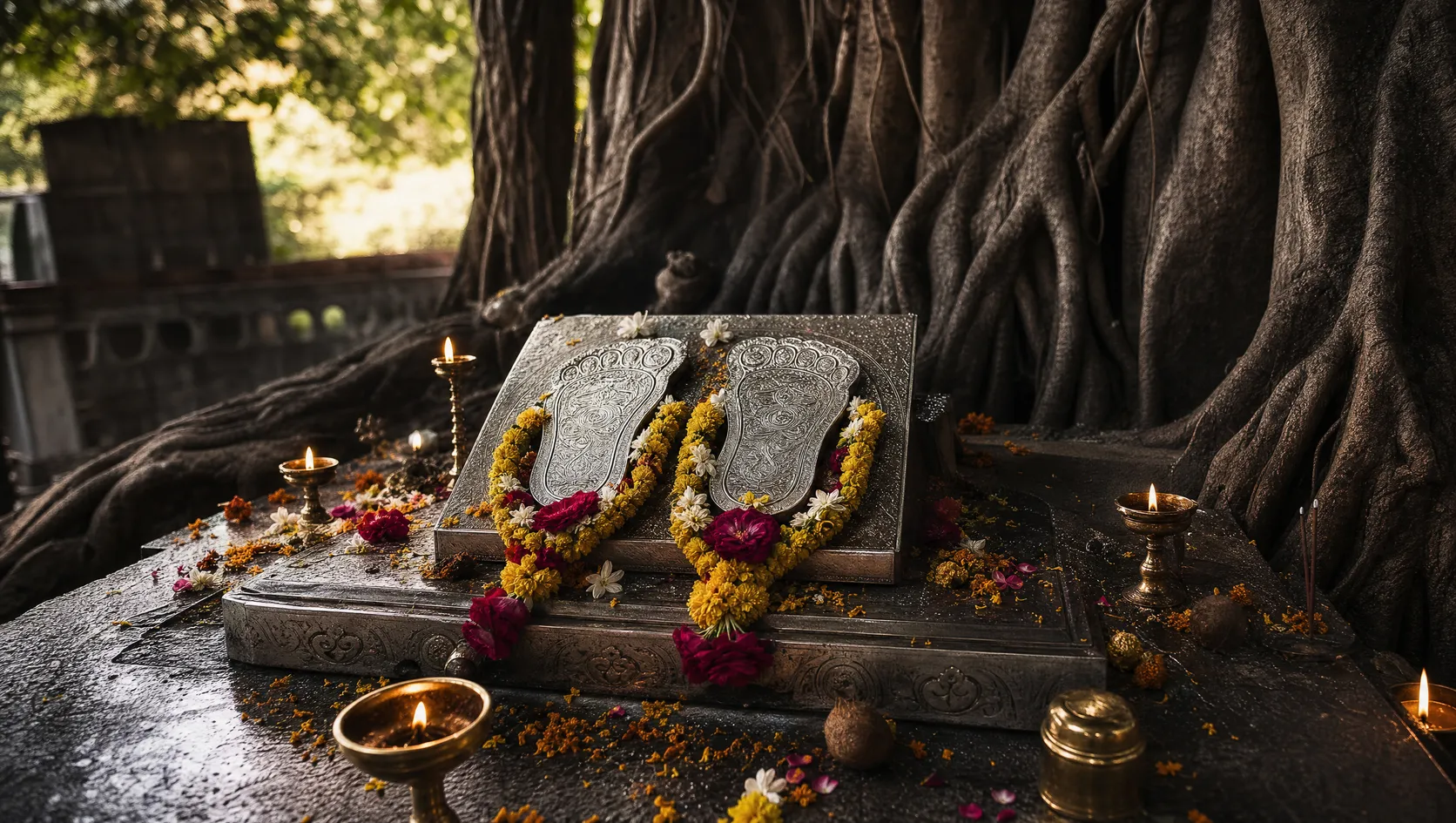
The object of worship at Audumbar is the padukas of Nrisimha Saraswati, set beneath the sacred audumbara, the cluster fig that gives the kshetra its name. As at the other Datta kshetras, the guru is worshipped not through an image of his form but through the footprint-impressions, the mark of his chaturmas, held to be the sign of his continuing presence at the foot of the tree.
The deepest icon of Audumbar, though, is the audumbara itself. The cluster fig is to the Datta tradition what the pipal is to Vishnu, the tree at whose foot Dattatreya is always held to dwell, and at Audumbar, the kshetra named for it, the tree is worshipped as the very presence of the guru. To sit beneath the audumbara here is held to be to sit at Dattatreya's own feet, and the tree is the controlling image of the place, more than any carved form.
The wider iconography of the tradition surrounds this centre: Dattatreya with three heads for Brahma, Vishnu and Shiva united, six hands, the four dogs of the Vedas and the cow, standing by the audumbara. And beside the Datta shrine stands the goddess Bhuvaneshwari, the ruler of the worlds, whose presence joins the worship of the goddess to that of the guru. The padukas beneath the tree, the tree itself, and the goddess together make the iconography of Audumbar: the guru worshipped at the foot of his own tree, by the river, in the company of the goddess.
Distinctive Practicesविशिष्ट परंपराएँ
Sitting Beneath the Audumbara
औदुम्बर के नीचे बैठना
Year-round, for pilgrims at the kshetra
Pilgrims come to sit beneath the sacred audumbara, the cluster fig at whose foot the guru kept his chaturmas and at whose foot Dattatreya is always held to dwell, taking the place beneath the tree as the closest approach to the guru's presence.
The audumbara is not a symbol of Dattatreya but his dwelling: the tradition holds that the guru is present at the foot of the tree, and at Audumbar, the kshetra of the tree, that presence is held to be at its most reliable. To sit beneath the audumbara is therefore not to meditate near a holy object but to place oneself in the guru's company, at the very foot where he is held to be, and the practice is one of simply being present with him beneath the tree.
Recitation of the Sri Guru Charitra
श्री गुरु चरित्र का पाठ
Undertaken as a saptaha or set-day parayana
Pilgrims undertake the parayana of the Sri Guru Charitra at Audumbar, the disciplined recitation of the tradition's central scripture, held especially fruitful here for the grace associated with the spot, above all the making of the dull into the wise.
The tradition binds Audumbar to the episode of the dull brahmin boy made a master of learning by the guru's grace, and the recitation of the Charitra here is held to carry that same power, to fill the empty and quicken the slow. To read the guru's scripture at the place of that grace is to bring the text and its promise together, in the hope that what the guru gave the boy he may give the reciter, and the parayana at Audumbar is undertaken above all by those who seek learning, clarity and the quickening of the mind.
The River Bath and Worship of Bhuvaneshwari
नदी-स्नान और भुवनेश्वरी की उपासना
Daily, for pilgrims at the kshetra
Pilgrims bathe in the Krishna as the purifying rite of the kshetra before worship, and take the darshan of the goddess Bhuvaneshwari, whose shrine stands at Audumbar, joining the worship of the goddess to that of the guru.
The Krishna is the sacred river of the Datta kshetras, and to bathe in it before worship is to come clean to the guru at the foot of his tree. The presence of Bhuvaneshwari, the ruler of the worlds, joins the goddess to the Datta devotion, a pairing found at several Datta sites, in which the guru who is the three gods and the goddess who is their power are worshipped together, so that the kshetra holds both the teacher and the mother.
Did You Know?क्या आप जानते हैं?
Audumbar is a Datta kshetra named for the audumbara, the cluster fig that is the tree of Dattatreya, at whose foot the guru is always held to dwell.
Datta Sampradaya tradition
The Sri Guru Charitra holds that Nrisimha Saraswati kept a chaturmas here, the four monsoon months of a renunciate's retreat, in austerity beneath the tree.
Sri Guru Charitra
The guru is worshipped here through his padukas beneath the audumbara, rather than through an image of his form, as at the other Datta kshetras.
Kshetra tradition of Audumbar
The Charitra binds Audumbar to the story of a dull brahmin boy made a master of learning by the guru's grace, so the recitation here is sought for clarity and learning.
Sri Guru Charitra
The kshetra stands on the bank of the Krishna, and pilgrims bathe in the river before worship, as at the other Datta sites of the valley.
Kshetra tradition
The shrine of the goddess Bhuvaneshwari, the ruler of the worlds, stands at Audumbar, joining the worship of the goddess to that of the guru.
Kshetra tradition of Audumbar
Though the guru's stay here was a single chaturmas, shorter than at Narsobawadi or Ganagapur, the tradition holds Audumbar especially charged as the kshetra of the tree.
Datta Sampradaya tradition
Audumbar is often taken by pilgrims together with Narsobawadi nearby, the two forming part of the cluster of Datta kshetras along the Krishna.
Current pilgrimage practice
Visitor Accessप्रवेश जानकारी
The shrine is open to devotees, and traditional dress and conduct are expected as at a working kshetra. Footwear is removed at the shrine, and photography is generally not permitted at the padukas. Audumbar is a quiet riverside kshetra, and pilgrims commonly come to sit beneath the audumbara, bathe in the Krishna, take the darshan of Bhuvaneshwari and recite the Sri Guru Charitra, often over several days. The place is geared to Datta pilgrims rather than to sightseeing. Because the kshetra is on the riverbank, its routine can be affected by the state of the Krishna, particularly in the monsoon. Confirm current arrangements locally, especially around Datta Jayanti.
Come to Audumbar to sit beneath the sacred audumbara, bathe in the Krishna, take the darshan of Bhuvaneshwari and, if you wish, recite the Sri Guru Charitra, held especially fruitful here. Allow unhurried time rather than a quick visit. Dress traditionally, remove footwear at the shrine, and respect the ban on photography at the padukas. Carry a change of clothes for the river bath, and note the state of the Krishna in the monsoon. Audumbar is reached from Bhilawadi railway station and by road from Sangli and Miraj, and is commonly combined with Narsobawadi nearby and the other Datta kshetras of the region.
Festivalsत्योहार
Datta Jayanti
दत्त जयंती
Nov-Dec (Margashirsha Purnima)
The birth-anniversary of Dattatreya, the great festival of the Datta tradition, observed at Audumbar with special worship of the padukas beneath the audumbara, recitation and gatherings, the central day of the kshetra's year.
Guru Purnima
गुरु पूर्णिमा
Jun-Jul (Ashadha Purnima)
The day dedicated to the guru is of particular importance in a tradition centred on the guru principle, observed at Audumbar with the worship of Dattatreya, the Adi Guru, and of Nrisimha Saraswati beneath the sacred tree.
Nrisimha Saraswati observances
नृसिंह सरस्वती अनुष्ठान
Varies (days sacred to the guru)
The days sacred to Nrisimha Saraswati, whose chaturmas hallowed the kshetra, are observed with special worship of the padukas and recitation of the Sri Guru Charitra beneath the audumbara.
Navaratri (Bhuvaneshwari)
नवरात्रि (भुवनेश्वरी)
Sep-Oct (Ashwin)
As the goddess Bhuvaneshwari has her shrine at Audumbar, Navaratri is observed with worship of the goddess over its nine nights, tying the Datta kshetra to the worship of the divine feminine.
Traditional Offeringsपारंपरिक अर्पण
Primary Offerings
Service to the padukas beneath the audumbara
औदुम्बर के नीचे पादुकाओं की सेवा
The central offering at Audumbar is service to the padukas beneath the sacred audumbara: their abhishekha, their adornment and the aarti, given to the footprints as to the presence of Nrisimha Saraswati at the foot of the tree.
Reverence at the audumbara tree
औदुम्बर वृक्ष पर श्रद्धा
Reverence offered at the audumbara itself, the tree of Dattatreya at whose foot the guru is held to dwell, is central at the kshetra named for it; pilgrims circle and sit beneath the tree as worship of the guru present there.
The river bath and worship of Bhuvaneshwari
नदी-स्नान और भुवनेश्वरी की उपासना
The bath in the Krishna before worship, and the offering of reverence to the goddess Bhuvaneshwari at her shrine, join the purification of the river and the worship of the goddess to the service of the guru.
Lamps, incense and naivedya
दीप, धूप और नैवेद्य
Lamps and incense are offered in the daily worship of the padukas, and food as naivedya, shared as prasad, marking the ritual rhythm of the kshetra and carrying the guru's grace to those who partake.
Unique to This Temple
The Offering of the Charitra for the Quickening of the Mind
मन के जागरण के लिए चरित्र की भेंट
What is particular to Audumbar is the recitation of the Sri Guru Charitra offered for learning and the quickening of the mind, in the tradition of the dull boy made wise here by the guru's grace. The parayana of the Charitra is the offering held highest, and at Audumbar it carries the particular hope of clarity and understanding. A pilgrim serves the padukas, reveres the tree and bathes in the river, but the offering the tradition holds highest is the recitation of the Charitra beneath the audumbara, undertaken above all by those who seek learning and the filling of the empty mind. The offering and the blessing meet in the reading: the devotee gives the discipline of the recitation, and the guru who made the dull boy a master is believed to give from it the same grace.
Offerings at Audumbar follow the Datta tradition, centred on the service of the padukas beneath the audumbara, the reverence of the sacred tree, the river bath, the worship of Bhuvaneshwari and the recitation of the Sri Guru Charitra. Eternal Raga presents these practices as a devotional tradition; specific arrangements should be confirmed at the kshetra.
How to Reachकैसे पहुँचें
Audumbar lies on the bank of the Krishna in Palus taluka of Sangli district in southern Maharashtra, near Bhilawadi, and is reached from the towns of the region.
By air: Kolhapur Airport is roughly 60 km away with limited connections; Belgaum and Pune are larger airports at a greater distance.
By rail: Bhilawadi railway station, a few kilometres away, is the nearest; Sangli and Miraj are larger junctions nearby, connected to Pune, Mumbai and the wider network.
By road: Audumbar is connected by road to Sangli, Miraj and the towns of the region, served by buses and taxis; the kshetra is on the riverbank, reached through the local roads.
Many Datta pilgrims combine Audumbar with Narsobawadi nearby, also on the Krishna, and with the other Datta kshetras of the region. Being a quiet riverside spot, Audumbar rewards an unhurried visit.
Plan Your Visitयात्रा की योजना
🌤 Best Season
October to March is the most comfortable time to visit, with milder temperatures in the Krishna valley and the river settled after the monsoon. Datta Jayanti, in November or December, is the great festival of the kshetra. April to June is hot in this part of the Deccan, and the middle of the day is best avoided. The monsoon, roughly June to September, brings the risk of the Krishna in flood, when the riverbank and the kshetra can be affected; those planning to visit or bathe in the monsoon should check the state of the river. The cooler post-monsoon months are the best for sitting beneath the audumbara, bathing in the settled river and undertaking the recitation of the Charitra.
👘 Dress Code
Traditional and modest dress is expected at the kshetra, as at a working religious centre. Men commonly wear a dhoti or trousers with a shirt; women a saree or salwar kameez. Footwear is removed at the shrine, and those bathing in the Krishna should carry a change of clothes.
📱 Phones & Photography
Photography is generally not permitted at the padukas and within the sanctum, and phones should be silenced across the shrine premises. Follow the directions of the shrine and the conventions of the kshetra, which is a place of quiet devotion rather than sightseeing.
🏨 Accommodation
Audumbar has simple lodging for pilgrims, including dharamshalas and guest houses for those who come to stay and undertake the disciplines of the kshetra, along with basic amenities. Standards are simple, suited to the quiet devotional character of the place. Many pilgrims stay at Narsobawadi nearby, or in the larger towns of Sangli and Miraj, within easy reach by road, which offer a fuller range of accommodation. Demand rises around Datta Jayanti, when arriving early is advisable.
Sacred Soundsपवित्र ध्वनि
Did You Know? · क्या आप जानते हैं?
The same translation error that turned '33 Koti' into '33 crore' in Hinduism also happened in Buddhism. The Chinese translation of Buddhist texts rendered 'Sapta Koti Buddha' (7 Supreme Buddhas) as '7 Crore Buddhas.' The Tibetan translation got it right: 7 types, not 7 crore. One Sanskrit word, misread across two major world religions, generated two identical misconceptions independently.
Related Contentसंबंधित सामग्री
Related Scriptures
Community Reflections
🕉️
Be the first to share your reflection.