Maniknagar Manik Prabhu
माणिकनगर माणिक प्रभु
The seat of Shri Manik Prabhu, the Datta saint who founded the Sakalmat Sampradaya, the path that welcomes all
Maniknagar, Karnataka, India
Māṇikanagar (Śrī Māṇik Prabhu)Also known as: Maniknagar Manik Prabhu, Shri Manik Prabhu Samsthan, Manik Nagar, Sakalmat Sampradaya seat
Era
Founded in the earlier nineteenth century by Shri Manik Prabhu, who took his samadhi at Maniknagar; the seat of the Sakalmat Sampradaya and a living peetham of his successors
Architecture
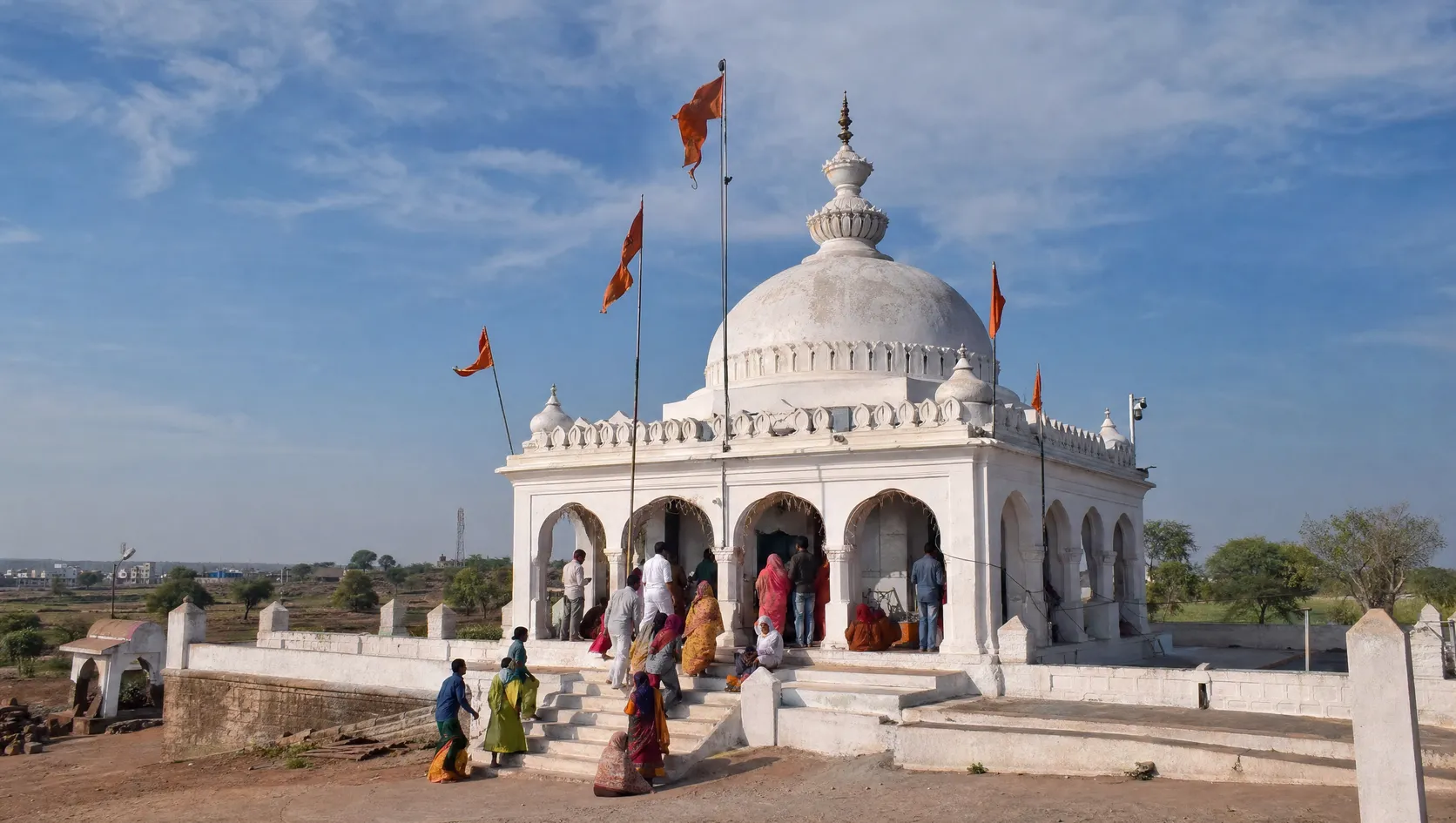
A Datta samsthan town centred on the samadhi mandir of Manik Prabhu and the peetham of his successors, with associated shrines, in the plain Deccan idiom
Special
The samadhi mandir keeps its daily rounds of worship and aarti, and the peetham of the Prabhus maintains the Sakalmat tradition; the great annual fair falls at Datta Jayanti. Timings are set by the samsthan and vary with the ritual calendar.
The Sacred Legend · पवित्र कथा
In the town of Maniknagar in the Bidar country of Karnataka is the seat of Shri Manik Prabhu, a nineteenth-century saint of the Datta tradition who founded a path of his own, the Sakalmat Sampradaya, the tradition that accepts all creeds. Revered as a manifestation of Dattatreya, the guru who is the three great gods in one, Manik Prabhu taught a devotion open to all, Hindu and Muslim alike, and his seat at Maniknagar is a place where that openness is still lived. The name Sakalmat means all the paths, or the acceptance of every faith, and it is the heart of Manik Prabhu's teaching: that the divine is one, approached by many roads, and that no seeker of any creed is turned away. His town, which he is said to have founded, drew and still draws devotees across the lines of religion, and his great annual fair at Datta Jayanti is among the notable gatherings of the region, marked by that same welcome. Manik Prabhu lived in the earlier nineteenth century and took his samadhi at Maniknagar, where his tomb-shrine is the centre of worship and where his lineage of successors, the Prabhus of Maniknagar, continues to this day as a living peetham. The seat is thus both the samadhi of a Datta saint and an active spiritual centre, holding the Sakalmat teaching of the one divine welcoming all.
Sacred Designationपवित्र पदनाम
Sacred Origin Storyपवित्र उत्पत्ति कथा
Source: The Datta Sampradaya and the tradition of Shri Manik Prabhu and the Sakalmat Sampradaya
The tradition of Manik Prabhu tells of a saint born in the earlier nineteenth century in the Deccan, marked from childhood as extraordinary, who came to be revered as a manifestation of Dattatreya, the guru of the three gods in one. Around him gathered a community drawn across the lines of religion, and he founded at Maniknagar a seat of his own and a path he called Sakalmat, the acceptance of all creeds.
The deeds gathered in his tradition are those of the Datta saints: the suffering healed, the poor helped, the doubting taught, the devoted raised. But his particular teaching was the openness of Sakalmat, that the divine is one and every faith a road to it, so that his following included Hindus and Muslims alike, and his seat became a place where the usual boundaries were set aside in a shared devotion.
Manik Prabhu took his samadhi at Maniknagar, and the tradition holds, as with the Datta saints, that he remains present, his samadhi the seat of a continuing presence. He established a lineage of successors, the Prabhus of Maniknagar, who have held the peetham after him to the present day, so that Maniknagar is not only the tomb of a saint but a living seat, where the Sakalmat teaching of the one divine welcoming all is carried on by his line.
Sources cited:
- Tradition of Shri Manik Prabhu and the Sakalmat Sampradaya
- Datta Sampradaya tradition
- Records of the Manik Prabhu Samsthan, Maniknagar
Scholarly Context
Shri Manik Prabhu is a nineteenth-century saint of the Datta tradition, and the founder of the Sakalmat Sampradaya, a distinct lineage seated at Maniknagar in the Bidar region of Karnataka. His historical activity falls in the earlier and middle nineteenth century, and he is among the better documented of the recent Datta saints, remembered in the records and tradition of the samsthan he founded. His distinctive contribution is the Sakalmat teaching, the acceptance of all creeds, which gave his following an unusually broad and inclusive character, drawing Hindus and Muslims alike, a feature scholars note as characteristic of a strand of Deccan sant devotion that crossed communal lines. The Sakalmat Sampradaya is thus of interest not only as a Datta lineage but as an instance of the syncretic and inclusive currents of nineteenth-century Deccan religion. Manik Prabhu is distinct from the Nrisimha Saraswati and Swami Samarth lineages of the Datta tradition, founding his own seat and succession; the Prabhus of Maniknagar have continued the peetham as a living institution to the present. Scholars treat Maniknagar as both the samadhi of a notable saint and an active spiritual centre, its great annual fair at Datta Jayanti among the significant gatherings of the region, and its Sakalmat ethos a distinctive feature of the Datta traditions of the Deccan.
Historyइतिहास
Maniknagar is the seat of Shri Manik Prabhu, a nineteenth-century saint of the Datta tradition revered as a manifestation of Dattatreya and the founder of the Sakalmat Sampradaya, the path that accepts all creeds. He is said to have founded the town of Maniknagar, in the Bidar country of Karnataka, and to have made it the centre of his teaching and his community.
Manik Prabhu lived in the earlier and middle nineteenth century, and his particular teaching was Sakalmat, the acceptance of all faiths as roads to the one divine, which gave his following an unusually inclusive character, drawing Hindus and Muslims alike. The deeds gathered in his tradition are those of the Datta saints, but his openness across the lines of religion is his distinctive mark, and Maniknagar became a place where that welcome was lived.
He took his samadhi at Maniknagar, and the tradition holds, as with the Datta saints, that he remains present, his samadhi the seat of a continuing presence and the centre of worship. He established a lineage of successors, the Prabhus of Maniknagar, who have held the peetham after him to the present day, so that the seat is both the samadhi of a saint and a living spiritual institution.
Maniknagar remains an active centre of the Datta tradition and of the Sakalmat Sampradaya, drawing devotees across the lines of religion in keeping with its founder's teaching. Its great annual fair at Datta Jayanti is among the notable gatherings of the region, and the peetham of the Prabhus continues the Sakalmat ethos of the one divine welcoming all, making Maniknagar a distinctive seat among the Datta kshetras of the Deccan.
Historical Timelineऐतिहासिक कालक्रम
Shri Manik Prabhu, a saint of the Datta tradition revered as a manifestation of Dattatreya, is born in the Deccan and marked from childhood as extraordinary.
Manik Prabhu's historical activity falls in the earlier and middle nineteenth century.
Manik Prabhu founds the town of Maniknagar in the Bidar country and makes it the centre of his teaching and his community.
The town of Maniknagar takes its name from the saint and is held to have been founded by him.
Manik Prabhu founds the Sakalmat Sampradaya, the path that accepts all creeds, drawing a following across the lines of religion, Hindu and Muslim alike.
The Sakalmat teaching, accepting all faiths, is Manik Prabhu's distinctive contribution and gave his following an inclusive character.
Manik Prabhu takes his samadhi at Maniknagar; the tradition holds, as with the Datta saints, that his passing is a change of mode and that he remains present at his samadhi.
The samadhi becomes the centre of worship at Maniknagar.
Manik Prabhu establishes a lineage of successors, the Prabhus of Maniknagar, who hold the peetham after him and carry on the Sakalmat tradition to the present.
The Prabhus of Maniknagar continue the peetham as a living institution.
Manik Prabhu and the Sakalmat Sampradaya are recorded in colonial-era accounts of the religious life of the Deccan, which note the inclusive character of the following and the seat at Maniknagar.
The peetham continues under the Prabhus of Maniknagar, and the great annual fair at Datta Jayanti grows as among the notable gatherings of the region, marked by the Sakalmat welcome.
The samsthan continues under the Prabhus of Maniknagar as a living peetham, maintaining the Sakalmat tradition and its educational and charitable activity, and extending the seat's devotion among the wider community.
Maniknagar remains an active seat of the Datta tradition and of the Sakalmat Sampradaya, drawing devotees across the lines of religion, with the samadhi mandir at its centre and the peetham of the Prabhus carrying on the founder's teaching.
The Sakalmat ethos of Maniknagar, receiving seekers of every faith, is noted as a distinctive and living instance of the inclusive currents of Deccan devotion, and remains the seat's defining mark in the present.
What You'll Seeदर्शन में
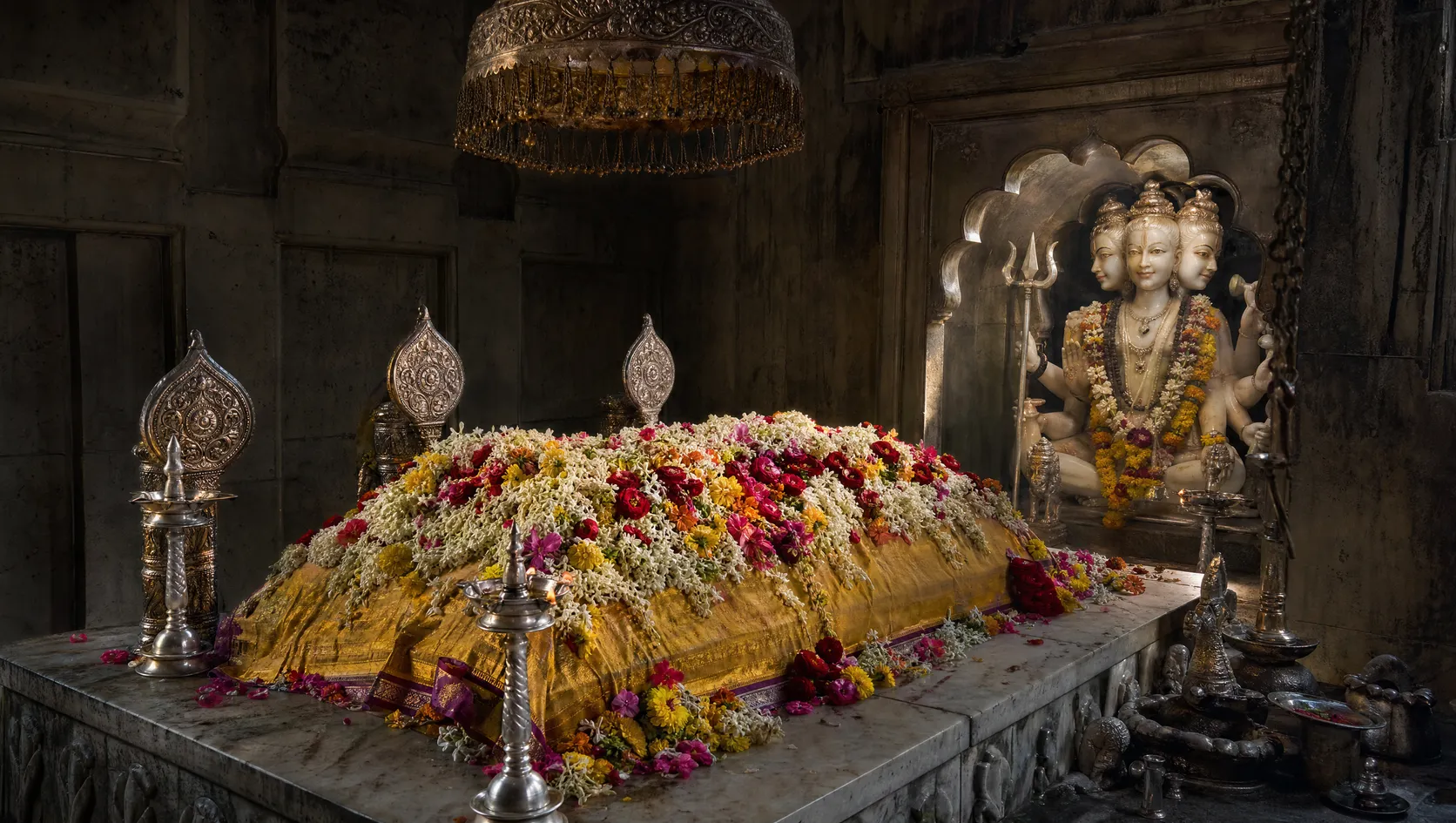
The centre of worship at Maniknagar is the samadhi of Manik Prabhu, the tomb-shrine where the saint was laid, worshipped as the seat of his continuing presence, and the image and padukas of the saint venerated within the mandir. Manik Prabhu is depicted and remembered in the devotional images of the samsthan, held by his devotees in their homes as at the seat.
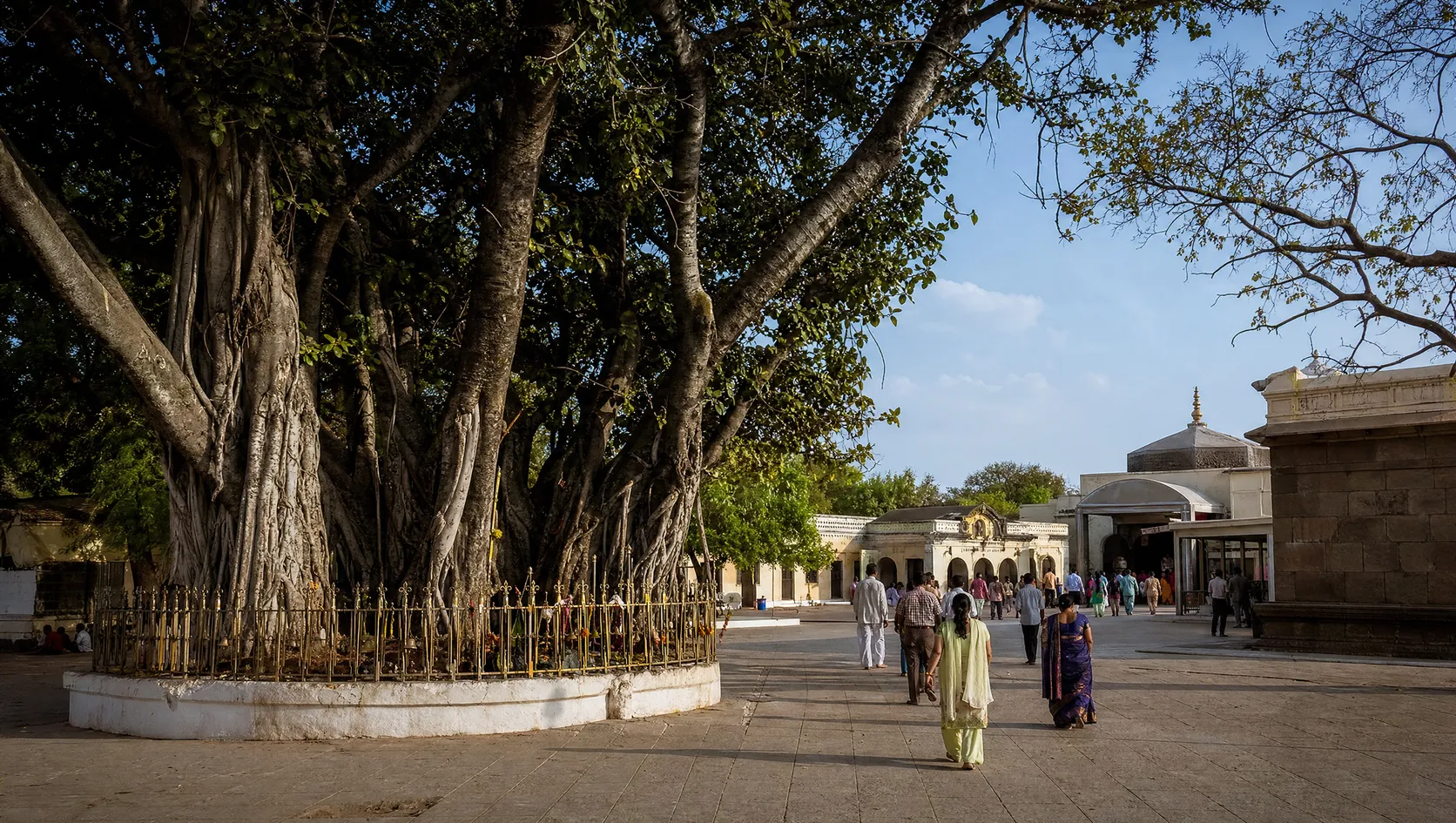
As a Datta seat, the wider iconography of the tradition surrounds this centre: Dattatreya with three heads for Brahma, Vishnu and Shiva united in the one guru, six hands, the four dogs of the Vedas and the cow, standing by the audumbara, the tree of Dattatreya honoured here as at the other Datta sites. Manik Prabhu is revered as a manifestation of this Dattatreya, and the seat holds both the deity and the saint.
The deepest sign of Maniknagar, though, is not an image but the Sakalmat ethos itself, the welcome to all creeds, which shapes the character of the seat as much as any icon. In the Datta manner the saint is worshipped as present rather than remembered as past, and the samadhi, the images and the living peetham of the Prabhus together carry that presence; but the openness of Sakalmat, the seat where seekers of every faith are received, is the distinctive mark of Maniknagar, an iconography of welcome as much as of form.
Distinctive Practicesविशिष्ट परंपराएँ
The Sakalmat Welcome to All Creeds
सब मतों को सकलमत स्वागत
Continuous, in the character of the seat
The defining practice of Maniknagar is the Sakalmat welcome, the acceptance of seekers of every faith, Hindu and Muslim alike, in keeping with Manik Prabhu's teaching that the divine is one and every creed a road to it; the seat receives all without the usual boundaries of community.
Sakalmat, all the paths, is the heart of Manik Prabhu's teaching, and the welcome to all creeds is not incidental to the seat but its very meaning. If the divine is one and approached by many roads, then no seeker of any faith is a stranger, and the practice of receiving all, across the lines that usually divide, is the enactment of that conviction. Maniknagar is thus a place where the openness that is often only preached is made the daily practice of a seat, and the welcome itself is held to be a form of devotion to the one divine of all the paths.
Darshan at the Samadhi of Manik Prabhu
माणिक प्रभु की समाधि पर दर्शन
Year-round, at the samadhi mandir
Devotees come for darshan at the samadhi of Manik Prabhu, the seat of his continuing presence, worshipping the saint held present there in the Datta manner, as a living presence rather than a memory of the past.
As at the other Datta seats, the samadhi is worshipped not as a grave but as a living seat: the tradition holds Manik Prabhu present there, and to take his darshan is to come into his company. The samadhi and the living peetham of the Prabhus together make Maniknagar a place where the saint is met rather than merely honoured, the tomb the point where his presence is held to be closest, and the darshan an approach to a guru held to receive all who come.
The Datta Jayanti Fair
दत्त जयंती मेला
Datta Jayanti (Nov-Dec)
The great annual fair at Datta Jayanti draws large numbers to Maniknagar across the lines of religion, in keeping with the Sakalmat welcome, the birth-anniversary of Dattatreya observed as the central festival of the seat with worship, music and a gathering that fills the town.
The fair at Datta Jayanti gathers the whole community of the seat, and the Sakalmat character makes it a gathering across communal lines, a picture of the openness Manik Prabhu taught. To celebrate the birth of Dattatreya, the guru of the three gods in one, at a seat that welcomes all faiths is fitting: the deity who unites the three great gods is honoured at a place that unites the paths of the seekers, and the fair enacts, in a crowd drawn from every side, the one divine of the many roads.
Did You Know?क्या आप जानते हैं?
Maniknagar is the seat of Shri Manik Prabhu, a nineteenth-century Datta saint revered as a manifestation of Dattatreya and founder of the Sakalmat Sampradaya.
Tradition of Shri Manik Prabhu
Sakalmat means all the paths, the acceptance of every creed, and it is the heart of Manik Prabhu's teaching that the divine is one, approached by many roads.
Tradition of the Sakalmat Sampradaya
His following crossed the lines of religion, drawing Hindus and Muslims alike, a distinctive inclusive character among the Datta traditions of the Deccan.
Studies of the Sakalmat Sampradaya
Manik Prabhu is said to have founded the town of Maniknagar itself, which takes its name from the saint.
Records of the Manik Prabhu Samsthan
He established a lineage of successors, the Prabhus of Maniknagar, who continue the peetham as a living institution to the present day.
Guru parampara of the Manik Prabhu Samsthan
Manik Prabhu is distinct from the Nrisimha Saraswati and Swami Samarth lineages, founding his own Datta seat and succession at Maniknagar.
Datta Sampradaya tradition
The great annual fair at Datta Jayanti is among the notable gatherings of the region, marked by the Sakalmat welcome across communal lines.
Records of the Manik Prabhu Samsthan
As a Datta seat, Maniknagar honours the audumbara, the tree of Dattatreya, and worships Manik Prabhu at his samadhi in the Datta manner, as a living presence.
Datta Sampradaya tradition
Visitor Accessप्रवेश जानकारी
The samadhi mandir is open to devotees, and traditional dress and conduct are expected. Footwear is removed at the shrine. In keeping with the Sakalmat teaching, the seat receives seekers of every faith, and its welcome is unusually open. Maniknagar is a samsthan town centred on the samadhi of Manik Prabhu and the peetham of the Prabhus, and pilgrims come for darshan at the samadhi and, at the great festival, for the Datta Jayanti fair. The seat keeps its own daily worship and the Sakalmat tradition. The town is reached by road in the Bidar region of Karnataka, near the Maharashtra and Telangana borders. Timings are set by the samsthan and vary with the ritual calendar; confirm current arrangements locally, especially around Datta Jayanti, when the fair draws very large numbers.
Come to Maniknagar for darshan at the samadhi of Manik Prabhu and, if the timing allows, for the great Datta Jayanti fair, the seat's central festival, when the Sakalmat gathering fills the town. Dress traditionally and remove footwear at the shrine. The seat welcomes seekers of every faith in keeping with the Sakalmat teaching. Maniknagar is reached by road in the Bidar region of Karnataka, via Humnabad and from the larger towns of Kalaburagi and the region; confirm the route and timings locally. Many Datta pilgrims take Maniknagar as part of a wider circuit of the Datta seats of the Deccan, though it belongs to a distinct lineage from the Nrisimha Saraswati kshetras.
Festivalsत्योहार
Datta Jayanti Fair
दत्त जयंती मेला
Nov-Dec (Margashirsha Purnima)
The birth-anniversary of Dattatreya, observed at Maniknagar with a great annual fair that draws large numbers across the lines of religion, the central festival of the seat, marked by worship, music and the Sakalmat welcome.
Manik Prabhu Punyatithi
माणिक प्रभु पुण्यतिथि
Varies (the day of the saint's samadhi)
The anniversary of the samadhi of Manik Prabhu, kept as a central observance at Maniknagar with special worship at the samadhi and the recollection of his continuing presence, honouring the founder of the seat and the Sakalmat tradition.
Guru Purnima
गुरु पूर्णिमा
Jun-Jul (Ashadha Purnima)
The day dedicated to the guru is of particular importance at a seat centred on the guru principle, observed at Maniknagar with the worship of Dattatreya, the Adi Guru, and of Manik Prabhu and the Prabhus of the lineage.
Sakalmat observances
सकलमत अनुष्ठान
Through the year
The observances of the Sakalmat Sampradaya through the year, in which the seat's inclusive character is expressed in worship and gathering open to all creeds, mark the distinctive tradition of Maniknagar beyond the great festivals.
Traditional Offeringsपारंपरिक अर्पण
Primary Offerings
Darshan and service at the samadhi
समाधि पर दर्शन और सेवा
The central offering at Maniknagar is darshan and service at the samadhi of Manik Prabhu: the worship, adornment and aarti offered before it, given to the samadhi as to the living presence of the saint.
Reverence to the Prabhus of the lineage
परम्परा के प्रभुओं को श्रद्धा
Devotees offer their reverence to the living Prabhus of Maniknagar, the successors of Manik Prabhu who hold the peetham, an offering central to a seat whose authority rests on its lineage.
Naivedya and prasad
नैवेद्य और प्रसाद
Food offered at the samadhi as naivedya and shared as prasad is received as the saint's grace made tangible, carrying his blessing to those who partake, in the open spirit of the Sakalmat welcome.
Lamps, incense and the audumbara
दीप, धूप और औदुम्बर
Lamps and incense are offered in the daily worship at the samadhi, and reverence at the audumbara, the tree of Dattatreya, marks the seat as a Datta kshetra, joining the worship of the saint to that of the deity he manifests.
Unique to This Temple
The Offering of the Open Heart in the Way of Sakalmat
सकलमत के मार्ग में खुले हृदय की भेंट
What is particular to Maniknagar is that the offering the tradition holds highest is the open heart of Sakalmat, the coming to the seat without the boundaries of creed, in the trust that the one divine receives all. Manik Prabhu taught that every faith is a road to the one, and the offering most proper to his seat is the setting aside of the lines that divide, the coming as a seeker among seekers. A devotee offers worship at the samadhi, reverence to the Prabhus and naivedya, but the offering held highest is the heart brought open to the Sakalmat welcome, in which Hindu and Muslim and all others are received alike. The offering and the blessing meet in that openness: the devotee offers a heart without walls, and Manik Prabhu, held present at his samadhi, is believed to receive all who come to the one divine of the many paths.
Offerings at Maniknagar follow the Datta tradition of guru devotion and the distinctive Sakalmat ethos, centred on darshan and service at the samadhi of Manik Prabhu, reverence to the Prabhus of the lineage, and the open welcome to seekers of every faith. Eternal Raga presents these practices as a devotional tradition; specific seva and offering arrangements should be confirmed with the samsthan.
How to Reachकैसे पहुँचें
Maniknagar lies near Humnabad in Bidar district of northern Karnataka, in the Kalyana-Karnataka region near the Maharashtra and Telangana borders, and is reached by road from the towns of the region.
By air: Kalaburagi Airport is the nearer airport with limited connections; Hyderabad is a larger airport at a greater distance, from which the region is reached by road or rail.
By rail: Humnabad and Kalaburagi are the nearer railheads, connected to the wider network; from there Maniknagar is reached by road.
By road: Maniknagar is reached by road via Humnabad and from the larger towns of Kalaburagi and Bidar, served by buses and taxis; the town is built around the samadhi mandir and the samsthan.
Many Datta pilgrims take Maniknagar as part of a wider circuit of the Datta seats of the Deccan, though it belongs to a distinct lineage, the Sakalmat Sampradaya of Manik Prabhu, from the Nrisimha Saraswati kshetras such as Ganagapur.
Plan Your Visitयात्रा की योजना
🌤 Best Season
October to March is the most comfortable time to visit, with milder temperatures in the northern Karnataka plain. Datta Jayanti, in November or December, is the great fair of the seat and its busiest and most vivid time, when the Sakalmat gathering fills the town. April to June is hot in this part of the Deccan, and the middle of the day is best avoided. The monsoon brings rain but the town remains accessible. The cooler months, and above all the Datta Jayanti season, are the best time to experience the seat, though those seeking a quieter darshan should come outside the great fair, when the samadhi mandir allows an unhurried visit.
👘 Dress Code
Traditional and modest dress is expected at the seat, as at a working religious centre. Men commonly wear a dhoti or trousers with a shirt; women a saree or salwar kameez. Footwear is removed at the shrine. In keeping with the Sakalmat welcome, seekers of every faith are received.
📱 Phones & Photography
Photography is generally restricted within the sanctum and at the samadhi; follow the posted rules and the directions of the samsthan, and keep phones silenced within the shrine.
🏨 Accommodation
Maniknagar has lodging geared to pilgrims, including bhakta nivas and guest houses maintained by the samsthan, with basic amenities in the town. Standards are simple, suited to the pilgrimage. Demand rises sharply around the Datta Jayanti fair, when arriving early or booking ahead is advisable. The larger towns of Humnabad and Kalaburagi, within reach by road, offer a fuller range of hotels for those who prefer to stay outside the town and visit.
Sacred Soundsपवित्र ध्वनि
Did You Know? · क्या आप जानते हैं?
The same translation error that turned '33 Koti' into '33 crore' in Hinduism also happened in Buddhism. The Chinese translation of Buddhist texts rendered 'Sapta Koti Buddha' (7 Supreme Buddhas) as '7 Crore Buddhas.' The Tibetan translation got it right: 7 types, not 7 crore. One Sanskrit word, misread across two major world religions, generated two identical misconceptions independently.
Related Contentसंबंधित सामग्री
Related Scriptures
Community Reflections
🕉️
Be the first to share your reflection.