Guru Purnima -- The Full Moon of the Teacher
गुरु पूर्णिमा -- गुरु की पूर्णिमा
आषाढ़ मास की पूर्णिमा को, प्रायः जुलाई में, भारत भर में विद्यार्थी अपने शिक्षकों के चरण स्पर्श करते हैं, शिष्य अपने गुरुओं के आश्रमों में एकत्र होते हैं, और घरों में उस व्यक्ति के चित्र के आगे फूल चढ़ाए जाते हैं जिसने पहली बार कुछ सिखाया। यह दिन गुरु पूर्णिमा है, गुरु की पूर्णिमा।
इसका दूसरा नाम इसका मूल बताता है। यह व्यास पूर्णिमा भी है, वेदव्यास के सम्मान में मनाई जाती है, जिन्हें परम्परा उस ऋषि के रूप में याद करती है जिन्होंने वेदों को चार भागों में व्यवस्थित किया, महाभारत रची और, अनेक वर्णनों में, पुराणों को रूप दिया। परम्परा के अनुसार यही पूर्णिमा उनका जन्मदिन है। व्यास का सम्मान उस स्रोत का सम्मान है जिससे हिन्दू गुरु जो कुछ सिखाते हैं उसका अधिकांश आता है; इसीलिए इस दिन जिस आसन से गुरु उपदेश देते हैं, उसे प्रायः व्यासपीठ कहा जाता है।
परीक्ष्य लोकान् कर्मचितान् ब्राह्मणो निर्वेदमायान्नास्त्यकृतः कृतेन । तद्विज्ञानार्थं स गुरुमेवाभिगच्छेत् समित्पाणिः श्रोत्रियं ब्रह्मनिष्ठम् ॥
parīkṣya lokān karmacitān brāhmaṇo nirvedamāyānnāstyakṛtaḥ kṛtena | tadvijñānārthaṃ sa gurumevābhigacchet samitpāṇiḥ śrotriyaṃ brahmaniṣṭham ||
कर्म से प्राप्त लोकों की परीक्षा करके साधक को वैराग्य प्राप्त करना चाहिए: जो अकृत है वह कृत से नहीं मिलता। उसे जानने के लिए वह हाथ में समिधा लेकर ऐसे गुरु के पास जाए जो वेदज्ञ और ब्रह्मनिष्ठ हो।
— Mundaka Upanishad 1.2.12
उपनिषद् मानते हैं कि परम ज्ञान केवल पढ़ा नहीं जा सकता; उसे किसी ऐसे व्यक्ति से प्राप्त करना होता है जिसके पास वह हो। गुरु की धारणा के पीछे यही विचार है। एक लोकप्रिय पारम्परिक व्युत्पत्ति, जो एक परवर्ती उपनिषद् में मिलती है, शब्द को "गु" -- अन्धकार -- और "रु" -- उसे दूर करने वाला -- में बाँटती है: गुरु वह है जो अज्ञान का अन्धकार दूर करे। वैयाकरण इसे अधिक सीधे "गुरु" अर्थात् "भारी" या "गम्भीर" से निकालते हैं: वह जिसके वचनों में भार हो। दोनों उस बारे में कुछ सच कहते हैं जो हिन्दू एक शिक्षक से अपेक्षा करते हैं।
गीता एक पंक्ति में विधि बताती है। अर्जुन से कहा जाता है कि वह प्रणाम, प्रश्न और सेवा से सीखे -- इनमें से एक से नहीं, तीनों से एक साथ।
तद्विद्धि प्रणिपातेन परिप्रश्नेन सेवया । उपदेक्ष्यन्ति ते ज्ञानं ज्ञानिनस्तत्त्वदर्शिनः ॥
tadviddhi praṇipātena paripraśnena sevayā | upadekṣyanti te jñānaṃ jñāninastattvadarśinaḥ ||
उसे प्रणाम करके, प्रश्न पूछकर और सेवा करके जानो। तत्त्व को देखने वाले ज्ञानी तुम्हें वह ज्ञान सिखाएँगे।
— Bhagavad Gita 4.34
गुरु पूर्णिमा कैसे मनाई जाती है
| Where | What people do |
|---|---|
| In the home | Offer flowers, a lamp and sweets before an image of the guru, Vyasa or Dakshinamurti; recite a guru stotra; touch the feet of parents and elders |
| In ashrams and maths | Guru puja (often worship of the guru's sandals, paduka puja); disciples gather to hear the guru teach; many renew vows |
| In schools and music | Students honour their teachers; in classical music and dance, disciples offer gurudakshina and perform before the guru |
| For monks | Traditionally the start of chaturmasa, the four months of the rains when wandering sannyasis stay in one place to study and teach |
जिन व्यास का सम्मान होता है, वे कौन थे? महाभारत उनका जन्म बताता है: वे महर्षि पराशर और मछुआरे की पुत्री सत्यवती के पुत्र थे, यमुना के एक द्वीप पर जन्मे और श्याम वर्ण के थे -- इसी से उनका पूरा नाम कृष्ण द्वैपायन है, "द्वीप पर जन्मे श्याम"। वे स्वयं उसी कथा में बुने हुए हैं जो वे कहते हैं: नियोग की प्रथा से वे धृतराष्ट्र, पाण्डु और विदुर के पिता बने, इसलिए कौरव और पाण्डव उनके पौत्र हैं, और वे युद्ध के निर्णायक क्षणों में परामर्श देने, सान्त्वना देने और अन्त में शोक करने के लिए प्रकट होते हैं। उनके पुत्र शुकदेव भागवत पुराण के वक्ता हैं। परम्परा व्यास को चिरंजीवियों में गिनती है, उन अमरों में जो संसार में बने रहते हैं।
इस दिन के पीछे यही व्यक्तित्व है: कोई दूर का लेखक नहीं, बल्कि एक गुरु जिन्होंने ज्ञान को इस तरह व्यवस्थित किया कि दूसरे उसे आगे ले जा सकें, और जो अपनी कथा के लोगों के निकट रहे। अनेक परम्पराएँ गुरु पूर्णिमा पर उपदेश का आरम्भ अपनी गुरु-परम्परा के पाठ से करती हैं, व्यास या दक्षिणामूर्ति से लेकर वर्तमान गुरु तक गुरुओं की पंक्ति -- यह स्मरण कि कोई भी गुरु शून्य से आरम्भ नहीं करता।
यही पूर्णिमा बौद्धों के लिए भी पवित्र है, जो इसे आसाळ्ह पूजा के रूप में मनाते हैं: बौद्ध परम्परा के अनुसार आषाढ़ पूर्णिमा को ही बुद्ध ने वाराणसी के पास सारनाथ के मृगदाव में पाँच साथियों को अपना पहला उपदेश दिया था -- उनके शिक्षक-जीवन का आरम्भ।
गुरु की पारम्परिक समझ किसी एक व्यक्ति से व्यापक है। माता-पिता को पहला गुरु माना जाता है, और शास्त्र दक्षिणामूर्ति का वर्णन करते हैं -- वटवृक्ष के नीचे बैठे मौन गुरु के रूप में शिव -- और भागवत के उस अवधूत का -- जिन्हें परम्परा दत्तात्रेय मानती है -- जो प्रकृति के उन चौबीस "गुरुओं" के नाम बताते हैं जिनसे उन्होंने सीखा, पृथ्वी से लेकर मधुमक्खी तक। गुरु पूर्णिमा इन सबको समेटती है: यह दिन किसी एक गुरु से अधिक हर उस व्यक्ति से सीखने के बारे में है जो हमसे अधिक जानता है -- और उसके साथ आने वाली कृतज्ञता के बारे में।
गुरु स्तोत्र का पाठ करें
"अखण्डमण्डलाकारं" -- गुरु पूर्णिमा पर पढ़ा जाने वाला गुरु स्तोत्र, अर्थ सहित।
Tags
Eternal Raga · शाश्वत राग
Institutional voice — scholarly articles on Sanatan Dharma
अपनी समझ गहरी करें
अपनी समझ और गहरी करें
tantra mantra yantra
Guru-Shishya Parampara -- How Knowledge Passes from Teacher to Student
For three thousand years, the most important knowledge in India -- the Vedas, philosophy, yoga, music and dance -- has been passed on not through books alone but from one living teacher to one living student. What the guru-shishya parampara is, what it asks of each side, and why it still matters.
tantra mantra yantra
Diksha -- Why Initiation Matters and What It Actually Means
The Kularnava Tantra is unambiguous: there is no liberation without Diksha, no Diksha without a Guru, and no Guru without a Parampara. In an age where mantras are available on YouTube and spiritual apps offer 'instant enlightenment,' understanding why initiation is non-negotiable separates the seeker from the tourist.
deities avatars
Dakshinamurti -- The Silent Teacher Who Taught the Universe Through Silence
Under a banyan tree sits a young guru, surrounded by old disciples. He says nothing. They understand everything. This is Dakshinamurti -- Shiva as the original teacher -- and his image is the most profound statement on education in any civilisation: the highest knowledge cannot be spoken. It can only be transmitted through presence.
deities avatars
Dattatreya -- The Three-Headed Guru
Dattatreya is the only Hindu deity in whom Brahma, Vishnu, and Shiva appear in one body. He walks naked with four dogs beside him, carries the begging bowl of the avadhuta, and teaches that every creature a person meets can be a teacher. This is the deity Maharashtra and Karnataka call simply Guru.
deities avatars
Brihaspati -- Guru of the Gods and Lord of Jupiter
Three thousand years before he became the yellow-robed planet consulted before every Hindu wedding date, Brihaspati was Brahmanaspati, the Rig Veda's Lord of Prayer, a god made entirely of correct ritual speech. Centuries later the Puranas gave him a wife who left him for the Moon, a son born from a war over her, and a title, Devaguru, that still opens the Ganapati mantra chanted at the start of every Vedic ritual today. This is the planet with two very different pasts.
scriptural exegesis
The Four Vedas -- An Overview of Hinduism's Oldest Scriptures
Rig, Yajur, Sama and Atharva: what each Veda contains, how every Veda is layered from hymns to Upanishads, why the Vedas are called shruti, "what was heard", and how they were carried for thousands of years without being written down.
scriptural exegesis
The Mahabharata -- The Text Behind the World's Longest Epic
Most people who say they have read the Mahabharata mean they have read a retelling of the dice game, the exile, and Kurukshetra. Few have asked how the book itself is built: eighteen numbered parvas, a traditional count of one hundred thousand verses, and a story that reaches every reader through three narrators nested inside one another, the outermost speaking at a sacrifice convened because a king's father died of snakebite. This is that architecture, not the episodes.
यही पूर्णिमा बौद्धों के लिए भी पवित्र है, जो इसे आसाळ्ह पूजा के रूप में मनाते हैं: बौद्ध परम्परा के अनुसार आषाढ़ पूर्णिमा को ही बुद्ध ने वाराणसी के पास सारनाथ के मृगदाव में पाँच साथियों को अपना पहला उपदेश दिया था -- उनके…
More in Rituals & Traditions
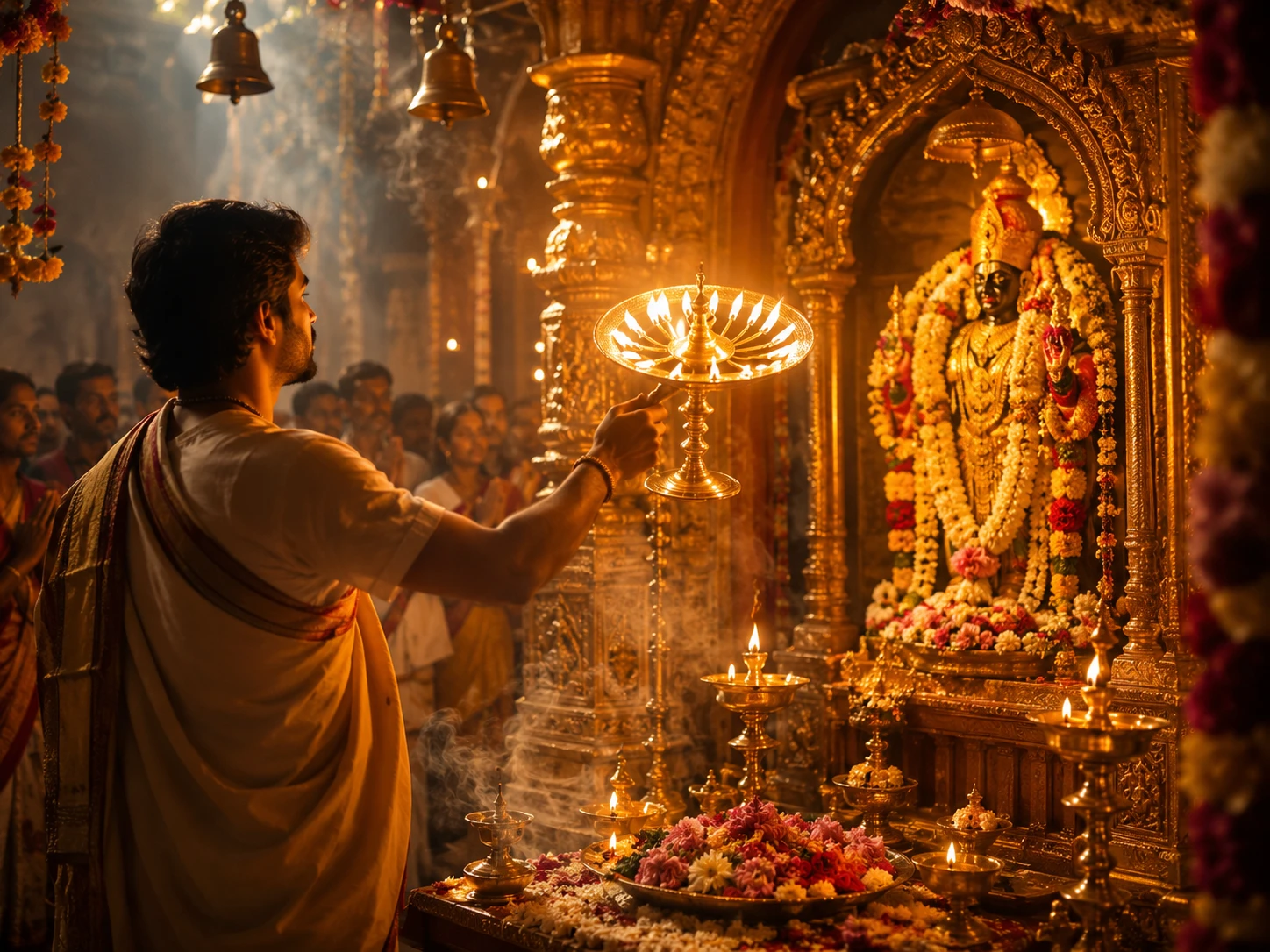
Aarti -- Why Hindus Circle Light Before God
13 मिनट पढ़ें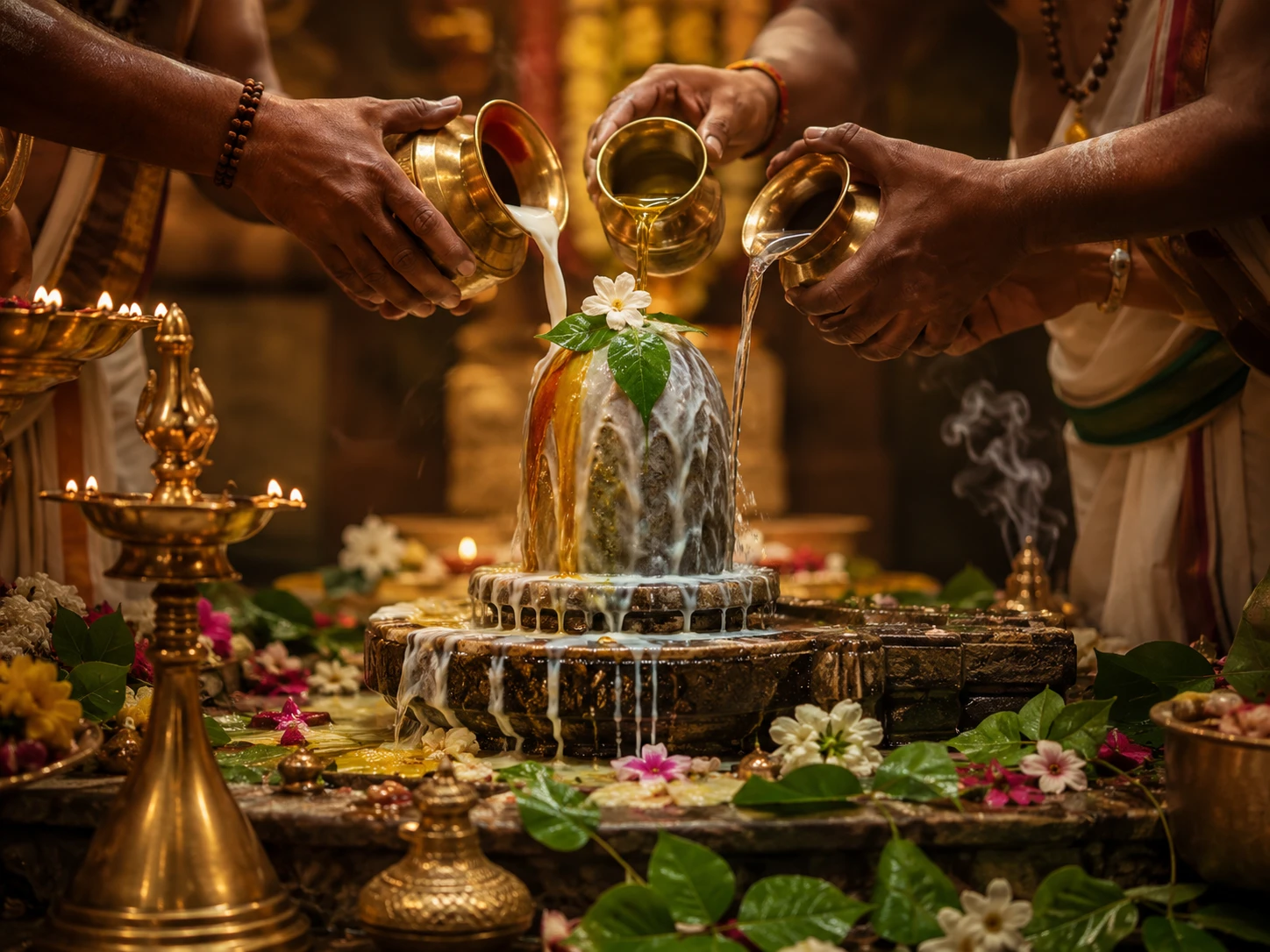
Abhisheka -- Why Hindus Bathe Their Gods
10 मिनट पढ़ें
Akshaya Tritiya -- The Day Nothing Given Away Runs Out
12 मिनट पढ़ेंवही अनुवाद त्रुटि जिसने हिन्दू धर्म में '33 कोटि' को '33 करोड़' बनाया, बौद्ध धर्म में भी हुई। बौद्ध ग्रन्थों के चीनी अनुवाद ने 'सप्त कोटि बुद्ध' (7 श्रेष्ठ बुद्ध) का अनुवाद '7 करोड़ बुद्ध' कर दिया। तिब्बती अनुवाद ने सही …
Deities AvatarsCommunity Reflections
🕉️
Be the first to share your reflection.