The Kurukshetra War -- What Happened in Eighteen Days
कुरुक्षेत्र युद्ध -- अठारह दिनों में क्या हुआ
महाभारत का युद्ध अठारह दिन चला। वर्तमान दिल्ली के उत्तर में कुरुक्षेत्र के मैदान पर अठारह अक्षौहिणी -- महाकाव्य की सबसे बड़ी सैन्य इकाई, जिसमें रथ, हाथी, घोड़े और पैदल सैनिक निश्चित अनुपात में होते थे -- युद्ध में भिड़ीं: ग्यारह दुर्योधन और कौरवों के पक्ष में, सात पाण्डवों के साथ। देश का लगभग हर राजा किसी न किसी पक्ष से लड़ा।
लड़ाई आरम्भ होने से पहले दोनों पक्षों ने नियमों पर सहमति की: योद्धा केवल अपने समकक्ष से लड़ेंगे, जो आत्मसमर्पण कर दे, भाग जाए या शस्त्रहीन हो उस पर कोई प्रहार नहीं करेगा, और सारथियों, दूतों और नगाड़ा बजाने वालों को छोड़ दिया जाएगा। फिर, जब सेनाएँ तैयार खड़ी थीं, अर्जुन ने श्रीकृष्ण से अपना रथ दोनों पंक्तियों के बीच ले चलने को कहा, और भगवद्गीता कही गई। शेष युद्ध को पहली सुबह के उन्हीं नियमों के धीरे-धीरे टूटने के रूप में पढ़ा जा सकता है।
धर्मक्षेत्रे कुरुक्षेत्रे समवेता युयुत्सवः । मामकाः पाण्डवाश्चैव किमकुर्वत सञ्जय ॥
dharmakṣetre kurukṣetre samavetā yuyutsavaḥ | māmakāḥ pāṇḍavāścaiva kimakurvata sañjaya ||
धृतराष्ट्र ने कहा: हे संजय, धर्मक्षेत्र कुरुक्षेत्र में युद्ध की इच्छा से एकत्र हुए मेरे और पाण्डु के पुत्रों ने क्या किया?
— Bhagavad Gita 1.1
कौरवों के चार सेनापति
| Days | Kaurava commander | How the phase ended | Book of the Mahabharata |
|---|---|---|---|
| 1 -- 10 | Bhishma | Arjuna, sheltering behind Shikhandi, whom Bhishma would not fight, brings him down; he lies on a bed of arrows awaiting the sun's northward turn | Bhishma Parva |
| 11 -- 15 | Drona | Told that "Ashvatthama is dead" -- an elephant of that name -- Drona lays down his arms and is killed by Dhrishtadyumna | Drona Parva |
| 16 -- 17 | Karna | His chariot wheel sinks into the earth; Arjuna kills him while he tries to free it | Karna Parva |
| 18 | Shalya | Killed by Yudhishthira; Duryodhana flees, then falls to Bhima in a mace duel | Shalya Parva |
पाण्डव पक्ष में पूरे युद्ध के प्रधान सेनापति द्रौपदी के भाई धृष्टद्युम्न थे। अन्तिम दिन के बाद की रात, सोते हुए पाण्डव शिविर पर अश्वत्थामा का आक्रमण एक अलग पर्व, सौप्तिक पर्व, में कहा गया है।
दस दिन तक दोनों परिवारों के पितामह भीष्म ने कौरव सेना को सँभाले रखा। उन्होंने हस्तिनापुर के लिए लड़ने का वचन दिया था पर पाण्डवों को नहीं मारते थे, और उन्हें तभी हराया जा सकता था जब वे स्वयं चाहें। नौवीं रात पाण्डव उनके शिविर में गए और उनसे उपाय पूछा। उन्होंने बताया: वे शिखण्डी पर, जो स्त्री के रूप में जन्मा था, धनुष नहीं उठाएँगे। दसवें दिन अर्जुन ने शिखण्डी के पीछे से बाण चलाए, यहाँ तक कि भीष्म गिर पड़े, बाणों से इतने बिंधे कि उनका शरीर भूमि को नहीं छूता था।
द्रोण के नेतृत्व में युद्ध और कठोर हुआ। तेरहवें दिन कौरवों ने चक्रव्यूह रचा, और अर्जुन का सोलह वर्षीय पुत्र अभिमन्यु, जो उसमें प्रवेश करना जानता था पर निकलना नहीं, घिर गया और कई योद्धाओं ने एक साथ उसे मार डाला -- नियमों के विरुद्ध। चौदहवें दिन अर्जुन ने सूर्यास्त से पहले जयद्रथ को मारने का प्रण पूरा किया, और उस रात कर्ण ने अपना एकमात्र अमोघ अस्त्र, वासवी शक्ति, भीम के पुत्र घटोत्कच पर खर्च कर दिया। पन्द्रहवें दिन द्रोण उस अर्धसत्य से पराजित हुए जो युधिष्ठिर ने कहा, वह एकमात्र व्यक्ति जिसके वचन पर वे भरोसा करते थे।
कर्ण ने दो दिन नेतृत्व किया। सोलहवें और सत्रहवें दिन युद्ध अपनी सबसे पीड़ादायक भिड़न्तों तक पहुँचा: भीम ने दुःशासन के विरुद्ध अपना प्रण पूरा किया, जिसने द्रौपदी को द्यूत-सभा में घसीटा था, और कर्ण और अर्जुन -- भाई, यद्यपि यह केवल कर्ण जानता था -- अन्ततः आमने-सामने हुए। जब कर्ण के रथ का पहिया भूमि में धँस गया, उसने युद्ध के नियमों के अन्तर्गत समय माँगा; श्रीकृष्ण ने उसे द्रौपदी और अभिमन्यु के विरुद्ध तोड़े गए हर नियम का स्मरण कराया, और अर्जुन ने बाण चला दिया।
अठारहवाँ दिन अन्त था। शल्य युधिष्ठिर के हाथों गिरे, कौरव सेना बिखर गई, और दुर्योधन एक सरोवर में छिप गया। बाहर निकाले जाने पर उसने गदा-युद्ध के लिए भीम को चुना, और भीम ने श्रीकृष्ण के संकेत पर उसकी जाँघ पर प्रहार किया -- कमर के नीचे का प्रहार, जो गदा-युद्ध में वर्जित था, और जिसने द्यूत-सभा में लिया गया एक और प्रण पूरा किया। उस रात अश्वत्थामा, कृपाचार्य और कृतवर्मा ने सोते हुए पाण्डव शिविर पर आक्रमण किया, धृष्टद्युम्न और द्रौपदी के पाँचों पुत्रों को मार डाला। महाकाव्य कहता है कि विशाल सेनाओं में से हर पक्ष के गिने-चुने योद्धा ही बचे।
महाकाव्य जीवित बचे लोगों के नाम बताता है। पाण्डव पक्ष में: पाँचों पाण्डव, श्रीकृष्ण, सात्यकि और युयुत्सु, धृतराष्ट्र का एक पुत्र जो युद्ध से पहले पाण्डवों की ओर आ गया था। कौरव पक्ष में: केवल अश्वत्थामा, कृपाचार्य और कृतवर्मा -- वही तीन जिन्होंने रात्रि-आक्रमण किया।
महाभारत टूटे नियमों पर इतना क्यों ठहरता है? आंशिक रूप से इसलिए कि महाकाव्य ईमानदार है कि धर्म के पक्ष ने भी नियमों को मोड़कर जीत पाई -- शिखण्डी के द्वारा भीष्म, अर्धसत्य के द्वारा द्रोण, असहाय अवस्था में कर्ण, और वर्जित प्रहार से दुर्योधन। महाकाव्य में ही दिया गया श्रीकृष्ण का तर्क यह है कि जो शत्रु पहले ही हर नियम तोड़ चुका था, उसके विरुद्ध संसार को नष्ट कर रहे युद्ध को समाप्त करने का कोई और उपाय नहीं था। महाकाव्य इस उत्तर को रहने देता है पर उसे कभी सहज नहीं बनाता। इसके बाद आने वाला स्त्री पर्व, जिसमें दोनों पक्षों की विधवाएँ मृतकों के बीच चलती हैं, अठारह दिनों पर उसका वास्तविक निर्णय है।
पहली सुबह कही गई गीता पढ़ें
भगवद्गीता, अध्याय-दर-अध्याय, संस्कृत और अनुवाद सहित -- वह संवाद जिससे युद्ध आरम्भ हुआ।
Tags
Eternal Raga · शाश्वत राग
Institutional voice — scholarly articles on Sanatan Dharma
अपनी समझ गहरी करें
अपनी समझ और गहरी करें
scriptural exegesis
The Bhagavad Gita -- An Overview of the Song of God
Seven hundred verses spoken between two armies, in the minutes before a war. What the Bhagavad Gita is, where it sits in the Mahabharata, how its eighteen chapters are arranged, and why a dialogue about duty on a battlefield became the most read book of Hindu thought.
scriptural exegesis
The Mahabharata -- The Text Behind the World's Longest Epic
Most people who say they have read the Mahabharata mean they have read a retelling of the dice game, the exile, and Kurukshetra. Few have asked how the book itself is built: eighteen numbered parvas, a traditional count of one hundred thousand verses, and a story that reaches every reader through three narrators nested inside one another, the outermost speaking at a sacrifice convened because a king's father died of snakebite. This is that architecture, not the episodes.
divine arsenal
Akshauhini -- The Epic Army Structure Where Every Digit Sums to 18
1 chariot. 1 elephant. 3 horses. 5 foot soldiers. That is the Patti -- the smallest tactical unit of the Mahabharata's military system. Multiply it through nine hierarchical levels and you get the Akshauhini: 218,700 warriors. Multiply that by 18 and you get the Kurukshetra War: nearly four million soldiers arranged in the most precisely documented military hierarchy in all of ancient literature.
divine arsenal
Rules of War -- Dharmayuddha and the Geneva Conventions
Three thousand years before the Geneva Conventions, Indian warriors debated whether you could strike a man who had dropped his weapon. The Mahabharata's rules of engagement cover night fighting bans, non-combatant immunity, treatment of prisoners, proportional force, and the use of weapons of mass destruction -- and then shows what happens when every single rule is broken.
divine arsenal
Vyuha Formations -- The Strategic Chess of Kurukshetra
Eighteen formations deployed across eighteen days. Every morning, the commander-in-chief chose a shape -- eagle, lotus, crescent, thunderbolt, tortoise, crocodile -- and nearly four million soldiers rearranged themselves accordingly. Each vyuha had a counter-vyuha. Each counter had a counter-counter. The Mahabharata's battle tactics are the world's oldest documented game theory -- played with real armies on a real field.
scriptural exegesis
Krishna -- The Charioteer Who Steered the Cosmos
He was Vishnu's purna avatar in human form, born in a Mathura prison, raised in a Vrindavan cowherd village, king of Dwaraka, charioteer to Arjuna, the speaker of the Gita, the witness who watched the Mahabharata unfold and quietly guided every consequential decision in it. The other characters in this cluster are people. Krishna is something else. The Mahabharata is, in the end, his story.
divine arsenal
Narayanastra -- The Weapon That Could Only Be Defeated by Surrender
After Drona's death, his son Ashvatthama released the personal weapon of Narayana on the Pandava army. It grew stronger the harder it was fought, and Krishna's answer was the strangest order of the war: lay down your arms. The story of the Narayanastra.
महाकाव्य जीवित बचे लोगों के नाम बताता है। पाण्डव पक्ष में: पाँचों पाण्डव, श्रीकृष्ण, सात्यकि और युयुत्सु, धृतराष्ट्र का एक पुत्र जो युद्ध से पहले पाण्डवों की ओर आ गया था। कौरव पक्ष में: केवल अश्वत्थामा, कृपाचार्य और कृतव…
More in Scriptural Exegesis
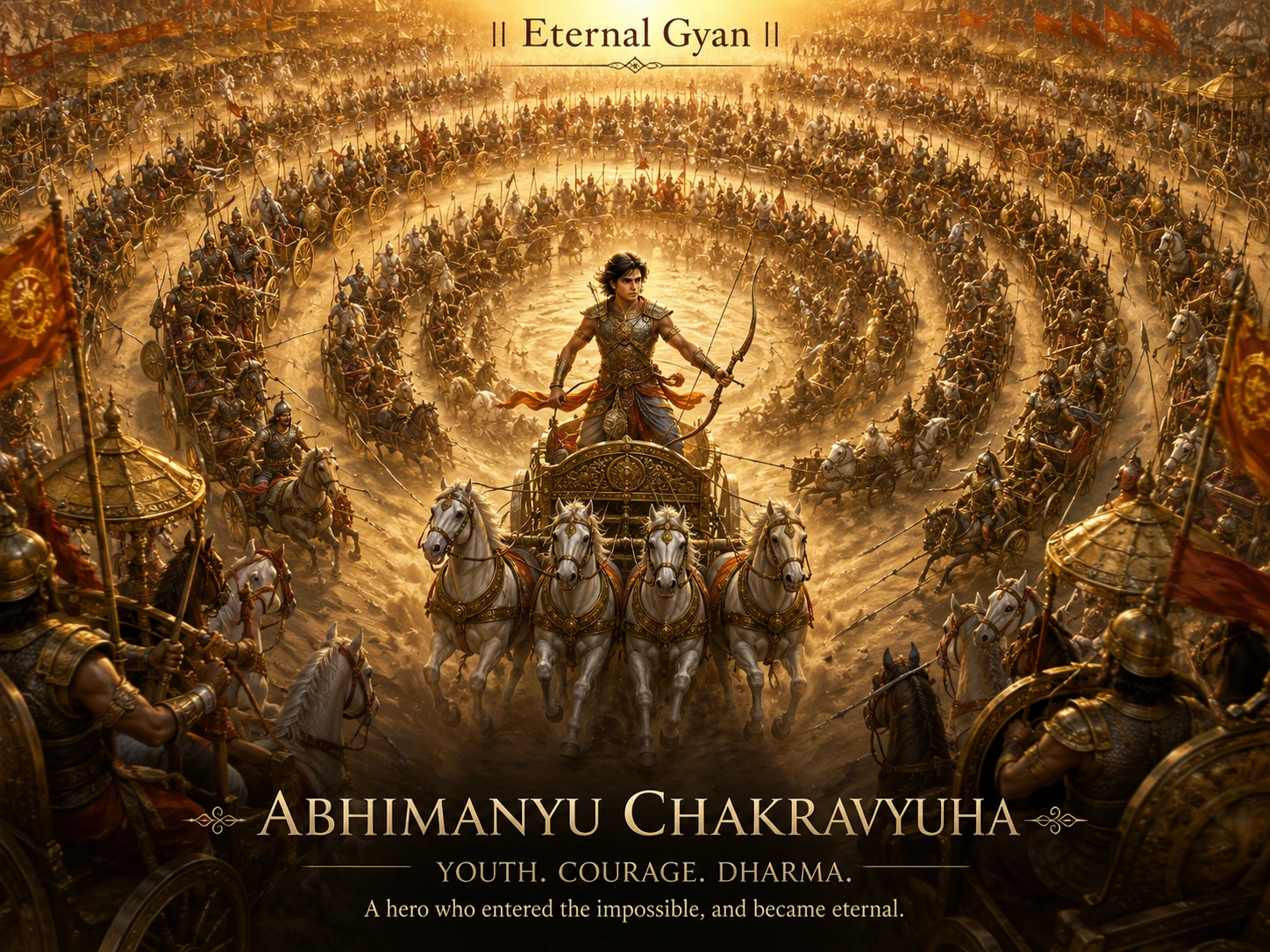
Abhimanyu and the Chakravyuha -- The Boy Who Knew How to Enter but Not How to Leave
14 मिनट पढ़ें
Adbhuta Ramayana -- The Ramayana Where Sita Becomes Kali
9 मिनट पढ़ें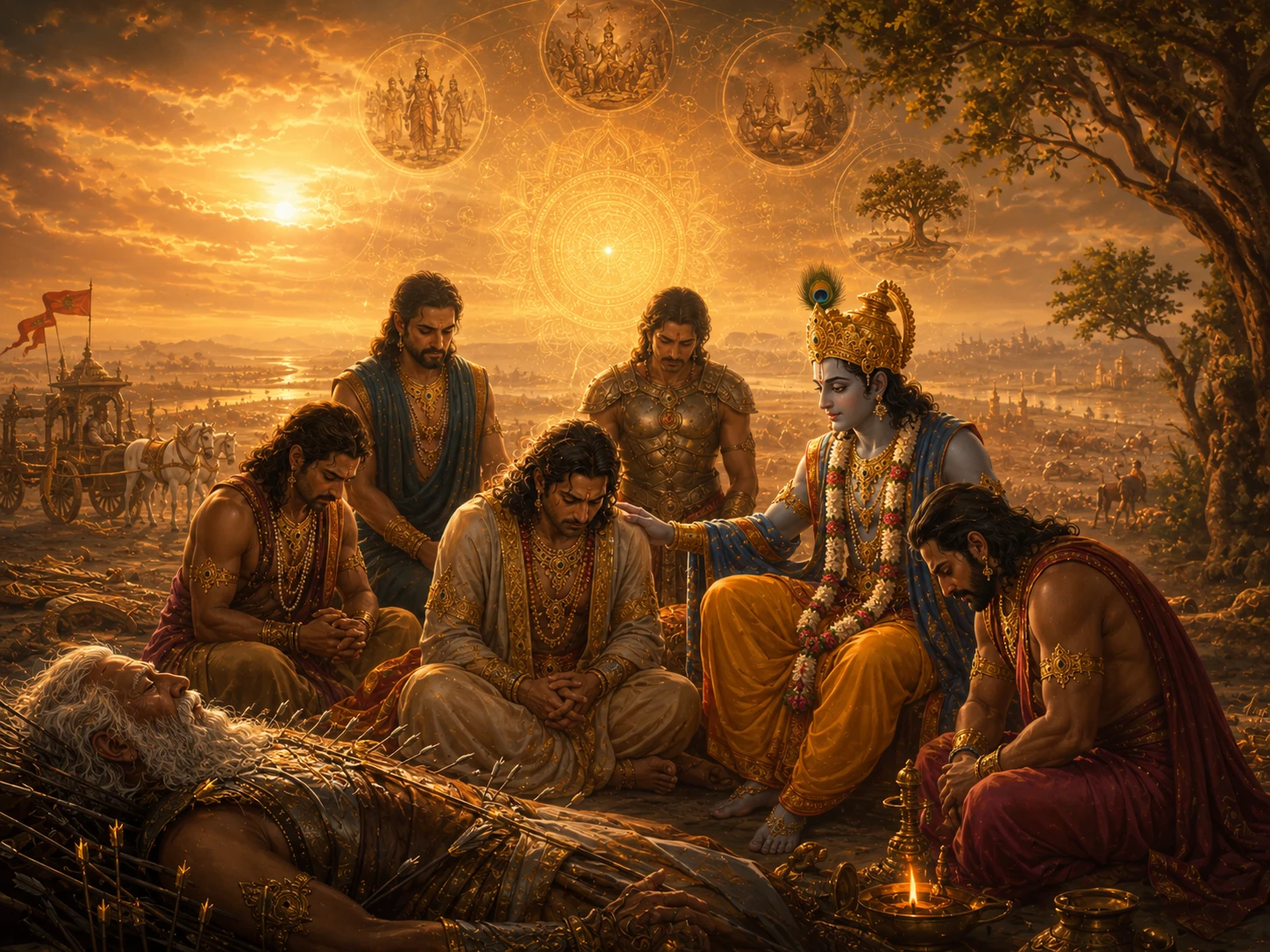
After Kurukshetra -- What Happened Next
14 मिनट पढ़ेंवही अनुवाद त्रुटि जिसने हिन्दू धर्म में '33 कोटि' को '33 करोड़' बनाया, बौद्ध धर्म में भी हुई। बौद्ध ग्रन्थों के चीनी अनुवाद ने 'सप्त कोटि बुद्ध' (7 श्रेष्ठ बुद्ध) का अनुवाद '7 करोड़ बुद्ध' कर दिया। तिब्बती अनुवाद ने सही …
Deities AvatarsCommunity Reflections
🕉️
Be the first to share your reflection.