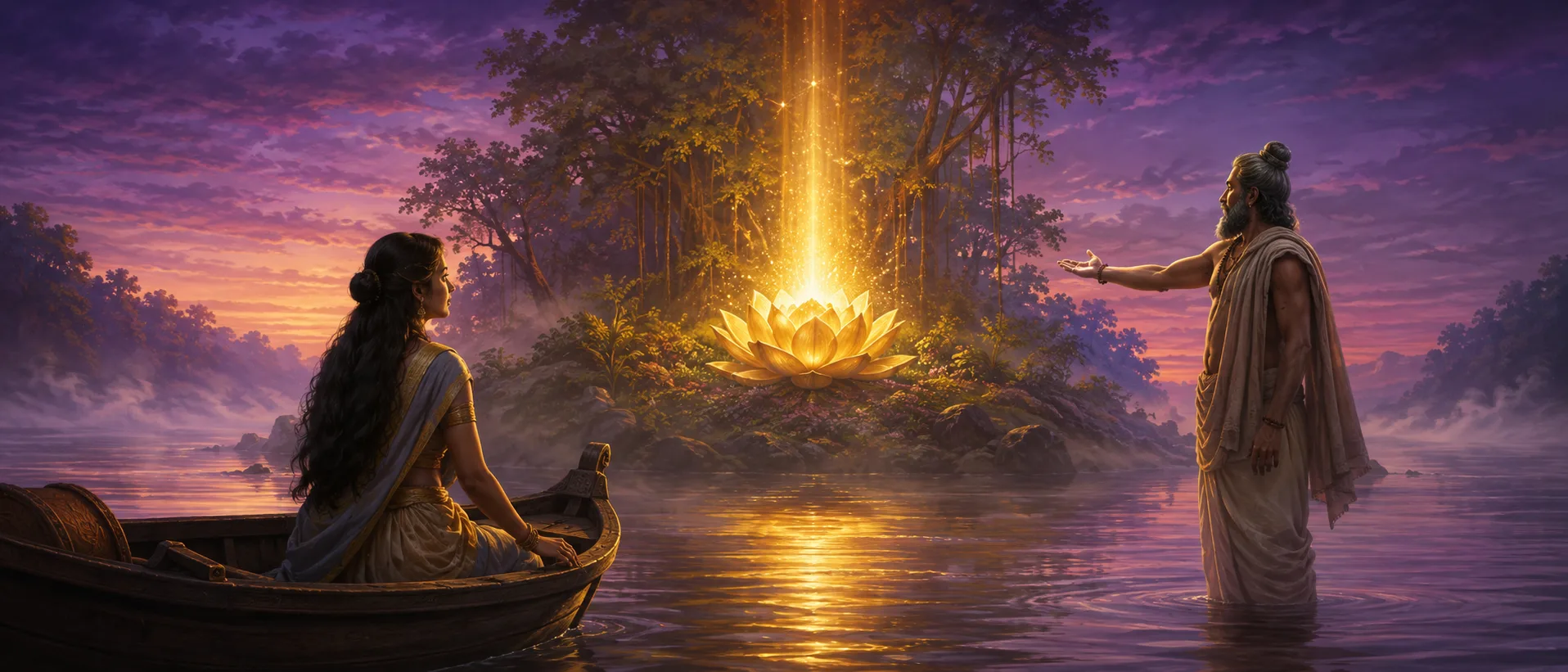
Skandha 2 builds the frame the entire Devi Bhagavatam will sit inside. It opens with Satyavati's birth as Matsyagandha, the fisherman's daughter, and her union with the wandering sage Parashara that produces Vyasa — the very sage who will later compile this Purana. The narrative moves forward through Shantanu's reign, his marriage to the river-goddess Ganga, and the birth of their son Devavrata, whose terrible vow of lifelong celibacy (earning him the name Bhishma) clears the way for Satyavati's own sons to inherit the throne. The Pandavas' birth follows in due genealogical course, alongside the older story of Ruru and his beloved Pramadvara, before the skandha turns to its true occasion: King Parikshit, cursed to die within seven days by a brahmana's son, is killed exactly as foretold by the serpent Takshaka despite every precaution, and his son Janamejaya undertakes a snake-sacrifice in vengeance — the sacrifice at which sage Vyasa's disciples are, in this very moment of the frame story, telling the Devi Bhagavatam itself.
Chapters
Why it matters today
This skandha's frame-within-a-frame structure — Vyasa's own birth narrated inside a text his disciples are reciting at his great-grandson's sacrifice — is a deliberate authorial signature shared with the Srimad Bhagavata Purana's own opening, and comparing the two openings side by side shows how closely the Devi Bhagavatam models its narrative architecture on its Vaishnava counterpart while redirecting its ultimate devotional center toward the Goddess.