Bhairavi Mata (Jalandhar)
भैरवी माता
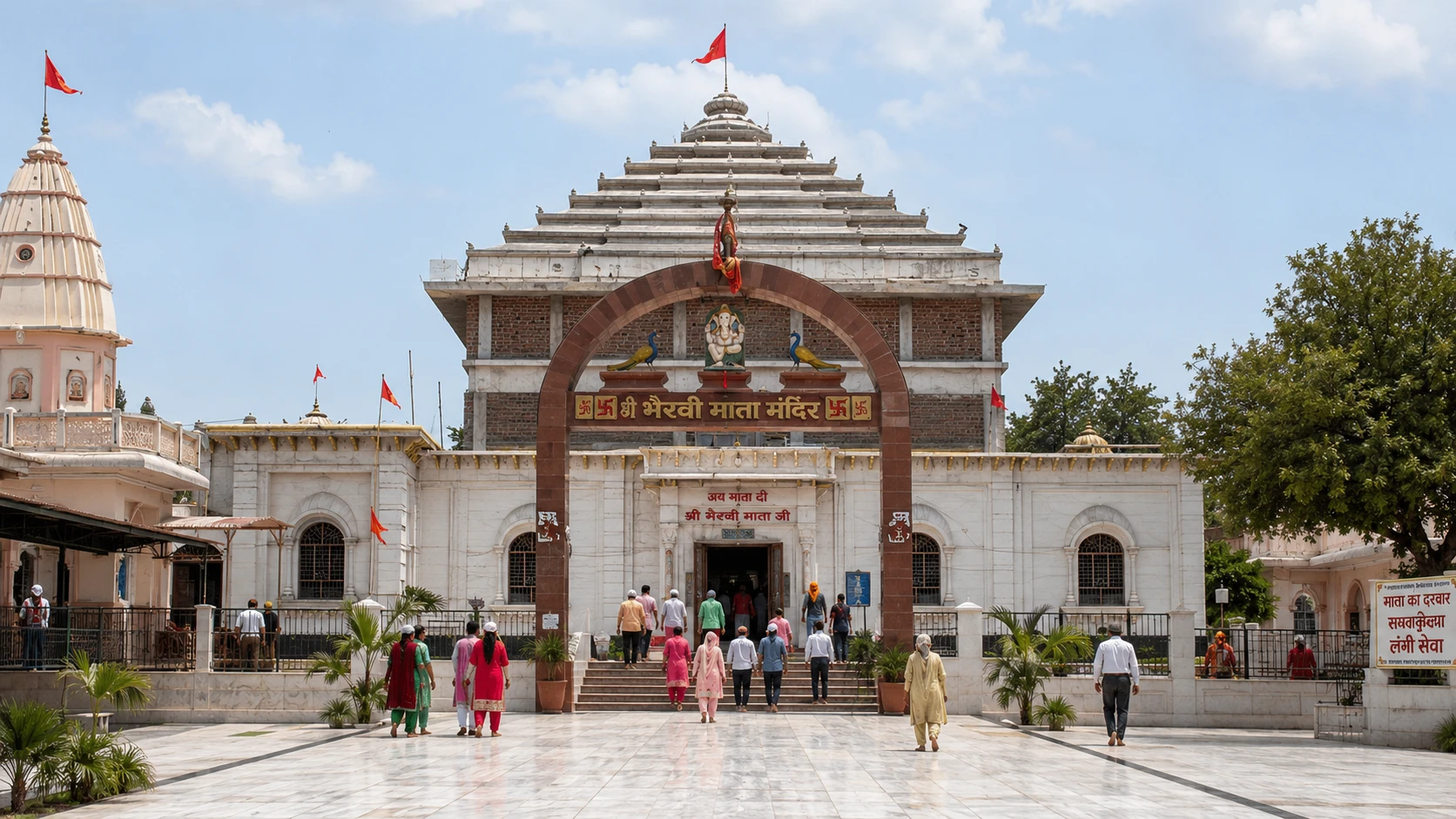
The Tripurmalini-Bhairavi Devī of the Jālandhara Shakti Peeth, canonical 51-Pīṭha site with the left-breast (vāma-stana) body-part attribution per the dominant Pīṭhanirṇaya tradition, paired with Bhairava Bhīṣaṇa; the principal regional Shakta anchor of the Punjab Doaba sacred-geography, housed at the Devi Talab Mandir centered on the canonical Devi Talab sacred tank; the corpus's first formally-documented Punjab Shakta entry, operating within the broader Punjab-Himachal regional Shakta-pilgrimage corridor alongside Jwala Devi (Kangra district) and Naina Devi (Bilaspur district)
Jalandhar, Punjab, India
Tripurmalini Devī (regionally Bhairavī Mātā)Also known as: Bhairavi Mata, Tripurmalini Devi, Tripuramālinī, Jalandhar Tripurmalini, Jālandhara Pīṭha Devī, Devi Talab Mata, Maha Tripurmalini, Jalandhar Bhairavi
Era
Pre-canonical Devī-worship attestation in the broader Doaba region; canonical 51-Pīṭha attestation by 8th, 12th c. textualization period; medieval-period operational continuity through the Mughal-era and the Sikh-era religious-cultural framework; substantive reconstruction-and-renovation phases through the late 19th and 20th centuries; modern administrative arrangements under the Government of Punjab Hindu temple framework continue temple operations
Architecture
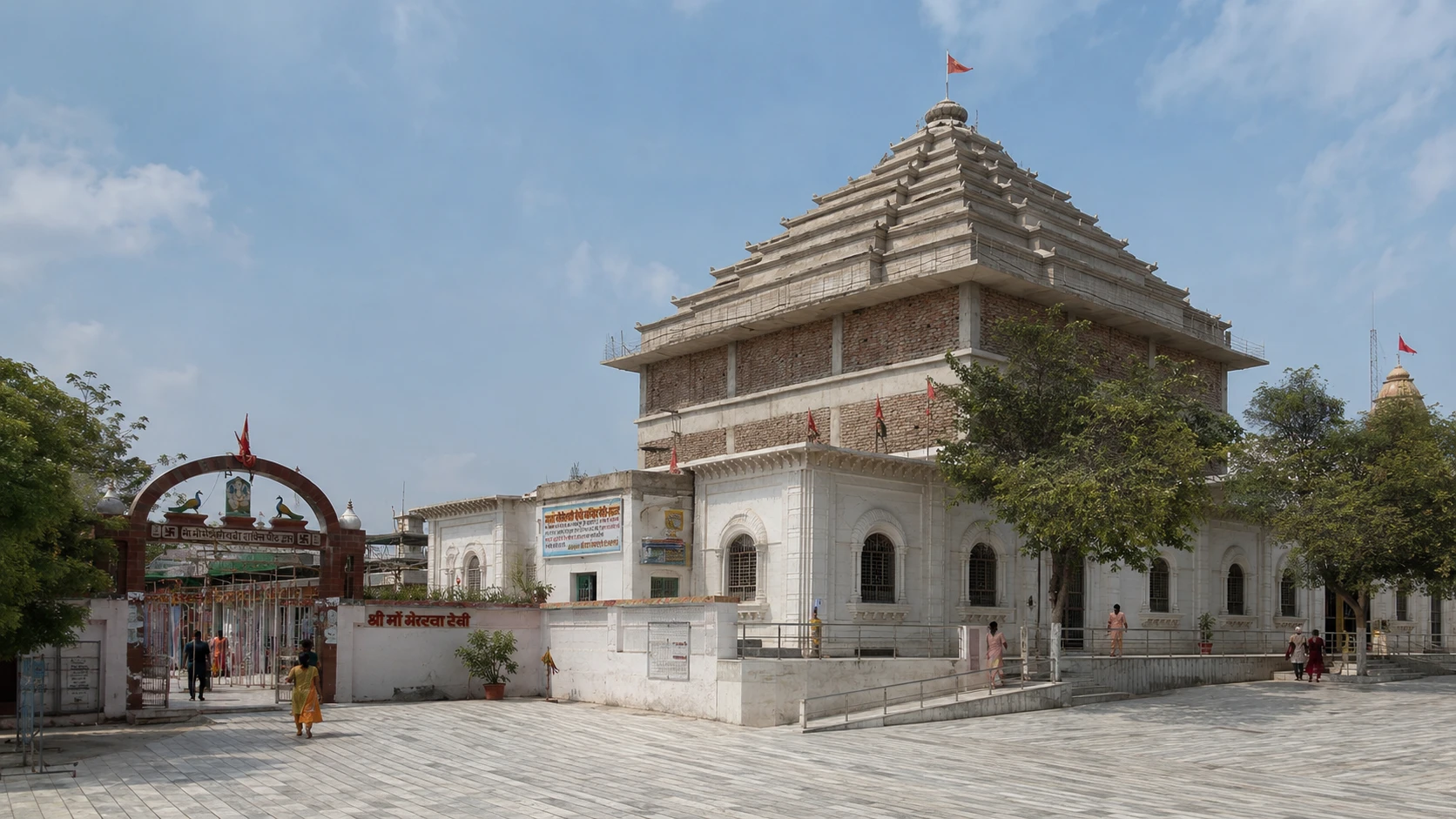
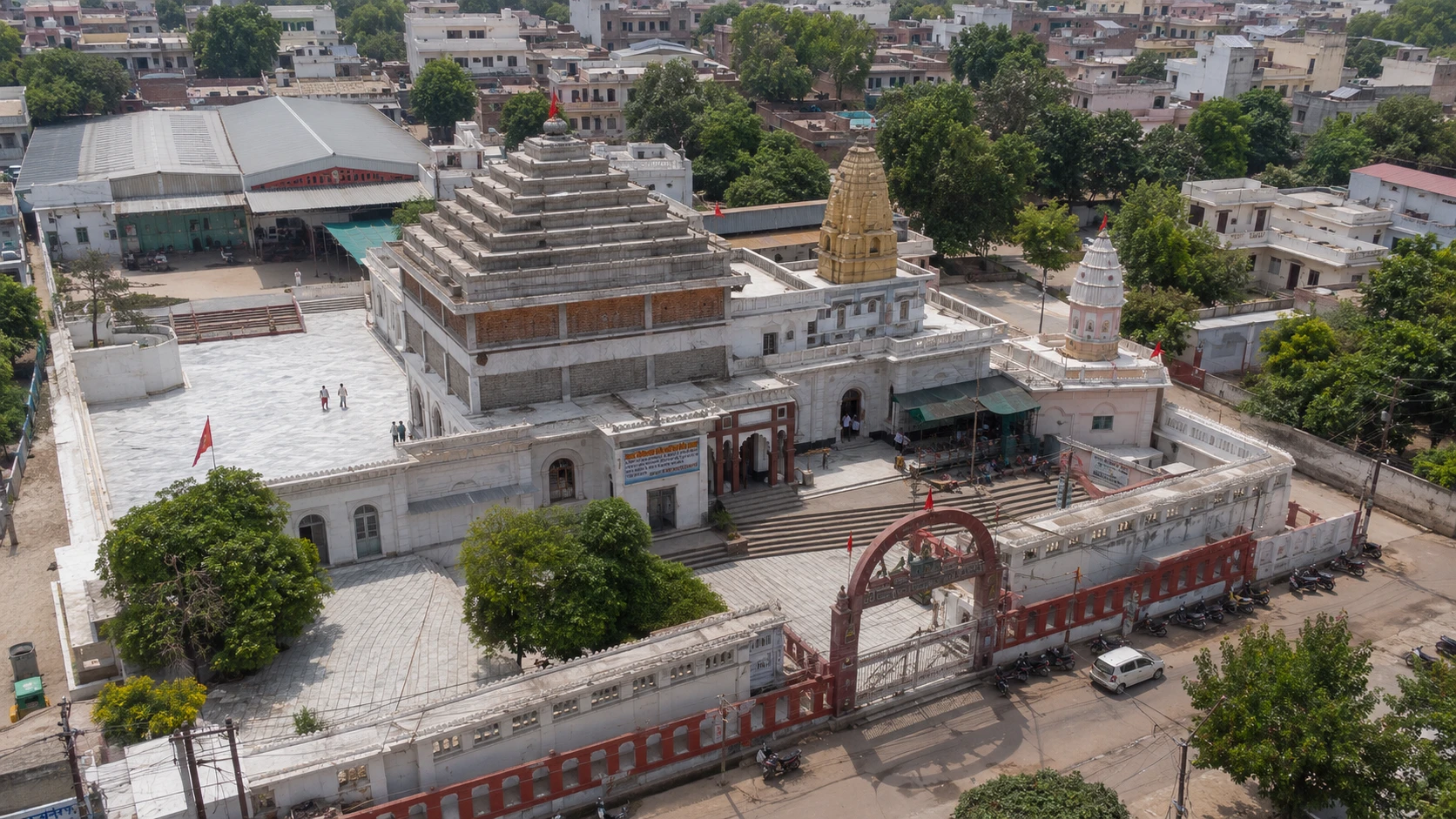
Regional Punjab Hindu temple-construction style with substantial modern reconstruction-era layering. The temple-complex is centered on the canonical Devi Talab, the sacred tank that operates as the canonical architectural anchor of the integrated temple-precinct, with the principal Tripurmalini-Bhairavi sanctum positioned at the canonical site adjacent to the tank. The contemporary temple-complex preserves the canonical Punjab-region temple-construction conventions integrating the canonical sacred-tank infrastructure with the broader temple architecture. The temple-complex also houses canonical sub-shrines integrating the regional Hindu sacred-geography network, with the broader temple-precinct operating as the principal regional Hindu temple destination in the Jalandhar urban area
Open
05:00 – 21:30
Aarti
05:30 · 12:00 · 19:00 · 20:30
Special
Śāradīya Navarātri (Sep-Oct) is the principal annual Devī-focused festival at the Devi Talab Mandir, drawing substantial regional Punjab pilgrim flow alongside broader pan-North-Indian Shakta-tradition pilgrim engagement; Caitra Navarātri (Mar-Apr) brings the spring Devī-festival cycle with substantial regional observance; the broader Punjab regional festival cycle integrates with the temple's annual programming including the canonical Lohri (mid-January, the regional Punjab winter-harvest festival) and the regional Holi-period observances; Durgāṣṭamī and Mahānavamī during both Navarātri cycles bring the peak crowd; Annual Bhairavi-Tripurmalini commemorative observances per the regional Punjab Shakta liturgical calendar bring substantial regional pilgrim flow
The Sacred Legend · पवित्र कथा
The Jālandhara Shakti Peeth sits at the Devi Talab Mandir in Jalandhar city in the Doaba region of Punjab, the principal regional Shakta anchor of the broader Punjab Doaba sacred-geography. The Pīṭha occupies a structurally distinctive position in the canonical 51-Pīṭha enumeration through the dominant Pīṭhanirṇaya tradition's left-breast (vāma-stana) body-part attribution and the canonical Bhairava-pair Bhīṣaṇa. The canonical Pīṭhanirṇaya tradition and Sircar 1948 attest the Devī of the Jālandhara Pīṭha as Tripurmalini (Tripuramālinī, the canonical Devī-name in the broader Sanskrit Pīṭha-textual corpus); the regional Jalandhar devotional tradition uses the name Bhairavi (Bhairavī Mātā) as the local devotional appellation for the same canonical Devī, with the two names operating as parallel canonical and regional designations for the canonical Jālandhara Pīṭha Devī rather than as references to distinct deities. The Devi Talab Mandir (literally 'The Devī's Tank Temple') is the principal canonical shrine, centered on the canonical Devi Talab, the sacred tank that the regional canonical tradition holds as the canonical bathing infrastructure associated with the Devī and the site's principal canonical ritual-water-source. The temple-complex preserves the canonical Pīṭha-narrative through the integrated architecture: the principal Tripurmalini-Bhairavi sanctum, the canonical Devi Talab sacred tank, the surrounding canonical mandapa architecture, and the broader pilgrim-infrastructure within the temple precinct. The Jālandhara site is structurally distinctive within the corpus through several converging dimensions: (a) the canonical 51-Pīṭha attestation with the left-breast (vāma-stana) body-part attribution, corpus-distinctive among the documented breast-region body-part Pīṭhas alongside Bhairavaparvat at Ujjain (right breast / dakṣiṇa-stana) and the broader breast-region anatomical cluster within the broader 51-Pīṭha framework; (b) the canonical Bhairava-pair Bhīṣaṇa, the canonical Pīṭhanirṇaya-attested Bhairava-form whose name (Bhīṣaṇa, 'the Terrifying One') operates within the broader canonical Bhairava-iconographic register; (c) the canonical Devi Talab sacred-tank integrated architectural register, the canonical principal-sanctum + sacred-tank coordinated devotional infrastructure that the regional Doaba tradition holds as theologically continuous; (d) the corpus's first formally-documented Punjab Shakta entry, operating within the broader Punjab-Himachal-Haryana regional Shakta-pilgrimage corridor (alongside the canonical regional sites Jwala Devi at Jvālāmukhī in Kangra district, Naina Devi at Naina Devi in Bilaspur district, Chamunda Devi at Chamunda Nandikeshwar Dham in Kangra district, and the broader regional Shakta network); (e) the canonical Tripurmalini-vs-Bhairavi naming convention operating as a regional naming variability documented in the broader Hindu Shakta tradition. The Jālandhara Pīṭha's geographical position, in the heart of the Punjab Doaba region between the Beas and Sutlej rivers, in the broader cultural-religious zone where the canonical Sikh and Hindu traditions have operated in canonical co-residence across the medieval and modern periods, gives the site a regionally-distinctive religious-cultural context within the broader Hindu Shakta sacred-geography network.
Sacred Designationपवित्र पदनाम
Shakti Peeth
Body part: Left Breast (Vāma-stana / Stana-pradeśa) per the dominant Pīṭhanirṇaya tradition and Sircar 1948
Shakti: Tripurmalini (Tripuramālinī, the canonical Devī-name in the broader Sanskrit Pīṭha-textual corpus per the Pīṭhanirṇaya); regionally Bhairavī Mātā (the canonical regional Punjab devotional appellation for the same canonical Jālandhara Pīṭha Devī). The corpus records both names as parallel canonical-regional designations for the same canonical Devī rather than as references to distinct deities, with the broader Hindu Shakta tradition's regional naming variability operating as the canonical context for this dual-naming convention
Bhairava: Bhīṣaṇa (canonical Pīṭhanirṇaya attestation; 'the Terrifying One,' operating within the broader canonical Bhairava-iconographic register)
Sacred Origin Storyपवित्र उत्पत्ति कथा
Source: Devī Bhāgavata Purāṇa, Skandha VII (canonical 51-Pīṭha enumeration); Kālikā Purāṇa, Chapters 18 and 60, 62 (52-list tradition; vāma-stana body-part attribution at Jalandhar); Pīṭhanirṇaya (Tripurmalini at Jalandhar paired with Bhairava Bhīṣaṇa); regional Punjab Shakta Sthala Purāṇa tradition on the Jalandhar Devi Talab site; medieval-period Punjab Hindu temple administrative records
The Pīṭha-narrative at Jalandhar follows the canonical Pīṭha-formation cycle: Sati's body-fragment (canonically the left breast / vāma-stana per the dominant Pīṭhanirṇaya attestation) fell at the Jalandhar site, giving rise to the canonical Jālandhara Pīṭha.
The canonical Devī of the site is Tripurmalini per the Pīṭhanirṇaya tradition and the broader Sanskrit Pīṭha-textual corpus, with the regional Punjab devotional tradition using the name Bhairavi as the local devotional appellation for the same canonical Devī.
The canonical Pīṭha-narrative integrates with the regional Doaba sacred-geography through the Devi Talab, the canonical sacred tank that the regional tradition holds as the canonical bathing infrastructure associated with the Devī and the canonical principal ritual-water-source at the site.
The Devi Talab Mandir, the principal canonical shrine of the Jālandhara Pīṭha, is centered on the canonical Devi Talab sacred tank, with the canonical integrated architectural register operating through the principal Tripurmalini-Bhairavi sanctum positioned at the canonical site adjacent to the tank.
The canonical Bhairava-pair Bhīṣaṇa operates as the canonical Pīṭhanirṇaya-attested Bhairava-form at the site, with the canonical Bhairava-iconographic register's 'Terrifying One' theological identity integrating with the broader canonical Pīṭha-Bhairava intra-site pairing pattern.
The regional Punjab Doaba Shakta tradition holds the Jālandhara Pīṭha as the principal regional Shakta anchor of the broader Doaba sacred-geography, with the canonical Devī-tradition operating in canonical co-residence with the broader regional Hindu-Sikh religious-cultural framework that emerged through the medieval-and-modern Punjab religious history.
The broader regional canonical context integrates the Jālandhara site with the broader Punjab-Himachal-Haryana Shakta-pilgrimage corridor, the canonical regional Shakta-pilgrimage network anchored by the Jvālāmukhī Jwala Devi shrine (Kangra district, Himachal Pradesh), the Naina Devi shrine (Bilaspur district, Himachal Pradesh), the Chamunda Nandikeshwar Dham shrine (Kangra district, Himachal Pradesh), the Brajeshwari Devi shrine (Kangra district, Himachal Pradesh), the Mansa Devi shrine (Panchkula district, Haryana), and the broader regional 51-Pīṭha distributions.
The Jālandhara Pīṭha's particular position within this regional network operates as the principal Punjab Doaba canonical Shakta anchor, with the broader regional Shakta-pilgrimage corridor's coordinated devotional infrastructure integrating Jalandhar with the canonical Himachal Pradesh Shakta-cluster sites.
Sources cited:
- Devī Bhāgavata Purāṇa, Skandha VII (canonical 51-Pīṭha enumeration)
- Kālikā Purāṇa, Chapters 18 and 60, 62 (52-list tradition; vāma-stana body-part attribution at Jalandhar)
- Pīṭhanirṇaya (Tripurmalini at Jalandhar paired with Bhairava Bhīṣaṇa)
- Regional Punjab Shakta Sthala Purāṇa tradition on the Jalandhar Devi Talab site
- Medieval-period Punjab Hindu temple administrative records
- Sircar, D. C., 'The Śākta Pīṭhas' (Motilal Banarsidass, 1948; revised 1973)
- Bhattacharya, N. N., 'History of the Sakta Religion' (Manohar, 1974)
- Singh, Khushwant, 'A History of the Sikhs' (Oxford University Press, 1963/2004), Punjab regional historical framework
- Grewal, J. S., 'The Sikhs of the Punjab' (Cambridge University Press, 1990), Punjab regional historical framework
- Government of Punjab, Jalandhar district administration documentation
Other Traditions · अन्य परंपराएँ
Tripurmalini-vs-Bhairavi canonical-regional naming convention at the Jālandhara Pīṭha
The canonical Devī of the Jālandhara Pīṭha shows a documented canonical-vs-regional naming convention pattern. The dominant Pīṭhanirṇaya tradition and Sircar 1948 attestation identify the Devī as Tripurmalini (Tripuramālinī), with this name operating as the canonical Devī-designation across the broader Sanskrit Pīṭha-textual corpus.
The regional Punjab devotional tradition uses the name Bhairavi (Bhairavī Mātā) as the local devotional appellation for the same canonical Devī, with the regional name operating across the broader Punjab Shakta living-tradition.
The two names operate as parallel canonical-regional designations for the canonical Jālandhara Pīṭha Devī rather than as references to distinct deities, a canonical-regional naming convention pattern documented at numerous Pīṭha sites across the broader Hindu Shakta tradition where the Sanskrit canonical name and the regional devotional name coexist as parallel attestations of the same canonical Devī.
The corpus records both names as devotionally compatible canonical-regional designations within the broader Hindu Shakta tradition's regional-naming framework. The Devi Talab Mandir's institutional signage and regional devotional infrastructure use both names contextually, the Sanskrit canonical name in the canonical liturgical contexts and the regional devotional name in the broader regional pilgrim engagement context.
Punjab-Himachal-Haryana regional Shakta-pilgrimage corridor canonical integration
The Jālandhara Pīṭha operates as the principal Punjab Doaba canonical Shakta anchor of the broader Punjab-Himachal-Haryana regional Shakta-pilgrimage corridor, the canonical regional Shakta-pilgrimage network that integrates the canonical regional Devī-sites across the broader north-western Indian sub-Himalayan zone.
The corridor's canonical regional sites include Jwala Devi at Jvālāmukhī in Kangra district (Himachal Pradesh; the canonical eternal-flame Devī shrine, also corpus-documented as a 51-Pīṭha attestation), Naina Devi at Naina Devi in Bilaspur district (Himachal Pradesh; the canonical eye-region Devī shrine, also corpus-documented as a 51-Pīṭha attestation), Chamunda Devi at Chamunda Nandikeshwar Dham in Kangra district (Himachal Pradesh; the canonical regional Chamunda shrine), Brajeshwari Devi at Kangra (Kangra district, Himachal Pradesh; the canonical regional Devī shrine, also documented as a 51-Pīṭha attestation per some readings), and Mansa Devi at Panchkula district (Haryana; the canonical regional Devī shrine).
The canonical regional pilgrimage circuit integrates these sites in a coordinated multi-site pilgrim infrastructure, with Jalandhar operating as the principal Punjab Doaba anchor and the canonical regional Himachal Pradesh sites operating as the broader sub-Himalayan Shakta-cluster within the broader corridor.
The corridor's canonical integration with the broader Vaishno Devi shrine (Reasi district, Jammu and Kashmir; one of the principal regional pilgrim destinations of the broader North Indian Shakta network) operates through coordinated regional pilgrim flow, with many pilgrims undertaking the canonical extended North Indian Shakta-circuit (Jalandhar + Himachal Pradesh Shakta-cluster + Vaishno Devi) as a coordinated multi-day pilgrim engagement.
Scholarly Context
Jalandhar occupies a structurally distinctive position in the corpus as the first formally-documented Punjab Shakta entry, operating as the principal Punjab Doaba canonical Shakta anchor of the broader Punjab-Himachal-Haryana regional Shakta-pilgrimage corridor. The canonical 51-Pīṭha attestation operates through the dominant Pīṭhanirṇaya tradition's left-breast (vāma-stana) body-part attribution and the canonical Bhairava-pair Bhīṣaṇa. The canonical Tripurmalini-vs-Bhairavi regional naming convention reflects the broader Hindu Shakta tradition's documented canonical-vs-regional naming pattern at numerous Pīṭha sites; the corpus records both names as parallel canonical-regional designations for the same canonical Devī. The broader Punjab-Himachal-Haryana regional Shakta-pilgrimage corridor, anchored by Jalandhar in the Punjab Doaba and extending through the canonical regional Himachal Pradesh sites (Jwala Devi at Jvālāmukhī, Naina Devi at Naina Devi, Chamunda Devi at Chamunda Nandikeshwar Dham, Brajeshwari Devi at Kangra) and the Haryana regional Mansa Devi shrine, operates as the canonical regional Shakta-pilgrimage network within the broader North Indian Shakta sacred-geography. Kathleen Erndl's 'Victory to the Mother' (Oxford University Press, 1993) provides the principal modern academic treatment of the canonical Punjab-Himachal Devī tradition's broader regional framework, with the corpus's regional Shakta-corridor documentation operating within Erndl's scholarly framing. The canonical Devi Talab sacred-tank integrated architectural register at Jalandhar operates as a corpus-distinctive devotional infrastructure pattern, the canonical principal-sanctum + sacred-tank coordinated architecture that the regional Doaba tradition holds as theologically continuous. The Jālandhara site's broader regional cultural-religious context integrates with the canonical Punjab Hindu-Sikh religious-cultural framework, the canonical Sikh tradition's regional institutional infrastructure (including the canonical Harmandir Sahib at Amritsar 80 km away and the broader Sikh devotional network across Punjab) operates in canonical co-residence with the broader Hindu Shakta tradition's regional infrastructure across the medieval-and-modern Punjab religious history. Singh 1963/2004 and Grewal 1990 provide the principal modern academic treatments of the broader Punjab regional historical-religious framework within which the Jālandhara Pīṭha operates.
Historyइतिहास
Jalandhar's historical depth as a sacred site is integrated with the broader Punjab Doaba regional religious-cultural framework. The pre-canonical layer (continuous Devī-worship in the broader Doaba region from at least the late epic period through c. 4th c. CE) places Jalandhar within the deep regional Devī-tradition.
The canonical 51-Pīṭha attestation arrived through the 8th, 12th c. textualization period via the Devī Bhāgavata, the Kālikā Purāṇa, the Pīṭhanirṇaya, and the broader Pīṭha-network textualization. The medieval period saw substantial regional religious-cultural development across the broader Punjab region.
The Delhi Sultanate period (1206, 1526 CE) brought administrative integration into the broader Sultanate framework with documented disruption to several regional Hindu temple sites; the Jālandhara Devi Talab site's specific institutional history during this period is documented unevenly across primary sources but consistent with the broader regional pattern.
The Mughal period (1526, 1707 CE) brought relative stability across the broader Punjab region, with the canonical Sikh tradition emerging at Amritsar (Sri Harmandir Sahib founded c. 1581 by Guru Ram Das, the canonical Sikh tradition's principal devotional infrastructure established at Amritsar 80 km from Jalandhar).
The Sikh Confederacy period (mid-18th century) and the Sikh Empire under Maharaja Ranjit Singh (1799, 1839) brought substantial regional patronage for the broader Punjab Hindu and Sikh religious-cultural infrastructure, with the canonical Jalandhar Devi Talab Mandir operating within the broader regional religious-cultural framework.
The British colonial period (Punjab Annexation 1849; 1857, 1947 direct administration) brought the broader regional religious-cultural framework into the colonial administrative arrangements. The 1947 Partition of India had substantial implications for the broader Punjab region's religious-cultural geography, with the canonical Jalandhar Devi Talab site operating on the Indian side of the partitioned Punjab and continuing operations under the post-Independence Indian administrative framework.
The post-Independence period saw substantial reconstruction-and-institutional-consolidation phases at the Devi Talab Mandir, with the broader regional Punjab Hindu temple network's institutional revival operating across the Government of Punjab Hindu temple framework.
The 21st century has brought substantial infrastructure improvements including coordinated pilgrim management during Śāradīya Navarātri, Caitra Navarātri, and the broader regional Punjab festival cycle, alongside the broader regional Punjab-Himachal-Haryana Shakta-pilgrimage corridor's coordinated pilgrim infrastructure development.
Historical Timelineऐतिहासिक कालक्रम
Pre-canonical attestation of Devī-worship in the broader Punjab Doaba region. The Jalandhar site is situated within the deep regional Devī-religious geography that would integrate the canonical 51-Pīṭha attestation through the textualization period.
Canonical 51-Pīṭha attestation of the Jālandhara Pīṭha through textualization in the Devī Bhāgavata Purāṇa (Skandha VII), the Kālikā Purāṇa (Chapters 18 and 60, 62), the Pīṭhanirṇaya (Tripurmalini at Jalandhar paired with Bhairava Bhīṣaṇa), and the broader Pīṭha-network textual corpus. The left-breast (vāma-stana) body-part attribution arrives at the site within the broader 8th, 12th c. textualization period during which the canonical 51-network framework was consolidated. The canonical Devī-name Tripurmalini operates as the Pīṭha-textual-corpus canonical designation; the regional Punjab devotional tradition's parallel naming convention (Bhairavi) emerged within the broader regional religious-cultural development.
Delhi Sultanate period (1206, 1526 CE) institutional-political integration of the broader Punjab Doaba region into the Sultanate framework. The Jalandhar Devi Talab site's specific institutional history during this period is documented unevenly across primary sources, but the broader regional disruption-and-continuity pattern is documented through Punjab medieval historiography. The Devi Talab site's living-tradition continuity through the medieval period operated through the broader regional Punjab Hindu institutional resilience.
Mughal period (1526, 1707 CE) and pre-Sikh Empire period brought relative stability across the broader Punjab region. The canonical Sikh tradition emerged during this period, Sri Harmandir Sahib at Amritsar (80 km from Jalandhar) was founded c. 1581 by Guru Ram Das, with the canonical Sikh tradition's principal devotional infrastructure establishing in the broader regional religious-cultural framework. The Jalandhar Devi Talab Mandir operated within the broader regional religious-cultural framework during this period, with the canonical Hindu Shakta tradition's institutional continuity preserved across the Mughal-period administrative arrangements.
Sikh Empire under Maharaja Ranjit Singh (1799, 1839; the Empire continued until British annexation in 1849) brought substantial regional patronage for the broader Punjab Hindu and Sikh religious-cultural infrastructure. The Sikh Empire's institutional framework operated through canonical religious-pluralist principles that supported both the Hindu and Sikh devotional infrastructure across the broader Punjab region. The Jalandhar Devi Talab Mandir operated within the broader Sikh Empire-era regional religious-cultural framework, with the canonical Hindu Shakta tradition's institutional continuity preserved across the Sikh Empire administrative arrangements. The Sikh Empire's collapse and British annexation in 1849 transitioned the broader regional administrative framework into the British colonial administrative arrangements.
British colonial period (Punjab Annexation 1849; 1857, 1947 direct administration) brought the broader regional religious-cultural framework into the colonial administrative arrangements. The 1947 Partition of India had substantial implications for the broader Punjab region's religious-cultural geography, the partitioned Punjab divided the broader regional infrastructure between the Indian and Pakistani administrative frameworks, with the canonical Jalandhar Devi Talab site operating on the Indian side of the partitioned Punjab and continuing operations under the post-Independence Indian administrative framework. The post-Independence period saw substantial reconstruction-and-institutional-consolidation phases at the Devi Talab Mandir, with the broader regional Punjab Hindu temple network's institutional revival operating across the Government of Punjab Hindu temple framework. The 21st century has brought substantial infrastructure improvements including coordinated pilgrim management during Śāradīya Navarātri, Caitra Navarātri, the canonical Lohri and Holi-period regional observances, and the broader regional Punjab festival cycle, alongside the broader regional Punjab-Himachal-Haryana Shakta-pilgrimage corridor's coordinated pilgrim infrastructure development. The temple continues to draw substantial regional Punjab and broader pan-North-Indian pilgrim flow as the principal Punjab Doaba canonical Shakta anchor.
What You'll Seeदर्शन में
The Devi Talab Mandir at Jalandhar preserves the canonical Tripurmalini-Bhairavi iconographic register through the integrated architectural envelope centered on the canonical Devi Talab sacred tank. The principal sanctum houses the canonical Tripurmalini-Bhairavi murti sculpted in the canonical regional Punjab Shakta sculptural tradition, depicting the Devī in the canonical anthropomorphic form with the canonical Devī-iconographic attributes (multiple arms bearing canonical weapons and gestures, including the canonical sword, trident, and the canonical abhaya-mudrā and varada-mudrā configurations).
The Devī is daily draped in red silk vestments per the canonical regional Punjab Shakta convention, with substantial gold and silver ornamentation including the canonical Devī-kireeta, the canonical jewelled forehead-ornament, and the canonical regional Punjab gold-and-pearl ceremonial vestments.
The principal sanctum's architectural positioning is canonically integrated with the broader Devi Talab sacred-tank infrastructure, the canonical Devi Talab (literally 'The Devī's Tank') operates as the canonical architectural anchor of the integrated temple-precinct, with the sacred tank's canonical bathing infrastructure functioning as the principal canonical ritual-water-source for the temple's daily liturgical cycle.
The tank's canonical architectural form is the regional Punjab Hindu temple-tank construction, a rectangular sacred tank with surrounding pradakṣiṇā path, integrated bathing ghats, and the broader temple-complex's mandapa architecture extending outward from the tank's perimeter.
The Devi Talab Mandir's broader architectural envelope preserves canonical sub-shrines integrating the broader regional Hindu sacred-geography network within the temple precinct, with the modern reconstruction-era architectural layering operating across the canonical foundation.
The Devi Talab Mandir's integrated principal-sanctum + sacred-tank architectural register is corpus-distinctive among the documented Pīṭhas as the principal canonical sacred-tank integrated architectural pattern within the broader 51-Pīṭha network, parallel to (but architecturally distinct from) the Sauparnika river-side ghat infrastructure at Mookambika and the broader regional canonical sacred-water-infrastructure traditions documented across the broader corpus.
Distinctive Practicesविशिष्ट परंपराएँ
Devi Talab Sacred-Tank Integrated Devotional Engagement (Canonical Bathing + Principal-Sanctum Coordinated Darshan)
देवी तालाब पवित्र-सरोवर एकीकृत भक्ति संलग्नता (प्रामाणिक स्नान + प्रमुख-गर्भगृह समन्वित दर्शन)
Year-round; particularly weighted during Śāradīya Navarātri, Caitra Navarātri, Mahā Śivarātri (when the broader Hindu temple network's sacred-water observance peaks), and during the canonical regional Punjab Hindu liturgical calendar's coordinated sacred-water observances
The corpus-distinctive Devi Talab sacred-tank integrated devotional engagement at Jalandhar operates through the canonical pilgrim circuit that engages the canonical Devi Talab sacred tank and the principal Tripurmalini-Bhairavi sanctum as theologically continuous devotional infrastructure. The canonical engagement operates through coordinated devotional practices: (a) the canonical sacred-tank bathing observance, pilgrims engage the canonical Devi Talab's bathing ghats per the regional Punjab Hindu temple convention prior to or after the principal sanctum darshan, with the canonical bathing infrastructure operating as the canonical purification-ritual preceding the canonical principal darshan; (b) the canonical pradakṣiṇā around the Devi Talab sacred tank, integrating the canonical circumambulation observance with the broader integrated principal-sanctum darshan; (c) the canonical principal-sanctum darshan engaging the Tripurmalini-Bhairavi murti with the canonical Devī-offerings (red flowers, silk vestments, sindoor/kumkum, and the broader canonical regional Punjab Shakta-devotional offerings); (d) the canonical post-darshan engagement at the broader temple-precinct's sub-shrine infrastructure. The integrated sacred-tank devotional engagement is corpus-distinctive at Jalandhar as the principal documented canonical Pīṭha + sacred-tank integrated devotional pattern, distinct from the broader sacred-river infrastructure at sites like Mookambika (Sauparnika river) or Tarapith (Dwaraka river) where the sacred-water infrastructure operates as an adjacent natural-water feature rather than as a canonical-architectural sacred-tank within the temple-precinct. The Devi Talab sacred-tank infrastructure's canonical theological framework holds the tank and the principal sanctum as integrated canonical devotional infrastructure rather than as separate canonical pillars.
The canonical Devi Talab sacred-tank integrated devotional infrastructure operates as the canonical purification-and-darshan coordinated framework that the regional Punjab Doaba tradition holds as the canonical comprehensive Jalandhar Pīṭha pilgrim engagement. The canonical bathing observance prior to principal darshan operates as the canonical purification preparation that integrates the canonical devotional engagement with the canonical sacred-water-ritual framework.
Punjab-Himachal-Haryana Regional Shakta-Corridor Pilgrim Circuit Integration (Jalandhar Doaba Anchor + Himachal Pradesh Cluster + Haryana Mansa Devi)
पंजाब-हिमाचल-हरियाणा क्षेत्रीय शाक्त-गलियारा तीर्थयात्री परिक्रमा एकीकरण (जालन्धर दोआब आधार + हिमाचल प्रदेश समूह + हरियाणा मनसा देवी)
Year-round; particularly weighted during Śāradīya Navarātri and Caitra Navarātri when the broader regional Shakta-corridor pilgrim flow operates at festival-scale intensity. The corridor's coordinated pilgrim infrastructure also operates during the canonical Vaishno Devi yatra cycle which integrates with the broader Punjab-Himachal-Haryana Shakta-corridor framework
The Jālandhara Pīṭha operates as the principal Punjab Doaba canonical Shakta anchor of the broader Punjab-Himachal-Haryana regional Shakta-pilgrimage corridor, the canonical regional Shakta-pilgrimage network that integrates the canonical regional Devī-sites across the broader north-western Indian sub-Himalayan zone. The corridor's coordinated pilgrim circuit canonically engages multiple regional Shakta sites in a multi-day pilgrim infrastructure: (a) the Jalandhar Doaba anchor, the canonical 51-Pīṭha attestation operating as the principal Punjab Doaba canonical Shakta anchor; (b) the canonical Himachal Pradesh Shakta-cluster, Jwala Devi at Jvālāmukhī in Kangra district (canonical 51-Pīṭha attestation, the eternal-flame Devī shrine), Naina Devi at Naina Devi in Bilaspur district (canonical 51-Pīṭha attestation, the eye-region Devī shrine), Chamunda Devi at Chamunda Nandikeshwar Dham in Kangra district, and Brajeshwari Devi at Kangra in Kangra district; (c) the Haryana regional Mansa Devi shrine at Panchkula district (the canonical regional Devī shrine); (d) the broader canonical Vaishno Devi shrine at Reasi district in Jammu and Kashmir (one of the principal regional pilgrim destinations of the broader North Indian Shakta network). The canonical regional pilgrim circuit operates through coordinated multi-day pilgrim engagement, with pilgrims typically allocating 4, 7 days for the canonical extended North Indian Shakta-circuit covering Jalandhar + Himachal Pradesh Shakta-cluster + Vaishno Devi. Jalandhar's Doaba-region geographical position makes it a canonical logistical anchor for pilgrims entering the broader Himachal Pradesh sub-Himalayan zone from the Punjab plains, with the broader regional transport infrastructure supporting the canonical multi-site circuit.
The canonical Punjab-Himachal-Haryana regional Shakta-pilgrimage corridor operates as the canonical regional Shakta-pilgrimage network that integrates the multiple canonical regional Devī-sites within a coordinated devotional infrastructure. The canonical corridor's regional framework gives the broader North Indian Shakta-tradition pilgrim infrastructure its coordinated multi-site pilgrimage architecture, with Jalandhar operating as the principal Punjab Doaba anchor of this broader corridor.
Tripurmalini-Bhairavi Canonical-Regional Dual-Naming Devotional Engagement
त्रिपुरमालिनी-भैरवी प्रामाणिक-क्षेत्रीय द्वि-नामकरण भक्ति संलग्नता
Year-round; integrated across the canonical daily liturgical cycle and the broader festival programming
The corpus-distinctive Tripurmalini-Bhairavi canonical-regional dual-naming devotional engagement at Jalandhar operates through the integrated devotional practice that engages both canonical and regional names for the canonical Jālandhara Pīṭha Devī. The practice operates through coordinated devotional engagement: (a) canonical Sanskrit liturgical contexts use the canonical Devī-name Tripurmalini (Tripuramālinī) per the Pīṭhanirṇaya and broader Sanskrit Pīṭha-textual corpus, with the canonical name operating across formal canonical liturgical practice including the canonical Pīṭha-stotra recitation and the broader formal Sanskrit Devī-stotra engagement; (b) regional Punjab devotional contexts use the regional Devī-name Bhairavi (Bhairavī Mātā) per the regional Punjab Shakta living-tradition, with the regional name operating across the broader regional pilgrim engagement and the popular devotional infrastructure including the canonical regional bhajan tradition and the broader regional Hindi/Punjabi devotional engagement; (c) the integrated devotional practice operates through coordinated use of both names within the broader temple-precinct's liturgical infrastructure, with the canonical Sanskrit name and the regional devotional name operating as parallel canonical-regional designations for the same canonical Devī. The Devi Talab Mandir's institutional signage and devotional infrastructure use both names contextually, the canonical Sanskrit name in canonical liturgical contexts and the regional devotional name in the broader regional pilgrim engagement context. The corpus's editorial position presents both names as devotionally compatible canonical-regional designations within the broader Hindu Shakta tradition's regional-naming framework.
The canonical-regional dual-naming devotional engagement at Jalandhar operates as a corpus-distinctive devotional pattern that integrates the canonical Sanskrit Pīṭha-textual framework with the regional Punjab Shakta living-tradition's devotional infrastructure. The dual-naming practice operates as a documented canonical-regional naming convention pattern that the broader Hindu Shakta tradition has institutionalized across numerous Pīṭha sites where the canonical Sanskrit Devī-name and the regional devotional name coexist as parallel attestations of the same canonical Devī.
Did You Know?क्या आप जानते हैं?
The canonical Devī of the Jālandhara Pīṭha operates through a documented canonical-vs-regional naming convention: the canonical Pīṭhanirṇaya tradition and the broader Sanskrit Pīṭha-textual corpus name the Devī as Tripurmalini (Tripuramālinī), while the regional Punjab devotional tradition uses the name Bhairavi (Bhairavī Mātā) as the local devotional appellation for the same canonical Devī. The two names operate as parallel canonical-regional designations for the canonical Jālandhara Pīṭha Devī rather than as references to distinct deities. The corpus records both names as devotionally compatible canonical-regional designations within the broader Hindu Shakta tradition's regional-naming framework, a pattern documented at numerous Pīṭha sites across the broader 51-Pīṭha network.
Pīṭhanirṇaya; Sircar, 'The Śākta Pīṭhas' (1948); Regional Punjab Shakta Sthala Purāṇa tradition; Devi Talab Mandir institutional documentation
The Jālandhara Pīṭha is housed at the Devi Talab Mandir, centered on the canonical Devi Talab sacred tank (literally 'The Devī's Tank') that operates as the canonical architectural anchor of the integrated temple-precinct. The integrated principal-sanctum + sacred-tank architectural register is corpus-distinctive among the documented Pīṭhas as the principal documented sacred-tank integrated architectural pattern within the broader 51-Pīṭha network, with the sacred tank operating as the canonical bathing infrastructure and the principal ritual-water-source for the temple's daily liturgical cycle.
Regional Punjab Shakta Sthala Purāṇa tradition; Devi Talab Mandir institutional documentation; Pīṭhanirṇaya
The Jālandhara Pīṭha is corpus-first as the formally-documented Punjab Shakta entry, operating as the principal Punjab Doaba canonical Shakta anchor of the broader Punjab-Himachal-Haryana regional Shakta-pilgrimage corridor. The corridor's canonical regional Shakta-pilgrimage network integrates the canonical regional Devī-sites across the broader north-western Indian sub-Himalayan zone, Jalandhar (Punjab Doaba) + Jwala Devi (Kangra district) + Naina Devi (Bilaspur district) + Chamunda Devi (Kangra district) + Brajeshwari Devi (Kangra district) + Mansa Devi (Panchkula district, Haryana), extending to the broader Vaishno Devi shrine (Reasi district, Jammu and Kashmir). Kathleen Erndl's 'Victory to the Mother' (Oxford University Press, 1993) provides the principal modern academic treatment of this canonical Punjab-Himachal Devī tradition's broader regional framework.
Erndl, 'Victory to the Mother' (1993); Sircar, 'The Śākta Pīṭhas' (1948); regional Punjab and Himachal Pradesh Shakta tradition
The Jalandhar Devi Talab Mandir operated under canonical Sikh Empire-era patronage during the reign of Maharaja Ranjit Singh (1799, 1839). The Sikh Empire's institutional framework operated through canonical religious-pluralist principles that supported both the Hindu and Sikh devotional infrastructure across the broader Punjab region. The canonical Sikh tradition's regional institutional infrastructure (Sri Harmandir Sahib at Amritsar 80 km from Jalandhar, founded c. 1581 by Guru Ram Das) and the canonical Hindu Shakta tradition's regional infrastructure (including the Devi Talab Mandir) operated in canonical co-residence across the medieval-and-modern Punjab religious history. The broader Punjab regional cultural-religious framework's documented Hindu-Sikh canonical co-residence operates as a regionally-distinctive religious-cultural context for the Jalandhar Pīṭha within the broader Hindu Shakta sacred-geography network.
Singh, Khushwant, 'A History of the Sikhs' (1963/2004); Grewal, 'The Sikhs of the Punjab' (1990)
The 1947 Partition of India had substantial implications for the broader Punjab region's religious-cultural geography, the partitioned Punjab divided the broader regional infrastructure between the Indian and Pakistani administrative frameworks. The canonical Jalandhar Devi Talab site operated on the Indian side of the partitioned Punjab and continued operations under the post-Independence Indian administrative framework, while several other canonical regional Hindu sites on the Pakistani side of the partitioned Punjab experienced substantial disruption. The Devi Talab Mandir's post-Partition operational continuity reflects the canonical Indian-side Punjab Hindu temple network's institutional resilience through the Partition-era and the post-Independence administrative arrangements.
Singh, Khushwant, 'A History of the Sikhs' (1963/2004); Government of India and Government of Punjab Partition-era administrative records
Visitor Accessप्रवेश जानकारी
The temple-complex is open to all pilgrims regardless of background. Photography and videography are restricted inside the principal Tripurmalini-Bhairavi sanctum particularly during aarti; mobile phones should be carried switched off or deposited at the designated counter when entering the inner sanctum. Footwear is removed at the entrance to the temple precinct. The canonical Devi Talab sacred tank operates with the regional Punjab Hindu temple bathing-ghat conventions, pilgrims engaging the canonical sacred-tank bathing infrastructure should follow the regional bathing-modesty conventions and the temple administration's coordinated guidance. The temple operates from approximately 05:00 to 21:30 with four canonical aarti times.
Spiritual Basis
The photography prohibition reflects the standard major Pīṭha shrine sanctum-photography policy. The Devi Talab sacred-tank bathing-ghat conventions reflect the regional Punjab Hindu temple's coordinated sacred-water observance framework, with appropriate decorum expected at the canonical bathing infrastructure.
Contemporary Context
The Devi Talab Mandir Trust operates under the Government of Punjab Hindu temple framework. The 21st century has brought substantial infrastructure improvements including coordinated pilgrim management during Śāradīya Navarātri, Caitra Navarātri, the canonical Lohri and Holi-period regional observances, and the broader regional Punjab festival cycle, alongside the broader regional Punjab-Himachal-Haryana Shakta-pilgrimage corridor's coordinated pilgrim infrastructure development. There are no caste, gender, or sectarian access restrictions in modern practice.
Practical Guidance
Allow approximately 1.5, 2 hours at the Devi Talab Mandir for the integrated sacred-tank + principal-sanctum darshan during off-peak periods (longer during major festival peaks). Pilgrims undertaking the canonical Punjab-Himachal-Haryana regional Shakta-corridor pilgrim circuit typically allocate 4, 7 days for the canonical extended circuit (Jalandhar + Himachal Pradesh Shakta-cluster including Jwala Devi at Jvālāmukhī, Naina Devi at Naina Devi, Chamunda Devi at Chamunda Nandikeshwar Dham, Brajeshwari Devi at Kangra + Mansa Devi at Panchkula + the broader Vaishno Devi shrine at Reasi). Modest, traditional dress is expected; head covering is customary at the sanctum during aarti. The Punjab climate brings cold winters (December-February, with occasional sub-10°C lows) and hot summers (April-June, with 38°C+ highs); pilgrims should plan accordingly.
Festivalsत्योहार
Śāradīya Navarātri (Autumn Devī-Festival)
शारदीय नवरात्र (शरद देवी-उत्सव)
Sep-Oct (Āśvina month)
Śāradīya Navarātri is the principal annual Devī-focused festival at the Devi Talab Mandir, with full nine-night observance at the principal sanctum and substantial festival-scale liturgical infrastructure across the broader temple-complex. The festival draws substantial regional Punjab pilgrim flow alongside broader pan-North-Indian Shakta-tradition pilgrim engagement. The Devī's festival-scale alaṅkāra cycle brings elaborated ceremonial-scale ornamentation to the canonical Tripurmalini-Bhairavi iconographic register, and the canonical Devi Talab sacred tank operates at festival-scale ritual intensity. Durgāṣṭamī and Mahānavamī during the nine-night cycle bring the festival's peak crowd. The festival integrates with the broader Punjab-Himachal-Haryana Shakta-corridor pilgrim circuit's coordinated festival programming.
Caitra Navarātri (Spring Devī-Festival)
चैत्र नवरात्र (वसंत देवी-उत्सव)
Mar-Apr (Caitra month)
Caitra Navarātri at the Devi Talab Mandir follows the canonical Devī observance cycle with full nine-night observance at the principal sanctum. Vasant Pañcamī within the broader Caitra-month context brings the broader regional Devī-festival cycle, with the festival's pilgrim flow operating at substantial regional scale though typically less than the autumn Śāradīya Navarātri peak. The festival operates in canonical co-residence with the broader Punjab regional spring festival cycle including the canonical regional Baisakhi observances (mid-April, the canonical Punjab spring-harvest festival).
Lohri (Regional Punjab Winter-Harvest Festival)
लोहड़ी (क्षेत्रीय पंजाब शीत-फसल उत्सव)
Mid-January (typically 13 January)
Lohri is the canonical regional Punjab winter-harvest festival, observed across the broader Punjab Hindu and Sikh religious-cultural framework. At the Devi Talab Mandir, Lohri operates within the broader temple-precinct's annual liturgical calendar as a regional festival observance integrating the canonical Devī-tradition with the broader regional Punjab festival cycle. The festival's regional-cultural significance gives the Devi Talab Mandir's Lohri observance particular pilgrim flow from the regional Punjab community.
Holi-Period Regional Observances
होली-कालीन क्षेत्रीय आचरण
Mar (Phālguna Pūrṇimā)
The Holi-period regional observances at the Devi Talab Mandir integrate the canonical Devī-tradition with the broader pan-North-Indian Holi festival framework. The festival operates at substantial regional scale, with the canonical Tripurmalini-Bhairavi sanctum receiving festival-period liturgical attention and the broader temple-precinct hosting the canonical regional Holi-period pilgrim engagement. The festival's broader Punjab regional cultural framework gives the Devi Talab Mandir's Holi observance its layered canonical regional context.
Annual Bhairavi-Tripurmalini Commemorative Observances
वार्षिक भैरवी-त्रिपुरमालिनी स्मरणीय आचरण
Regional Punjab Shakta liturgical calendar (per the canonical regional observance)
The Annual Bhairavi-Tripurmalini Commemorative Observances are the canonical regional Punjab Shakta liturgical calendar's site-specific observance honoring the canonical Devī of the Jālandhara Pīṭha. The festival's specific dating varies across the regional Punjab Shakta tradition; the canonical observance is documented at the regional liturgical-calendar level. The festival operates as the principal site-specific annual observance distinct from the broader pan-Hindu Devī-festival cycles.
Traditional Offeringsपारंपरिक अर्पण
Primary Offerings
Red flowers, marigold, red roses, hibiscus
लाल पुष्प, गेंदा, लाल गुलाब, गुड़हल
पुष्प-माल्य
Red flowers are the canonical floral offering across the Shākta tradition. At Jalandhar the offering is placed at the parapet of the principal Tripurmalini-Bhairavi sanctum, integrated into the canonical daily Devī-adornment cycle. The regional Punjab Devī-floral tradition emphasizes marigold, red roses, and seasonal regional floral combinations from the broader Punjab Hindu temple floral convention.
Silk vestment (Pattu Saree) and Chunari
रेशम वस्त्र (पट्टु साड़ी) और चुनरी
क्षौम; उत्तरीय
Silk vestment offerings at the principal sanctum are the canonical Devī-vestment offering. The regional Punjab Hindu temple floral-and-vestment convention preserves traditional canonical red silk for the canonical Devī-festival vestments at the Tripurmalini-Bhairavi sanctum.
Coconut
नारियल
नारिकेल
Coconut, offered whole or broken at the sanctum, represents the egoic self surrendered to the Devī. At Jalandhar the coconut offering follows the standard regional Punjab Hindu temple convention, with the broken coconut's interior fluid offered as part of the canonical abhiṣeka sequence and the canonical Devi Talab sacred-tank ritual-water observance.
Sindoor and Kumkum (vermilion offerings)
सिंदूर और कुंकुम
सिन्दूर; कुङ्कुम-तिलक
Sindoor and kumkum are applied at the consecrated application points on the canonical Tripurmalini-Bhairavi murti, on the chunari, and as tilak on the pilgrim's forehead. The consecrated kumkum returned as prasad carries the canonical Devī-presence consecration. The Punjab Shakta convention preserves the canonical sindoor-application tradition at the canonical Pīṭha.
Akhand-Jyot ghee and wicks
अखंड-ज्योत हेतु घी और बत्तियाँ
अखण्ड-ज्योतिः घृत-वर्तिका
The temple-precinct maintains continuously-burning lamps at the principal Tripurmalini-Bhairavi sanctum and across the broader temple-complex's canonical sub-shrines and the canonical Devi Talab sacred-tank perimeter. Pilgrims offer ghee and wicks to be added to these lamps. The integrated multi-shrine + sacred-tank lamp-maintenance operates within the broader regional Punjab Hindu temple convention.
Unique to This Temple
Devi Talab Sacred-Tank Integrated Offering (Canonical Bathing + Principal-Sanctum Coordinated Offering)
देवी तालाब पवित्र-सरोवर एकीकृत अर्पण (प्रामाणिक स्नान + प्रमुख-गर्भगृह समन्वित अर्पण)
The corpus-distinctive Devi Talab sacred-tank integrated offering tradition at Jalandhar operates through the coordinated offering set that pilgrims undertaking the canonical Devi Talab + principal-sanctum integrated pilgrim engagement bring through the canonical two-pole devotional infrastructure. The sacred-tank component includes: (a) canonical floral and lamp offerings at the canonical Devi Talab perimeter; (b) canonical sacred-water observance at the canonical Devi Talab bathing-ghats per the regional Punjab Hindu temple bathing convention; (c) canonical pradakṣiṇā around the Devi Talab perimeter. The principal-sanctum component includes the canonical Devī-offerings (red flowers, silk, sindoor/kumkum, ghee for the lamps). Pilgrims preparing the integrated offering bring it through the canonical two-pole pilgrimage in the canonical sequence (Devi Talab sacred-tank engagement first as the canonical purification preparation, principal-sanctum darshan second as the canonical principal devotional engagement). The integrated offering tradition is corpus-distinctive as the principal documented canonical Pīṭha + sacred-tank coordinated offering tradition within the broader 51-Pīṭha network.
Punjab-Himachal-Haryana Shakta-Corridor Coordinated Multi-Site Offering
पंजाब-हिमाचल-हरियाणा शाक्त-गलियारा समन्वित बहु-स्थल अर्पण
The corpus-distinctive Punjab-Himachal-Haryana Shakta-corridor coordinated multi-site offering tradition at Jalandhar operates through the canonical extended regional Shakta-circuit pilgrim engagement. Pilgrims undertaking the canonical regional Shakta-corridor pilgrim circuit bring coordinated offerings across the canonical multi-site network: Jalandhar (Punjab Doaba) + Jwala Devi (Kangra district, the canonical eternal-flame Devī shrine) + Naina Devi (Bilaspur district, the canonical eye-region Devī shrine) + Chamunda Devi (Kangra district) + Brajeshwari Devi (Kangra district) + Mansa Devi (Panchkula district, Haryana) + the broader Vaishno Devi shrine (Reasi district, Jammu and Kashmir). The canonical regional Shakta-corridor offering tradition operates through the coordinated multi-site offering preparation, with pilgrims bringing offerings calibrated to each site's regional canonical devotional infrastructure. The integrated multi-site offering is corpus-distinctive at Jalandhar as the canonical Punjab Doaba anchor of the broader regional Shakta-corridor framework.
Tripurmalini-Bhairavi Dual-Naming Coordinated Devotional Offering
त्रिपुरमालिनी-भैरवी द्वि-नामकरण समन्वित भक्ति अर्पण
The corpus-distinctive Tripurmalini-Bhairavi dual-naming coordinated devotional offering tradition at Jalandhar operates through the integrated devotional engagement that engages both canonical Sanskrit and regional Punjab names for the canonical Jālandhara Pīṭha Devī within the broader offering framework. The offering includes: (a) canonical Sanskrit Pīṭha-stotra recitation alongside the canonical offering (using the canonical Devī-name Tripurmalini); (b) regional Punjabi Devī-devotional bhajan and folk-poetry tradition recitation alongside the canonical offering (using the regional Devī-name Bhairavi); (c) integrated offering material engaging both canonical-Sanskrit-tradition and regional-Punjabi-tradition floral and vestment offerings. The dual-naming devotional offering is corpus-distinctive at Jalandhar as the principal documented canonical-regional dual-naming integrated offering tradition.
Offerings may be brought from outside or purchased at vendor counters near the temple precinct. The integrated Devi Talab sacred-tank + principal-sanctum offering and the broader Punjab-Himachal-Haryana Shakta-corridor coordinated multi-site offering are corpus-distinctive at Jalandhar. The Government of Punjab Hindu temple administration through the Devi Talab Mandir Trust coordinates the offering ecology including the canonical multi-pole ritual materials and the festival-period coordinated offering arrangements.
How to Reachकैसे पहुँचें
Jalandhar is well-accessible from the broader Punjab regional transport network. By air, Sri Guru Ram Dass Jee International Airport, Amritsar (ATQ, 80 km) provides full domestic and international connectivity, particularly strong connectivity for the broader Sikh-diaspora travel network; Adampur Airport, Jalandhar (AIP, 20 km) provides limited domestic connectivity; Chandigarh International Airport (IXC, 145 km) provides full domestic and international connectivity; Indira Gandhi International Airport, Delhi (DEL, 350 km) provides comprehensive domestic and international connectivity.
By rail, Jalandhar City Railway Station (JUC, 4 km from the Devi Talab Mandir) is the principal regional railhead on the Northern Railway's Delhi-Amritsar Main Line with extensive connectivity from Delhi, Amritsar, Chandigarh, Ludhiana, and the broader pan-Indian rail network.
Jalandhar Cantonment Railway Station (JRC, 8 km) is the secondary city railhead with complementary regional connectivity. From the railway station, the Devi Talab Mandir is reached by local taxi, auto-rickshaw, or cycle-rickshaw services in approximately 10, 15 minutes.
By road, Jalandhar is connected via National Highway 1 (the canonical Grand Trunk Road, the historic Delhi-Amritsar arterial route) and the regional state highway network, Punjab State Road Transport Corporation (PRTC) and the broader regional bus services operate from Delhi (350 km), Amritsar (80 km), Chandigarh (145 km), Ludhiana (60 km), and the broader regional Punjab transport network.
Pilgrims undertaking the canonical Punjab-Himachal-Haryana Shakta-corridor circuit typically arrange hired multi-day road transport given the inter-site distances, with the broader regional pilgrimage architecture extending to the Himachal Pradesh Shakta-cluster sites (Kangra district approximately 200 km north-east of Jalandhar), the Haryana Mansa Devi shrine (Panchkula district approximately 200 km south of Jalandhar), and the broader Vaishno Devi shrine (Reasi district, Jammu and Kashmir, approximately 350 km north of Jalandhar).
Plan Your Visitयात्रा की योजना
🌤 Best Season
October through March offers the most agreeable weather in Punjab, cool, dry, and clear, ideal for the Devi Talab Mandir darshan and the integrated Punjab-Himachal-Haryana Shakta-corridor pilgrim circuit. The Punjab winters (December-February) can bring sub-10°C lows with occasional foggy conditions; April through June bring intense pre-monsoon heat in the Punjab region (38°C+ highs); the monsoon months (July-September) bring moderate rainfall typical of the Punjab plains climate. The major festival seasons, Śāradīya Navarātri (Sep-Oct), Caitra Navarātri (Mar-Apr), Lohri (mid-January), and Holi-period observances (March), bring substantial pilgrim flow.
👘 Dress Code
Modest, traditional attire is expected at the Devi Talab Mandir. Both traditional Punjab convention (salwar-kameez for women, dhoti or modern modest attire for men) and modern modest dress are accepted; head covering is customary at the sanctum during aarti. The regional Punjab Hindu temple convention preserves traditional dress for major festival observances. For Śāradīya Navarātri and the canonical regional Lohri observance, traditional Punjab regional attire is the canonical festival pilgrim convention.
📱 Phones & Photography
Mobile phones must be deposited at the cloak counter before entering the principal Tripurmalini-Bhairavi sanctum or carried in switched-off state during aarti. Photography and videography are restricted within the inner sanctum particularly during aarti and the canonical Pīṭha-darshan observances. Photography is generally permitted at the outer Devi Talab sacred-tank perimeter, on the temple-complex's open-air precincts, and across the broader Jalandhar urban landscape (subject to regional bathing-modesty conventions at the sacred-tank bathing-ghats).
🏨 Accommodation
Jalandhar has substantial local accommodation infrastructure including private hotels of various budget categories, Devasthanam-coordinated guesthouse facilities near the Devi Talab Mandir, and the broader regional Punjab pilgrim-accommodation network. The city operates as a major Punjab Doaba urban center with substantial mid-range and budget accommodation options. Many pilgrims undertaking the canonical Punjab-Himachal-Haryana Shakta-corridor circuit base in Jalandhar for the Punjab Doaba leg of the canonical circuit before transitioning to the Himachal Pradesh Shakta-cluster sites. Pilgrims undertaking integrated Sikh-Hindu Punjab pilgrimages may alternatively base in Amritsar (80 km, with elaborate accommodation infrastructure given the broader Sikh-tradition pilgrim flow at Sri Harmandir Sahib) and undertake Jalandhar as a day-trip or two-day visit. During Śāradīya Navarātri, Caitra Navarātri, and Lohri, accommodation demand at Jalandhar exceeds standard supply; advance booking is recommended.
Book a Pujaपूजा बुक करें
The Devi Talab Mandir at Jalandhar draws substantial regional Punjab and pan-North-Indian pilgrim flow alongside the corpus-distinctive multi-tradition pilgrim category, 51-Pīṭha pilgrims (engaging the canonical Jālandhara attestation), Tripurmalini-tradition pilgrims (engaging the canonical Sanskrit Pīṭha-textual framework), regional Punjab Bhairavi-tradition pilgrims (engaging the regional devotional appellation), Punjab-Himachal-Haryana Shakta-corridor circuit pilgrims (engaging the broader regional pilgrim infrastructure), and broader Vaishno-Devi-yatra-connected pilgrims. The multi-tradition pilgrim concentration creates corresponding multi-domain vulnerability to third-party fraud across the integrated temple-precinct devotional infrastructure. Third-party activity to navigate with care includes: informal-pandit intermediaries at the temple-precinct entrance soliciting 'authenticated Tripurmalini-Bhairavi VIP darshan' or 'priority Devi Talab sacred-tank VIP bathing coordination' at high cost outside the Trust-recognized priest-roster, pilgrims should engage ONLY the Trust's official priest roster for canonical ritual coordination; travel-agency operators offering 'Punjab-Himachal yatra packages' combining Jalandhar with the broader regional Shakta-corridor sites and the Vaishno Devi shrine that may charge significantly above market and may include non-Trust-recognized priest arrangements, verify all multi-site circuit operators against each site's respective administrative office recognition before payment; online booking aggregators selling 'guaranteed Śāradīya Navarātri VIP darshan' or 'priority Lohri-period VIP coordination' outside official Trust channels; informal-vendor intermediaries near the temple selling 'authenticated Devi Talab-blessed prasad' or 'pre-prepared integrated puja-thali ready-prepared sets', pilgrims seeking these items should source through reputable Jalandhar town vendors or Trust-recognized retail counters rather than informal sellers. Any third-party website or service claiming to offer 'guaranteed Devi Talab Mandir VIP darshan,' 'authenticated regional Bhairavi-tradition VIP coordination,' or 'priority Punjab-Himachal Shakta-corridor VIP integrated coordination' should be verified through the Sri Devi Talab Mandir Trust official channels before any payment.
Managed by: Sri Devi Talab Mandir Trust, the temple's local administrative trust framework operating under the Government of Punjab Hindu temple oversight. The Trust coordinates festival programming during Śāradīya Navarātri, Caitra Navarātri, Lohri, Holi-period observances, and the Annual Bhairavi-Tripurmalini commemorative observances, alongside the standard daily integrated darshan operations across the principal Tripurmalini-Bhairavi sanctum, the canonical Devi Talab sacred tank, and the broader temple-precinct's canonical sub-shrine infrastructure
Booking information verified: 2026-05-17
Sacred Soundsपवित्र ध्वनि
Durgā Saptaśatī / Devī Māhātmya Pāṭha (the 700-verse Shākta liturgy from the Mārkaṇḍeya Purāṇa), recited at the principal Tripurmalini-Bhairavi sanctum during Śāradīya Navarātri and Caitra Navarātri cycles in coordinated nine-night observance
path
Bhairavī Stotram, the canonical Sanskrit Devī-stotra invoking the Devī in her Bhairavi aspect; at the Devi Talab Mandir the Stotram operates within the canonical regional Punjab devotional engagement using the regional Bhairavi name for the canonical Jālandhara Pīṭha Devī
stotram
Tripurā-related canonical Sanskrit Devī-stotra corpus, at Jalandhar the canonical Tripurmalini name's Tripurā-canonical framework integration brings the broader Tripurā-canonical Sanskrit Devī-stotra corpus into the site's liturgical engagement; the canonical Pañcadaśākṣarī Tripurā-mantra and related Tripurā-canonical Sanskrit liturgical infrastructure require initiation and are not published as audio tracks, with the broader public-facing canonical engagement operating through canonical Tripurā-related Devī-stotra recitation
stotram
Regional Punjab Devī-devotional corpus, the Punjabi-language regional Devī-devotional bhajan and folk-poetry tradition that operates across the broader Punjab Hindu Shakta living-tradition. The corpus is canonically integrated with the broader regional Punjab cultural-religious framework, with Devi Talab Mandir-specific regional Punjabi devotional traditions operating within this broader corpus
devotional_poetry
Śrī Vidyā Tri-Bīja (Om Aim Hrīṁ Śrīm), the three-seed Devī mantra suitable for non-initiated recitation; the Pañcadaśākṣarī and longer Śrī Vidyā mantras require initiation and are not published
mantra
Did You Know? · क्या आप जानते हैं?
The same translation error that turned '33 Koti' into '33 crore' in Hinduism also happened in Buddhism. The Chinese translation of Buddhist texts rendered 'Sapta Koti Buddha' (7 Supreme Buddhas) as '7 Crore Buddhas.' The Tibetan translation got it right: 7 types, not 7 crore. One Sanskrit word, misread across two major world religions, generated two identical misconceptions independently.
Related Contentसंबंधित सामग्री
Related Scriptures
Related Temples
Jwala Devi
ज्वाला देवी
Jwalamukhi, Himachal Pradesh
Naina Devi
नैना देवी
Bilaspur, Himachal Pradesh
Vaishno Devi
वैष्णो देवी
Katra, Jammu and Kashmir
Manibandh (Gayatri Mata)
मणिबंध शक्तिपीठ
Pushkar, Rajasthan
Kalighat
कालीघाट
Kolkata, West Bengal
Tarapith
तारापीठ
Tarapith, West Bengal
Kamakhya Temple
कामाख्या मंदिर
Guwahati, Assam
Biraja Devi (Girija)
बिरजा देवी (गिरिजा)
Jajpur, Odisha
Alopi Devi (Madhaveshwari)
अलोपी देवी (माधवेश्वरी)
Prayagraj, Uttar Pradesh
Shrinkhala Devi
शृंखला देवी
Pandua, West Bengal
Vishalakshi Temple
विशालाक्षी मंदिर
Varanasi, Uttar Pradesh
Mangala Gauri Temple
मंगला गौरी मंदिर
Gaya, Bihar
Sharada Peeth (Sarasvati)
शारदा पीठ (सरस्वती)
Sharda, Azad Kashmir (Pakistan-administered Kashmir)
Vrindavan (Uma Devi)
वृंदावन शक्तिपीठ
Vrindavan, Uttar Pradesh
Community Reflections
🕉️
Be the first to share your reflection.