Avanti (Harasiddhi Mata)
अवंती शक्तिपीठ
Where Satī's upper lip fell, beside the seat of Mahā-kāla, Pīṭha at the convergence of Shākta, Jyotirlinga, and Kumbh canon
Ujjain, Madhya Pradesh, India
Mahākālī (Ujjayinī Pīṭha)Also known as: Mahakali Devi (Ujjain), Ujjayini Mahakali, Hara-Siddhi Mahakali (regional), Mahakali Pith
युग
Pīṭhanirṇaya canonical inclusion in the medieval period; documented site-level continuity since at least the 7th century CE (early literary references); current temple structure substantively dates to the 18th-century Maratha-Scindia revival period, with elements from earlier strata; the wider Ujjain sacred geography is documented from the Mauryan period (3rd century BCE) onward
वास्तुकला
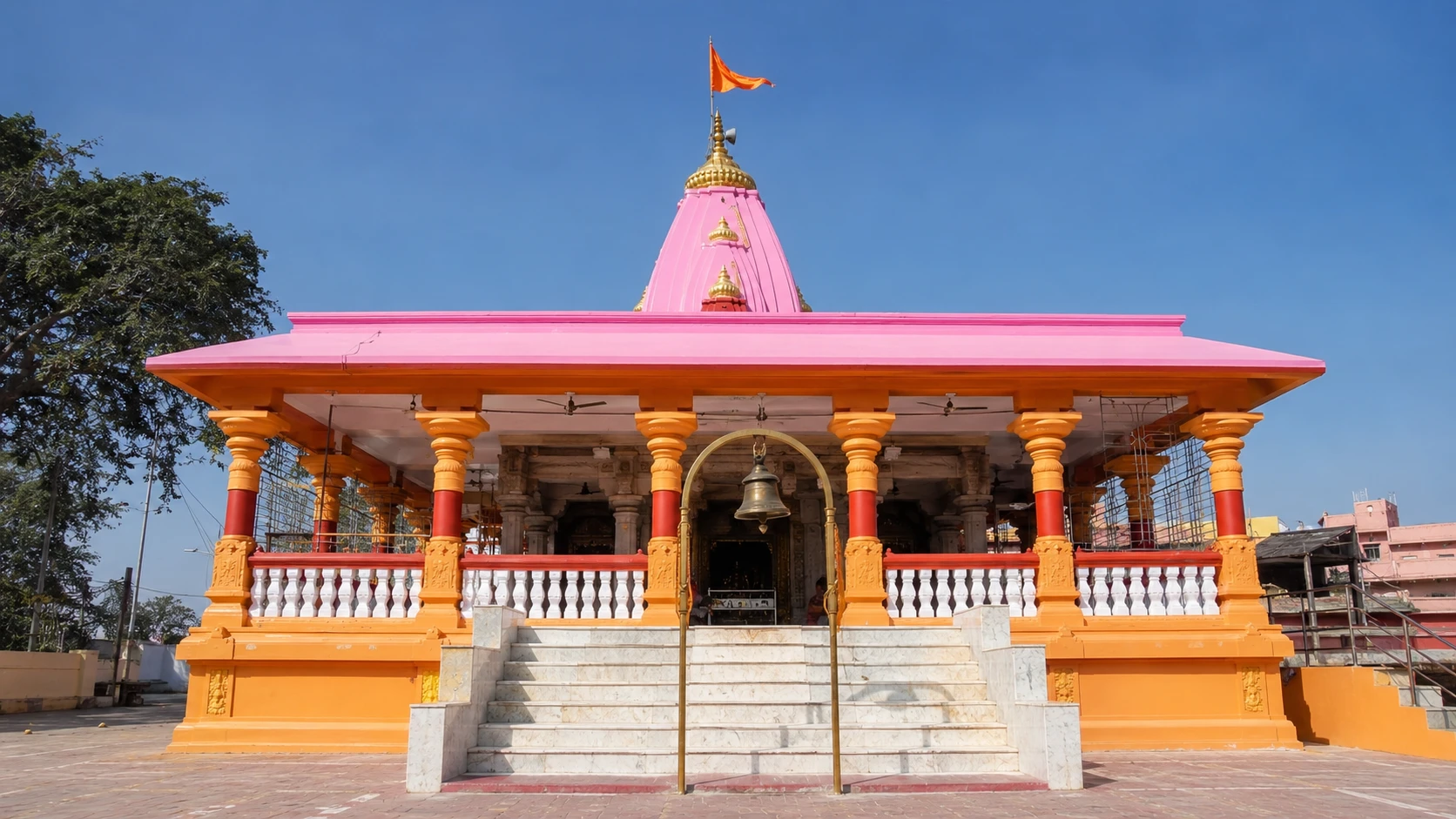
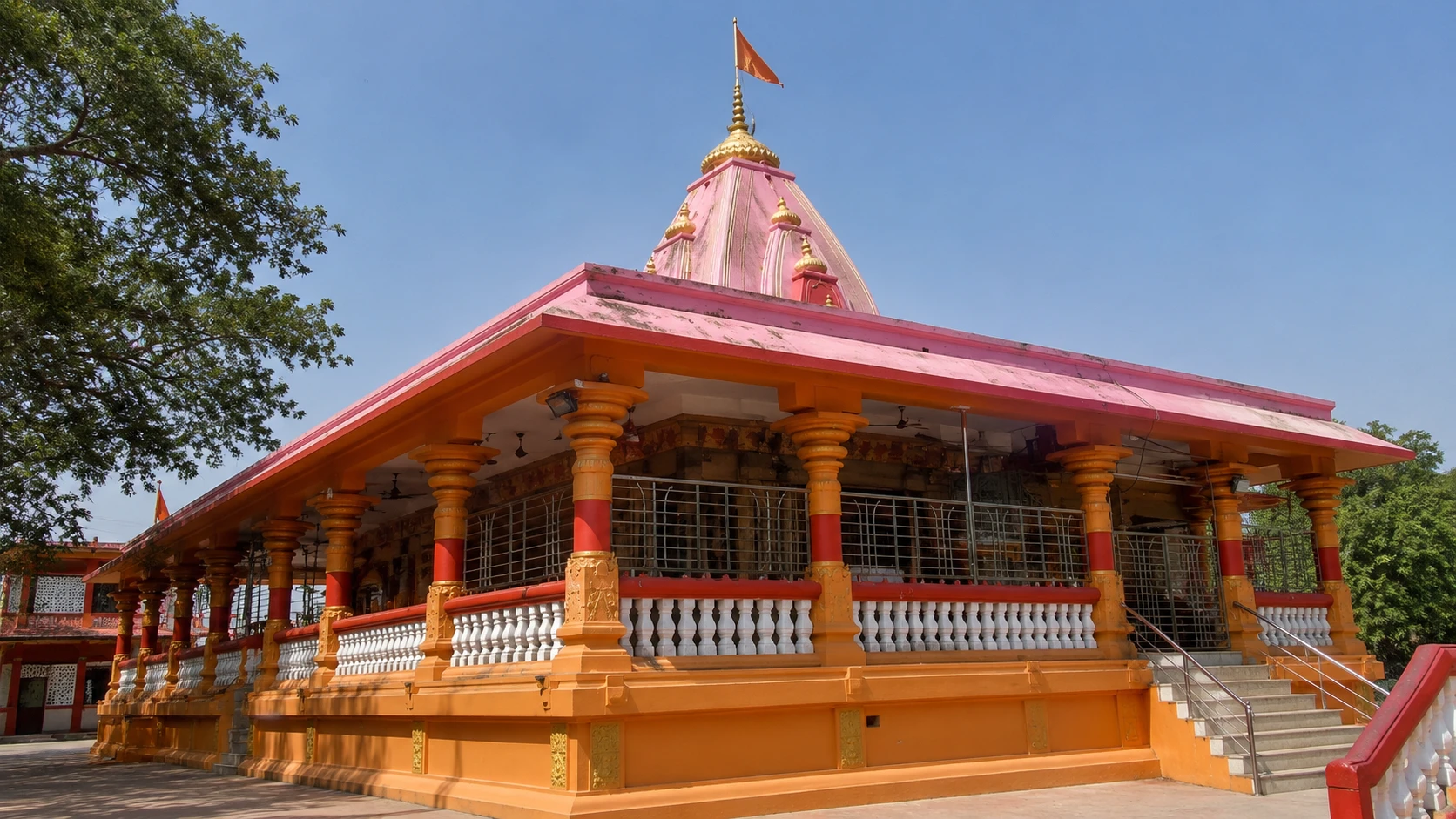
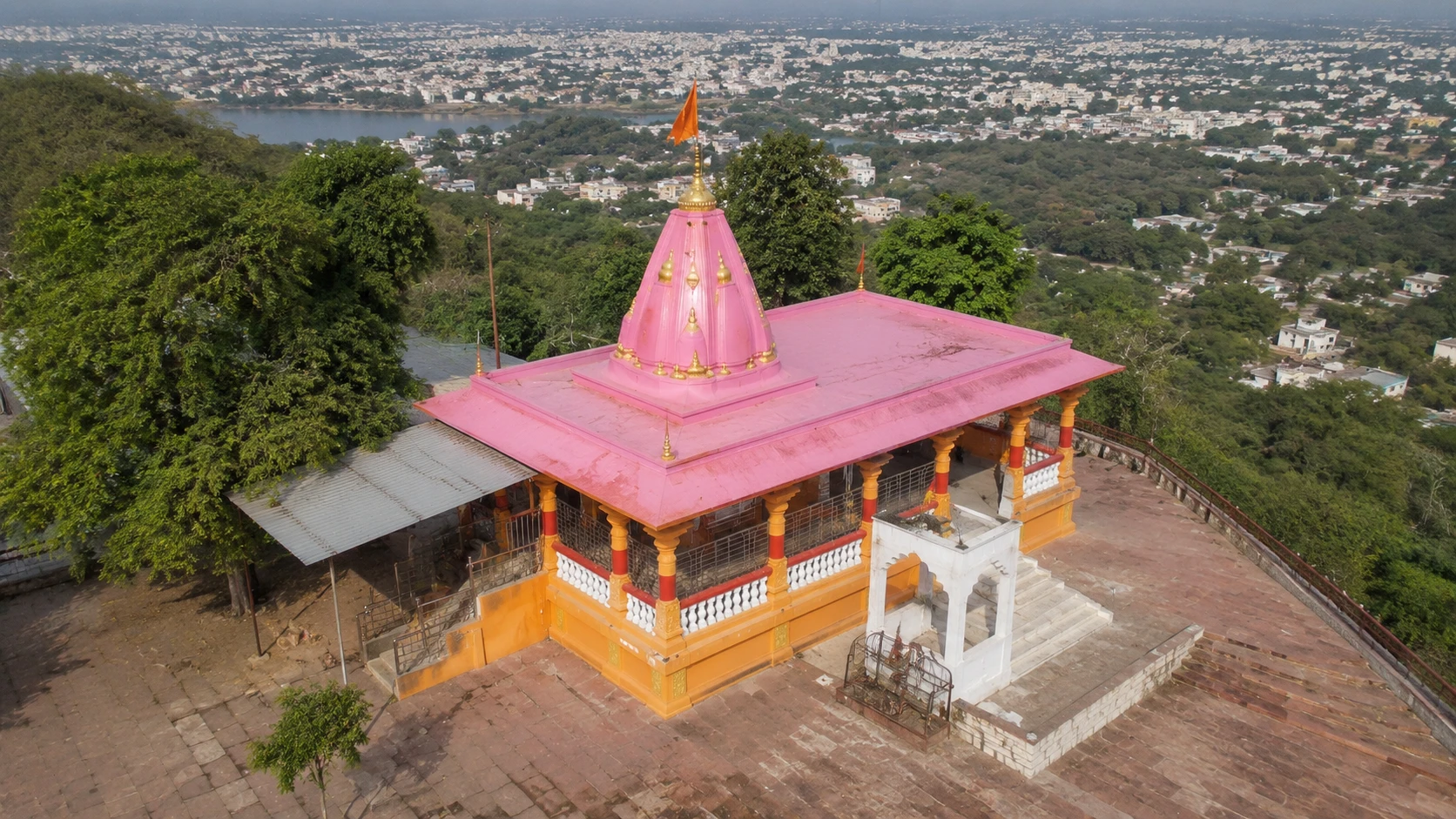
Maratha-influenced North Indian temple architecture with shikhara-style superstructure, central garbhagṛha housing the Mahākālī mūrti, courtyard configuration typical of 18th-century Scindia patronage; contemporary structure incorporates significant later renovations through the 19th and 20th centuries
खुला
05:00 – 23:00
आरती
05:30 · 07:00 · 10:30 · 17:00 · 19:00 · 22:30
विशेष
Navarātri (Aswin śuklapakṣa), the principal annual cycle, with substantial pilgrim flows from Madhya Pradesh, Maharashtra, Gujarat, Rajasthan, and beyond; Caitra Navarātri in spring; Mahā Śivarātri (joint observance with the adjacent Mahā-kāleśvara Jyotirlinga); Kumbh Mela / Siṃhastha cycles every twelve years (most recent: 2016; next major: 2028) bringing very substantial pilgrim flows to the wider Ujjain sacred geography
पवित्र कथा · पवित्र कथा
Ujjayinī Mahākālī is the Shakti Pīṭha at the heart of Ujjain, the place where Satī's upper lip (ūrdhva-oṣṭha) is said to have fallen as Viṣṇu's Sudarśana cakra cut her body apart upon the back of the grieving Śiva. The canonical Pīṭhanirṇaya enumeration places the presiding Devī as Mahākālī, paired with the Bhairava Mahā-kāleśvara, and here lies the temple's most distinctive feature: the Bhairava who companions Mahākālī at her Pīṭha is the same Mahā-kāleśvara who is enshrined at Ujjain as one of the twelve Jyotirlingas of Śiva. Among the eighteen Ashtadasa Mahā-Shakti Pīṭhas listed in Adi Shankara's foundational stotram and across the 51-list canonical traditions, Ujjayinī Mahākālī is one of the very few sites where a Shakti Pīṭha shares its sacred ground with a Jyotirlinga, and where the Bhairava of the Pīṭha is canonically identical to a major Śiva-temple deity. Set on the Kṣiprā river in the ancient civilization-city of Ujjayinī, the seat of the legendary Vikramāditya, the origin of the Vikram Samvat calendar, the birthplace of Kālidāsa's Sanskrit poetic civilization, and one of the four Kumbh Mela cities, Mahākālī's Pīṭha stands at the convergence of three major canonical sanctification systems: Shaiva Jyotirlinga, Shākta Mahā-Pīṭha, and the Sapta Purī mokṣa-city tradition. To approach Mahākālī at Ujjain is to enter a sacred geography in which the Devī, Śiva, and the puranic cycle of cosmic renewal stand at a single threshold.
Sacred Designationपवित्र पदनाम
Shakti Peeth
शरीर का अंग: Upper lip (ūrdhva-oṣṭha)
शक्ति: Mahākālī ('the great Devī of time / cosmic dissolution')
भैरव: Mahā-kāleśvara (canonically identical to the Mahā-kāleśvara Jyotirlinga at the same site)
Sacred Origin Storyपवित्र उत्पत्ति कथा
Source: Pīṭhanirṇaya (canonical Tantric pīṭha-enumeration text) and the Ashtadasa Shakti Pīṭha Stotram attributed to Ādi Śaṅkara (8th c. CE), paired with the Kālīkā Purāṇa 52-list and Devī Bhāgavata 51-list canonical traditions, and the living Ujjain Shakta-Shaiva tradition that holds Mahākālī and Mahā-kāleśvara as a single sanctified pair
When Dakṣa Prajāpati performed his great sacrifice and refused to invite his daughter Satī's husband, the ascetic Śiva, whom Dakṣa had never accepted as a son-in-law, Satī went to her father's court uninvited, intending to confront him.
Dakṣa met her not with welcome but with public condemnation: he spoke of Śiva as one fit only for cremation grounds, as the consort of ghosts, as no proper husband for the daughter of a Prajāpati. Satī, hearing her husband mocked in the assembly of the gods, would not return to him bearing such humiliation.
She invoked her own yogic fire at her father's hearth and consumed her body in it.
When Śiva learned of his wife's self-immolation, his grief broke the cosmos. He destroyed Dakṣa's yajña, sending Vīrabhadra to scatter the gods and behead Dakṣa himself, and then, taking up Satī's burned body across his shoulders, he began the wandering called the Tāṇḍava of grief.
He walked across the earth without rest, the dead weight of his wife borne on his back, and as he walked, all creation began to shudder.
Viṣṇu, who alone of the gods could intervene, took up his Sudarśana cakra and, walking behind Śiva on his unending journey, he reached his discus forward and began to cut. Piece by piece, almost surgically, the cakra severed Satī's body from Śiva's shoulders.
Each part fell to earth at the place where the cakra's stroke had cut, and each place where a piece of the goddess fell became sanctified, a Pīṭha, a seat of the goddess's power, where she could thereafter be worshipped in fragmentary but inexhaustible presence.
At one such cut, Satī's upper lip, the ūrdhva-oṣṭha, fell to the Kṣiprā plain in the heart of the Malwa plateau, at the ancient civilization-city of Ujjayinī. The Pīṭhanirṇaya canonical enumeration registers this place's presiding Devī as Mahākālī, 'the great Devī of time,' the dissolution-aspect of the Devī whose name carries the same kāla-register that Śiva himself carries in his Ujjain manifestation as Mahā-kāleśvara, 'the great lord of time.' Here, uniquely among the major Shakti Pīṭhas, the Devī's Bhairava is not a distinct local figure but is the same Mahā-kāleśvara whom Śiva has manifested at Ujjain as one of the twelve Jyotirlingas, the self-luminous pillars of light by which Śiva established his presence on earth.
The theological convergence is precise and deliberate. Mahā-kāla (Śiva as lord of time) and Mahā-kālī (Devī as cosmic time itself, the kāla-power without which Mahā-kāla could not exercise dominion) meet at Ujjain as a single sanctified pair, the masculine and feminine principles of cosmic dissolution and renewal joined at a single geographic locus.
The 51-Pīṭha Shākta tradition and the 12-Jyotirlinga Śaiva tradition, ordinarily independent canonical systems, converge here as nowhere else in the subcontinent. The wider Ujjayinī sacred geography reinforces this convergence: the city is also one of the four Kumbh Mela sites (where the cosmic nectar of immortality is said to have fallen from the gods' churning of the cosmic ocean), one of the seven Sapta Purī mokṣa-bestowing cities, the legendary capital of Vikramāditya, the origin city of the Vikram Samvat calendar, and the birthplace of Kālidāsa's classical Sanskrit civilization.
To stand at Mahākālī's Pīṭha at Ujjain is to stand at the geographic convergence of half a dozen of Hindu sacred tradition's most significant canonical enumerations.
उद्धृत स्रोत:
- Pīṭhanirṇaya (canonical Tantric pīṭha-enumeration), entry for the ūrdhva-oṣṭha-fall locus
- Ashtadasa Shakti Pīṭha Stotram attributed to Ādi Śaṅkara (8th c. CE)
- Kālīkā Purāṇa, Chapters 18 and 60, 62 (52-list tradition)
- Devī Bhāgavata Purāṇa, Skandha VII (51-list tradition)
- Skanda Purāṇa, Avantī Khaṇḍa (extensive treatment of the Ujjayinī sacred geography)
- Sircar, D. C., 'The Śākta Pīṭhas' (Journal of the Royal Asiatic Society of Bengal, 1948; revised monograph 1973)
- Mate, M. S., 'Temples and Legends of Maharashtra' (1962, with comparative material on the Maratha temple network including the 18th-century Scindia Ujjain revival)
अन्य परंपराएँ · अन्य परंपराएँ
Shaiva-Shākta unity reading, the Mahā-kāla / Mahā-kālī cosmological pair as a single dissolution-renewal principle, with the Pīṭha and the Jyotirlinga understood as the feminine and masculine faces of a single sanctified ground
A primary alternative reading of Ujjayinī Mahākālī approaches the Pīṭha not as a separable Shākta site that happens to coexist with a Shaiva Jyotirlinga but as the feminine face of a single sanctified pair. In this reading, held strongly in the Ujjain temple establishment and in the Adi Shankara-influenced Daśanāmī Sannyāsa tradition that has historical patronage of both temples, Mahā-kāla and Mahā-kālī are not two deities at adjacent sanctums but two faces of a single cosmic principle: kāla, time-as-cosmic-process. Śiva as Mahā-kāla is the principle of time-as-dissolution; the Devī as Mahā-kālī is the same time-as-dissolution viewed as power rather than as agent.
The Jyotirlinga and the Shakti Pīṭha together complete the icon: neither stands alone. This reading does not contest the canonical Pīṭhanirṇaya body-fall narrative, it places that narrative within a wider theological frame in which the convergence at Ujjain is not coincidental but doctrinally necessary.
The pilgrim who visits Mahā-kāleśwara without Mahākālī, or Mahākālī without Mahā-kāleśwara, has visited only half of what Ujjain offers.
Ujjayinī civilizational reading, the Pīṭha situated within the wider royal-cultural-canonical density of the ancient Avantī capital, the seat of Vikramāditya, Kālidāsa's birth-city, and the source of the Vikram Samvat calendar
A second alternative reading approaches Ujjayinī Mahākālī not primarily through the canonical Pīṭha enumeration but through the wider civilizational density of the city in which she sits. Ujjayinī, the ancient name of Ujjain, has been a sovereign capital and intellectual centre since at least the Mauryan period (3rd c. BCE), when Ashoka served here as Avantī's viceroy.
The Vikram Samvat calendar, which dates from 57 BCE and remains in current use across North India, takes its name from the legendary Vikramāditya whose court is placed at Ujjayinī. Kālidāsa, the greatest classical Sanskrit poet, is in living tradition tied to this same city, his Meghadūta describes Ujjayinī's beauty in passages that have been recited by Sanskrit students for sixteen centuries.
The Paramāra dynasty (10th, 13th c.) made Ujjain its capital; the Marāṭhā Scindias rebuilt the city's temple infrastructure in the eighteenth century. In this civilizational reading, the Mahākālī Pīṭha is not an isolated Shakti shrine but the goddess at the heart of a city that has held the highest stratum of Indian civilization continuously for more than two millennia.
The Devī here is the patroness of a sovereignty whose continuity has anchored North Indian political and cultural life across every transition.
विद्वत संदर्भ
Modern scholarship treats Ujjayinī Mahākālī as a 'multi-canonical convergence' site of the first order. Unique among the Shakti Pīṭhas, Ujjayinī Mahākālī is included in all three major Shakti Pīṭha enumeration traditions (Ādi Śaṅkara's 18 Ashtadasa Mahā-Pīṭhas, the Kālīkā Purāṇa's 52-list, and the Devī Bhāgavata Purāṇa's 51-list); it shares its sacred ground with the Mahā-kāleśvara Jyotirlinga (one of the 12 Jyotirlingas of Śiva); it is one of the four Kumbh Mela sites (alongside Haridwar, Prayag, and Nashik), where the Siṃhastha Kumbh occurs every twelve years; and it sits within Ujjayinī, one of the seven Sapta Purī mokṣa-bestowing cities of Hindu sacred geography. D. C. Sircar's foundational compilation ('The Śākta Pīṭhas', 1948/1973) treats Ujjayinī as one of the strongest-attested Pīṭha sites in the entire 51-list tradition. Diana Eck's 'India: A Sacred Geography' (2012) treats Ujjain as one of the most densely-canonical cities in the subcontinent. The Maratha-Scindia 18th-century revival of the temple structures at Ujjain, following centuries of Mughal-era restriction, is documented through Scindia estate records and the work of M. S. Mate (1962) and later scholars of Maratha religious patronage. The Siṃhastha Kumbh Mela cycles at Ujjain are documented continuously from the medieval period; the 2016 Kumbh drew an estimated 75, 80 million pilgrims to the wider Ujjain sacred geography, the most recent twelve-year cycle in the documented record.
Historyइतिहास
Ujjayinī Mahākālī's documented history unfolds across the longest continuous arc of any Shakti Pīṭha in this corpus, sustained from the Mauryan period (3rd century BCE) through the Gupta golden age, the Paramāra dynasty, the medieval sultanate-era restrictions, the Maratha-Scindia revival, the colonial period, and into the modern Indian state.
The earliest documentary horizon for the Mahākālī Pīṭha specifically is the medieval Pīṭhanirṇaya enumeration; the wider Ujjayinī sacred geography is documented from the Mauryan period when Ashoka served here as Avantī's viceroy before becoming emperor.
The Gupta period (4th, 6th c.) saw Ujjayinī's full classical efflorescence: Kālidāsa's Meghadūta (4th, 5th c.) describes the city as a major civilization-centre, and Bāṇabhaṭṭa's Harṣacarita (early 7th c.) treats Ujjayinī's Shaiva and Shākta temples as established and active in the post-Gupta period.
The Paramāra dynasty (10th, 13th c.) made Ujjain its capital and extended substantial patronage to the temple complex; Paramāra-era inscriptions and architectural remains attest to the period's activity at both the Mahā-kāleśvara Jyotirlinga and the wider sacred geography that includes the Mahākālī Pīṭha.
The catastrophic event in this longer history is the 1235 CE sack of Ujjain by Sultan Iltutmish of the Delhi Sultanate, in which the Mahā-kāleśvara temple was destroyed and the sacred geography of the city was severely disrupted.
The extent of damage to the Mahākālī Pīṭha specifically during this period is less documented than the Jyotirlinga's destruction, but the wider sacred-geographic disruption was substantial; the temples were rebuilt or replaced in successive periods through the late medieval and early modern centuries.
The transformative revival of the Ujjain temple complex unfolded under the Marāṭhā Scindia dynasty in the eighteenth century. Mahādjī Scindia and Daulat Rāo Scindia, building the Maratha military and political dominance across central India in the second half of the eighteenth century and into the early nineteenth, extended formal patronage to the rebuilding of Ujjain's major temples, Mahā-kāleśvara and Mahākālī among them, in the architectural style characteristic of Maratha temple revivalism of that period.
The substantive elements of the present Mahākālī temple structure date from this Scindia-era revival, with continuous renovations and additions through the nineteenth and twentieth centuries.
Through the British colonial period, Ujjain remained a religious centre while Indore (40 km south-west) became the political-administrative seat of the Holkar dynasty's princely state. The post-Independence period has seen substantial growth in pilgrimage flows to Ujjain, particularly during the twelve-year Siṃhastha Kumbh Mela cycles.
The 2016 Siṃhastha drew an estimated 75, 80 million pilgrims to the wider Ujjain sacred geography; the next major Siṃhastha is scheduled for 2028. The Mahākālī Pīṭha continues to be administered through arrangements that integrate state-level oversight (via the Madhya Pradesh Mahakal Temple Committee for the wider sacred-geographic complex) with traditional priesthood structures.
Historical Timelineऐतिहासिक कालक्रम
Pīṭhanirṇaya canonical inclusion of Ujjayinī as the ūrdhva-oṣṭha-fall locus, with Mahākālī as the presiding Devī and Mahā-kāleśvara as the canonically-identified Bhairava, the latter attribution unique among the Shakti Pīṭhas in identifying the Bhairava directly with a major Jyotirlinga deity. Ujjayinī Mahākālī's inclusion is also formalised in Ādi Śaṅkara's Ashtadasa Shakti Pīṭha Stotram (8th c. CE), in the Kālīkā Purāṇa 52-list, and in the Devī Bhāgavata Purāṇa 51-list, making Ujjayinī one of the few sites included in all three major Shakti Pīṭha enumeration traditions.
Body-part attributions are consistent across the major canonical lists for Ujjayinī (ūrdhva-oṣṭha / upper lip); the Bhairava identification with Mahā-kāleśvara is also consistent across the lists. Ujjayinī's strong canonical convergence is itself one of the most documented features of the Shakti Pīṭha tradition.
Early literary attestation of Ujjayinī's continued Shaiva-Shākta sanctification in the post-Gupta period. Kālidāsa's Meghadūta (4th, 5th c. CE) describes Ujjayinī as a major civilization-city; Bāṇabhaṭṭa's Harṣacarita (early 7th c.) treats the temples of Ujjayinī as established and active. The Skanda Purāṇa's Avantī Khaṇḍa provides extensive purānic treatment of Ujjayinī's sacred geography and the convergence of Shaiva, Shākta, and broader puranic canonical systems at the city. These references establish that Ujjayinī's status as a multi-canonical convergence site was settled and active by the mid-first millennium CE.
Paramāra dynasty patronage of Ujjain temple complex. The Paramāras made Ujjain their capital and extended substantial patronage to the city's Shaiva-Shākta sacred geography. Paramāra-era inscriptions and architectural remains at Ujjain attest to active worship at both the Mahā-kāleśvara Jyotirlinga and the wider sacred-geographic complex including the Mahākālī Pīṭha. The Paramāra patronage represents the high point of medieval Hindu royal investment in Ujjain's temple infrastructure before the disruptions of the thirteenth century.
Sack of Ujjain by Sultan Iltutmish of the Delhi Sultanate. The campaign destroyed the Mahā-kāleśvara temple and disrupted the wider sacred geography of the city. The extent of damage to the Mahākālī Pīṭha specifically during this campaign is less directly documented than the Jyotirlinga's destruction, but the overall disruption to Ujjain's temple infrastructure was substantial; subsequent centuries saw various rebuilding efforts under different patrons before the comprehensive Scindia-era revival of the eighteenth century. The 1235 sack is one of the most contested events in medieval Indian religious history and remains a focal point of debate about the politics of medieval temple destruction.
The 1235 sack is documented in Sultanate-era Persian chronicles and has been treated by both traditional Hindu sources (which emphasise the destruction's religious and cultural impact) and modern scholarship (which contextualises it within broader patterns of medieval state-formation and patronage politics). The damage specifically to the Mahākālī Pīṭha versus the Mahā-kāleśvara Jyotirlinga has historically been a matter of varying emphasis across sources; Eternal Raga reports the documented event without adjudicating the contested interpretive frames around medieval temple destruction.
Maratha-Scindia revival of the Ujjain temple complex. Under Mahādjī Scindia (r. 1761, 1794) and Daulat Rāo Scindia (r. 1794, 1827), the Marāṭhā Scindia dynasty extended formal patronage to the rebuilding of Ujjain's major temples, Mahā-kāleśvara and Mahākālī among them. The substantive structures of the present Mahākālī temple date from this Scindia-era revival, which is part of a broader Maratha religious patronage project across central India that reconstituted Hindu temple infrastructure following the disruptions of the preceding centuries. The Scindia revival is documented through estate records, Marathi-language religious commentary, and the architectural-historical analysis of M. S. Mate and others.
Post-Independence continuity and the Siṃhastha Kumbh Mela cycles. The Mahākālī Pīṭha at Ujjain has continued through the post-1947 period as a major active pilgrimage site, with the temple administered through arrangements that integrate state-level oversight (via the Madhya Pradesh Mahakal Temple Committee for the wider sacred-geographic complex) with traditional priesthood structures. The twelve-year Siṃhastha Kumbh Mela cycles have grown into a globally-significant pilgrimage event: the 2016 Siṃhastha drew an estimated 75, 80 million pilgrims to Ujjain across the festival period, the largest documented gathering in any of the recent Kumbh cycles at the city. The next major Siṃhastha is scheduled for 2028. The Mahākālī Pīṭha receives substantial pilgrim flows during these Kumbh windows as part of the wider Ujjain sacred geography.
Pilgrim count estimates for major Kumbh events vary substantially across sources and methodologies; the 75, 80 million figure for the 2016 Ujjain Siṃhastha is drawn from Madhya Pradesh state government estimates and is consistent with peer comparisons of recent Kumbh attendance figures, though Kumbh attendance numbers are inherently estimation-based rather than exact counts.
What You'll Seeदर्शन में
The Mahākālī mūrti at Ujjayinī is enshrined in a Maratha-influenced North Indian temple structure with shikhara-style superstructure, set within a courtyard configuration characteristic of 18th-century Scindia patronage.
The presiding image is a stone Devī form in the Mahākālī register, fierce-protective in iconographic mode rather than the Kātyāyanī-contemplative or Yogādyā-meditative registers seen elsewhere in this corpus. The mūrti is robed in red textile through the year, with intensified ornamentation during Navarātri and the Siṃhastha Kumbh cycles.
The Devī's facial register is in the standard Mahākālī convention: bold features, large outlined eyes, the expression carrying the dissolution-aspect appropriate to her name as 'the great Devī of time.' Subsidiary shrines within the temple compound include images of Bhairava Mahā-kāleśvara (representing the Pīṭha's canonical Bhairava in his Devī-companion register, distinct from but theologically continuous with the principal Mahā-kāleśvara Jyotirlinga shrine at the nearby Mahakaleshwar temple), as well as ancillary shrines reflecting the temple's integration into the wider Ujjain sacred-geographic complex.
The garbhagṛha and surrounding courtyard are configured to handle very substantial pilgrim flows during peak festival periods; during the 2016 Siṃhastha, daily attendance at the Mahākālī Pīṭha rose to several hundred thousand at peak pilgrim days.
The approach is through Ujjain's central temple district, within walking distance of the Mahakaleshwar Jyotirlinga, the Harsiddhi temple, and the Kṣiprā ghāts where the Siṃhastha Kumbh's central ritual bathing occurs.
Distinctive Practicesविशिष्ट परंपराएँ
Mahākāla, Mahākālī joint darshan circuit
महाकाल-महाकाली युग्म दर्शन परिक्रमा
Year-round; intensifies during Mahā Śivarātri, Navarātri, and the Siṃhastha Kumbh cycles
The most distinctive practice at Ujjayinī Mahākālī, sustained by the canonical Pīṭhanirṇaya identification of the Pīṭha's Bhairava with the Mahā-kāleśvara Jyotirlinga: pilgrims to Ujjain undertake a combined darshan of both Mahā-kāleśvara and Mahākālī as a single integrated ritual sequence, recognising the Devī and Bhairava as a sanctified pair at the same sacred ground. The circuit typically begins with the pre-dawn bhasma-aarti at the Mahakaleshwar Jyotirlinga (the famous ritual in which sacred ash is applied to the linga before sunrise, a practice with mythological associations to Śiva's tāṇḍava and his cosmic dissolution-aspect), proceeds to the Mahākālī Pīṭha for darshan of the Devī, and is often completed with bathing at the Kṣiprā river ghāts. This is a corpus-unique practice: no other Shakti Pīṭha in the 51-list tradition has its Bhairava canonically identified with a Jyotirlinga in this way, and no other Pīṭha-Bhairava pairing produces a comparable joint-circuit pilgrimage tradition.
The joint circuit performs the theology that Ujjain canonically holds: that Mahā-kāla and Mahā-kālī are not two deities at adjacent sanctums but the masculine and feminine faces of a single cosmic principle. To darshan only one would be to receive only half of what Ujjain offers; the integrated circuit makes the pilgrim's body trace the doctrinal unity that the canon affirms. The bhasma-aarti opening, with its register of cosmic dissolution, prepares the devotee for the encounter with Mahākālī as time-itself-as-power.
Siṃhastha Kumbh Mela integration
सिंहस्थ कुम्भ मेला समाकलन
Every twelve years; most recent 2016, next major scheduled for 2028
Ujjain's place as one of the four Kumbh Mela cities makes the Mahākālī Pīṭha part of a globally-significant pilgrimage event that returns every twelve years. The Siṃhastha Kumbh draws an estimated 75, 80 million pilgrims to the wider Ujjain sacred geography across its festival period (figures from the 2016 cycle, the most recent documented). During the Siṃhastha, the Mahākālī Pīṭha sees pilgrim flows comparable to the largest single-temple gatherings in the subcontinent; the ritual cycle integrates the temple's darshan with the central Kumbh-bathing at the Kṣiprā ghāts. This Kumbh integration is corpus-unique: no other Shakti Pīṭha in the 51-list tradition is a Kumbh Mela site. The Pīṭha's role within the Siṃhastha is distinctive: the Devī receives darshan as the kāla-aspect goddess of a festival whose own temporal architecture (twelve-year cycles tied to Jupiter's transit through Leo) is itself a meditation on cosmic time.
Kumbh's twelve-year cycle, the Devī's name (Mahā-kālī, 'the great power of time'), and the Bhairava's name (Mahā-kāla, 'the great lord of time') all share the kāla register. To darshan Mahākālī during Siṃhastha is to encounter the Devī of time at the moment of the festival's own temporal return, the cosmic time-cycle and the Devī's time-aspect meeting in the same ritual window. The integration is theologically continuous, not coincidental.
Daśanāmī Sannyāsa lineage observances
दशनामी संन्यास परम्परा अनुष्ठान
Year-round; intensified during the Kumbh cycles when sannyāsī akhāḍas converge at Ujjain
Ujjain's deep historical association with Ādi Śaṅkara's Daśanāmī Sannyāsa order, the monastic lineage that includes the ten Sannyāsa orders (Giri, Purī, Bhāratī, Sarasvatī, Tīrtha, Āśrama, Vana, Araṇya, Parvata, Sāgara), gives the Mahākālī Pīṭha a distinctive monastic-ritual character. The Mahānirvāṇī, Niraňjanī, Atal, and Āvāhana akhāḍas (among others) maintain establishments at Ujjain and participate in temple observances. The Pīṭha receives substantive ritual attention from these orders during the Kumbh cycles, when sannyāsī akhāḍas converge at Ujjain for the central Shāhī Snān ritual bathing. Beyond Kumbh, year-round Daśanāmī observance includes specific Devī-pūjā cycles, scriptural recitation, and the maintenance of the Adi Shankara-attributed Ashtadasa Shakti Pīṭha Stotram as a living liturgical tradition. The Daśanāmī presence connects Ujjain's Pīṭha to the broader Shaiva-Shākta non-dual theological tradition that Adi Shankara systematised.
The Daśanāmī Sannyāsa observance at Mahākālī integrates the Pīṭha into the Adi Shankara non-dual tradition's broader theology: the Devī here is not separate from Śiva but the same singular reality (brahman) viewed in her power-aspect. The order's continuous presence at Ujjain through every transition of medieval and modern history, including the 1235 disruption and the Scindia-era revival, has been one of the key mechanisms of the Pīṭha's continued canonical identity.
Did You Know?क्या आप जानते हैं?
Ujjayinī Mahākālī is the most multi-canonically convergent Shakti Pīṭha site in the entire Hindu sacred-geographic tradition. The Pīṭha is included in all three major Shakti Pīṭha enumeration traditions, Ādi Śaṅkara's 18 Ashtadasa Mahā-Pīṭhas, the Kālīkā Purāṇa's 52-list, and the Devī Bhāgavata Purāṇa's 51-list. It shares its sacred ground with the Mahā-kāleśvara Jyotirlinga (one of the 12 Jyotirlingas of Śiva), making Ujjain the only site where a Shakti Pīṭha's Bhairava is canonically identical to a Jyotirlinga deity. It is one of the four Kumbh Mela sites where the twelve-year Siṃhastha festival is held. And it sits within Ujjayinī, one of the seven Sapta Purī mokṣa-bestowing cities. This six-way canonical convergence, three Shakti lists, one Jyotirlinga set, one Kumbh set, one Sapta Purī set, is corpus-unique.
Pīṭhanirṇaya; Ashtadasa Shakti Pīṭha Stotram (Adi Shankara); Kālīkā Purāṇa; Devī Bhāgavata Purāṇa; Skanda Purāṇa Avantī Khaṇḍa; Eck (2012); Sircar (1948/1973)
Ujjain has historically served as the prime meridian of Hindu astronomy, the 'Greenwich' of classical Indian astronomical tradition. The Tropic of Cancer passes through Ujjain, and Ujjain's longitude (approximately 75.78° E) was the reference meridian from which classical Sanskrit astronomical texts (Sūrya Siddhānta, Brāhma Sphuṭa Siddhānta, others) calculated planetary positions. This astronomical prime-meridian status reinforces Ujjayinī Mahākālī's kāla-register identity: the city that anchors Hindu astronomical time also holds the Devī of cosmic time.
Sūrya Siddhānta (c. 4th, 5th c. CE); Brāhma Sphuṭa Siddhānta (Brahmagupta, 7th c. CE); Pingree, David, 'Jyotiḥśāstra: Astral and Mathematical Literature' (1981)
Mahā-kāleśvara is the only Jyotirlinga (among the twelve) to receive bhasma-aarti, the pre-dawn ritual application of sacred ash on the linga before sunrise. The Mahākālī Pīṭha, sharing canonical Bhairava-identification with Mahā-kāleśvara, is integrated into the bhasma-aarti pilgrim circuit: many pilgrims undertake the bhasma-aarti at the Jyotirlinga shrine and proceed immediately to the Mahākālī Pīṭha for Devī-darshan in the post-dawn morning. The ash-rite carries direct iconographic resonance with Mahākālī's dissolution-aspect: ash is what remains after burning, the substance of cremation, the residue of time's work, the same kāla-register that the Devī's name carries.
Skanda Purāṇa Avantī Khaṇḍa; living Mahakaleshwar temple ritual tradition; Eck (2012); Mahakal Temple Committee published ritual descriptions
Among Shakti Pīṭhas, Ujjayinī Mahākālī occupies the longest continuous documented sacred-civilizational arc, sustained from the Mauryan period (3rd c. BCE) through the Gupta classical efflorescence, the Paramāra dynasty, the medieval Sultanate-era disruptions, the Maratha-Scindia revival, the British colonial period, and into the modern Indian state. Few sacred sites anywhere in South Asia carry comparable continuity. The Mahākālī Pīṭha is the Devī-aspect of a city that has held the highest stratum of Indian civilization continuously for more than two millennia, a position no other Shakti Pīṭha in this corpus matches.
Skanda Purāṇa Avantī Khaṇḍa; Kālidāsa; Bāṇabhaṭṭa; Paramāra inscriptions; Eck (2012); comparative observation across the Eternal Raga Shakti Peeth corpus
The 2016 Siṃhastha Kumbh Mela at Ujjain drew an estimated 75, 80 million pilgrims to the wider sacred geography across the festival period, making it among the largest documented religious gatherings of the twenty-first century. The Mahākālī Pīṭha received pilgrim flows in the hundreds of thousands on peak days during the Siṃhastha, reflecting the temple's integration into the Kumbh ritual circuit. The next major Siṃhastha at Ujjain is scheduled for 2028 (the twelve-year cycle from 2016). The scale and continuity of these gatherings makes Ujjayinī Mahākālī's pilgrim ecosystem qualitatively different from the village-Pīṭha character of most other entries in this corpus.
Madhya Pradesh Tourism Department 2016 Siṃhastha reports; Maclean, Kama (2008); modern Kumbh scholarship
Visitor Accessप्रवेश जानकारी
Ujjayinī Mahākālī welcomes devotees of all backgrounds for darshan throughout the temple's open hours. There are no caste-based, sectarian, or gender-based entry restrictions. As a major urban-pilgrim destination integrated into Ujjain's wider temple network and Kumbh ecosystem, the visitor experience is shaped by significant pilgrim density (especially during Mahā Śivarātri, Navarātri, and Siṃhastha Kumbh windows) rather than by the quiet of a village-Pīṭha shrine. Photography of the inner sanctum is not permitted; outer-compound photography follows the practices of the Ujjain temple network and is generally accepted. The temple's integration with the Mahakaleshwar Jyotirlinga circuit means most pilgrims approach Mahākālī as part of a combined-darshan itinerary; Mahākālī-only visits are less common but fully welcomed. Pilgrim management infrastructure (queue systems, prasād distribution, priest interface) is calibrated for high-volume operation and is more institutionalised than at most other entries in this corpus.
Festivalsत्योहार
Navarātri (Aswin)
नवरात्रि (आश्विन)
Sep, Oct (Aswin śuklapakṣa)
The temple's principal annual observance, drawing very substantial pilgrim flows from Madhya Pradesh, Maharashtra, Gujarat, Rajasthan, and beyond. The nine-night Devī cycle reaches its devotional peak across Saptamī, Aṣṭamī, and Navamī, with elaborate liturgical observances, public bhajans, and the integration of the wider Ujjain Devī-worship community. Mahākālī's specific name and dissolution-register give the Aswin Navarātri at Ujjain a distinctive intensity compared to other Devī Navarātri celebrations across North India.
Siṃhastha Kumbh Mela
सिंहस्थ कुम्भ मेला
Apr, May (every twelve years; 2016, next 2028)
The twelve-yearly Siṃhastha, Ujjain's Kumbh, is the largest single event in the temple's cycle and one of the largest religious gatherings in the world. The festival is anchored at the Kṣiprā river ghāts where the central Shāhī Snān bathing occurs; the Mahākālī Pīṭha is integrated into the broader Kumbh ritual circuit. The 2016 Siṃhastha drew an estimated 75, 80 million pilgrims across the festival period; the 2028 cycle is anticipated to draw comparably substantial flows. Among Shakti Pīṭhas, only Ujjayinī Mahākālī sits within a Kumbh Mela city.
Mahā Śivarātri (joint observance with Mahā-kāleśvara Jyotirlinga)
महा शिवरात्रि (महाकालेश्वर ज्योतिर्लिङ्ग के साथ युग्म अनुष्ठान)
Feb, Mar (Phālguna kṛṣṇa caturdaśī)
Distinctive to Ujjain because of the Mahā-kāleśvara / Mahā-kālī sanctified pair: Mahā Śivarātri is observed as a joint festival across the Jyotirlinga and the Shakti Pīṭha, with pilgrims combining bhasma-aarti at the Jyotirlinga with overnight darshan at the Mahākālī Pīṭha. The joint observance reflects the theological reading that holds Mahā-kāla and Mahā-kālī as the masculine and feminine faces of a single cosmic dissolution-renewal principle.
Caitra Navarātri
चैत्र नवरात्रि
Mar, Apr (Caitra śuklapakṣa)
The spring Devī cycle, theologically reckoned in some traditions as the more ancient of the two Navarātri cycles. At Ujjayinī Mahākālī, Caitra Navarātri is a secondary observance to the Aswin cycle but is preserved as a continuous part of the temple's annual liturgy. The Caitra cycle attracts primarily devotees with specific Vasanta-Pañcamī or Rāma-Navamī observances combined with their Mahākālī darshan.
Traditional Offeringsपारंपरिक अर्पण
प्राथमिक अर्पण
Red Japā (Hibiscus) flowers
लाल जपा (गुड़हल) के पुष्प
जपा-पुष्प
The red hibiscus is the canonical floral offering to the Devī across Shākta tradition. At Ujjayinī Mahākālī the offering carries its standard significance: the deep red signifies the goddess's life-force and her victory over asuric power. At Ujjain the offering is particularly resonant because Mahākālī's specific name and dissolution-register make the red of japā a direct iconographic match, the colour of fire and blood, the same kāla-register the Devī's name carries.
Kumkum and Sindūr (Vermilion)
कुमकुम और सिन्दूर
कुङ्कुम / सिन्दूर
Vermilion is offered at the Devī's feet, carrying the standard Shākta register of life-force and sovereignty. At Ujjayinī, sindūr offerings are particularly substantial during Navarātri and during peak Siṃhastha Kumbh days, when the temple receives offerings from pilgrims drawn from across the subcontinent.
Red bangles and red-bordered cloth
लाल चूड़ियाँ और लाल-किनारी वस्त्र
Devotees offer red bangles and lengths of red-and-gold cloth to the Devī. At Ujjayinī, the red-and-gold textile palette (gold being added to the standard red-and-white Bengali Shākta convention) reflects the Maratha-era temple aesthetic in which the contemporary structure was rebuilt. The bangles carry the standard Shākta association of the Devī with the married woman, the householder's protectress, and the bestower of saubhāgya.
Coconut
नारियल
नारिकेल
The coconut is broken before the Devī as a symbolic offering of the ego, the hard outer shell, white interior, and sweet water within corresponding to body, mind, and consciousness offered to the goddess. Observed at Ujjayinī in continuity with standard Hindu temple practice across both Shaiva and Shākta registers.
Pān-supāri (Betel leaf and areca)
पान-सुपारी
ताम्बूल-पूगफल
Betel leaf with areca and lime is offered before the Devī as a traditional auspicious offering signifying hospitality, honour, and welcome. Distributed at the close of major aartis as a token of the Devī's reciprocal welcome to the devotee.
इस मंदिर की विशेषता
Bhasma-related dissolution-aspect items
भस्म-सम्बद्ध विसर्जन-पक्ष सामग्री
Distinctive to Ujjayinī Mahākālī among Shakti Pīṭhas: offerings that carry the kāla / dissolution register that the Devī's name (Mahākālī, 'the great power of time') carries directly. Pilgrims undertaking the joint Mahā-kāla, Mahā-kālī darshan circuit often carry small portions of the sacred bhasma (consecrated ash) obtained from the Mahā-kāleśvara bhasma-aarti to the Mahākālī Pīṭha as part of the integrated ritual sequence, the ash that is applied to the linga at the Jyotirlinga shrine becomes, at the Pīṭha, a substance of devotional continuity between the masculine and feminine faces of the cosmic time-principle. This is unique to Ujjain among the 51-list Pīṭhas and reflects the canonical Bhairava-Jyotirlinga identification that defines this site.
Joint Mahā-kāla, Mahā-kālī offering pattern
महाकाल-महाकाली युग्म अर्पण प्रतिमान
Pilgrims undertaking the joint Pīṭha-Jyotirlinga circuit often bring paired offerings, bel-patra (sacred to Śiva) for the Jyotirlinga shrine and red japā (sacred to the Devī) for the Pīṭha, carried as a single offering bundle from the same vendor near the temple district. This unified offering practice reflects the canonical reading of Ujjain as a single sanctified ground holding both Shaiva and Shākta principles. The vendor ecosystem near the temples, operating continuously across generations, has organised offering supply around this dual-register practice.
Most devotees bring offerings from the vendor ecosystem near the Ujjain temple district, which has organised supply around the joint Pīṭha-Jyotirlinga practice. The temple administration coordinates with the Mahakal Temple Committee for offering management during peak Siṃhastha Kumbh windows; advance booking for specific offering bundles is sometimes available through the wider committee infrastructure.
How to Reachकैसे पहुँचें
Ujjayinī Mahākālī sits in the central temple district of Ujjain, within walking distance of Ujjain Junction railway station (1.5 km) and the Mahakaleshwar Jyotirlinga (approximately 1 km). Ujjain Junction is a major rail hub on Western Railway with direct daily services to Delhi, Mumbai, Indore, Bhopal, Ahmedabad, Jaipur, Kolkata, and most other major Indian cities.
From Delhi, the journey is typically 12, 14 hours by train or 7, 8 hours by road via the Agra-Bhopal corridor; from Mumbai, 12, 14 hours by train or 9, 10 hours by road. The nearest functional airport is Devi Ahilyabai Holkar International Airport at Indore (55 km, full domestic and limited international connectivity); a road transfer from Indore takes approximately 1.5 hours.
Bhopal Raja Bhoj Airport (190 km) provides an alternative entry. Within Ujjain, the central temple district is largely pedestrian-friendly with cycle-rickshaws and shared autos serving longer movement; the Mahakaleshwar, Mahākālī, Harsiddhi temple triangle is readily traversed on foot.
During the Siṃhastha Kumbh cycles, additional state-managed transport infrastructure (buses from Indore and major North Indian cities; temporary rail capacity expansions) supplements the year-round network.
Plan Your Visitयात्रा की योजना
🌤 सर्वोत्तम मौसम
October to March is the most comfortable visiting window, cool to mild Malwa-plateau weather, dry conditions, and the Aswin Navarātri at the peak of the temple's annual cycle. The April, June pre-monsoon period brings extreme heat to the Malwa plateau; daytime temperatures often exceed 42°C and visitors should be prepared for significant heat-stress. The July, September monsoon is generally manageable, with moderate rainfall and somewhat cooler temperatures. The Siṃhastha Kumbh windows (every 12 years, next 2028; held in Apr, May) bring extraordinary pilgrim density alongside the pre-monsoon heat, pilgrims planning Kumbh visits should prepare accordingly. Mahā Śivarātri (Feb, Mar) is the second-largest annual gathering and sees substantial overnight pilgrim flow.
👘 पहनावे का नियम
Modest full-coverage attire is appropriate. For women: saree, salwar-kameez, or other modest full-coverage clothing. For men: dhoti-kurta, kurta-pyjama, or modest trousers and shirt. Pilgrim conventions at Ujjain are similar to those of the wider Indian temple network and are not formally enforced beyond general modesty expectations. The temple does not have specific dress restrictions; the recommendation is one of cultural fit with a major active pilgrimage temple rather than a regulatory requirement. Footwear is removed before entering the sanctum proper; covered shoe-storage is available at the temple compound entrance.
📱 फोन और फोटोग्राफी
Mobile phones are permitted on the temple grounds. Photography is not permitted in the inner sanctum (garbhagriha); outer-compound photography follows the practices of the Ujjain temple network and is generally accepted by local custom. Flash photography near the mūrti is not appropriate even where photography is otherwise tolerated. During festival peak windows (Navarātri, Mahā Śivarātri, Siṃhastha) phone use should be silenced or kept on low-volume to respect the high-density darshan environment.
🏨 आवास
Ujjain offers a wide accommodation range serving its substantial annual and Siṃhastha pilgrim flows. Options include the Madhya Pradesh Tourism Department's hotels and dharamshalas, hundreds of mid-range hotels and guesthouses in central Ujjain, and large āśram complexes operated by various sannyāsī orders. During the Siṃhastha Kumbh windows (next 2028), temporary tented accommodation is established across the city to handle the extraordinary pilgrim volumes; advance booking is essential for any Kumbh-period visit. For year-round visits outside the Siṃhastha, accommodation in central Ujjain near the temple district is recommended for efficient combined-darshan circuit access. Indore (55 km) provides additional premium-segment hotel options for visitors who prefer a metropolitan base with day trips to Ujjain.
Sacred Soundsपवित्र ध्वनि
Mahākālī Stotram (canonical Devī invocation)
stotram · 487
Ashtadasa Shakti Pīṭha Stotram (Ādi Śaṅkara, 18 Mahā-Pīṭha enumeration)
stotram · 612
Caṇḍī Pāṭh, Devī Māhātmya Chapter 1
path · 1247
Mahākālī Praṇām Mantra (Ujjayinī living tradition)
pranam_mantra · 168
Mahā-kāla, Mahā-kālī Yugma Stotram (joint invocation reflecting the Ujjain Pīṭha-Jyotirlinga unity)
stotram · 524
क्या आप जानते हैं? · Did You Know?
वही अनुवाद त्रुटि जिसने हिन्दू धर्म में '33 कोटि' को '33 करोड़' बनाया, बौद्ध धर्म में भी हुई। बौद्ध ग्रन्थों के चीनी अनुवाद ने 'सप्त कोटि बुद्ध' (7 श्रेष्ठ बुद्ध) का अनुवाद '7 करोड़ बुद्ध' कर दिया। तिब्बती अनुवाद ने सही किया: 7 प्रकार, 7 करोड़ नहीं। एक संस्कृत शब्द, दो प्रमुख विश्व धर्मों में गलत पढ़ा गया, ने दो एकसमान भ्रम स्वतन्त्र रूप से उत्पन्न किए।
Related Contentसंबंधित सामग्री
Related Scriptures
Related Temples
Mahakaleshwar
महाकालेश्वर
Ujjain, Madhya Pradesh
Kireet Shakti Peeth
किरीट शक्तिपीठ
Lalbagh (Murshidabad), West Bengal
Yogadya (Kshirgram)
योगाद्या शक्तिपीठ
Kshirgram, West Bengal
Vrindavan (Uma Devi)
वृंदावन शक्तिपीठ
Vrindavan, Uttar Pradesh
Tarapith
तारापीठ
Tarapith, West Bengal
Bakreshwar Mahishmardini
बक्रेश्वर शक्तिपीठ
Bakreshwar, West Bengal
Bahula Shakti Peeth
बहुला शक्तिपीठ
Ketugram, West Bengal
Kankalitala Shakti Peeth
कंकालीतला शक्तिपीठ
Bolpur, West Bengal
Attahas Shakti Peeth
अट्टहास शक्तिपीठ
Labpur, West Bengal
Manibandh (Gayatri Mata)
मणिबंध शक्तिपीठ
Pushkar, Rajasthan
Ambaji
अंबाजी
Ambaji, Gujarat
Community Reflections
🕉️
Be the first to share your reflection.