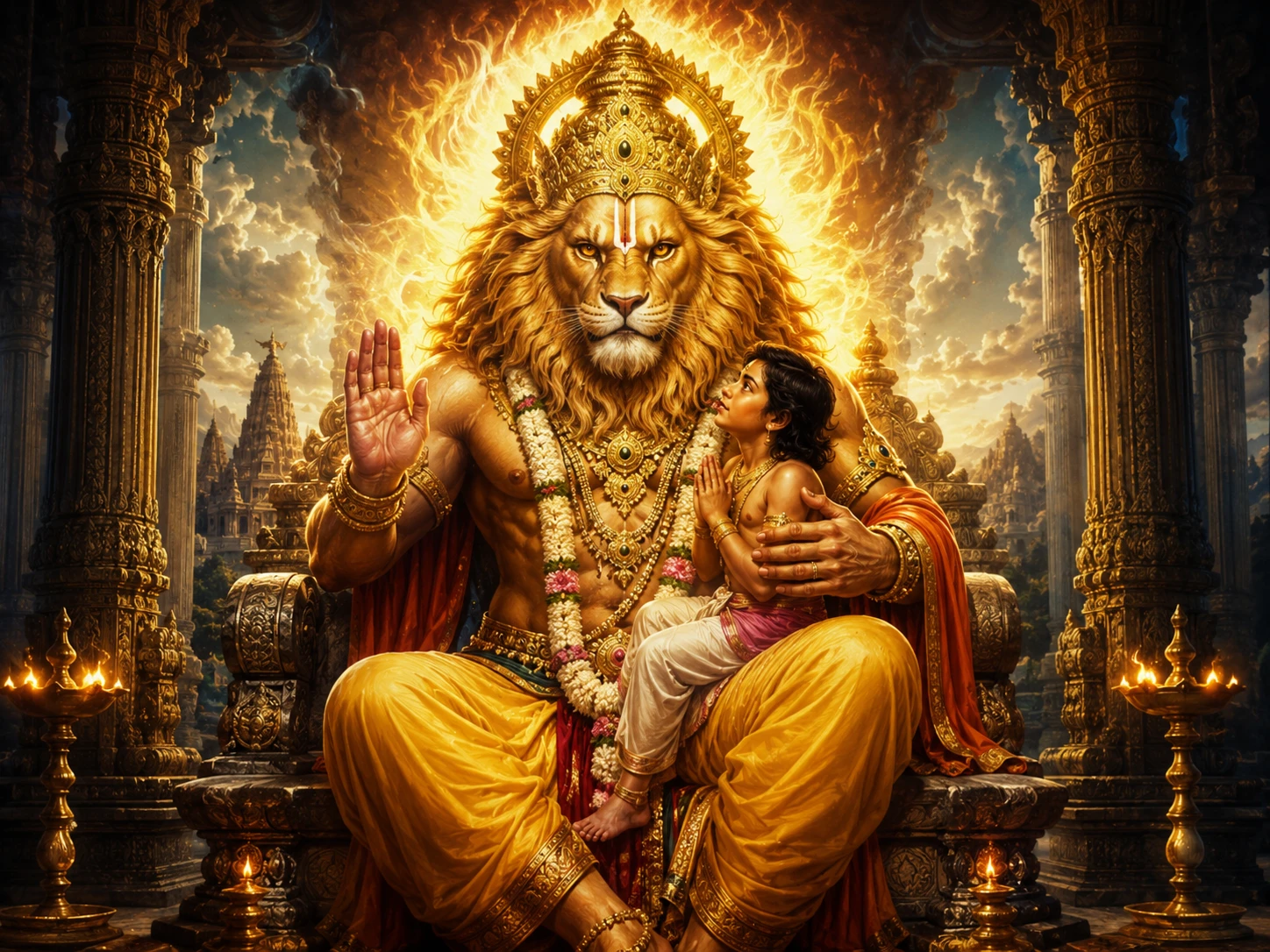
Narasimha -- The Avatar Who Broke Every Rule to Keep His Word
नरसिंह -- वह अवतार जिसने अपना वचन निभाने के लिए हर नियम तोड़ा
Most Vishnu avatars are gentle before they are fierce. Rama is a prince who becomes a warrior reluctantly. Krishna is a cowherd who picks up the Sudarshana Chakra only when diplomacy fails. Narasimha is different. Narasimha is fury from the first frame. He does not arrive with a smile. He explodes out of a stone pillar, roaring, half-man and half-lion, His mane wild, His claws extended, His eyes blazing with a rage so intense that even the Devas cannot look directly at Him. After the killing, no one in the universe -- not Brahma, not Shiva, not Lakshmi initially -- can calm Him. It takes Prahlada, a five-year-old child, placing his small hand on Narasimha's burning cheek, to bring God back from the edge of cosmic wrath.
The Narasimha episode occupies Skandha 7 of the Bhagavata Purana, with the primary narrative in Adhyaya 2 through 10. It is structured as a story within a story -- the sage Narada narrates it to King Yudhishthira to explain why divine protection always reaches the devotee, no matter how impossible the circumstances appear.
To understand Narasimha, you must first understand the antagonist. Hiranyakashipu is not a mindless demon. He is a grieving brother. His twin, Hiranyaksha, was killed by Vishnu's Varaha avatar. Hiranyakashipu's motivation is revenge -- and his method is impeccable. He performs tapasya (austerity) so severe that the heat from his body threatens to burn the universe. Brahma, compelled to respond, offers a boon. Hiranyakashipu's request is a masterpiece of legal drafting. He asks that he cannot be killed by man or beast, indoors or outdoors, on earth or in the sky, during day or night, by any weapon animate or inanimate. He covers every binary. He thinks in categories and closes every category.
This is not stupidity. This is intelligence applied to the wrong problem. Hiranyakashipu approaches the universe like a corporate lawyer drafting an airtight contract. Every clause is covered. Every contingency is addressed. What he fails to account for is that the counterparty -- God -- is not bound by contractual logic. The universe was not created by categories. Categories were created to describe the universe. The creator is not limited by the descriptions.
इतो नृसिंहः परतो नृसिंहो यतो यतो यामि ततो नृसिंहः। बहिर्नृसिंहो हृदये नृसिंहो नृसिंहमादिं शरणं प्रपद्ये॥
ito nṛsiṁhaḥ parato nṛsiṁho yato yato yāmi tato nṛsiṁhaḥ | bahir nṛsiṁho hṛdaye nṛsiṁho nṛsiṁham ādiṁ śaraṇaṁ prapadye ||
Narasimha is here, Narasimha is there, wherever I go there is Narasimha. He is outside, He is in the heart. I take refuge in that primordial Narasimha.
— Narasimha Pranama (traditional stotra, widely attributed to Vedic tradition; recited in Vaishnava temples)
The story of Prahlada is inseparable from the Narasimha narrative and arguably more important. Prahlada is Hiranyakashipu's own son, born into the household of the universe's most powerful anti-Vishnu tyrant. Yet from birth, Prahlada is an unwavering Vishnu devotee. His father tries everything to break this devotion. He sends Prahlada to the school of the demon gurus Shanda and Amarka, hoping indoctrination will cure him. Prahlada comes back and teaches his classmates about Vishnu instead. Hiranyakashipu then escalates: he throws Prahlada off a cliff, feeds him to poisonous snakes, has him trampled by elephants, dunked in boiling oil, locked in a chamber with fire set around it. Prahlada survives every attempt, his devotion unshaken.
The Holika episode -- which gives us Holi, India's most popular festival -- comes from this sequence. Hiranyakashipu's sister Holika has a boon that makes her immune to fire. She sits in a pyre with Prahlada in her lap, intending for the fire to kill him while she survives. Instead, Holika burns and Prahlada walks out unharmed. This is the origin of Holika Dahan, the bonfire lit on the eve of Holi across India. Every year, from the gullies of Varanasi to the tech parks of Hyderabad, when people light that bonfire, they are re-enacting a 5-year-old's refusal to abandon his principles under the worst possible pressure.
Prahlada's character is the Bhagavata Purana's answer to the question: what does true devotion look like in hostile territory? It does not look like retreat. Prahlada does not run away from his father's kingdom or hide in an ashram. He lives in the demon's house, eats at the demon's table, and quietly, politely, refuses to stop loving God. His resistance is not violent. It is not even defiant in tone -- he speaks to his father with respect. But he does not bend. This is the most dangerous kind of resistance: the kind that cannot be provoked into either capitulation or aggression.
In modern India, the Prahlada archetype appears regularly. The Dalit student at a premier institution who faces social exclusion but does not drop out -- instead becoming the top-ranked graduate. The RTI activist in a small town who keeps filing requests despite threats. The journalist who keeps reporting despite defamation suits. The UPSC aspirant from a family that wanted an early marriage who keeps studying. Prahlada's message is not 'God will magically save you.' It is 'if you do not abandon your principles under pressure, the universe will rearrange itself to protect you -- but only if you hold.'
The killing itself is the most precisely constructed scene in all of Puranic literature. Hiranyakashipu, enraged by Prahlada's insistence that Vishnu is everywhere, strikes a pillar and demands: 'Is your Vishnu in this pillar?' Narasimha erupts from the stone. The Bhagavata Purana describes the moment in terrifying detail -- the sound that shakes the cosmic shell, the form that is neither fully human nor fully animal, the rage that makes even Brahma tremble.
The conditions of the killing systematically void every clause of Hiranyakashipu's boon. Narasimha is neither man nor animal (half-and-half). He kills Hiranyakashipu on the threshold of the palace (neither indoors nor outdoors). He does it at twilight (neither day nor night). He places the demon across His lap (neither on earth nor in sky). He tears him apart with His claws (neither weapon animate nor inanimate -- nails are part of the body yet not alive). Every binary in the boon is precisely bisected.
The legal precision here is not accidental. The Bhagavata Purana is making an argument about the nature of categories. Hiranyakashipu's boon operates on binary logic: X or not-X, inside or outside, day or night. Narasimha demonstrates that reality is not binary. Twilight exists. Thresholds exist. Hybrid forms exist. Every rigid classification system has a liminal space -- a zone that is neither one thing nor the other. And that liminal space is exactly where the divine operates.
This has profound implications for modern thinking. In Indian law, the landmark NALSA v. Union of India judgment (2014) recognised transgender persons as a 'third gender,' breaking the binary of male/female. The court was essentially performing a Narasimha manoeuvre -- finding the liminal space that a rigid classification system had failed to account for. In technology, the entire concept of 'fuzzy logic' -- used in AI, washing machines, and missile guidance systems -- works by rejecting hard binaries in favour of degrees and gradients. Narasimha is the patron deity of edge cases.
After the killing, Narasimha's fury does not subside. The Bhagavata describes Him sitting on the throne, Hiranyakashipu's entrails draped like a garland, His roar still shaking the universe. The Devas send Brahma -- He cannot approach. They send Shiva -- He cannot calm Him. They send Lakshmi -- even She hesitates. Finally, young Prahlada walks forward. He offers a hymn of praise (the Prahlada Stuti, one of the most beautiful prayers in Sanskrit literature). As the child's hand touches the burning cheek, Narasimha's rage dissolves. He becomes Lakshmi-Narasimha -- the fierce protector now gentle, with Lakshmi on His lap and Prahlada at His feet.
The teaching is unmistakable: divine wrath exists, and it is real, and it is terrifying. But it answers to love. Not to power, not to status, not to theological argument -- but to the simple touch of a child who never stopped believing. Every temple that houses both Ugra Narasimha (the wrathful form) and Shanta Narasimha (the peaceful form) is making this point architecturally: fury and tenderness are not opposites. They are the same love expressed in different registers.
Hiranyakashipu's Boon vs Narasimha's Solution -- A Legal Breakdown
| Boon Clause | Binary Assumed | Narasimha's Loophole | Category Violated |
|---|---|---|---|
| Not by man or animal | Human vs Beast | Half-man, half-lion | Hybrid form |
| Not indoors or outdoors | Inside vs Outside | On the threshold (doorstep) | Liminal space |
| Not during day or night | Daylight vs Darkness | At twilight (sandhya) | Transitional time |
| Not on earth or in sky | Ground vs Air | On Narasimha's lap | Intermediate position |
| Not by any weapon | Weapon vs No weapon | Torn by claws (body part, not tool) | Organic instrument |
Each clause assumes a strict binary. Each solution finds the liminal zone between the two poles. This is not trickery -- it is a demonstration that reality exceeds classification.
The Narasimha Stambha (pillar from which Narasimha emerged) has a physical counterpart. At the Simhachalam temple near Visakhapatnam, Andhra Pradesh -- one of the most important Narasimha temples in India -- the main deity is covered in sandalwood paste (chandana) for eleven months of the year. Only on Akshaya Tritiya (usually in April-May) is the paste removed for 12 hours, revealing the Varaha-Narasimha form beneath. The rest of the year, devotees worship a shape they cannot fully see. This is deliberate theology: Narasimha's true form is too intense for constant viewing. Even God's presence must be mediated for human safety.
Ahobilam in Andhra Pradesh's Kurnool district houses nine Narasimha temples spread across forested hills, each depicting a different form -- from Ugra (wrathful) to Yoga (meditative) to Karanja (under a Karanja tree) to Chatravata (under a sacred tree). The trek connecting all nine temples through dense Nallamala forest is approximately 25 km and takes two days. It is considered one of the most challenging temple pilgrimages in South India and has recently gained popularity among trekking communities in Hyderabad and Bengaluru as a spiritual-adventure hybrid experience.
Chant the Narasimha Kavacham for Protection
The Narasimha Kavacham is recited for protection against fear and adversity. Read it once a day, in the morning or at dusk, until you know its shape by heart. It is on Eternal Raga with its meaning.
Tags
Eternal Raga · शाश्वत राग
Institutional voice — scholarly articles on Sanatan Dharma
Deepen Your Understanding
अपनी समझ और गहरी करें
deities avatars
Dashavatara -- Why Vishnu Comes Back Ten Times
Fish, tortoise, boar, half-lion, dwarf, axe-warrior, prince, cowherd, enlightened teacher, future horseman. The ten avatars of Vishnu are not random folklore. Read them in sequence and you get something startling -- a narrative that mirrors evolutionary biology, tracks the rise and fall of political systems, and argues that God does not sit above history but enters it, gets dirty, and does the work. The Dashavatara is Hinduism's answer to the question every civilisation asks: why does the world keep breaking, and who fixes it?
deities avatars
Krishna Leela -- Why God Chose to Play
He stole butter, broke pots, lied to his mother's face, danced with married women under the full moon, and lifted an entire mountain on his little finger. The Bhagavata Purana's Tenth Skandha -- the most popular 4,000 verses in all of Hindu literature -- is not a biography. It is a theological argument that the Supreme Being's highest expression is not creation, destruction, or cosmic governance. It is play. Krishna Leela is the radical idea that God's truest nature is joy.
divine arsenal
The Divine Shields and Armour -- Karna's Kavach-Kundal, Agastya's Gift, and the Spiritual Meaning of Protection
Karna was born wearing armour that made him invincible -- and gave it away to the one man who wanted him dead. Rama received divine armour from a sage moments before facing Ravana. In Hindu tradition, the greatest protection is not what you wear on your body but what you carry in your soul.
scriptural exegesis
Gita Chapter 11 -- Vishwaroop: When Arjuna Saw Everything and Could Not Bear It
Arjuna asks to see Krishna's true form. He gets what he asks for. Infinite mouths, infinite eyes, infinite arms, the entire universe being consumed. Warriors rushing into blazing mouths like moths into flame. Time itself as a devouring force. This is the chapter Oppenheimer quoted at Trinity. It is the Gita's most terrifying passage -- and its most honest statement about what happens when a human mind encounters infinity without a filter.
rituals traditions
Holi and Holika Dahan -- The Night a Child's Faith Burned an Empire
Before the colours fly, the fire burns. The night before Holi, India lights bonfires to commemorate the moment a five-year-old boy named Prahlad sat in flames and survived because he chanted Vishnu's name -- while the demoness Holika, who was supposed to be fire-proof, burned to ash. The story comes from the Bhagavata Purana, Seventh Canto, and it is one of Hinduism's most powerful narratives about the cost of faith and the fragility of power.
scriptural exegesis
Prahlada and Narasimha -- Faith That Split a Pillar
A five-year-old boy told the most powerful being in the universe that God exists everywhere -- even in a pillar. His father smashed the pillar to prove him wrong. God stepped out. The Prahlada-Narasimha story is not a children's tale. It is the most radical statement about faith in all of Hindu literature.
The Narasimha Stambha (pillar from which Narasimha emerged) has a physical counterpart. At the Simhachalam temple near Visakhapatnam, Andhra Pradesh -- one of the most important Narasimha temples in India -- the main dei…
More in Deities & Avatars
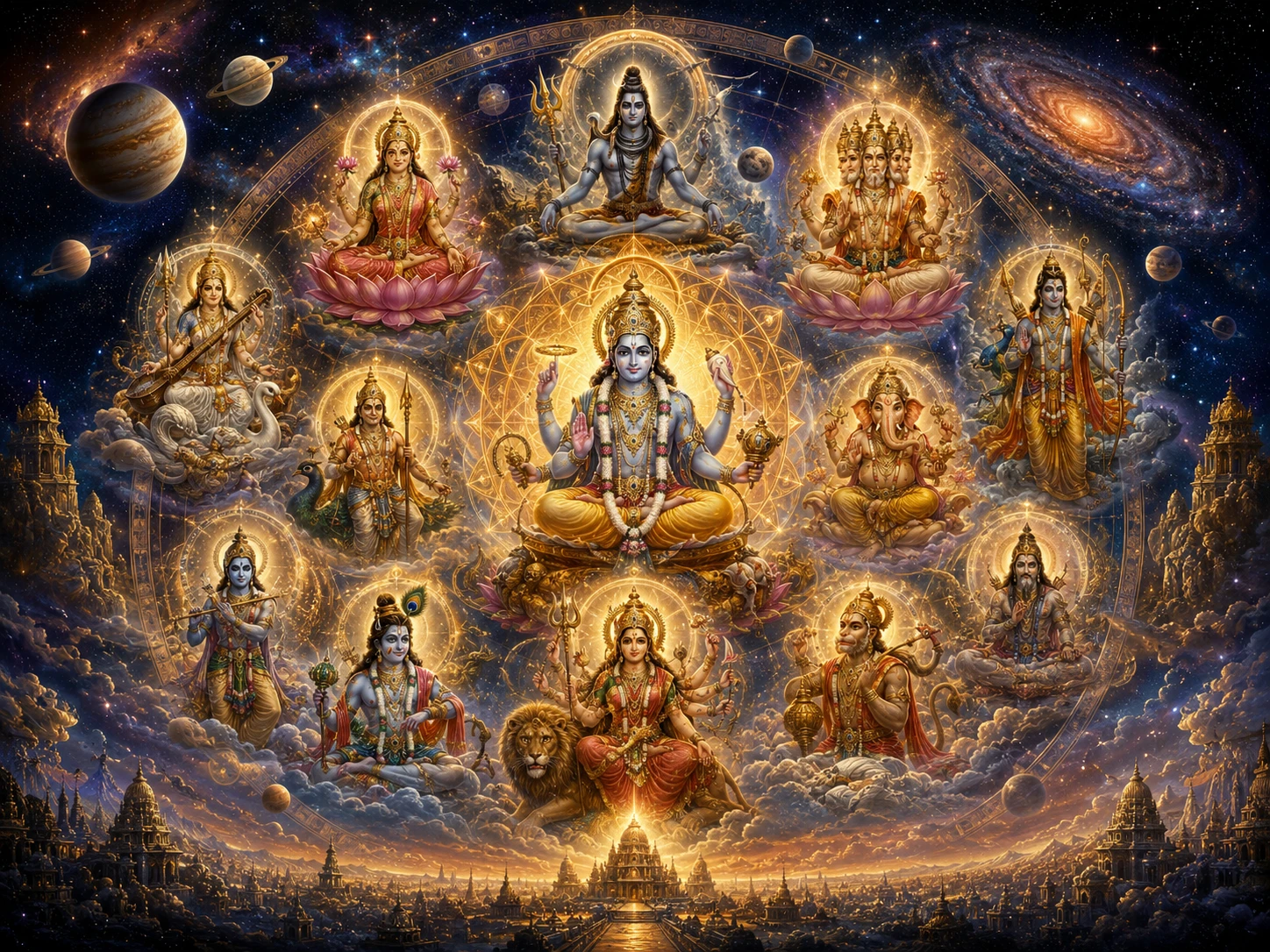
33 Koti Devata -- Why Hinduism Has 33 Types of Gods, Not 33 Crore
13 min read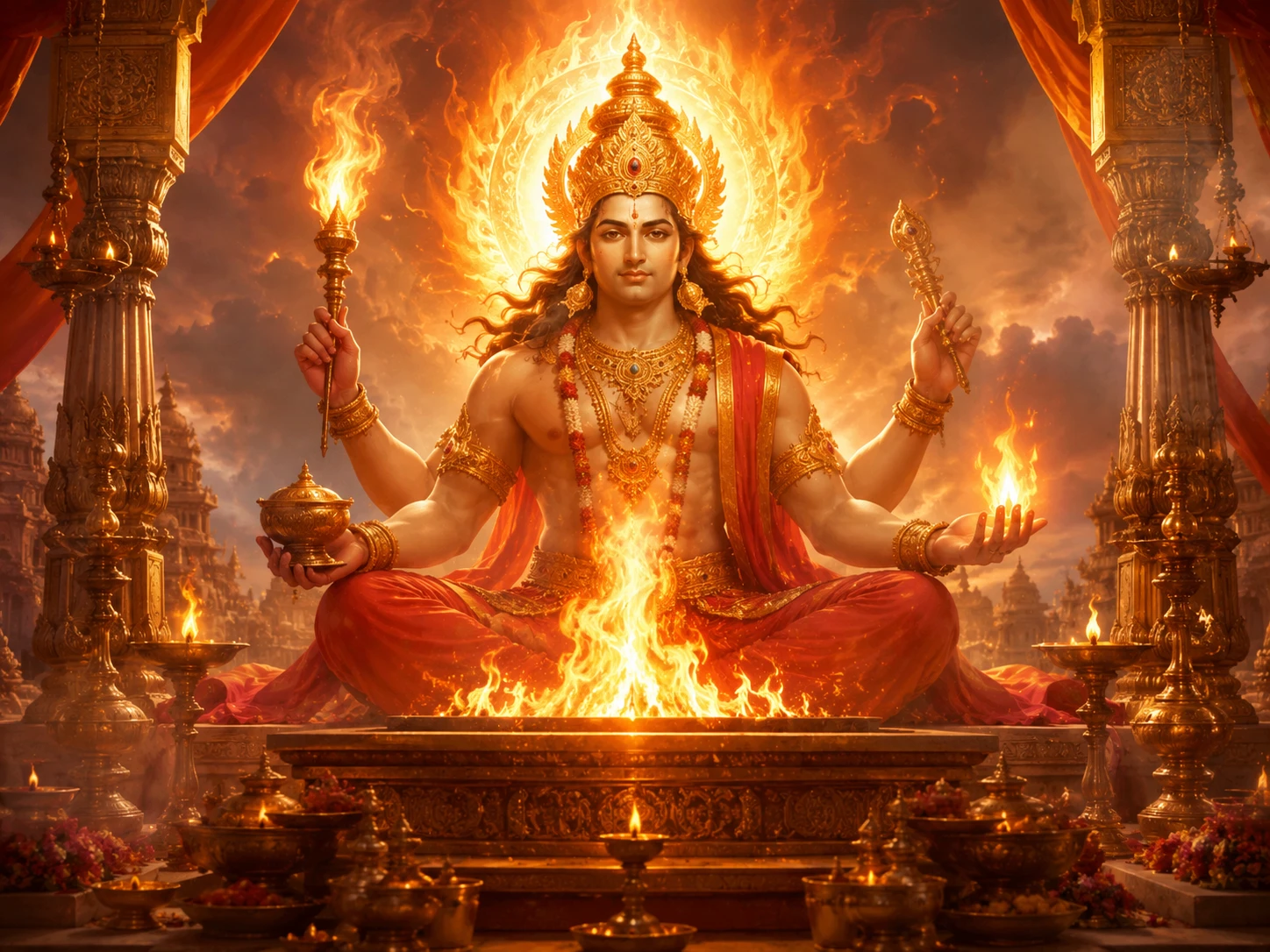
Agni -- The Fire God
19 min read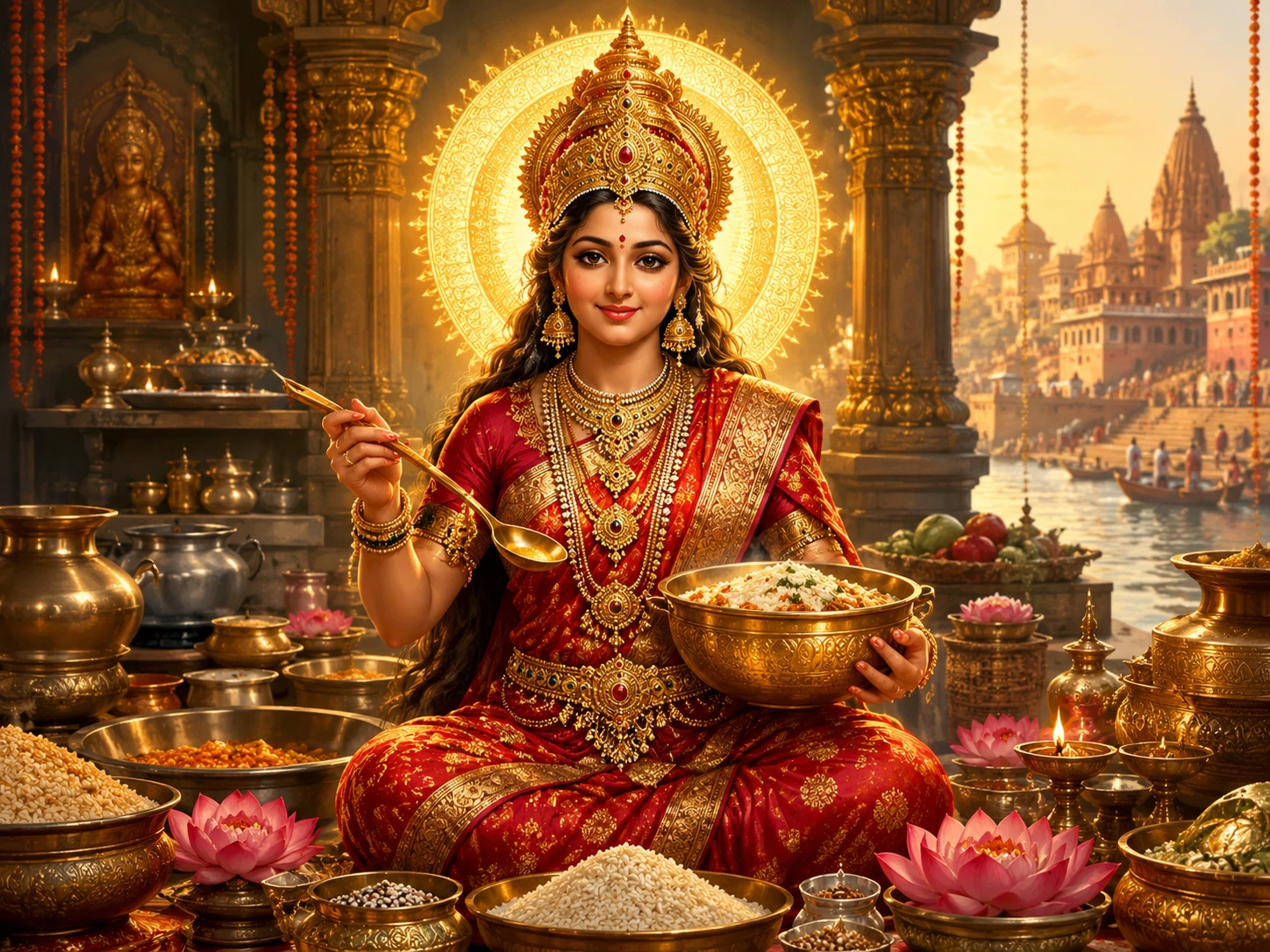
Annapurna -- Goddess of Food
19 min readThe same translation error that turned '33 Koti' into '33 crore' in Hinduism also happened in Buddhism. The Chinese translation of Buddhist texts rendered 'Sapta Koti Buddha' (7 Supreme Buddhas) as '7 Crore Buddhas.' The…
Deities AvatarsCommunity Reflections
🕉️
Be the first to share your reflection.